
Entertainment
The 1970s, Extremely R-Rated, Thriller That Inspired An Entire Franchise
By Robert Scucci
| Published

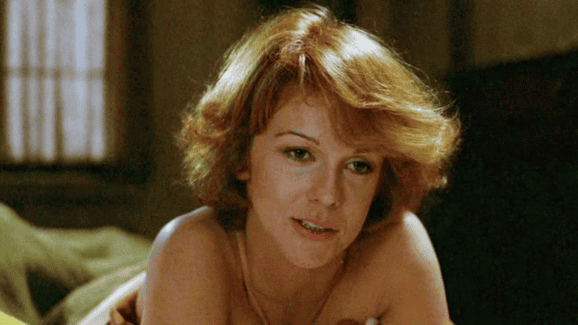
If you’re a fan of the Child’s Play franchise, you owe it to yourself to look back a decade before it launched and check out 1978’s Magic. Often cited as a direct inspiration for the franchise’s infamous Chucky, Magic leans more into psychological thriller territory, though its story still centers on a ventriloquist dummy that may or may not be possessed by a murderous entity. Half the fun of Magic is figuring out whether the puppet itself is responsible for a string of killings that seem to happen nearby, or if his unstable puppet master is the real culprit.
Even better, the deeply unstable man at the center of Magic is portrayed by none other than Anthony Hopkins, who clearly knows a thing or two about playing total psychopaths (Hello, Clarice!). The dynamic between Hopkins and the puppet he’s constantly lugging around turns the film into a disturbing trip into the Catskills, where isolation becomes its own kind of antagonist and late night screams are guaranteed to go unheard.
A Magician, Turned Ventriloquist, Turned Psycho

When Corky Withers (Anthony Hopkins) endures yet another heckler-infused open mic night as an aspiring magician, he realizes it’s time to change his act. That realization leads him to introduce a talking dummy named Fats (voiced by Hopkins) to his routine. Almost overnight, Corky and Fats dominate the comedy circuit, eventually catching the attention of Ben Greene (Burgess Meredith), a seasoned talent agent with deep industry connections.
The cracks in Corky’s personality start to show once he’s offered a television pilot, under the condition that he undergo a full medical evaluation before any contract is finalized. To Ben, this is standard practice, as networks want to avoid pouring money into talent whose health may be deteriorating. Corky, however, sees the evaluation as a threat and refuses the offer outright, since he and Ben both know his mental health is far from stable.

The core issue Corky faces is that he cannot turn Fats off, even when he’s not on stage. The two are constantly bickering, and Corky can barely go five minutes without slipping back into his act, even when doing so actively makes things worse. Fully aware that he needs to get himself together if he wants to take his career any further, Corky retreats to the Catskills, where his former high school crush, Peggy Ann Snow (Ann-Margret), runs a quiet bed and breakfast.
A Budding Romance, And A Brutal Weekend
Magic takes a darker turn once Corky and Fats settle in and reacquaint themselves with their old stomping grounds. Peggy confides that she always had a crush on Corky and admits that her marriage to Duke (Ed Lauter) is falling apart. With some help from Fats, Corky quickly charms Peggy, and for a brief moment, things seem to be going his way. He’s getting the rest he needs before planning his next move back in the city, but that calm is shattered when Ben arrives unannounced to smooth things over, an encounter that ends fatally. Corky begins to spiral, confiding in Fats when alone while keeping up the ventriloquist routine whenever he’s around Peggy and Duke.

Teetering on the edge of a psychotic break, Corky grows increasingly fearful of what he and Fats might do next, especially after Duke starts to catch on to Corky and Peggy’s shared past. Tensions rise further when Duke notices Ben’s car on the property but can’t find Ben himself, leading him to suspect Corky is involved in his disappearance.
With no agent, no one he can trust, and a menacing puppet that appears to be calling the shots, Corky is forced to confront what’s really happening. Is he splitting his personality in two, allowing his violent impulses to live through Fats? Or is the puppet genuinely possessed by a malicious spirit, leaving Corky to reckon with the destruction he’s leaving behind?


Magic does an excellent job exploring Corky’s fractured psyche and the personality inhabiting Fats, ultimately leaving viewers with far more questions than answers. More importantly, Magic’s legacy can’t be overstated, as it directly inspired screenwriter Don Mancini to create 1988’s Child’s Play, which quickly became a full-blown media juggernaut. If you want to see the film that helped kick it all off, you can stream Magic for free on Tubi as of this writing.
Entertainment
Save on gas (and everything else) with a $15 BJ’s membership

TL;DR: Score a one-year BJ’s membership for $15 (reg. $60) and save up to 20¢/gal. on gas through April 30 — just in time for spring shopping and road trips.
Credit: BJ’s Wholesale Club
The warmer weather tends to sneak up fast, and so do those grocery bills and gas receipts. A one-year membership to BJ’s Wholesale Club is one of those simple upgrades that can make everyday shopping feel a little more manageable.
You can currently grab a Club Card Membership with BJ’s Easy Renewal for just $15 (reg. $60) through April 30, which opens the door to savings across groceries, household essentials, and even your weekend cookout prep.
Mashable Deals
Let’s start with the obvious, though. Gas prices. Members already get everyday savings at BJ’s Gas, but during this promo window, you’ll get an extra 15¢ off per gallon stacked on top of the usual 5¢ discount — bringing your total to 20¢ off per gallon through April 30.
Inside the club, it’s all about stretching your dollar further. BJ’s is known for offering competitive pricing on national brands, plus a wide selection of fresh produce, meats, bakery items, and deli favorites. Whether you’re planning a backyard BBQ, stocking up for a party, or just trying to cut down on weekly grocery runs, buying in bulk can help simplify things.
Mashable Trend Report
There’s also something to be said for convenience. Fewer trips to the store, more options in one place, and access to seasonal items that make spring and summer feel extra special.
Get a one-year Club Card Membership with BJ’s Easy Renewal® for just $15 (reg. $60) and enjoy an extra 15¢ off per gallon at any of the 199 BJ’s gas stations through April 30.
Grabbing this deal? Build your cart to $100+ and score a lifetime license to Microsoft Office 2021 free with code GWP4MAC (for Mac) or GWP4WIND (for Windows) through April 19.
Gift with $100+ purchase promo ends April 19, 2026. Exclusions apply. Only one promo code applicable per order. Prices subject to change.
StackSocial prices subject to change.
Entertainment
This $43 bundle quietly upgrades your entire PC experience
TL;DR: This rare Microsoft bundle deal gives you a lifetime license to Microsoft Office Professional 2021 for Windows and Windows 11 Pro for only $42.97 (reg. $418.99) through May 17.
$42.97
$418.99
Save $376.02
Looking for an affordable way to make your old PC feel new again? If you don’t have the funds to buy a brand new computer, don’t worry. The Ultimate Microsoft Office Professional 2021 for Windows lifetime license and Windows 11 Pro Bundle is the next best thing, offering your computer a total upgrade for only $42.97 through May 17.
Don’t count out your dusty old PC. This Microsoft bundle is here to give it a total facelift for less than $50. It kicks off with a lifetime license to some of the brand’s most popular tools — Microsoft Office, which you’ll pay for once and enjoy without any subscription fees.
Mashable Deals
You’ll get permanent access to a suite of eight helpful apps with Microsoft Office Professional 2021 for Windows. It includes staples that have been around for decades, like Word, Excel, PowerPoint, and Outlook. You’ll also get newer favorites like Teams, OneNote, Access, and Publisher.
Once you’ve loaded the apps onto your device, you can upgrade your OS to Windows 11 Pro. It’s an operating system made for modern professionals, with tools that support your workflow. Enjoy a more powerful search experience, improved voice typing, a seamless interface, snap layouts, and much more.
You can rest easy knowing Windows 11 Pro takes your cybersecurity seriously. You’ll have biometric logins, encrypted authentication, and advanced antivirus defenses to keep your data secure.
Mashable Deals
Show your PC some love with the Microsoft Office Professional 2021 for Windows and Windows 11 Pro bundle for only $42.97 (reg. $418.99) now until May 17.
StackSocial prices subject to change.
Entertainment
Star Trek’s First Broadcast Episode Was Very Carefully Chosen, Because It Was Boring
By Chris Snellgrove
| Published

These days, Star Trek is a bona fide pop culture phenomenon. But during the development of The Original Series, there was anxiety that the general public wouldn’t really understand Gene Roddenberry’s mashing up Western tropes with a sci-fi setting. Making matters worse was that the original pilot, “The Cage,” had been rejected by NBC for being too brainy. Fortunately, Roddenberry got a chance to shoot another pilot, one which impressed the network enough to order an entire season worth of episodes.
Several episodes of Star Trek: The Original Series had already been shot when the time came for this new show to make its broadcast premiere. The first episode that the general public saw was “The Man Trap,” which featured a shapeshifting monster that was revealed to be an alien salt vampire. This good-but-not-great episode was an odd choice, and it was one that the cast and crew hated. As it turns out, though, this episode was very carefully selected by executives because it served as an inoffensive, relatively straightforward encapsulation of everything Star Trek had to offer.
It’s A Trap!

Most of the information we have about why “The Man Trap” was selected as Star Trek’s first episode comes from the book Inside Star Trek: The Real Story. Within this impressive reference tome, Robert H. Justman and Herbert F. Solow revealed something surprising: NBC had several other episodes to choose from for the premiere, including “The Corbomite Maneuver,” “Charlie X,” “Mudd’s Women,” “Where No Man Has Gone Before,” and “The Naked Time.” All of them had already been shot and were mostly finished, so it was just a matter of figuring out which episode would serve as the best introduction to Star Trek, a heretofore unknown sci-fi series.
“The Man Trap” won out, mostly because the powers that be worried that other episodes would be off-putting to general audiences in some very specific ways. For example, they worried that audiences would find “Charlie X” a story that was “too gentle” because it focused on an adolescent with special powers. This was probably the right call, in retrospect: when Variety gave a negative review of “The Man Trap” (an episode chosen, in part, because of its relative maturity), they declared that Star Trek: The Original Series was “better suited to the Saturday morning kidvid bloc” (ouch!).
A Monster Hit Of An Episode

“The Corbomite Maneuver” was a great potential choice, but this episode’s impressive special effects were still in post-production, and almost all of its action took place on the ship. “Where No Man Has Gone Before” really outlined the premise of the new show, but it was deemed “expository” for general audiences expecting more action and danger. Justman thought “The Naked Time” was a killer introduction to the crew’s personalities, but the network passed, presumably because of how over-the-top (half-naked, swashbuckling Sulu? Oh, my!) that episode gets. “Mudd’s Women,” meanwhile, was deemed too offensive because the plot involved literally selling women to miners.
Through this process of elimination, executives decided that “The Man Trap” was the best intro to Star Trek. It had cool scenes on both the Enterprise and a distant outpost (a strange new world) and featured a straightforward action plot you didn’t have to be a sci-fi aficionado to understand. Finally, it was all about finding and defeating a creepy monster, which offered thrills to audiences of all ages. The network’s choice paid off, and Star Trek: The Original Series became the most popular sci-fi show in television history, even though the cast (including William Shatner and Leonard Nimoy) thought “The Man Trap” was the worst possible episode they could have chosen.

All of this is a keen reminder of how much thought and work went into putting Star Trek’s best foot forward. It might be a reminder that Paramount’s current upper leadership needs, as Starfleet Academy hit the ground running with the worst episodes of Season 1. The show got better after that, but it didn’t matter because the prospective audience had already been driven away. As it turns out, today’s execs need to learn something that the network execs of the ‘60s had learned very well: series succeed when you give the audience what they want to see and not what you want to show!

New Bengals DT Dexter Lawrence signs 1-year, $28M extension
St. Bonaventure sees influx of transfers added to basketball roster


