
Entertainment
Google Pixel Watch 3 can detect loss of pulse and call 911
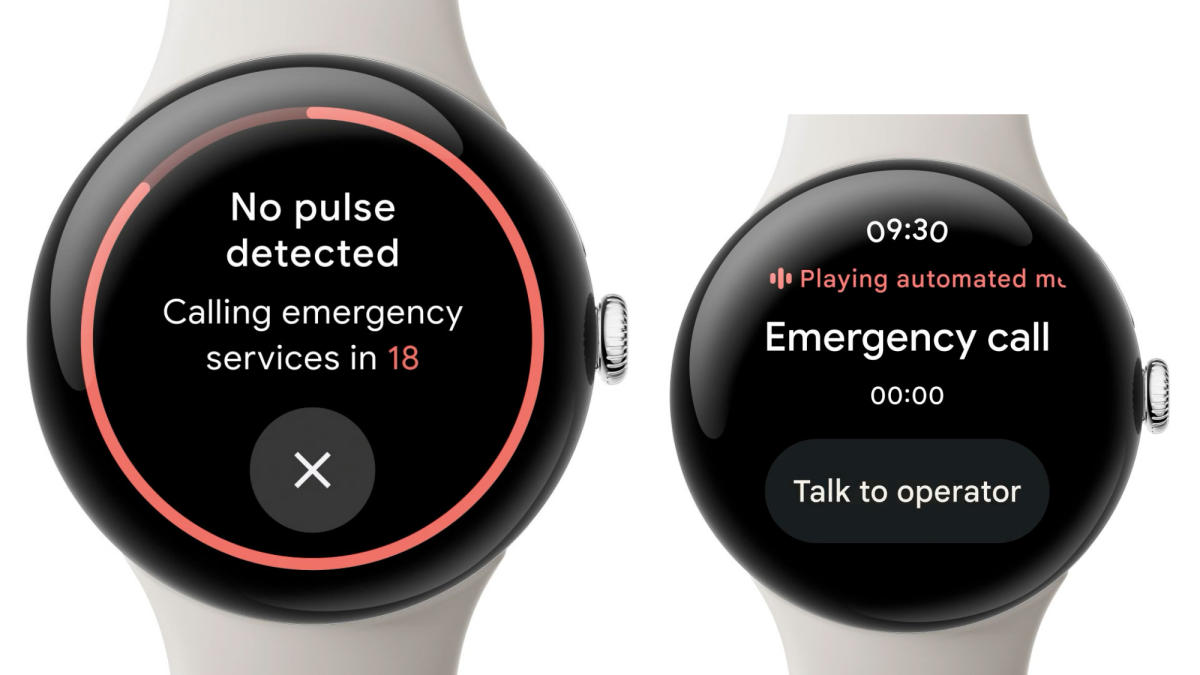
Google has secured FDA clearance for its first-to-market pulse detection feature intended to aid smartwatch wearers who may experience isolated medical emergencies.
Powered by an AI-based algorithm and a device “multipath heart rate sensor,” the smartwatch can detect “pulselessness” caused by various medical emergencies, such as cardiac arrest, poisoning, or respiratory arrest. The watch will then automatically call and request a dispatch of emergency services. The feature was designed with input from cardiologists, global authorities on resuscitation, and Emergency Medical Service leaders, dispatchers, and paramedics, according to the company.
“When a loss of pulse event happens, it’s usually up to a bystander to give or get help,” the company explains. “However, half of all loss of pulse events related to cardiac arrest, for example, are unwitnessed – leaving millions worldwide effectively no chance of receiving emergency care soon after losing their pulse.”
Mashable Light Speed
Here’s how it works: The Pixel Watch 3 harnesses integrated heart rate monitors to detect a loss of pulse, which then trigger additional sensors that search for other signs of pulse or motion. If none are detected, the watch then begins prompting the user with check-in alerts. If there is no response from the wearer, the watch will begin emanating a loud sound and display a countdown on its screen, after which it will call an emergency dispatcher through the LTE-enabled smartwatch or connected smartphone.
Google makes it clear in the fine print, however, that the feature is not intended for those with preexisting heart conditions or who require cardiac monitoring.
The Loss of Pulse Detector feature was first announced in August, available to select market across U.K, France, Austria, Denmark, Ireland, the Netherlands, Norway, Sweden and Switzerland. Since then, the feature has expanded to 14 countries. It will finally roll out to U.S.-based Pixel Watch 3 owners in March.
Entertainment
macOS 27 public beta 2 arrives. Everything to know about the update.

The second public beta for macOS 27 Golden Gate has just been released by Apple. The first beta brought some brand-new features to Mac, including a relaunch of Siri as a true AI assistant.
Siri AI can answer questions based on a user’s inbox, documents, and camera roll, and can also carry out tasks in a user’s email, messages, and other apps. And, as Mashable previously covered, users can also access a hidden Siri AI interface, which is very much in its test phase, within the public beta.
macOS 27 public beta 2 brings even more updates. First, there are some fixes and tweaks to Liquid Glass, as well as the glitchy system search feature, a common complaint with macOS 26.
Apple Intelligence also gets some updates in the new beta, with design changes, a new set of writing tools, and improved Visual Intelligence. The public beta also introduces a tool for users to create custom Safari extensions and new Shortcuts using natural language with AI.
Mashable Light Speed
As 9to5Mac points out, there’s also a new aspect ratio support in Phone Mirroring, which seems to hint at a feature for Apple’s foldable iPhone.
If you want to experience some of the long-awaited Siri AI features, improved system search, and the latest changes to Liquid Glass, here’s how you can check out the mac OS 27 Golden Gate beta 2 now.
Download and install the macOS 27 beta 2
First, you’ll need to enroll your Mac into Apple’s public beta program if you haven’t already. You can do so at https://beta.apple.com.
Next, go to System Settings, then General Software, followed by Update.
Select the “i” icon beside Beta Updates and select the latest macOS 27 Golden Gate Public Beta from the dropdown menu.
Entertainment
King Of The Hill’s Newest Season Is Dadcore Perfection
By Chris Snellgrove
| Updated

Growing up, I wasn’t a huge fan of King of the Hill. Sure, I found it enjoyable enough, but I never went out of my way to regularly watch it. To my teenage sensibilities, Mike Judge’s other major cartoon, Beavis and Butt-Head, was more endearing. Fast forward more than a decade later, though, and I discovered just how brilliant this show was. It helped that I had become a father, raising my own son in a tiny Southern town full of colorful personalities. Hank Hill was no longer a character I couldn’t understand; rather, he was someone I knew a little bit better every time I looked into the mirror.
That kinship with Hank is a big part of why I loved King of the Hill’s triumphant return on Hulu. Much of the revival’s first season focused on the relationship between Hank and Bobby, one which had changed since Bobby (much like my own son in the intervening years) had become his own man. Once more, Hank felt like my own reflection; someone trying to find his place in a world where everything changed but him. That consistency is at the heart of the newest season, which uses top-notch characterization to give us the best storytelling in this show’s history.
Bobby Loves Connie

To me, the most exciting thing about the King of the Hill revival was seeing the kind of man young Bobby had grown into. Making him a chef and restaurant owner was a stroke of genius because it highlighted the character’s passion and strengths while also underscoring that he still has more than a few things to learn. Bobby grew over that season in several ways, but none more so than finally beginning a relationship with his childhood crush, Connie Souphanousinphone. These two hooking up was the emotional climax of the previous season, and this season explores how their relationship has evolved.
As usual, the King of the Hill revival approached their changed dynamic with humor and bemusement, like when they wrestled with the decision to give their relationship a hard launch or a soft launch. They faced some predictable relationship woes, including arguments over exes and flirtatious women. All of this felt very real, but the show never resorted to cheap tricks by making us think they are going to break up. They always work things out and always lift each other up. Just as Hank constantly models good fathering, Bobby and Connie model a healthy relationship, and it is just infinitely rewarding to watch this couple do its thing.
Never Too Old For An Arc

If the King of the Hill revival’s first season had one weakness, it was that it arguably focused a bit too much on Hank and Bobby. While these two are still front and center in most stories, many of the newer episodes focused on other older characters, with a special emphasis on how they have changed over time. For example, we see Nancy finally decide to work on her relationship with Dale rather than constantly cucking her husband with John Redcorn. We also see more of the fallout of Kahn and Minh’s divorce. Heck, even Bill gets major development, both as Kahn’s roommate and as a man suffering from crippling depression.
Giving the older characters these major arcs infuses the new season with a special power. After all, these are characters most fans grew up with, and seeing their evolution is a keen reminder that it’s never too late for any of us to change. Plus, the resolution to these arcs is often emotionally rewarding. My favorite was seeing Hank go all out to help Peggy with her menopause; overwhelmed, she asked him to be the one thing that never changes. It’s a beautiful moment because Peggy’s praise reinforces Hank’s idea of himself. As for Hank, we see his biggest secret: that he’s willing to make major changes to help the ones he loves.
As an avowed wife guy, moments like this are absolutely beautiful. Fair warning: you may want to keep some manly tissues handy because it’s hard not to tear up at the sheer sweetness of these characters.
He Walks The Line

The last thing I wanted to highlight about the King of the Hill revival’s latest season is how well it walks the scariest tightrope of them all: politics. Hank is a conservative character living in a very conservative area, but he is defined more by a personal moral compass than a political one. The show often emphasizes this by showing how reasonable and moderate Hank is, especially in the face of weird extremism. The mildest example of this is when some Comic-Con nerds mock Hank for being old and out-of-touch; he ultimately bonds with them by watching their favorite nerd show and crafting a hero-quality prop of their favorite fantasy weapon.
The most extreme example involves a hen becoming a rooster, something that is rare but scientifically possible. When Hank innocuously mentions how this is neat, some parents start screaming at him about teaching false gender ideology and how he must support trans kids playing sports. Hank doesn’t pop off a speech about trans rights. Instead, he calmly reminds his accusers that they were talking about something entirely different and trying to twist his words. The whole plot is a perfect satire of trans panic, keeping Hank Hill in character while highlighting that the loudest voices on any political issue are more interested in being heard than actually having a discussion.
Time To Grab Some Brews With The Boys

A stinging satire of culture war bullsh*t that doesn’t get preachy and merely points out how stupid extremist positions are? Simply put, there is no other modern comedy (cartoon or otherwise) firing on all cylinders like King of the Hill.
If you were waiting for my TL; DR review, here it is: the new King of the Hill season is television at its finest. You should really drop whatever you’re doing and go stream it on Hulu. And here’s a little recommendation: while you’re up, get in some comfy clothes and grab your favorite drink and coziest blanket. All the episodes are out now, and trust me: you’ll want to binge this bad boy all night long!

KING OF THE HILL REVIEW SCORE
Entertainment
The federal government is erasing bike lanes — from its websites
In yet another interesting direction of resources, federal transportation leaders are systematically removing bike safety information from official websites.
Transportation employees, including those working for the Federal Highway Administration, have been ordered to find and even remove mentions of bikes, bike lanes, and bike safety from online pages, an investigation by NPR found. In the last week, dozens of safety pages have been taken down or edited to remove public access to resources, the publication reported, such as the Pedestrian and Bicycle Crash Analysis Tool.
An anonymous Department of Transportation staffer told NPR that the decision was “asinine” and was not “making the sites better, faster or quicker.”
When asked about the changes, a department spokesperson wrote:”Since nearly 80% of the population uses cars to get to work and their important medical appointments, we are taking a closer look at federal guidance to ensure American families have the infrastructure they need. This is a common sense approach despite the Left’s belief that everyone should ride a bike to their shoebox-sized apartment to eat crickets to achieve a phony climate agenda.”
Mashable Trend Report
The website edits come shortly after remarks by Transportation Secretary Sean Duffy, who referred to Biden-era transportation initiatives as DEI expenditures.
“I just redirected $1.73 billion in USDOT grants away from Biden-era DEI pet projects,” he wrote in a post on X. “Now this funding is officially locked in to fix America’s actual backbone: ROADS, BRIDGES, AND SHIPPING PORTS.” Two days later, staffers were ordered to remove related language and update content “in alignment with administration direction.”
The Trump administration has revoked funding for alternative transportation infrastructure and eradicated many environmental resources, including the former climate.gov domain.
The emphasis away from bikes and public transit comes as oil prices just jumped to $100 a barrel following the return of hostilities between the Trump administration and the Iranian government.

16 Dresses for the High Summer Event
MLB roundup: Cubs erupt in 6-run first, crush Framber Valdez, Tigers


