
Entertainment
Critics Hate Dark Comedy With Stand-Up Legend's Rare Leading Role, Stream And Judge For Yourself

By TeeJay Small
| Published

If you’re a fan of legendary comedian and Saturday Night Live alumnus Norm MacDonald, you’ve likely spent plenty of time keeled over laughing at his stand-up specials, late-night appearances, or his own short-lived Netflix talk show. What you may not realize, however, is that Norm once starred in a critically panned feature film, which is rife with his trademark blend of irreverent comedy, slow-burn humor, and sarcastic deadpan delivery. The film, 1998’s Dirty Work, is currently streaming on Freevee via Amazon Prime Video, for those interested in checking it out today.
Norm MacDonald In Dirty Work
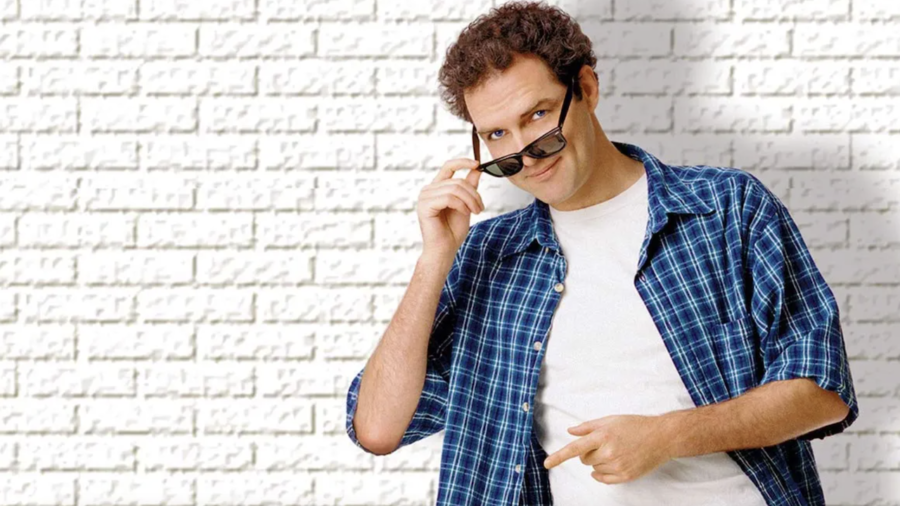
For those who have not yet had the pleasure of catching Dirty Work on streaming, the film centers on a pair of hapless slackers named Mitch Weaver and Sam McKenna. What the duo lack in strength, smarts, good looks, and work ethic, they more than make up for in schemes, plots, and petty revenge fantasies.
This is demonstrated by a few instances of childhood hijinks that involve framing their bully for a crime to have him kicked out of school, and using themselves as live bait to have a sexual predator arrested and thrown in jail.
As adults, neither of the men are capable of holding a job, leaving them completely penniless, rudderless, and incapable of saving Sam’s father when his heart fails. In an effort to bank $50,000 to get Sam’s dad a heart transplant, the duo decides to launch “Dirty Work,” a revenge-for-hire business that utilizes their penchant for mischief at a steep price.
By the time Dirty Work builds to its shocking conclusion, Mitch and Sam manage to leverage their skills for some of the funniest gags you’ll see streaming today. This includes tanking a shady used car salesman by hiring hookers to play dead in the trunks of his vehicles, playing pornographic material in a normal movie theater, and smashing up an apartment to spite the landlord.
From Flop To Cult Status
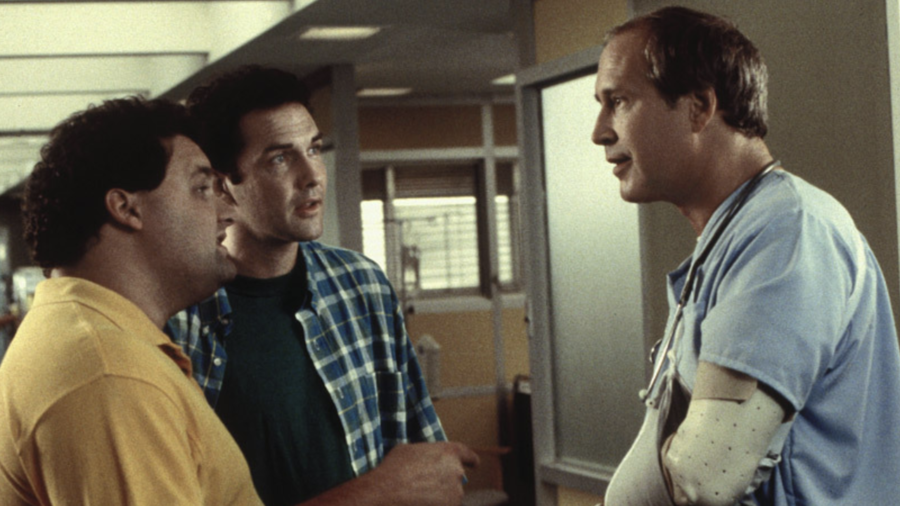
Long before Dirty Work hit streaming, the film achieved cult status with fans of Norm MacDonald’s off-beat comedy, despite its abysmal critical response and status as a major box office bomb. As someone who grew up loving Norm MacDonald’s very specific and niche comedic delivery, I loved Dirty Work, though I can recognize why it might not be for everyone.
This is especially true while watching the film in 2024, as its low budget is quite evident, its forced PG-13 rating leaves the jokes neutered, and the repeated use of sexual assault as a punchline has definitely aged like a glass of milk under a heat lamp.
Streaming For Free

Norm MacDonald is joined in the cast by comedy legends such as Artie Lange, Christopher McDonald, Don Rickles, Chevy Chase, John Goodman, Gary Coleman, and David Koechner. Adam Sandler and Chris Farley also have uncredited cameo appearances in the movie, making it Farley’s final on-screen performance. Dirty Work serves as the feature film directorial debut of Bob Saget, who was a frequent collaborator with MacDonald both before and after the film’s production. Those interested in catching Dirty Work can find the film streaming on Freevee via Amazon Prime Video.
Entertainment
Apple could deactivate leased iPhones remotely for non-payment, report says

The iPhone 18 is about to launch, along with the final version of its operating system, iOS 27, most likely in September. But a new report says it may arrive with a feature that lets Apple, and third-party lenders, remotely deactivate phones if customers fall behind on payments.
With the iOS 27 beta now widely available, 9to5Mac found code that would let Apple place delinquent iPhones in “Restricted Mode.” This would limit users to a short list of widgets and apps, including the App Store, Clock, Settings, Wallet, and Passwords, according to the report.
In theory, 9to5Mac says the system could work like this: Authorized financing partners who lease iPhones to customers get to perform regular status checks to see if the contract is still valid. If a customer falls behind, Restricted Mode would be activated.
The feature is “unequivocally present” in the iOS 27 beta, according to 9to5Mac — and a future update to iOS 26 could bring this feature to older iPhones as well.
The era of internet-connected “smart” devices has had plenty of benefits for consumers, but as consumer advocates have long warned, it also allows brands to remotely turn off devices.
Why might Apple be testing a tool like this right now? Let’s dive in.
Mashable Light Speed

Credit: Timothy Werth / Mashable
If you’ve bought any new tech products recently, you’ve probably noticed: New devices are getting really expensive. Just this month Apple raised prices on a variety of its products. iPhone prices haven’t risen just yet, but Tim Cook has prepared the ground for an “unavoidable” iPhone price hike.
Thanks to the ongoing global memory chip crisis known as RAMageddon, new phones now require a serious investment. The new foldable phones released by Samsung this week were preceded by a new Galaxy credit card program.
Apple is believed to be readying a new leasing program of its own. Bloomberg’s Apple oracle, Mark Gurman, says Apple will launch the “Apple Upgrade” leasing program later this month.
Gurman calls it “one of the biggest-ever changes to how the company sells” new devices — and says Apple Upgrade will be part of a partnership with the online lender Klarna, giving buyers a lease-to-buy option. iPhone customers who qualify could make monthly payments over two years.
The code discovered by 9to5Mac also reportedly includes another type of locking mechanism called “Partner Finance Lock,” which would stop users from trying to resell a financed device.
Clearly, Apple and Klarna can’t let customers who miss payments continue to use leased iPhones indefinitely. But it’s also an uncomfortable reminder of how much control Big Tech has over our devices.
Mashable reached out to Apple for comment about Restricted Mode; we’ll update this story if this famously taciturn tech giant provides new information.
Entertainment
Instagram is coming for creepy Meta glasses videos
Meta’s smart glasses allow creators to record strangers without holding up an obvious camera. Unsurprisingly, it’s enabled a lot of bad behavior. Now, Instagram is placing new limits on what happens to that footage once it reaches the platform.
In an Instagram Story (first reported by Business Insider), Instagram head Adam Mosseri said the platform would remove smart-glasses videos that show people being harassed or taken advantage of.
“If you’re posting content that is taking advantage of people and harassing them, like a lot of these pickup line kind of videos that we’ve heard of and seen, then we’re going to take the content down,” Mosseri reportedly said. “We don’t want people to be surreptitiously taking videos of other people and harassing them and then posting them on our platform,” he added.
The belated crackdown covers formats including pickup videos — in which creators approach people who may not realize they are being recorded — and prank videos targeting cashiers, fast-food employees, and other workers.
The report also noted Instagram had deactivated two pickup-artist accounts that used smart glasses to film women in public, both with more than 1 million followers. Meta confirmed the accounts were removed for violating its policy against harassing content, but did not say when the removals occurred.
Meta also didn’t explain how Instagram will determine when an interaction becomes harassment, or how many posts and accounts have been removed. But recent incidents show why the platform is under pressure to draw a clearer line — and how much damage can be done before a video is taken down.
Why Meta’s smart glasses have raised privacy concerns
Meta first introduced its Ray-Ban smart glasses in 2021 and has since expanded its wearable lineup through partnerships with Oakley and Kylie Jenner. Depending on the model, the glasses can record photos and videos, play audio, make calls, and respond to requests through Meta AI. Meta has also made it easy for users to upload their smart glasses footage to Instagram, and this content is often labeled “Made with Meta Ray-Ban.”
Mashable Trend Report
A small white LED on the front flashes when the camera is operating. In a July 7 explainer, Meta said its second-generation glasses automatically disable the camera if they detect the light has been covered — a response to reports of users tampering with the recording indicator. People in at least 30 states are even offering this tampering as a service, according to journalist Joanna Stern. Meta also said it actively removes advertisements, posts, and Marketplace listings that offer Meta Ray-Ban-tampering services.
That discretion has helped fuel an ecosystem of pickup, prank, and “troll” accounts built around filming strangers without their knowledge. Creators have secretly recorded attempts to get women’s phone numbers in gyms, airports, bars, stores, and public streets. The women are then exposed to audiences that may scrutinize their appearance, sexualize them, or criticize how they responded to an interaction they did not know was content.
Back in April, one woman discovered online footage of a man asking for her number after he recorded their conversation through smart glasses. She said the video was posted despite her refusing permission.
Other videos use unsuspecting retail and restaurant employees as participants in pranks, confrontations, or deliberately uncomfortable exchanges. In one recurring Meta glasses prank, creators spray a foul-smelling substance on a candle, then approach Walmart shoppers or employees and ask them to smell the scent. In another video, a creator placed fake feces in a fast-food restaurant bathroom, then asked an unsuspecting cashier to leave the counter and inspect it.
There’s more: one creator recorded visits to massage parlors and used sexually suggestive captions to tease explicit pay-per-view versions of the footage. Another built an Instagram page around non-consensually filming women’s bodies. After Mashable provided Meta with those examples back in January 2026, the company disabled both accounts for violating its policy on adult sexual exploitation.
Former prank creator Brad Podray, previously known online as Scumbag Dad, told Mashable in January that creators frequently target women and service employees because they are likely to provide usable reactions while being less able or willing to confront the person recording them.
“They want people who are good on camera, so they’re going to hit fast food employees, and they’re going to hit pretty girls,” Podray said. “A lot of random women walking around aren’t going to want to participate in a skit if you ask them to, so they remove the agency entirely by just running the glasses.”
Meta warned in an October 2025 statement that “people shouldn’t use them for engaging in harmful activities like harassment, infringing on privacy rights, or capturing sensitive information.” The company issued this warning after the University of San Francisco sent out a campus safety advisory. Multiple women reported that a man wearing Ray-Ban Meta glasses had approached them with unwanted comments and inappropriate dating questions. The university said he may have been recording these interactions for a pickup artist account on Instagram and TikTok.
Meta’s glasses are, of course, used for plenty of legitimate purposes beyond this inappropriate and often immoral content. Many wearers use them to capture travel, sports, concerts, and everyday moments from a first-person perspective without holding a phone. The glasses can also play music, make calls, send messages, translate conversations, answer questions about what’s around you, and provide directions or reminders through Meta AI. Athletes and creators also use them to record hands-free footage, while blind and visually impaired users can ask the glasses to read labels, identify objects, select clothing, and describe their surroundings.
Nevertheless, as the glasses become more common and harder to distinguish from ordinary eyewear, Instagram’s challenge will be keeping creators from finding new ways to turn that discretion into content at someone else’s expense.
Entertainment
Suspense Mystery Thriller Based On Hit Novel Will Leave You Breathless
By Nikola Pajtic
| Published

Based on the bestselling novel by Delia Owens, 2022’s Where the Crawdads Sing gave me the same emotional sensations as the book. Directed by Olivia Newman, the film is a visual feast and a remarkable coming-of-age story embroiled in a murder mystery. It follows Kya, a young woman, as she grows up alone in the unforgiving North Carolina marsh.
Where The Crawdads Sings
While in most books, childhoods are as idyllic as they can get, that is not the case here. Where the Crawdads Sing portrays Kya’s childhood as harsh, to say the least. An abusive alcoholic father breaks the family, and Kya is left to take care of herself alone at just seven years old.

Daisy Edgar Jones, of War of the Worlds fame, beautifully portrays a girl who tries to fend for herself but becomes ostracized by the townsfolk of the small North Carolina town Barkley Cove. She is given the nickname ‘Marsh Girl’. Through the years, she has survived by selling mussels at a store owned by people who become Kya’s friends.
A Coming-Of-Age Murder Mystery
Where the Crawdads Sing sees Kya through several stages of her life, jumping from one timeline to another. On this coming-of-age adventure, Kya finds love and gets her heart torn apart by lies and betrayal. Growing up, she becomes close to a kind neighbor, Tate Walker, played by Taylor John Smith, who teaches her to read and write, and their romance blossoms within the limits of the marsh.

Unfortunately, their happiness is short-lived as Tate leaves for college and breaks the promise of returning to her. Fast forward, and Kya has found love again. This time, she found solace with Chase Andrews (Harris Dickinson). Dickinson brings a believable character from the book to the screen with all its charm and darkness underneath. She soon discovers his dark side, which sets in motion a string of events that turn a coming-of-age story into a murder mystery thriller, with Kya sent to jail.
Closely Follows The Novel
As a film, Where the Crawdads Sing is afraid to stand on its own and follows the book to the tiniest details, with some timeline changes that don’t even affect the story. Olivia Newman played it safe here by following the book, which was good to see.

I didn’t expect new twists and turns, as the film doesn’t need them. It required great acting and beautiful scenery. The score, the scenes, and the main story of Where the Crawdads Sing won’t be dull to you for a single moment, despite the film being over two hours long. When the credits rolled, I wondered how fast the time flew by.
Cheering For Kya
I was glued to the screen from the start until the end cheering for Kya, feeling what she felt throughout this magnificent journey. Her independence and innocence hooked me and kept me on her side, a stark contrast to how the people treated her. Yet, I knew there was something more about her than meets the eye, keeping the suspense element alive throughout the entire film.

Reese Witherspoon’s production company, Hello Sunshine, was pivotal in bringing Delia Owens’ bestselling novel Where the Crawdads Sing to the big screen.
Filmed in Louisiana in early 2021, the movie adaptation arrived in theaters in July 2022. Critical reception was mixed as the film holds just 34 percent on Rotten Tomatoes, with some praising the film’s stunning visuals and lead performance by Daisy Edgar-Jones, while others found the story uneven. Despite this, the film became a box office success, grossing over $144 million worldwide against a $24 million budget, and currently boasts a 96 percent approval rating across over 5,000 reviews on the Popcornmeter.
Taylor Swift Contributed An Original Song

The film score also helped set the mood, with Taylor Swift’s original song “Carolina” stealing the show. Swift wanted to create something for the film, having read the book a while back and still taking hold of her. Taylor said she wrote the song before the filming even started, and this effort earned her Golden Globe nomination for Best Original Song.
A few plotholes might scare you off, but I recommend you give When the Crawdads Sing a chance. First, because the marsh breathes and exists independently as a character. Then, because of the Oscar-worthy acting of Daisy and the twist that will leave you breathless. This suspense mystery is a must-watch for those who read the book and newcomers alike.

As of this writing, Where the Crawdads Sing is streaming on Hulu.
WHERE THE CRAWDADS SING SCORE

New England, Toronto draw in game marked by missed chances
Union topple Red Bulls for first win since April 11


