
Entertainment
90s Sci-Fi Adventure Series Brought Classic Novel To Life, Stream For Free On Tubi
By Jonathan Klotz
| Published
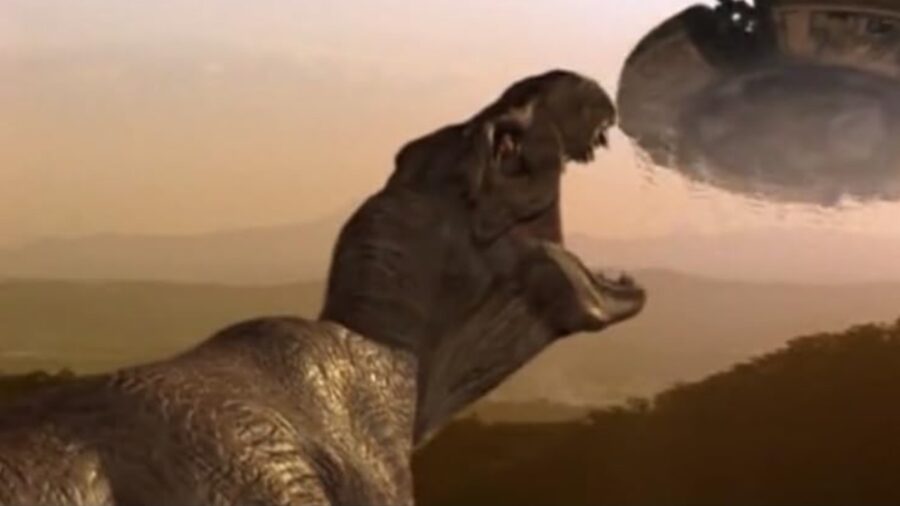
The 90s were a treasure trove of offbeat syndicated shows based on every intellectual property in the public domain, from Robin Hood to Hercules, and the less popular work of Sherlock Holmes creator, Sir Arthur Conan Doyle. Of course, because it’s less popular than the world’s most famous detective, doesn’t mean it’s bad, and in fact, The Lost World is a seminal work of science fiction that helped influence Marvel’s Savage Land and every single work of fiction that includes a secret world where dinosaurs still roam. It was also a three-season syndicated show that never came close to the standard set by its source material.
Discovering The Lost World

The Lost World loosely follows the basic plot of the novel, with a group of adventurers, led by Professor Challenger, a character described by Doyle himself as “an aoe in a tuxedo,” setting sail over the South American jungle in a hot air balloon that eventually crashes, leaving them stranded on top of a plateau filled with dinosaurs and lost civilizations. Alongside the Professor are reporter Ned Malone, adventurer Lord John Roxton, Professor Summerlee, and Marguerite Knux, the financier of the expedition and a talented linguist. They are soon joined by Veronica Layton, the survivor of a previous expedition who has now become an expert at surviving in the harsh jungle, and also the focus of every single piece of marketing for the series.
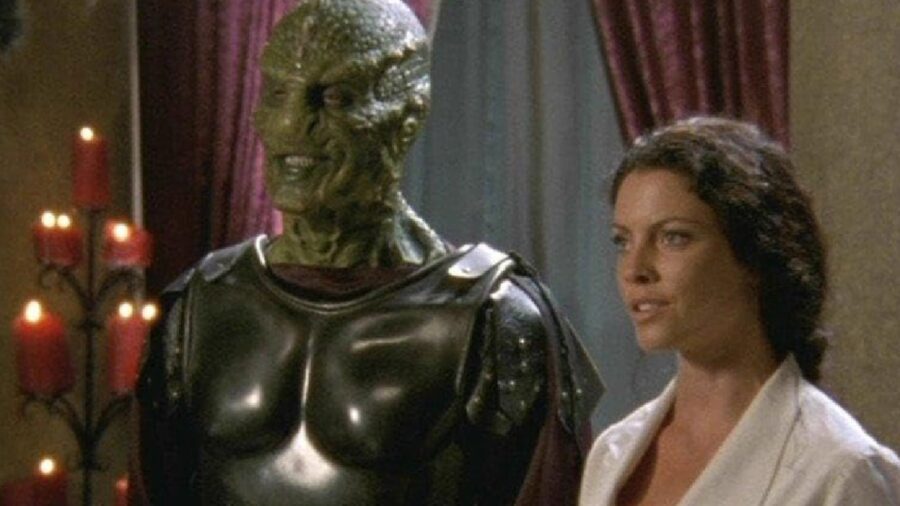
Together, the explorers challenge the unknown of the plateau, which includes giant bees, giant dinosaurs, vampires, a pirate’s treasure, lizard people, and a meteor strike. The Lost World plays fast and loose with the source novel, but it’s par for the course compared to its syndicated contemporaries at the time. Every episode is essentially a standalone adventure, but that’s part of the charm of the old-school series that ends up escalating to the point where competing realities are colliding together.
Pay-Per-View Adventure
In 1999, then The Lost World first debuted, it wasn’t in syndication, instead, it was available on DirectTV as a PPV series. It was a one-of-a-kind setup, with episodes airing on broadcast television a few weeks after the PPV airing, which included a few “blink and you’ll miss it” shots that you’d expect to see on a PPV series. That wasn’t enough to find an audience though, with the show taking off once TNT started airing episodes, doing well enough to warrant three seasons and 66 episodes in total.
The Lost World had been adapted before the 1999 series, perhaps most notably in 1925, when the original film adaptation was able to include Sir Arthur Conan Doyle himself introducing the film. Prior to the syndicated series, a film was made starring John Rhys-Davies as Professor Challenger and Eric McCormack as Malone, that was made so cheaply, a sequel was released the same year. None of the adaptations have had the staying power of the 1999 series that remains the definitive pop-culture take on the seminal novel.
Syndicated adventure shows of the 90s remain a strange time capsule of a lost era of television, where campy, low-budget fare would air on upstart networks as a cheap way to fill time. Hercules, Xena, even Relic Hunter, proved alongside The Lost World that to be successful, embracing the low-budget and leaning hard into the camp of re-using sets, actors, and even special effect shots, could result in a surprise hit. There’s nothing quite like them airing today and even if they were, they would never make it past the first season.
Sir Arthur Conan Doyle’s The Lost World is available for free on Tubi.
Entertainment
NYT Connections Sports Edition today: Hints and answers for April 19, 2026

Today’s Connections: Sports Edition will be a little easier if you love baseball.
As we’ve shared in previous hints stories, this is a version of the popular New York Times word game that seeks to test the knowledge of sports fans.
Like the original Connections, the game is all about finding the “common threads between words.” And just like Wordle, Connections resets after midnight and each new set of words gets trickier and trickier — so we’ve served up some hints and tips to get you over the hurdle.
If you just want to be told today’s puzzle, you can jump to the end of this article for the latest Connections solution. But if you’d rather solve it yourself, keep reading for some clues, tips, and strategies to assist you.
What is Connections: Sports Edition?
The NYT‘s latest daily word game has launched in association with The Athletic, the New York Times property that provides the publication’s sports coverage. The sports Connections can be played on both web browsers and mobile devices and require players to group four words that share something in common.
This Tweet is currently unavailable. It might be loading or has been removed.
Each puzzle features 16 words, and each grouping of words is split into four categories. These sets could comprise anything from book titles, software, country names, etc. Even though multiple words will seem like they fit together, there’s only one correct answer.
If a player gets all four words in a set correct, those words are removed from the board. Guess wrong and it counts as a mistake — players get up to four mistakes before the game ends.
This Tweet is currently unavailable. It might be loading or has been removed.
Players can also rearrange and shuffle the board to make spotting connections easier. Additionally, each group is color-coded with yellow being the easiest, followed by green, blue, and purple. Like Wordle, you can share the results with your friends on social media.
Mashable Top Stories
Here’s a hint for today’s Connections: Sports Edition categories
Want a hint about the categories without being told the categories? Then give these a try:
Here are today’s Connections: Sports Edition categories
Need a little extra help? Today’s connections fall into the following categories:
-
Yellow: AL East Teams
-
Green: First Words of Football Positions
-
Blue: Premier League Managers
-
Purple: Nicknames for the Dodgers Franchise, Over Time
Looking for Wordle today? Here’s the answer to today’s Wordle.
Ready for the answers? This is your last chance to turn back and solve today’s puzzle before we reveal the solutions.
Drumroll, please!
The solution to today’s Connections: Sports Edition #573 is…
What is the answer to Connections: Sports Edition today?
-
AL East Teams — BLUE JAYS, ORIOLES, RAYS, YANKEES
-
First Words of Football Positions — DEFENSIVE, RUNNING, TIGHT, WIDE
-
Premier League Managers — EMERY, GUARDIOLA, MOYES, SLOT
-
Nicknames for the Dodgers Franchise, Over Time — BRIDEGROOMS, DODGERS, ROBINS, SUPERBAS
Don’t feel down if you didn’t manage to guess it this time. There will be new sports Connections for you to stretch your brain with tomorrow, and we’ll be back again to guide you with more helpful hints.
Are you also playing NYT Strands? See hints and answers for today’s Strands.
If you’re looking for more puzzles, Mashable’s got games now! Check out our games hub for Mahjong, Sudoku, free crossword, and more.
Not the day you’re after? Here’s the solution to yesterday’s Connections.
Entertainment
NYT Connections hints today: Clues, answers for April 19, 2026
The NYT Connections puzzle today is not too difficult if you have a sweet tooth.
Connections is the one of the most popular New York Times word games that’s captured the public’s attention. The game is all about finding the “common threads between words.” And just like Wordle, Connections resets after midnight and each new set of words gets trickier and trickier—so we’ve served up some hints and tips to get you over the hurdle.
If you just want to be told today’s puzzle, you can jump to the end of this article for today’s Connections solution. But if you’d rather solve it yourself, keep reading for some clues, tips, and strategies to assist you.
What is Connections?
The NYT‘s latest daily word game has become a social media hit. The Times credits associate puzzle editor Wyna Liu with helping to create the new word game and bringing it to the publications’ Games section. Connections can be played on both web browsers and mobile devices and require players to group four words that share something in common.
This Tweet is currently unavailable. It might be loading or has been removed.
Each puzzle features 16 words and each grouping of words is split into four categories. These sets could comprise of anything from book titles, software, country names, etc. Even though multiple words will seem like they fit together, there’s only one correct answer.
If a player gets all four words in a set correct, those words are removed from the board. Guess wrong and it counts as a mistake—players get up to four mistakes until the game ends.
This Tweet is currently unavailable. It might be loading or has been removed.
Players can also rearrange and shuffle the board to make spotting connections easier. Additionally, each group is color-coded with yellow being the easiest, followed by green, blue, and purple. Like Wordle, you can share the results with your friends on social media.
Mashable 101 Fan Fave: Nominate your favorite creators today
Mashable Top Stories
Here’s a hint for today’s Connections categories
Want a hint about the categories without being told the categories? Then give these a try:
-
Yellow: Lippy
-
Green: Gowns
-
Blue: Played in Vegas
-
Purple: Sweet treats
Here are today’s Connections categories
Need a little extra help? Today’s connections fall into the following categories:
-
Yellow: Cheeky
-
Green: Dress measurements
-
Blue: Cards in Texas Hold ‘Em
-
Purple: Last words of candy brands in the singular
Looking for Wordle today? Here’s the answer to today’s Wordle.
Ready for the answers? This is your last chance to turn back and solve today’s puzzle before we reveal the solutions.
Drumroll, please!
The solution to today’s Connections #1043 is…
What is the answer to Connections today
-
Cheeky: ARCH, FRESH, SASSY, WISE
-
Dress measurements: BUST, HIPS, LENGTH, WAIST
-
Cards in Texas Hold ‘Em: FLOP, HOLE, RIVER, TURN
-
Last words of candy brands in the singular: CAP, DUD, KID, MINT
Don’t feel down if you didn’t manage to guess it this time. There will be new Connections for you to stretch your brain with tomorrow, and we’ll be back again to guide you with more helpful hints.
Are you also playing NYT Strands? Get all the Strands hints you need for today’s puzzle.
If you’re looking for more puzzles, Mashable’s got games now! Check out our games hub for Mahjong, Sudoku, free crossword, and more.
Not the day you’re after? Here’s the solution to yesterday’s Connections.
Entertainment
NYT Strands hints, answers for April 19, 2026
Today’s NYT Strands hints are easy if you’re constantly changing.
Strands, the New York Times‘ elevated word-search game, requires the player to perform a twist on the classic word search. Words can be made from linked letters — up, down, left, right, or diagonal, but words can also change direction, resulting in quirky shapes and patterns. Every single letter in the grid will be part of an answer. There’s always a theme linking every solution, along with the “spangram,” a special, word or phrase that sums up that day’s theme, and spans the entire grid horizontally or vertically.
By providing an opaque hint and not providing the word list, Strands creates a brain-teasing game that takes a little longer to play than its other games, like Wordle and Connections.
If you’re feeling stuck or just don’t have 10 or more minutes to figure out today’s puzzle, we’ve got all the NYT Strands hints for today’s puzzle you need to progress at your preferred pace.
NYT Strands hint for today’s theme: Small change
The words are related to changes.
Mashable Top Stories
Today’s NYT Strands theme plainly explained
These words describe fine-tuning.
NYT Strands spangram hint: Is it vertical or horizontal?
Today’s NYT Strands spangram is vertical.
NYT Strands spangram answer today
Today’s spangram is There I Fixed It.
Mashable 101 Fan Fave: Nominate your favorite creators today
NYT Strands word list for April 19
-
There I Fixed It
-
Adjust
-
Modify
-
Alter
-
Improve
-
Tweak
-
Refine
Looking for other daily online games? Mashable’s Games page has more hints, and if you’re looking for more puzzles, Mashable’s got games now!
Check out our games hub for Mahjong, Sudoku, free crossword, and more.
Not the day you’re after? Here’s the solution to yesterday’s Strands.

Cody Bellinger homers twice, as Yankees eclipse Royals
NYT Connections Sports Edition today: Hints and answers for April 19, 2026


