
Entertainment
1990s Sci-Fi Epic Blockbuster Flop Restored And Embraced By Fans

By Jeffrey Rapaport
| Published
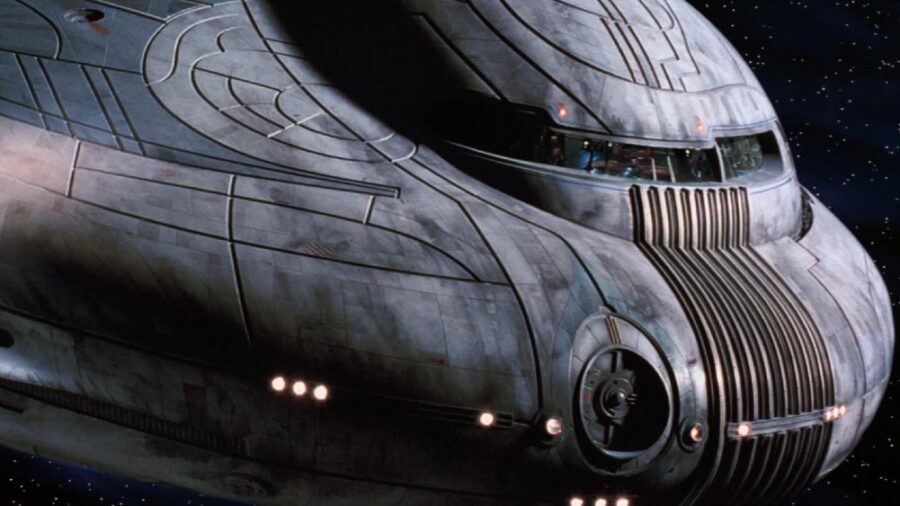
Critics panned Lost in Space when it premiered in the ’90s, though the film fared pretty well commercially and earned a cult audience. Today, in a remarkable turn of events, the movie enjoys new life and appreciation among fans via a restored Collector’s Edition by Shout Factory. The re-release reignited interest in the cult classic.
Shout Factory is renowned for reviving classic films, and they’ve gone to the limit for Lost In Space. Their special edition of the sci-fi film shipped in 2024. The Lost In Space Special Edition features a new 2K scan of the interpositive, ensuring a hugely enhanced visual experience.
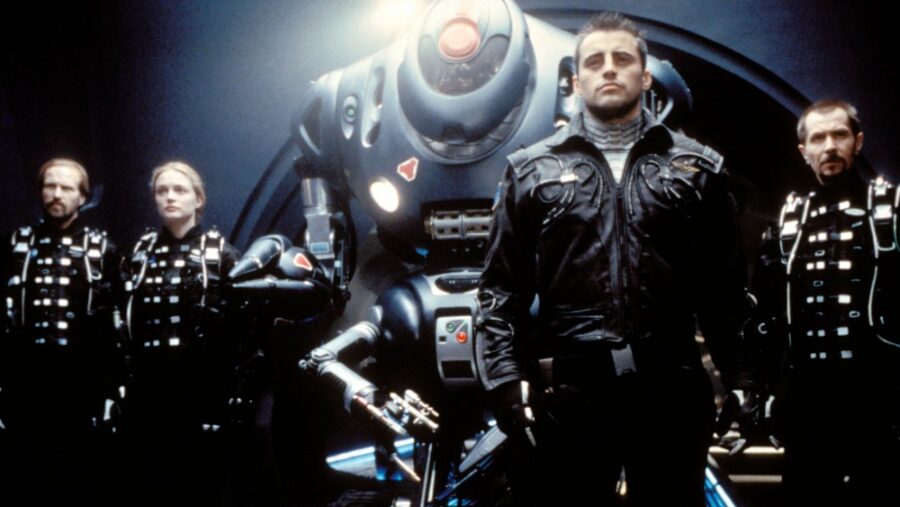
The Lost in Space re-release includes bells and whistles like DTS-HD Master Audio 5.1, commentaries from director Stephen Hopkins, writer-producer Akiva Goldsman, and others, in addition to deleted/additional scenes, and more. The comprehensive package surpasses a mere restoration: it’s a celebration of the film’s unique, underappreciated place in sci-fi cinema.
Premiering in the late 1990s, the film amounted to an ambitious adaptation of the 1960s TV series (of the same name). The movie sought to nail the same sense of adventure and wonder inherent to space travel, intertwining it all with family dynamics and futuristic tech.
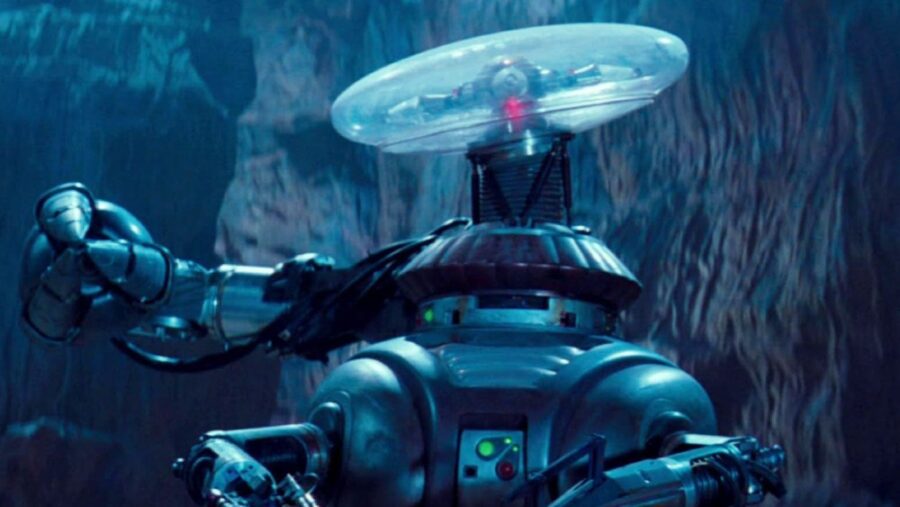
The narrative revolves around the intergalactic Robinson family, as they embark on a mission to discover a habitable planet. Of course, the space-faring Robinsons are soon lost in space (wink-wink) and thrown off course, resulting in an extraordinary, often funny saga through deep space.
In 2058, with the Earth facing imminent uninhabitability, the Powers That Be launch the Robinson family on the spaceship Jupiter II. Their mission? Get to Alpha Prime, where the Robinsons are to build a hypergate for Earth’s population transfer.

Soon, however, terrorists sabotage the effort. Their spy, Dr. Zachary Smith, steers the ship off course. The family thus encounters the derelict vessel Proteus, in addition to the memorably creepy, spider-like creatures aboard. All of this sets the stage for a thrilling sci-fi experience, benefitting from healthy doses of comedy, as the Robinsons battle baddies, leverage time travel, and save the world.
Upon its release in 1998, Lost in Space endured a decidedly mixed reaction from critics. The experts admitted that the film boasted impressive special effects and a stellar cast (William Hurt and Matt LeBlanc, at the height of his Friends fame, shine). But the movie suffered from plot inconsistencies and, some critics claimed, failed to embody the original series’s unique sensibility fully.

Roger Ebert particularly panned the movie, which today has a dismal 27 percent rating on Rotten Tomatoes and an only marginally better 42 out of 100 on Metacritic (always the more charitable aggregator).
However, Lost in Space’s box office earnings were more positive. Against an $80 million budget, the movie grossed around $136 million worldwide for a $56 million profit: not bad.
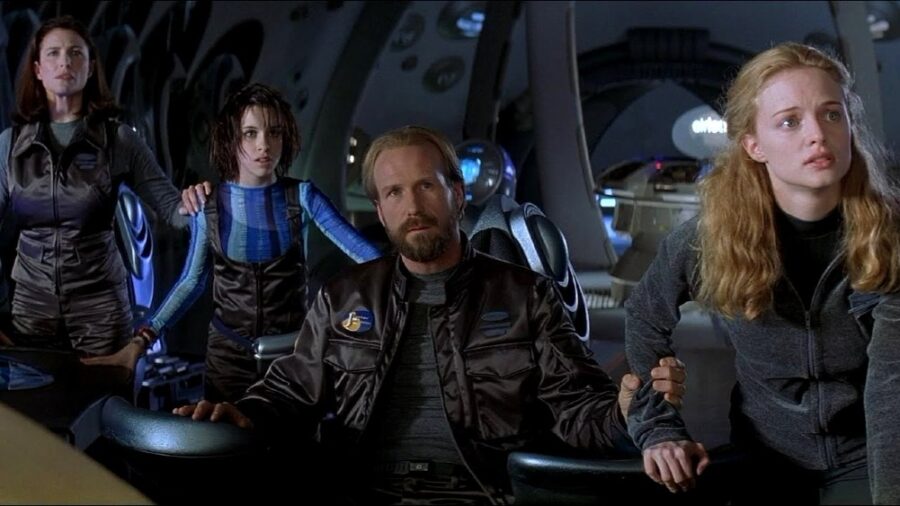
Thankfully, the film’s saga did not end there; it transformed from a critical joke to a cult darling. In the following decades, fans came to appreciate the film’s ambition and quirky vision, alongside its singular aesthetic. They also disagreed with so-called professionals, embracing the movie’s nostalgic connection to the 1960s TV series.
The restored version released by Shout Factory testifies to the enduring appeal of Lost in Space.
Entertainment
NASAs incredible new telescope will offer an atlas of the universe

NASA has completed its next space observatory, built to create sharp, panoramic maps of the universe while revealing how the most mysterious, invisible substances and distant worlds shape the cosmos.
About a quarter-century after the Hubble Telescope reshaped astronomy, and a few years into the era of the James Webb Space Telescope, NASA’s Nancy Grace Roman Space Telescope will join them not as a replacement, but as a big-picture partner. Where Hubble and Webb zoom in for close‑ups, Roman will capture Hubble‑like detail across areas about 100 times larger, turning isolated snapshots into sweeping surveys that show the very scaffolding of the universe.
At NASA’s Goddard Space Flight Center in Greenbelt, Maryland, engineers are wrapping up prelaunch testing on the cutting-edge telescope. Next, the observatory will travel 900 miles to Kennedy Space Center in Cape Canaveral, Florida, where teams will prepare it for launch.
That could happen as early as this September, about eight months ahead of schedule, NASA managers said at a news conference on Tuesday, April 21. Once in space, Roman will head to a stable orbit about 1 million miles from Earth, near the same region where Webb orbits the sun, and begin a years‑long campaign of deep space imaging.
“We didn’t want to wait to launch the Nancy Grace Roman. We’re eight months ahead of schedule,” said Nicky Fox, NASA’s associate administrator of science. “Everybody felt the urgency. Everybody was sprinting towards this.”
Named for Nancy Grace Roman, who became the agency’s first chief of astronomy and one of its earliest female executives, the telescope reflects a legacy of opening new windows on the universe from above Earth’s atmosphere. Nicknamed the “mother of Hubble,” Roman helped lay the groundwork in the 1960s for a whole fleet of space telescopes.
A wide shot of the dark universe
At the heart of the mission is Roman’s eight-foot-wide mirror, the same size as Hubble’s, paired with a powerful camera that sees in infrared light, like Webb. That camera’s field of view is Roman’s superpower. In a single shot, it can image vast swaths of sky that Hubble simply can’t match.
Because a space telescope can only see one patch of sky at a time, it has to take many separate “pointings” — individual shots aimed at slightly different spots — and stitch them together into a mosaic.
In 2023, Ami Choi, an astrophysicist and scientist for Roman’s wide field camera, contrasted the difference between Hubble and the new telescope. To photograph the Andromeda Galaxy, Hubble has to take 400 smaller images and stitch them together. For Roman’s camera, that should only take two pointings, she said.
This wide, sharp vision is what scientists need to study the so-called “dark universe.” Ordinary matter — the stuff that makes up stars, planets, and even people — accounts for only about 5 percent of the cosmos. The bulk of it is dark matter and dark energy, which do not emit light but leave clues where they’ve influenced space’s expansion and the arrangement of galaxies.
Mashable Light Speed
“Current observations hint that our standard model of the universe is incorrect,” said Julie McHenry, senior project scientist, referring to cosmologists’ best recipe for the universe. “Roman will be able to confirm these and set us on the path to understanding what’s right.”
Roman will trace those clues in several ways at once. By mapping the positions and shapes of hundreds of millions of galaxies, it will show how structures have grown from the early universe to today. Subtle distortions in galaxy shapes will reveal how clumps of invisible space stuff bend their light on the way to us, exposing the hidden dark matter. At the same time, Roman will discover and track large numbers of a special kind of exploding star, known as Type Ia supernovas; their predictable brightness lets astronomers measure how quickly space has expanded over time.

Imaging large space targets, such as the Andromeda Galaxy, will require far fewer smaller images to stitch together than other flagship observatories.
Credit: NASA composite image
Taken together, these measurements will allow scientists to test competing ideas about dark matter, dark energy, and even the laws of gravity themselves with far greater precision than ever before. Other observatories can make similar kinds of measurements, but none combines Roman’s sharpness and sky coverage in the infrared, NASA mission leaders say, which lets it see more distant and dust-covered galaxies.
A new census of distant exoplanets
Roman’s wide‑field power also makes it skilled at exoplanet hunting. Previous missions like Kepler and TESS mostly found planets close to their stars, where their repeated crossings dim starlight in a regular rhythm. Roman will focus on a different region of planetary systems: the cooler, outer zones, where worlds similar to Jupiter and Saturn reside. It may even find wandering planets that aren’t tethered to stars.
To do this, Roman will repeatedly monitor dense star fields toward the center of our Milky Way. As a foreground star passes in front of a more distant one, its gravity will briefly magnify the background star’s light. If the foreground star carries planets, they can produce smaller, telltale blips in that brightening. This technique, called microlensing, works best in precisely the kind of crowded, faint, and distant regions that Roman is expected to capture.

Optical Engineer Bente Eegholm inspects the primary mirror for the Nancy Grace Roman Space Telescope.
Credit: NASA / Chris Gunn
Over its mission, Roman will attempt to record thousands of these microlensing events, revealing planets at distances and masses other surveys mostly miss. From that haul, astronomers will compare our solar system’s architecture with many others and judge whether having inner rocky worlds and outer giant planets is the status quo or something more rare.
Roman will also test an advanced coronagraph — a system of masks and mirrors that blocks a star’s glare so the telescope can try to see the faint glow of planets around it. On Roman, this is more of a technology trial than an everyday science instrument, but if it works, it will set the stage for a future observatory whose main goal is to directly image Earth‑like worlds around other sun‑like stars.
“What astronomers can do today with coronagraph instruments is see planets that are maybe a million times fainter than their stars,” Vanessa Bailey, NASA’s Roman coronagraph scientist, told Mashable. “What we’re doing with the Roman coronagraph is hopefully getting to 10 million to 100 million times fainter, maybe even a little bit more, in the best case scenario.”
Catching the universe in motion
Roman is also built for studying how the sky changes, creating a veritable library of “before” and “after” shots.

Technicians assemble the solar panels on the Nancy Grace Roman Space Telescope.
Credit: NASA / Sydney Rohde
One of its major surveys will repeatedly scan high‑latitude regions of the sky, away from the plane of the Milky Way. By returning to the same fields every few days, Roman will catch supernovas as they ignite and fade, watch black holes light up as they feed on nearby material, and uncover other short-lived, dramatic events across the distant universe. Its infrared vision will reveal explosions and flares that dust clouds hide from visible‑light telescopes.
Another core program will stare toward the Milky Way’s central bulge. There, Roman will track how the brightness of millions of stars rises and falls on timescales of minutes to months. Those records will not only power the microlensing planet search but also expose other phenomena, such as neutron stars and black holes.
Because Roman will cover such large areas with fine detail, its images will also become a long‑lasting reference tool. When other telescopes later spot something odd — a burst of high‑energy radiation, for instance, or an unusual variable star — astronomers will be able to pull Roman’s earlier images and see what was there before the excitement.
“The images it captures will be so large there is not a screen in existence large enough to show them,” said NASA administrator Jared Isaacman. “Roman will give the Earth a new Atlas of the universe. I think it’s worth pausing for a moment just to think about how really incredible that is.”
Entertainment
400K MagSafe power banks recalled after fatal fire, the 10th power bank recall in a year
The U.S. Consumer Product Safety Commission (CPSC) and Casely reannounced a power bank recall this April after a fire linked to the device fatally injured a user. This is the tenth power bank recall in the United States in the last 12 months, and Anker recalled 1.5 million power banks in 2025.
The recall affects an estimated 429,200 Casely 5,000-mAh MagSafe Power Pods (Model E33A), which were originally recalled in 2025. The MagSafe power banks need to be completely replaced.

Back of Casely power banks.
Credit: CPSC
Affected customers should stop using the portable power banks immediately. They can also contact Casely to receive a free replacement.
“The recalled lithium-ion battery in the power banks can overheat and ignite, posing risk of serious injury or death from fire and burn hazards to consumers,” the CPSC stated on its recall website.
Mashable Light Speed
The Brooklyn-based company is reannouncing the recall after receiving 51 reports of the lithium-ion battery overheating, expanding, and/or catching fire while charging smartphones, “resulting in six minor burn injuries.”
However, in the past year, the CPSC says 28 more reports have been made, including explosions that caused a serious accident on an airplane and one death.
In August 2024, a 75-year-old woman from New Jersey, was charging her cell phone with the power bank on her lap when it caught on fire and exploded. The victim suffered second and third degree burns and later passed away from complications from her injuries. In February 2026, a 47-year-old woman was charging her cell phone with the power bank on an airplane when it caught on fire and exploded, resulting in the victim suffering first degree burns.
How to check your Casely Power Pod
Worried you may own one of the 429,000 recalled power banks? It’s easy to check if your device is included in the recall.
On the back of the device, look for the device’s model number, as show in a picture provided by the CPSC. If the model number reads “E33A,” then stop using the device immediately.

Look for the model number.
Credit: CPSC
More information on requesting a replacement power bank is available on the CPSC and Casely recall websites.
Entertainment
The new Dyson Supersonic Travel is the cheapest Supersonic yet
Table of Contents
Nearly three years ago, I asked if the (then) $429 Dyson Supersonic was still worth the price of entry.
These days, with the Supersonic line having expanded, the standard model having increased in price to $449.99, and the most expensive version of the hair dryer topping out at $549.99, it’s a question that feels even more apt.
The good news? If you’re not super into the idea of spending about $500 for a hair dryer, Dyson just announced the Dyson Supersonic Travel, a $299.99 model of its famous hair tool. In addition to its lower price point, it comes with more travel-friendly proportions and features.
As someone who’s personally tested Supersonics (and their many dupes), I took a closer look at the latest Dyson beauty launch to gather everything you need to know.
The design differences of the Dyson Supersonic Travel
In short, the Supersonic Travel is the standard Supersonic but smaller. According to Dyson, that comes out to exactly 32 percent smaller and 25 percent lighter than the OG Supersonic. In other words, it’s 0.7 pounds to the standard Supersonic’s 1.8 pounds, and 8.7 inches tall to the larger model’s 10 inches.
Mashable Trend Report
This model also comes with one attachment, the styling concentrator, a la the now-discontinued Dyson Supersonic Origin (which ran for $399.99). For comparison, the $449.99 Supersonic comes with three attachments: a styling concentrator, diffuser, and wide-tooth comb. For all five attachments, you’ll have to shell out $549.99.

The Supersonic Travel is compatible with all original and Supersonic Nural attachments.
Credit: Dyson
The same attachments can be used between the Travel, original, and Supersonic Nural dryers. This means opting for the Travel could technically save you some money — individual attachments range from $19.99 to $44.99. If you only use a styling concentrator and diffuser, for instance, the total cost of a Travel dryer with the extra attachment purchase would come out to $344.98, making it still over $100 cheaper than the three-attachment original Supersonic.
The Supersonic Travel is more versatile in some ways, and less so in others
Functionality-wise, the Supersonic Travel is a slightly different product from the other Supersonics in the line. It has anywhere from 1,000 to 1,220 watts of power and an airflow speed of 11.6 liters per second, compared to the 1,600 watts and 13.3 liters per second of the standard Supersonic. In other words, the bigger dryer is slightly more powerful, so it wouldn’t be unreasonable to expect longer dry times.
The standard Supersonic and Supersonic Nural also feature four heats and three air speeds, where the Supersonic Travel features three heats and two air speeds.
The best noise-cancelling headphones for flying: 8 picks to improve your travel experience
That said, the Supersonic Travel has universal voltage compatibility, so it can be used from 100 to 240 volts, whereas the other Supersonics are locked into 120 volt compatibility.
In terms of its portability, it’s also worth noting the Supersonic Travel weighs the same as the Supersonic r, a professional grade hair dryer (priced as such at $549.99) that’s become more popular due in part to being lightweight and easy to maneuver.
Where to buy the Dyson Supersonic Travel
The Dyson Supersonic Travel is available for $299.99 at Dyson’s website, Amazon, and Best Buy. If you buy at the former, you will receive a complimentary $59.99 travel bag along with the hair dryer.

NASAs incredible new telescope will offer an atlas of the universe
400K MagSafe power banks recalled after fatal fire, the 10th power bank recall in a year


