
Entertainment
11 Space Operas That Need A Movie Right Now

There’s a wealth of science fiction out there, just waiting for some movie studio to pick it up and do something with it.
By Joshua Tyler
| Published

With Hollywood’s box office numbers fading, there’s never been a better time to take a big risk on good ideas. There’s a wealth of science fiction out there, just waiting for some movie studio to pick it up and do something with it.
No more waiting. Drop that Back to the Future remake, Hollywood, and do something with these already brilliant sci-fi properties instead. I’ve ranked them in order, by which is most likely to be a huge, huge hit.
11. Farscape: The Movie

Farscape was critically acclaimed from day one, but it’s so linear and deeply character-driven that missing even a single episode in the days before streaming left you adrift without a paddle. A movie presents an opportunity to solve that.
Instead of one story stretched out over several seasons, we have the chance to get a complete story in a single, epic film. And if you thought Farscape’s visuals were impressive on a basic cable television budget, just imagine what the geniuses at the Jim Henson workshop could do with a $30 million budget.
If there’s a problem, it’s that it has since been totally ripped off by Guardians of the Galaxy, but I think there’s still enough here to make Farscape feel like its own thing. I’m just not sure I want to see it without the original cast, and given their age, there’s probably no way to do it with them. So that’s why it’s on the bottom of this list.
The Pitch: It’s the story of modern-day astronaut John Crichton, flung through a wormhole into a distant galaxy. There, he’s stuck on a living ship with a group of escaped prisoners who, though at first his enemies, become his allies, and eventually his friends. It’s the classic tale of a stranger in a strange land, mixed with piracy and full of deeply rooted character drama. It’s romantic too, full of realistic relationships against a fantastic backdrop.
10. Starship Troopers

Didn’t they already make this movie? Not really. There was a 1990s movie called Starship Troopers, which claimed to be an adaptation of the famous Robert A. Heinlein novel of the same name, but that film has so little in common with the novel that it’s not the same thing.
Heinlein’s version of this story has never been done at all and would feel totally original, unlike anything else audiences have ever seen in theaters. You’d probably just have to call it something else.
The Pitch: A hard science fiction movie about the difficulties of war in outer space, trapped in a battle for survival. The soldiers use power armor, which means you’d end up with a more serious take on the classic mech-suit trope in sci-fi. Somehow, we’ve also never gotten a good live-action mobile mech suit movie, and Heinlein invented the idea. It’s the best place to start.
9. The Futurama Movie
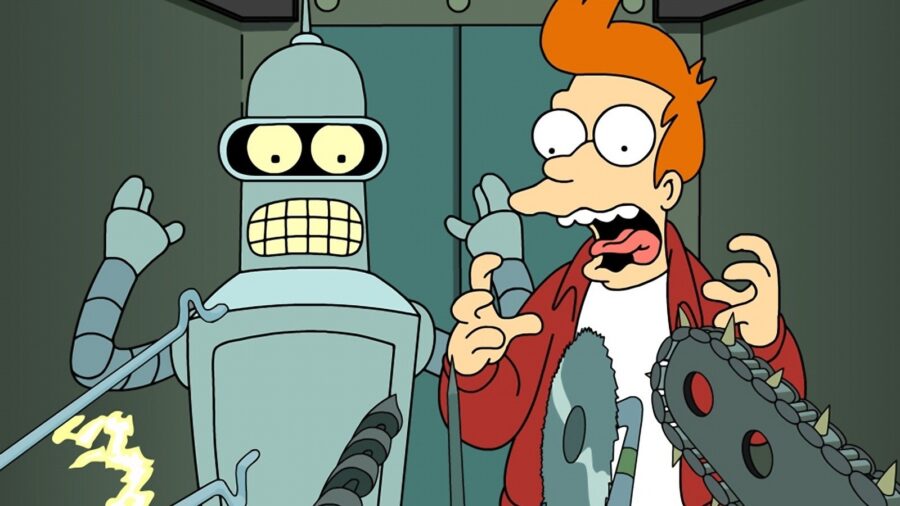
Turning in a movie worked for The Simpsons and they ran out of jokes fifteen years ago. Futurama, on the other hand, thanks to frequent network cancellations, still feels young. Matt Groening’s other animated masterpiece has never gotten a fair shake, but with its spacey setting and tendency towards blaster fire, it’s far more suited to the big screen than Springfield’s favorite family. It’s an animation, yes, but an animation for adults. Feel free to take things up a notch for the theatrical version, hook Bender up with a three-nippled robot hooker, and slap it with an “R” rating. Or if you’re really feeling spendy, ditch the animation and give us a live-action version.
The Pitch: A pizza delivery boy is accidentally frozen for a thousand years and wakes up in the future. There, he finds employment at the interplanetary delivery company Planet Express and struggles to fit in with its strange assortment of employees. His best friend is an alcoholic robot, he’s in love with a smoking hot kung-fu Cyclops who finds him repulsive, and he’s employed by a mad scientist with an increasingly bad case of dementia. Hilarity ensues. Think Hitchhiker’s Guide to the Galaxy meets Encino Man.
8. The Expanse: The Movie
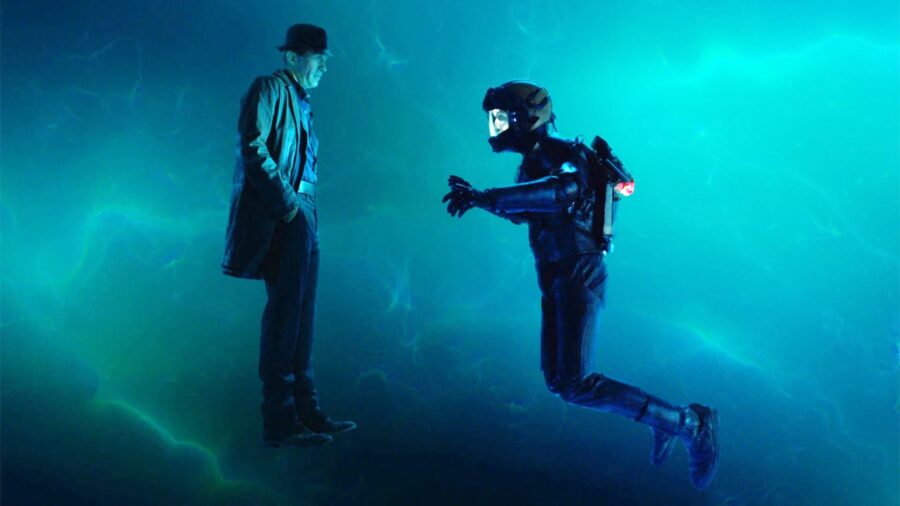
The Expanse was the best science fiction series of the modern era. It’s based on a series of critically acclaimed books. The stories keep getting bigger as it goes on, and The Expanse is from jump a dense narrative examining complicated human politics and dynamics in a far-off future where man has begun traveling to the stars.
Despite its futuristic setting, the show and the books are propelled by their realism. The Expanse gets all the little details about both science and human nature right. When you delve into this world, it feels exactly like what humanity colonizing outer space would really be like.
The Pitch: As impressive as The Expanse has been as a TV series, I’d love to see what it might look like on the big screen. Each book in the series, while continuing a linear narrative with the same group of characters, can also stand on its own.
The best move for The Expanse is to simply make a parallel production. There’s really no way to make a sequel to the series, and I think there’s room for another take on it. Fans of the show would still be more connected to it because of their history with the franchise, but newcomers would be able to jump in for the movie if it’s done right.
7. Battlestar Galactica: The Movie

There have been frequent talks about Battlestar Galactica getting the movie treatment. One problem: Most of those talks have been about making a movie out of the wrong version. When the fantastic, award-winning, Ronald Moore reboot of the classic franchise went off the air, Hollywood immediately cast it aside and rehired the creator of the less successful 80s version to start the whole thing all over again. Don’t do that. There’s a better way.
The Pitch: This movie should be a Battlestar Galactica prequel set in the Ron Moore version of the series. The story you need to tell already exists, in an underfunded web series called Battlestar Galactica: Blood and Chrome. Turn that into a movie, and expect to print money.
6. Stargate: Lost In Space

Stargate started out as a movie, way back in 1994. But it was after that movie ended that Stargate became a franchise, thanks to the television series, which took the movie’s premise and ran with it in a completely different direction. The series is now getting a new installment on Amazon, and if it works, it’s time for another movie.
This time, the fans of the television franchise deserve a feature film set in that version of the Stargate universe. It shouldn’t use the same actors, they’ve grown too old for that. I don’t think we need a reboot either.
I’d position this movie as a sequel to the 1994 film, but skew its style and script to better align with the television series. Better still, the sequel could easily follow a course similar to the one charted by Stargate Universe, before it was cancelled after only two seasons.
The Pitch: Let’s reboot Stargate Universe, while keeping everything else in canon. It can work. Decades after the discovery of a stargate that allows humans instantaneous travel to other planets, a breakthrough happens. While exploring the universe via the gates, a group of humans stumbles on an ancient alien starship traveling the galaxy.
When they board the ship, our heroes are stranded there and must use the alien vessel to try to find their way home. Lost in a hostile galaxy full of strange dangers and incredible creatures, they discover the key not only to existence, but also to themselves.
5. The Mote In God’s Eye

It’s one of the greatest science fiction books ever written, and perhaps also one of the most overlooked. Written in through a collaboration between Larry Niven and Jerry Pournelle, and first published in 1974, this two-book duology charts the first contact between humanity and an alien race.
I know what you’re thinking, we’ve seen this before. No, you haven’t, not like this. Sure, much like Alien, this first contact doesn’t take place until far off in man’s future, when we’ve already explored most of space. But any similarities end there. What really sets this apart is the complex, utterly realistic, detailed way in which Niven and Pournelle develop the alien race, known as the Moties, which humanity encounters out there in that far-off place.
The Pitch: Popular science fiction often portrays aliens as either monsters or nearly human. Rarely is there a middle ground. Avatar’s Na’vi, for instance, are barely alien at all. They’re more like some blue African tribe.
Mote presents an intelligent alien species that is truly alien, not just in appearance but in the way they think, and then uses them as part of a gripping tale which asks this simple question: How can we possibly trust something so alien, let alone understand it? Maybe they lack the sex appeal of blue cat people (you’re unlikely to be aroused by a Mote’s gripping hand), but the story’s brilliantly written characters and massive, epic scope could turn the science fiction genre on its head if it ever made it up on screen.
4. Babylon 5: The Movie

With all due respect to Star Trek, Babylon 5 (at least for the first four seasons), may have been the greatest science fiction series in the history of television. At least, it was one of the most revolutionary. It was the first television show, for instance, to use computer-generated effects on whole sequences. The show’s plot plays out as a single complicated, linear story arc of the type now used by Lost and every other show currently on television, but unheard of back in the early 90s.
It told a complete story wrapped in a single series. Most importantly, though, it’s character-driven, epic, and utterly compelling. Many of the show’s cast members have sadly passed away. So if you do this, Hollywood, it’ll need to be a total reboot.
The Pitch: The show began every week with a monologue that, much better than I ever could, tells you all you need to know. Here’s how Babylon 5 described itself in Season 2: “ The Babylon Project was our last, best hope for peace. A self-contained world five miles long, located in neutral territory. A place of commerce and diplomacy for a quarter of a million humans and aliens. A shining beacon in space . . . all alone in the night. It was the dawn of the Third Age of Mankind – the year the Great War came upon us all. This is the story of the last of the Babylon stations. The year is 2259. The place is called Babylon 5.”
3. The Hyperion Cantos

There have actually been rumors that Dan Simmons masterful far-future series of novels (collectively referred to as the Hyperion Cantos) may be turned into a movie, but it hasn’t happened yet, and we’re tired of waiting. The material is challenging and heady, but also utterly unique. It starts out as a group of pilgrims journeying to a far-off planet called Hyperion, where they’ll visit the legendary Time Tombs. The tombs are guarded by the Shrike, an unstoppable, unknowable, spikey, metallic creature that snatches up travelers and impales them on its tree of thorns.
The Pitch: Hyperion tells the story of the pilgrims as they travel, and as the story spans multiple books it goes beyond them. It works brilliantly because it’s character-driven, scratch that, it’s more than character-driven, it’s emotion-driven.
Simmons puts his characters through hell and takes us with them through every step of suffering, sadness, and pain, which gradually comes together to form a larger picture. Hyperion is a story with something to say about the human condition, and it does it in an epic, potentially visually stunning package. It’s science fiction’s Lord of the Rings, and done right, it’ll win just as many Oscars.
2. Legend Of The Galactic Heroes

Legend of the Galactic Heroes began as a 10-novel series by Japanese author Yoshiki Tanaka and went on to become one of the most influential and longest-running space operas in Japanese history. It’s been adapted into an animation several times, but the most recent version is fully titled as Legend of the Galactic Heroes: Die Neue These.
It tells the story of competing Galactic empires through the lens of two strategic geniuses, one in each nation, as they each rise through the military ranks, buoyed by their achievements.
Legend of the Galactic Heroes is a complex mix of eye-popping large-scale space battles, political maneuvering, and personal relationships told over a series of decades. It’s one of the biggest stories ever told, so big it’s hard to imagine it being told in any form other than anime.
The Pitch: Combine Star Wars with Game of Thrones, and you’re starting to get the picture. This could easily span multiple movies and become the biggest thing since George Lucas. There are no bigger ideas in space opera.
1. The Orville: The Motion Picture
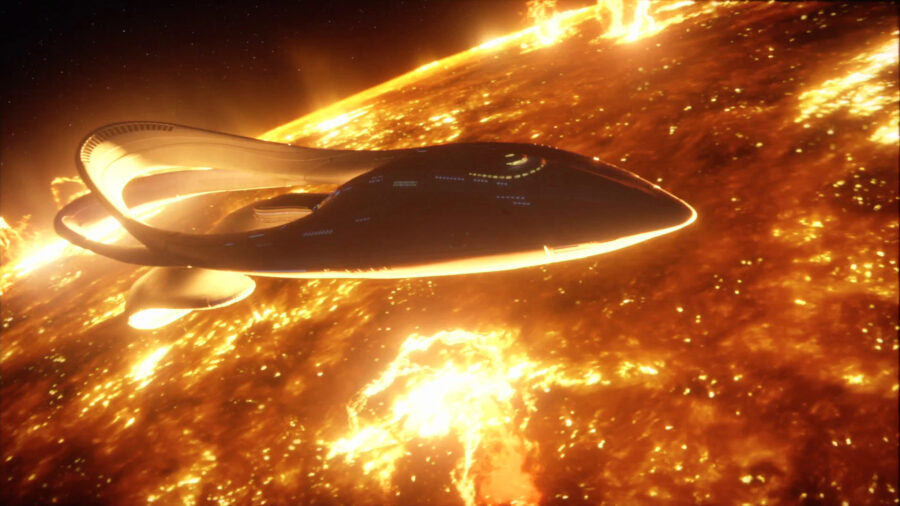
As the show progressed, Seth MacFarlane’s Star Trek homage became increasingly cinematic. The Orville’s focus on delivering a cinema-quality product for television has become so intense that the third season took nearly two years to complete. If they’re going to all this trouble to make The Orville look and feel like a movie, they might as well actually make one and release it in theaters.
I feel like there’s a good chance this might actually happen. Season 3 aired in 2025, and there’s been no movement on making season 4, despite heavy interest from fans. Now might be the perfect time to bring The Orville to the big screen, and Seth MacFarlane has all the Hollywood energy he needs to get it done.
The Pitch: The ideal path here is to simply deliver a normal Orville adventure on a movie scale. They’ve already had a massive battle on the show, so I wouldn’t necessarily go that route.
The Orville Movie should be about raising the stakes for the characters, not necessarily about bigger special effects or more galactic consequences. If they’re smart, they’ll pattern The Orville movie after Star Trek: The Motion Picture, with some sort of existential threat that questions the very nature of their existence and demands a difficult sacrifice. Since it’s The Orville, they’ll also be able to take that concept and make it less boring, with weird, humorous quips and snappy crew banter.
Entertainment
I tested the top MacBook alternatives: See which Windows PCs actually beat Apple
The 2026 Dell XPS 14 is a stylish investment for aesthetic-forward power users — I’m thinking content creators who might also be occasional gamers. You’re probably wishing the 14-inch MacBook Pro was even sleeker and a little more portable, and you may be getting impatient waiting for Apple’s touchscreen OLED upgrade. You’re definitely open to carrying around dongles.
I tested two configurations of the handsome XPS 14. The one I recommend as the best MacBook Pro alternative is an upper mid-tier model with an Intel Core Ultra X7 358H processor and a dazzling tandem OLED touchscreen (an optional upgrade). It’s no battery life champ, but it keeps pace with the base Pro in multi-core workloads, and its integrated GPU is excellent for demanding creative software and casual gaming.
The XPS 14 is easily one of the most elegant laptops I’ve ever encountered. Dell trimmed down its all-aluminum design for 2026, making it a touch thinner and nearly half a pound lighter than a 14-inch Pro. It’s available in two MacBook-y finishes: graphite and shimmer (coming later this year). Its lattice keyboard takes some adjusting to if you’re used to regular island-style keyboards, but it translates to a modern, minimalist look. Its seamless glass haptic touchpad looks equally clean. Its speakers are above-average for a Windows laptop — they’re just a little more echoey than a MacBook’s.
The XPS 14’s 2.8K OLED display is a $150 upcharge that I can endorse. It’s not as bright or crisp as a MacBook Pro’s Liquid Retina XDR display, but it’s more vibrant and just as smooth. (The standard IPS version is much duller in comparison.) Keep in mind that OLED won’t be a thing on a Mac until late 2026 at the soonest.
The Core Ultra X7 chip is a close rival of Apple’s M5 chip when you work it hard. It doesn’t feel as snappy in single-core scenarios, but trails the current MacBook Pro by only four percent when used for multi-core tasks. (That’s nothing.) What’s more, the Core Ultra X7’s Intel Arc B390 iGPU is comparable to an entry-level discrete graphics card. It’s perfectly capable of running graphically taxing titles like Cyberpunk 2077 with the help of games’ AI upscaling tech.
The XPS 14’s stamina is lacking compared to the M5 MacBook Pro, though it really depends on what you’re using it for. It held out for 10 hours and 19 minutes in our video rundown test, which is a full workday at least, but not great. (Its Apple counterpart ran for over 21 hours in the same test.) That said, its 120Hz OLED display dips down to just 20Hz when you’re viewing static content, so it should last much longer when it’s not looping a video.
If you want an XPS 14 with MacBook-beating battery life in almost any scenario, look into the $1,999.99 base model with a Core Ultra 5 325 chip. It lasted 22 hours on the dot in our video rundown test, and its refresh rate can drop to a mere 1Hz for static content. Just know that you’ll sacrifice a good chunk of power: It offers 35 percent worse multi-core performance than the Core Ultra X7 version. Speed-wise, it’s most akin to an M2 MacBook Air from 2022. (The cheaper Dell 14S with the Core Ultra 7 355 chip performs slightly better and lasts even longer, FWIW.)
Entertainment
I put the Camp Snap 2 to the ultimate test: Capturing my honeymoon
Table of Contents
In preparation for my honeymoon, getting a camera was at the top of my list. Although my iPhone 17 Pro Max takes next-level photos, I wanted to be able to stay off my phone and stay in the moment. I needed something beginner-friendly, and while I love the look of film, I wanted the convenience of digital. That’s where the Camp Snap comes in.
Originally designed for summer campers who want a digital camera to capture camp memories, the Camp Snap is screen-free. However, the Camp Snap has attracted an audience beyond summer campers, thanks to its nostalgic-looking photos.
I own the Camp Snap, but when I tried the Camp Snap 2, I totally fell in love. It was the perfect camera to bring on my honeymoon, and now I have the sweetest photos to look back on.
Camp Snap 2 at a glance

The Camp Snap 2 is more high-tech than it looks.
Credit: Samantha Mangino / Mashable
The Camp Snap 2 is a screen-free digital camera, which costs $69.95. It has a playful, vintage look, but it’s not a gimmick. It has flash and five filters and is exceptionally easy to use. Without a screen, you stay in the moment; however, it does make using the filters a bit of a guessing game. It still creates stunning digital photos with a film-like look. Uploading photos is straightforward, requiring only a USB-C connection to get them on your phone or computer, even on the go.
A camera made for amateurs

The only screen on the Camp Snap 2 displays your photo count and filters.
Credit: Samantha Mangino / Mashable
You know when someone hands you their camera, and there are so many buttons that they need to point out the right one to hit snap? Well, that’s not an issue on the Camp Snap 2 because there are so few buttons, it’s obvious which ones do what. There are exactly three buttons: an on/off/flash switch, the shoot button on top of the camera, and a filter button.

There’s no guessing on which button does what on the Camp Snap 2.
Credit: Samantha Mangino / Mashable
There’s a viewfinder and a tiny screen that displays the photo count and the filter the camera is set to. There are no lens details to futz with; you just turn it on and shoot. There’s no learning curve to worry about. It also takes photos in a 3:4 or 4:3 ratio.
This meant that on our honeymoon, we could whip out the camera, snap the shot, and go. Plus, if we ever handed the camera to someone so we could get a couple shot, it was self-explanatory. It has a little shutter sound that clicks when the photo is taken, so you know you’ve got the shot.
The photos have a sweet, nostalgic feel to them

Camp Snap 2 photos look like film but still have the convenience of digital.
Credit: Samantha Mangino / Mashable
Camp Snap’s photos are just as charming as the camera itself looks. It has a vintage-inspired design, and the Camp Snap 2 now comes in colorful jelly shades.
The photos the camera takes also have a nostalgic look, most reminiscent of photos from a disposable camera digitized. It looks like film, but it has the convenience of digital. Don’t expect crisp, detailed photos; everything has a slight fuzz to it, but that’s part of the style to just embrace.
Camp Snap 2

Lake Vouliagmeni captured on the Camp Snap 2.
Credit: Samantha Mangino / Mashable
iPhone 17 Pro Max

Lake Vouliagmeni captured on my iPhone.
Credit: Samantha Mangino / Mashable
Without a screen, you’re always taking a gamble on a bad shot, but since it’s digital, it’s not the same stakes as with a film camera. But out of the hundreds of photos I took, none of them were true duds.
Camp Snap 2

On the Camp Snap 2, the foreground is too dark compared to the sunset.
Credit: Samantha Mangino / Mashable
iPhone 17 Pro Max

The iPhone gives a more balanced photo.
Credit: Samantha Mangino / Mashable
It doesn’t perform well on high-contrast images. For example, a crowded street in the shade with a bright sunset behind it lost much of the detail that a similar photo I took on my iPhone did. As long as you have bright, well-balanced sunlight, you’ll have beautiful photos. If not, make sure to turn on flash.
Upload to any device on the go

With its easy uploads, I could look at photos from the day as soon as I took them.
Credit: Samantha Mangino / Mashable
On vacation, I didn’t have a full computer setup, just my phone and a USB-C cord, but that’s enough to upload photos. While we were traveling between destinations, I plugged the Camp Snap 2 into my phone, watched the photos appear in the Photos app, uploaded them, and even deleted them to free up space on the camera. It was so simple, required no WiFi connection, and was really quick.
While I tested the Camp Snap on iOS and Mac devices, it’s also compatible with Android and PC.
No worries about battery life or storage
There were plenty of devices I had to worry about charging during our honeymoon: my phone, iPad, and portable fan. But the Camp Snap wasn’t one of them. It has extensive battery life, and one charge gets you 500 photos. With the included MicroSD storage, the camera stores 2,000 photos; however, if you need even more space, you can swap out cards.
There’s a bit of a learning curve with the filters

This is the standard shot taken on the Camp Snap 2, without filter.
Credit: Samantha Mangino / Mashable

Photos taken in bright light will have a darker tint to them even without filter.
Credit: Samantha Mangino / Mashable
The biggest upgrade between the Camp Snap and Camp Snap 2 is the inclusion of filters. The Camp Snap 2 comes with six built-in filters: standard, vintage 1–3, analog, and black & white. The filters are a nice touch, but I never found myself reaching for them.

Trying out the filters with my dog, Milly.
Credit: Samantha Mangino / Mashable
Since there’s no screen, you can’t see what the filter looks like until you upload it later. This means you’ll need to spend a little time playing around with them to see how they look and what you like.
Is the Camp Snap 2 worth it?

The Camp Snap 2 adds instant nostalgia to photos.
Credit: Samantha Mangino / Mashable
The Camp Snap 2 is 100 percent worth it. At $69.95, it’s about half the price of a standard digital camera, and although it definitely has some drawbacks, like no screen or zoom, it makes up for them with ease and charm. It’s so easy to use, whether you’re an amateur photographer or a summer camper. The upload process is just as simple, too.

Entertainment
Review: The unbeatable M5 MacBook Air might be too powerful for its own good
Table of Contents
At a glance
Key specs: A speedy M5 chip, Touch ID, HDR Liquid Retina Display, and Neural Accelerators to support AI workloads — all in a body that’s just 2.7 pounds and 0.44 inches thick
New starting price: 13-inch model is $1,299 (originally $1,099); 15-inch model is $1,499 (originally $1,299)
Colors: Midnight black, sky blue, silver, starlight
Our 100-word review: “The M5 MacBook Air is an impressive piece of machinery. It’s incredibly thin and light, and I’m a big fan of macOS 26 Tahoe and Liquid Glass, no matter what the haters say. The default screensaver that plays is completely mesmerizing, and sometimes I find myself staring at it for minutes on end, enjoying a nice moment of zen in the middle of a workday. On top of that, you get all the premium features you expect in a modern MacBook. My one caveat: If I already had an M3 or M4 MacBook Air, I’d probably hold onto it for awhile longer.”
Apple MacBook Air (M5): Our updated review
The newest MacBook Air from Apple is a damn near-perfect machine. And for a few glorious days in late May, when it was discounted to just $899 at Amazon, it was a true 10/10 product. Unfortunately, thanks to the global memory crisis, Apple has since increased the starting price of this laptop from $1,099 to $1,299, and that changes how we feel about this machine.
To be clear, from an engineering, user experience, performance, and design standpoint, the M5 MacBook Air is nearly flawless.
And as a long-time product reviewer, I try to avoid using words like “perfect” and “flawless” in my reviews at all costs. But after spending five months with this laptop, it keeps impressing me.
In my initial review of the M5 MacBook Air, I wondered whether this laptop was actually too powerful for its own good. I still think it’s overpowered (and thus slightly overpriced) for the average Air customer — especially after the recent price increase — but this is undoubtedly one of the best laptops and MacBooks in the world right now.
So, after stress-testing the newest MacBook Air — and watching many hours of Dropout TV shows after work — I’m ready to lock in this product as a Mashable Choice Award winner.
The new MacBook Air (M5): By the numbers

Liquid Glass looks particularly good on the MacBook Liquid Retina display.
Credit: Joe Maldonado / Mashable
For this review, I tested the 15.3-inch version of the MacBook Air with 1TB of storage. You may see some slight variations in performance with the 13.6-inch model. Overall, this laptop has impressive specifications:
-
Processor: M5 (10-core CPU, 8‑core GPU, Neural Accelerators)
-
Colors: Sky blue, silver, starlight, midnight black
-
Memory: 16GB (configurable to 24GB or 32GB)
-
Storage: 512GB SSD (configurable to 1TB, 2TB, or 4TB)
-
Display: 13.6 or 15.3-inch Liquid Retina display
-
Video playback: HDR with Dolby Vision, HDR10+/HDR10, and HLG
-
Resolution: 2,560 x 1,664
-
Brightness: 500 nits
-
Battery life: 17 hours, 40 minutes in video playback test
-
Ports: MagSafe 3 charging port, 3.5 mm headphone jack, DisplayPort, Thunderbolt 4, USB-C 4
-
Connectivity: Apple N1 chip, WiFi 7, Bluetooth 6
-
Webcam: 12MP Center Stage camera with Desk View
-
Dimensions: 11.97 x 8.46 x 0.44 inches
-
Weight: 2.7 pounds
The MacBook Air (M5) performs like a Pro

Credit: Joe Maldonado / Mashable
Despite all the accolades I’ve given it, the new MacBook Air is definitely an iterative upgrade in many respects. Like its predecessor, it comes in 13.6 and 15.3-inch models, and you can choose from silver, sky blue, starlight, and midnight black. At a mere 0.44 inches thick and a measly 2.7 pounds, it’s remarkably thin and lightweight, yet it never feels fragile or flimsy in the slightest. On the contrary, the MacBook’s signature all-aluminum body makes it a very durable laptop.
The big difference, of course, is the M5 chip inside. When we put it through the Geekbench 6 benchmark test, it scored 16,099 on the multi-core test. On the single-core test, it scored 4,025, even higher than we expected. The multi-core score puts it within spitting distance of the M5 MacBook Pro released late last year. For almost all intents and purposes, it is a MacBook Pro. Minus the fans, of course.
The single-core score is a good proxy for everyday performance (what our laptop expert calls “snappiness”), and that lines up perfectly with my testing. When exporting or importing large files, it barely flinches. It can handle video editing software, complex Apple Shortcuts, and even some gaming.
Is the MacBook Air (M5) too powerful?
Apple introduced the M1 chip in 2020, its first in-house processor, kicking off a revolution in the laptop world. The M1 chip destroyed the competition, and the original M1 MacBook Air is probably the most award-winning laptop ever. It’s a legendary device that was still popular six years later, an unheard-of feat.
As Apple introduced the M2, M3, M4, M5, and now M5 Pro and Pro Max chips, the MacBook Air and Pro laptops have become extremely powerful. The new M5 Max chip scored 29,000 on the Geekbench 6 test, making it so powerful that pro laptop reviewers struggled to test it properly. I know professional film editors who are still working on M1 and M2 laptops. And in 2024, my colleague Stan Schroeder wrote that “Apple’s M series chips are too good for their own good.” That’s doubly true today.
The new MacBook Air also has a much higher starting price of $1,299, or $300 more than the previous generation. Yes, Apple doubled the starting storage, but Apple experts like Bloomberg’s Mark Gurman say that’s just Apple’s way of softening the blow of a price increase.
This Tweet is currently unavailable. It might be loading or has been removed.
Traditionally, the MacBook Air has been a popular laptop for college students, early-career professionals, and more casual users. If you’re running complex programs like Final Cut Pro, DaVinci Resolve, or Adobe Suite, then you opt for the Pro.
On the Geekbench 6 tests we ran, this laptop achieved 92.5 percent of the power of the latest MacBook Pro. Only hardcore superusers are going to come close to taxing the M5 Air, and those kinds of users will probably be buying a Pro or Mac Studio anyway.
So, in a world with the $699 MacBook Neo — a surprisingly capable laptop that matches the M1 Air in performance — I’m not quite sure we needed a newer, even more powerful Air. The recipe was already just right.
So, am I seriously telling you that this MacBook would be better if it were worse? Kind of! I may be in the minority on this one, but I think the average Air buyer would be better off with a slightly less powerful but more affordable device. I miss the days when the M3 and M4 Air went on sale for $799 or $899.
Unfortunately, laptops are getting more expensive across the board. The top alternatives to the MacBook Air have also gotten price increases in 2026.
MacBook Air (M5) review: Speakers, display, and design

Credit: Joe Maldonado / Mashable
As I mentioned earlier, I’ve been using this laptop to watch Dropout TV, which isn’t available on my smart TV, sadly. Not only does it have enough processing power for most workloads, but it’s also a great entertainment laptop. The HDR Liquid Retina Display looks fantastic, even if it’s not quite at OLED level.
Similarly, the speakers sound strong and clear when listening to music or watching TV shows and movies. When using the four-speaker sound system, the laptop supports spatial audio and Dolby Atmos; spatial audio is also supported when listening with AirPods.
For video calls or voice recording, you’ll benefit from a three-mic array, directional beamforming, voice isolation, and a 12MP Center Stage camera.
Of course, as strong as they are, none of these components has been upgraded from last year’s M4 MacBook Air.
MacBook Air (M5) review: Battery life

Credit: Joe Maldonado / Mashable
When testing a laptop’s battery, we evaluate how long it lasts while using the laptop as our daily driver — doing work, browsing the web, streaming music and TV. And we’ve been able to get consistent all-day performance out of this device. However, we also test the battery life during video playback. (We conduct a battery rundown test by playing the 1080p version of Tears of Steel on loop, at 50 percent brightness and 50 percent volume.) And this is the one area where the new MacBook Air didn’t quite meet our expectations.
Typically, we expect new MacBooks to achieve 19 hours of battery life (the smaller and more affordable MacBook Neo is the exception). However, when running down the 15-inch MacBook Air (M5), the battery only lasted 17 hours and 40 minutes. That’s more than enough power for virtually all use cases, but we have tested other MacBook and Windows laptops with better battery life.

The M5 Air has two Thunderbolt 4 ports, a MagSafe charging port, and a headphones jack.
Credit: Joe Maldonado / Mashable
M5 MacBook Air review: Is it worth it?
As much as I hate the new $1,299 price, this laptop is definitely still worth buying.
Sure, for $899, or even $949, I’d find this laptop irresistible, and it would get a perfect 5.0 score from me. But here’s the bottom line: For the new $1,299 price — and with Windows laptops also getting price hikes — this laptop still justifies its price with premium components, the newest WiFi and Bluetooth tech, and a fast chip with no true competition in the Windows market.
Personally, I’d wait and see what this laptop’s new sale price will be during events like Black Friday. Before the price hike, it was discounted to $899 to $949, but I suspect we won’t see this laptop for under $1,000 for a long while, if ever. So, if you have the coin, and if you want near-MacBook-Pro-level performance but in a lighter and more portable body, then spring for the new and improved Air.
$1,049
at Amazon
$1,099
Save $50

Top 10 Sports Moments of July: Ranking the Biggest Moments of the Month
Wizards F Jamir Watkins recovering from ACL surgery


