
Entertainment
What Everyone Is Getting Wrong About Star Trek’s Starfleet Academy

By Chris Snellgrove
| Published

The new Star Trek spinoff, Starfleet Academy, has had a controversial launch, and I have been one of its harshest critics; after all, the show’s casual mangling of franchise lore and cringeworthy humor is sometimes downright painful to watch. However, the one criticism that I’ve always found insane is fans hating how the show often focuses on its young cadets learning something about themselves and embracing a hidden power they didn’t realize was there. The reason this critique is so silly is simple: Starfleet Academy is explicitly designed as a Young Adult show, and this kind of storytelling is a major part of the most famous YA literature.
Season 1 of Starfleet Academy has spent many episodes focusing on specific characters: “Kids These Days” is all about Caleb losing his mother and becoming a criminal who seeks redemption (not to mention a surrogate mommy figure) in Starfleet. “Beta Test” focuses on how Betazed princess Tamina builds a new life for herself at the War College, and “Vox in Excelso” is about the Klingon Jay-Den making peace with his family and with the cultural heritage that he simultaneously embraces and rejects. Most famously, “Series Acclimation Mil” focuses on SAM as she studies Benjamin Sisko, all in the hopes of being a better emissary for her holographic race.
You Can Blame Harry Potter For This
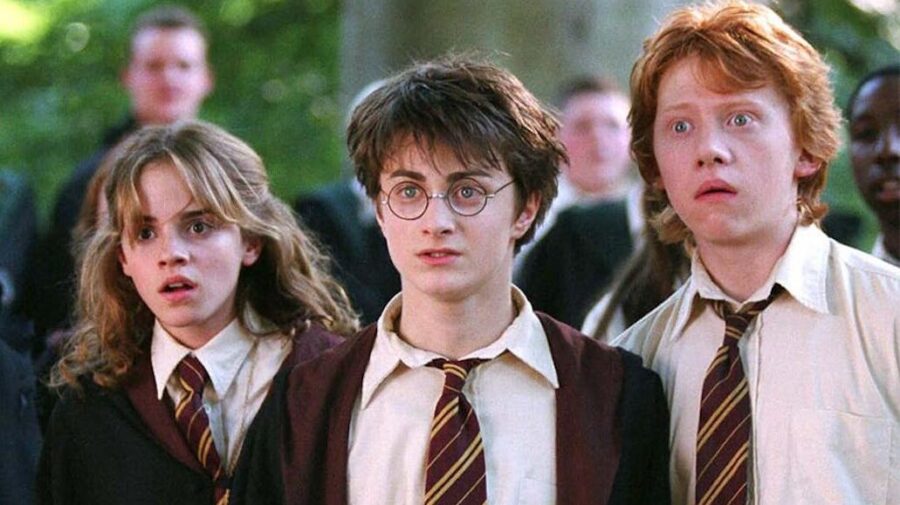
These kinds of stories aren’t for everyone, and they will be particularly disappointing to fans who want stories with higher stakes. However, Star Trek fans who relentlessly dunk on these kinds of stories are missing the point of what Paramount is trying to do: recruit younger fans into the Star Trek family. With Starfleet Academy, they are attempting to do so in the most straightforward way possible: by copying the formula made famous by Harry Potter and countless other book franchises aimed at Young Adults.
Ask yourself: beyond the specifics about wands and broomsticks, what is the story of Harry Potter about? It’s about the titular character leading a fairly boring existence until he is plucked out of obscurity and whisked away to a magical academy. There, he learns that he is a special person of important destiny, one who is destined to take on the greatest threat the Wizarding World has ever known.
May The Odds Be Ever In Paramount’s Favor
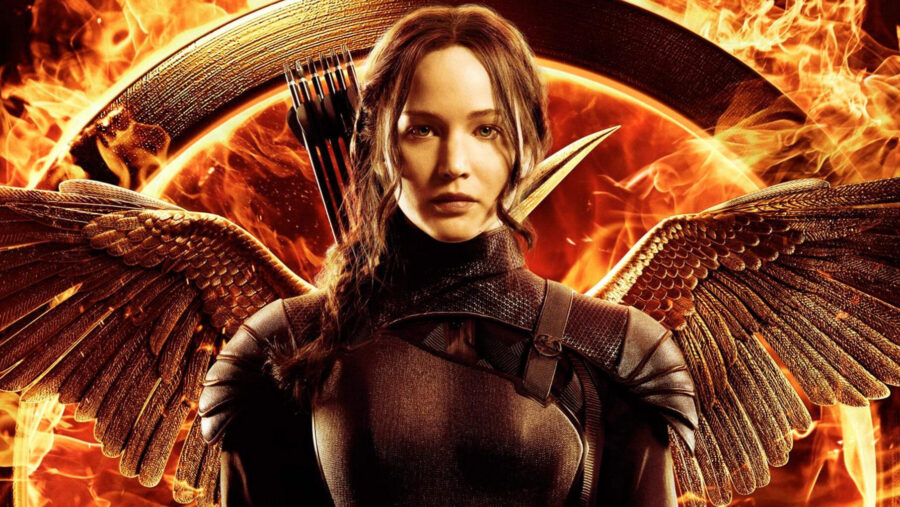
This basic formula plays out again and again in YA literature: The Hunger Games, for example, is about an unassuming young woman who receives special training and taps into abilities that help her take on a fascist dictator. Twilight is about an equally unassuming young woman who falls in love with a vampire, eventually discovering special mental abilities that she uses to save the day before becoming a creature of the night. Oh, and Percy Jackson & the Olympians involves the titular everyman character finding out he’s a literal demigod whose training will eventually help him overcome a Titan bent on ruling the world.
Starfleet Academy is doing its own version of this with its cadets: the academy functions a bit like Hogwarts, representing an entirely new world to these traumatized youngsters who grew up during the Burn. There, they all discover that the things that have always made them outcasts are actually special strengths that can help them serve the greater good. Caleb’s lifetime of criminal activity makes him a scrappy and resourceful hero, SAM’s relative lack of life experience gives her fresh insights, Jay-Den’s rejection of Klingon values helps him become a better Starfleet officer, and so on.
Kids Will Be Kids (Even Chosen Ones)

Does this mean you need to magically like Starfleet Academy’s preferred brand of storytelling? Of course not: by definition, YA literature is aimed at young adults, and many longtime Star Trek fans are very thoroughly middle-aged. Therefore, it’s no great shock that stories designed to appeal to teenagers are often off-putting to older viewers who are unlikely to pick up such books in the first place.
However, Starfleet Academy has been (slowly but surely) getting better at balancing out its YA-centric “everyone is a special chosen one” storytelling with more serious and ambitious episodes aimed at more discerning viewers. In time, Paramount may succeed and, like JK Rowling’s famous books, appeal to fans of all ages. If not, though, this attempt to appeal to bite Harry Potter’s style could backfire, casting “Avada Kedavra” on the franchise and killing Star Trek altogether.
Entertainment
How to watch Wales vs. France online for free
TL;DR: Live stream Wales vs. France in the 2026 Six Nations for free on BBC iPlayer. Access this free live stream from anywhere in the world with ExpressVPN.
The Six Nations started with a number of huge performances from the usual candidates. The best performance from the opening round? It’s difficult to look past France. They dismantled Ireland in front of a passionate Stade de France, making a big statement of intent as the tournament kicked off.
Next France face Wales at the Millennium Stadium. Wales suffered a defeat to England in the opening round, and will be hoping to see improvements over the next few weeks. Fans will expect France to win this one comfortably, but you can never truly count out Wales.
If you want to watch Wales vs. France in the 2026 Six Nations for free from anywhere in the world, we have all the information you need.
When is Wales vs. France?
Wales vs. France in the 2026 Six Nations starts at 3:10 p.m. GMT on Feb. 15. This fixture takes place at the Millennium Stadium.
How to watch Wales vs. France for free
Wales vs. France in the 2026 Six Nations is available to live stream for free on BBC iPlayer.
Mashable Top Stories
BBC iPlayer is geo-restricted to the UK, but anyone can access this free streaming platform with a VPN. These handy tools can hide your real IP address (digital location) and connect you to a secure server in the UK, meaning you can unblock BBC iPlayer from anywhere in the world.
Live stream Wales vs. France from anywhere in the world by following these simple steps:
-
Subscribe to a streaming-friendly VPN (like ExpressVPN)
-
Download the app to your device of choice (the best VPNs have apps for Windows, Mac, iOS, Android, Linux, and more)
-
Open up the app and connect to a server in the UK
-
Visit BBC iPlayer
-
Live stream Wales vs. France for free from anywhere in the world
$12.99 only at ExpressVPN (with money-back guarantee)
The best VPNs for streaming are not free, but most do offer free-trials or money-back guarantees. By leveraging these offers, you can watch Wales vs. France without committing with your cash. This isn’t a long-term solution, but it does give you enough time to stream most of the 2026 Six Nations before recovering your investment.
If you want to retain permanent access to free streaming services to watch the Winter Olympics, the T20 World Cup, and more from anywhere in the world, you’ll need a subscription. Fortunately, the best VPN for streaming live sport is on sale for a limited time.
What is the best VPN for the 2026 Six Nations?
ExpressVPN is the best choice for bypassing geo-restrictions to stream live sport, for a number of reasons:
-
Servers in 105 countries including the UK
-
Easy-to-use app available on all major devices including iPhone, Android, Windows, Mac, and more
-
Strict no-logging policy so your data is secure
-
Fast connection speeds free from throttling
-
Up to 10 simultaneous connections
-
30-day money-back guarantee
A two-year subscription to ExpressVPN is on sale for $68.40 and includes an extra four months for free — 81% off for a limited time. This plan includes a year of free unlimited cloud backup and a generous 30-day money-back guarantee. Alternatively, you can get a one-month plan for just $12.99 (with money-back guarantee).
Live stream Wales vs. France in the 2026 Six Nations for free with ExpressVPN.
Entertainment
Mind-Bending Sci-Fi Anthology Series Is The Digital Age's Twilight Zone
By Robert Scucci
| Published

Sometimes you want to watch sci-fi anthology series like The Twilight Zone, The Outer Limits, or Black Mirror for their existential subject matter without fully diving off a dread-induced deep end. That’s where 2017’s Dimension 404 comes in handy. It tackles the same kind of metaphysical topics while functioning as a straight-up comedy series. Narrated by Mark Hamill and featuring talent like Joel McHale and Patton Oswalt, Dimension 404 plays out like The Twilight Zone for the digital age.
Clocking in at only six episodes across a single season, Dimension 404 is a breezy weekend binge if I’ve ever seen one. It’s a satisfying watch if you’re into the above series but want to lean more toward levity. It’s still cynical and brushes up against the same moral and philosophical conundrums you’d expect from a forward-thinking sci-fi anthology, but it carries significantly less existential baggage.
We’ve Seen These All Before, But Not The Funny Versions

While I fully understand that shows like Black Mirror aren’t all doom and gloom and can be quite funny at times, they tend to occupy that lane more often than not. Dimension 404 leans into camp, comedy, and parody as its baseline approach to storytelling.
The first episode, “Matchmaker,” which premiered just months before Black Mirror’s Season 4 episode “Hang the DJ,” treads similar territory with its absurdist take on dating apps.
Where the Black Mirror episode hinges on the futility of modern dating, “Matchmaker” goes full absurdist, involving cloning, dating do-overs, and a campus full of men named Adam (Robert Buckley), all of whom chow down on pink slop while watching each successive version of themselves try to win the dating game. It’s the same subject matter but has a better sense of humor about everything.

The rest of Dimension 404 follows a similar pattern, with each episode feeling vaguely familiar but twisted toward comedy instead of dread.
Patton Oswalt portrays a movie snob who brings his own 3D glasses to a high-tech theater in “Cinethrax,” only to discover that a Lovecraftian monster is crawling out of the screen and face-sucking every patron wearing the glasses the theater provided. In “Chronos,” a young woman named Susan (Ashley Rickards) finds herself stuck in a time loop centered on her favorite 90s cartoon that nobody else remembers, and she has to break the cycle in time to submit her physics final.

“Polybius” centers on an arcade game that pulls its players into its realm, complete with ancient, biblical implications. “Bob” gives us the classic “what if AI has feelings” routine, except the titular machine is made entirely out of genetically modified human meat and is as disgusting to look at as you’d expect. And finally, “Impulse” follows an aspiring professional FPS gamer who learns the dark side of fame after slugging down one too many energy drinks.
Doesn’t Reinvent The Wheel, But Still A Fun Vehicle
Dimension 404 doesn’t reinvent the thought-provoking sci-fi anthology wheel, but it doesn’t really need to. There are plenty of genuinely laugh-out-loud moments, and everybody involved is clearly having fun with whatever ridiculous scenario they’re trapped in. It’s the diet Black Mirror, or the version of The Twilight Zone that mom says we have at home. I don’t mean that as a knock, but the series clearly wears its influences on its sleeve, and there’s nothing inherently wrong with that.


If you’re a sci-fi fan who’s seen it all before, you know exactly what you’re getting into when firing up Dimension 404, which is currently streaming for free on Tubi. That familiarity doesn’t make it any less entertaining, though. For everything it may lack in originality, it’s still an engaging watch from start to finish thanks to the talent involved, and it swerves away from baseline expectations just enough to earn your attention.
Entertainment
Starfleet Academy Finally Finds The Sweet Spot For Storytelling
By Chris Snellgrove
| Published

If we’re being honest, there have been plenty of problems with NuTrek since it premiered in 2017, but one of the more persistent problems has been figuring out what stakes a story should have. Discovery and Picard exhausted fans by having huge stakes, whereas early episodes of Starfleet Academy annoyed the fandom with hilariously low stakes. In the latest SFA episode “Come, Let’s Away,” however, NuTrek has finally found a storytelling sweet spot, delivering the kind of medium stakes that typified the Golden Age of Star Trek.
For better or for worse, Star Trek: Discovery was always a show swinging for the fences with high-stakes storytelling. Season 1 involved saving the Federation from Klingons who were intent on destroying the Earth, and Season 2 involved saving the entire galaxy from evil AI. Season 3 involved saving the Federation yet again (this time, in the far future), while Season 4 was all about stopping a threat that destroyed entire planets. The final season wrapped things up with a plot about keeping reality-rewriting technology from ending up in the hands of the scariest aliens the galaxy has ever known.
Star Trek Fans Experience Disaster Fatigue
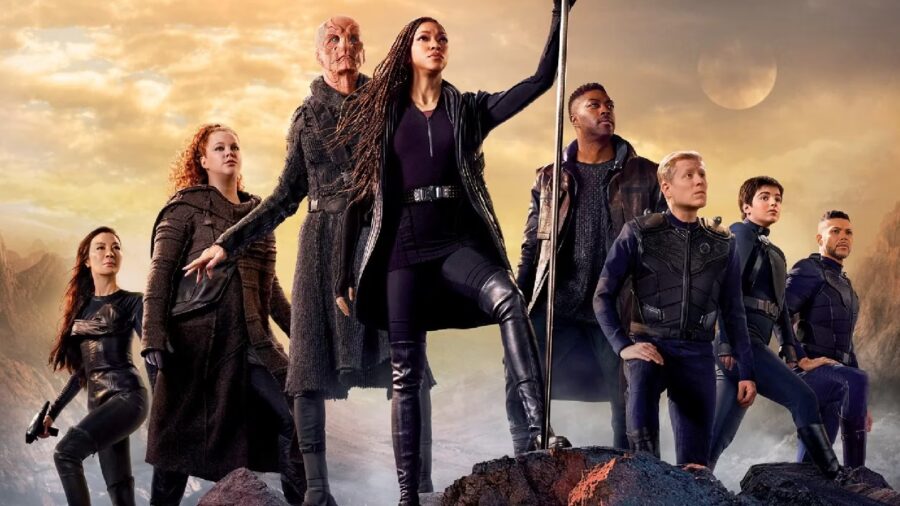
Star Trek: Picard continued this tradition: Season 1 turned Picard’s quest to help Data’s daughter into an adventure involving an ancient Romulan conspiracy, android rebellion, and all-powerful machine gods from outside the galaxy. Season 2 had Picard and his buddies fighting to keep their entire future from becoming a freaky fascist dystopia. Oh, and Season 3 wrapped things up by having our heroes prevent the Borg from taking over and rewriting the entire galaxy into their cybernetic image.
Understandably, audiences grew tired of what amounted to disaster fatigue; as with superhero movies, the simple truth is that it’s just exhausting when the stakes are always impossibly high. It’s hard to care that the entire galaxy is in danger when this is happening in literally every season. Strange New Worlds tried to fix this problem with simpler, episodic adventures, but some fans thought the adventures were too low-stakes, and it was hard to care about stories with plots like “will everyone stop singing?” and “will Spock fulfill his naughty nurse fantasy?”
Star Trek’s Drama Loses Its Shirt

When Starfleet Academy began, it arguably replicated the problem of Star Trek’s low-stakes stories. It’s a show modeled after Young Adult franchises like Harry Potter, so the episodes mostly revolve around the young cadets discovering the power and value that has been hidden inside of them all along. That makes for some interesting coming-of-age stories, but some fans found story hooks like “will Starfleet Academy win the prank war?” and “will SAM stop arguing with her holographic parents?” so low-stakes that they couldn’t really care about these episodes.
That’s part of why I was so impressed by “Come, Let’s Away:” the most recent Starfleet Academy episode effectively found a narrative sweet spot by giving us an adventure where our cadets were in mortal peril. After a training mission goes sideways, several cadets are kidnapped by killer cannibals, forcing Starfleet to ask space pirate Nus Braka for help. While the cadets are ultimately saved, Braka doublecrosses our heroes, destroying a starship and ransacking a starbase while leaving a trail of bodies in the cold vacuum of space.
How Star Trek Got Its Groove Back

I personally loved this episode for many reasons, including the fact that it ditched the show’s signature bad humor to deliver a tense thriller reminiscent of the Golden Age of Trek. Seeing the characters cut the jokes and pool their different skills to overcome an impossible situation reminded me of why I fell in love with shows like The Next Generation. Eventually, I realized the other big reason this episode reminded me of TNG: it finally found the sweet spot between insanely high stakes and laughably low stakes.
The cadets being in mortal peril is certainly higher-stakes than, say, stories focusing entirely on Caleb’s love life or prank battles with the War College. But it’s not like Discovery or Picard, where the crew regularly had to save the entire galaxy from some insane threat or another. Instead, Starfleet Academy finally found that sweet spot by giving us the ultimate Trek trope of a story: a simple mission goes wrong, and everyone must put their training to the test to overcome impossible odds.
Only time will tell if Starfleet Academy can maintain this sweet spot for future episodes or if we will go back to low-stakes adventures punctuated by cringeworthy potty humor. But as I mentioned in my review of “Come, Let’s Away,” my fingers are crossed that this represents a turning point for this controversial show and that it is becoming the kind of series older franchise fans have been begging for. With any luck, the writers realize they are dealing with their own high-stakes story about whether Star Trek survives another 60 years or gets a Dr. McCoy-like assessment from a bored fandom: “it’s dead, Jim!”

Netherlands' Femke Kok takes speed skating 500m gold; Erin Jackson 5th
Why Cade Cunningham MVP Could Be Smart Bet Amid SGA Injury Concerns


