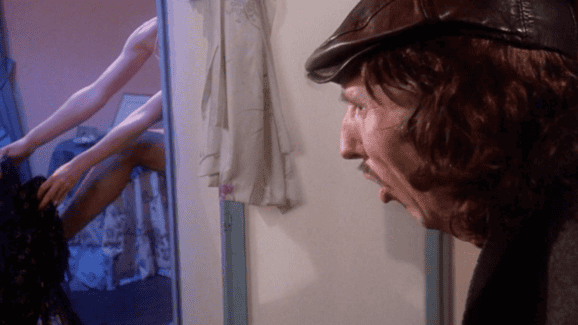
After The Evil Dead’s commercial success, Sam Raimi was eager to work on another project with Bruce Campbell, with help from the Coen brothers, in the form of 1985’s Crimewave. While this sounds like the best movie you’ve probably never heard of, it’s best to approach this one with guarded enthusiasm because what sounds awesome on paper doesn’t quite work on screen as intended. It’s not that the script isn’t funny, or that the setpieces aren’t ambitious, but rather that Raimi wasn’t allowed to edit the film due to studio interference. The end result is a movie that feels disjointed and incomplete despite the talent involved.
Had Raimi and the Coen brothers conceptualized the film later in their careers, when they had more clout and creative leverage, Crimewave could have been a masterpiece of subversive comedy. All the elements that draw you to it are present, but everything feels cobbled together and without a clear sense of direction. At the end of the day, that’s pretty much what you should expect when getting into a dark, neo-noir crime comedy inspired by Hitchcock, filtered through B-movie production values that lean fully into slapstick humor, as if you were watching a Laurel and Hardy bit stretched to feature length.
Still, if you’re a fan of the filmmakers, it’s a fascinating creative misstep to witness. If nothing else, it lets you check off one of their more obscure titles, a movie that never really had a chance to thrive upon release, but is now adored as the cult classic it was always destined to be.
A Glorious Mess Of Intent Vs Execution
Crimewave tells its primary story in flashbacks, leading up to the execution of Victor Ajax (Reed Birney), who finds himself strapped into an electric chair as midnight approaches. You’re also treated to a smash cut of a group of nuns crammed into a sedan, barreling toward the prison for reasons that won’t be explained until much later. Victor insists that he’s innocent, and hopes he can convince the executioner to spare him by recounting what really happened before he was apprehended and incarcerated.
Victor’s flashbacks tell the story behind the murders he’s been accused of committing, but given how convoluted everything becomes, it’s no wonder he’s minutes away from getting zapped out of his mortal coil. According to Victor, he worked as a technician for Ernest Trend (Edward R. Pressman), the co-owner of Trend-Odegard Security. While installing security cameras in his boss’s apartment building, Victor is sent off to track down his dream girl, Nancy (Sheree J. Wilson), who just so happens to live in the same building. What Victor doesn’t realize is that this errand is a deliberate distraction, as he’s supposed to be heading back to the shop across the street, completely unaware of what Mr. Trend already knows.
Mr. Trend has just learned that his business partner, Mr. Odegard, is trying to sell the company out from under him. In response, he hires exterminators Faron (Paul L. Smith) and Arthur (Brion James) to kill Odegard at the shop. Meanwhile, Victor attempts to charm Nancy, who is openly disinterested in him, but infatuated with Renaldo The Heel (Bruce Campbell), a sleazy rival who plans on buying the company from Odegard. Through this love triangle, the machinations of Mr. Trend, and the exterminators’ willingness to wipe out anyone in their path to make sure the sale doesn’t go through, Victor finds himself in the middle of a murder spree that becomes increasingly slapstick in execution, but incriminating all the same.
As bedlam unfolds according to Victor’s recounting of events, we gradually piece together what really happened that night. Whether or not he’s telling the truth, however, is left for the judge and executioner to decide as the clock ticks closer to midnight.
Could Have Been Brilliant, But We Got This Instead
The most disappointing aspect of Crimewave is that it contains all the raw elements you’d expect from a Sam Raimi film written by the Coen brothers. Bruce Campbell is reliably Bruce Campbell, and the slapstick is pushed so far into absurdity that it feels like an early preview of what the Coens would later refine in films like Raising Arizona and O Brother, Where Art Thou? Unfortunately, Raimi simply didn’t have the authority he needed to fully realize the project on his own terms, and the resulting studio interference hurt Crimewave far more than it helped.
While Crimewave remains a fun watch thanks to its cast, oddball story beats, and occasionally elaborate setpieces, its individual parts never quite line up to form a satisfying whole. The silver lining is that its failure directly inspired Raimi to double down on Evil Dead II after recovering from this production. In that sense, Crimewave became a necessary stepping stone that pushed the franchise we know and love into bolder, more unrestrained territory.
Had Crimewave been conceived in the 90s, 2000s, or later, the final product would likely have been far more cohesive. By that point, Raimi and the Coen brothers would have had enough creative control to fully embrace the absurdity baked into the screenplay. Even so, it’s still a Sam Raimi film written by the Coen brothers, which means you can expect a healthy dose of offbeat, dark humor that reflects the sensibilities they’ve consistently delivered throughout their careers. It just happens, in this case, to miss the mark more often than it hits, making for a messy but undeniably interesting watch.
As of this writing, Crimewave is streaming for free on Tubi.
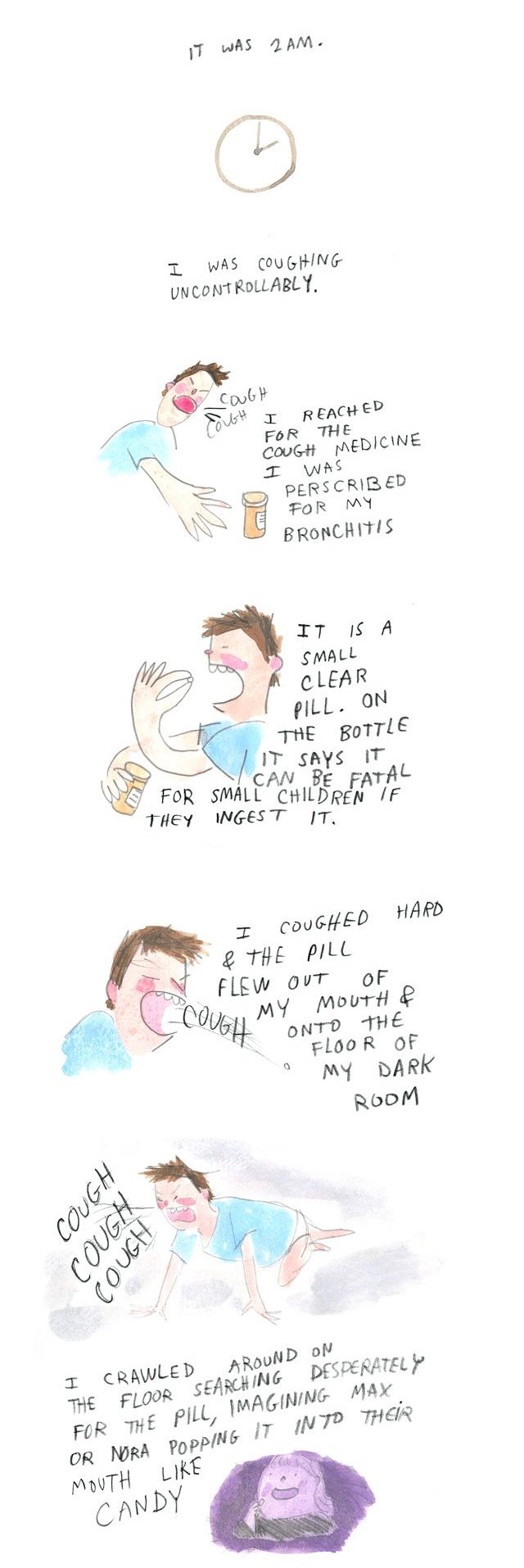
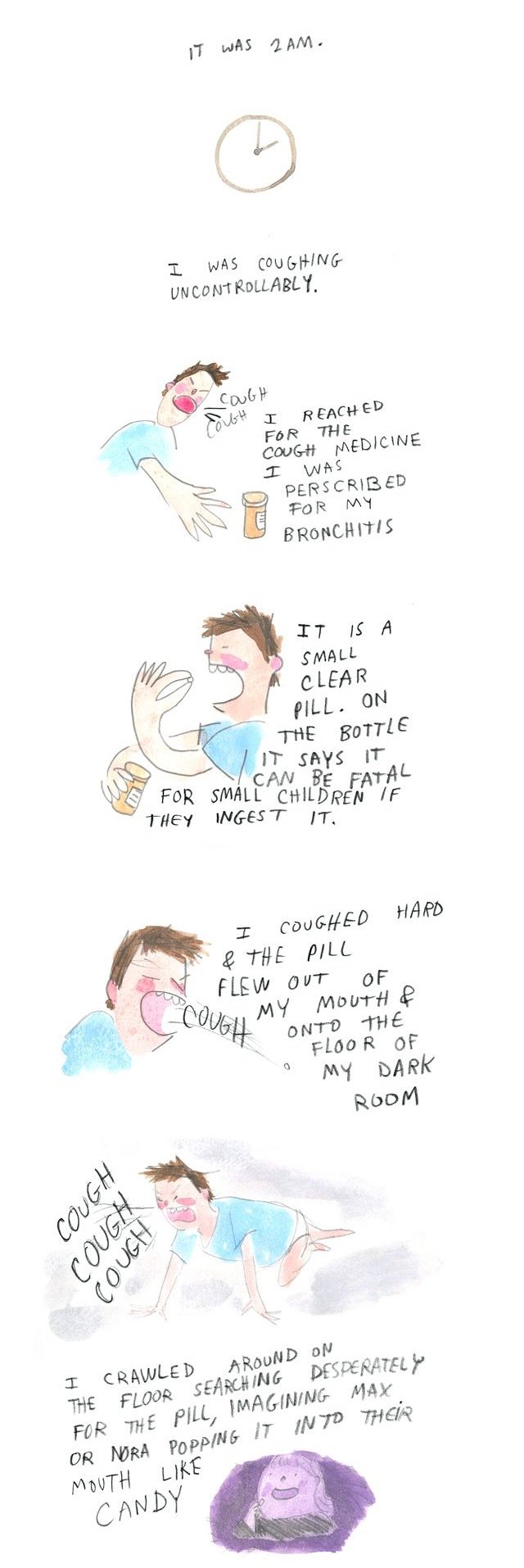
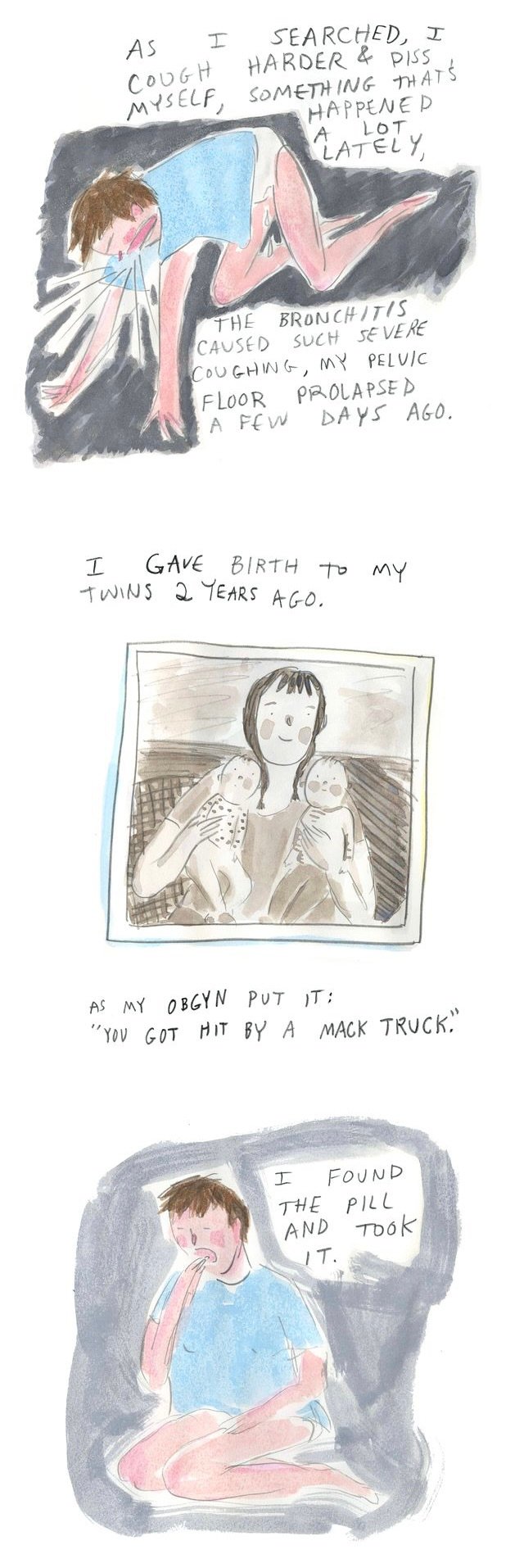
By the wonderful illustrator and writer Hallie Bateman based in Cincinnati, Ohio. Her work has been published by The New Yorker, The New York Times Magazine, The Awl and others. You can find her on Instagram and Substack.
Are investors already getting weary of tech’s golden goose, artificial intelligence?
On Friday, tech stocks took a hit on Wall Street, and the underlying cause seems to be alarm over record AI infrastructure spending. Microsoft, Amazon, Alphabet, Nvidia, Amazon, Meta, and Oracle were among just some of the companies whose falling shares accounted for $1 trillion in losses from Big Tech stocks, as CNBC reported.
Big tech companies like Amazon and Google have been furiously ramping up capital expenditures to build AI data centers and shifting focus to AI products and services.
The immediate spark for the Friday sell-off was the Amazon fourth-quarter earnings report. The e-commerce giant projected that its capital expenditures would reach $200 billion in 2026. CNBC reported that Amazon’s Capex figure was $50 billion higher than expected, and the stock market reacted accordingly.
Speaking to CNBC, GAM Investments’ investment director Paul Markham explained why AI would affect these companies on the stock market.
Mashable Light Speed
“Questions over the extent of capex [capital expenditures] as a result of LLM build-outs, the eventual return on that, and the fear of eventual over-expansion of capacity will be persistent,” Markham told CNBC.
However, the cold feet from investors regarding AI seems to be a fairly recent development, at least when it comes to stock market results. Just a few weeks ago, Facebook and Instagram owner Meta announced it planned to allocate an additional 73 percent of its capital spending, or roughly $115 billion to $135 billion, to AI development. Unlike the recent Amazon announcement, Meta’s stock went up 10 percent on this news.
There are also reasons to be skeptical of an AI bubble, however.
Also on Friday, NVIDIA CEO Jensen Huang insisted that massive increases in capital expenditures are “justified,” as the tech leader told CNBC’s “Halftime Report” hosts. After making these comments, CNBC reported that NVIDIA shares rose 8 percent.
NVIDIA is often seen as a bellwether for a possible AI bubble, as the company sells the chips used by AI companies like OpenAI, Meta, and Google. At Davos, Huang said that the massive investment in AI seemingly proves it’s not a bubble. NVIDIA would be a massive loser if AI did prove to be a bubble, of course.
Still, there were signs that Amazon’s stock was rebounding slightly after Huang’s comments.
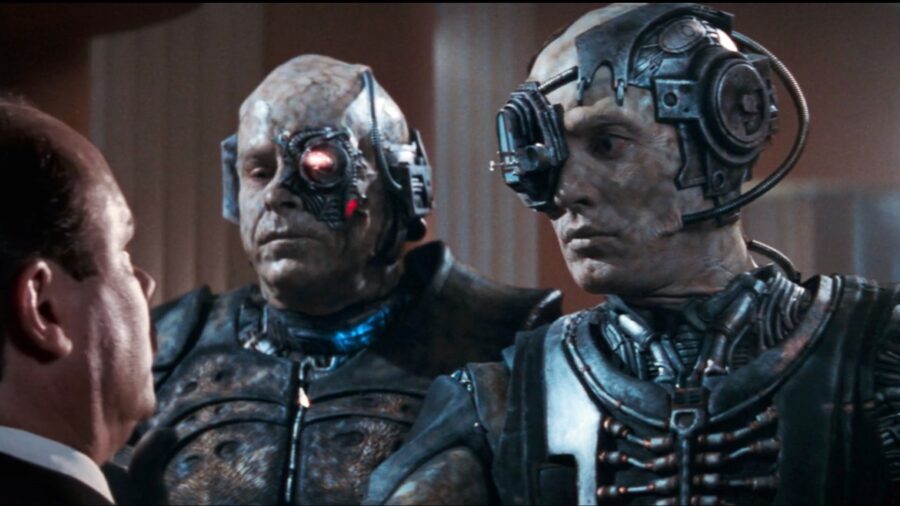
Few Star Trek creators are quite as controversial as Rick Berman, who has been accused of everything from persistent on-set misogyny to running the franchise’s Golden Age into the ground with Enterprise and Nemesis. However, for all of his alleged faults, Berman actually predicted very early on what would become the worst part of the franchise: its overreliance on the Borg. Moreover, he implied that if Star Trek couldn’t find anything original to do with these iconic bad guys, they should simply stop being included in future stories.
Berman’s thoughts on this matter are quoted extensively in Captain’s Logs: The Unauthorized Complete Trek Voyages. He was discussing “Descent,” the two-part Star Trek: The Next Generation episode that explored what happened to the Borg after the Enterprise crew returned a Borg with a personality (Hugh) back to the Collective. The executive producer liked how the show used the villains in this ambitious episode, but he specifically enjoyed how they were written so very differently from their earlier appearances.
Star Trek’s Most Two-Dimensional Villains
“I find [the Borg] very two-dimensional in a way,” Berman said. “They are faceless characters without personality and without specific character traits.” While many fans would say this is what makes them so scary (they are basically the closest thing Star Trek has to zombies), Berman thought that their collective nature made them “sort of a one-beat group of bad guys.”
Berman did acknowledge that these “one-beat” villains could be used well in certain circumstances. For example, he noted that “In ‘Best of Both Worlds’ they represented a threat as opposed to characters, and that was a great episode.” This is a fairly astute analysis, really: being a Collective, the Borg were always going to fail at being interesting characters, but they worked astoundingly well as TNG’s first real existential threat to the Federation’s entire way of life.
Borg Of A Different “Hugh”
For Berman, the episode “I, Borg” (where a captured Borg develops a personality before being returned to the Collective) was something of a revelation. He enjoyed how this story transformed the Borg “into a character” who was “given a personality and something to be sympathetic towards.” He then made a bold statement that would prove weirdly prophetic: “My only interest in the Borg is when they’re used off-center in other than the way they were originally conceived.”
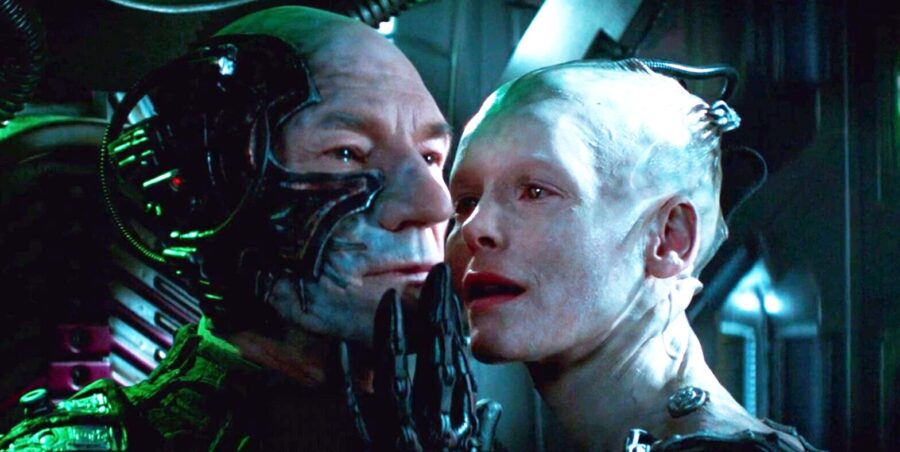
While Berman may have loved how different the Borg in “Descent” were, that sentiment wasn’t shared by most of the fandom. Many missed the cybernetic zombies that had first scared them in episodes like “The Best of Both Worlds,” finding them far more frightening than the group of angry, screaming cyborgs in “Descent.” Accordingly, Star Trek: First Contact brought the Borg back more or less as they were, with one twist: the addition of a Queen.
The Worst Of Both Worlds
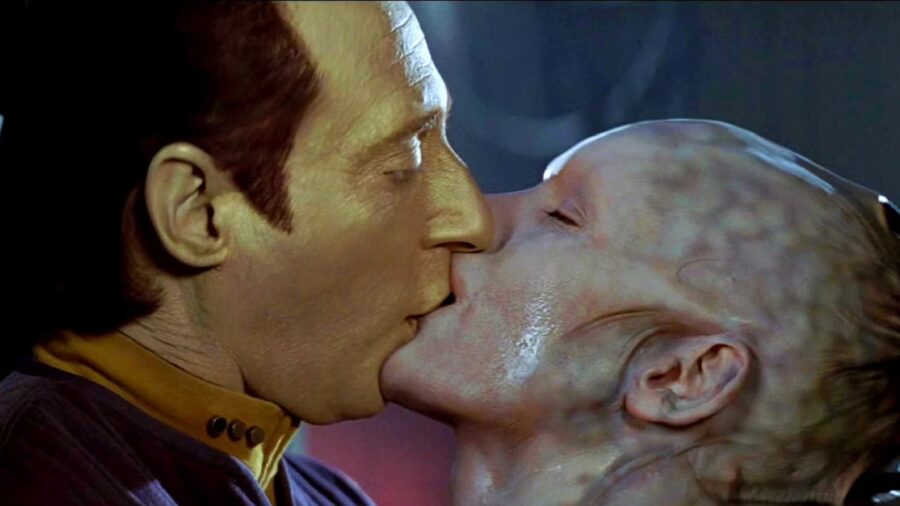
Unfortunately, this ended up being “the worst of both worlds” from a creative standpoint. The Queen was (as confirmed by Brannon Braga and other Star Trek creatives) primarily added to give the Borg a recognizable figure who could both speak and be spoken to; that made for more compelling filmmaking than having characters like Picard and Data talk to the formless voice of the Collective. But the very idea of an individual queen went against the Borg’s whole deal, irking fans who wished these villains had stayed consistent.
Speaking of consistency, Star Trek never really made any major changes with the Borg as a whole after this. Sure, the Queen still popped up, but for the most part, the Borg were back to being robot zombies. As Rick Berman predicted, constantly using the Borg without making any substantive changes eventually provided diminishing storytelling returns.
Kissing The Borg Goodbye?
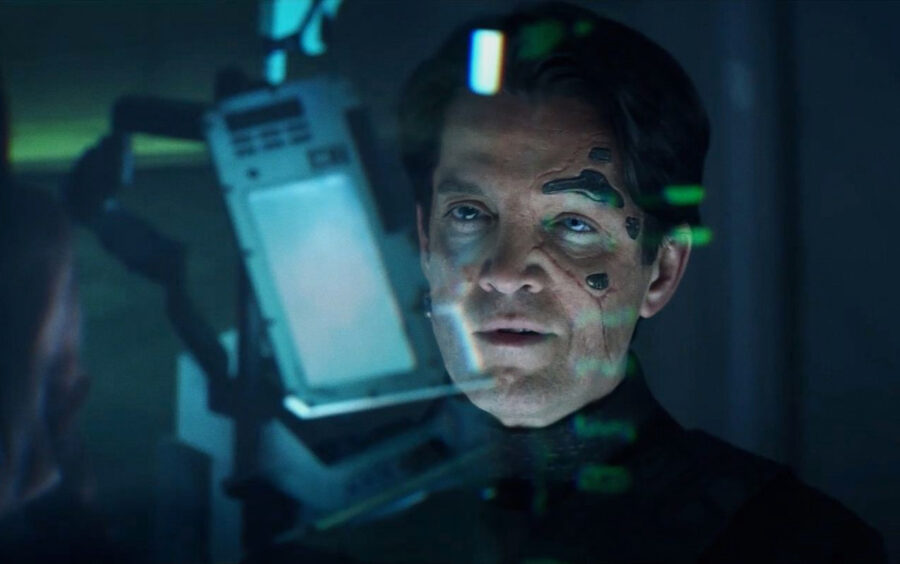
For example, they popped up so much in Voyager (a show that eventually added a Borg officer) that their appearances stopped feeling special. They popped up in Enterprise and, somewhat inexplicably, every single season of Star Trek: Picard. Heck, that show even made the Borg (complete with their unkillable Queen) the final Big Bad, signifying to fans that the writers had really and truly run out of ideas.
Rick Berman’s prophecy came to pass: the Borg remained one-note bad guys until the very end, never again receiving a character change as significant as what we saw in “Descent.” They were transformed back into a reliable bad guy, but one that ultimately became reliably boring. Now that the franchise has moved into the 32nd century, we can only hope the Borg never pop up in Starfleet Academy; otherwise, the iconic race might have to get several passionate lectures on the evils of cultural assimilation, punctuated by quippy phrases like “Resistance ain’t futile, bruh” and “assimilate this, b*tch!”
Can the Collective be defeated by pure, undiluted cringe? Here’s hoping we don’t have to find out!