
Entertainment
The Series So Raunchy, It Broke The Boundaries Of Acceptable TV

By Jonathan Klotz
| Published

By the early 2000’s cable networks were desperate to produce the next big series. HBO’s success with The Sopranos, Sex and the City, and Oz proved cable was the next big thing, but where the premium channels had an advantage and could show all the sex and violence they wanted, FX decided to push as far as they could with their hit 2003 series, Nip/Tuck.
The medical drama launched the career of megaproducer Ryan Murphy and, alongside The Shield, turned the Fox cable channel into a mid-2000’s rating juggernaut. Today, Nip/Tuck has broken free of a cable subscription and is streaming for free on PLEX.
Tell Me What You Don’t Like About Yourself

Nip/Tuck follows two plastic surgeons, the family man Dr. Sean McNamara (Dylan Walsh, a “that guy” actor you’ve seen in nearly everything) and the playboy Dr. Christian Troy (the late Julian McMahon after he left Charmed), as they cater to the rich of Miami. Episodes usually started with “Tell me what you don’t like about yourself” as the patient of the week went through everything they wanted changed. Every season also had overarching stories, from Season’s crime boss attempting to get out of the country to a multi-season serial killer arc that turned the show from a cable hit into a phenomenon.
Seasons 2 and 3 follow “The Carver,” a black-clad masked villain named for carving up their victim’s faces after the attack. “Who is The Carver?” was a popular topic in the early days of social media, including a MySpace page dedicated to the killer that featured exclusive audio logs and videos. Today, that’s basic Social Media Marketing 101, but in 2004, this was mindblowing immersion.
The actual Carver storyline is, in retrospect, hilariously awful, because again, this is a Ryan Murphy series, and over 20 years later, everyone’s used to his bizarre, off-the-wall twists for the sake of having a twist. Nip/Tuck was the first time Murphy was allowed to indulge, before Glee, American Horror Story, and 911 exposed his bad creative habits. It wasn’t only watching Christian land every woman who crosses his path into bed that pushed up against what was allowed to air, but also the gory plastic surgery scenes and language, which both shocked and excited audiences in the early 2000s.
A Bonkers Series Decades Ahead Of Its Time

Nip/Tuck skyrocketed in ratings with Season 2 and 3, reaching upwards of 6 million viewers each week. Back then, the weekly airings were perfect for Murphy’s twist-filled writing style that comes off as annoying in the era of binge-watching. Later seasons relocated the show’s setting to Los Angeles and made it feel a little less unique and special as a result, which shows in the ratings falling back down to 3 million, then 2 million for Season 6. These days, those numbers would still be good enough be one of the top shows on cable.
It’s a medical drama, it’s a black comedy, and it’s a satire; Nip/Tuck doesn’t fit neatly into any genre. If you go back and binge the series, you’ll see the building blocks for today’s modern cable dramas. Ryan Murphy’s vision was so far ahead of its time that, despite airing on FX, his first major hit feels like it’s from last week and not 23 years ago.
Entertainment
15 romantic Valentines Day gifts that go beyond tired clichés


It’s not that there’s anything wrong with a box of chocolates or flowers on Valentine’s Day: Some things are clichés for a reason, and who doesn’t love being the envy of the office when a surprise bouquet of flowers is delivered to your cubicle? But flowers die, and chocolates get eaten. (Probably pretty quickly, if we’re being honest.) Even a gourmet meal, one of the cornerstones of the holiday, only lasts a couple of hours.
Amazon has curated its top 100 Valentine’s Day gifts. Here are our 10 favorites from the list.
Luckily, there are tons of incredibly romantic gift ideas out there — gifts you can keep enjoying without an expiration date. We’ve scoured the web for the best of the best, keeping in mind that not all couples define “romance” the same way. Some couples embrace their inner cheeseball year-round, lavishing each other with adorable gifts at every opportunity. Others are really only prepared for this level of cornball-ery once a year, so we like to make it count.
We’ve selected gifts that suit partners at every stage of a relationship, from couples who have built lives together, to those who are still charting the fragile terrain between “casual hookup buddy” and something more serious. Do you live with your boo, or are they hundreds of miles away? Somewhere in between? We’ve got ideas for that, too. Below are our favorite romantic Valentine’s Day gifts for 2026.
Entertainment
Bad Bunny Super Bowl Halftime Show: Will he call out ICE?
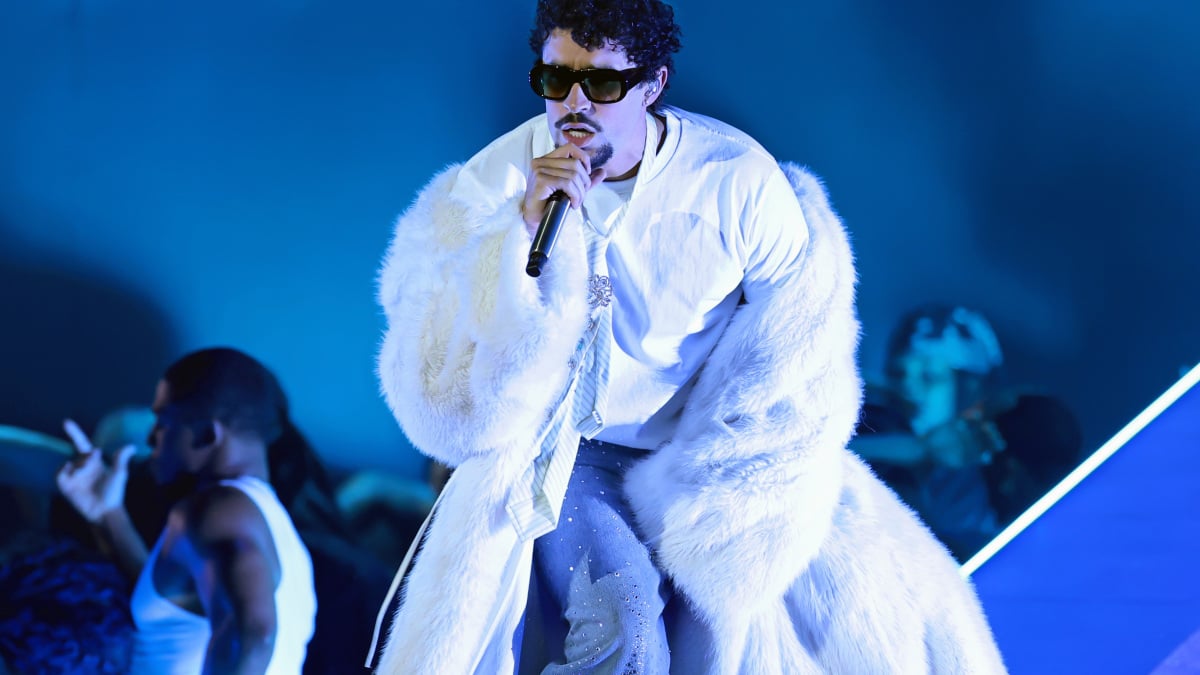
Fresh off his historic Album of the Year win at the 2026 Grammys for DeBÍ TiRAR MáS FOToS, Bad Bunny is set to headline the Super Bowl LX halftime show on Feb. 8 — a performance poised to become yet another culture-shifting moment on the world’s biggest stage.
At the Grammys, the Puerto Rican superstar didn’t shy away from politics, directly calling out U.S. Immigration and Customs Enforcement with a pointed “ICE out” during his acceptance speech for Música Urbana Album. Now, as he prepares for one of the most-watched performances in the world, the question remains: Will Bad Bunny bring that same unapologetic message to the Super Bowl?
Bad Bunny’s history of speaking out against ICE
If Benito does take on ICE at the Super Bowl, it wouldn’t be the first time. In a September 2025 interview with i-D magazine, he said concerns over potential ICE raids and the safety of his Latino and Puerto Rican fans were a key reason he excluded the United States from his 2025–2026 DeBÍ TiRAR MáS FOToS World Tour.
“People from the U.S. could come here to see the show. Latinos and Puerto Ricans of the United States could also travel here, or to any part of the world,” he said. “But there was the issue that … ICE could be outside (my concert venue). And it’s something that we were talking about and very concerned about.”
Instead, the artist staged a historic 31-date residency in Puerto Rico — one intentionally designed to prioritize local fans, keep ticket prices accessible, and inject more than $400 million into the island’s economy. The decision underscored not only his connection to the island but also his ongoing concern for the communities most affected by immigration enforcement.
That awareness surfaced again during the Grammys telecast, when host Trevor Noah joked, “If things keep getting worse in America, can I come live with you in Puerto Rico?” Bad Bunny gently corrected him: “Puerto Rico is part of America.” The moment landed lightly, but its implications were a reminder of Puerto Rico’s complicated political status and the way Latinx communities are often treated as both central to and peripheral within American life.
His criticism of ICE has been consistent. Last June, Bad Bunny shared a video on his Instagram Story condemning federal agents operating in Puerto Rico, urging them to stop harassing people who were simply trying to work. With ICE operations intensifying under the Trump administration, his past comments suggest this activism is not a fleeting statement but a throughline in his career.
Mashable Trend Report
And as a Puerto Rican artist whose music openly celebrates the island, it wouldn’t be surprising if the Super Bowl stage became yet another place where he chooses to make that message heard.
Has Bad Bunny ever criticized President Trump?
While Bad Bunny has rarely named Donald Trump outright, his criticism of the former president — and the policies of his administration — has been clear. In 2024, the artist endorsed Kamala Harris for U.S. president, citing frustration with the Trump administration’s handling of Hurricane Maria and its devastating impact on Puerto Rico. He made the public endorsement in the wake of comedian Tony Hinchcliffe’s racist remarks about Puerto Rico at a Trump rally at Madison Square Garden, where the island was referred to as a “floating island of garbage.”
His commentary has also surfaced through his music. On this past Fourth of July, Bad Bunny released the music video for “NUEVAYoL,” a salsa tribute to the Puerto Rican diaspora in New York.
The visual features the singer perched atop the Statue of Liberty, who wears a Puerto Rican flag across her forehead like a bandanna. In the final moments, a Trump-like voice plays over a radio broadcast, issuing an imagined apology to immigrants. “This country is nothing without the immigrants,” the voice says, naming Mexicans, Dominicans, Puerto Ricans, Colombians, Venezuelans, and Cubans in an unmistakable rebuke of Trump-era immigration rhetoric.
Tensions escalated further after the NFL announced Bad Bunny as the Super Bowl LX halftime performer. U.S. Secretary of Homeland Security Kristi Noem publicly criticized the decision, saying ICE agents would be “all over” the Super Bowl and suggesting the event should be reserved for “law-abiding Americans who love this country.”
The following night, Bad Bunny addressed the backlash during his Saturday Night Live monologue. Speaking first in English, then in Spanish, he framed the moment as a collective victory for Latino communities in the United States, emphasizing their labor and cultural impact. “Our footprints and our contribution in this country,” he said, “no one will ever be able to take that away or erase it.” He closed with a pointed aside in English: “And if you didn’t understand what I just said, you have four months to learn.”
Trump himself responded dismissively when asked about Bad Bunny in October, telling NewsMax he had “never heard of him” and questioning why the NFL selected him as the halftime performer. Just last month, he told the New York Post that he would not attend Super Bowl LX, citing Bad Bunny and opening act Green Day as reasons. “I’m anti-them,” Trump said, “I think it’s a terrible choice. All it does is sow hatred. Terrible.”
We’ll have to wait until Super Bowl Sunday to see if Benito responds.
So, will Bad Bunny mention ICE or Trump at the Super Bowl?
Whether or not Bad Bunny directly addresses politics at Super Bowl LX, the act of bringing Puerto Rican culture and its history to the world’s biggest stage is itself a statement. For Bad Bunny, music and identity have always been inseparable, and this halftime show will surely be no exception.
Entertainment
These avatars will fly around the moon with NASAs Artemis 2 astronauts
When the Artemis II spaceship carries four astronauts around the moon, it will also bring four miniature proxies of the crew made from their own cells.
Alongside crew commander Reid Wiseman, Victor Glover, Christina Koch, and Jeremy Hansen will fly lab-grown tissue samples designed to mimic parts of the crew’s bodies, particularly bone marrow, a key component of the immune system. The NASA experiment, called AVATAR — short for A Virtual Astronaut Tissue Analog Response — aims to show how living human cells respond to deep-space radiation and weightlessness.
Before launch, which could occur as early as March 6, doctors will draw blood from each crew member. Scientists will then grow cells from those samples and place them into chips about the size of a computer thumb drive. During the 10-day mission, the chips will soak up the same radiation and microgravity as their human counterparts.
“This is a small experiment, but it could lead to really big impacts for healthcare, both for our astronauts, but also people here back on the earth,” said Jacob Bleacher, NASA’s chief exploration scientist.
Artemis II marks NASA’s first crewed mission beyond low-Earth orbit since Apollo — and the first to place biomedical research at the center of a lunar flight. The Orion spaceship, named Integrity by the crew, will travel beyond Earth’s protective magnetic bubble, exposing the astronauts to radiation levels far higher than those aboard the International Space Station. That’s an opportunity for scientists to begin writing the playbook for interplanetary travel, learning how to keep humans alive in the unforgiving wilds of space.
Outside the ship, space is vast — incomprehensibly so. But inside the capsule, “space” is among the scarcest resources. Orion’s habitable area is closer to a studio apartment than a space station, shaping everything from how astronauts move to how they store biological samples. NASA researchers have built that constraint into the studies themselves.
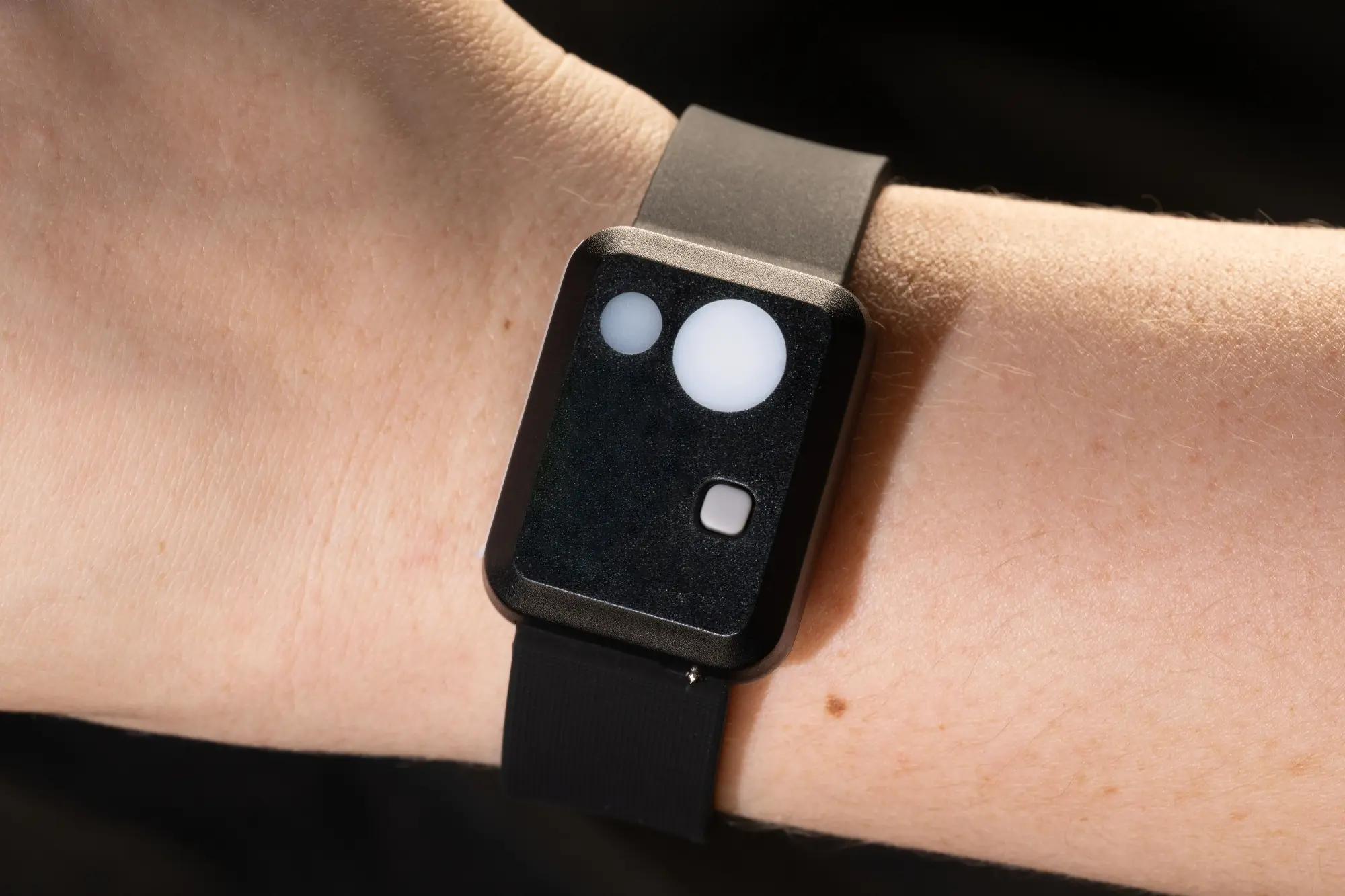
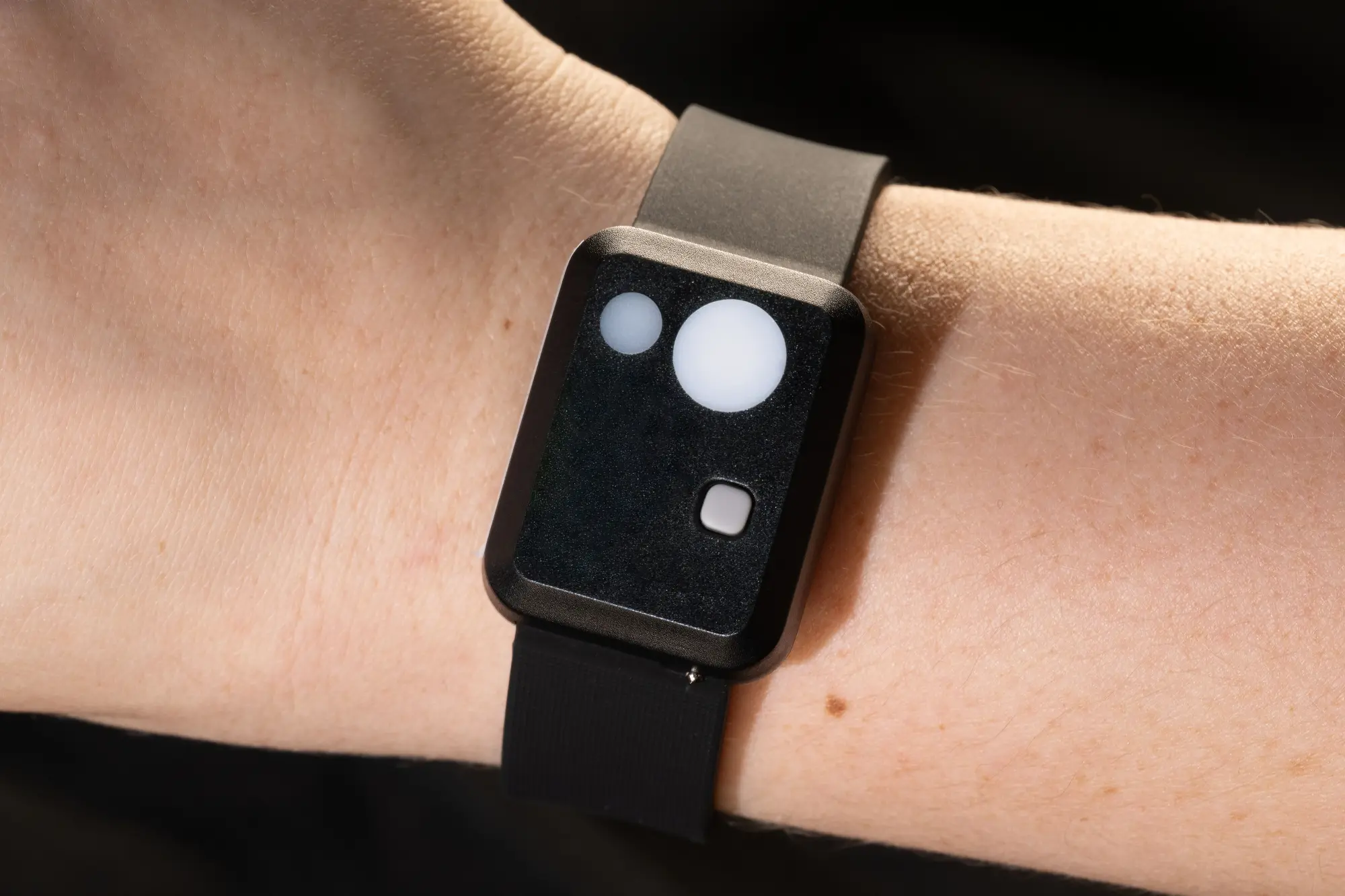
The Artemis II astronauts will wear NASA’s version of a fitness tracker on their wrists for the Archer study during their 10-day flight.
Credit: NASA / Helen Arase Vargas
Immune Biomarkers study
One investigation, known as Immune Biomarkers, focuses on how deep space alters immune systems. Previous research has shown that spaceflight can weaken immune responses and awaken dormant viruses, such as shingles and cold sores.
Because Orion lacks refrigeration, astronauts will collect their spit by licking treated paper like stamps and storing them in small booklets. Scientists will rehydrate the samples after the capsule returns to Earth.
“Saliva is basically a window into how our immune system is functioning,” Bleacher said.
Mashable Light Speed
Archer study
Another study, Artemis Research for Crew Health and Readiness (Archer), will examine how astronauts sleep, think, and get along in deep space. Crew members will wear wrist devices, similar to a Fitbit, to monitor their activity and rest. Researchers will pair that data with cognitive testing and behavioral assessments.
The fitness trackers will also help NASA study how the foursome handle exercising in Orion’s confined quarters, where increased breathing will raise carbon dioxide levels.
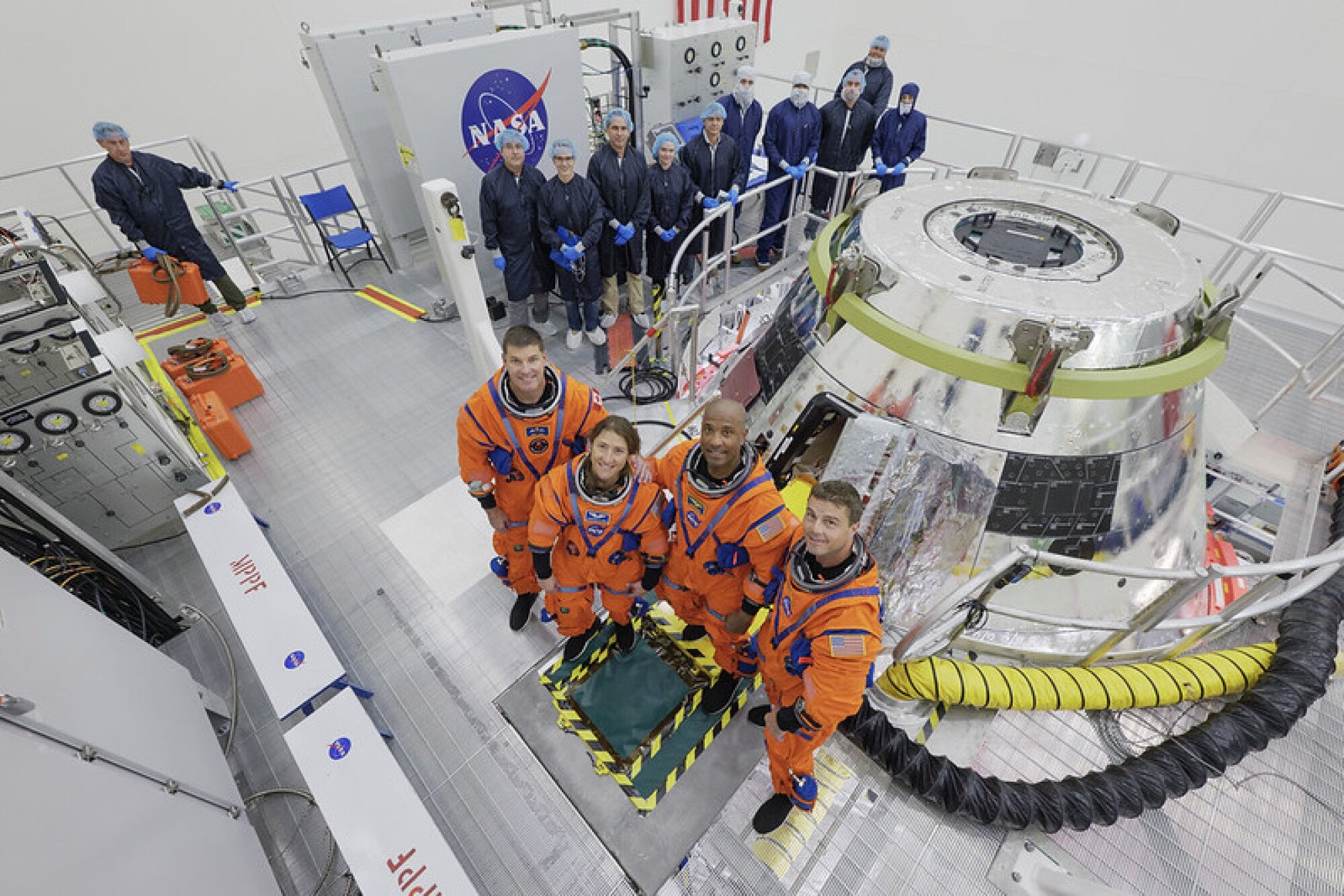
The Artemis II crew in orange flight suits, from left: Reid Wiseman, Christina Koch, Victor Glover, and Jeremy Hansen.
Credit: NASA
Spaceflight Standard Measures study
A third effort, Spaceflight Standard Measures, extends a health-monitoring program NASA began in low-Earth orbit in 2018. Astronauts will provide blood, urine, and saliva before and after the mission and complete tests of balance, strength, and endurance.
Microgravity takes a toll on astronauts’ bones and muscles, but NASA wants to know how quickly the crew can bounce back to physical labor. Shortly after splashdown off the California coast, the crew will don spacesuits and complete a simulated spacewalk and obstacle course to gauge their recovery.
After all, if NASA wants to send humans on a months-long journey to Mars, those astronauts won’t have rehab to get them in shape once they arrive.
Radiation exposure study
Radiation remains one of the largest unknowns for long-duration space travel. Earth’s magnetic field and the Van Allen radiation belt, a zone of charged particles around the planet’s magnetosphere, help shield low‑orbiting spacecraft like the space station from much of the sun‘s outbursts and cosmic rays. But Artemis II will go beyond that, into a more hostile radiation environment.
Artemis II astronauts will carry personal radiation sensors in their pockets, while detectors mounted throughout the cabin will track exposure levels. Additional monitors developed with the German Space Agency will measure high-energy particles believed to pose increased health risks.
AVATAR study
Radiation data will also inform one of the mission’s most unusual experiments: the organ-on-a-chip devices containing the crew’s living cells.
NASA will house the AVATAR tissue chips in a battery-powered box that regulates temperature and nutrient delivery throughout the flight. After the mission, scientists will analyze how gene activity changed within individual cells, comparing flight samples with copies on Earth.
The work aims to reveal how deep-space radiation and weightlessness affect the development of blood cells. And it will also serve as a test case for whether these chips can predict health outcomes.
“This will be very important for building both our understanding of the stresses of just doing the very first Artemis II, but [also] later on, as we go and establish a sustained presence on the moon and then hopefully go to Mars,” said Mark Clampin, deputy associate administrator for NASA science. “It’s a way, maybe in the future, that we can actually build [personalized] health kits that help us ensure our astronauts are safe.”


Balanced Cincinnati tramples UCF by 20

Women's Top 25 roundup: Duke, LSU notch lopsided wins


