
Entertainment
The Sci-Fi Spinoff That Destroyed Our Chance At A Franchise To Rival Star Wars

By Joshua Tyler
| Published

New space science fiction shows rarely catch fire right away. Star Trek was infamously cancelled after three seasons due to low ratings, only to rise from the ashes in rerun syndication. Firefly was cancelled after a few episodes, only to spawn a movie so good it ended up near the top of our list of the best space movies of all time.
But one space series did the impossible. It captured the cultural zeitgeist right away. In the now-forgotten era of binge-watching via post office-mailed Netflix DVDs, it became an obsession for sci-fi fans and normies alike.
That should have been a launching pad for a generational sci-fi franchise to rival Star Wars. Instead, it spawned a spinoff series so disastrous that everything it built evaporated into thin air, leaving behind nothing but the sweat of shirtless wrestlers.
This is Why Caprica Failed.
Battlestar Galactica Finishes On A High
When the reimagined Battlestar Galactica finished in March 2009, it had the two things a franchise needs: audience heat and critical credibility. During its run, episodes of the show aired in theaters to eager packed audiences. It was a watercolor topic of conversation and sucked in even people who weren’t into science fiction.
The final run averaged 2.2M viewers in the U.S., and the finale spiked to ~2.4M, the show’s best number in years. Those may not sound like big numbers, but they were huge for a show airing on SyFy, a basic cable channel people otherwise ignored.

When Battlestar Galactica arrived on DVD, it became an even bigger hit as people bought box sets and binged the show all at once in the pre-streaming era. Battlestar popularized the idea of binge-watching, setting the stage for the streaming future that was to come.
The BSG universe was perfectly poised to go bigger and become the kind of mega-media franchise that lasts for generations. Star Trek turned itself into a mega-franchise after being canceled three seasons in, and here was Battlestar Galactica riding a wave of success that should have made it much easier to propel to the next level.
Instead, the follow-through came in stuttered moves that dispersed attention and trained fans to stop checking in. Only a few short years after its success, Battlestar Galactica was a dead franchise, a once-in-a-generation missed opportunity by SyFy’s parent company, NBCUniversal.
How NBCUniversal Squandered Battlestar Galactica’s Potential With Its Next Show
NBCU/Syfy did produce companion pieces: Razor (2007) during the run and half-hearted DVD-only The Plan (2009) after, but the core “what’s next” arrived as Caprica in 2010.

Ronald D. Moore, the genius solo creator of Battlestar Galactica, only served as a co-creator on Caprica. He shares the title with a man named Remi Aubuchon, who’d previously worked with Moore in the BSG writers’ room. By all accounts, it was Remi, not Moore, who was the real architect of the show. Which may, at least in part, explain why it’s so different.
Set more than fifty years before the events of Battlestar Galactica, Caprica is about how human bureaucracy accidentally invents the society that will lead to its own extinction. Caprica focuses on two families, the Graystones and the Adamas, as cutting-edge technology collides with grief, religion, and ego. It results in the birth of the Cylons. The idea was for it to happen slowly, very slowly, over the course of the show.

In practice, Caprica played out like a soap opera, with few sci-fi elements on screen. The show was creatively ambitious but also tonally totally different.
Caprica was a prequel about corporate intrigue set in a universe where audiences expected gritty space combat. It gave fans something with the Battlestar Galactica name attached to it that bore no resemblance at all to the franchise they loved. Imagine if, after Star Trek was cancelled in the 60s, CBS had decided to follow it up with a Star Trek police procedural set on Earth, and you’ll start to understand what a horrible mistake Caprica was.

Caprica needed patient scheduling and a clear runway to overcome the hurdle of its premise. It didn’t get either. Critics tried to give it a chance, but despite praising its intellect, ultimately they admitted it was unreasonably slow, way too talky, and wildly uneven. Again, basically nothing like the tension-filled world of Battlestar Galactica.
Ratings slid from a mid-season high of 1.6 M to fewer than 900,000 viewers after a hiatus; Syfy then canceled the show and pulled the remaining episodes from its schedule, burning them off months later. Whatever audience was willing to follow learned the wrong lesson: don’t invest.
After Caprica, NBCUniversal Stopped Caring
It was a failure so immediate and extreme that whatever faith there was in BSG evaporated. Still, a last-ditch attempt to salvage things was thrown together.
After Caprica, the series Blood & Chrome was announced, and it sounded like the crowd-pleaser they should have made in the first place. It was to be about young Adama in a Cylon War setting.

Unfortunately, NBCUniversal had already quit on BSG. Rather than a fast series order and a serious investment, the project arrived as a 10-part web series on Machinima in late 2012 and only later as a TV movie in early 2013.
Battlestar Galactica needed a grand Star Trek: The Motion Picture-style blockbuster movie to push it to the next level. NBCUniversal gave it a low-budget web series. Producer David Eick publicly positioned Blood & Chrome as “always meant” for online, but that didn’t make it better; it just made it more insulting.
Ronald Moore Killed His Own Creation
The truth is, much of the fault lies at the feet of Ronald D. Moore. Before you come at me with your pitchforks, let me say that I love Ron Moore. And I loved him long before Battlestar.
Moore was a huge part of the creative force behind the best parts of Star Trek: Deep Space Nine, and his work is simply incredible. But when he finished Battlestar Galactica, he basically quit on the franchise he’d birthed into being.
He’s admitted he was burned out. Burned out on space stuff. He spent a decade working on Star Trek, then created his own space show, and he just didn’t want to do space sci-fi anymore.

The thing is, that’s what he’s good at, and that’s where his success always was. Nothing he’s done since has come close to reaching the level of quality achieved in Star Trek and BSG. He’s done a lot since then, just none of it in space.
Ron Moore had a once-in-a-generation opportunity, and when BSG finished, he decided he wasn’t going to do anything with it. The result was a show no one wanted in Caprica, followed by the evaporation of everything he’d worked so hard at creating.
He could have been the next Gene Roddenberry, but instead, he’s spent his time since making things like time-travel romance, with no real cultural footprint.
SyFy Gets Turned Into A Wrestling Channel

While all this was unfolding, the channel that launched Battlestar Galactica was repositioning itself. Sci Fi Channel rebranded to Syfy in 2009 and leaned harder into broader-appeal reality/wrestling alongside genre.
Turning your science fiction channel into a wrestling channel was always a bizarre choice. It diluted the sense that “space opera lives here,” right when Galactica fans needed a dependable home for successors. Trade coverage and industry commentary at the time called out the shift, with cancellations clustered around quality scripted sci-fi.
NBCUniversal Throws Ron Moore’s Sci-Fi Universe Away

Universal eventually began announcing Battlestar Galactica feature films. That sounds positive, but it wasn’t. They were all reboots and not continuations of the show. There was one with Bryan Singer attached in 2011, later Francis Lawrence in 2016, then Simon Kinberg in 2020. None of them actually happened.
What had happened was that NBCUniversal had clearly signaled to fans that the once-in-a-generation sci-fi universe Ron Moore spent 10 years building was being thrown in the garbage, and that if BSG ever came back, they’d be starting all over from scratch. Universal did the impossible, producing a hit sci-fi show. And then they decided to erase it and start over rather than continue to grow on that foundation.

Imagine if, instead of giving William Shatner’s Captain Kirk a movie, they’d recast him and redid all the same episodes again. Or instead of introducing a new show set in the same universe, in the form of The Next Generation, Star Trek had wiped the slate clean, created a new sci-fi universe, and slapped the old name on it.
Unfortunately, that’s now standard practice in Hollywood. A practice that accelerated beyond all reason after BSG. That mentality is why there has never been another long-running sci-fi universe like Star Trek or Star Wars, and why there will never be. Battlestar Galactica was perfectly poised to take that trip, but no one at Universal dared to make a real investment.

Entertainment
Buffy Star’s Sudden Death Adds To Lethal Year For Hollywood

By Jennifer Asencio
| Published

The Grim Reaper has already had a fruitful year in 2026, taking from Hollywood stars like Robert Carridine, Catherine O’Hara, Robert Duvall, James Van Der Beek, and even the invincible Chuck Norris. Now Nicholas Brendon has died. The Buffy the Vampire Slayer actor was 54.
According to a statement released by his family, Brendon died in his sleep from “natural causes.” If that sounds like a young age for such a cause of death, it is. The actor’s health was actually complicated by a lot of factors. He suffered from cauda equina syndrome, a spinal condition that required several surgeries. He revealed in 2023 that he had a congenital heart defect that had recently been diagnosed after a 2022 heart attack. All of this was exacerbated by mental health and substance abuse battles that he struggled with all his life, but his family reported that he was in good spirits and maintaining his health schedule before he died.

Brendon is best known for playing Xander Harris on Buffy the Vampire Slayer. Xander was that awkward teen who was supposed to be the stand-in for the audience with his everyday reactions to his spreading awareness of what is out in his world. He was the Scooby gang’s broad generalist, ordinary and plain, while the other characters have their own skills or abilities, either as the Slayer, witch, or demon. Often overwhelmed, underprepared, and clearly misinformed, he was somehow the heart of the group, and he always managed to deliver. What kept Xander so relatable was that he was “everyone,” that very human connection.
Sarah Michelle Gellar was slated to be in the Hulu reboot of the Buffy series, and rumors abounded that other characters were going to be returning for the show. However, there were questions about Brendon’s participation because of his mental health and addiction struggles, especially as they resulted in numerous run-ins with the law. At the time of Brendon’s death, it did not seem that Xander was going to be included in the reboot, a fact the actor was not happy about.

Immediately following the success of Buffy, Brendon starred in Kitchen Confidential for 13 episodes. This half-season series was based on Anthony Bourdain’s novel “Kitchen Confidential: Adventures in the Culinary Underbelly,” with the lead Bradley Cooper playing “Jack” Bourdain for Anthony himself. Brendon plays the pastry chef and friend of Jack’s, Seth Richman.
He maintained steady acting roles in his post-Buffy career, with another highlight being the film Coherence. In this 2013 psychological sci-fi thriller, he plays Mike as he and his wife Lee, played by Lorene Scafaria, host six of their friends as Miller’s Comet passes the Earth. What follows is a story where time no longer moves in a linear fashion. Out-of-sequence events culminate in the comet breaking up and a rather surprising ending.

Following this film came his return to the small screen in a major role as character Kevin Lynch in the long-running series Criminal Minds for 21episodes over the course of eight seasons. A technical analyst with prodigious technical computing ability, he is brought in to hack the computer of one of the series stars, fan favorite Penelope Garcia (Kirsten Vangsness), to find out who shot her. Over the episodes, he is depicted or referenced and goes on cases to many locations with the team, even starting a relationship with Garcia. Although this character wasn’t one of his more admired roles, he nevertheless left his mark with fans.
Despite his struggles, Brendon continued acting until 2024. He even had two upcoming projects. With his untimely death, it appears that the IMDB page for his project Best Sheep is no longer available and was taken down during the research for this article. Once in a Blue Moon is written and directed by Valeria Sweet, and the role that Brendon was to play was that of Matt; little else is available about the production, so we will see what ultimately happens with the series.

Nicholas Brendon left us too soon. His wholesome on-screen persona masked serious struggles that the actor bravely faced while trying to maintain his career, constantly picking himself up whenever he fell. He may not have had the most stable off-screen life, but what he brought to fans was important enough to him that he kept fighting for it until his very last breath. Hopefully, he has found peace.
Entertainment
Upcoming Star Trek Show Could Finally Give Fans What They Want
By Chris Snellgrove
| Published
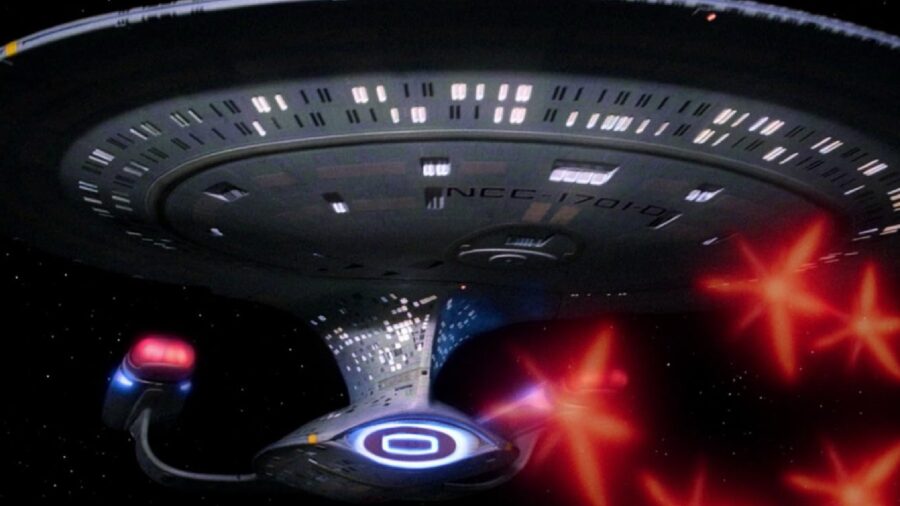
Recently, the controversial Star Trek show Starfleet Academy finished its first season, and the online discourse about the show has been endless. Defenders of the series have constantly pointed out that because it took shows like The Next Generation and Deep Space Nine time to achieve greatness, everyone should give Starfleet Academy some grace during its initial shakedown cruise. To this, critics always have a simple response: that because modern seasons are less than half as long as they used to be, Star Trek shows can no longer afford to waste time getting good.
Whether Starfleet Academy gets renewed for Season 3 (Season 2 has already been filmed) may come down to various factors, including streaming numbers and decisions from upper Paramount leadership. Recently, however, it occurred to me that it would be easy for an upcoming series to finally make the divided fandom happy. All Paramount needs to do is give Tawny Newsome’s upcoming Star Trek spinoff a tighter per-episode budget and more episodes per season.
The Office In Space?
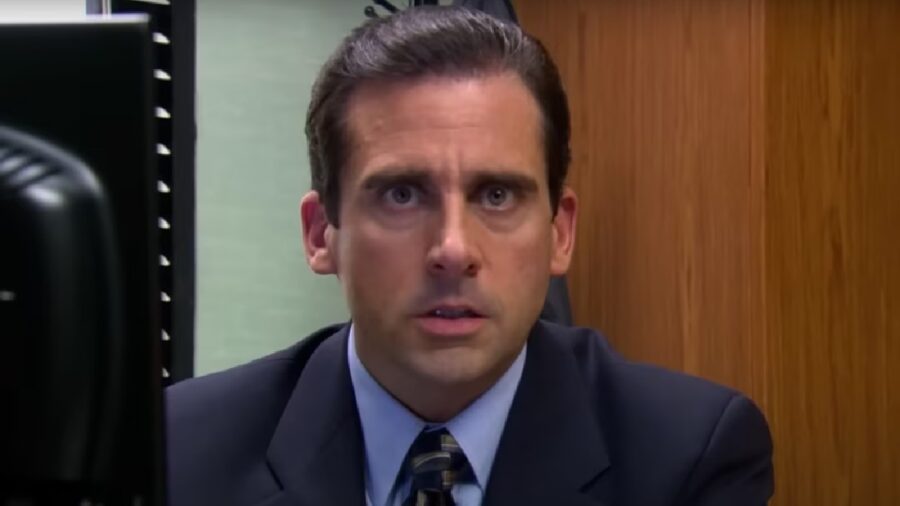
If you don’t know, Lower Decks legend and Starfleet Academy writer Tawny Newsome is currently working on a Star Trek show that is supposed to function as a workplace comedy. This unnamed series is set on a vacation planet (not Risa, though). Beyond this and the fact that she wants to set it in the 25th century (so, the Picard era), all we know about the show is that it involves helping the planet join the Federation. Oh, and the original pitch for the show involved some unspecified shenanigans that would somehow broadcast everything our Federation workers are doing to the entire quadrant.
The series has not yet gotten the green light from Paramount, and it has reportedly evolved (albeit in unknown ways) since the original pitch. Personally, I always thought the “broadcast to the whole quadrant” thing meant they were doing a Star Trek version of The Office. At any rate, Newsome’s workplace comedy show provides the perfect opportunity for NuTrek to boldly go where it has never gone before: 20+ episode seasons, with a more modest budget for each episode.
The Numbers Game

Back in the Golden Age of Star Trek, shows like Voyager had 26-episode seasons, and this offered a number of advantages to the writers. On the most basic level, they had an extended runway: with this many episodes per season, you could flesh out your main characters and even give your side characters extended screentime. Most importantly, having so many episodes each season meant that Paramount could afford to have a few stinkers; the awful quality of early TNG episodes like “Code of Honor,” for example, would ultimately get outweighed by better episodes like “Conspiracy.”
However, the network could only do this because of the cost factor. Star Trek: The Next Generation episodes cost about $1.3 million to produce, which was admittedly a pretty penny back in the day. Now, though, Star Trek: Discovery previously cost about $8 million per episode, and there are persistent rumors that each Starfleet Academy episode costs Paramount $10 million. If that’s true, then it costs almost the same amount to produce one season of Starfleet Academy as it did to produce three seasons of The Next Generation.
That’s bad enough, but three seasons of The Next Generation add up to 78 episodes; meanwhile, one season of Starfleet Academy is only 10 episodes. That’s not enough time to develop every character, which is likely why Genesis never got her own episode like everyone else. Furthermore, short seasons lead to killer ratios: if, say, four of your episodes are stinkers (a very generous estimate for SFA), then 40 percent of your entire season sucks. That’s enough to make fans tune out and possibly seal a show’s fate long before it finally gets good.
NuTrek Goes Old School

What does this bleak numbers game have to do with Tawny Newsome’s Star Trek show? Simple: one of the big reasons that shows like Starfleet Academy are so expensive is because of all the top-notch special effects needed for stories where the entire galaxy is in danger. The crew is always visiting new places (exploring strange new worlds and all that), meeting exotic aliens (seeking out new life), and generally having ambitious adventures that are very expensive to bring to life.
However, if Newsome’s workplace comedy show really is like Star Trek meets The Office, it could potentially be far cheaper to create. Characters could stay in a fixed location, effectively turning almost every episode into a bottle episode. Residents of the vacation planet don’t need to have elaborate makeup; in fact, the show could return to the grand Trek tradition of having aliens who are just humans with something funny on their foreheads. Finally, the show doesn’t have to have legacy characters or other big names; instead, the cast can be comprised of almost entirely unknown actors.
Put it all together, and you have a new Star Trek show that is infinitely cheaper to make than Starfleet Academy. But I’m not suggesting Paramount lower its overall budget; instead, the amount of money they would normally allocate to a NuTrek show should go to creating seasons with at least 20 episodes. This would allow for greater character development and more rewatchability. Best of all, there would be a built-in grace period: even if the show’s first five episodes are awful, fans would forgive that if the next 15 are solid Star Trek.
The Best Of Both Worlds
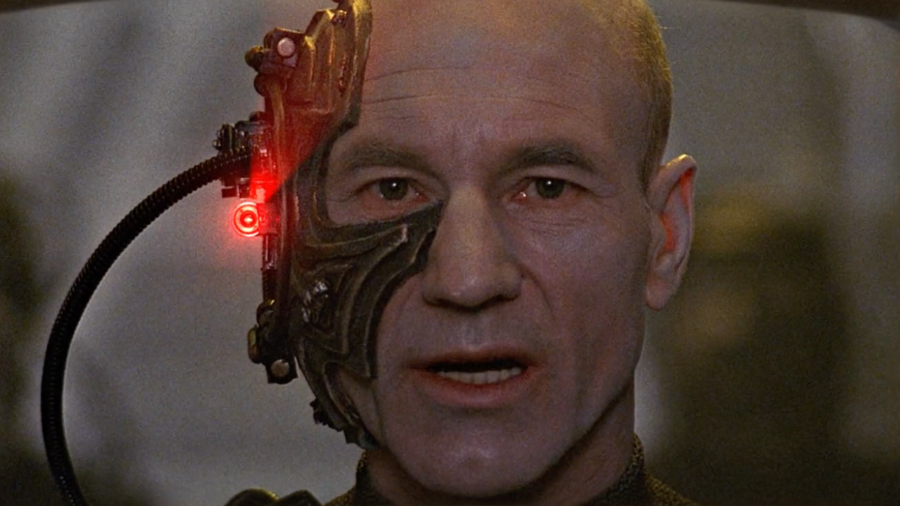
Realistically, I know this isn’t likely to happen for many reasons, including Alex Kurtzman’s inability to try anything new. But Paramount is currently exploring whether or not to keep Kurtzman around, and new leadership seems eager to shake things up with the franchise. A smaller-budget Star Trek spinoff could be a return to the Golden Age, where classic episodes were created with killer writing and not a small mountain of VFX.
Done right, Tawny Newsome’s show (assuming it gets the green light) could be the best of both worlds: it would give NuTrek fans more show than they can handle while finally making old-school fans happy. Plus, it would give its biggest fans more episodes per season to stream, giving this series the coziness of shows like Voyager. But the only way this can happen is for Paramount to embrace some very unconventional wisdom regarding the budget for each episode: make it low, Number One!
Entertainment
Chuck Norris Trashed After Death As Dangerous And Immoral
By Jennifer Asencio
| Published

Chuck Norris’s death was barely announced by his family on March 21, 2026, before Variety, famous for snubbing fashion and movie icon Brigitte Bardot, decided to take a shot at him. The article, written by William Earl, was published just hours after his death was announced in the news.
The article, titled “Chuck Norris Was a Great Action Star – But Politics May Overshadow His Legacy,” questions the actor’s resume as a cinematic and television tough guy. It indicates that his portrayal of characters such as Colonel James Braddock in Missing in Action, Colonel Scott McCoy in The Delta Force, and Cordell Walker in Walker, Texas Ranger might have been too patriotic in their portrayal of American heroism and justice.
“Given our nation’s divisions in morality, information literacy, and overall sense of morality,” Earl posits, “it’s easier to see Norris’s characters as justification for a fringe conspiracy movement rather than a moral standing.” He defends this perspective by explaining that Norris’s characters are all vigilantes, an idea which “seems less fun” these days because of current events, such as nationwide immigration raids, in which law enforcement agents “are acting like one-man militias.” He seems convinced that they were inspired to these actions by Norris’s iconic persona.

This attack on Norris is unwarranted for a lot of reasons, not in the least of which is Norris’s persona off-screen. He was legendary for being a family man and all-around nice guy, giving a lot of time and energy in addition to donations to causes that helped kids, the hungry, and the poor. He also wrote several books, including a few about fitness and martial arts. He was such a prolific martial arts expert that he created his own style, called Chun Kuk Do. Earl handwaves this all as “Was Norris a brilliant athlete and a top-shelf star?”
He then proceeds to attack his portrayals of heroic Americans for being American. Throughout the article, he is critical of portraying cops and soldiers as heroes. He indicates that the United States is a bad country for going to war against Iran and for the aforementioned immigration initiatives. He denounces Norris’s characters for being proud Americans with strong moral values, calling him “the poster boy for American exceptionalism” and wondering if his work is “dangerous propaganda.”

However, the title of the article gives away the true motive behind it: politics. And the problem isn’t the characters Norris played, it’s the fact that he was a lifelong Republican and an outspoken Christian. He lived a lot of the values he portrayed on-screen, ideas which are not as precious in Hollywood these days because they involve nuclear families, positive masculinity, and judging people by their actions rather than identities. Even the idea of patriotism and pride in our country is viewed with disdain, as the very country that invented Hollywood is often decried for its flaws rather than recognized for its merits.
In our fascist, oppressive, speech-stifling country, William Earl attacked a man hours after his death for playing the wrong type of characters in his movies and representing them in a positive light. That makes him the worst villain in a Chuck Norris story in my book.

Buffy Star’s Sudden Death Adds To Lethal Year For Hollywood
TechCrunch Mobility: Uber everywhere, all at once


