
Entertainment
The Long Lost Star Trek Episode Starring Milton Berle

Captain Kirk and his crew soon discover their advanced technology is due to cultural interference by a Federation scientist called Bayne. Bayne was to be played by the iconic and notorious Milton Berle.
By Saralyn Smith
| Published

Norman Spinrad thought the script he wrote in 1967 called “He Walked Among Us” had been lost to time until it showed up with an autograph-seeking fan at a convention. The fan scanned the faded script and emailed it to Spinrad, who has published it as an e-book.
Captain Kirk Versus Milton Berle
The script had the Enterprise encountering a primitive race called the Jugali, who used technology that should have been well beyond their ability to develop. Captain Kirk and his crew soon discover their advanced technology is due to cultural interference by a Federation scientist called Bayne. Bayne was to be played by the iconic and notorious Milton Berle.
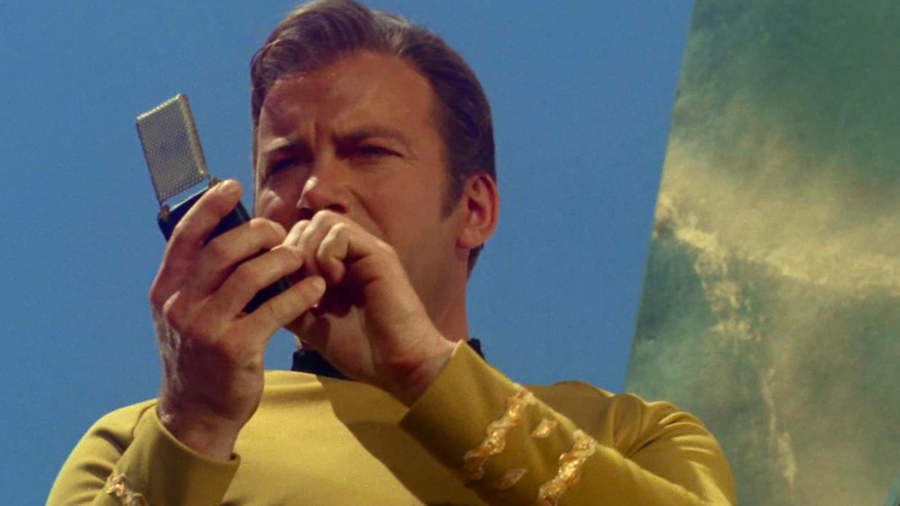
Bayne had good intentions, but as things often do in science fiction, those good intentions result in unintended consequences. Because of his interference, the Jugali begin worshipping Bayne as a god. Captain Kirk’s job is to get him out of there without further damaging the Jugali.
The whole Bayne is a god mess would have ended up being comedic, had the script made it on screen. But that’s not what the script’s writer, Conrad Spinrad intended. So he set out to sabotage his own episode of Star Trek.
How Conrad Spinrad Killed His Own Star Trek Script
By Spinrad’s own account, the screenplay was a victim of a sometimes terrible but integral part of big- and small-screen productions: the rewrite. Roddenberry originally commissioned a dramatic script from Spinrad that would feature Milton Berle (and an “overgrown backlot village set” Roddenberry was apparently fond of). Berle — who was commonly referred to as “Mr. Television” — was arguably the biggest television star in the medium’s history and was mostly known for comedy.
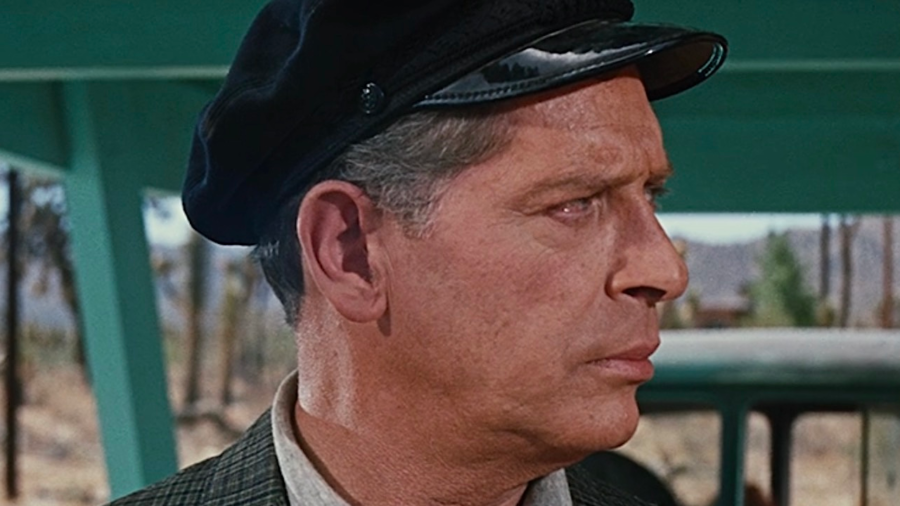
The Star Trek line producer wasn’t aware that Berle could also do drama, though, and rewrote Spinrad’s script into “an unfunny comedy.” Spinrad was so disgusted and ashamed of the rewrite that he campaigned against its production: “This is so lousy, Gene [Roddenberry], that you should kill it!” I told him. “You can’t, you shouldn’t shoot this thing! Read it and weep!”
His pleas paid off, and the script was never filmed, but that also meant he never received any of the residuals that would have gone along with a produced syndicated episode. Eventually, Spinard made at least a little money off his work by publishing the script for fans to read.
Entertainment
Unrated Slacker Comedy Is This Generation’s Office Space

By Robert Scucci
| Published

No matter where you’re from, you probably grew up with somebody like Marty (Joshua Burge) from 2014’s Buzzard. While you went to college or joined the workforce, or at the very least tried to make something of yourself, Marty wants nothing to do with the rat race. The problem is he’s not smart enough to scrape by without resorting to criminal activity. He’s the kind of guy who would stage a slip and fall at a fast food restaurant just to get a $500 payout three years later, thinking he stuck it to the man and came out on top.
Buzzard explores this behavior to the extreme, one scam, pizza coupon, and Nintendo controller at a time. It’s the ultimate slacker comedy because Marty cares about self-preservation just enough to stay out of serious trouble, but not enough to stop himself from constantly getting hoisted by his own petard. It’s Office Space for the disenfranchised Millennial. It’s a slacker comedy with a nihilistic bent. It’s the $20 plate of hotel spaghetti that keeps you going until you can find more Mountain Dew to sustain yourself.
It’s Always A Party With Marty

Buzzard, like most films written and directed by Joel Potrykus and starring Joshua Burge, centers on Marty, an office temp at a mortgage company who’s always looking for the next scheme to help him coast through life. He lives off frozen pizzas he gets at a discount by calling customer service to complain after every meal, scoring coupons in return. He steals toner, staplers, telephones, and keyboards from the company dumpster and returns them to office supply stores for cash. He opens bank accounts for the free $50 deposit, withdraws the funds, and then does it again. It’s not beneath him to cut his hand at home, show up to work, and stage an accident with the paper slicer so he can file a worker’s comp claim.
Marty decides to ante up when he realizes he can steal customer refund checks, sign them over to himself, and cash them at the bank. Never thinking about the consequences, he quickly learns the company receives monthly check-cashing reports, complete with images of the checks and the accounts they were deposited into.

Fearing he’s about to get caught red-handed, Marty lays low at his friend and coworker Derek’s (Joel Potrykus) house while trying to figure out his next move. If you haven’t noticed by now, planning ahead is not Marty’s strong suit. For reasons never explained, he modifies an old Nintendo Power Glove with steak knives, a la Freddy Kreuger, and carries it with him everywhere. Just in case.
The rest of the movie plays out exactly how you’d expect. Marty tries cashing checks, but every bank flags his account. He tries breaking into a motel to sleep for free and immediately gets caught. He burns through the last of his money with no backup plan other than continuing to live exactly how he wants. The problem is he’s running out of options, and his increasingly sloppy crimes are catching up to him.
Marty Will Never Learn

What’s most fascinating about Buzzard is how deeply the slacker DNA is embedded in Marty. No matter what happens, he finds a way out of a jam, and he doesn’t care how pathetic it makes him look. When called out for his “worksite injury,” he shrugs and waits for it to blow over while the doctor stares him down, clearly not buying it. When he’s finally backed into a corner where the authorities might get involved, he busts out the Power Glove in a desperate attempt to fend off his problems. When he spends his last $20 on hotel spaghetti, he shovels it down without a single thought about where his next meal will come from.
Marty is every slacker you’ve ever met, all rolled into one composite character. He’s impulsive, repulsive, and never sympathetic. But that’s also what makes Buzzard so much fun to watch, because you end up rooting for him anyway. He’s screwing the system every chance he gets, or so he thinks, and part of you wants to live vicariously through that because he genuinely does not give a single sh*t. It’s almost inspiring how little he cares about anything, whether it’s his friendships, job security, or reputation. None of it matters to Marty.

It’s the kind of personality you envy in small doses, if only because you know you could never carry yourself with that level of nonchalance while still functioning as a productive member of society.
Consequences Be Damned
Half the fun of watching Buzzard is wondering when Marty’s run will finally end, and how many people he’d be willing to drag down with him if it means squeezing out one more free Party Pizza before getting hauled off to jail, flipping his boss the bird on the way out. Even if he does face consequences, you get the sense he’ll find a way to keep scamming his way through life.

That’s what makes Buzzard so compelling. Marty puts more effort into avoiding responsibility than it would take to just show up, do the bare minimum, and live comfortably. That’s the real irony, because everything he does looks exhausting.

As of this writing, Buzzard is streaming for free on Tubi.

Entertainment
The Forgotten Buffy Episode That Secretly Endorsed Communism
By Chris Snellgrove
| Published

Buffy the Vampire Slayer is, for the most part, a generally apolitical show. Obviously, there are embedded messages about the importance of feminism and accepting others who may be different (like being gay, being a witch, or being a gay witch). Some might consider those “woke” messages, but the show was simply emphasizing the importance of treating everyone equally. However, one memorable episode might have taken the idea of equality a little too far. You see, the climax of Season 3’s opening episode, “Anne,” actually endorsed Communism!
For some context, “Anne” was the first Buffy the Vampire Slayer episode of Season 3, and it continued from the previous season’s fairly startling cliffhanger, “Becoming.” In the Season 2 finale, Buffy killed Angel, who had turned evil. In doing so, she managed to save the entire world from getting sucked into Hell. However, at the last minute, Angel’s soul was restored, forcing Buffy to kill the man she loved to save all of humanity. As if that wasn’t bad enough, she previously got an ultimatum from her mother to never return home if she walked out the front door. Accordingly, Buffy packed her things and secretly moved out at the end of the episode.
A New Life In The City Of Angels

“Anne” continues Buffy’s story, revealing that she is now living in Los Angeles and working as a waitress. She just wants to lead a normal life, but she discovers a supernatural plot where a demon is forcing humans into hard labor at his evil factory. Buffy saves the day, of course, killing the demon and helping to free all of his captives. Realizing that she just can’t escape her calling as a Slayer, she returns home to Sunnydale, where she is reunited with her very worried mother.
Generally speaking, fans really like “Anne,” an episode that takes Buffy out of her comfort zone and even plants the seeds for the eventual Angel spinoff. However, most of this episode’s biggest fans miss Buffy’s not-so-subtle endorsement of Communism. You see, when she is fighting some of the demon’s sidekicks, the most prominent weapon she uses is a hammer and sickle!
It’s Hammer Time

The hammer and sickle is, of course, the famous symbol of the Soviet Union. These tools symbolically represent Communism because they show the workers and peasants unifying themselves against common enemies. Those enemies nominally include those who would try to take power and make themselves superior to others. In this way, there is also a threat embedded in this symbol. Namely, that when someone tries to oppress others, workers and peasants will unite to overthrow their usurpers.
Believe it or not, the climax of “Anne” really emphasizes this. On top of Buffy wielding a hammer and sickle (the latter of which she stole from a bad guy), she fights in a factory where a demon has uncharacteristically forced humans into hard labor. It’s not entirely clear what the purpose of the factory is, but it’s very obvious that the demon has tried to seize the means of production from the workers (a big no-no in Communism). Buffy even gets the workers to chip in, and they all work together to escape. Uniting the workers and peasants together to fight a demonic capitalist? In this case, both Giles and Stalin would be proud!

Obviously, Buffy the Vampire Slayer didn’t become an openly Communist show after this, and the inclusion of a hammer and sickle in “Anne” was likely nothing more than a glorified Easter egg. But it’s undeniably fun to see our protagonist become a hero of the people, openly leading helpless workers in a revolt against the literal boss from Hell. Speaking of bosses, “Anne” offers some gallows hope to anyone who hates their job. At least your employer is only sucking out your soul metaphorically rather than literally.
Entertainment
Raunchy, R-Rated Comedy Finds Purpose Where You Least Expect It
By Robert Scucci
| Published

There’s no problem in life that can’t be solved by an epic rant because it’s the best way to lay all your thoughts out on the table and properly dissect them. In 2025’s Is This Thing On?, these rants come in the form of an amateur stand-up set as a man tries to navigate his upcoming divorce. What starts as a completely impulsive move turns into a lifeline for Will Arnett’s Alex Novak, who doesn’t necessarily want to move on without his wife and kids, but doesn’t yet know how to accept this phase of his life.
A comedy drama with an extra emphasis on comedy, Is This Thing On? is a feel-good story about falling out of love, coping with the loss, and picking up the pieces in unexpected ways. If I have any criticism of the film, it’s that it’s just a little too convenient, and the stakes, all things considered, are considerably low for the kind of point it’s trying to get across. The concept, which is loosely based on English comedian John Bishop’s life, is fun, and it’s a light watch. It’s a great movie about second chances, and sometimes that’s all you really need after a particularly tumultuous week on the home front.
From Bachelor Pad To Comedy Club

Is This Thing On? doesn’t have much going on at a narrative level, but its character arcs are still satisfying. Amicably separated from his wife of 20 odd years, Tess (Laura Dern), Alex Novak (Will Arnett) feels lost post-marriage. Their divorce wasn’t rancorous, and they still run in the same social circles. They live separately, but share custody of their two kids, Felix (Blake Kane) and Jude (Calvin Knegten). By all measures, this is the healthiest way to approach divorce, but it’s obvious that the separation is gnawing away at both Alex and Tess, who no longer feel like a couple but still show up for each other every day.
After eating a pot cookie with Tess and accidentally getting separated at the train station, Alex walks into a comedy club. Not having any cash on hand, he signs up for an open mic to get out of paying the cover charge, and something awakens in him that night. He goes on stage and kills it, finding the sense of purpose outside of his white-collar job and family life that he’s been desperately craving.

It doesn’t take long for him to become an open mic regular, and eventually a featured act, unbeknownst to his family, which is probably for the better. Since most of his jokes are about his failed marriage, it’s a good thing that Tess doesn’t hear his rants. That is, until she shows up at a comedy club by sheer coincidence and sees him in action.
From this point forward in Is This Thing On?, Alex and Tess decide to give their relationship a second chance, learning the real reason their marriage failed now that they’ve had some time apart. It’s not like everything gets fixed overnight, but they still have feelings for each other, even if they don’t quite know how to move forward at this point in their lives.
When A Feel-Good Movie Feels Too Good

A total feel-good movie through and through, Is This Thing On? is about more than life after divorce and one man’s attempt to pick up the pieces. By all measures, Alex is killing it. He’s showing up for his family in ways he neglected in the past, and his comedy hobby puts a bounce in his step. His new lease on life is immediately noticed by the woman who no longer wanted to be with him, but decides that she does upon realizing that she could also be chasing her dreams of being an Olympic volleyball coach while supporting him with his.
The problem with this dynamic, however, is that it doesn’t feel plausible, even if it’s inspired by a true story. Too many critical changes happen too quickly, making the whole thing play out like a Lifetime movie, which is unfortunate because with a little more drama and tension, this could have been a perfect movie. It explores themes that a lot of married couples struggle with, but its “conflict” is borderline nonexistent.

For what it’s worth, though, it’s a nice movie about finding a new purpose in life well into adulthood, when you should be set in your ways, and that’s really all it needs to be. I’m not buying how clean everything resolves here, but if these things happened in my life, it’s probably how I’d want them to play out.
As of this writing, Is This Thing On? is streaming on Hulu.

Unrated Slacker Comedy Is This Generation’s Office Space
FCC bans import of new consumer routers made overseas, citing security risks


