
Tech
The kids ‘picked last in gym class’ gear up for Super Bowl
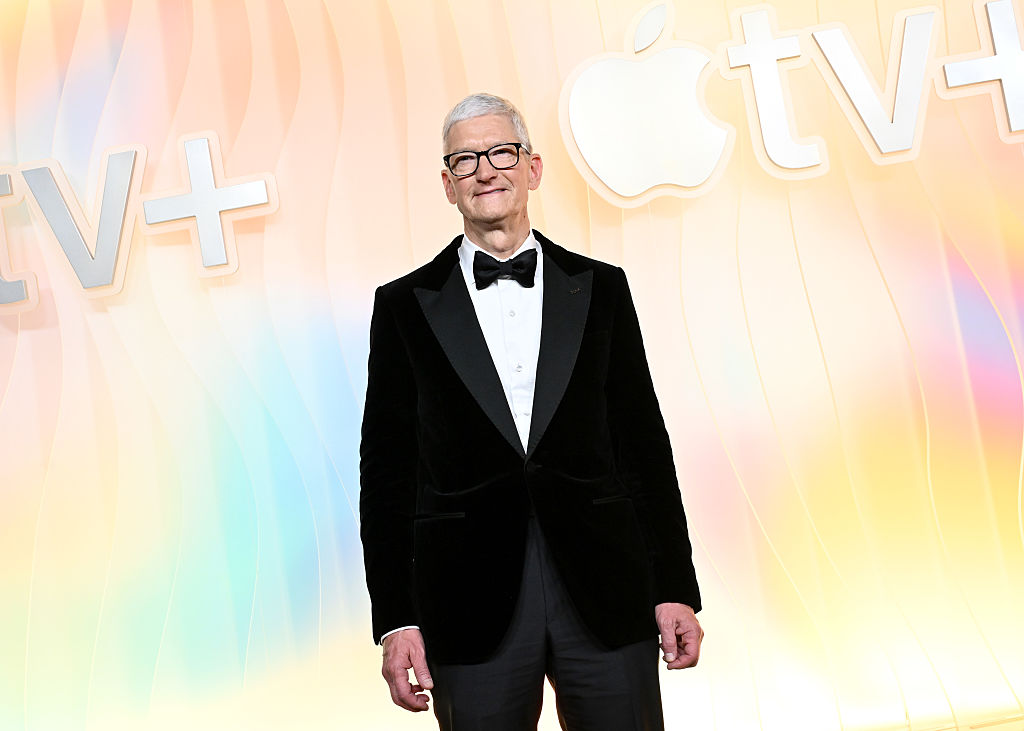
The Super Bowl is happening in Silicon Valley this Sunday, and the Patriots-Seahawks game at Levi’s Stadium is going to be packed with tech money. YouTube CEO Neal Mohan is expected to be there. Apple’s Tim Cook, too. (He has become a Super Bowl fixture since Apple Music began sponsoring the halftime show several years ago.)
Longtime VC Venky Ganesan from Menlo Ventures gave the New York Times a quote about the whole thing, saying the Super Bowl in the Bay Area is “tech billionaires who got picked last in gym class paying $50,000 to pretend they’re friends with the guys who got picked first.” Added Ganesan, “And for the record, I, too, was picked last in gym class.”
Ganesan could likely afford a $50,000 ticket if he needed one. Menlo went all-in on Anthropic, setting up a $100 million fund with the AI company in summer 2024 to invest in other AI startups. The firm has also joined numerous funding rounds for Anthropic itself, both through its flagship fund and various special purpose vehicles. (Anthropic is reportedly expected to close a $20 billion round of funding next week at a post-money valuation of $350 billion.)
Tickets are expensive across the board, averaging almost $7,000 according to the Times (with some last-minute seats still available on StubHub for closer to $3,600, according to a quick glance at the ticket reseller site). Only a quarter go to the general public; the rest are distributed to NFL teams. Of all ticket buyers, the largest group (27%) is coming from Washington State for the Seahawks, who’ve won just one Super Bowl in franchise history compared with the Patriots’ six titles, all with Tom Brady at quarterback.
Google, OpenAI, Anthropic, Amazon, and Meta are splashing out for competing ads about whose AI is best for customers, so maybe their respective CEOs will show up, too. Other than Amazon’s Andy Jassy, who reportedly splits his time between Seattle and Santa Monica, all of them have homes within an hour or so of Sunday’s game.
This is just the third time the Bay Area has hosted the Super Bowl. The first time was in 1985 at Stanford Stadium, the original football stadium at Stanford University, where the 49ers beat the Dolphins. The second took place 10 years ago at Levi’s Stadium, when the Broncos beat the Panthers.
Techcrunch event
Boston, MA
|
June 23, 2026
Tech
In Japan, the robot isn’t coming for your job; it’s filling the one nobody wants

Physical AI is emerging as one of the next major industrial battlegrounds, with Japan’s push driven more by necessity than anything else. With workforces shrinking and pressure mounting to sustain productivity, companies are increasingly deploying AI-powered robots across factories, warehouses, and critical infrastructure.
Japan’s Ministry of Economy, Trade and Industry said in March 2026 that it aims to build a domestic physical AI sector and capture a 30% share of the global market by 2040. The country already holds a strong position in industrial robotics, with Japanese manufacturers accounting for about 70% of the global market in 2022, according to the ministry.
Based on conversations with investors and industry executives, TechCrunch explored what’s driving that shift, how Japan’s approach differs from the U.S. and China, and where value is likely to emerge as the technology matures.
Driven by labor shortages
Several factors are driving adoption in Japan, including cultural acceptance of robotics, labor shortages driven by demographic pressures, and deep industrial strength in mechatronics and hardware supply chains, Woven Capital managing director Ro Gupta told TechCrunch.
“Physical AI is being bought as a continuity tool: how do you keep factories, warehouses, infrastructure, and service operations running with fewer people?” Hogil Doh, Global Brain general partner, also said. “From what I’m seeing, labor shortages are the primary driver.”
Japan’s demographic crunch is accelerating. The population declined for a 14th straight year in 2024; those of working age make up just to 59.6% of the total, a share projected to shrink by nearly 15 million over the next 20 years, Doh pointed out. It’s already reshaping how companies operate: a 2024 Reuters/Nikkei survey found labor shortages are the main force pushing Japanese firms to adopt AI.
“The driver has shifted from simple efficiency to industrial survival,” Sho Yamanaka, a principal with Salesforce Ventures, said in an interview with TechCrunch. “Japan faces a physical supply constraint where essential services cannot be sustained due to a lack of labor. Given the shrinking working-age population, physical AI is a matter of national urgency to maintain industrial standards and social services.”
Techcrunch event
San Francisco, CA
|
October 13-15, 2026
Japan is stepping up efforts to advance automation across manufacturing and logistics, according to Mujin CEO and co-founder Issei Takino. The government has been promoting automation to address structural challenges such as labor shortages. Mujin, a Japanese company, has built software that lets industrial robots handle picking and logistics tasks autonomously. Mujin’s approach centers on software — specifically robotics control platforms — that allows existing hardware to perform more autonomously and efficiently, Takino said.
Hardware strength, system risk
Where Japan has historically excelled is in the physical building blocks of robotics. Whether that advantage translates into the AI era is a more open question. The country continues to demonstrate strength in core robotics components such as actuators, sensors and control systems, according to Japan-based venture capitalists, while the U.S. and China are moving more quickly to develop full-stack systems that integrate hardware, software and data.
“Japan’s expertise in high-precision components – the critical physical interface between AI and the real world – is a strategic moat,” Yamanaka said. “Controlling this touchpoint provides a significant competitive advantage in the global supply chain. The current priority is to accelerate system-level optimization by integrating AI models deeply with this hardware.”
Hardware capabilities are strongest in China and Japan, with Japan particularly strong in robot motion control, while the U.S. leads in the service layer and market development, Takino said. Historically, many U.S. companies have leveraged their software strengths to build integrated businesses – similar to Apple – pairing strong software platforms with high-quality hardware sourced from Asia. However, this model may not fully translate to the emerging world of physical AI, Takino said.
“In robotics, and especially in Physical AI, it is critical to have a deep understanding of the physical characteristics of hardware,” Takino said. “This requires not only software capabilities, but also highly specialized control technologies, which take significant time to develop and involve high costs of failure.”
WHILL, a Tokyo- and San Francisco-based startup that makes autonomous personal mobility vehicles, is drawing on Japan’s “monozukuri,” or craftsmanship heritage, as it takes a broader, full-stack approach to global expansion, CEO Satoshi Sugie told TechCrunch. The company has developed an integrated platform combining electric vehicles, onboard sensors, navigation systems and cloud-based fleet management for short-distance and autonomous transport. The company is leveraging both Japan and the U.S. for development, using Japan to refine hardware and address aging population needs, and the U.S. to accelerate software development and test large-scale commercial models, Sugie noted.
From pilots to real-world deployment
The government is putting money behind the push. Under Prime Minister Sanae Takaichi, Japan has committed about $6.3 billion to strengthen core AI capabilities, advance robotics integration and support industrial deployment.
The shift from experimentation to real deployment is already underway. Industrial automation remains the most advanced segment, with Japan installing tens of thousands of robots each year, particularly in the automotive sector. Newer applications are also beginning to gain traction, Doh said.
“The signal is simple – customer-paid deployments rather than vendor-funded trials, reliable operation across full shifts, and measurable performance metrics such as uptime, human intervention rates and productivity impact,” Doh said.
In logistics, companies are deploying automated forklifts and warehouse systems, while in facilities management, inspection robots are being used in data centers and industrial sites.
Companies like SoftBank are already applying physical AI in practice, combining vision-language models with real-time control systems to enable robots to interpret environments and execute complex tasks autonomously.
In defense, where autonomous systems are becoming foundational, competitiveness will depend not just on platforms but on operational intelligence powered by physical AI, Terra Drone CEO Toru Tokushige told TechCrunch. Tokushige added that by combining operational data with AI, Terra Drone is working to enable autonomous systems to function reliably in real-world environments and support the advancement of Japan’s defense infrastructure.
Investment is shifting beyond hardware, with companies allocating more capital to orchestration software, digital twins, simulation tools and integration platforms, according to investors and industry sources.
The rise of hybrid ecosystems
Japan’s physical AI ecosystem is also evolving in ways that differ from traditional tech disruption models. Rather than a winner-take-all dynamic, industry participants expect a hybrid model, with established companies providing scale and reliability, while startups drive innovation in software and system design.
Large incumbents, including Toyota Motor Corporation, Mitsubishi Electric, and Honda Motor, retain significant advantages in manufacturing scale, customer relationships, and deployment capabilities. But startups are carving out critical roles in emerging areas such as orchestration software, perception systems, and workflow automation.
“The relationship between startups and established corporations is a mutually complementary ecosystem,” Yamanaka said. “Robotics requires heavy hardware development, deep operational know-how, and significant capital expenditure. By fusing the vast assets and domain expertise of major corporations with the disruptive innovation of startups, the industry can strengthen its collective global competitiveness.”
Japan’s defense ecosystem is also shifting away from dominance by large corporations toward greater collaboration with startups, the Terra Drone CEO said. Large companies remain focused on platforms, scale and integration, while startups are driving development in smaller systems, software and operations, with speed and adaptability becoming key competitive factors.
Companies like Mujin are developing platforms that sit above hardware, enabling multi-vendor automation and faster deployment across industries. Others, including Terra Drone, are applying similar approaches to autonomous systems, combining AI and operational data to support real-world applications at scale.
“The most defensible value will sit with whoever owns deployment, integration, and continuous improvement,” Doh said.
Tech
Can orbital data centers help justify a massive valuation for SpaceX?
SpaceX has reportedly filed confidential paperwork for an initial public offering in which the company would raise $75 billion at a $1.75 trillion valuation. And according to CEO Elon Musk, orbital data centers will be a big part of SpaceX’s future.
On the latest episode of TechCrunch’s Equity podcast, Kirsten Korosec, Sean O’Kane, and I discussed Musk’s vision, as well as other companies that are pursuing similar goals.
It will take significant tech development and massive capital spending to make orbital data centers a reality, but as Sean noted, with “opposition happening around the country to data centers in general,” executives like Musk and Jeff Bezos may be thinking, “The engineering challenge may be less than the social challenge back here” on Earth.
Read a preview of our conversation, edited for length and clarity, below.
Sean: This has been a trend — I would say a rapidly forming trend — over the last half year to a year, and we have different examples of it. We have SpaceX; I feel like in some ways, Elon Musk was late on this trend. And for the moment, let’s set aside the actual mechanics and the viability of data centers in space. We could talk about that in a second if we want, but —
Kirsten: We have a really good story we’ll link to in the show notes, by the way. One of our most recent hires, Tim Fernholz, is amazing. He writes all about the physics and the constraints of that.
Sean: Yeah, I think it’s a really interesting engineering challenge. It’s a really interesting physics challenge. It’s a really interesting orbital mechanics challenge. But it’s something that clearly a bunch of companies and people are going to try and chase. [There’s] going to be SpaceX doing it, with a kind of variance of what they’re already working on with their Starlink network.
Techcrunch event
San Francisco, CA
|
October 13-15, 2026
There’s a startup that had come out of Y Combinator, originally called Starcloud, that was really one of the first ones out there trying to build a huge business around this, that just raised $170 million this week, their valuation [on] that tipped them over into a unicorn status.
Jeff Bezos is trying to go after this as well. This is a next generation version of the competition that we’ve seen happening between Starlink and Amazon’s Leo satellite network, and Blue Origin has its own satellite network coming online as well in the next couple of years.
So there’s going to be a whole bunch of this happening, and it feels like it wasn’t happening a year ago. I know the way that Elon Musk pitches it is — we know he’s allergic to red tape, he’s built a data center in Memphis, too. Maybe now he knows the challenges and the risks you have to take to sidestep that red tape.
There’s a lot of opposition happening around the country to data centers in general. And these people say, “We have access to space, so let’s just try and do it up there.” The engineering challenge may be less than the social challenge back here on our [planet].
Kirsten: And it also creates excitement, right? If a company is about to go [public] and they’re working on data centers in space, this is something that people can have expectations about in a positive way and ignore the constraints. It feels like a company that is working on something that’s not old and outdated, but signals the future. And it’s really a great strategy when you think about it.
Anthony: Not that Elon Musk is the only one who does this, but it seems like he’s incredibly successful at being like, “Don’t judge my companies based on how much money they’re making now, judge them based on these grand visions that I can spin out about what will happen in the future.”
And going back to a point that Sean was making, I think that part of what’s interesting is to [ask]: How does this fit in with the broader data center rollout? How does it fit in with opposition and the idea that maybe people are not going to be able to build as many data centers as they want to?
I don’t think any of us are engineers who can really assess the viability of these plans. It does certainly have a tinge of fantasy to it, but even when they do lay out these plans, it feels like just a drop in the bucket in terms of compute capabilities compared to what they want to build out on Earth. So it feels like there’s not a scenario where this replaces a whole bunch of new data centers on Earth. It’s just sort of a […] supplement to it.
Sean: The last two things I’ll point out that are really front and center for me is, one, we’ve seen a backing off in some ways [from] data centers — not just because of opposition, but because maybe we don’t need as much, right? We see a bunch of jockeying from some of the AI labs about, “Well, maybe we don’t need to lease this much from this company,” or whatever. And if that becomes a thing that is more true than it was five months ago, do you all of a sudden lose all that momentum to do something as crazy as putting the data centers in space? Providing that it works, even.
The other thing is that the idea of building these massive data centers in space, with all these satellites that make up the quote unquote “data center,” is business for SpaceX. And I think this is unique to them compared to these other companies: They are a launch company primarily, even though they generate a bunch of revenue from Starlink. They are the vehicle that gets the data centers to space. They get to book that as revenue for SpaceX.
And so it becomes this thing where, of course [Musk] wants — whether or not it works, he would eventually have to prove it — but of course he wants to send more and more satellites into space because it’s more revenue for SpaceX. And that makes SpaceX look better as a public company. And then you just kind of tumble down the path until he finds something else to pitch the investors on.
Tech
TechCrunch Mobility: ‘A stunning lack of transparency’
Welcome back to TechCrunch Mobility — your central hub for news and insights on the future of transportation. To get this in your inbox, sign up here for free — just click TechCrunch Mobility!
You might recall the congressional hearing last month that sparked criticism against Waymo over its use of remote assistance workers in the Philippines. We have covered that issue extensively. You can read about the company’s remote assistance and road assistance teams here and here.
Waymo tends to get the most attention because, well, those robotaxis are now operating commercially in 10 U.S. cities, with more coming soon. But the issue of remote assistance is not a Waymo issue. It’s an autonomous vehicle technology issue.
A new report from Sen. Ed Markey (D-MA) makes my point.
Markey sent letters to seven U.S. companies — Aurora, May Mobility, Motional, Nuro, Tesla, Waymo, and Zoox — working on autonomous vehicle technology with a list of questions. He wanted to know how often these companies’ vehicles relied on input from remote staff.
They all refused to say, according to the results of Markey’s investigation. Markey said it was a “stunning lack of transparency from the AV companies around their use of remote assistance operators to help guide their AVs.”
You can read senior reporter Sean O’Kane’s article, which digs into the issue and includes the rather mute responses from the companies. (TechCrunch reached out to all of them.) One interesting admission from Tesla: The company said its remote assistance workers are authorized to temporarily assume direct vehicle control (a very different thing than “remote assistance”) as a final escalation maneuver.
Techcrunch event
San Francisco, CA
|
October 13-15, 2026
But here’s the thing — this is not going away. And silence will not defuse the matter. If anything, Markey seems more motivated than ever to get answers. He is now calling on the National Highway Traffic Safety Administration to investigate companies’ use of remote assistance workers and said he is “working on legislation to impose strict guardrails on AV companies’ use of remote operators.”
A little bird

Nothing this week that we have been able to verify. Send us tips! Have one? Email Kirsten Korosec at kirsten.korosec@techcrunch.com or my Signal at kkorosec.07, or email Sean O’Kane at sean.okane@techcrunch.com.
Deals!

It seems like just last week I was writing about Uber being everywhere, all at once. And I see it is still a trend, although this time it isn’t directly related to autonomous vehicles.
Uber said it is buying Berlin-based startup Blacklane, which provides on-demand, black-car chauffeur services, as the ride-hail giant expands deeper into luxury and executive travel services. Blacklane, which was founded in 2011, had raised more than $100 million to date from rental car company Sixt, Mercedes-Benz, and Alfahim, a conglomerate in the UAE.
The timing of the acquisition is notable. It comes just a few weeks after Uber announced the launch of Uber Elite, a chauffeur service that also offers a bunch of luxury offerings like airport meet-and-greets and in-vehicle amenities.
Other deals that got my attention …
Manna Air Delivery, a consumer drone delivery startup based in Ireland, raised $50 million from ARK Invest, the Ireland Strategic Investment Fund, Schooner Capital, Coca-Cola HBC, and Molten Ventures.
Saronic Technologies, an autonomous military ship developer based in Austin, raised $1.75 billion in a Series D funding round led by Kleiner Perkins. The company is now valued at $9.25 billion. Other investors include Advent International, Bessemer Venture Partners, DFJ Growth, BAM Elevate, and other new partners and recognizes the continued commitment of its existing investors, including 8VC, Caffeinated Capital, Andreessen Horowitz, Elad Gil, and Franklin Templeton.
Voltify, a startup that has developed a way to retrofit diesel locomotives with battery power, raised $30 million in seed funding co-led by Israeli venture firm Aleph and Australian miner Fortescue.
Notable reads and other tidbits

Also, the micromobility company created inside Rivian that spun out last year, will work with DoorDash to develop autonomous delivery vehicles. As part of the deal, DoorDash took part in Also’s $200 million Series C funding round, which was led by Greenoaks Capital. DoorDash is getting a seat on Also’s board of directors, too.
Baidu robotaxis stalled throughout Wuhan, China, in some cases trapping passengers for up to two hours due to system failure.
GM is ramping up its efforts to improve its advanced driver-assistance system, Super Cruise. CEO Mary Barra posted on LinkedIn that GM has started supervised testing of its next-gen automated driving system on public highways in California and Michigan.
“Soon, more than 200 supervised and manual test vehicles will be in live traffic, with trained drivers ready to take over at any time. This data will guide future updates to strengthen our autonomous capabilities,” she wrote.
Lucid issued a recall for more than 4,000 Gravity SUVs after discovering a problem with the seat belts.
The National Highway Traffic Safety Administration reported that traffic deaths fell 6.7% to 36,640 in 2025 from the prior year. This is the second-lowest traffic fatality rate in recorded history at 1,10 fatalities per 100 million vehicle miles traveled, according to the NHTSA.
All of those long TSA lines are prompting airlines to catch up and adapt. For instance, United Airlines has updated its mobile app to show TSA wait times at select airports.
The Subaru-Toyota partnership keeps cranking out EVs. At the New York Auto Show, Subaru introduced the all-electric Gateway, a three-row SUV that is essentially a rebadged Toyota Highlander EV.
Tesla’s Q1 sales figures show its cheaper vehicles aren’t helping it turn around declining sales. (Some legacy automakers have seen EV sales plummet.) That seems to have affected Tesla’s workforce numbers at its Austin, Texas, factory, which dropped 22% in 2025. Meanwhile, I riff on the changing of the guard over at Tesla (and, no, I am not referring to the string of executive departures there, although that is interesting). CEO Elon Musk shared that production of the Tesla Model S and X has ended, a milestone that marks the shift away from building cars designed for people to drive and toward robots and self-driving cars.
Toyota’s Woven Capital has appointed a new CIO and COO in a push to find the “future of mobility.”
Uber and Chinese autonomous vehicle company WeRide launched robotaxi operations without a human safety operator in Dubai as part of a broader expansion in the Middle East.
Waymo’s robotaxi service is now live at San Antonio International, its fourth major airport. Meanwhile, Wired looked at Waymo’s school bus problem (meaning the investigation into the illegal behavior of its robotaxis around school buses). The article provides new details on how the Austin School District tried to help Waymo solve the problem. It didn’t work.
One more thing …
My podcast, the Autonocast, spent some time talking with Ashu Rege, DoorDash’s VP of Autonomy. We recorded the episode prior to the Also-DoorDash announcement, which makes his comments about the company’s strategy all the more interesting. Check out the episode here.

Avalanche face Blues, hoping to clinch top seed in the West
Amaka Agugua-Hamilton no longer coach at Virginia


