
Entertainment
Tense Survival Thriller Pushes Suspense Into Extreme New Heights
By Robert Scucci
| Published

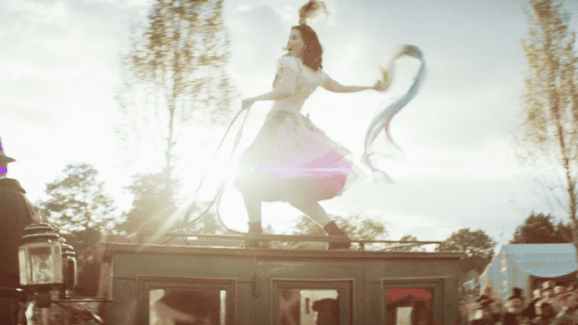
I can finally end my search for an action adventure thriller set entirely in a hot air balloon after watching 2019’s The Aeronauts. While we can get into the nitty gritty about how it’s “based on true events,” as depicted in the 2013 Richard Holmes book Falling Upwards: How We Took to the Air, anybody with access to Wikipedia can do that. Instead, let’s talk about the film itself. Since we’re ultimately dealing with a fictional piece of cinema inspired by multiple real-life balloon ascents, it’s all but expected that creative liberties are taken, and composite characters are stitched together from their historical counterparts for the sake of a cleaner, more dramatic story.
The Aeronauts, like most films that carry the biographical label, is no exception. As long as you’re not treating it like a history lesson, it’s well worth your time for the visuals and sheer level of suspense alone. I never thought a movie about a giant balloon could be this intense, but here we are, watching two deeply committed people float through the troposphere without even packing proper winter coats.
Floating High And Above

Set in 1862 London, The Aeronauts centers on scientist James Glaisher (Eddie Redmayne) and balloon pilot Amelia Wren (Felicity Jones). James believes that ascending to unprecedented heights will allow him to study atmospheric patterns in a way that could eventually make weather prediction possible. When the Royal Society refuses to take him seriously enough to fund the project, he turns to Amelia, whose skill and nerve make the entire expedition feasible. Through a series of flashbacks, we learn about the political resistance and personal motivations surrounding the journey, but that groundwork is not the main reason you’re here.
The real spectacle unfolds once James and Amelia leave the ground, rising beyond 30,000 feet and shattering the standing record for balloon travel. Completely devoted to his research, James pushes forward as Amelia repeatedly urges him to descend. Awestruck by the vast skyscape around them, James loses track of the balloon’s physical limitations and just how drastically the temperature has dropped while he continues taking notes and running tests.

When it becomes clear they’ve gone far too high for their own good, Amelia takes decisive action after recognizing the signs of James’ worsening hypoxia. That plan immediately falls apart when she realizes the gas release valve at the top of the balloon has frozen shut. Reduced to a speck drifting through the sky, Amelia braves brutal conditions in her attempts to bring both of them back to land. The elements are not on her side, and she soon begins suffering from frostbite as well. With their lives and James’ research hanging in the balance, every split-second decision carries real consequences, and the margin for error disappears fast.
Stunning Cinematography All Around

While the flashback sequences in The Aeronauts are necessary for context, they lean into familiar tropes tied to dangerous missions. Both characters are haunted by their pasts and repeatedly revisit traumatic moments while grappling with their present situation. If I’m being completely honest, I have a hard time taking people in top hats seriously, so these scenes occasionally play as unintentionally funny for me. I fully recognize that I might be a sample size of one here, and your mileage may vary.
What truly impressed me were the sequences that take place inside and around the balloon itself. The horizon, the clouds, and even butterflies drifting through air currents at what were once unheard-of altitudes are the real draw of The Aeronauts. Ice crystallizing across the balloon as Amelia struggles with the frozen gas valve, along with wide shots that emphasize how small she and James are against the open sky, are genuinely striking. The storms that threaten to consume them as they push higher in the name of science add another layer of tension, made all the more effective by how grounded and tactile everything looks.

It’s safe to assume The Aeronauts received a healthy dose of VFX in post-production, but it’s difficult to spot while watching. The visuals feel real and cohesive, creative liberties with characterization aside, and the result is an immersive experience even from your couch. If you’re looking to challenge your fear of heights, or you’re simply in the mood for historical fiction that focuses on discovery rather than warfare, you can stream The Aeronauts on Prime Video as of this writing.
Entertainment
20 noise-cancelling headphones and earbuds deals live ahead of Amazons Big Spring Sale

Best noise-cancelling headphones deals ahead of the Big Spring Sale


If spring is the season of cleaning and rebirth, why can’t that include your old, half-functioning noise-cancelling headphones barely hanging on to half their original battery life?
While Black Friday and Prime Day are generally great times of year to pick up a new pair of headphones, that doesn’t mean you’re left high and dry in the spring, especially thanks to Amazon’s Big Spring Sale.
The sitewide sale starts for its third year running on March 25 and goes all the way through March 31. Prime and non-Prime members alike can enjoy savings, and while this sale is more focused on season-appropriate savings like outdoor gear, home essentials, and cleaning supplies, historically we’ve also seen great deals on tech like noise-cancelling headphones.
Amazon’s Big Spring Sale kicks off on March 25 this year. Here’s how we’re prepping for it.
The Spring Sale isn’t necessarily Black Friday-level, so some early deals are just as good as what you’ll see live during the sale. With that in mind, we gathered 20 of the best noise-cancelling headphones and earbuds deal live ahead of the sale:
Note: any deals with a strike are no longer available at the time of writing.
Best noise-cancelling headphones on sale

$398
at Amazon
$459.99
Save $61.99
Why we like it
Sony’s flagship WH-1000XM6 headphones may not be the cheapest out there, even on sale for $61.99 off. Still, they’re some of the best headphones out there, and certainly one of the best sounding ones, with a great equalizer for fine tuning your listening experience. Add with their solid battery life, excellent ANC, and folding ear cups for some travel portability, and you have some well-rounded headphones. If you’re looking for a cheaper option, we recommend the Sony WH-CH720N.
Check out our full review of the Sony WH-1000XM6.
Mashable Deals
More early noise cancelling headphones deals
Best noise-cancelling earbuds on sale
$88
at Amazon
$129.99
Save $41.99
Why we like it
While there are plenty of great noise-cancelling earbuds out there, not all of them can claim to offer a performance that beats that AirPods 4 while costing less than $100. With the Sony WF-C710N on sale for $88, that’s exactly the case. While this isn’t the absolute lowest price we’ve caught these earbuds at (that would be $69.99), you’ll still save an impressive 32% on them. And, you’ll get a pair of earbuds with solid ANC, a comfortable enough fit for at least a few hours of continuous wear, easy to use touch controls, classic well-rounded Sony sound, and 8.5 hours of battery life per charge.
Check out our full review of the Sony WH-C710N.
More early noise-cancelling earbuds deals
Entertainment
iPhone exploit DarkSword has been released in the wild: How to protect yourself
DarkSword, the web-based hacker tool that can be used to steal data from millions of iPhones, has just been published on GitHub for public use. Cybersecurity experts say Russian hacking groups are actively using DarkSword “to fully compromise devices.”
Now that the exploit is public, any would-be cybercriminal can just quickly copy and paste the DarkSword code, take a few minutes to set it up on their web host, and deploy the spyware.
Last week, reports about the new hacker tool called DarkSword sparked so much concern in the security world that Apple was forced to issue a quick response explaining how the company is addressing the threat. The reports came from Google’s Threat Intelligence Group and two cybersecurity firms, iVerify and Lookout.
Want to be the first to hear about our latest tech coverage? Sign up for Mashable’s Top Stories and Deals newsletters today.
What is DarkSword?
DarkSword is an exploit that lets hackers steal data from vulnerable iPhones running outdated versions of iOS.
DarkSword has concerned cybersecurity professionals because it doesn’t require that the hacker’s target download any malware or corrupted files. Hackers can simply download the DarkSword HTML and Javascript and upload it to a compromised website. If a user with an old version of iOS visits the compromised site, their device becomes vulnerable. The hacker can then steal data such as passcodes, emails, private messages, and more from the victim’s iPhone.
Mashable Light Speed
As Lookout reported last week:
In a tangible example of how attacks are evolving, Lookout Threat Labs has discovered DarkSword, a full iOS exploit chain and payload for iPhones running iOS versions between iOS 18.4 and 18.6.2…DarkSword aims to extract an extensive set of personal information including credentials from the device and specifically targets a plethora of crypto wallet apps, hinting at a financially motivated threat actor. Notably, DarkSword appears to take a ‘hit-and-run’ approach by collecting and exfiltrating the targeted data from the device within seconds or at most minutes followed by cleanup.
Google cybersecurity researchers reported that the notorious hacker group UNC6353, which is suspected to have ties with the Russian government, previously deployed DarkSword on compromised Ukrainian government agency sites to target iPhone users within Ukraine.
iVerify told TechCrunch that the DarkSword exploit that’s now in the wild is slightly different but “shared the same infrastructure.” According to iVerify, no iOS experience is needed to run the exploit and it will work “out of the box.”
This Tweet is currently unavailable. It might be loading or has been removed.
As TechCrunch also reported, another X user shared that they were able to hack their iPad mini 6th gen running iOS 18.6.2 with the DarkSword exploit that was just released in the wild.
Apple previously reported on its developer website that nearly 25 percent of all iPhones are still running iOS 18, meaning hundreds of millions of iOS devices are susceptible to this exploit. The current version of iOS is iOS 26.3.1.
How to protect your Apple devices from DarkSword
Google’s Threat Intelligence Group urged iOS users to update their devices to the newest version of iOS, and if that’s not possible, to activate the iPhone’s Lockdown Mode.
Apple also said that it pushed out a critical security update on March 11 for older iOS devices that can’t install the more up-to-date iOS in order to protect these devices from DarkSword. Users with devices running iOS 13 or iOS 14 need to update to iOS 15 to receive these critical protections.
Entertainment
Unrated, Extremely Graphic Thriller Tries To Kill You But Can’t
By Robert Scucci
| Published

1978’s The Odd Job is a comedy of errors about a man who hires a janitor to kill him because he’s too much of a coward to end his own life. It’s a slapstick effort written by Graham Chapman that’s way funnier than its critical reputation suggests, and on one hand, I get it. It’s essentially the same gag repeated over and over again, with mixed results, landing if you’re a fan of the kind of irreverent humor that only somebody from the Monty Python comedy troupe could deliver with a wink and a nod.
Toying with a similar premise is 2014’s The Suicide Theory, which centers on a comparable setup but with wildly different results (namely, it’s not a comedy). In The Suicide Theory, we’re introduced to a contract killer hired by a man who no longer wants to live. The problem is that he’s given suicide the old college try on countless occasions leading up to this point and is convinced he’s invincible. While both films feature the same kind of contractual relationship in which one man wants to be eliminated from his mortal coil, The Suicide Theory is existentially heavy, focusing primarily on fate, free will, and how they’re constantly at odds with each other.
Steven And Percival’s Deadly Dynamic

The Suicide Theory wastes no time setting up its conflict when Steven (Steve Mouzakis) is tracked down by a desperate man named Percival (Leon Cain). Percival already looks worse for wear, with scars all over his face indicating that he wouldn’t be hiring a hitman if he hadn’t already tried to die, and failed miserably, countless times. Not even sure if Steven can successfully kill him, Percival hands over a large sum of cash and tells the killer that he doesn’t want to see it coming, and that since he believes he may be cursed, an attempt can only be made on his life if he looks legitimately happy.
Up to the challenge, but not one to believe Percival’s claims, Steven immediately shoots Percival in the chest three times upon making the arrangement, only for the man to wake up hours later in the hospital with no major injuries. Percival is further upset when he learns that the doctors found a massive tumor near one of the bullet wounds and were able to remove it while they were in there, meaning getting shot actually saved his life.

Fascinated by this project, Steven, who’s lost his passion for contract killing, keeps his promise and continues searching for new ways to execute Percival, none of which work. Steven, who’s been afraid of crossing streets ever since his wife was struck by a car and killed three years prior, can’t always chase Percival down due to his phobia, but has no qualms about hailing a taxi cab to help him cross the street if he needs to.
An Exploration Of Fate And Purpose
As we get to know the two principal players in The Suicide Theory, it becomes evident that they’re not so different. One man is a hardened, cold-hearted killer who’s lost his passion for the game, while the other is so deeply wounded that even multiple suicide attempts can’t put him out of his misery.

It’s almost as if he’s done something so horrible in life that his cosmic punishment is never being able to end it on his own terms. The two men become friends, if you could call it that, and come to realize they were supposed to meet each other, as if fate had been waiting for them. The reason their paths cross, when finally revealed, is the kind of gut punch that will make you wish you were watching The Odd Job instead, because it’s a brutal way to spend your time.
The Suicide Theory is not an easy watch, but it’s a rewarding one. It’s an exploration of fate and destiny taken to its most morbid conclusion, and it’s not without a dark sense of humor. It’s not “haha” funny by any stretch, but every time Percival wakes up in the hospital wondering how he made it out alive this time, you can’t help but sport a wry smile because he’s trying everything he can to not wake up ever again. Steven’s odyssey is all about finding purpose; he wants to hang up his gun for good, but knows this last job is an important one. But it’s up to you, dear reader, to figure out why.

The Suicide Theory is currently streaming for free on Tubi.

20 noise-cancelling headphones and earbuds deals live ahead of Amazons Big Spring Sale
iPhone exploit DarkSword has been released in the wild: How to protect yourself


