
Tech
TechCrunch Mobility: The great Tesla rebranding

Welcome back to TechCrunch Mobility — your central hub for news and insights on the future of transportation. To get this in your inbox, sign up here for free — just click TechCrunch Mobility!
Tesla CEO Elon Musk has spent months — years? — trying to position his company as something more than just a maker of electric vehicles. When Tesla acquired Solar City in 2016, he (and his comms team) pitched it as a sustainable energy company. Over the past year, he has pushed the idea of Tesla as an AI and robotics company.
Musk’s aspirational branding has slammed right up against financial reality: The bulk of its revenue comes from selling EVs. Its latest earnings support this.
The company generated $94.8 billion in revenue in 2025. Of that, $69.5 billion came from selling and leasing EVs as well as related regulatory credits. The remaining $25 billion is split nearly down the middle between its energy generation (solar) and storage business and “services and other,” which include revenue from its Superchargers, parts sales, and Full Self-Driving subscriptions. That reliance on deliveries means that as EV sales have dipped, so has Tesla’s entire balance sheet. Its profits in 2025 were 46% lower year-over-year.
Tesla has tried to grow its non-EV businesses to compensate for the decline in sales, and its Q4 and full-year earnings report (and its accompanying call) signaled a shift beyond the persistent AI-robotics talk and toward action. For now, that action involves spending money, not making it. Musk repeatedly stressed that 2026 would be a huge CapEx year, more than doubling spending to $20 billion, which would put them in negative-cash-flow territory.
For instance, Musk announced that Tesla is ending production of the Model S and Model X, which is more symbolic than material. Those two models represent about 2% of Tesla’s sales volume, a point that Barclays analyst Dan Levy also makes in his most recent note. Still, it is a notable end-of-an-era moment for Tesla and the broader automotive industry, which was forever changed when the Model S went on sale in 2012.
The more material move is what Tesla plans to do now.
Techcrunch event
Boston, MA
|
June 23, 2026
Tesla plans to fill the production void left by the Model S and X with its Optimus humanoid robots, which will be made at its Fremont, California, factory. Musk also intends to scale Tesla’s robotaxi operations to more cities in 2026 and even floated the need for Tesla to build a TerraFab factory to shore up chip supply.
But the item that really stood out to me — and a true Elon Inc circular economy deal — was Tesla’s plan to invest $2 billion into another Musk company, xAI, and signaled plans to more closely align those two companies. Meanwhile, other outlets are reporting talks are underway to possibly merge (in some combination) three of Musk’s companies: SpaceX, Tesla, and xAI.
But let’s come back down to earth for a moment and review Tesla’s current business. Its sales are down year-over-year, while its smaller energy storage business made positive gains.
A little bird

We’re not quite ready to share the full details, but we’ve heard from one little bird that there is some activity on the fundraising front for Waymo. You probably saw reporting last month about Waymo raising up to a $15 billion round led by its parent company Alphabet. Based on my conversations, it is still in “the realm” of $15 billion and large portion is coming from Alphabet, and there is high interest from external investors to join. One little bird told me one of the other investors may be an OEM (original equipment manufacturer.
Stay tuned for more on this.
Got a tip for us? Email Kirsten Korosec at kirsten.korosec@techcrunch.com or my Signal at kkorosec.07, or email Sean O’Kane at sean.okane@techcrunch.com.
Deals!

Waabi gets my “deal of the week” badge — and not just because of the dollar figures attached. The autonomous vehicle startup has raised $750 million in a Series C round co-led by Khosla Ventures and G2 Venture Partners, plus another $250 million in milestone capital from Uber to support the deployment of 25,000 or more Waabi Driver-powered robotaxis exclusively on its platform.
Uber is already a Waabi backer, participating in one of its earliest raises in 2021. But this is about more than money. When Waabi first launched, it focused on applying its autonomous vehicle tech to self-driving trucks. The deal with Uber is a declaration that it intends to scale its tech across multiple self-driving verticals with a single technology stack.
Can Waabi do it? Others have tried and retreated. Waymo shuttered its self-driving trucks program to focus on robotaxis; Aurora, which is also an investor in Waabi, was working on both trucks and robotaxis, too, before deciding to focus just on big rigs.
Other deals that got my attention …
Gatik AI, a startup developing autonomous trucks focused on the “middle mile,” has signed a deal with a major (unnamed) consumer-goods company. Here’s why it matters: The contract will deliver $600 million in revenue over five years. And these are for driverless transport, meaning no safety driver is behind the wheel. These Gatik trucks, which run 24 hours a day moving ambient, refrigerated, and frozen goods between distribution centers and stores, have been operating driverlessly since mid-2025. According to the company, it has completed 60,000 fully driverless orders without incident.
Luminar’s lidar business has been sold for $33 million to Redmond, Washington-based MicroVision. The company, which is developing its own sensors, beat out Quantum Computing in an auction for the assets. TC’s Sean O’Kane interviewed MicroVision CEO Glen DeVos about his plans for Luminar. The sales process did have a bit of last-minute intrigue when a mystery bidder, with a far larger offer, made a play for Luminar’s lidar business.
Rad Power Bikes, which started the bankruptcy process about a month ago, reached a deal to sell itself to Life Electric Vehicles Holdings (or Life EV) for around $13.2 million. When accounting for Rad Power’s liabilities, the total value of the bid is $14.9 million. History lesson: Rad Power has raised $329.2 million since its founding and once had a valuation of $1.65 billion.
Redwood Materials raised $425 million in a Series E round that includes Google as a new investor. The round was led by venture firm Eclipse and includes a strategic investment by Nvidia’s venture capital arm, NVentures, as well as existing investors Capricorn and Goldman Sachs. Read the full story to learn what Redwood plans to do with the capital.
Notable reads and other tidbits

Obi, a company that aggregates real-time pricing and pickup times across multiple ride-hailing services, shared new data on ride-hailing and robotaxis in the San Francisco Bay Area. There are a few takeaways — so please go read the full story — including that the price gap between Waymo and rides provided by Uber and Lyft is narrowing.
Uber launched a new division called Uber AV Labs, that is not — as senior reporter Sean O’Kane points out — a ploy to start developing its own robotaxis again. This is a data-sharing play; sensor-equipped Uber cars will collect and then share data with partners like Lucid, Waymo, and Waabi. Important note: No contracts are signed yet.
Waymo is now allowed to operate a robotaxi service to and from the San Francisco International Airport (SFO). The company will begin offering access to SFO to a select number of riders before offering it to all customers in the coming months. That win comes with a bit of tarnish, however. Waymo is under investigation by the National Highway Traffic Safety Administration and National Transportation Safety Board after the company reported one of its robotaxis struck a child near an elementary school in Santa Monica on January 23.
The San Francisco Police Departmentis investigating an incident involving a Zoox autonomous vehicle that crashed into the driver’s-side door of a parked car.
One more thing …
It’s been a few weeks since we’ve had a poll and here is a fun one: What will the name or ticker of Musk’s combined supercompany be?
Sign up here to take get the newsletter in your inbox and participate in our polls!
Tech
SNAK Venture Partners raises $50M fund to back vertical marketplaces
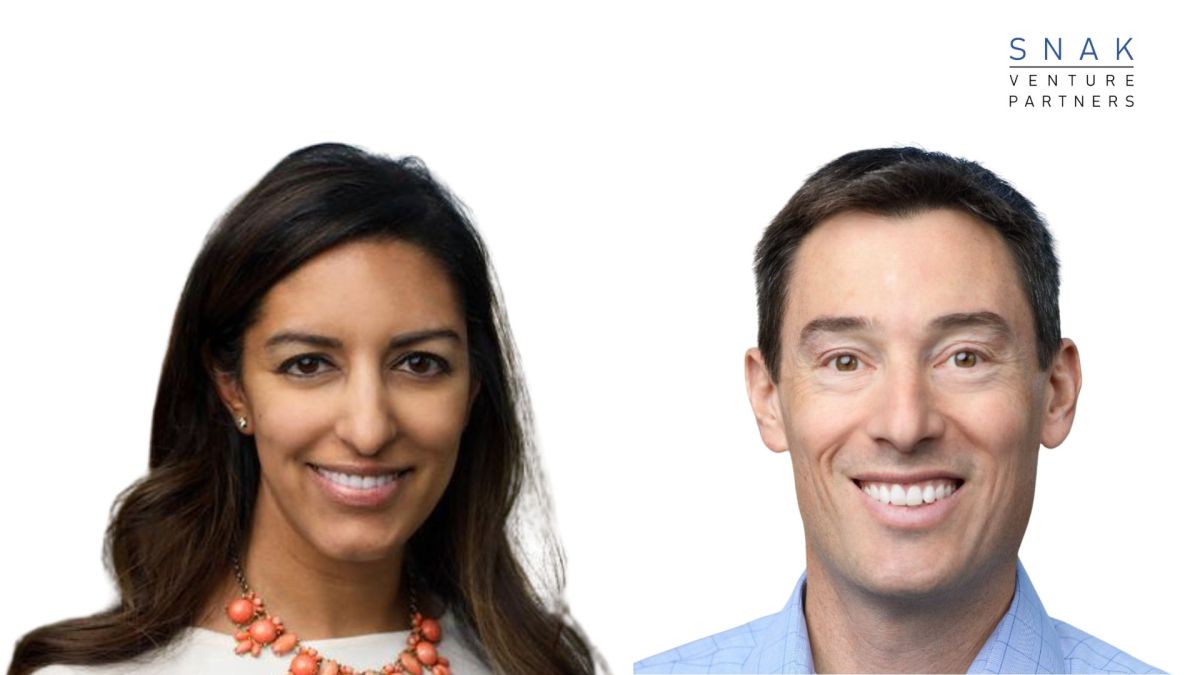
SNAK Venture Partners announced Wednesday the close of its oversubscribed $50 million debut fund, anchored by the investment firm Pritzker Group (founded by Illinois governor JB Pritzker and his brother, Tony).
SNAK founders Sonia Nagar and Adam Koopersmith worked at the firm and helped lead investments in companies like the auto marketplace Backlot Cars and TicketsNow (exited to Ticketmaster). The duo decided to break out on their own and, earlier this year, launched their firm to back digital marketplaces.
“It felt like the timing was right and there was support within the firm to go do this,” Nagar said.
The vision is that there is still so much to digitize, like in supply chain and construction, and this is the moment to strike because even holdout industries are more comfortable adopting new technology as fintech architecture advances.
“If you look at the biggest venture wins over the last decade,” she said, pointing to the likes of Uber, Instacart, and Airbnb, “those are five of the top 10 outcomes in venture.” As in those companies that raised billions from investors, went on to IPO, and returned millions to them.
“Most of those wins were in consumer, which tends to be faster-moving than large enterprises,” Nagar continued. “We think there’s a ton of white space to double down and focus on B2B marketplaces.” Looking specifically for the categories that haven’t yet digitized.
The firm has already invested in six companies, including Big Rentals and Repackify, focused on equipment rental and packaging logistics, respectively. Nagar said the firm hopes to overall write seed checks into at least 20 companies, at $1 million to $2 million a pop. She said they hope to deploy the entire fund within the next 3 to 4 years.
Techcrunch event
Boston, MA
|
June 23, 2026
Though many new funds are struggling to raise capital (and capital remains concentrated at the top), Nagar said she and Koopersmith were able to lean on their backgrounds when wooing LPs.
Nagar previously helped launch Amazon apparel back in 2009, and was head of mobile at RetailMeNot. Koopersmith, meanwhile, spent 20 years at Pritzker Group and serves on the board of various marketplace companies. At the same time, Nagar said that without Pritzker’s support, it would have been quite hard to raise this fund, especially in last year’s environment.
Other LPs in their fund include the State of Illinois Growth and Innovation Fund and executives from other marketplace companies, like Favor Delivery and RetailMeNot.
Nagar said the firm is also location-agnostic, recognizing that the still-hidden marketplaces may not be found only in Silicon Valley and New York City. “We’re finding these overlooked founders in places where maybe other funds aren’t looking,” she said.
SNAK is itself based in Chicago, which she said some LPs have questioned. “People perceive that as a disadvantage; we view it as an advantage,” she continued. “We can get to everybody very fast.”
Tech
Uber appoints new CFO as its AV plans accelerate
Uber is promoting Balaji Krishnamurthy, its VP of strategic finance and investor relations, to be its CFO, replacing its current finance chief Prashanth Mahendra-Rajah.
Krishnamurthy has been at Uber for over six years, spending most of his tenure in the company in its investor relations division. He often posts about the company’s autonomous ride-hailing efforts, and has a board seat at AV company Waabi — so the appointment may be a signal of the company’s plans to expand its driverless investments and operations.
Indeed, on the company’s fourth-quarter earnings call on Wednesday, Krishnamurthy said the company would invest capital in its AV software partners, work with AV makers by investing equity or via offtake agreements, and “support our AV infrastructure partners.”
“With large and growing free cash flows, over the coming years we will invest with discipline across a multitude of opportunities, including positioning Uber to win in an AV future,” Krishnamurthy wrote in a statement detailing the company’s Q4 results.
Uber’s CEO Dara Khosrowshahi said on the call that he was convinced autonomous vehicles would “unlock a multitrillion-dollar opportunity,” for the company, adding that autonomy “fundamentally amplifies” the strengths of the company’s platform.
“By the end of 2026, we expect to be facilitating AV trips in as many as 15 cities globally, with a roughly even split of U.S. and international cities. And by 2029, we intend to be the largest facilitator of AV trips in the world,” Khosrowshahi said.
Over the past two years, Uber has amassed partnerships with at least 20 autonomous vehicle companies across a variety of use cases, including sidewalk delivery robots, robotaxis, and trucking. Waymo is perhaps its highest profile partner with shared robotaxi operations in Atlanta and Austin. It has also struck deals with Avride, UK-based Wayve, Chinese companies WeRide, Momenta, and Volkswagen, among others.
Techcrunch event
Boston, MA
|
June 23, 2026
It has made direct investments in AV startups as well. Waabi, for instance, recently announced a $750 million Series C funding round that included an up to an additional $250 million (if it reaches certain milestones) from Uber to support the deployment of 25,000 or more robotaxis on its platform. Uber has also invested in Silicon Valley-based Nuro and Lucid as part of a deal to launch a premium robotaxi service.
Uber said revenue rose to $14.37 billion in the fourth quarter, up 20% from a year earlier, driven by strong demand for its food delivery services.
Mahendra-Rajah is leaving Uber after three years at the company.
Tech
After backlash, Adobe cancels Adobe Animate shutdown and puts app on ‘maintenance mode’
Adobe is putting on hold its plan to discontinue Adobe Animate following intense backlash from its customers after it announced plans to shut down the 2D animation software amid an increased focus on its investments in AI.
“We are not discontinuing or removing access to Adobe Animate. Animate will continue to be available for both current and new customers, and we will ensure you continue to have access to your content,” the company wrote in a post on Wednesday.
Adobe’s Monday announcement about discontinuing Animate was met with incredulity, disappointment, and anger, and users aired concerns about the lack of alternatives that mirror Animate’s functionality.
The company changed its tune on Wednesday, saying there would no longer be a “deadline or date by which Animate will no longer be available.”
“Adobe Animate is in maintenance mode for all customers. This applies to individual, small business, and enterprise customers. Maintenance mode means we will continue to support the application and provide ongoing security and bug fixes, but we are no longer adding new features. Animate will continue to be available for both new and existing users - we will not be discontinuing or removing access to Adobe Animate,” it said.
One customer, posting on X, had asked Adobe to at least open source the software rather than abandon it. Commenters on the thread responded with angst, saying things like, “this is legit gonna ruin my life,” and, “literally what the hell are they doing? animate is the reason a good chunk of adobe users even subscribe in the first place.”
On Monday, the company updated its support site and sent emails to existing customers announcing that Adobe Animate would be discontinued on March 1, 2026. Enterprise customers would continue to receive technical support through March 1, 2029, to ease the transition, the company said at the time. Other customers would have support through March of next year.
Adobe explained its decision to discontinue the program in an FAQ, saying, “Animate has been a product that has existed for over 25 years and has served its purpose well for creating, nurturing, and developing the animation ecosystem. As technologies evolve, new platforms and paradigms emerge that better serve the needs of the users. Acknowledging this change, we are planning to discontinue supporting Animate.”
Reading between the lines, it seemed as if Adobe was saying that Animate no longer represents the current direction of the company, which is now more focused on products that incorporate AI technologies.
What’s surprising is that Adobe couldn’t even recommend software that would fully replace what customers are losing with Animate. Instead, it said customers with a Creative Cloud Pro plan can use other Adobe apps to “replace portions of Animate functionality.”
For instance, it suggested that Adobe After Effects can support complex keyframe animation using the Puppet tool, and Adobe Express can be used for animation effects that can be applied to photos, videos, text, shapes, and other design elements.
There were hints that Adobe was headed in this direction when no mention was made of Animate at the company’s annual Adobe Max conference. Plus, no 2025 version of the software was released.
Before switching to “maintenance mode,” Abode had intended for the software to continue to work for those who have it downloaded. Typically, Adobe charged $34.49 per month for the software, which dropped to $22.99 with a 12-month commitment. The annual prepaid plan was available for $263.88. Now, the company says it will be available to new users, as well.
Some users have been recommending other animation programs to use as a replacement, including Moho Animation and Toon Boom Harmony.
Updated, February 4, 2026, to note that Adobe reversed its decision and announced the software would be placed in maintenance mode instead of discontinued.


Saturday Night Live UK announces 11 cast members

Get $600 off the Bluetti Elite 400 portable power station and stay prepared for emergencies


