
Tech
Stripe alumni raise €30M Series A for Duna, backed by Stripe and Adyen execs
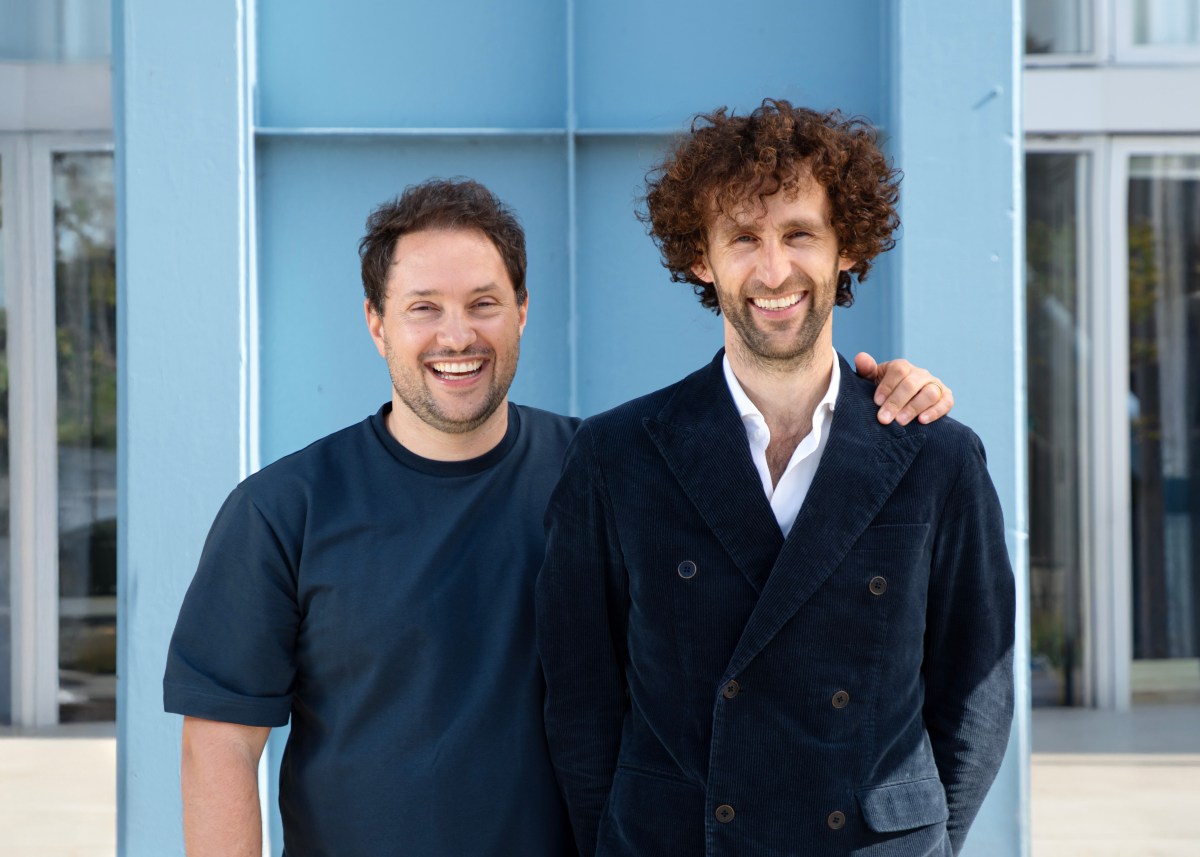
Anthropic and OpenAI may be rivals, but their presidents Daniela Amodei and Gregory Brockman have one thing in common: they are both Stripe alumni. With former employees who went on to create dozens of startups, the fintech company has become one of the most prolific “founder factories” — and the money is following. The latest example: business identity verification startup Duna, which just raised a €30 million Series A to become the best-funded European member of the so-called “Stripe mafia.” The funding round was led by Alphabet’s growth fund CapitalG, which has also backed Stripe since co-leading its Series D in 2016.
Based in Germany and the Netherlands, Duna was co-founded by Stripe alumni Duco van Lanschot and David Schreiber. With customers including Plaid, the startup helps fintech companies onboard business customers more efficiently, reducing the typical churn associated with corporate ID checks and other fraud prevention measures.
Stripe is not a customer of Duna, van Lanschot said, but its executives were well placed to understand the opportunity that the startup is seizing, which is reflected in its cap table. The company’s angel investors include current Stripe COO Michael Coogan and former executives David Singleton (CTO) and Claire Hughes Johnson (COO). Even Stripe rival Adyen got involved, with CRCO Mariëtte Swart and CFO Ethan Tandowsky joining as angels.
Their endorsements also validate van Lanschot’s hunch that these companies won’t compete with Duna, even though they could. “It requires such fine-grained controls that change on a company-by-company basis, that an Adyen or a Stripe isn’t going to spin out their business onboarding as a separate product where another enterprise customer can change all of the configurations,” he told TechCrunch.
If it’s still worth the effort for Duna, it’s because the startup is going after the long tail of enterprise clients that don’t have huge resources to dedicate to business onboarding. But it’s also because its vision doesn’t stop there: Duna’s ambition is to build a network that allows companies to reuse their verified identity information across multiple platforms.
“What we want to build over time is a global trust infrastructure where we provide a digital passport for every business. So you can reuse your file from onboarding on [German spend management platform] Moss to onboard with Plaid, or you can reuse it to open up a bank account,” van Lanschot said.
This goal resonated with Alex Nichols, the general partner who led CapitalG’s investment into the Series A. “I would say the common thing I look for in my investments are some sort of network effects, or more formal scale advantage,” he told TechCrunch. “I also love it when founders have an earned insight about a problem they may not know about otherwise, and this is a very good example of that,” he added.
Techcrunch event
Boston, MA
|
June 23, 2026
Duna has competitors in the category known as KYB, or Know Your Business. This includes vendors such as Jumio and Veriff. But for Nichols, what sets Duna apart is its decision to generate its own data, rather than trying to aggregate existing data sources that are often lacking. “It’s the rare opportunity to rebuild something as foundational as a Visa and create an amazing business in the process.”
Duna says it has already found a strong business case in helping customers onboard corporate users faster and cheaper. This also explains why existing investors are doubling down: Index Ventures, which led Duna’s €10.7 million seed round in May 2025, participated in the Series A, as did Puzzle Ventures and Snowflake chairman Frank Slootman. But the startup’s bigger ambition won’t pay off until Duna reaches significant scale. So the company is looking for shortcuts.
How so? Van Lanschot and the Duna team are identifying small clusters of companies that already overlap with each other — what they call “patches of networks.” These include manufacturing companies with shared customers, investment firms with overlapping LPs, or companies in the same small country. In these tight-knit groups, the ability to reuse verification becomes valuable immediately, even before Duna achieves full network effects.
The countries may be small, but the opportunity is big, van Lanschot said. “In the Netherlands alone — a tiny, tiny country — the four biggest banks employ 14,000 people in compliance, and half of them are working on businesses.” Duna won’t fully replace these jobs yet, but AI automation can save costs and generate revenue even before the network effects kick in.
If Duna eventually provides the rails for an identity network, there might be an even bigger opportunity in taking advantage of this position to enable one-click business onboarding. This would make it akin to Amazon’s one-click checkout — or closer to B2B, to Stripe Link. Once again with Duna, the Stripe connection is never really far.
Tech
Mirage raises $75M to continue building models for its AI video editing app Captions

Mirage, the maker of video-editing app Captions, has raised $75 million in growth financing from General Catalyst’s Customer Value Fund (CVF).
Over the past year, the startup has made significant changes both to its product and corporate identity. The startup rebranded from Captions to Mirage to position itself as an AI lab that produces different models and also caters to industries like advertising and marketing. It has also trained a model specifically for pacing, framing, and attention dynamics in short videos.
The company also switched to a freemium model in January 2025 to better compete with apps like ByteDance’s CapCut and Meta’s Edits, which was released later in the year. It now offers a video-creation suite as well, with some of the features from Captions, that lets companies create and distribute videos in bulk.
Mirage’s co-founder and CEO Gaurav Misra said that the company aims to create more models. However, he didn’t specify what its next set of models would do, only saying that they would be focused on “assembly intelligence” — basically putting together a video using different sources and components.
Speaking about Mirage’s new audio model, which it claims can preserve accents in generated videos, Misra said, “The reason for the audio model was that we noticed that there was a gap in accents because a lot of our users are international. Accents are just very important. There was my own dad’s example. He was trying to use the app, and he would say a word in an Indian accent, and it would always make it sound like he’s talking in an American accent.”
According to data from analytics firm Appfigures, Captions has been downloaded over 3.2 million times in the last 365 days and has brought in $28.4 million in in-app revenue. Misra said the platform has been used to create more than 200 million videos so far, and that it has attracted an international user base, with only 25% of its revenue coming from the U.S.
Currently, Mirage’s marketing suite is available on the web, and Captions largely offers a mobile-first editing suite. The company aims to merge these two platforms to better target small businesses that may be looking to create marketing videos.
Techcrunch event
San Francisco, CA
|
October 13-15, 2026
Pranav Singhvi, managing director of General Catalyst’s CVF fund, said Mirage has great product-market fit.
“Mirage’s business equation is extremely figured out. They know exactly how to spend that dollar and generate a very attractive ROI. If you think about the market they’re going after, it’s in a sense an infinite total addressable market. You can start out in the creator world, the influencer world, and then use that as a mechanism to sell to enterprises as well,” Singhvi told TechCrunch.
There are tons of companies building AI video-generation pipelines for marketing. Canva has introduced several tools around marketing creation and tracking, while platforms like D-ID, HeyGen, Webflow, and Avataar have been releasing new models and features.
However, Singhvi seems confident about Mirage’s positioning and unit economics. “Regardless of what the other tools are out there, Mirage is clearly ahead of the pack from a unit economics standpoint. Ultimately, it’s all a reflection of their product,” he said.
Mirage aims to use the fresh capital to fuel growth, and expand in high-growth Asian markets.
Tech
Spotify’s new SongDNA feature maps how your favorite songs are connected
Spotify announced on Tuesday the global rollout of a new feature, SongDNA, that lets listeners more deeply explore their favorite music.
Now available to Premium subscribers on iOS and Android, the feature provides an interactive experience that lets users trace other components of a song beyond the singer, songwriter, or musician. With SongDNA, listeners could explore other connections, like who may have covered that song, plus other information like samples, interpolations, or what other projects the song’s collaborators have also been involved in.
The idea is something of an expansion to the existing “About the Song” feature, allowing Spotify’s customers to learn more about the writers, producers, and collaborators behind their favorite music. This could lead users to see how artists are connected to and influenced by one another’s work. For those in the music industry itself, the feature could help them find new collaborators, producers, engineers, and others they may want to work with.
It also offers those in the background of music production more visibility and credibility than they’ve previously had in the streaming age.

TechCrunch reported in October that Spotify was developing the SongDNA feature as a way to help users discover music through a song’s credits, after references to the feature were spotted in the app’s code by reverse engineer Jane Manchun Wong. The following month, the company officially confirmed its plans to launch SongDNA in early 2026.
In part, SongDNA has been built on top of data from the online community-built music database WhoSampled, which Spotify acquired last year. The feature also competes with TIDAL’s interactive credits, which similarly focus on the contributors behind the songs you stream.
“By bringing collaborators, samples, and covers together in one place, we’re making it easier for fans to discover new music and see how songs connect and come to life—while giving songwriters, producers, and rightsholders meaningful recognition for the role they play in creating it,” said Jacqueline Ankner, Spotify’s head of Songwriter & Publisher Partnerships, in a statement.
The feature is rolling out now in beta to Premium users globally across iOS and Android devices, with plans for the rollout to be complete sometime in April.
Tech
Snapchat’s new ‘AI Clips’ Lens format turns photos into five-second videos
Snapchat announced on Tuesday that it’s launching AI Clips in Lens Studio, its platform that lets creators design and publish AR and AI effects called Lenses. The new Clips are an AI-powered Lens format that transforms a single photo into a five-second video.
Unlike open-ended text-to-video tools, AI Clips are designed as a closed-prompt experience, where Lens creators design the Lens, and users can tap it to generate a video from their own photos.
For example, a Lens creator could design a Lens that allows users to generate a video of themselves walking down a red carpet using their own photo.
Snapchat says both experienced and new developers can use the new Lens format to turn a single prompt into a published Lens in minutes without the need for external tools.
AI Clips are available to Snapchat users who are subscribed to that platform’s Lens+ offering, which costs $8.99 per month. As its name suggests, Lens+ gives users access to exclusive Lenses and AR experiences, along with the features available as part of the standard Snapchat+ subscription.

“For the first time, developers can build and publish photo-to-video AI directly to Snapchat from the GenAI Suite in Lens Studio,” Snapchat wrote in a blog post. “There’s currently nothing else on the market that combines closed-prompt AI video generation with direct photo input, real distribution, and monetization.”
Lens creators enrolled in Lens+ Payouts, Snapchat’s monetization program that allows developers to earn money from their Lenses, can earn revenue from the AI Clips they create.
Snapchat isn’t the only platform focused on letting users create AI clips from their own photos, as YouTube announced last week that it was rolling out “Reimagine,” a new feature that lets users transform a single frame from an existing YouTube Short into an eight-second clip using their own photo.
The launch of AI Clips comes the same day that Snapchat announced that users created nearly two trillion Snaps, or 63,000 Snaps per second, in 2025.

20 noise-cancelling headphones and earbuds deals live ahead of Amazons Big Spring Sale
iPhone exploit DarkSword has been released in the wild: How to protect yourself


