How do you fix a controversial show that audience members keep complaining about? Simple: through blatant fan service!
Starfleet Academy has been under constant fire from Trekkies who think the brand is being worn by it like a skinsuit. In an effort to combat this, the new spinoff has been making more and more callbacks to classic shows, attempting to strengthen its ties to some of the franchise’s best episodes from Star Trek’s golden age.
The latest Starfleet Academy episode, “Life of the Stars,” takes fan service to the next level by serving as a direct sequel to a forgotten Voyager episode. In “Real Life,” the Doctor used Voyager’s holodeck to create a family for himself, but thanks to the realism of his simulation, his digital daughter died after a freak accident. While he never seemed all that bothered about it in subsequent episodes, Starfleet Academy just revealed that he has been carrying around the horrific trauma of her death for over 800 years.
The Real World
“Real Life” was an episode of Voyager’s third season in which the Doctor wanted to learn more about what it meant to be a human. Accordingly, he programmed a family in the holodeck, giving himself a wife and two children.
After Tom Paris and B’Elanna Torres (who visit for dinner) tell him everything is a little too perfect, the Doctor tweaks the program to make it more realistic. This results in more rambunctious teenage children: the son falls in with a bad crowd of local Klingons, while the daughter starts playing the dangerous fictional sport of Parisses Squares.
Robert Picardo as The Doctor in Star Trek: Voyager’s “Real Life”
While it looks like the Doctor’s son is in the most danger (it isn’t very long before he wants to get involved in Klingon bloodletting rituals), things take a turn for the worse when his daughter receives a fatal injury while playing sports. The Doctor’s attempts at treating her fail, and he shuts the simulation down out of sheer pain; however, after Tom Paris reminds him that families must support each other through even the worst tragedies. The holographic healer resumes the program and stays by his daughter’s bedside until she dies.
An Unexpected Callback
Star Trek: Voyager was a very serialized show, so it never really followed up on how the Doctor felt after watching his daughter die. However, the Starfleet Academy episode “Life of the Stars” dropped the bombshell revelation that he has been carrying around the extreme trauma of that event for more than 800 years. This also provides a retroactive explanation for why the Doctor has been so weird about SAM, his fellow hologram: she has reminded him of his daughter since day one, and he shut down her attempts to reach out to him because spending time with her reopened old wounds that had never fully healed.
SAM is glitching out in this episode, and the Doctor helps her mysterious alien race diagnose the problem: namely, that she never had the benefit of growing up, so she lacked the emotional resilience to process the recent trauma (namely, the Doctor’s own rejection of her) that she has experienced. In order to help her do so, the Doctor makes the radical decision to raise SAM on her homeworld, giving her 17 years of life experience before she returns to Starfleet Academy. But thanks to some timey-wimey stuff with her home planet, what feels like 17 years to SAM and the Doctor only amounts to about two weeks back at the academy.
Fan Service Done Right
Some critics of Starfleet Academy have complained that previous fan service episodes (mostly “Series Acclimation Mil,” which focused extensively on Deep Space Nine) are just naked attempts to please the audience. That doesn’t make them bad, necessarily; for example, some DS9 fans were happy to finally learn more about what happened to the Sisko. But “Life of the Stars” arguably takes fan service to the next level by making a perfect (albeit obscure) Voyager episode even better nearly 30 years later.
“Real Life’ is an underappreciated gem of an episode that allowed Robert Picardo to do some of his best work as an actor. He channeled some major pathos back then to portray the grief of a man experiencing grief over losing a daughter he never realized he loved until she was gone. Starfleet Academy brings that pathos back, letting Picardo give a master class in acting while adding some much-needed depth and complexity to his character.
Even if you’re not a huge fan of the show (maybe you even outright hate it), Starfleet Academy just added serious rewatch value to one of Voyager’s best episodes. The show also did this while giving explicit callbacks to the golden age of the franchise. Now that the show is finally getting decent (even downright good on occasion), let’s hope that this new Star Trek spinoff can defeat the ultimate no-win scenario of them all: premature cancellation by Paramount.
Connor Storrie makes out with Sarah Sherman in SNL promo
Heated Rivalry‘s Connor Storrie is hosting SNL this Saturday, and in the clip above he takes on the time-honored tradition of filming a series of increasingly silly promo videos with a cast member (in this case Sarah Sherman) and the musical guest (Mumford & Sons).
There are an unsurprisingly large number of jokes about Heated Rivalry from Sherman, capped off by a bit in which the two pretend to make out with each other — and the entirety of Mumford & Sons get involved too.
Michelle Rial is the author and illustrator of the forthcoming picture book Charts for Babies. Her work has appeared in The New Yorker, Oprah Daily, WIRED, and more. She is the mom to one baby (ahem — toddler).
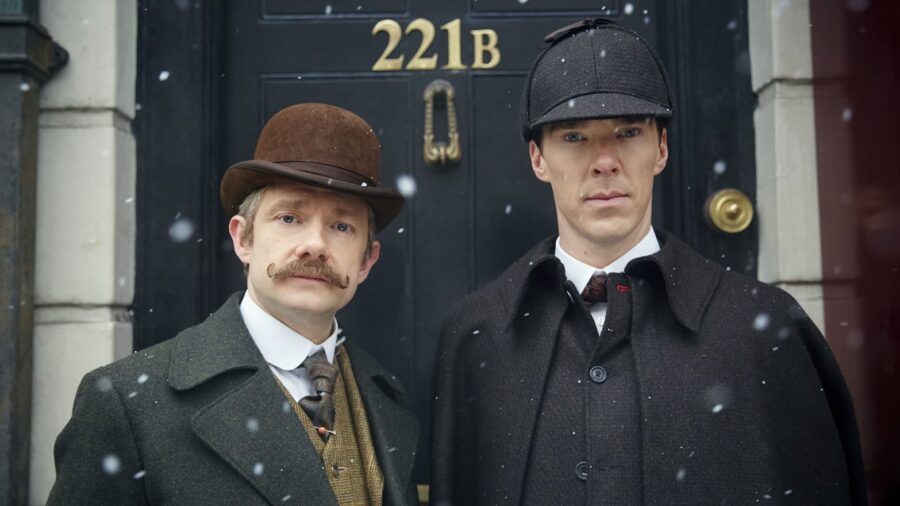
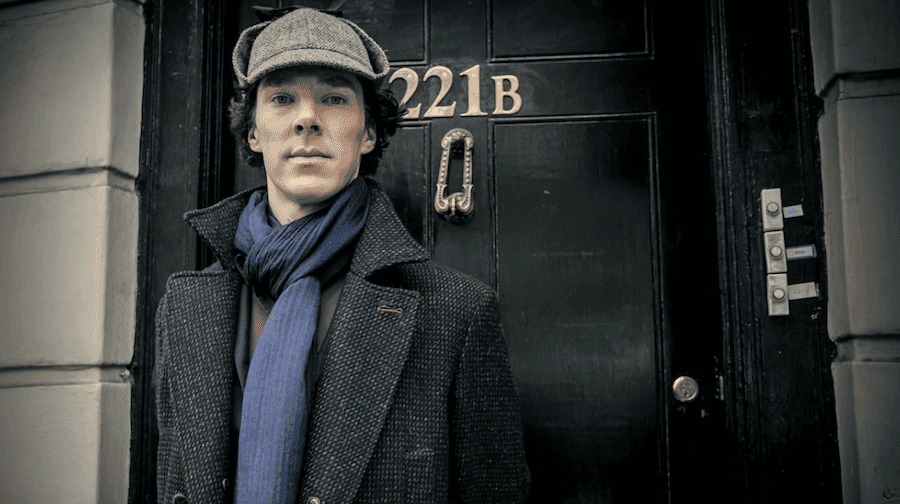
One of the most popular TV adaptations of Arthur Conan Doyal’s Sherlock Holmes series is available to stream on Hulu and Disney+. The modern version of this story grew popular with many fans over its four seasons.
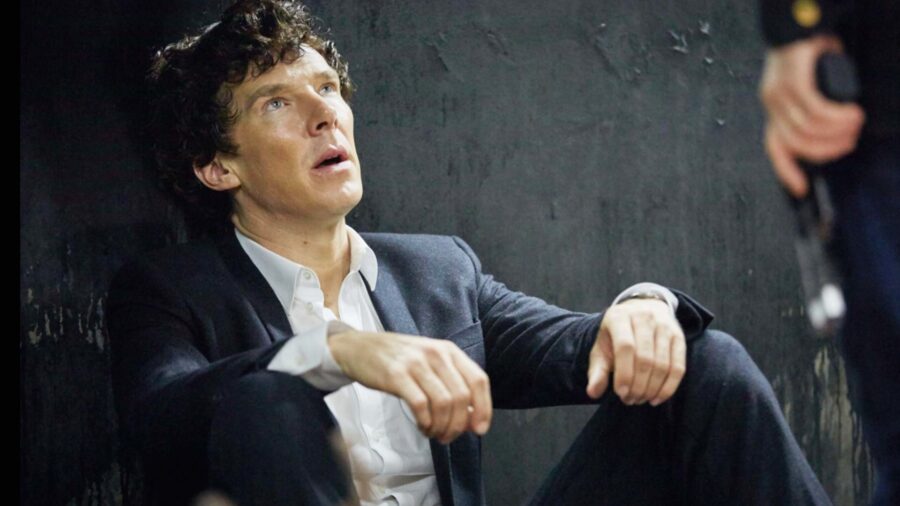
The 2010 Sherlock series follows a consulting detective named Sherlock Holmes in modern London. He helps police solve crimes with his flatmate, Dr. John Watson. Overall, the show follows a very similar story to the original Sherlock Holmes novels but is set in a more modern time.
Stephen Moffat (Doctor Who) and Mark Gatiss (The League of Gentlemen) worked together to create this version of Sherlock. The cast was impressive as well, with Benedict Cumberbatch as Sherlock Holmes (Doctor Strange) and Martin Freeman (The Hobbit) as John Watson. Additional cast members include Rupert Graves (V for Vendetta), Una Stubbs (Till Death Us Do Part), Jonathan Aris (Vivarium), and Lara Pulver (The Split).
Sherlock was interesting in the way it presented itself. Though it was a TV series, each season was made up of only three episodes that ran for approximately 90 minutes. This meant that each season was more like a trio of movies than an actual series.
Because of how long each episode was, and the fact that the directors were working on several shows at once, seasons took a fair amount of time to come out. Season 1 came out in 2010, Season 2 in 2012, Season 3 in 2014, and Season 4 came out in 2017.
Reactions To Sherlock
Upon release, Sherlock did well, especially in the first two seasons. According to IMDb ratings, it has an average rating of 9.1 out of 10.
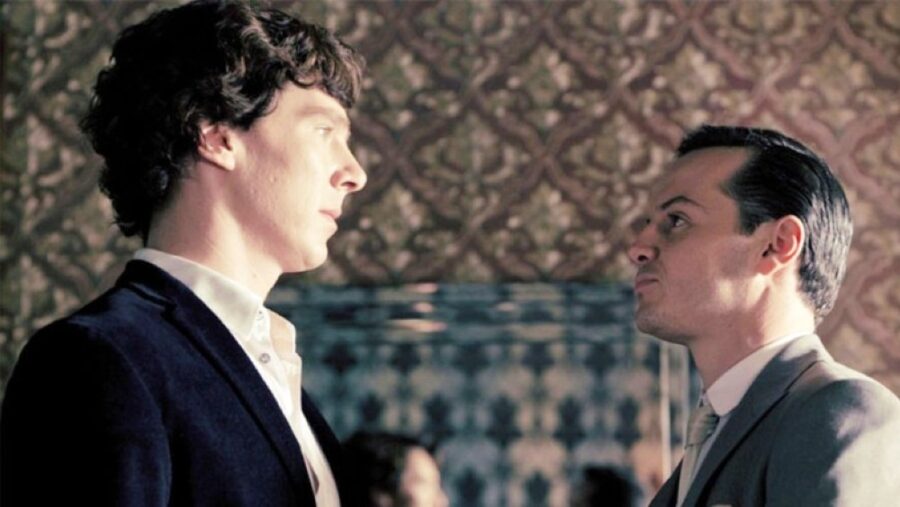
When it comes to modern Sherlock Holmes adaptations, Sherlock is considered one of the best. There’s a lot to like about this four-series show. The main villain, Moriarty, was played by an amazing actor, Andrew Scott (Spectre). Additionally, the story is easy to follow and has a fast pace.
Dueling Modernized Sherlocks
However, it’s not always seen as the best modern Arthur Conan Doyle adaptation. That award is sometimes given to Elementary. This seven-season show focused more on the human side of Sherlock and the people in his life than on the actual drama and crime. Johnny Lee Miller (Aeon Flux) plays Sherlock, while Watson is played by Lucy Liu (Kill Bill).
The reviews on Rotten Tomatoes support this. Where Sherlock earned a critic score of 78 percent and an audience score of 83 percent, Elementary had a critic score of 95 percent and an audience score of 89 percent.
How Sherlock Sabotaged Its Own Legacy
Part of the problem was that while the first two seasons were rather good, Sherlock declined in the last two. The show shifted away from the crimes to focus more on character development, and the writers also added crazy and far-reaching twists, such as Watson’s partner. While Sherlock started to fall flat, Elementary remained a good show throughout all of its seasons.