
Entertainment
Raunchy Henry Cavill Drama Leaves You Cheering For One Of History's Most Notorious Figures
By Jonathan Klotz
| Published
Before Netflix introduced viewers to the royal court of King George and Queen Charlotte in Bridgerton, Showtime brought the world of King Henry VIII to life. The Tudors debuted in 2007, and at the time, there had never been a period drama that put so much emphasis on sex, from the politics surrounding it to the English nobles’ never-ending pursuit of more.
Henry the VIII went so far in his pursuit of a male heir and the right to marry whomever he wanted that he created his own religion and forever altered the course of the Catholic Church in the process, which could make for a very dry and boring history lesson, but this is a Showtime production, which makes it the perfect binge for those who want to explore an era so scandalous, it hasn’t been topped in nearly 500 years.
The Affair That Created The Church Of England

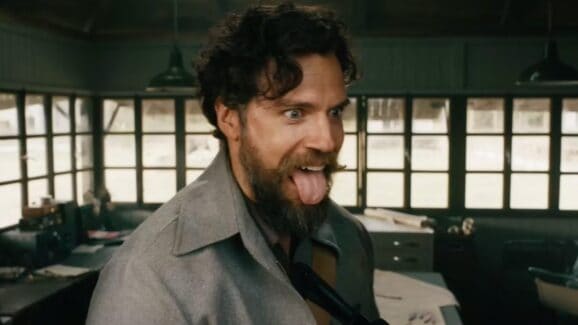
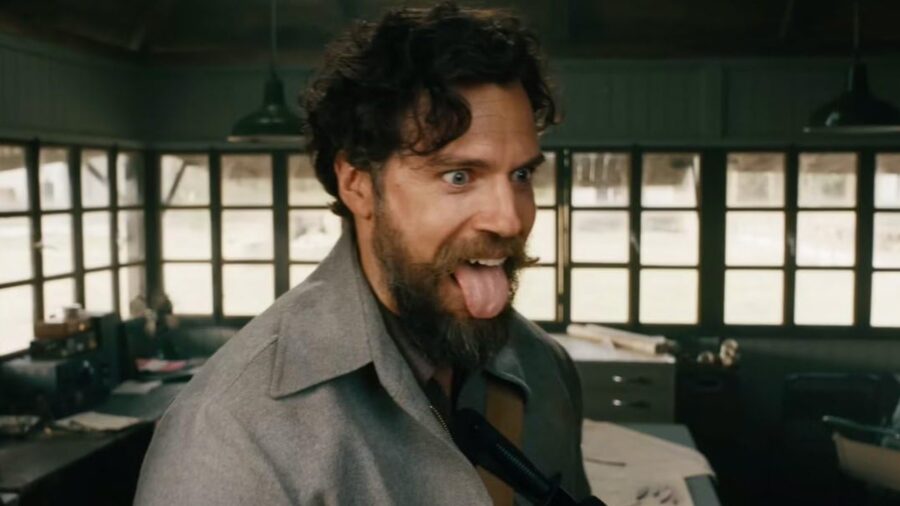
The Tudors starts off with a young King Henry VIII (Jonathan Rhys Meyers) following his mandated marriage to Katherine of Aragorn (Maria Doyle Kennedy) and her inability to produce a male heir. Henry spends his days running around with his friends, Charles the Duke of Suffolk (Henry Cavill in his last pre-Superman role) and Sir Knivert (an underutilized Dead Like Me’s Callum Blue), or spending time with his mistress. It’s not long before a faction of his own court seeks to undermine his authority by deploying Mary Boleyn to win Henry’s attention and pull him into scandal. Mary’s unable to hold his interest, so her father sends in Anne Boleyn (Natalie Dormer), and the result is the most catastrophic affair in history.
Jonathan Rhys Meyers and Natalie Dormer’s chemistry absolutely sizzles on screen throughout Season 1. If you’ve only ever seen Dormer as Margery Tyrell in Game of Thrones, you saw a small glimpse of what she can do when she sinks her teeth into a meaty role. Anne Boleyn may be doomed from the very start of her relationship with Henry, but that doesn’t stop Dormer from playing her as the one in control up until the very last tragic moment, where she realizes how far Henry will go to get what he wants.

Real history forms the basis for The Tudors but the show plays fast and loose with timelines, personalities, and even mashes together real people, in the case of Burn Notice’s Gabrielle Anwar as Henry’s sister, when in reality he had two sisters. The historical conflict between Henry and the Catholic Church drives the political drama, bolstered in Season 1 by Sam Neill as Cardinal Wolsey, and then Thomas Cromwell, played to absolute slimy perfection by James Frain. If you can’t tell, this telling of English history is brought to life by a never-ending stream of famous faces you’ll recognize, including Henry’s later wives, played by singer Joss Stone and Nip/Tuck’s Joely Richardson.
The Tudors Launched Careers But Not The One You’d Expect

Throughout all four seasons, The Tudors consistently cuts the big historical picture down to Henry’s immediate perspective. You’ll hear about major conflicts taking place with the French, but it’s mainly offscreen and takes a backseat to Henry’s pursuit of his next romantic conquest. The result is a show that starts out fun and breezy, but as his mental health falls apart, it becomes darker, more grim, and what was fun when he was in his 20s becomes more pathetic later in life.
Jonathan Rhys Meyers does an amazing job in capturing the rise and fall of Henry VIII, which is why the show has remarkably consistent critics’ ratings across different websites. Staying within 60 percent on both Metacritic and Rotten Tomatoes, though audience ratings tend to be higher, approaching the 90s, because everyone loves courtly romance wether it’s from the female perspectives of Bridgerton or the male perspective of The Tudors.
Tragically, it’s also the height of Jonathan Rhys Meyers acting career. The talented star has been battling alcohol addiction for years amid personal family tragedies, leaving the breakout stars of The Tudors to become Natalie Dormer and Henry Cavill. When you watch the show, you’ll see why each was tapped for major franchises the moment production wrapped.
The Tudors helped set the tone for later historical dramas by tossing aside real-world historical details when they interfered with the story, giving the first seasons the feel of medieval Entourage. Available to stream on Paramount+ and anywhere else that includes a Showtime add-on, it’s a fairly quick binge with under 40 episodes, and it moves fast enough that, unlike Henry, you won’t get bored.
Entertainment
NYT Connections hints today: Clues, answers for February 6, 2026

The NYT Connections puzzle today is not too difficult to solve if you have a caffeine addiction.
Connections is the one of the most popular New York Times word games that’s captured the public’s attention. The game is all about finding the “common threads between words.” And just like Wordle, Connections resets after midnight and each new set of words gets trickier and trickier—so we’ve served up some hints and tips to get you over the hurdle.
If you just want to be told today’s puzzle, you can jump to the end of this article for today’s Connections solution. But if you’d rather solve it yourself, keep reading for some clues, tips, and strategies to assist you.
What is Connections?
The NYT‘s latest daily word game has become a social media hit. The Times credits associate puzzle editor Wyna Liu with helping to create the new word game and bringing it to the publications’ Games section. Connections can be played on both web browsers and mobile devices and require players to group four words that share something in common.
This Tweet is currently unavailable. It might be loading or has been removed.
Each puzzle features 16 words and each grouping of words is split into four categories. These sets could comprise of anything from book titles, software, country names, etc. Even though multiple words will seem like they fit together, there’s only one correct answer.
If a player gets all four words in a set correct, those words are removed from the board. Guess wrong and it counts as a mistake—players get up to four mistakes until the game ends.
This Tweet is currently unavailable. It might be loading or has been removed.
Players can also rearrange and shuffle the board to make spotting connections easier. Additionally, each group is color-coded with yellow being the easiest, followed by green, blue, and purple. Like Wordle, you can share the results with your friends on social media.
Mashable Top Stories
Here’s a hint for today’s Connections categories
Want a hint about the categories without being told the categories? Then give these a try:
Here are today’s Connections categories
Need a little extra help? Today’s connections fall into the following categories:
-
Yellow: Items at a coffee station
-
Green: Things with stripes
-
Blue: Words before “Fly” in insect names
-
Purple: Homophones of greetings
Looking for Wordle today? Here’s the answer to today’s Wordle.
Ready for the answers? This is your last chance to turn back and solve today’s puzzle before we reveal the solutions.
Drumroll, please!
The solution to today’s Connections #971 is…
What is the answer to Connections today
-
Items at a coffee station: CUP, LID, STIRRER, STRAW
-
Things with stripes: CANDY CANE, CROSSWALK, REFEREE, TIGER
-
Words before “Fly” in insect names: BUTTER, DRAGON, FIRE, HORSE
-
Homophones of greetings: CHOW, HAY, HIGH, YEOH
Don’t feel down if you didn’t manage to guess it this time. There will be new Connections for you to stretch your brain with tomorrow, and we’ll be back again to guide you with more helpful hints.
Are you also playing NYT Strands? Get all the Strands hints you need for today’s puzzle.
If you’re looking for more puzzles, Mashable’s got games now! Check out our games hub for Mahjong, Sudoku, free crossword, and more.
Not the day you’re after? Here’s the solution to yesterday’s Connections.
Entertainment
How to watch the ICC T20 World Cup 2026 live online for free
TL;DR: Live stream the ICC T20 World Cup 2026 for free on ICC.TV. Access this free streaming platform from anywhere in the world with ExpressVPN.
$12.99 only at ExpressVPN (with money-back guarantee)
There are so many incredible sporting events taking place in 2026. Fans can look forward to the Winter Olympics, World Cup, and much more this year. And cricket fans don’t need to wait long for arguably the biggest showpiece event on the calendar: the 2026 T20 World Cup.
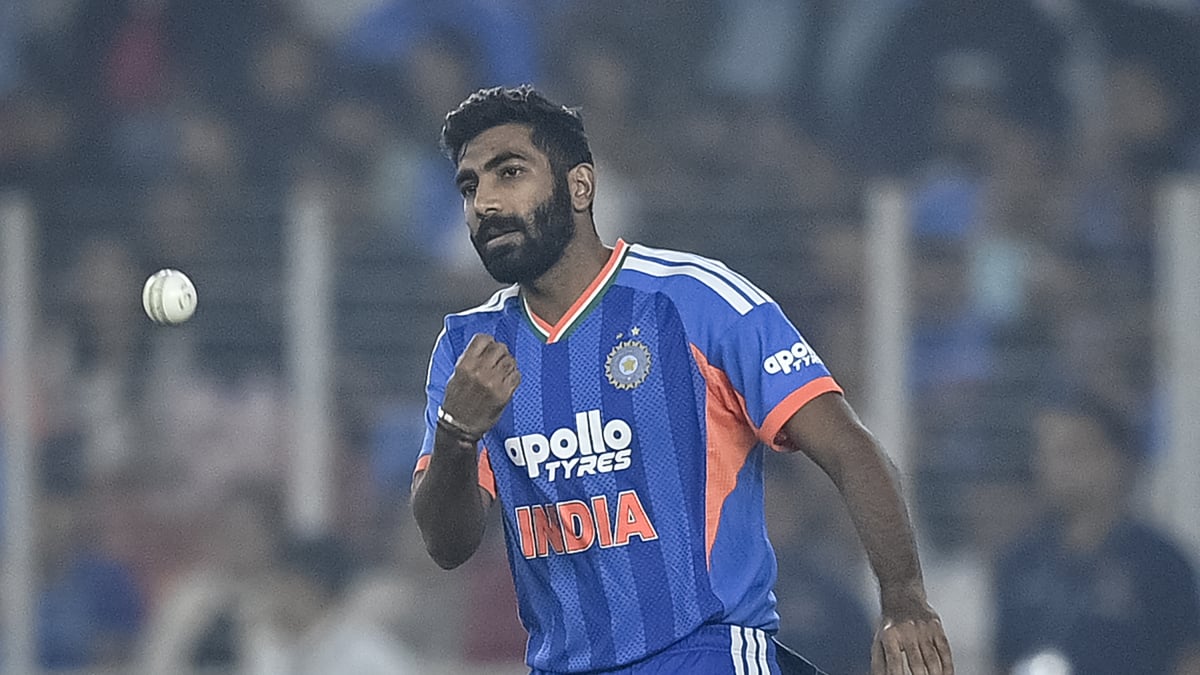
The best international T20 teams are heading to India and Sri Lanks to compete for the top prize. You can expect the likes of India, Australia, South Africa, and England to be fighting it out in the knockout rounds. Those teams are the pre-tournament favorites, but this electric form of the game is unpredictable. Sri Lanka, New Zealand, and Pakistan possess the talent to beat anyone on their best day.
If you want to watch the ICC T20 World Cup 2026 for free from anywhere in the world, we have all the information you need.
What is the T20 World Cup?
The ICC Men’s T20 World Cup is a Twenty20 International cricket tournament organised by the International Cricket Council. The event is generally held every two years. India are the defending champions.
In 2026, 20 teams will compete in 55 matches across five venues. The 20 qualifying teams are divided into four groups of five. In the group stage, each team will play four matches in a round-robin format, with the top two teams in each group advancing to the Super 8 stage. At this point, teams will be placed into two groups of four, and will play three matches. The top two teams in each group will advance to the knockout stage.
Mashable Top Stories
When is the 2026 T20 World Cup?
The 2026 T20 World Cup is the 10th edition of the competition. This year’s event takes place from Feb. 7 to March 8 in India and Sri Lanka.
How to watch the 2026 T20 World Cup for free
The 2026 T20 Cricket World Cup is available to live stream for free on ICC.TV.
This free live stream on ICC.TV is only available in select regions (see full list of territories here), but anyone can live stream the T20 Cricket World Cup for free with a VPN. These helpful tools can hide your IP address (digital location) and connect you to a secure server in a location with free access. This simple process bypasses geo-restrictions so you can live stream on ICC.TV from anywhere in the world.
Access free T20 Cricket World Cup live streams by following these simple steps:
-
Subscribe to a streaming-friendly VPN (like ExpressVPN)
-
Download the app to your device of choice (the best VPNs have apps for Windows, Mac, iOS, Android, Linux, and more)
-
Open up the app and connect to a server in a location with access
-
Visit ICC.TV
-
Watch the 2026 T20 Cricket World Cup for free from anywhere in the world
The best VPNs for streaming are not free, but leading VPNs do tend to offer free-trial periods or money-back guarantees. By leveraging these offers, you can gain access to free live streams without committing with your cash. This is obviously not a long-term solution, but it does give you time to watch every game from the 2026 T20 Cricket World Cup before recovering your investment.
What is the best VPN for ICC.TV?
ExpressVPN is the best service for bypassing geo-restrictions to stream live sport on ICC.TV, for a number of reasons:
-
Servers in 105 countries
-
Easy-to-use app available on all major devices including iPhone, Android, Windows, Mac, and more
-
Strict no-logging policy so your data is always secure
-
Fast connection speeds
-
Up to 10 simultaneous connections
-
30-day money-back guarantee
A two-year subscription to ExpressVPN is on sale for $68.40 and includes an extra four months for free — 81% off for a limited time. This plan includes a year of free unlimited cloud backup and a generous 30-day money-back guarantee. Alternatively, you can get a one-month plan for just $12.99 (with money-back guarantee).
Watch the ICC T20 Cricket World Cup 2026 for free with ExpressVPN.
Entertainment
How A Movie Ruined The 1990s By Making Everyone Obey
By Joshua Tyler
| Updated

The 1990s are now, in the minds of many, supplanting the 1950s as humanity’s golden age. The internet was still in its earliest form, the economy was booming, and so was American innovation and culture.
In 1994, at the very center of that era was one blockbuster movie that the entire world rushed to fawn over. A supposed tale of optimism and high hopes, a recontextualizing of the path America had taken to reach a bright and shining future, as told through the lens of one very stupid man.
Or that’s what the film seemed to be. In reality, it may have been the first big step towards decline. Whether you knew it or not, while watching Forrest Gump, you were being screenwashed.
Forrest Gump’s Philosophy Of Total Obedience
Forrest Gump begins with a feather floating on the breeze. It has no weight, no impact, and no agency. The feather goes wherever the wind blows it, without complaint, confident that it’ll all work out in the end.
Life is like a box of chocolates, you never know what you’ll get out. Life is like a feather floating on the air. There’s no way of knowing which way the wind is blowing; all you can do is let it move you.

There’s no way of knowing what you’re putting in your mouth, so just keep eating and accept whatever touches your tongue next.
It’s a philosophy of total obedience and an abandonment of agency, a rejection of responsibility, and it’s something no normal human would ever agree to. Which is why it’s easy to dismiss Forrest Gump as just a movie.
To make that kind of insane message stick, you’d need to go far beyond a speech about a box of chocolates into a world of secret, weapons-grade psychological persuasion. So that’s exactly what Forrest Gump did.

Let’s start this by saying Jenny is at the center of everything, but it’s not because she’s a secret villain, which is the standard edgy Forrest Gump take. She’s not a secret villain at all, she’s an open villain, but a villain made to serve a secret purpose.
Before I explain that, you need to understand the movie itself.
Forrest Gump Triggers Emotional Reactions To Make The Audience Suggestible
Forrest Gump is beautifully made and sold as a feel-good fable about kindness and decency. It’s so good at being emotional and at making the audience feel that it’s almost impossible to see what it’s doing through the tears. And that’s exactly why it works.
While training to be a hypnotist, most of my earliest lessons revolved around how to trigger someone into a suggestive state. One of the best and most effective ways is by creating an emotional reaction. Psychologists sometimes call this emotional priming. Emotional priming takes advantage of the fact that strong emotion impairs critical thinking and increases suggestibility.

One of the most unique things about Forrest Gump is its structure. It’s not one, continuous narrative. Instead, it’s a series of short vignettes, set at different times in the life of Gump.
Each Vignette starts a story, and then ends with a swelling emotional scene. It’s timed so that as each new segment begins, the audience is in a strong emotional state created by the last one.
We feel Forrest’s shame as he’s mocked for being dumb. Fear in the jungles of Vietnam. Unbearable grief at the death of his mother. With the audience constantly primed, Forrest Gump then uses that to deliver something insidious: a morality play where obedience is rewarded and independent thought is punished.
All of that is then wrapped in nostalgia and empathy so thick you’re not supposed to notice.
Forrest Gump As A Compliance Exercise
From the start, Forrest Gump is a rule follower, no matter how bad the rules are around him. The movie starts with Forrest relaying things his mother told him and explaining how he followed her instructions.
The entire movie becomes a compliance exercise for Forrest Gump, a man who never questions anything, and a script that makes that work for the audience by portraying him as a person of limited intelligence.

Of course, Forrest just complies; he’s not smart enough to do anything else. But why Forrest complies isn’t as important from a persuasion perspective as the fact that he does comply, and the movie gets viewers to cheer for his compliance.
Forrest succeeds because he does exactly what he’s told. Not metaphorically. Literally.
Run, Forrest. He runs.
Join the army. He joins.
Play ping-pong. He plays.
Invest in shrimp. He invests.
Forrest never questions instructions from anyone. He never resists authority. He never evaluates outcomes. He doesn’t even really choose. He complies, and the universe showers him with rewards. Wealth. Fame. Love. Respect. A charmed life delivered one order at a time.

The film frames this as innocence. But structurally, it’s perfect obedience.
Obedience to his mother and Jenny. Obedience to the state that sends him to die in the jungle and then to play ping pong. Obedience is Forrest Gump’s entire life. He has no agency, and it’s celebrated.
One of the only moments where Forrest shows any agency is in a failed attempt to rescue Jenny, who he sees making out with a boy in a car and mistakenly thinks she’s being harmed. She yells at him, tells him he’s wrong.
So it’s right back to doing what he’s told. In that moment, after he apologizes and returns to compliance, Jenny rewards him by taking off her top.
Forrest Enters A Holding Pattern When There’s No One To Obey
When Forrest’s mother dies, and he runs out of people to obey, Forrest spends his time mowing lawns. Back and forth, back and forth, locked in a holding pattern while he waits for his next command.

When Jenny leaves him, that pattern repeats. Forrest starts running. Back and forth, back and forth, awaiting his next instructions. Like a feather being blown about by the wind.
Moral Laundering And Forrest Gump
Forrest Gump’s character is a textbook example of a persuasion technic call Moral Laundering. In Moral Laundering, an unpopular or contested idea is made more acceptable by attaching it to a trusted, heroic, or morally admired figure, allowing the figure’s perceived virtue to transfer onto the message.

Moral laundering alone wouldn’t be enough to screenwash an audience into viewing total compliance as optimal. So the film provides a contrast to our obedient hero, using our old friend, Poisoning the Well.
Poisoning the Well is a concept we’ve talked a lot about on Screenwashed, and it’s the polar opposite of Moral Laundering.

In Poisoning the Well, you have a villain say something good, to make people think that the good thing is as villainous as the person saying it.
Both Moral Laundering and Poisoning the Well take advantage of moral asymmetry.
Moral asymmetry is the tendency of humans to judge the same behavior as morally acceptable or unacceptable depending on who commits it, rather than on the behavior itself.

Forrest Gump is used to launder the idea that total obedience is an optimal behavior pattern, while another character poisons the well against thinking for yourself. Who’s the ultimate free thinker in Forrest Gump? Jenny.
Jenny’s Refusal To Follow Rules Unlocks Forrest Gump’s True Intention
From the moment we meet Jenny, she refuses to obey and follow the crowd. Forrest is getting picked on by the kids around him. Jenny has none of it; she defies the bullies’ authority and befriends him.

Throughout the movie, Jenny questions. Jenny rebels. Jenny does the unexpected. When she faces abuse from an authority figure, she gets away from it. She rejects traditional paths. She challenges authority. She experiments with politics, sex, and culture.
For that, the movie destroys her. It destroys her narratively by making her life a disaster, but it also destroys her in the eyes of the audience by making her a villain. It does that by having her express her independence through actions and ideas that most of the audience will find intolerable, and then turning her relationship with Forrest into one where she takes advantage of him.

The movie makes Jenny a villain on purpose, not accidentally, as some commentators seem to assume. Every time Jenny exercises agency, the film punishes her with escalating consequences: abuse, addiction, illness, and isolation. Her curiosity is framed as recklessness. Her defiance is reframed as self-harm. Her independence becomes pathology.
This is not subtle storytelling. It’s conditioning.
Jenny’s Suffering Only Ends When She Complies
The movie pretends Jenny’s suffering is the result of “bad choices,” but it carefully rigs the game so every choice outside obedience leads to pain. There is no version of Jenny’s life where thinking for herself works out. The audience is trained, scene by scene, to associate her autonomy with disaster.

Worst of all, Jenny is redeemed only when she stops rebelling.
She returns home. She settles down. She becomes quiet. Sick. Dependent. Her independence is stripped away, and only then is she allowed happiness. Only briefly, before she dies.
The message is unmistakable: a person who thinks for themselves must be broken before they can be accepted.

Forrest, meanwhile, never changes. He doesn’t grow. He doesn’t learn. He is rewarded precisely because he remains unchanged and never exercises any agency. He never thinks for himself. He always obeys.
This isn’t an accident. It’s a narrative machine built to make submission feel virtuous and independence feel dangerous.
Forrest Gump Wants You To Think You Have No Agency
In the movie’s final moments, Forrest tells the audience that there are only two possibilities to life: that everything is destiny or everything is random. Either possibility has the same commonality: you have no agency, you have no say in anything that happens to you. By the time the feather floats away, the audience has been trained to believe those two realities are the only possibilities, and that the best way through life is to follow orders, trust the system, and never ask why.

Life is a box of chocolates, and Forrest Gump teaches you to sit back and let life put whatever it wants in your mouth. So you cheer for the person who never questions. You mourn the person who does. You walk away thinking that’s just how the world works and there’s nothing anyone can do about it.
Congratulations, obedient slaves, you’ve been screenwashed.


U.S. loads World Baseball Classic roster with MVPs, Cy Young Award winners

No. 2 Michigan crushes Penn St.; Nimari Burnett drops 31 in 21 minutes


