
Entertainment
Overlooked Sci-Fi Thriller Is An Extremely R-Rated, Modern Classic Based On Real Science

By Robert Scucci
| Published

Thriller and horror flicks based on real-life situations tend to be the most frightening because there’s always a nagging feeling in the back of your mind that the events on screen could actually happen to you. 2012’s The Bay is one such film, especially since it was not originally meant to be a work of fiction. When director Barry Levinson was approached to make a documentary about high levels of pollution in the Chesapeake Bay, he passed on the opportunity because Frontline had already recently done something similar, and in his mind that story had already been told and well received.
The Bay, which Levinson has claimed is roughly 80 percent factually accurate in terms of the science used to frame its story, takes a found footage approach to paint a much bleaker picture. I get the motivation behind that creative decision. Watching a news report about pollution does not raise enough eyebrows to get people really thinking about certain issues. Show scores of people getting eaten by parasites from the inside out as their quiet community becomes overrun with death, on the other hand, and suddenly people are paying attention because they are having a visceral experience with a fictionalized version of events.
Transcends Genre Through Its Messaging

While The Bay is billed as a found footage horror film, there is much more going on than meets the eye. We are not watching kids run through a haunted house or forest with a shaky camera. Instead, this is an ecological thriller that uses horror tropes to get its point across, and the camerawork is surprisingly solid and believable. Through live news bumpers, we get steady footage as the community of Claridge celebrates its annual Fourth of July event.
In other words, both professional and amateur reporters are documenting what should have been a perfectly normal holiday, giving the film plenty of B-roll to pull from once everything collapses.

Framed as leaked footage the U.S. government wanted buried, we are introduced to Donna Thompson (Kether Donohue), who cannot move on with her life until she tells the story she documented. That story involves severe water contamination caused by industrial farming runoff flooding the Chesapeake Bay, creating the conditions for parasitic organisms to thrive and mutate with horrifying results.
At first, the Fourth of July celebration goes off without a hitch. There are dunk booths, kids bobbing for apples, and the annual crab-eating contest. Then, without much warning, the citizens of Claridge fall victim to a rapidly spreading outbreak. Their bodies become covered with painful lesions before whatever is inside them eats its way out of their still-living bodies in the most violent way possible.
Always Blame The Mayor

Just like Mayor Larry Vaughn in Jaws, Mayor John Stockman (Frank Deal) in The Bay is far from innocent. He knew about the dangerously high pollution levels in the water but chose not to act, especially with an election right around the corner. His negligence results in far too many casualties for Dr. Abrams (Stephen Kunken) to handle, even on his best day. Treating hundreds of victims suffering from an unknown infection quickly becomes impossible.
Even though Dr. Abrams does everything he can, the CDC and the White House ultimately urge evacuation and shutting down the local cell towers, acknowledging that the spread has gone well past the point of no return.

The Bay gets under your skin before it bursts out of your neck. The story works because it feels familiar in the worst way. The found-footage aesthetic sells the horror, and there is nothing more unsettling than watching a once-thriving, idyllic community turn into a ghost town almost overnight. The smash cuts from small-town fair footage to total devastation create a jarring experience, and the second and third acts feature gore that will make you pause your popcorn consumption for a minute because it’s absolutely revolting.

If you have a strong stomach and want to hear an environmental warning delivered through Barry Levinson’s willingness to push real-world ecological concerns to their most logical extreme, you can stream The Bay for free on Tubi as of this writing.

Entertainment
New Star Trek Spinoff Is Running Out Of Time

By Chris Snellgrove
| Published

The new Star Trek spinoff, Starfleet Academy, has proven to be very controversial, but its fans always offer the same rebuttal to any criticism of the show: “give it time.” The logic goes that this show might need time to find its footing, just like The Next Generation and Voyager did. However, given that the show is limited to 10 episodes per season and a maximum of four seasons, Starfleet Academy is officially running out of time to impress viewers.
This reaction to a new spinoff began with Star Trek: The Next Generation, whose first season was its absolute worst. Season 2 wasn’t much better, but the show (thanks largely to new showrunner Michael Piller) transformed into must-see TV with Season 3. After Deep Space Nine had a similarly rocky Season 1, it became gospel among many Trek fans that you should always give a new series a season or two to really find its footing.
It Gets Ugly When You Run The Numbers

Needless to say, this has become the most common defense Starfleet Academy fans have used against any and all criticisms of the show. Those fans love to make comparisons to TNG and say that critics should give these cadets time to find their space legs, just like we gave Picard and crew time. However, what these Starfleet Academy fanboys don’t realize is that the new show is racing the clock, and it’s all Paramount’s fault.
Back in the Golden Age of Star Trek, shows ran for seven seasons, with (outside of the occasional writer’s strike) 26 episodes per season. This is why shows like Voyager could afford to have a rocky first season: whenever there was a bad episode, fans could reasonably expect that a good one was around the corner. Even if the first two seasons were wildly rocky (looking at you, The Next Generation), there would be 130 episodes left that would be, relatively speaking, very good.
Each Season Is A Bubble, Waiting To Pop

But those were the salad days of network television. In the streaming era, shows are more streamlined, and Starfleet Academy (like Strange New Worlds before it) has only 10 episodes per season. Moreover, executive producer and co-showrunner Alex Kurtzman has confirmed that the show is designed to last only four seasons, mirroring the four years it takes the cadets to complete their academy training.
That means that Starfleet Academy has a much more limited window to find its audience than fans think. Every episode represents ten percent of an entire season, meaning that a few bad episodes can make the entire season feel like a mixed bag. This is why fans began turning against the more whimsical episodes of Strange New Worlds: while the occasional lighthearted story can be fun, it feels weird when 30 percent of your third season is devoted to overly wacky episodes.
Starfleet Academy is facing a similar problem because the writers keep dragging decent stories down with juvenile humor. Tales of parental trauma and racial diaspora exist uneasily alongside jokes about cadets eating comm badges and vomiting glitter (incredibly, these are different cadets). By the time the show ends, fans may well wonder how much more character development we might have gotten if there had been fewer scenes of farting fish, drunken dancing, and other try-hard attempts to make us laugh.
The Show Will Be Over Before You Know It

It’s also important to remember that Starfleet Academy lasting four seasons is actually a best-case scenario. Previously, NuTrek shows like Discovery and Lower Decks were prematurely canceled by Paramount. Strange New Worlds, meanwhile, unexpectedly had its final season (which recently finished filming) cut in half. While Starfleet Academy has already been renewed for a second season, poor reception of Season 1 could very well get the show prematurely canceled.
That may already be happening, as Starfleet Academy recently tumbled out of the Top 10 list on Paramount+. With any luck, the show will continue to smooth out its rough edges and grow more impressive over time, like The Next Generation before it. But considering that Starfleet Academy will have fewer episodes in its total run than TNG had for only two seasons, it’s important for fans and showrunners alike to realize that this new show is rapidly running out of time to win over new audiences.
Entertainment
Marvel's Biggest TV Show Was Doomed From The Beginning

By Jonathan Klotz
| Published

It’s currently the year 2026. For six years, Marvel’s Agents of S.H.I.E.L.D. has been off the air, and every day since, fans of the adventure series have been wondering when their favorite characters will show up in the MCU. They won’t.
From the very beginning, the signs were there that Disney had no interest in fully integrating the television series into the MCU. All you had to do was watch the second episode, “0-8-4,” a bottle episode that could be set in any universe, with any cast of characters, and needed a last-minute 30-second Samuel L. Jackson cameo in order to keep viewers going into Episode 3.
No Show Should Start With A Bottle Episode

“0-8-4” has Agent Coulson’s (Clark Gregg) team in Peru to recover an artifact of “unknown origin.” Bringing back the “hero ducks down and a shockwave comes from their stick” move from Serenity, the team flees back onboard their ship, “the Bus,” with members of the national army. That’s right, the second episode of the brand new big-budget MCU television series is a bottle episode.
Bottle episodes utilize existing sets, typically with only the main cast involved, and are heavier on dialogue. They can be great when used right, like Supernatural’s “Baby,” but “0-8-4” was only the second episode to air. Going right into a bottle episode was meant to let us see how the characters interact with one another and develop relationships, but Agents of S.H.I.E.L.D. was also a Marvel series, and nothing about this episode took advantage of the setting.

How many lost civilizations exist in the Marvel universe that the artifact could have been tied to? It could have been part of Nova Roma. Instead of the Peruvian army, Coulson’s ex could have been leading a unit of The Wild Pack. Something. Anything small to tie the story into the larger world, instead of being a generic adventure. Then again, bottle episodes are cheaper to produce, so “0-8-4” should have been a clue that the show’s budget was being throttled in order reach 22 episodes a season.
Agents Of S.H.I.E.L.D. Is Too Good For Modern Marvel

The best of “0-8-4,” besides FitzSimmons, the best part of every episode of Agents of S.H.I.E.L.D., is the brief cameo appearance of Samuel L. Jackson’s Nick Fury after the credits. For over a decade, fans have complained that they have never experienced another moment like that. That was the second clue in “0-8-4” that the series was never, ever, going to reach its potential.
Agents of S.H.I.E.L.D. eventually found its groove by, ironically, abandoning all connection to the MCU and saying, “Screw it, we’re doing Ghost Rider,” or “Let’s adapt Secret Empire.” It was a fun, fantastic sci-fi adventure show. 14 years later, the unrealized potential that Disney had right there still hurts. Given the current state of the MCU, though, maybe it’s good that FitzSimmons, May, Quake, Coulson, and Mack can be remembered on their own. But….What If?
Entertainment
Raunchiest Sitcom Of The 1980s Now Streaming Free
By Chris Snellgrove
| Published

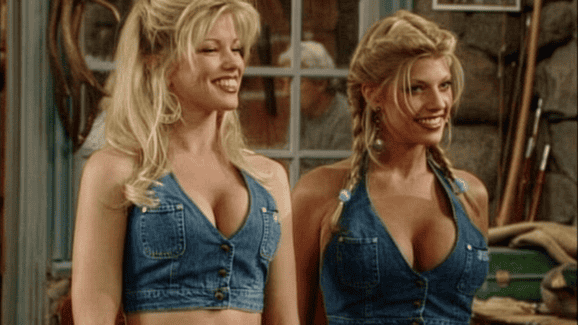
In 1987, Fox debuted Married…With Children, a subversive sitcom about the most dysfunctional family ever put onscreen. The show is filled with “how did they get away with that” jokes and, as an added bonus, happens to star two of the decade’s hottest actors. Fortunately, you don’t have to spend a dime to experience these raunchy laughs for yourself, as Married…With Children is currently streaming for free on Tubi.
The basic premise of Married…With Children is that a slobby, schlubby shoe salesman is raising a family that includes a lazy wife, a ditzy daughter, and a dirtbag son. They get into various TV show shenanigans, but what sets this show apart is its dark humor and complete subversion of the family sitcom formula. Basically, this was a show as hilariously mean-spirited as It’s Always Sunny in Philadelphia, but it premiered back when the airwaves were dominated by more family-friendly fare like Who’s the Boss and Growing Pains.
A Shockingly Great Cast

The cast of Married…With Children includes David Faustino (best known outside of this show for his voice work on The Legend of Korra) as young Bud Bundy and breakout bombshell Christina Applegate (best known for Don’t Tell Mom The Babysitter’s Dead) as young Kelly Bundy. Katey Segal (best known for voicing Leela on Futurama) plays Peg Bundy, a stunning housewife who is despised by her husband. That husband is played to hapless perfection by Ed O’Neill, someone best known to younger sitcom fans for his long-running role as a perpetually-perplexed patriarch on Modern Family.
When Married…With Children came out, it was a smash with audiences looking for something other than another cookie-cutter sitcom about another overly perfect little family. The show’s comedy has also stood the test of time, and it currently has a 97 percent audience rating on Rotten Tomatoes. While there are not enough professional reviews for the show to have a critical score (poor Al Bundy gets no respect), most of the critics who reviewed the show agree that it is perfectly cast and filled with writing as acidic as it is infectiously hilarious.
Everyone Fell In Love With TV’s Crankiest Husband

It’s almost impossible to overstate what a monster hit Married…With Children really was. To this day, it is the longest-running sitcom ever aired on Fox, and at 11 seasons and 259 episodes, it’s also one of the longest-running sitcoms in television history. Whether you’re an old fan looking for some comedy comfort food or a new fan looking for a few dark laughs, this is the dirty, binge-friendly pleasure you’ve been looking for.
As an ‘80s kid, I watched Married…With Children at a young age, and if I’m being honest, I didn’t really process what was so subversive about its humor. All I really knew was that Kelly was hot, Peg was hotter, and Al’s cranky punchlines were funny. Returning to the show now as a family guy (complete with a Peter Griffin-like waistline), though, I find myself appreciating its dark humor now more than ever.
The Darkest Laughs The ’80s Had To Offer

You see, the central gag of Married…With Children is that Al Bundy has achieved the American dream: he has a steady job, a beautiful wife, two healthy kids, and a big house to raise them in. Nonetheless, he has inexplicably found that the dream has turned into a nightmare.
His customer service job offers endless abuse from the public, his children are idiots, and his wife has transformed henpecking into an art. All Al really wants to do at the end of a long day is disassociate and obsess about the good old days, which makes him an almost shockingly modern figure in the world of ‘80s television comedy.

Another way that Married…With Children was ahead of its time was how it focused on the comedy that can only come from dysfunctional and hilariously broken people. Seinfeld debuted two years later and became a cultural phenomenon, and It’s Always Sunny in Philadelphia (which debuted 18 years later) arguably perfected the formula of “jerks behaving badly.” Arguably, those other shows’ outsized success would have been impossible if Married…With Children hadn’t shown how hungry audiences were for an alternative to saccharine-sweet sitcoms.
The Original Doomer

In this way, Married…With Children is weirdly timeless: it still works well as a kind of antisitcom, and if you grew up watching ‘80s staples like Who’s the Boss, you’ll still laugh (and laugh hard) at how transgressively this show breaks all the rules. But if you’re a bit young for those vintage sitcoms, you’ll still enjoy the adventures of Al and Peg Bundy because they are of a piece with later cynical programming like It’s Always Sunny. Basically, Al Bundy is the original doomer, and whether you’re here to laugh at his jokes or ogle his wife, there’s a lot to love in this vintage sitcom.
Will you agree that Married…With Children is one of the best raunchy sitcoms in television history, or would you rather work in a shoe store than finish a single episode? The only way to find out is to run for the remote (go channel your glory days as a high school running back!) and stream it for free on Tubi. Come for the killer theme song and stay for the hottest ladies the ‘80s had to offer!



NBA roundup: Pistons top Hornets at Fight Night in Charlotte

New Star Trek Spinoff Is Running Out Of Time


