
Entertainment
NYT Pips hints, answers for February 1, 2026

Welcome to your guide to Pips, the latest game in the New York Times catalogue.
Released in August 2025, the Pips puts a unique spin on dominoes, creating a fun single-player experience that could become your next daily gaming habit.
Currently, if you’re stuck, the game only offers to reveal the entire puzzle, forcing you to move onto the next difficulty level and start over. However, we have you covered! Below are piecemeal answers that will serve as hints so that you can find your way through each difficulty level.
How to play Pips
If you’ve ever played dominoes, you’ll have a passing familiarity for how Pips is played. As we’ve shared in our previous hints stories for Pips, the tiles, like dominoes, are placed vertically or horizontally and connect with each other. The main difference between a traditional game of dominoes and Pips is the color-coded conditions you have to address. The touching tiles don’t necessarily have to match.
The conditions you have to meet are specific to the color-coded spaces. For example, if it provides a single number, every side of a tile in that space must add up to the number provided. It is possible – and common – for only half a tile to be within a color-coded space.
Here are common examples you’ll run into across the difficulty levels:
-
Number: All the pips in this space must add up to the number.
-
Equal: Every domino half in this space must be the same number of pips.
-
Not Equal: Every domino half in this space must have a completely different number of pips.
-
Less than: Every domino half in this space must add up to less than the number.
-
Greater than: Every domino half in this space must add up to more than the number.
If an area does not have any color coding, it means there are no conditions on the portions of dominoes within those spaces.
Easy difficulty hints, answers for Feb. 1 Pips
Number (0): Everything in this space must add up to 0. The answer is 0-5, placed horizontally.
Greater Than (4): Everything in this space must be greater than 4. The answer is 0-5, placed horizontally.
Equal (3): Everything in this space must be equal to 3. The answer is 3-3, placed horizontally.
Number (6): Everything in this space must add up to 6. The answer is 6-4, placed vertically.
Number (6): Everything in this space must add up to 6. The answer is 6-0, placed vertically.
Equal (0): Everything in this purple space must be equal to 0. The answer is 0-4, placed horizontally.
Mashable Top Stories
Equal (4): Everything in this green space must be equal to 4. The answer is 6-4, placed vertically; 0-4, placed horizontally.
Medium difficulty hints, answers for Feb. 1 Pips
Greater Than (3): Everything in this space must be greater than 3. The answer is 5-3, placed horizontally.
Equal (3): Everything in this space must be equal to 3. The answer is 5-3, placed horizontally; 3-3, placed vertically.
Number (4): Everything in this space must add up to 4. The answer is 6-4, placed horizontally.
Less Than (2): Everything in this space must be less than 2. The answer is 0-0, placed horizontally.
Not Equal: Everything in this space must be different. The answer is 2-3, placed horizontally; 6-4, placed horizontally; 5-5, placed horizontally.
Number (5): Everything in this space must add up to 5. The answer is 5-5, placed horizontally.
Hard difficulty hints, answers for Feb. 1 Pips
Less Than (9): Everything in this space must be less than 9. The answer is 4-4, placed horizontally; 1-0, placed horizontally.
Less Than (4): Everything in this space must be less than 4. The answer is 1-1, placed horizontally; 1-0, placed horizontally.
Less Than (3): Everything in this space must be less than 3. The answer is 6-2, placed horizontally.
Number (12): Everything in this space must add up to 12. The answer is 6-6, placed horizontally.
Less Than (5): Everything in this space must be less than 5. The answer is 4-5, placed horizontally.
Less Than (20): Everything in this space must be less than 20. The answer is 4-3, placed horizontally; 4-5, placed horizontally; 5-5, placed vertically.
Less Than (7): Everything in this space must be less than 7. The answer is 4-3, placed horizontally; 3-6, placed vertically.
Less Than (3): Everything in this space must be less than 3. The answer is 2-5, placed horizontally.
Number (6): Everything in this space must add up to 6. The answer is 2-5, placed horizontally; 6-1, placed horizontally; 0-0, placed horizontally.
If you’re looking for more puzzles, Mashable’s got games now! Check out our games hub for Mahjong, Sudoku, free crossword, and more.
Entertainment
Star Trek’s Most Hated Producer Predicted The Worst Part Of The Franchise
By Chris Snellgrove
| Published
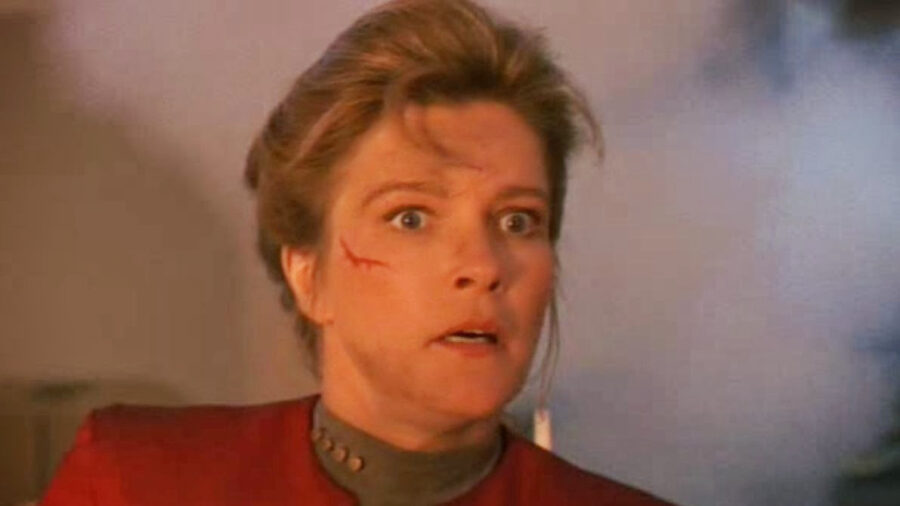
Few Star Trek creators are quite as controversial as Rick Berman, who has been accused of everything from persistent on-set misogyny to running the franchise’s Golden Age into the ground with Enterprise and Nemesis. However, for all of his alleged faults, Berman actually predicted very early on what would become the worst part of the franchise: its overreliance on the Borg. Moreover, he implied that if Star Trek couldn’t find anything original to do with these iconic bad guys, they should simply stop being included in future stories.
Berman’s thoughts on this matter are quoted extensively in Captain’s Logs: The Unauthorized Complete Trek Voyages. He was discussing “Descent,” the two-part Star Trek: The Next Generation episode that explored what happened to the Borg after the Enterprise crew returned a Borg with a personality (Hugh) back to the Collective. The executive producer liked how the show used the villains in this ambitious episode, but he specifically enjoyed how they were written so very differently from their earlier appearances.
Star Trek’s Most Two-Dimensional Villains
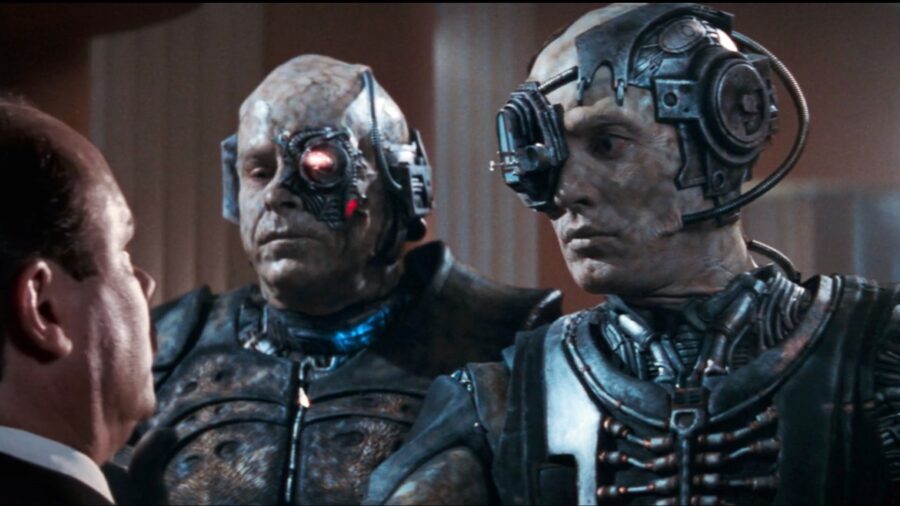
“I find [the Borg] very two-dimensional in a way,” Berman said. “They are faceless characters without personality and without specific character traits.” While many fans would say this is what makes them so scary (they are basically the closest thing Star Trek has to zombies), Berman thought that their collective nature made them “sort of a one-beat group of bad guys.”
Berman did acknowledge that these “one-beat” villains could be used well in certain circumstances. For example, he noted that “In ‘Best of Both Worlds’ they represented a threat as opposed to characters, and that was a great episode.” This is a fairly astute analysis, really: being a Collective, the Borg were always going to fail at being interesting characters, but they worked astoundingly well as TNG’s first real existential threat to the Federation’s entire way of life.
Borg Of A Different “Hugh”
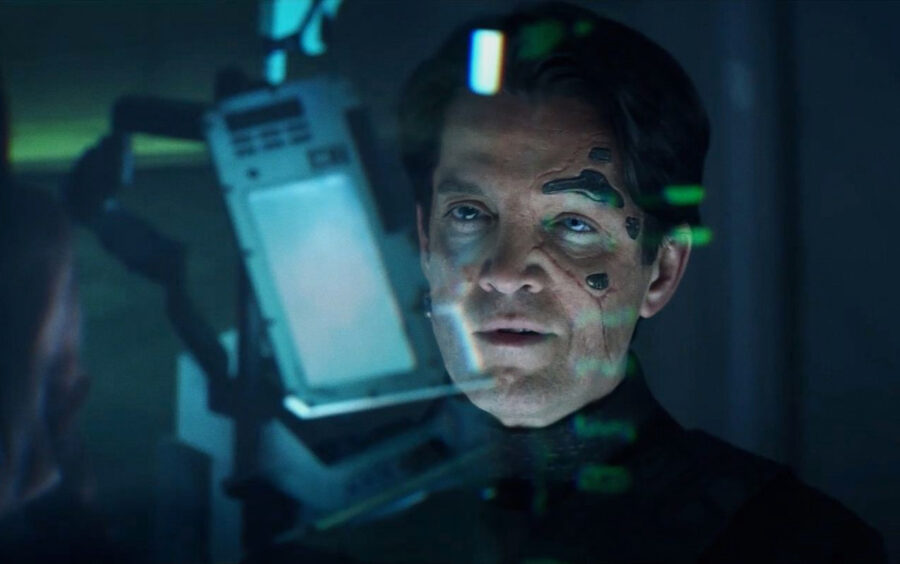
For Berman, the episode “I, Borg” (where a captured Borg develops a personality before being returned to the Collective) was something of a revelation. He enjoyed how this story transformed the Borg “into a character” who was “given a personality and something to be sympathetic towards.” He then made a bold statement that would prove weirdly prophetic: “My only interest in the Borg is when they’re used off-center in other than the way they were originally conceived.”
While Berman may have loved how different the Borg in “Descent” were, that sentiment wasn’t shared by most of the fandom. Many missed the cybernetic zombies that had first scared them in episodes like “The Best of Both Worlds,” finding them far more frightening than the group of angry, screaming cyborgs in “Descent.” Accordingly, Star Trek: First Contact brought the Borg back more or less as they were, with one twist: the addition of a Queen.
The Worst Of Both Worlds
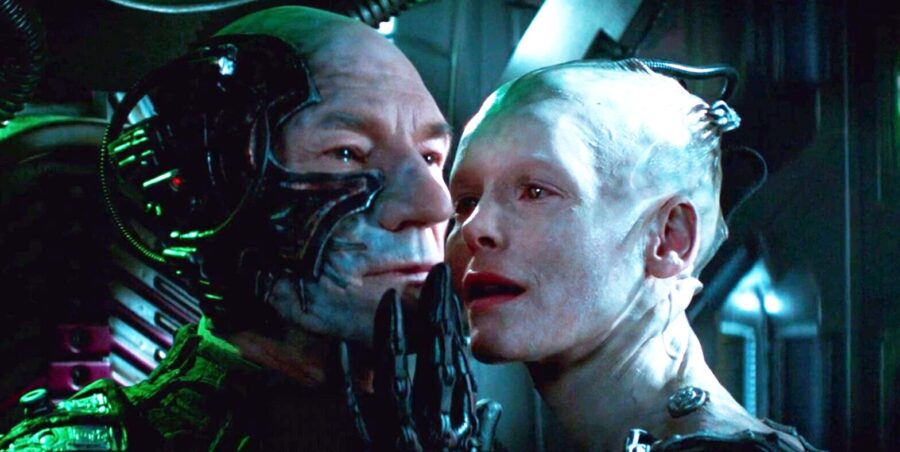
Unfortunately, this ended up being “the worst of both worlds” from a creative standpoint. The Queen was (as confirmed by Brannon Braga and other Star Trek creatives) primarily added to give the Borg a recognizable figure who could both speak and be spoken to; that made for more compelling filmmaking than having characters like Picard and Data talk to the formless voice of the Collective. But the very idea of an individual queen went against the Borg’s whole deal, irking fans who wished these villains had stayed consistent.
Speaking of consistency, Star Trek never really made any major changes with the Borg as a whole after this. Sure, the Queen still popped up, but for the most part, the Borg were back to being robot zombies. As Rick Berman predicted, constantly using the Borg without making any substantive changes eventually provided diminishing storytelling returns.
Kissing The Borg Goodbye?
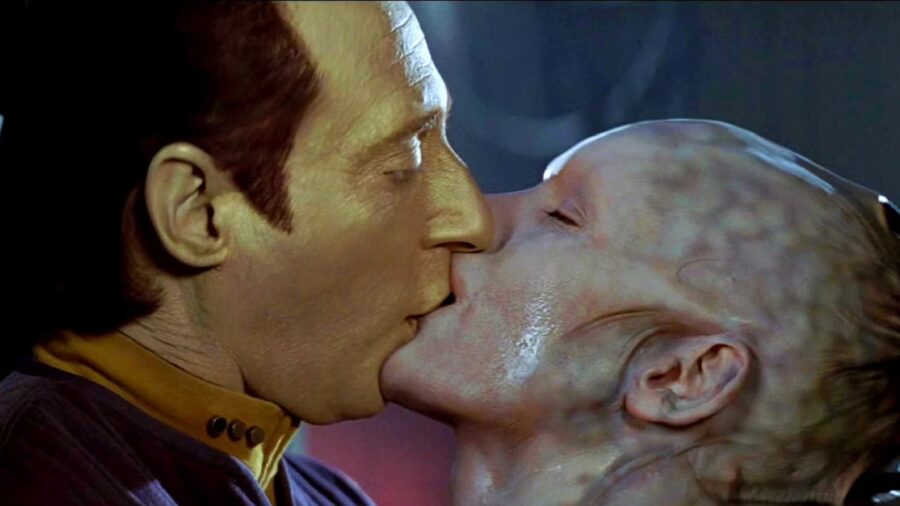
For example, they popped up so much in Voyager (a show that eventually added a Borg officer) that their appearances stopped feeling special. They popped up in Enterprise and, somewhat inexplicably, every single season of Star Trek: Picard. Heck, that show even made the Borg (complete with their unkillable Queen) the final Big Bad, signifying to fans that the writers had really and truly run out of ideas.
Rick Berman’s prophecy came to pass: the Borg remained one-note bad guys until the very end, never again receiving a character change as significant as what we saw in “Descent.” They were transformed back into a reliable bad guy, but one that ultimately became reliably boring. Now that the franchise has moved into the 32nd century, we can only hope the Borg never pop up in Starfleet Academy; otherwise, the iconic race might have to get several passionate lectures on the evils of cultural assimilation, punctuated by quippy phrases like “Resistance ain’t futile, bruh” and “assimilate this, b*tch!”
Can the Collective be defeated by pure, undiluted cringe? Here’s hoping we don’t have to find out!
Entertainment
The 1980s Thriller So Extreme, It Almost Didn’t Make It Past The Censors
By Robert Scucci
| Published

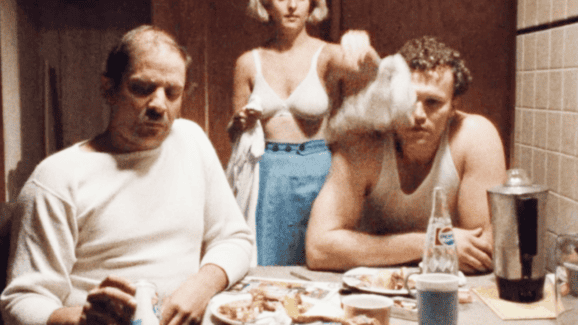
Most serial killer movies land firmly in the R rated category so they can see a wide theatrical release and score big with horror fans at the box office. 1986’s Henry: Portrait of a Serial Killer, on the other hand, was deemed so extreme when it made its early rounds through the festival circuit that it was slapped with an X rating by the MPAA despite its positive reception. While several versions of the film have circulated over the years in an effort to secure an R rating, the unrated cut is currently streaming for free on Tubi, and it’s easy to see why the censors were all over this one.
By today’s standards, the violence in Henry: Portrait of a Serial Killer feels surprisingly restrained on a practical level. There are still a handful of brutally effective sequences in the second and third acts that will make your skin crawl, but it’s not necessarily the gore that risks putting you off. Much of the violence plays out like crime scene photographs taken after the fact rather than staged acts of carnage. That said, those images alone are more than enough to make you want to wash your eyeballs out with Listerine.

Based loosely on the life of real life serial killer Henry Lee Lucas, who famously claimed responsibility for hundreds of murders, and his associate Ottis Toole, Henry: Portrait of a Serial Killer leans into its depravity with a level of casual confidence that’s far more unsettling than stylized cinematic violence. It’s not the crimes themselves that are most disturbing here, but the people committing them as if it were just another day at work.
Simple Story, Complex Characters
Henry: Portrait of a Serial Killer wastes no time introducing its three principal characters. We first meet Henry (Michael Rooker) as he drifts from town to town, picking up hitchhikers and stopping at diners. These mundane routines are punctuated by shock cuts of the bodies he leaves behind, but we never actually see him commit the murders themselves. This approach tells you everything you need to know about Henry. He’s completely unassuming, and the contrast between his outward normalcy and the devastation he causes makes it clear how easily he blends in with society.

Meanwhile, Otis (Tom Towles), Henry’s former prison mate and current roommate, is returning from the airport with his sister Becky (Tracy Arnold), who will be staying with them for the time being. When Becky presses Henry about his past, he’s forthcoming about murdering his abusive mother, the crime that landed him in prison. Becky doesn’t immediately see Henry as a bad person because she comes from an abusive household herself and understands how desperate circumstances can push people to extreme behavior that they later regret.
As Becky searches for work and tries to get back on her feet with plans to eventually return home, Otis and Henry embark on an increasingly brutal crime spree that steadily escalates. It begins with Henry killing the call girls he and Otis are seeing, but takes a darker turn after they rob a fence and steal his video equipment. Otis quickly develops a sick fascination with filming their crimes and watching the footage back when they return home.

During this stretch, Henry lays out his philosophy for staying ahead of the law, explaining the importance of constantly changing his MO and staying on the move. As the body count rises, Otis’s lack of impulse control begins to clash with Henry’s colder, more methodical approach. Otis is reckless in a way that somehow makes Henry look almost reasonable by comparison, and that growing tension eventually puts the two men at odds.
A Total Punisher In The Best Kind Of Way
Visually and thematically, Henry: Portrait of a Serial Killer is far from an easy watch. As a character study, it remains one of director John McNaughton’s most punishing and effective efforts because it refuses to pull its punches. The violence is disturbing on its own, but what lingers far longer is the sheer indifference behind it. Henry can be polite, patient, and accommodating with Becky, only to turn into a monster without warning.

That duality is the film’s most unsettling quality. One moment he’s helping Becky clean up after dinner. The next, he’s stepping out to murder a call girl with the same emotional investment you’d put into a late night gas station run for cigarettes. The lack of distinction between those two worlds is what makes the film so difficult to shake.

Boasting an 89 percent approval rating on Rotten Tomatoes, Henry: Portrait of a Serial Killer is a certified fresh outing that grapples with subject matter that’s rotten to its core. Whether you can handle it is entirely up to you, but if you’re willing to find out, the unrated version is currently streaming for free on Tubi as of this writing.
Entertainment
How Star Trek’s Strongest Female Character Ruined Dr. Crusher
By Chris Snellgrove
| Published

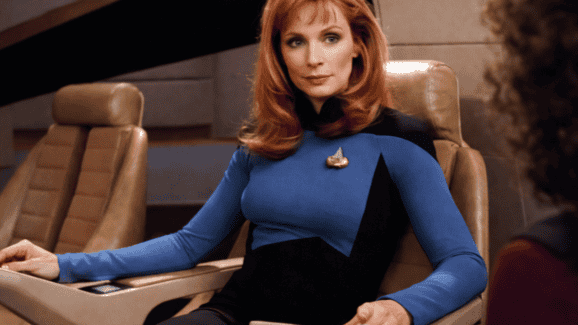
Arguably, the strongest female character in Star Trek: The Next Generation was Dr. Beverly Crusher. Not only was she the Chief Medical Officer, but she had the same rank as Commander Riker, the Enterprise’s swaggering first officer. Given the character’s rank, it would have been perfectly plausible for her to hop in the captain’s chair and take command on a relatively regular basis. However, Dr. Crusher actor Gates McFadden recently revealed why this didn’t happen: Star Trek’s producers kept her out of the captain’s chair to make the arrival of Voyager’s Captain Janeway feel more special.
This information comes to us courtesy of Fan Expo Portland, where McFadden got very candid about her time on Star Trek: The Next Generation. She explained that the producers “knew they were going to have a female captain fairly early on.” Finishing her thoughts, she noted that “while I was put sometimes in the captain’s chair, since I had the same rank as [Will Riker], they were careful about how much they wanted to do that, because they were saving that for when Voyager happened.”
The Doctor Is In (The Chair)
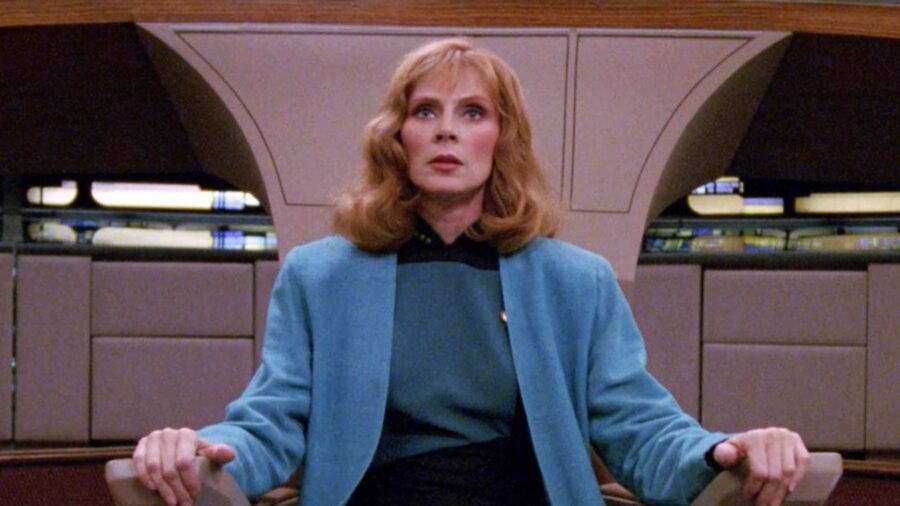
The most notable example of Dr. Crusher being put in command happened during the two-part episode, “Descent.” To help search for Commander Data, Picard inexplicably sends himself, his bridge crew, and half the ship to canvas an unknown alien planet, leaving Dr. Crusher in command of the Enterprise. Her command skills are really put to the test, though, when she has to figure out how to defeat a new type of Borg vessel, which (not unlike the old vessels) is more powerful than her ship in every way.
Using a combination of scientific know-how and more than a little plot armor, Dr. Crusher takes the Enterprise into the planet’s sun. After that, she uses the ship’s phasers to trigger a solar eruption that completely destroys the Borg vessel. After seeing the good doctor kicking butt and taking names in the captain’s chair, it’s understandable that fans wanted to see more of Crusher in command.
No Future In Command
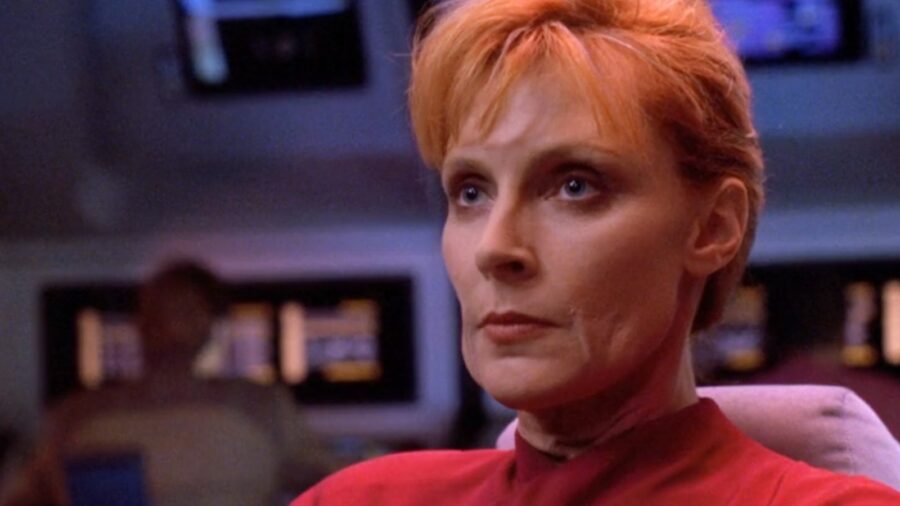
According to Gates McFadden, this didn’t happen very much because producers were busy developing Voyager. The timing of that show’s development generally matches McFadden’s account; Dr. Crusher led the Enterprise to victory over the Borg at the beginning of The Next Generation’s seventh season, which is exactly when the powers that be began working on Voyager. Because the producers knew the spinoff would have a female captain, they wanted to make Captain Janeway’s appearance special, effectively downplaying Dr. Crusher’s capabilities at commanding a starship.
Why was it so important for Voyager to have a female captain, though? While Deep Space Nine had proven to be a very successful TNG spinoff, Paramount wanted to create yet another Star Trek television show. Deciding that the new show would take place on a starship (hey, you can only do the space station gimmick once!), the producers faced a unique problem: how to make a new Star Trek show with this familiar setting that didn’t just feel like a lazy copy of The Next Generation.
Star Trek Leans In (At Dr. Crusher’s Expense)
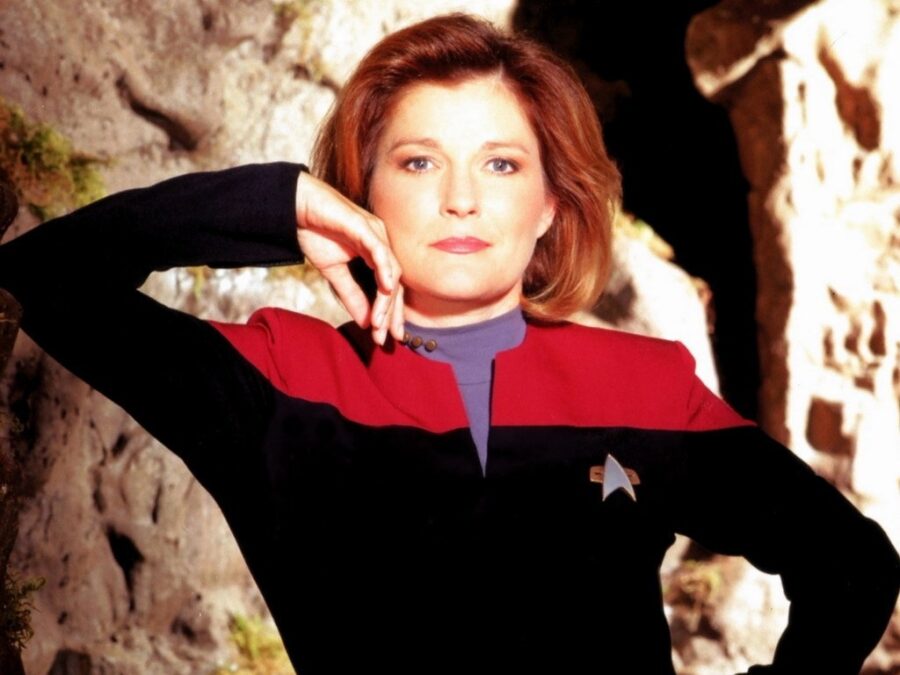
Part of what would ultimately make Voyager unique was its setting: namely, in the largely uncharted Delta Quadrant that the Borg call home. The crew would also be a mixture of Starfleet and Maquis personnel, which would provide (on paper, anyway) the potential for more character conflict than we ever saw on The Next Generation. Mostly, though, what set Voyager apart was that it was led by a female captain, a first for a franchise whose first show infamously claimed that women couldn’t become Starfleet officers.
Sadly, the production of Voyager kept Dr. Crusher sidelined from possible command duties. This is doubly painful because her character was often written very poorly, and she went from drunkenly throwing herself at Picard in Season 1 to boning down with a ghost in Season 7. She was also written out of Season 2 altogether by Maurice Hurley, the worst showrunner The Next Generation ever had.
Gates McFadden ultimately got the last laugh, though: Picard brought her character back for its third and final season, and both Dr. Crusher and her son became pivotal parts of the entire plot. This was arguably an even beefier revival of her vintage character than Kate Mulgrew got by voicing Captain Janeway in Prodigy. Furthermore, Picard even made Crusher an admiral and the new Head of Starfleet Medical, finally giving the dancing doctor her due after more than 35 years of writers holding her back!


LAFC acquire M Stephen Eustaquio on loan from Porto

Maybe AI agents can be lawyers after all


