
Tech
Northwood Space secures a $100M Series B and a $50M Space Force contract
Space is an increasingly crowded place thanks to the constant influx of new satellites and it’s only to get more cramped as the cost to get to orbit falls.
Those dynamics have brought attention to startup Northwood Space, which has spent the last few years developing more modern and efficient ground-based communications infrastructure. The startup capitalized on that interest in two ways this week.
The El Segundo, California-based company announced on Tuesday it has closed a $100 million Series B funding round, led by Washington D.C.-based firm Washington Harbour Partners (which has been on a run of space investments) and co-led by Andreessen Horowitz.
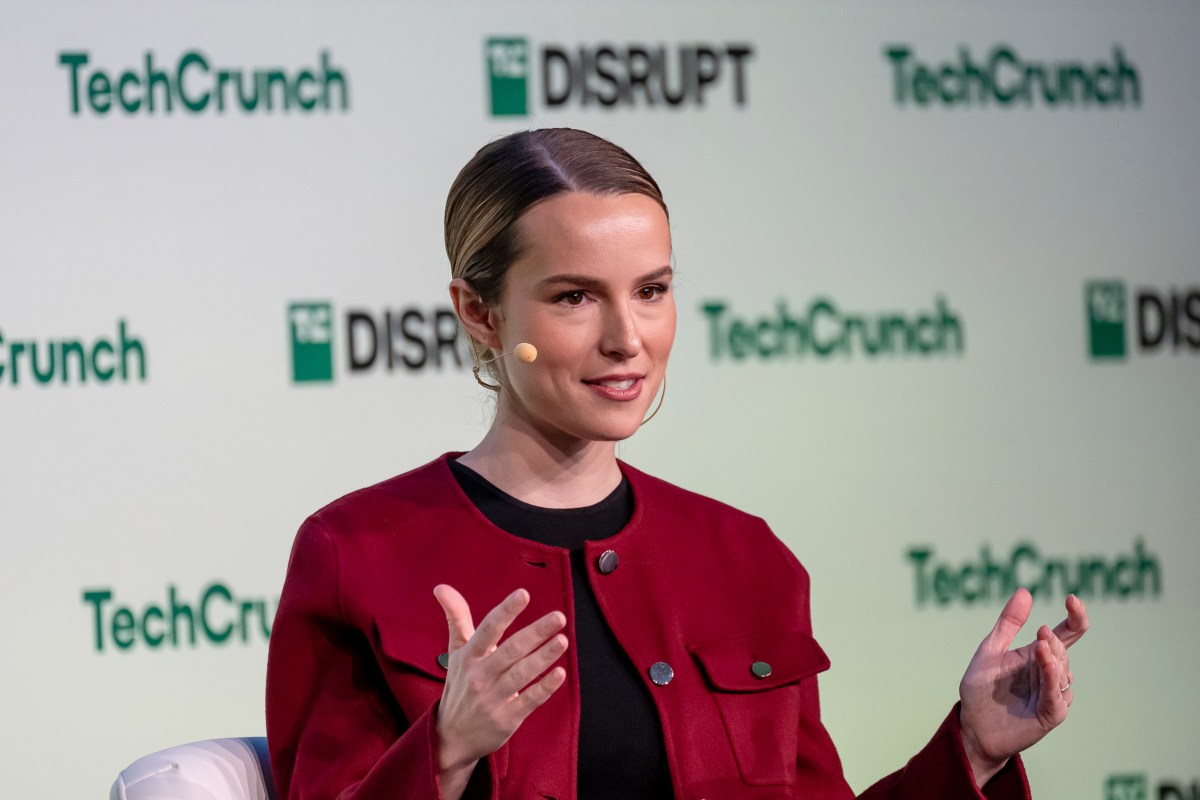
Northwood has also secured a $49.8 million contract with the United States Space Force to help upgrade what’s known as the “satellite control network,” which “handles a huge variety of consequential space missions for our government” including tracking and controlling GPS satellites, founder and CEO Bridgit Mendler said on a call with reporters.
The funding round and government contract are major milestones for the company, which is just a few years old and only closed its $30 million Series A less than a year ago.
But with so much interest in funding space tech, hard tech, and defense tech right now, Mendler said this was an opportunity for her company to grow responsibly and quickly.
“Yes, this is happening faster than we thought — you know, two fundraises in the same year and large sums of capital,” she said. But, she pointed out, “that’s really what we’re ready for from a production standpoint.”
Techcrunch event
San Francisco
|
October 13-15, 2026
Mendler also said the fresh capital will help Northwood keep pace with growing demand, marking an “inflection point in the business.”
“We get customers coming to us all the time requiring a ground solution, wanting us to help think through a ground problem with them, and we don’t want there to be a resource constraint that blocks us from being able to support that mission,” she said. “And so the resources were very intentionally brought on at this point to support the missions that that are coming forward for us.”
Part of the attention on Northwood has to do with the fact that what it’s doing — making smaller phased-array antenna systems meant to support or replace older systems that rely on larger dish antennas — remains novel, especially as a vertically-integrated play.
But with the volume of data being transmitted to and from satellites likely to keep growing, it’s an advantage Mendler is keen to press.
“It’s a hard thing to do. It requires a lot of risk, a lot of capital. It requires a lot of diverse skill sets to come together, to be able to really wrap your head around the entire ground [station] problem,” Mendler said. “And so yeah, it’s a big undertaking for us to take, and our bet is that if we can actually do that, if we can really think about ground holistically under one roof, then that produces a ton of value for the industry, and that’s really the right model to have.”
This pitch has made sense for prospective commercial customers for a while now. Companies like SpaceX and Amazon, which have massive satellite internet networks in the works, build and operate their own ground stations. But capacity is constrained for other players who typically have to rent space from third-party providers that may not always have availability.
Northwood CTO Griffin Cleverly expects the expanded capacity — that the new fundraising will help create — will be most valuable to customers who are “scaling into large constellations, so that may be going from like one or two satellites to dozens or more.”
Right now, Northwood’s “portal” sites can handle eight satellite links, he said. By the end of 2027, though, he expects the next-generation of Northwood’s ground stations to handle 10 to 12, with the company’s overall network capable of communicating with “hundreds” of satellites.”
With the Space Force contract, what Northwood is selling has clearly become an attractive option for the government.
It’s not surprising the newest armed forces branch is starting with the satellite control network (SCN), though. In 2023, a Government Accountability Office (GAO) report noted that the Department of Defense has been aware of capacity issues with the SCN since 2011.
“Satellite users who rely on the SCN and whom GAO interviewed said that this increased demand, and resulting limits on system availability, could compromise their missions in the future,” the report stated.
Tech
Bluesky finally adds drafts
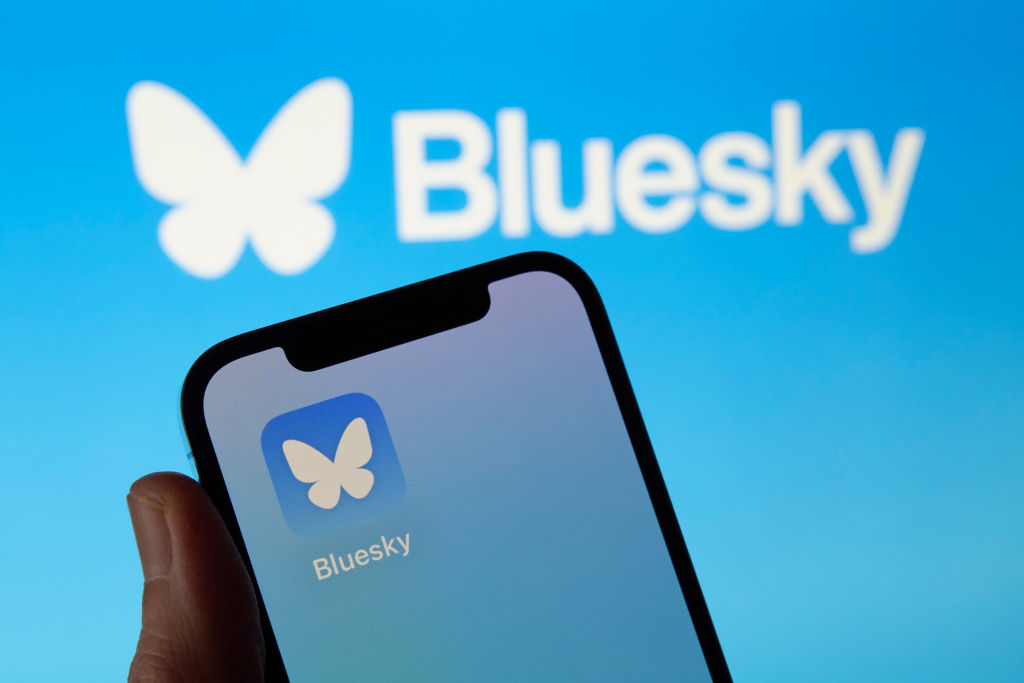
Social network Bluesky is finally rolling out one of users’ most-requested features: drafts. Bluesky’s competitors, X and Threads, have long supported the ability to write drafts, which is seen as a baseline feature for services like this.
Users can access drafts on Bluesky the same way they do on these other platforms, which is by opening the new post flow and selecting the Drafts button in the top-right corner.
The rollout of drafts comes as Bluesky recently teased its roadmap for the year ahead. The company said it plans to focus on improving the app’s algorithmic Discover feed, offering better recommendations on who to follow, and making the app feel more real-time, among other updates. At the same time, the company acknowledged that it still needs to get the basics right.
Although Bluesky has gained a loyal user base, it still lags behind rivals when it comes to basic features, like private accounts and support for longer videos.
Launched to the public in early 2024, Bluesky has since scaled to over 42 million users, according to data sourced directly from the Bluesky API for developers.
Tech
MrBeast’s company buys Gen Z-focused fintech app Step

YouTube megastar MrBeast announced on Monday that his company, Beast Industries, is buying Step, a teen-focused banking app.
Step, which raised half a billion in funding and has grown to over 7 million users, offers financial services geared toward Gen Z to help them build credit, save money, and invest. The company has attracted celebrity investors like Charli D’Amelio, Will Smith, The Chainsmokers, and Stephen Curry, in addition to venture firms like General Catalyst, Coatue, and the payments company Stripe.
If the company wants to continue getting its fintech product in front of young eyes, then partnering with Gen Z phenom MrBeast is wise. MrBeast, whose real name is Jimmy Donaldson, is the most-subscribed creator on YouTube, with over 466 million subscribers, but his ambitions stretch beyond his over-the-top videos.
“Nobody taught me about investing, building credit, or managing money when I was growing up,” the 27-year-old said. “I want to give millions of young people the financial foundation I never had.”
This acquisition makes sense, considering that a leaked pitch document from last year showed this was an area of interest for Beast Industries. The company is also reportedly interested in launching a mobile virtual network operator (MVNO), a lower-cost cell phone plan similar to Ryan Reynolds’ Mint Mobile.
In line with other top creators, Beast Industries’ business is much more than YouTube ad revenue. (In fact, the company reinvests much of that money back into the content.) The company’s cash cow is the chocolate brand Feastables, which is more profitable than both the MrBeast YouTube channel and the Prime Video show “Beast Games,” according to leaked documents reported on by Bloomberg. Some of his other ventures, like Lunchly and MrBeast Burger, have struggled.
“We’re excited about how this acquisition is going to amplify our platform and bring more groundbreaking products to Step customers,” Step founder and CEO CJ MacDonald said in a statement.
Tech
Waymo is testing driverless robotaxis in Nashville

Waymo has pulled the human safety driver from its autonomous test vehicles in Nashville, as the Alphabet-owned company moves closer to launching a robotaxi service in the city.
Waymo, which has been testing in Nashville for months, is slated to launch a robotaxi service there this year in partnership with Lyft. Riders will initially hail rides directly through the Waymo app. Once the service expands, Waymo will also make its self-driving vehicles available through the Lyft app. Lyft has said it will handle fleet services, such as vehicle readiness and maintenance, charging infrastructure, and depot operations, through its wholly owned subsidiary Flexdrive.
Waymo has accelerated its robotaxi expansion and today operates commercial services in Atlanta, Austin, Los Angeles, Miami, the San Francisco Bay Area, and Phoenix. It also has driverless test fleets in Dallas, Houston, San Antonio, and Orlando.
The company tends to follow the same rollout strategy in every new market, starting with a small fleet of vehicles that are manually driven to map the city. The autonomous vehicles are then tested with a human safety operator in the driver’s seat. Eventually, the company conducts driverless testing, often allowing employees to hail rides, before launching a robotaxi service.


The Best Star Trek Movie Only Happened Because One Man Saved Picard's Greatest Foe

Bluesky finally adds drafts

How Jerry Seinfeld Spent $150 Million On One Throwaway Joke


Tech
Northwood Space secures a $100M Series B and a $50M Space Force contract
Space is an increasingly crowded place thanks to the constant influx of new satellites and it’s only to get more cramped as the cost to get to orbit falls.
Those dynamics have brought attention to startup Northwood Space, which has spent the last few years developing more modern and efficient ground-based communications infrastructure. The startup capitalized on that interest in two ways this week.
The El Segundo, California-based company announced on Tuesday it has closed a $100 million Series B funding round, led by Washington D.C.-based firm Washington Harbour Partners (which has been on a run of space investments) and co-led by Andreessen Horowitz.
Northwood has also secured a $49.8 million contract with the United States Space Force to help upgrade what’s known as the “satellite control network,” which “handles a huge variety of consequential space missions for our government” including tracking and controlling GPS satellites, founder and CEO Bridgit Mendler said on a call with reporters.
The funding round and government contract are major milestones for the company, which is just a few years old and only closed its $30 million Series A less than a year ago.
But with so much interest in funding space tech, hard tech, and defense tech right now, Mendler said this was an opportunity for her company to grow responsibly and quickly.
“Yes, this is happening faster than we thought — you know, two fundraises in the same year and large sums of capital,” she said. But, she pointed out, “that’s really what we’re ready for from a production standpoint.”
Techcrunch event
San Francisco
|
October 13-15, 2026
Mendler also said the fresh capital will help Northwood keep pace with growing demand, marking an “inflection point in the business.”
“We get customers coming to us all the time requiring a ground solution, wanting us to help think through a ground problem with them, and we don’t want there to be a resource constraint that blocks us from being able to support that mission,” she said. “And so the resources were very intentionally brought on at this point to support the missions that that are coming forward for us.”
Part of the attention on Northwood has to do with the fact that what it’s doing — making smaller phased-array antenna systems meant to support or replace older systems that rely on larger dish antennas — remains novel, especially as a vertically-integrated play.
But with the volume of data being transmitted to and from satellites likely to keep growing, it’s an advantage Mendler is keen to press.
“It’s a hard thing to do. It requires a lot of risk, a lot of capital. It requires a lot of diverse skill sets to come together, to be able to really wrap your head around the entire ground [station] problem,” Mendler said. “And so yeah, it’s a big undertaking for us to take, and our bet is that if we can actually do that, if we can really think about ground holistically under one roof, then that produces a ton of value for the industry, and that’s really the right model to have.”
This pitch has made sense for prospective commercial customers for a while now. Companies like SpaceX and Amazon, which have massive satellite internet networks in the works, build and operate their own ground stations. But capacity is constrained for other players who typically have to rent space from third-party providers that may not always have availability.
Northwood CTO Griffin Cleverly expects the expanded capacity — that the new fundraising will help create — will be most valuable to customers who are “scaling into large constellations, so that may be going from like one or two satellites to dozens or more.”
Right now, Northwood’s “portal” sites can handle eight satellite links, he said. By the end of 2027, though, he expects the next-generation of Northwood’s ground stations to handle 10 to 12, with the company’s overall network capable of communicating with “hundreds” of satellites.”
With the Space Force contract, what Northwood is selling has clearly become an attractive option for the government.
It’s not surprising the newest armed forces branch is starting with the satellite control network (SCN), though. In 2023, a Government Accountability Office (GAO) report noted that the Department of Defense has been aware of capacity issues with the SCN since 2011.
“Satellite users who rely on the SCN and whom GAO interviewed said that this increased demand, and resulting limits on system availability, could compromise their missions in the future,” the report stated.
Tech
Bluesky finally adds drafts
Social network Bluesky is finally rolling out one of users’ most-requested features: drafts. Bluesky’s competitors, X and Threads, have long supported the ability to write drafts, which is seen as a baseline feature for services like this.
Users can access drafts on Bluesky the same way they do on these other platforms, which is by opening the new post flow and selecting the Drafts button in the top-right corner.
The rollout of drafts comes as Bluesky recently teased its roadmap for the year ahead. The company said it plans to focus on improving the app’s algorithmic Discover feed, offering better recommendations on who to follow, and making the app feel more real-time, among other updates. At the same time, the company acknowledged that it still needs to get the basics right.
Although Bluesky has gained a loyal user base, it still lags behind rivals when it comes to basic features, like private accounts and support for longer videos.
Launched to the public in early 2024, Bluesky has since scaled to over 42 million users, according to data sourced directly from the Bluesky API for developers.
Tech
MrBeast’s company buys Gen Z-focused fintech app Step
YouTube megastar MrBeast announced on Monday that his company, Beast Industries, is buying Step, a teen-focused banking app.
Step, which raised half a billion in funding and has grown to over 7 million users, offers financial services geared toward Gen Z to help them build credit, save money, and invest. The company has attracted celebrity investors like Charli D’Amelio, Will Smith, The Chainsmokers, and Stephen Curry, in addition to venture firms like General Catalyst, Coatue, and the payments company Stripe.
If the company wants to continue getting its fintech product in front of young eyes, then partnering with Gen Z phenom MrBeast is wise. MrBeast, whose real name is Jimmy Donaldson, is the most-subscribed creator on YouTube, with over 466 million subscribers, but his ambitions stretch beyond his over-the-top videos.
“Nobody taught me about investing, building credit, or managing money when I was growing up,” the 27-year-old said. “I want to give millions of young people the financial foundation I never had.”
This acquisition makes sense, considering that a leaked pitch document from last year showed this was an area of interest for Beast Industries. The company is also reportedly interested in launching a mobile virtual network operator (MVNO), a lower-cost cell phone plan similar to Ryan Reynolds’ Mint Mobile.
In line with other top creators, Beast Industries’ business is much more than YouTube ad revenue. (In fact, the company reinvests much of that money back into the content.) The company’s cash cow is the chocolate brand Feastables, which is more profitable than both the MrBeast YouTube channel and the Prime Video show “Beast Games,” according to leaked documents reported on by Bloomberg. Some of his other ventures, like Lunchly and MrBeast Burger, have struggled.
“We’re excited about how this acquisition is going to amplify our platform and bring more groundbreaking products to Step customers,” Step founder and CEO CJ MacDonald said in a statement.
Tech
Waymo is testing driverless robotaxis in Nashville
Waymo has pulled the human safety driver from its autonomous test vehicles in Nashville, as the Alphabet-owned company moves closer to launching a robotaxi service in the city.
Waymo, which has been testing in Nashville for months, is slated to launch a robotaxi service there this year in partnership with Lyft. Riders will initially hail rides directly through the Waymo app. Once the service expands, Waymo will also make its self-driving vehicles available through the Lyft app. Lyft has said it will handle fleet services, such as vehicle readiness and maintenance, charging infrastructure, and depot operations, through its wholly owned subsidiary Flexdrive.
Waymo has accelerated its robotaxi expansion and today operates commercial services in Atlanta, Austin, Los Angeles, Miami, the San Francisco Bay Area, and Phoenix. It also has driverless test fleets in Dallas, Houston, San Antonio, and Orlando.
The company tends to follow the same rollout strategy in every new market, starting with a small fleet of vehicles that are manually driven to map the city. The autonomous vehicles are then tested with a human safety operator in the driver’s seat. Eventually, the company conducts driverless testing, often allowing employees to hail rides, before launching a robotaxi service.
Leave a Reply