
Entertainment
Netflix's Barren, Empty April Schedule Is The Future Of Entertainment

By Jonathan Klotz
| Published

It’s no secret that Netflix is the largest streaming platform in the world. Over the last 10 years, it’s been the home to an ever-growing catalog of award-winning original series and movies, and in that sense, not much has changed. What avid Netflix watchers have started to notice has become clear with the platform’s April additions, which feel a lot more sparse than they used to.
There are a lot of older blockbusters coming to the platform and original series coming back for another season, but the emphasis isn’t on any of that: it’s on live events. If you’ve thought that Hollywood is making fewer and fewer shows and films each year, you’re right, and when even Netflix is focusing on boxing, baseball, and reality competitions, you know the world of entertainment has changed.
Netflix Is Getting Great Movies You’ve Already Seen
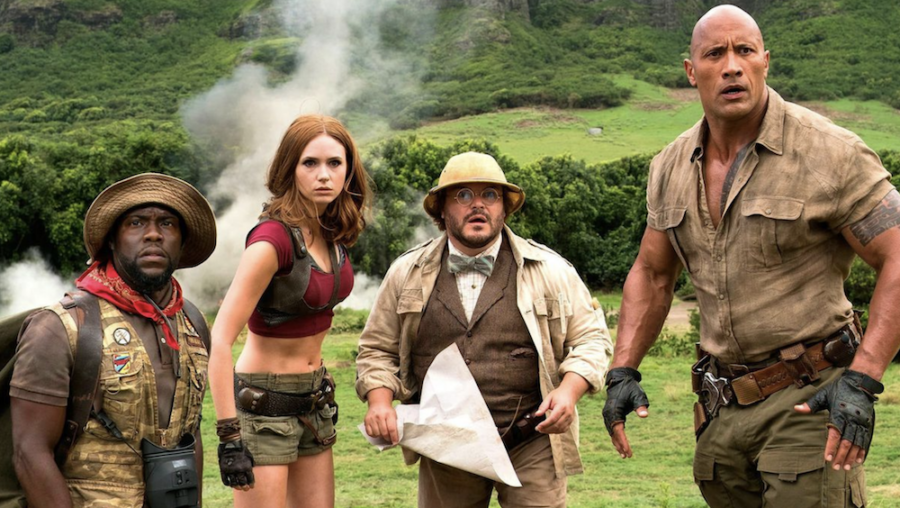
There are some great movies coming to Netflix this month, including the first five Mission: Impossible movies, Jumanji: Welcome to the Jungle, the Oscar-nominated sci-fi film Bugonia, and Denzel Washington’s underrated American Gangster. For shows, the first Stranger Things spin-off, Tales from ‘85, is arriving late in April, Beef Season 2 covers a new feud between Oscar Isaac and Carey Mulligan, and if you like anime, Jojo’s Bizarre Adventure Steel Ball Run is a must-watch. The problem is a lot of the movies are five years old, or significantly older, and the shows, with the one Hawkings Indiana sized exception, tend to be Season 2, or even later.
You’ve likely already seen most of the movies coming to Netflix. What you haven’t seen is Charlize Theron’s latest film, Apex, an action-thriller about humans hunting humans. It doesn’t sound all that exciting, but then again, neither did the log line for The Old Guard, and that turned into a surprisingly fun romp. Don’t worry, though, because Netflix is continuing its push into live entertainment as streaming becomes more and more like cable with every passing day.
Netflix Is Turning Into Cable

On April 11, Tyson Fury takes on Arslanbek Makhmudov in a boxing match between, and this might shock you considering the streamer’s love of Jake Paul, professional boxers. Two more boxing events, Supernova Strikers: Genesis, pitting boxers against influencers, and Supernova: Genesis, a legit boxing card, airs later in April as well. That’s a lot of boxing that’s on top of the weekly streams of WWE Raw, podcasts including Bill Simmons and Pete Davidson, and now, baseball games.
Netflix is slowing down the output of streaming originals and instead spending the time and effort on live broadcasts, whether you want it or not. The future of entertainment is going back to the past of cable television, where live events ruled the ratings. It’s alright if Netflix slows down it’s releases, not only because the shows coming out this month, including Beef Season 2 and Man on Fire with Wonder Man star Yahya Abdul-Mateen II look like fun, but there’s so much already on the platform it’ll take decades to go through it all.
Compounding the lack of streaming originals, particularly sci-fi this month, is that Hollywood has slowed down the number of shows and films getting release dates. On the one hand, it’s good, as for awhile, it was impossible to keep up, but on the other, it means more four-quadrant concepts and, less wild, creative swings at big, bold concepts. Netflix isn’t going anywhere, but what we watch on the platform is starting to change, and before we know it, the streamer will switch to the weekly release model. When that happens, it’ll be official: cable is back.
Entertainment
The quirky stuff NASA packed in the Orion spaceship for Artemis II

Over a half-century ago, NASA only spent three years landing astronauts on the moon before the nation lost interest in continuing the program.
That meant the U.S. space agency didn’t get to launch at least three more planned Apollo missions that would have explored new regions of the lunar surface.
But NASA never forgot — demonstrated by a little artifact the agency tucked inside the Orion spacecraft: An American flag that would have flown on Apollo 18 in the early 1970s.
“The flag serves as a powerful emblem of America’s renewed commitment to human exploration of the moon,” NASA said, “while honoring the legacy of the Apollo pioneers who first blazed the trail.”
NASA’s Artemis II mission, which blasted off April 1, is a crowded flight, carrying four astronauts in a spacecraft the size of two minivans. While the crew — Commander Reid Wiseman, Victor Glover, Christina Koch, and Jeremy Hansen — didn’t have to leave their carry-ons on the Cape Canaveral, Florida, launchpad, their “home” for the 10-day flight around the moon is certainly packed to the gills. Still, NASA had room to stow away a few precious mementos and other odds and ends for the journey.
The “official flight kit,” established in federal law, allows NASA, commercial partners, and international entities to use these items later as awards, gifts, or museum exhibits. But for them to get those items onboard, each supplier has to ask NASA for written permission.
The Artemis II flight kit is considerably smaller than the one that flew on the uncrewed Artemis I mission in 2022, which contained about 120 pounds of weird stuff. On this journey, the capsule was maxed out with systems and cargo to keep four adults alive. A toilet, compact rowing machine, food, and other life-support equipment, as well as the astronauts themselves, had to take priority.
This Tweet is currently unavailable. It might be loading or has been removed.
As usual, Artemis II’s kit includes a lot of flags, mission patches, and pins, most of which will go to employees and contractors who helped support the project. But here are some of the more unusual and symbolic items that made the cut:
Pieces of the Space Launch System
When a rocket is about to thrust you into space at 18,000 mph, the last thing you as an astronaut want to hear is that some of its parts are actually sitting right next to you inside the capsule.
But don’t worry. These are shavings from the Space Launch System‘s core stage, likely little aluminum bits recovered from the welding and machining process. After the first eight minutes of the flight, the core stage shut down its engines and detached, breaking apart over the Pacific Ocean.
Mashable Light Speed

At 212 feet tall, the core stage of the Space Launch System holds more than 733,000 gallons of fuel to feed four engines at its base.
Credit: NASA
Bags of dirt
Yes, mission planners made room for 10 bags of dirt — but not just any dirt. Special dirt. These bags contain soil collected from trees whose seeds flew on Artemis I. After that flight, they were planted on Earth. Now some of the soil that helped them grow is making the lunar trip, tracing a full circle from space to Earth and back again.
On Apollo 14, NASA brought seeds to learn about the effects of deep space on plants. Unfortunately, the can containing them broke, with the seeds getting all mixed up. No longer viable for research, the seeds became part of a new program. Not wanting to waste them, NASA delivered the seeds to the U.S. Forest Services. When hundreds began sprouting, they earned the nickname of “moon trees.”
NASA didn’t pack any tree seeds this time, but the Canadian Space Agency did, continuing the tradition. As a member of the Artemis II crew, Canadian astronaut Hansen is the first non-American on a deep space flight.
Other seeds, including a packet of zinnias and chili peppers, are also on board.

The Wrights pioneered the first powered airplane flight at Kitty Hawk, North Carolina, on Dec. 17, 1903.
Credit: The Estate of Orville Wright / Smithsonian
Wright Brothers’ fabric swatch
A one-inch square of fabric from the Wright brothers’ Flyer is inside Orion right now. The swatch is meant to commemorate the birth of flight. The scrap is on loan from the Smithsonian’s National Air and Space Museum, along with another little piece that previously flew on the Space Shuttle Discovery in 1985. After the spacecraft splashes down, the artifacts will return to the museum.
As another nod to the history of flight, the kit holds a photo negative from Ranger 7, the 1964 probe that became the first U.S. mission to successfully touch the lunar surface.
Lab-grown astronaut tissue samples
Separate from the flight kit, the mission is carrying a unique science experiment, known as A Virtual Astronaut Tissue Analog Response, or AVATAR. The test involves live tissue from each of the four astronauts on thumb-drive-size chips, stored in a temperature-controlled box.
Before the launch, doctors drew blood from each crew member and grew cells from those samples to load on the chips. The samples mimic bone marrow, a crucial part of the immune system.
After the mission, scientists will study how gene activity changes within individual cells, comparing flight samples with copies on Earth. The work aims to reveal how deep-space radiation and microgravity affect blood cell development. And it will also serve as a test case for whether these chips can predict health outcomes. In the future, the research may help NASA build personalized health kits for astronauts.

Lucas Ye, 8, won a contest to design a zero-gravity indicator for the Artemis II moon mission.
Credit: Freelancer / NASA
A stuffie with a story
NASA didn’t assign Snoopy to this moon mission — the beagle flew previously on Artemis I — but another cuddly plush toy is filling in. Though not a part of the official flight kit, the round mascot, selected by the astronauts from more than 2,600 contest entries, has an important role. It’s what’s known as a zero-G indicator, letting mission control know when the spacecraft has reached microgravity.
How? It floats.
A second grader from California, Lucas Ye, designed the little stuffie, who looks like the moon wearing an Earth cap. It represents the famous Earthrise image taken during Apollo 8, when humans first saw the planet hovering above the moon’s horizon. Zipped inside is an SD card of names from people rooting for the mission’s success.
Right now, it doesn’t look as though there’s a way to buy Rise, as NASA apparently hasn’t licensed it. But there may be some pent-up demand for the cutie: The official Kennedy Space Center gift shop has temporarily stopped selling most Artemis-related merchandise due to “an unprecedented surge” in orders.
“We sincerely appreciate your excitement and support,” the shop said in a notice on its website, “and kindly ask for your patience as fulfillment times may be longer than usual.”
Entertainment
Starfleet Academy’s Most Progressive Character Is Secretly Star Trek's Most Offensive
By Chris Snellgrove
| Published

Now that Starfleet Academy has been canceled, its fans have been fondly reminiscing about what they see as the show’s better qualities. Arguably, the best thing about the show was its colorful characters, whose diversity reflected the ideals of Star Trek as a whole. However, some critics felt the show went a little too far with Jay-Den, the gay, pacifist Klingon. Accordingly, this became another culture war flashpoint, with SFA superfans claiming that anyone who dislikes Jay-Den’s portrayal is just a bigot who never really understood what this franchise was about.
The truth is, there was a problem with this character’s portrayal, but not in the way the show’s biggest fans or its biggest haters could have guessed. You see, there’s nothing wrong with Starfleet Academy prominently featuring the first gay Klingon in Star Trek history. But the writers went about Jay-Den’s characterization in such a way that the show’s most progressive character accidentally became the most offensive.
The Accidental Caricature

Ironically enough, one of the reasons that Jay-Den became the most offensive character on Starfleet Academy is that the writers kept putting hats on top of hats to make him a uniquely progressive character. You see, he’s not just a gay Klingon, but he’s also an aspiring nurse who is a complete pacifist. Oh, and his parents are polyamorous (today was a good day for monogamy to die).
When I first heard that the new Star Trek show would feature a gay Klingon character, I assumed it would be a more traditional, Worf-like Klingon who is simply into dudes rather than gals. Making the character an aspiring medical officer was a confusing choice, but it still made a kind of sense; after all, a warrior culture like the Klingons must have battlefield medics. But then the writers made Jay-Den a Klingon pacifist (completely unheard of in previous lore), put him in a skirt, and did the shocked Pikachu face at the fact that old-school Trek fans disliked him.
Hello, Nurse!

Starfleet Academy made Jay-Den completely different from other Klingons in every way except his face. This is, understandably, offensive to Star Trek fans who expected him to act like a Klingon rather than simply look like one. But it’s also arguably offensive to those expecting a truly progressive character because Jay-Den ended up being weirdly half-baked as a person. He was ultimately nothing more than a set of half-assed progressive signifiers that transformed him into a caricature that leaned on offensive stereotypes.
I would bet my last bar of gold-pressed latinum that the Starfleet Academy writers thought they had struck gold by making Jay-Den the 32nd-century equivalent of a nurse. However, what they failed to consider is that, to 21st-century viewers, the “gay nurse” is actually a very offensive stereotype. It’s rooted in patriarchal, old-school homophobia and assumes that caretaking is a feminine activity. Writers often perpetuate the stereotype by making nurses gay, effectively confirming the homophobic assumption that male nurses can’t be “real” (i.e., heterosexual) men.
In retrospect, I can’t help but think that making a member of Star Trek’s most famous warrior race into a gay pacifist was a decision to play things safe. A hugely muscled, highly aggressive, bloodthirsty warrior who just happened to be gay is the kind of thing that makes people very, very nervous. By making Jay-Den gay and a pacifist and a nurse, Paramount effectively reassured sponsors, execs, and traditional fans (groups comprised mostly of older, white men) that the strong Black character couldn’t hurt them.
The Diversity Is The Character (And Why That’s A Bad Thing)

As I said before, Starfleet Academy is, by certain metrics, the most progressive Star Trek show ever made. Unfortunately, the writers made a pretty crucial mistake with Jay-Den: they made his sexuality and other progressive aspects very nearly the sum total of his character.
To see what I mean, look back at Stamets and Culber, the two most prominent gay characters in Trek before Jay-Den came along. Outside of their (frankly, very cute) scenes together as a couple, you might barely know they were gay because the show largely focused on their responsibilities: one was a doctor, one was an engineer. They were defined by their competence and characterization, and not by sexuality.

Jay-Den, outside of the one episode that focused on his character (the one that sent 99% of Klingons to Hell while giving him the “my parents didn’t understand me” stock gay story), wasn’t really developed as a character. Most of what we got from him was stupid romantic drama (“ooh, will he end up with the bad boy alpha or the adorkable beta?”) or more progressive signifiers (“look, he’s wearing the skirt again!”).
Such a portrayal arguably nullifies the whole point of representing minority groups because Jay-Den doesn’t get to be a real character; he gets to be a collection of stereotypes that make the audience feel good about how progressive they are.
To Explore New Worlds Of Strange

Despite being canceled, Starfleet Academy has a second season already filmed. At this point, one of my biggest hopes for Jay-Den is that he gets better character development in Season 2. But with Jay-Den actor Karim Diané’s recent Instagram declaration that “season 2 is gay AF” and that it will be “season 1 … turned all the way up,” I’m not exactly holding my breath.
Which is a shame because, once more for the cheap seats, there’s nothing wrong with having a gay Klingon. But the Starfleet Academy writers turned Jay-Den into a caricature rather than a character, one whose substance was buried under layers of cheap skirts and cheaper tropes.
He’s a non-threatening cipher that progressive fans can embrace to showcase their love for diversity. He’s touted as a brave new character, but Jay-Den actually reflects the cowardice of the writers. After all, if they were really ready to give us a gay Klingon, they wouldn’t have taken away everything that makes him a Klingon!
Entertainment
How An R-Rated Attempt To Make Reddit Relevant Became A Streaming Disaster
By TeeJay Small
| Published

Do you recall the 2021 GameStop stock trading story that took over the media and made a bunch of broke college kids thousand-aires overnight? It’s an incredible underdog story, about how the little guys can band together to take on financial behemoths, using the very tools that the billionaire elite employ to keep us down.
If you told that story with a stacked cast including Paul Dano, Seth Rogen, Nick Offerman, Sebastian Stan, Vincent D’Onofrio, and more, you might have a certifiable hit on your hands. Unfortunately, the film Dumb Money fails to deliver on any big laughs and reminds me of why movies about internet trends so often miss the mark.
The True Story Behind Dumb Money

In case you missed it, Dumb Money follows the true story of Keith Gill. Gill is a broke financial analyst living in Brockton, Massachusetts, who maintains a middling social media presence discussing low-value stocks with a small group of would-be day traders.
During the height of the COVID-19 pandemic, Gill’s channels began to pick up major steam, especially as he bought up cheap shares of GameStop. As Gill reads into the financial reports, he arrives at the conclusion that the big firms are betting on Game Stop to fail, and shorting the stock with the intention of raking in billions from the business’s impending bankruptcy.
Thanks to an army of loyal Reddit users, Gill and his pals manage to fight back against Wall Street and raise the stock price of GameStop significantly. Doing so makes millions for people with pennies and takes billions from companies with hundreds of billions. If you’re not a complete sociopath, you should see it as a win-win for every party. Sure, the billionaires lose a fraction of a percent of their wealth, but they can dry their tears with lobsters on the decks of their massive yachts.
Reddit Forums Are Not Interesting

I wasn’t actively part of the GameStop stock push in 2021, but I did follow it as it took place. I was super excited to see Dumb Money when it released just a few years later, but I ultimately left the film extremely disappointed. As it turns out, it’s really hard to make a movie engaging or visually interesting when 90 percent of the action takes place on Reddit forums. The result is roughly 100 minutes of watching Paul Dano shout “holy shit” while sitting in a gamer chair, or watching America Ferrera make shocked expressions at her cell phone.
Dumb Money is also loaded with random, unnecessary, and downright obnoxious needle drops. The narrative hardly progresses for five minutes at a time without some licensed pop song stopping the action so we can watch people dance around pointlessly. Look, I’m not a monster, I enjoy Kendrick Lamar‘s “Humble” as much as anyone. But if I wanted to watch 6 music videos back-to-back, I’d be on YouTube, not Hulu. My estimate is that the team behind Dumb Money realized they didn’t have enough story to make a feature film and relied on these musical portions to pad the runtime.
Has Craig Gillespie Ever Met Another Human Being?

To further that point, it seems like director Craig Gillespie really struggled to juggle the moving parts behind this story. Sure, Keith Gill is the centerpiece of the narrative, but all the side characters feel more like cameo appearances than supporting performances. Nick Offerman’s character is meant to loom over the movie like a video game final boss, but he gets only about 5 minutes of screen time. Seth Rogen was all over the trailer for Dumb Money, but in the narrative, he has practically nothing to do. The two college girls created for the film are portrayed so obnoxiously that it makes me wonder if Craig Gillespie has ever met another human being in his entire life.
Personally, I’d skip this movie, but if you’re interested in checking it out for yourself, Dumb Money is streaming on Hulu. My best advice would be to throw it on while you’re cooking, cleaning, or looking at your phone. That way, you can soak up the interesting parts without committing to an hour and 44 minutes of Pete Davidson lip-syncing.


Amaka Agugua-Hamilton no longer coach at Virginia
Kelly Morrone named women's basketball coach at Albany


