
Entertainment
Netflix Has The Wild 1960’s Classic That Changed Hollywood Forever
By Chris Snellgrove
| Updated

James Bond is a fictional character who needs no introduction: he is the super-sexy, martini-swilling secret agent who always manages to get the last laugh and the girl, usually in that order. Right now, the franchise is at a creative crossroads as we wait to learn who the next Bond will be and whether his adventures will stay confined to the big screen or spread out to the small screen. Fortunately, you can return to the franchise roots with the click of a button by playing Dr. No (1962) on Netflix today.
The premise of Dr. No is that British superspy James Bond is dispatched to investigate the sudden death of a fellow spy. Along the way, he meets up with a few expected enemies (like rival spies) and a few unexpected allies (like a friend at the CIA) before getting caught up in the titular villain’s plan to disrupt an upcoming space launch. Now, whether that launch will be successful or not and whether the good doctor’s evil organization ends up ruling the world may come down to Bond’s ability to save the day when every deck is stacked impossibly against him.
A Cast That Really Leans In

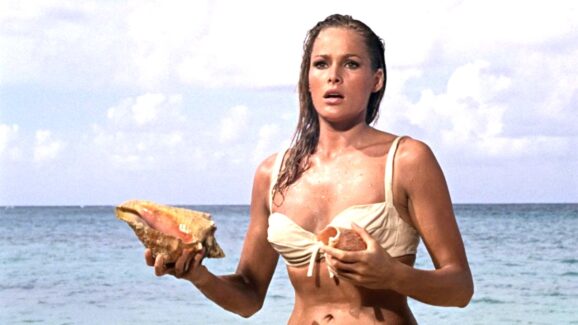
The cast of Dr. No includes Joseph Wiseman (best known outside of this movie for Buck Rogers in the 25th Century) as the titular supervillain and Ursula Andress (best known outside of this movie for Clash of the Titans) as the first Bond girl. Unsurprisingly, the best performance comes from Sean Connery, who gives his secret agent a roguish charm that helped to make the actor a household name. Make no mistake: James Bond would never have become such an international phenomenon if not for Connery’s legendary performance, one that holds up remarkably well after all these years.
Relative to its budget, Dr. No is one of the most successful films ever made, especially in the action genre. Against a budget of $1.1 million, the film earned $59.5 million, establishing Bond, James Bond, as one of the most marketable IPs in the entire world. The success of this movie ensured it would have many sequels, leading to a Bond franchise that consists (so far) of 25 official movies, with various actors (including Roger Moore, Pierce Brosnan, and Daniel Craig) filling the oversized shoes of Sean Connery once he finally left the franchise that had made him famous.
The Critics Couldn’t Say “No”

Dr. No took over the film world as surely as its titular villain wanted to take over the real world. On Rotten Tomatoes, the movie had a stunning score of 95 percent, with critics commending the film for its uniquely intoxicating blend of action and style. They further praised the movie for delivering such a fully formed cinematic hero in the form of James Bond, someone whose humor and sex appeal are just as much a part of his arsenal as the sexy cars and sleek guns.
If you’re a longtime fan of 007, you might find him largely unrecognizable in this first outing: he’s a meaner, colder secret agent, someone more akin to Daniel Craig or Timothy Dalton’s take on this famous super agent. That doesn’t mean you won’t see some of that trademark Bond charm and plenty of eye candy, thanks to the inaugural Bond girl, Honey Ryder. Plus, the plot is relatively scaled down, but this might very well appeal to someone who has gotten bored by the impossibly high stakes of later Bond outings that feel more like generic Marvel movies rather than grounded, realistic adventures in their own right.
The Most Driven Spy In Hollywood

Dr. No isn’t the best James Bond movie, but it’s arguably the most important because it introduced the world to an entirely new breed of action hero. 007’s influence in future films simply can’t be overstated, and he eventually became one of the most recognizable pop culture figures ever created. Understandably, there’s plenty of joy in returning to Bond’s first outing, which is a relentlessly satisfying romp in its own right that just happens to lay all the groundwork for the sexiest, most stylish franchise to ever grace the silver screen.
Will you agree that Dr. No is a sexy classic that changed Hollywood forever, or is this one spy movie you’d rather leave in the past? The only way to find out is to grab the remote (just watch out for that exploding pen!) and stream it for yourself on Netflix. When it comes to this first cinematic outing of the greatest secret agent the world has ever known, I’m confident you’ll be shaken and stirred.

Entertainment
Starfleet Academy Is Dead, Schrödinger’s Fans Blamed

By Chris Snellgrove
| Published

My relationship with Starfleet Academy has been, as Facebook would call it, complicated. It’s a show I absolutely despised at first, but I grew to like more as Season 1 progressed. Still, I couldn’t shake the feeling that the show was doomed from the start. That’s because it never cracked the Nielsen Top 10 Streaming list, and it very rarely made it into the top 10 for Paramount +, its own streamer. The network is cagey about releasing any actual viewership numbers, but from the outside looking in, it never seemed like enough people were watching to justify this show’s rumored per-episode price tag.
Schrödinger’s Fans (noun, plural) — A paradoxical audience state in which a fanbase is simultaneously dismissed as too small to matter and blamed as large enough to determine a project’s success or failure, depending on which argument is more convenient.
Now that the show is dead, the fandom has been conducting its inevitable autopsy. Equally inevitable is who they have chosen to blame for the show’s failure. Those mean, older fans who criticized the show from the start. Those haters warned of SFA’s doom from the beginning, but were always told they were simply a vocal, hateful minority. Now, these haters are being blamed for the death of Starfleet Academy, which has revealed these harsh critics to be Schrödinger’s fans; a group so small their opinion don’t matter, but so big that their lack of interest can ruin an entire show.
Cultural Collision

When it comes to Starfleet Academy, the division between Star Trek fans is pretty obvious. Most of the show’s biggest defenders skew younger, and the formative sci-fi of their youth was things like the Star Wars prequels (or, God help us, the Star Wars sequels). Conversely, most of the show’s biggest critics skew older, and they grew up watching shows like Star Trek: The Next Generation. A collision between these groups was inevitable: older Star Trek fans wanted Starfleet Academy to be more like older Star Trek. Newer fans wanted the franchise to do something new.
Paramount obviously chose to tailor Starfleet Academy to younger viewers. It’s an understandable impulse, of course. As the franchise warps to its 60th anniversary, the majority of the fandom isn’t getting any younger. The network decided to address this problem fairly directly by creating a show filled with young people speaking in modern slang and constantly enjoying sophomoric humor. Unfortunately, this decision ultimately drove away the older fans that, as Paramount found out the hard way, were more important than anyone could have guessed.
Understanding Schrödinger’s Fans

In case you need a quick refresher, Schrödinger’s cat is a thought experiment in quantum physics. It refers to the idea that particles exist in every possible state until they are directly observed. This idea (known as “superposition”) works well in theory, but the thought experiment shows how silly this notion is when applied to something as simple as a cat in a sealed box. You see, until you open the box and check, quantum mechanics tells us that the cat is, paradoxically, both alive and dead.
What does this have to do with Star Trek? Fans of Starfleet Academy have been looking for someone to blame for the show’s cancellation, and many of them are blaming the older fans who have hated the show from the beginning. These superfans seemingly believe that if the haters had tuned in or simply stopped saying anything negative about the show, SFA would still be around.

To these fans, I must make a blunt request: pick a lane! Before Starfleet Academy was canceled, critical voices were dismissed as a vocal minority who just didn’t understand the subtle genius of this new Star Trek show (the one with the dick and fart jokes).
Now, haters are being told that their refusal to watch SFA somehow screwed the show. Just like that, older Star Trek lovers became Schrödinger’s fans. There are so few of us that our thoughts and opinions don’t matter, yet there are so many of us that our opinions can either save or doom a show.
An Expensive Lesson, But Will Paramount Learn?

It feels self-serving saying this (since I’m a middle-aged, lifelong lover of the franchise), but the clear lesson here is that Paramount needs to give older Star Trek fans what we want. We are not some tiny minority group to be ignored. We are the group that has kept this franchise alive for 60 years. Ironically, most of us started watching The Next Generation at a young age because, get this, it was a slick update to The Original Series!
Star Trek doesn’t have to radically change direction to gain younger fans. Instead, creators need to work on updating the classic formula for modern audiences. This is why Strange New Worlds has proven popular with younger and older fans alike. Aging Trek fans like its homages to The Original Series, while younger fans enjoy the humor and jokes. Hindsight is always 20/20, but there was no need to make Starfleet Academy so radically different than what came before. As it turns out, if a show is Star Trek in name only, not that many Star Trek fans will tune in.

At the end of the day, this is a numbers game, and Starfleet Academy just didn’t have that many viewers. Paramount tried to do something completely new, and it blew up in their faces. Now is the time to embrace the Golden Age of the franchise: kick Alex Kurtzman to the curb, bring back Terry Matalas for Star Trek: Legacy, and focus on capable, competent adults exploring strange new worlds. Otherwise, Paramount’s attempts to reach younger viewers will ultimately result in no viewers, finally killing the greatest sci-fi franchise ever made.
Entertainment
Raccoon Nutsacks Are The Ultimate Defense In Underseen Studio Ghibli Classic
By Chris Sawin
| Published

Pom Poko is an animated fantasy film from 1994 written and directed by Isao Takahata (Grave of the Fireflies, Only Yesterday). The English dub of the film refers to the animals as raccoons, but they’re actually based on Japanese raccoon dogs, also known as tanuki. The tanuki are popular in Japanese folklore and are believed to be magical creatures with shape-shifting abilities, able to pass themselves off as just about any inanimate object, any other animal, or even human beings. The Tanooki suit in Super Mario Bros. 3 boasts a similar concept.
In Search Of A New Home

The film follows a group of raccoons (I watched the dub, so we’ll still call them raccoons from here on out) as they try to save their home in Tama Hills from deforestation and housing construction with the intent of a new suburban community meant to house up to 300,000. Up to that point, the raccoons had still lived near humans, but not to feast on their scraps. They had access to farm animals, crops, and other various forms of food that weren’t readily available in the city. They lived in an abandoned farmhouse in the country for a year, until it was demolished, and construction began on what is now referred to as New Tama.
The raccoons hunt and search for a new home, but all of the territories are already occupied by other raccoons. So naturally, they battle over who gets to stay. The raccoons have three forms in the film: the normal, most realistic version that just looks like a normal raccoon, a more caricatured version that walks on two legs and speaks, and a final, minimally detailed version that isn’t seen as often and also resembles rubber hose animation. The raccoons hide the fact that they can walk on two legs, speak, and shape-shift into humans. Their final form is reminiscent of the T-1000’s chrome form in Terminator 2: Judgment Day, when it’s between forms. It’s like it only comes out when they’re overstimulated; a combination of that and someone who tried to draw The Berenstain Bears from memory.
A Big Bag Of Tricks

While the raccoons in the film are based on Japanese raccoon dogs and Japanese folklore, why their testicles are featured so prominently isn’t really explained. Even when the raccoons transform into something with clothes that isn’t human (a lot of the raccoons wear samurai-like attire in battle), the males still have their balls hanging out. Halfway into the film, a 103-year-old raccoon named Osho asks all the male raccoons to meet up in the garden.
Once gathered, he’s all like, “Isn’t this red blanket we’re all sitting on so soft and nice? Just kidding, it’s my raccoon scrote.” They refer to it as a “raccoon pouch” in the film, but this thing is 150 sq ft and somebody (or a team of somebodies. Can you imagine if there was like a “coon junk animation team” in the credits?) had to animate this giant red blanket turning back into a massive, wrinkled gray-ish brown elder scrotum that reverts back to normal size.

Raccoon nutsack physics get more intricate as the film bounces on. Its first form may be stretched into a blanket, but the pouches eventually evolve into becoming a huge bullfrog, a hot air balloon, a parachute, an Indiana Jones-sized boulder, and a ship chock full of treasure. To be fair, the last one involves a 999-year-old raccoon that goes senile, and transforms his ballsack into a big enough boat to house a bunch of fake treasure (these are all illusions powered by magic scrotums; nutsack ghosts, if you will) and dozens of raccoons sailing off to their deaths.
Song, Dance, And Sack-Driven Logic
Pom Poko has this crazy sack-driven concept that makes it seem as if raccoons should rule the forest and anything they set their eyes on. But the film is quick to point out how lazy they are and that they don’t take anything seriously. After every small accomplishment, they want to throw a party. Even if one of them is passionate about getting revenge on the humans destroying their homes, they’re quick to drop it at the thought of tempura or any other delicious food.

They’re also distracted by this particular song about raccoons. If someone sings it at them, they have to finish it. The Pom Poko title comes from the sound it makes when they drum on their bellies. Every Spring, they have to fight the urge to screw themselves stupid and make a hundred babies. For a film that prioritizes the prominent showcasing of raccoon balls, it may mention sex and being frisky in spring, but it never shows anything graphic. There’s suddenly a raccoon with nipples hanging out in the last half hour, though, which is crazy to think about.
The original plan in the film involves the raccoons researching humans over the next five years. This involves scrounging up a working TV from the dump to monitor humans, which the raccoons drop all forms of productivity in order to watch TV all day, and reviving the ancient raccoon art of transformation. There are elder transformation masters located far away that the raccoons have to search for in the film to teach the raccoons of Tama Hills, specifically the ones who know nothing about altering their form or how to transform.
Transformations Take A Toll

The way the film addresses transformation and holding forms is intriguing, as well. Chameleons may be able to change color, but in this world, foxes, raccoons (and some cats) are the only ones who can physically transform. I feel like Pom Poko wants to introduce the idea that some of the humans that walk among us may actually be raccoons, and that’s cool to think about, not so much that someone we know may actually be a raccoon. But some of the people we see every day aren’t what they present themselves to be. Maybe some are hiding this extravagant other life with magical creatures we can only dream about.
It takes a lot of energy to maintain transformations for a long time. Multiple raccoons often have to take the same human form and switch out when they get tired if they’re out in public. The bags under their eyes are symbols of their fatigue, and things like energy drinks are hinted at being invented because so many raccoons are out there pretending to be human and getting exhausted, so there’s this crazy demand for them.

What’s wild is that the war between raccoons and humans starts as mild vandalism and escalates into full-blown insanity. At one point, the raccoons force vehicles off the road and end up killing three people. Back at Tama Hills, they all want to celebrate but are convinced to have a moment of silence. The eulogy and gathering last maybe two sentences before the raccoons laugh about death and start partying.
Could Have Reached Further Into Its Bag Of Tricks
The film plays out like a mash-up of Beetlejuice and Fantastic Mr. Fox. The raccoons use their shape-shifting powers to try to scare the humans away. There’s a whole sequence where they scare a police officer while trying to be human, but they all pretend not to have a face and scare him repeatedly until he passes out. The deforestation storyline, combined with extreme measures to save their home, feels like a direct inspiration for the Wes Anderson stop-motion film because it’s so similar.

The crown jewel of shape-shifting in Pom Poko is Operation Spectre, a parade where they all turn into demons, monsters, and ghosts to try to scare the residents of New Tama away. But a lot of the creatures are famous yokai from Japanese folklore, and Totoro even makes a brief cameo. It’s an extraordinary sequence that ultimately fails its intended purpose, but it is so visually creative and memorable.
Up until these recent viewings of Pom Poko (I watched it twice for this article), I had always felt it was a lackluster effort from Studio Ghibli. I think I originally felt like they should have done more with their balls. I thought, “They bounce around on these things for two hours and do everything but their intended purpose. That’s dumb. This is dumb.” These raccoons have 101 uses for their balls. They treat their sacks like Martha Stewart does crafts. One of them jumps onto a moving vehicle and stretches their pouch across the entire windshield, causing the driver to lose control and drive off the road.

Pom Poko is one of the more unique Studio Ghibli films, with a ton of unpredictable WTF moments without straying too far from its mostly family-friendly reputation as an animated film. Seek it out, embrace the ridiculousness, and witness a bunch of raccoons adapt to life’s hardships by folding and stretching their teabags like a master origamist.
Pom Poko (as well as 21 of the 23 core Studio Ghibli films) is currently streaming on Max.
Entertainment
Sid Haig’s Unrated Clown Saga Is Captain Spaulding's Redemption Arc
By Robert Scucci
| Published

2006’s Little Big Top is one of those movies you’ve probably never heard of unless you’re a fan of both Sid Haig and Richard Riehle. It’s a movie about clowning around, literally, and I can’t think of a better actor to portray a retired, drunken, down-on-his-luck circus clown than Haig. Think of it as a Captain Spaulding side quest. One where he’s not in hot pursuit of a bunch of sexy teenagers he can drop off at Dr. Satan’s place to be disemboweled, but instead getting absolutely hammered in his old, abandoned childhood home while reluctantly reentering the circus life he left behind so many years ago.
At its heart, Little Big Top is a film about putting your ego and personal demons aside for the greater good of the community. Here we have a sad clown who’s perfectly content drinking the rest of his days away, but rediscovers his passion for pieing people in the face when tasked with whipping the next generation of circus folk into shape. At first, he only does it for the money, but it becomes about something more by the time the story wraps.
This Movie Wouldn’t Work Without Sid Haig

Sid Haig totally understood the assignment, which makes perfect sense because he had just wrapped production on The Devil’s Rejects before working on Little Big Top. The way I see it, he got the manic killer clown energy out of his system with that movie, as well as 2003’s House of 1000 Corpses, and what we get here is a much more subdued performance. In my head, I kept calling the movie Captain Spaulding’s Last Ride. What a way to go out.
We first catch a glimpse of this character, known only as Seymour, through his opening sequences. He arrives in town, hits up the liquor store without hesitation, heads to his old boarded-up house, realizes it has no electricity or plumbing, cooks bacon over a fire while getting wasted, steps outside to relieve himself, and then crashes in preparation for the inevitable hangover.

Shortly after arriving, Seymour is approached by Bob (Richard Riehle), who’s organizing a circus event for the company Seymour’s grandfather founded. Wanting nothing to do with the lights, pies, and spectacle, but desperate for cash, Seymour agrees to coach the next generation under Bob’s supervision, but not for free. Bob, the gullible sap that he is, pays him out of his own pocket, which he immediately regrets when Seymour blows it all on booze and keeps living in his own filth.
Realizing how much faith Bob has in him, even though he’s 100 percent a lost cause, Seymour eventually comes around, and his passion for the circus slowly reignites. Think of it as a slow smolder, where our hero comes to terms with the fact that the only thing he’s good at is entertaining, even if his passion for it is long gone.
Inspiring, But Not Really, But That’s The Point

Little Big Top tells an ugly truth that most of us don’t want to admit. Sometimes the things you’re good at aren’t necessarily the things you want to do with your life. Maybe you don’t want to take over the family business because it doesn’t feel like your calling. Or maybe you just lost your way and need to be reminded that you were once not only great at what you do, but passionate about it. Little Big Top is about begrudgingly rediscovering that passion, not for your own sake, but for the sake of those around you.
Watching Seymour fight off yet another violent hangover while criticizing the new troupe’s clown car etiquette perfectly sums up this feeling because you can practically feel the pounding headache and smell the disdain early in the film. He’s stepping out of his comfort zone, which for him means getting completely assfaced and passing out in his own mess, because the next generation desperately needs guidance, and he’s the only one even capable of giving it.

Watching Seymour figure out where he belongs in all of this is half the fun that Little Big Top has to offer. The other half is watching Richard Riehle’s Bob realize just how screwed he is after spending his savings bankrolling Seymour’s disastrous return to the circus.
Little Big Top is currently streaming for free on Tubi.

Starfleet Academy Is Dead, Schrödinger’s Fans Blamed
Granola raises $125M, hits $1.5B valuation as it expands from meeting notetaker to enterprise AI app


