
Tech
Nearly half of xAI’s founding team has now left the company
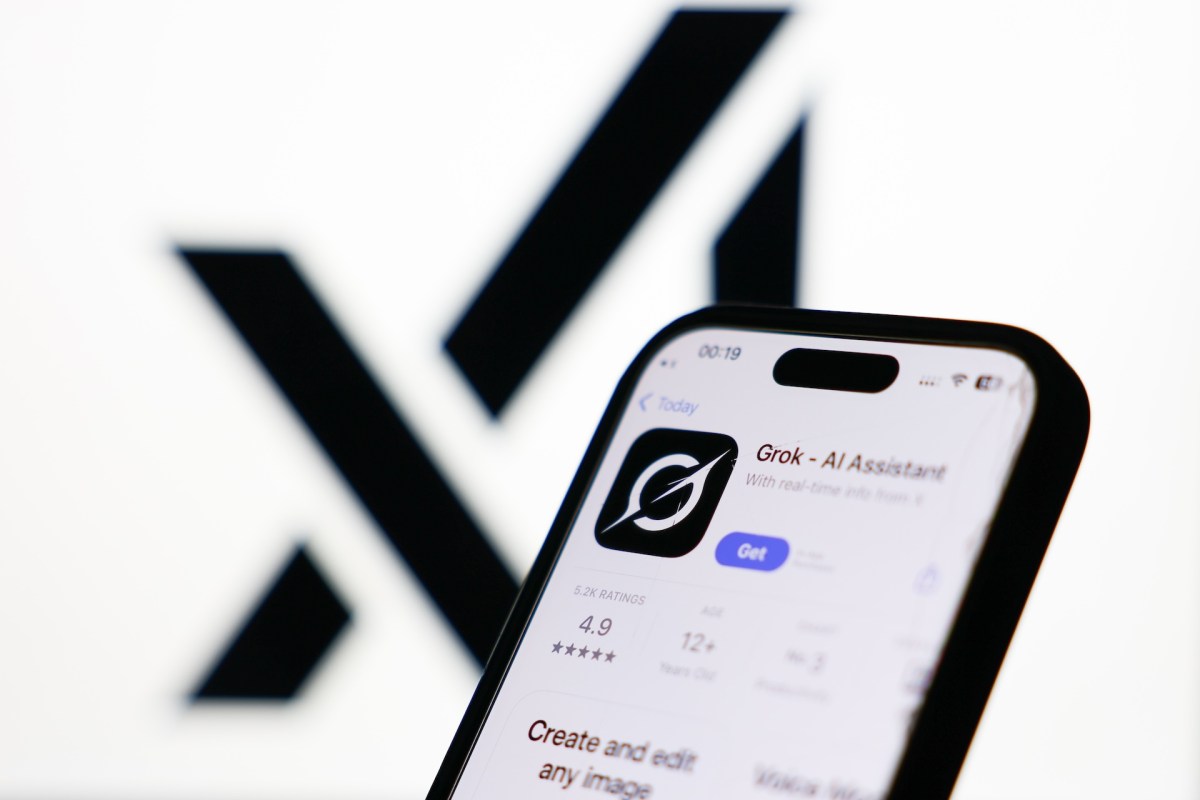
Monday night, xAI co-founder Yuhuai (Tony) Wu announced he was leaving the company. “It’s time for my next chapter,” Wu wrote in a late-night post on X. “It is an era with full possibilities: a small team armed with AIs can move mountains and redefine what’s possible.”
On its own, it’s a pretty standard tech departure announcement — but it’s part of a troubling pattern for the lab. Five members of the company’s 12-person founding team have now left the company, with four of the departures coming in just the last year. Infrastructure lead Kyle Kosic left for OpenAI in mid-2024, followed by Google veteran Christian Szegedy in February 2025. This past August, Igor Babuschkin left to found a venture firm, and Microsoft alum Greg Yang departed just last month, citing health issues.
By all accounts, the splits have all been amicable, and there are lots of reasons why, nearly three years in, some founders might decide to move on. Elon Musk is a notoriously demanding boss, and with the SpaceX’s acquisition of xAI complete and an IPO pending in the coming months, everyone involved has a pretty big windfall coming. It’s a great time to be fundraising for an AI startup, so it’s only natural for high-level researchers to want to strike out on their own.
There are also less amicable reasons that might factor in. The company’s flagship product, the Grok chatbot, has struggled with bizarre behavior and apparent internal tampering — the kind of thing that might easily create friction on the technical team. Then there were the recent changes to xAI’s image-generation tools that flooded the platform with deepfake pornography, sparking slow-moving but real legal consequences.
Whatever the cause, the cumulative impact is alarming. There is a lot of work left to do at xAI, and an IPO will bring more scrutiny than the lab has ever faced before. With Musk already spinning up plans for orbital data centers, the pressure to make good on those plans will be intense. The pace of model development isn’t slowing down, and if Grok can’t keep pace with the latest models from OpenAI and Anthropic, the IPO could easily suffer.
In short, the stakes are high, and xAI needs to hold on to all the AI talent it can.
Tech
Primary Ventures raises healthy $625M Fund V to focus on seed investing

Primary Ventures has closed a $625 million Fund V focused on seed investing nationwide, which is a sizable fund for a firm that focuses solely on early-stage investing. It perhaps showcases how the size of early-stage rounds has dramatically increased in the age of AI.
Ben Sun, a co-founder and general partner at Primary Ventures, told TechCrunch the average check size for this fund will range from $5 million to $10 million, and he hopes the firm will invest in 40 to 50 companies over the course of three years. He said the fund will also go as early as pre-seed.
The fund will also continue to spread its investments nationwide. Primary is one of New York’s most well-known venture firms, and at one point, most of its investments were focused in the Big Apple. Sun said the location thesis has changed.
The firm, which overall focuses on early-stage investing, has now done deals in Chicago, Seattle, Virginia, and D.C. “The talent, the founder, and the startups are happening everywhere,” he said. “The potential outcomes are so much bigger than they’ve ever been.”
He sees seed investing as headed toward its own asset class, especially as the quality of talent and their startups continue to rise, paired with tech’s current transformation. Firms are competing, after all, to find the hottest deals. “I think [a fund of this size] allows you to go in and compete and bring more resources to the table to work with the best founders and opportunities.”
Sequoia also recently raised a $200 million seed fund, as did Uncork Capital, which announced a $225 million seed fund earlier last year.
Though Primary calls itself a generalist, Sun said the firm has sector specialists, each with their own focus. He likes consumer, but also has investors focused on vertical AI, fintech, healthcare, enterprise, cybersecurity, and infrastructure. “We pretty much cover probably 80% or 90% of the seed sector activities out there.”
Techcrunch event
Boston, MA
|
June 23, 2026
Fund V has already invested in three companies. Primary previously raised $60 million in Fund I when it launched in 2015, followed by $100 million in Fund II and $150 million in Fund III.
It raised a $275 million fund and an additional $163 million for an opportunity fund. Some of its investments include the AI chip company Etched, the risk management platform Alloy, the women’s networking hub Chief, and the AI marketplace Dandelion Health. It has $1.65 billion in assets under management.
Tech
Spotify hits a record 751M monthly users thanks to Wrapped, new free features
Swedish music streaming giant Spotify saw its user numbers peak last quarter, driven by its year-end “Wrapped” campaign, which rounds up stats and listening highlights for users and new features on its free tier.
The company said it saw a record 38 million new users in the fourth quarter, taking its total to 751 million monthly active users, up 11% from a year earlier. Paying subscribers increased by 10% to 290 million in the quarter.
Spotify said the “Wrapped” campaign resulted in more than 300 million engaged users and 630 million shares on social media in 56 languages.
Revenue came in at €4.53 billion ($5.39 billion), about 7% more than a year earlier, thanks to an 8% increase in subscription revenue. However, the company’s ad-supported business saw revenue dip by 4% to €518 million ($616.6 million). Gross margin, an important metric investors watch for indications of improvements to Spotify’s profitability, improved by 83 basis points to a record high of 33.1% as the company sold more ads for podcasts and music.
The solid performance comes as Spotify’s new co-CEOs Gustav Söderström and Alex Norström take the reins from co-founder Daniel Ek, and they will now oversee a business that has far outgrown what it initially set out to do.
After launching as a music-streaming pure-play, Spotify has expanded its remit to include podcasts, audiobooks, and even physical bookstores. It’s launched music videos within the app as well as video podcasts and has doubled down on its retention strategy by adding social features like group chats and letting users share what they’re listening to. You can even use Spotify to book tickets to concerts, or explore the story behind songs.
The company has also added AI features like an AI DJ and AI-generated playlists, and now lets users exclude tracks from being recommended to help them better tailor what they listen to.
Techcrunch event
Boston, MA
|
June 23, 2026
Profitability has been a big focus for Spotify in recent years, and the company has tried to achieve that by increasing subscription prices in the U.S. and Europe. It’s also added new features to its free, ad-supported tier to attract more people away from rivals like YouTube Music and Amazon Music, letting users search for and choose songs they want to listen to.
The company expects to reach 759 million users and 293 million paying subscribers in the current quarter.
Tech
Former GitHub CEO raises record $60M dev tool seed round at $300M valuation
Former GitHub CEO Thomas Dohmke has raised the largest-ever seed round for a dev tool startup, according to its lead backer, Felicis. The startup, Entire, has raised $60 million at a $300 million valuation.
Entire offers an open source tool to help developers better manage code written by AI agents.
Entire’s tech has three components. One is a Git-compatible database to unify the AI-produced code. Git is a distributed version control system popular with enterprises and used by open source sites like GitHub and GitLab.
Another component is what it calls “a universal semantic reasoning layer” intended to allow multiple AI agents to work together. The final piece is an AI-native user interface designed with agent-to-human collaboration in mind.
The first product Entire is releasing is an open source tool it calls Checkpoints that automatically pairs every bit of software the agent submits for use in a software project with the context that created it, including prompts and transcripts. The idea is to allow the human developer to review, search, and perhaps even learn from why the AI did what it did.
Entire hopes to help developers better deal with the large volumes of software created by AI coding agents. Popular open source projects are particularly overwhelmed these days with suggested code contributions that may or may not be AI slop — meaning poorly designed and possibly unusable code.
Dohmke explains in the press release: “We are living through an agent boom, and now massive volumes of code are being generated faster than any human could reasonably understand. The truth is, our manual system of software production — from issues, to git repositories, to pull requests, to deployment — was never designed for the era of AI in the first place.”
Techcrunch event
Boston, MA
|
June 23, 2026
Dohmke was CEO of Microsoft’s GitHub for four years, leaving in August 2025 to found a startup, he said in a post on X at the time. During his time there, he oversaw the rise of the popular coding agent GitHub Copilot.
Other investors in the seed round include Madrona, M12, Basis Set, Harry Stebbings, Jerry Yang, and Datadog founder and CEO Olivier Pomel.

Reports: RHP Aaron Civale joins Athletics on 1-year deal
NHL players adapt to business-not-as-usual in Milan


