
Entertainment
Modern True Crime Wouldn't Exist Without This One Trailblazing, Perfect Movie

By Robert Scucci
| Published

One of the reasons I’ve distanced myself from Netflix’s true crime offerings is because they often feel disingenuous. Don’t get me wrong, there are some diamonds in the rough, like My Father, the BTK Killer, but for every banger like that, there’s also a ton of content that basically says, “Look at Jeffrey Dahmer and Ted Bundy, they’re so attractive, smart, and awesome! You’ll watch a 10-episode miniseries on them if we get somebody handsome enough to do the reenactments.” Personally, I prefer my true crime in the same vein as Forensic Files, a series I’ve watched all 406 episodes of multiple times.
Craving a solid procedural piece, I decided to finally check out what’s known as the best true crime documentary of all time, which just so happens to be credited as the film that popularized the genre as we know and love it today, 1988’s The Thin Blue Line. Admittedly, I slept on this one until just this week, and I’m just as disappointed with myself for not watching it sooner. Tubi, in its infinite glory, gave me easy access to the documentary, and now I feel whole.

Written and directed by Errol Morris, The Thin Blue Line is a top-tier exploration of a criminal justice system that becomes a dangerous combination of corrupt, complicit, and incompetent when you look at the case it’s unpacking: the wrongful conviction of Randall Dale Adams, a man whose only crime was being in the wrong place at the wrong time.
A Slam-Dunk Case Turned Total Disgrace
Private investigator Errol Morris spent three years making his case and documenting his findings in what would ultimately become The Thin Blue Line. The case in question, the 1976 murder of Dallas police officer Robert Wood, should have been a slam-dunk case on paper. The murderer, David Harris, was a 16-year-old psychopath who not only had access to an arsenal of weapons, but was also in the middle of a crime spree when the murder occurred, committing a string of robberies on his way home from the routine traffic stop that resulted in Wood’s murder. Heck, the next day, he bragged to all of his friends that he murdered a cop, as if it were some kind of rite of passage.

Caught in the crosshairs of this murder investigation was 27-year-old Randall Dale Adams, who was traveling to California from Ohio with his brother and stopped in Dallas to get some rest on Thanksgiving night. That Saturday, when his car ran out of gas, he was picked up by David Ray Harris, who, unbeknownst to Randall, was driving a stolen car. As the story goes, the two spent the day together, drank some beers, smoked some pot, and hit up a drive-in theater before going their separate ways.
Later that evening, Robert Wood was shot three times before David Ray Harris fled the scene and continued his crime spree. Randall Dale Adams wasn’t even in the car with him, but several eyewitness reports placed him at the crime scene. Adams was ultimately convicted of the crime after spending, in his words, about 15 minutes with Dr. James Grigson (also known as Dr. Death), the psychiatrist doubling as an expert witness who claimed with a hundred percent certainty that Randall would kill again. In his mind, the smoking gun was the lack of remorse Adams exhibited for the crime he didn’t commit.

Additionally, the state of Texas was all about carrying out due process so long as doing so meant somebody would get the electric chair. Eyewitnesses all piled on Adams, but as the documentary points out, many did so in bad faith. The prevailing theory surrounding Adams’ conviction is that he was old enough to receive the death penalty, while Harris, who would continue being a dangerous criminal over the next decade, was still a minor, meaning no death penalty.
The documentary takes a deep dive into the case, breaking down the prosecution, defense, sentencing, and appeals process while bringing in all the key players who sealed Adams’ fate before they even heard the whole story. As the film progresses, it becomes crystal clear that they already had their own version of events made up in their heads, and this was the outcome they wanted.
Blue Line? More Like Blue Print!

Though Errol Morris didn’t know it at the time, he created the template and gold standard for the modern true crime procedural. His approach, which seems like standard fare now, was ingenious at the time. His method of storytelling involved dramatized reenactments of Wood’s murder based on eyewitness accounts, fully intending to show viewers at home just how many holes existed in those stories when scrutinized. Adams, who maintained his innocence the entire time, would ultimately have his conviction overturned in 1989, after serving 12 years in prison.
The Thin Blue Line got its name from Dallas County Judge Don Metcalfe, who famously said of the police, “The police are a thin blue line that separates the public from anarchy. The line is supposed to be honest … and you’ve made a mockery of that.” The central thesis of Morris’ documentary is that when a system is broken at its foundation, innocent men will pay the price. Thanks to his investigative work, Morris did what no law enforcement official on the case could do, which was find justice not just for Adams, but for Wood, who died in the line of duty when he pulled David Ray Harris over to tell him his taillight was out.

If you’re a Forensic Files junkie like me and want to see how cold, hard facts get manipulated by the powers that be to fit a political agenda, The Thin Blue Line is essential viewing. It’s a masterclass in reading between the lines in pursuit of the truth, and in this case, the truth saved an innocent life from death row while helping expose the real culprit, who was pretty much dead to rights but didn’t fit the narrative.

As of this writing, The Thin Blue Line is streaming for free on Tubi.
Entertainment
60+ of the best Memorial Day deals: We found TVs, mattresses, headphones, and more on sale
Table of Contents


The unofficial start to summer is almost here, but you don’t have to wait until Memorial Day itself on May 25 to find those Memorial Day deals.
There are already deals live at Amazon, where you’ll find savings of up to 40%. There are also plenty of savings from other online shopping destinations, with deals on products such as mattresses, TVs, furniture, and outdoor patio items. Plenty of brands are getting in on early MDW action — you can grab the Dyson Airwrap i.d. for $150 off and the Bose QuietComfort headphones for $120 off.
We’ll be updating all the best Memorial Day deals throughout the weekend, so be sure to keep checking back on this page for the biggest and best savings.
Best Memorial Day Amazon deals

$259
at Amazon
$349.99
Save $90.99
Why we like it
What says start of the summer better than slushies on demand? When Mashable’s Leah Stodart reviewed the Ninja Slushi, she pointed out the merits of the Slushi over a regular blender: no ice is required, and it keeps drinks frozen while in its cooling cylinder. From cola slushies to frosé, this might just be the ultimate summer drink machine. It has some downsides (sugar-free beverages are a no-go), but if you’re a frozen drink enthusiast, this deal is worth a closer look.
More Amazon deals
Best Memorial Day TV deals
$264.99
at Best Buy
$529.99
Save $265
Why we like it
Best Buy and Amazon have been racing to match prices on this Fire TV. Best Buy was initially $75 cheaper than Amazon, so Amazon dropped its sale price to keep pace. But that’s only a piece of the picture demonstrating just how good this deal is. Our resident TV expert, Leah Stodart, pointed out that this $264.99 price point is so good that it’s less than the sale price of the 43-inch version of Amazon’s most basic Ember 4K Fire TV. In other words, if you’re looking to score a solid deal on a smart TV this Memorial Day, this could be the one for you.
More TV deals
43-inch to 50-inch TVs
55-inch TVs
Mashable Deals
65-inch TVs
70-inch TVs and up
-
Pioneer 70-inch 4K Roku TV — $319.99
$509.99(save $190) -
Insignia 75-inch QF QLED 4K TV — $399.99
$649.99(save $250) -
Hisense 75-inch E7 Mini-LED 4K TV — $749.99
$1,299(save $549.01) -
TCL 75-inch QM6K Mini-LED 4K TV — $899.99
$1,299.99(save $400) -
Hisense 85-inch U6 Mini‑LED 4K TV — $1,199.99
$1,999.99(save $800) -
TCL 85-inch QM6K Mini-LED 4K TV — $1,199.99
$1,999.99(save $800) -
LG 77-inch B5 OLED 4K TV — $1,499.99
$2,399.99(save $1,500) -
Sony Bravia 5 85-inch Mini-LED 4K TV — $1,798
$2,999.99(save $601.99)
Best Memorial Day mattress deals
-
Avocado: Get up to 20% off organic mattresses, bed toppers, and bedding.
-
Amerisleep: Get up to $1,000 off all mattresses and 40% off bundles
-
Bear: Get 35% off sitewide, plus $275 worth of free accessories
-
Casper: Get up to 30% off select mattresses and 35% off bundles
-
Purple: Get up to $900 off a mattress and a base
-
Helix: Get 25% off sitewide with code MEMDAY25
-
Leesa: Get 30% off select mattresses
-
Mattress Firm: Get up to 60% off select mattresses with queens starting at $189.99
-
Nectar: Get up to 50% off select mattresses and 66% off bundles
-
Saatva: Save up to $650 on mattresses, including the Saatva Classic and Memory Foam Hybrid mattresses
-
Serta: Save up to $600 on select mattress and adjustable base sets
-
Sleep Number: Save up to $1,200 on ClimateCool and ComfortNext mattresses, BOGO free Ultimate Shape Pillows, and BOGO 50% off sheets
-
Tempur-Pedic: Save 40% on the Tempur-Cloud Mattress or up to $500 on adjustable mattress sets, plus free gifts
Best Memorial Day home deals
-
Brooklinen: Refresh your bedding for summer with 25% off sitewide
-
Buffy: Save up to 25% sitewide
-
Caraway Home: Save up to 30% on cookware and bakeware
-
Cozy Earth: Save 20% sitewide or 25% when you buy three or more items
-
Crate & Barrel: Save up to 60% on rugs, 35% on kitchen brands, and 30% on furniture
-
Cuisinart: Save 15% on $99.95+, 20% on $149.95+, and 25% on $249.95+
-
Home Depot: Save up to 40% on select appliances, 20% on select patio furniture, and up to $175 off on select tools now through May 27
-
Joybird: Take up to 45% off on bestselling furniture and up to 35% off sitewide through May 25
-
Kohl’s: Save up to 50% sitewide on clothes, kitchen appliances, bedding, patio furniture, and more
-
Lovesac: Save 40% sitewide through May 31
-
Lowe’s: Save on appliances, grills, patio furniture, gardening supplies, and more through June 3
-
Mellow Sleep: Get $20 off $100, $50 off $200, or $100 off $300
-
Nest New York: Save 25% sitewide with code 25OFF
-
Parachute: Save 25% sitewide plus 30% on bundles
-
Ruggable: Save up to 25% sitewide
-
Rugs Direct: Save up to 80% sitewide on brands like Safavieh, Chris Loves Julia, Loloi, Rifle Paper Co., and Rugs USA
-
SharkNinja: Save up to 30% on Ninja kitchen appliances and Shark vacuums, hair tools, and fans
-
Target: Target’s Hello Summer Sale brings deals on summer favorites, including up to 20% off kids’ outdoor toys and up to 45% off patio furniture and garden essentials
-
Wayfair: Save up to 70% sitewide
Best Memorial Day tech deals
-
Best Buy: Save on TVs, Apple products, laptops, monitors, Sony cameras, Bluetooth speakers, and more
-
BJ’s Wholesale Club: Get up to 50% off TVs and electronics, 25% off mattresses, and 15% off home and kitchen
-
HP: Save up to 72% on OmniBook laptops, Omen gaming PCs, All-in-One desktops, and more
-
Lenovo: Save up to 30% on ThinkPad, Yoga, ThinkBook, IdeaPad, and Legion laptops
-
LG: Save up to 44% on TVs, 40% on monitors, and up to 58% on appliances
-
Tile: Save up to 40% on trackers
-
TP-Link: Save up to $220 on select products, including the Tapo C460 (4-Pack) + H500, plus get an additional 10% off sitewide with code USA10
Best Memorial Day beauty deals
-
Dyson: Save up to $150 on the Dyson Airwrap i.d., Airstrait, and Supersonic Nural
-
FabFitFun: Save 40% on your first box, plus get a free Vacation bonus box ($250 value) with an annual membership signup
-
L’ange: Save up to 44% on select tools with code MEMORIAL, plus an extra 15% off your entire order with code EXTRA15
Best Memorial Day outdoor deals
-
Bote: Save 15% sitewide
-
Columbia: Save up to 40% on “almost everything”
-
Dick’s Sporting Goods: Save up to 50% on bikes, kayaks, tents, grills, and golf gear, save up to to 40% on Nike and adidas
-
Huffy: Save 25% on select bikes
-
HOVERAir: Save up to 47%
-
Rumpl: Save 25% sitewide
-
Solo Stove: Save 15% on select fire pits and pizza ovens
Entertainment
Obsession Needed Only Two Weeks To Make Movie History
By Jonathan Klotz
| Published

Memorial Day weekend is a showdown between the two sides of modern Hollywood. On one side, we have Disney’s big-budget Star Wars blockbuster The Mandalorian and Grogu, and on the other, the latest micro-budget horror from Blumhouse: Obsession. The two films can’t be any more different, and while Star Wars’ return to the big screen is expected to earn over $400 million at the box office, it’s Obsession that’s going to enter the history books. Not only because of its total box office, it’s going to end up over a $100 million, but it’s how it’s earned the money. It’s the first film since Shrek to earn more its second weekend than its first, without the benefit of Christmas or Thanksgiving weekends. That’s one for the history books.
Obsession Defies Decades Of History

A second weekend drop of under 50 percent is considered a success in Hollywood. On average, movies tend to be frontloaded these days, and we’ll never again have a film like Titanic, which earned more on Valentine’s Day three months after release than it did on opening night. It was catastrophic that both Batman v. Superman: Dawn of Justice and Ant-Man and the Wasp: Quantumania fell by 67 percent in their second weekends, but a franchise-saving success when Bumblebee dropped only 3 percent. Obsession has, percentage-wise, done better than all of those films, and thousands of others.
Obsession is, as of the time of this writing, on pace for a second weekend performance of $19 million. 16 percent above its original haul of $17 million. With outstanding word of mouth, rave reviews, and countless social media reactions, sketch comedian Curry Barker’s (no relation to that other Barker) horror debut shows no signs of slowing down. If the third weekend breaks $19 million, Obsession will become one of the most successful films in modern history.
The Next Big Name In Horror

With a total budget of under a million dollars, Obsession cost less than the catering budget for The Mandalorian and Grogu. The tight story, with a total runtime of barely over 100 minutes, has been able to capture the audience’s imagination in a way few horror films have before, already earning the film comparisons to The Ring, The Blair Witch Project, and Paranormal Activity. The One Wish Willow that allows Bear (Michael Johnston) to wish for his crush, Nikki (Inde Navarrette) to love him more than anyone is already being talked about as the subject of a second film, or an anthology, with multiple One Wish Willow’s going very, very badly for the wisher.
Low-budget horror has become a staple of cinema over the last few decades in particular, and Curry Barker is set to follow up his current hit next year with Anything but Ghosts starring Aaron Paul and Bryce Dallas Howard (with an estimated budget of $5 million) and in 2027, a new take on an old classic: The Texas Chainsaw Massacre. It’ll be a tough bar to clear the success of Obsession, which might break even more records before its run comes to an end, but given the reaction to his small-scale Monkey’s Paw story, Barker is going to become one of the hottest directors in Hollywood.
Entertainment
Grogu Movie Proves Disney Learned The Wrong Lesson From The Star Wars Sequels
By Chris Snellgrove
| Published

Right now, The Mandalorian and Grogu is in theaters, and I can’t help but think director Jon Favreau and writer Dave Filoni are both doing their best Han Solo impersonations right now: “I’ve got a bad feeling about this.” The movie is projected to earn less money than any live-action Star Wars film before it, a record previously held by the much-maligned Solo: A Star Wars Story. Plus, the movie is currently at a 63 percent on Rotten Tomatoes (perilously close to “rotten” territory). Finally, some critics have dubbed this the new worst Star Wars movie, surpassing the worst that the Sequel Trilogy had to offer.
This is morbidly ironic because this was the safest Star Wars movie Disney could have made. It’s an adaptation of The Mandalorian, the franchise’s only breakout streaming hit, and it stars Pedro Pascal, Hollywood’s current golden boy. How did things go so far off the rails for the first Star Wars movie in seven years? The answer is so simple that you can see it even with your blast shield down: Disney learned all the wrong lessons from the failure of the Sequel Trilogy. Because of this, the movie they made to save the franchise may ultimately doom Star Wars altogether.
Jet Fett Radio
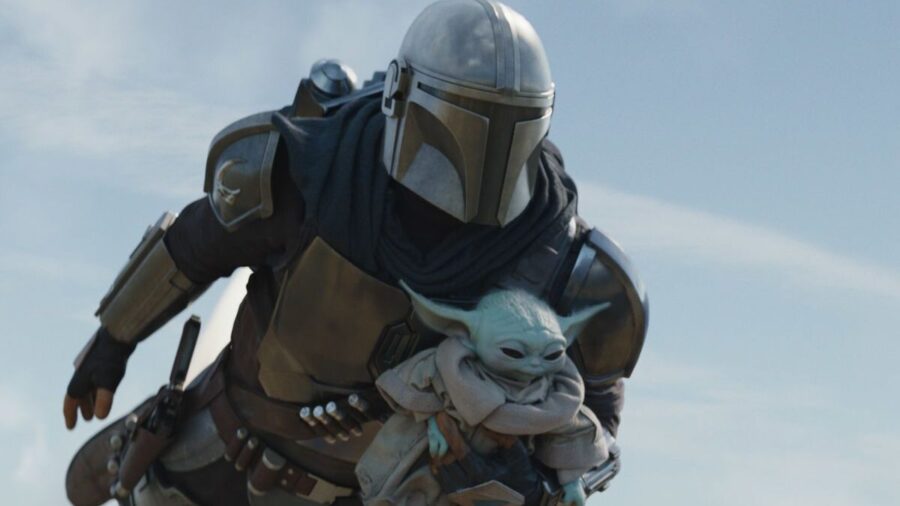
The failure of The Mandalorian and Grogu begins with the Star Wars sequels. The Force Awakens was a crowd-pleaser, but it’s an open secret that this film played it safe. It was a soft reboot of A New Hope that threw in plenty of familiar characters and franchise tropes. The Last Jedi tried to break out of the remake mold altogether, with Rian Johnson delivering a sequel filled with shocks and surprises (there’s not even a lightsaber duel!). The backlash among fans was immediate, and dislike of The Last Jedi is considered a major factor in why Solo: A Star Wars Story did so poorly at the box office.
In response, returning director JJ Abrams tried to fill The Rise of Skywalker with as much fan service as possible. He inexplicably brought Emperor Palpatine back with no explanation of how he survived, and Abrams even brought Han Solo back through equally unexplained means. Fan-favorite characters like Lando Calrissian were pushed to the forefront while controversial characters (mostly, Rose Tico) were almost entirely pushed out. TROS even sloppily recreates the ending of Return of the Jedi, all while frantically trying to undo multiple plot points from The Last Jedi. None of this worked, of course, and The Rise of Skywalker was deemed the worst Star Wars movie ever made.
This Isn’t The Way

Now, The Mandalorian and Grogu may be taking that title, and The Rise of Skywalker is partially to blame. You see, when fans expressed their dislike of The Last Jedi, Disney glommed onto the frequent complaint that “it doesn’t feel like Star Wars.” That’s why TROS is chock full of sloppy fan service: they wanted to give fans something familiar at every turn. But this came at the expense of the story, which is how The Rise of Skywalker came to be hated even more than The Last Jedi. As it turns out, giving fans a bunch of member berries moments doesn’t make up for nonsensical plotting and characterization.
Incredibly, though, Disney execs doubled down: instead of learning from their failures with TROS, they decided the only way for The Mandalorian and Grogu to succeed was if every single frame of the film was overflowing with lazy nostalgia. Villains have no depth or definition: they are all just faceless bad guys for the film’s titular duo to dispatch, video game style. We careen from one familiar Star Wars element to another (Hutts, Stormtroopers, and X-Wings, oh my!) in a plot that goes absolutely nowhere. That’s because you’re not supposed to care about the story: you’re supposed to enjoy watching the director take out your favorite action figures and do all the playing for you.
A Gunshy Studio, A Dying Franchise
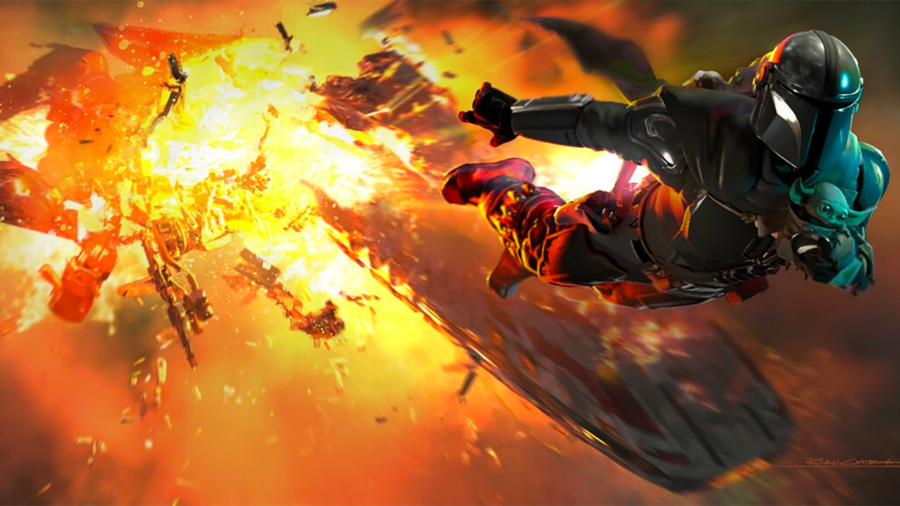
The Mandalorian and Grogu is a failure on many levels: the plot is terrible, the pacing is uneven, the characterization is nonexistent, and so on. But I think the film’s biggest problem is that Disney has lost the nerve to take any creative chances. Basically, fan response to The Last Jedi made the company permanently gunshy, and they no longer have the nerve to give us anything risky on the big screen. That’s fine if all you want out of this franchise is pure spectacle, and the latest movie delivers all the pew-pew you can pack into two hours. However, the sad truth is that Star Wars will never surprise you, ever again.
As a lifelong fan, I genuinely hate to see it. I’m one of the rare nerds who thought The Last Jedi was the best of the sequels, specifically because it took risks and tried to give us something new. That’s the real strength of the prequels, too: as stupid as they got, Lucas was always exploring new ways to tell stories in a galaxy far, far away. Now, in the Disney era, the franchise has lost the ability to innovate altogether and can only offer a buffet of the oldest and moldiest Star Wars tropes. Is it any wonder, then, that even the hungriest fans are starting to lose their appetite?

Mets' Juan Soto (illness) scratched from lineup vs. Marlins
Crazy Raccoon rally to win 2026 Champions Clash


