
Entertainment
How to cancel your Tinder subscription
We’ve all been there: You’re under the covers, scrolling through Tinder way past your bedtime. You’re on a left-swipe roll and accidentally pass on someone you would’ve swiped right on so hard your thumb would break.
The only way to Rewind — reverse your last swipe — is to pay for Tinder, so why don’t you go ahead and just drop some money to pay for a Tinder Plus subscription? Or even Tinder Gold or Tinder Platinum?
Tinder confirmed to Mashable that the app considers a user’s previous account activity, including how long you’ve had their account, past purchases, and past engagement, when providing subscription offers. Demographic factors like age, gender, and sexual orientation don’t factor in, according to Tinder. The exact cost may also vary based on international exchange rates. But according to Mashable’s latest roundup of best hookup apps, here’s what each subscription will cost you per month:
-
One month of Tinder Plus: $22.48
-
One month of Tinder Gold: $36
-
One month of Tinder Platinum: $45
If, when you get the next month’s charge, you regret this financial decision, you’ll need to cancel Tinder Gold. Here’s how to do it.
What is Tinder Gold?
Tinder Gold is one of the dating app‘s tier subscription options. Maybe they call it Gold because it’s the Goldilocks of plans: more perks (and costing more) than Tinder Plus, but fewer perks and a smaller price tag than Tinder Platinum.
With all Tinder subscriptions, you don’t see ads. You have unlimited Likes (as opposed to 100 right-swipes per day for free users), unlimited Rewinds, and can use the Passport feature for any location.
Tinder Gold, unlike Tinder Plus, also includes Top Picks, which show you your “most swipe-worthy matches.” You’ll get one free Boost a month, which makes you a top profile in your area for 30 minutes, and free weekly Super Likes, which let the user know you Liked them before they Like you back.
In addition to all of those features, Tinder Platinum allows you to see Likes you made; gives you Priority Likes, which put you at the top of your potential match’s options; and lets you send a message when you Super Like.
Mashable Trend Report
How to cancel Tinder Gold (or Plus, or Platinum)
How you cancel Tinder Gold or other subscriptions depends on how you subscribed. Deleting the app on your phone won’t cancel the subscription, and if you purchased it through the Apple or Google Play Store, deleting your Tinder account itself won’t cancel it either.
If you bought Tinder Gold on your iPhone, open your Settings and tap on your name. Then tap subscriptions, select your Tinder one, and press Cancel Subscription.
For Android, there are two options. If you purchased through the Google Play Store, go there on your Android. Tap the Menu icon and go to Subscriptions. Select the Tinder subscription, and choose Cancel Subscription.
If you used the direct credit card option on Android, open Tinder on your device. Go to your profile, tap Manage Payment Account, then Cancel Subscription.
Finally, if you bought Tinder Gold through Tinder’s browser application, go to the site. Tap the profile icon, go to Manage Account, then click Cancel or disable Auto Renew. Deleting your Tinder account on the browser site also automatically cancels the subscription if you bought it there.
Still having trouble? Tinder has a separate article for help on canceling the subscription, but it’s basically the same instructions. Should you need individualized help, screenshot what you’re seeing and contact Tinder directly.
How to unsubscribe from Tinder
Use these instructions if you bought a Tinder subscription on your iPhone
Step 1:
Open your Settings on iPhone
Step 3:
Tap Subscriptions and select Tinder
Step 4:
Press “Cancel Subscription”
Step 5:
Still having trouble?
Tinder has a help page on its site for canceling your subscription, and it outlines the same instructions as here. If you need individualized help, take a screenshot of what you’re seeing and contact Tinder directly.
What happens when I delete Tinder Gold?
You’ll still have access to the paid features until the subscription runs out. Tinder doesn’t prorate fees based on the cancellation date, nor does it retroactively refund previous payments.
Canceling your paid subscription doesn’t delete your Tinder account, so you can still use it for free. Should you want the extras again, you can always start a new subscription. Until then, enjoy your regret-free swipes.
This article was first published in 2021 and republished in 2026.
Entertainment
Buffy Star’s Sudden Death Adds To Lethal Year For Hollywood

By Jennifer Asencio
| Published

The Grim Reaper has already had a fruitful year in 2026, taking from Hollywood stars like Robert Carridine, Catherine O’Hara, Robert Duvall, James Van Der Beek, and even the invincible Chuck Norris. Now Nicholas Brendon has died. The Buffy the Vampire Slayer actor was 54.
According to a statement released by his family, Brendon died in his sleep from “natural causes.” If that sounds like a young age for such a cause of death, it is. The actor’s health was actually complicated by a lot of factors. He suffered from cauda equina syndrome, a spinal condition that required several surgeries. He revealed in 2023 that he had a congenital heart defect that had recently been diagnosed after a 2022 heart attack. All of this was exacerbated by mental health and substance abuse battles that he struggled with all his life, but his family reported that he was in good spirits and maintaining his health schedule before he died.

Brendon is best known for playing Xander Harris on Buffy the Vampire Slayer. Xander was that awkward teen who was supposed to be the stand-in for the audience with his everyday reactions to his spreading awareness of what is out in his world. He was the Scooby gang’s broad generalist, ordinary and plain, while the other characters have their own skills or abilities, either as the Slayer, witch, or demon. Often overwhelmed, underprepared, and clearly misinformed, he was somehow the heart of the group, and he always managed to deliver. What kept Xander so relatable was that he was “everyone,” that very human connection.
Sarah Michelle Gellar was slated to be in the Hulu reboot of the Buffy series, and rumors abounded that other characters were going to be returning for the show. However, there were questions about Brendon’s participation because of his mental health and addiction struggles, especially as they resulted in numerous run-ins with the law. At the time of Brendon’s death, it did not seem that Xander was going to be included in the reboot, a fact the actor was not happy about.

Immediately following the success of Buffy, Brendon starred in Kitchen Confidential for 13 episodes. This half-season series was based on Anthony Bourdain’s novel “Kitchen Confidential: Adventures in the Culinary Underbelly,” with the lead Bradley Cooper playing “Jack” Bourdain for Anthony himself. Brendon plays the pastry chef and friend of Jack’s, Seth Richman.
He maintained steady acting roles in his post-Buffy career, with another highlight being the film Coherence. In this 2013 psychological sci-fi thriller, he plays Mike as he and his wife Lee, played by Lorene Scafaria, host six of their friends as Miller’s Comet passes the Earth. What follows is a story where time no longer moves in a linear fashion. Out-of-sequence events culminate in the comet breaking up and a rather surprising ending.

Following this film came his return to the small screen in a major role as character Kevin Lynch in the long-running series Criminal Minds for 21episodes over the course of eight seasons. A technical analyst with prodigious technical computing ability, he is brought in to hack the computer of one of the series stars, fan favorite Penelope Garcia (Kirsten Vangsness), to find out who shot her. Over the episodes, he is depicted or referenced and goes on cases to many locations with the team, even starting a relationship with Garcia. Although this character wasn’t one of his more admired roles, he nevertheless left his mark with fans.
Despite his struggles, Brendon continued acting until 2024. He even had two upcoming projects. With his untimely death, it appears that the IMDB page for his project Best Sheep is no longer available and was taken down during the research for this article. Once in a Blue Moon is written and directed by Valeria Sweet, and the role that Brendon was to play was that of Matt; little else is available about the production, so we will see what ultimately happens with the series.

Nicholas Brendon left us too soon. His wholesome on-screen persona masked serious struggles that the actor bravely faced while trying to maintain his career, constantly picking himself up whenever he fell. He may not have had the most stable off-screen life, but what he brought to fans was important enough to him that he kept fighting for it until his very last breath. Hopefully, he has found peace.
Entertainment
Upcoming Star Trek Show Could Finally Give Fans What They Want
By Chris Snellgrove
| Published
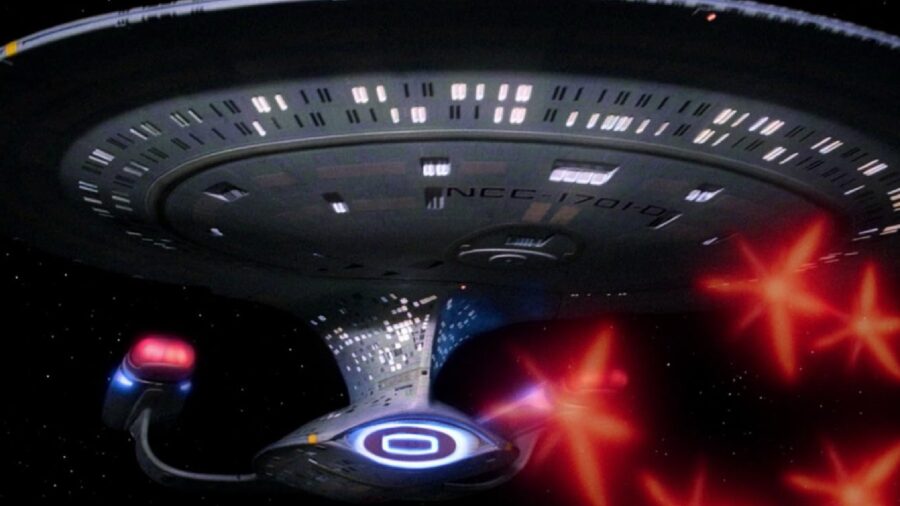
Recently, the controversial Star Trek show Starfleet Academy finished its first season, and the online discourse about the show has been endless. Defenders of the series have constantly pointed out that because it took shows like The Next Generation and Deep Space Nine time to achieve greatness, everyone should give Starfleet Academy some grace during its initial shakedown cruise. To this, critics always have a simple response: that because modern seasons are less than half as long as they used to be, Star Trek shows can no longer afford to waste time getting good.
Whether Starfleet Academy gets renewed for Season 3 (Season 2 has already been filmed) may come down to various factors, including streaming numbers and decisions from upper Paramount leadership. Recently, however, it occurred to me that it would be easy for an upcoming series to finally make the divided fandom happy. All Paramount needs to do is give Tawny Newsome’s upcoming Star Trek spinoff a tighter per-episode budget and more episodes per season.
The Office In Space?
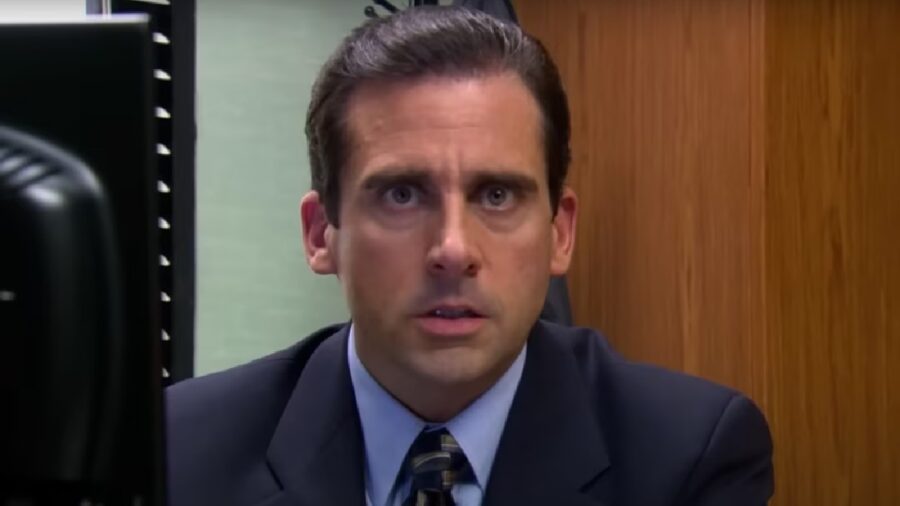
If you don’t know, Lower Decks legend and Starfleet Academy writer Tawny Newsome is currently working on a Star Trek show that is supposed to function as a workplace comedy. This unnamed series is set on a vacation planet (not Risa, though). Beyond this and the fact that she wants to set it in the 25th century (so, the Picard era), all we know about the show is that it involves helping the planet join the Federation. Oh, and the original pitch for the show involved some unspecified shenanigans that would somehow broadcast everything our Federation workers are doing to the entire quadrant.
The series has not yet gotten the green light from Paramount, and it has reportedly evolved (albeit in unknown ways) since the original pitch. Personally, I always thought the “broadcast to the whole quadrant” thing meant they were doing a Star Trek version of The Office. At any rate, Newsome’s workplace comedy show provides the perfect opportunity for NuTrek to boldly go where it has never gone before: 20+ episode seasons, with a more modest budget for each episode.
The Numbers Game

Back in the Golden Age of Star Trek, shows like Voyager had 26-episode seasons, and this offered a number of advantages to the writers. On the most basic level, they had an extended runway: with this many episodes per season, you could flesh out your main characters and even give your side characters extended screentime. Most importantly, having so many episodes each season meant that Paramount could afford to have a few stinkers; the awful quality of early TNG episodes like “Code of Honor,” for example, would ultimately get outweighed by better episodes like “Conspiracy.”
However, the network could only do this because of the cost factor. Star Trek: The Next Generation episodes cost about $1.3 million to produce, which was admittedly a pretty penny back in the day. Now, though, Star Trek: Discovery previously cost about $8 million per episode, and there are persistent rumors that each Starfleet Academy episode costs Paramount $10 million. If that’s true, then it costs almost the same amount to produce one season of Starfleet Academy as it did to produce three seasons of The Next Generation.
That’s bad enough, but three seasons of The Next Generation add up to 78 episodes; meanwhile, one season of Starfleet Academy is only 10 episodes. That’s not enough time to develop every character, which is likely why Genesis never got her own episode like everyone else. Furthermore, short seasons lead to killer ratios: if, say, four of your episodes are stinkers (a very generous estimate for SFA), then 40 percent of your entire season sucks. That’s enough to make fans tune out and possibly seal a show’s fate long before it finally gets good.
NuTrek Goes Old School

What does this bleak numbers game have to do with Tawny Newsome’s Star Trek show? Simple: one of the big reasons that shows like Starfleet Academy are so expensive is because of all the top-notch special effects needed for stories where the entire galaxy is in danger. The crew is always visiting new places (exploring strange new worlds and all that), meeting exotic aliens (seeking out new life), and generally having ambitious adventures that are very expensive to bring to life.
However, if Newsome’s workplace comedy show really is like Star Trek meets The Office, it could potentially be far cheaper to create. Characters could stay in a fixed location, effectively turning almost every episode into a bottle episode. Residents of the vacation planet don’t need to have elaborate makeup; in fact, the show could return to the grand Trek tradition of having aliens who are just humans with something funny on their foreheads. Finally, the show doesn’t have to have legacy characters or other big names; instead, the cast can be comprised of almost entirely unknown actors.
Put it all together, and you have a new Star Trek show that is infinitely cheaper to make than Starfleet Academy. But I’m not suggesting Paramount lower its overall budget; instead, the amount of money they would normally allocate to a NuTrek show should go to creating seasons with at least 20 episodes. This would allow for greater character development and more rewatchability. Best of all, there would be a built-in grace period: even if the show’s first five episodes are awful, fans would forgive that if the next 15 are solid Star Trek.
The Best Of Both Worlds
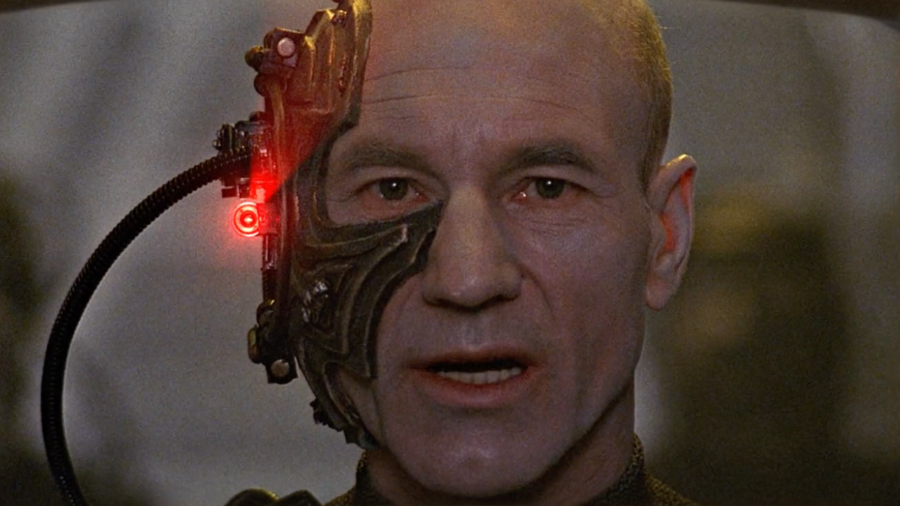
Realistically, I know this isn’t likely to happen for many reasons, including Alex Kurtzman’s inability to try anything new. But Paramount is currently exploring whether or not to keep Kurtzman around, and new leadership seems eager to shake things up with the franchise. A smaller-budget Star Trek spinoff could be a return to the Golden Age, where classic episodes were created with killer writing and not a small mountain of VFX.
Done right, Tawny Newsome’s show (assuming it gets the green light) could be the best of both worlds: it would give NuTrek fans more show than they can handle while finally making old-school fans happy. Plus, it would give its biggest fans more episodes per season to stream, giving this series the coziness of shows like Voyager. But the only way this can happen is for Paramount to embrace some very unconventional wisdom regarding the budget for each episode: make it low, Number One!
Entertainment
Chuck Norris Trashed After Death As Dangerous And Immoral
By Jennifer Asencio
| Published

Chuck Norris’s death was barely announced by his family on March 21, 2026, before Variety, famous for snubbing fashion and movie icon Brigitte Bardot, decided to take a shot at him. The article, written by William Earl, was published just hours after his death was announced in the news.
The article, titled “Chuck Norris Was a Great Action Star – But Politics May Overshadow His Legacy,” questions the actor’s resume as a cinematic and television tough guy. It indicates that his portrayal of characters such as Colonel James Braddock in Missing in Action, Colonel Scott McCoy in The Delta Force, and Cordell Walker in Walker, Texas Ranger might have been too patriotic in their portrayal of American heroism and justice.
“Given our nation’s divisions in morality, information literacy, and overall sense of morality,” Earl posits, “it’s easier to see Norris’s characters as justification for a fringe conspiracy movement rather than a moral standing.” He defends this perspective by explaining that Norris’s characters are all vigilantes, an idea which “seems less fun” these days because of current events, such as nationwide immigration raids, in which law enforcement agents “are acting like one-man militias.” He seems convinced that they were inspired to these actions by Norris’s iconic persona.

This attack on Norris is unwarranted for a lot of reasons, not in the least of which is Norris’s persona off-screen. He was legendary for being a family man and all-around nice guy, giving a lot of time and energy in addition to donations to causes that helped kids, the hungry, and the poor. He also wrote several books, including a few about fitness and martial arts. He was such a prolific martial arts expert that he created his own style, called Chun Kuk Do. Earl handwaves this all as “Was Norris a brilliant athlete and a top-shelf star?”
He then proceeds to attack his portrayals of heroic Americans for being American. Throughout the article, he is critical of portraying cops and soldiers as heroes. He indicates that the United States is a bad country for going to war against Iran and for the aforementioned immigration initiatives. He denounces Norris’s characters for being proud Americans with strong moral values, calling him “the poster boy for American exceptionalism” and wondering if his work is “dangerous propaganda.”

However, the title of the article gives away the true motive behind it: politics. And the problem isn’t the characters Norris played, it’s the fact that he was a lifelong Republican and an outspoken Christian. He lived a lot of the values he portrayed on-screen, ideas which are not as precious in Hollywood these days because they involve nuclear families, positive masculinity, and judging people by their actions rather than identities. Even the idea of patriotism and pride in our country is viewed with disdain, as the very country that invented Hollywood is often decried for its flaws rather than recognized for its merits.
In our fascist, oppressive, speech-stifling country, William Earl attacked a man hours after his death for playing the wrong type of characters in his movies and representing them in a positive light. That makes him the worst villain in a Chuck Norris story in my book.

FC Cincinnati upend CF Montreal with 2 late goals
Buffy Star’s Sudden Death Adds To Lethal Year For Hollywood


