
Entertainment
How Dueling Space Station Shows Created Sci-Fi's Best Decade

By Jennifer Asencio
| Published

The mid-1990s were a golden age of space opera. Two of the best shows of this genre were Star Trek’s Deep Space Nine and the independent series, Babylon 5. Both shows centered on a space station with all the drama, diplomacy, and war of such a setting. The conflicts of both shows are compounded by the existential horror of knowing there are forces at play that are larger and incomprehensible than the “human” mind can process.
We are introduced to both settings following major conflicts, and the recovery that comes after is often dark and filled with its own dread. Both series confront the harsh realities of war and occupation. The depth of the stories expressed is what makes these two shows stand out above the rest. Both ask us questions on guilt, innocence, and the price of survival.
The Name Of The Place Is Babylon 5

Babylon 5 begins in the aftermath of the Earth-Minbari War with an unsteady peace on the titular neutral-zone station. The Narn Homeworld was recently liberated from the Centauri Republic. Other minor powers are shown wanting a voice in station politics and to stop any wars. As the series progresses, the stakes are continually raised, with much of it framed by the Narn-Centauri conflict reigniting.
Overarching the politics of these various alien races are the machinations of the galaxy’s eldest races and the games they play. The Vorlon Empire has existed for millions of years and wanted to bring order to a chaotic galaxy. Resisting them is an even older species: the boogeymen of the series, the Shadows, with ships as black as the void of space. It is considered an ill omen to see even a shadow of their vessels. This ancient species believed that evolution began through chaos and conflict. Believing in the power of flesh and bioengineering, their ships were alive.
From the start of the series, audiences can feel the depth of lore. The ideologies of the Vorlon and the Shadow feel like universal truths. In Babylon 5’s clever cyclical storytelling, the young replace the old. Conflict will always happen. Order will always stand against disorder as the interests of the various alien species collide.
Come To Quark’s, Quark’s Is Fun

Meanwhile, at the start of Deep Space Nine, the Federation has taken over the former Cardassian station, Terok Nor, now known by the titular Starfleet designation. The station becomes the hub of new exploration when a wormhole to the Gamma Quadrant is discovered nearby.
Early seasons build on the recovery of Bajor and continued issues with the Cardassian Union. Meanwhile, the plot slowly introduces the Dominion threat, first through the Vorta and later through their Jem’Hadar shock troops. Eventually, it becomes a fully blown war, taking up the later seasons of “DS9.”
The story of Deep Space Nine is not typical of many shows set in the Star Trek setting. It has a long, continuously evolving plot despite having individual episodes like any other Star Trek show. Characters experience true devastating loss, with episodes showing lists of lost vessels with crew either confirmed killed or missing. It cast the long, dark shadow of war across the remaining seasons of the show, raising questions about morality and ethics in the face of an unrelenting enemy and the lines they are willing to cross to ensure victory.
Parallel’s Beween DS9 And B5

There are many similarities between these two series: themes, settings, and conflicts, starting with the Earth-Minbari War and the Cardassian withdrawal of Bajor. Simmering tensions brewing between groups leads to active war in both series. Even the elder alien races are comparable: the Vorlons and the Shadows in the universe of Babylon 5 mirror DS9’s Dominion, led by the shapeshifting Changelings who view solids as bringing chaos and disorder.
Another parallel between the two shows is that we, as fans, are treated to some of the best dramatic acting in all of science fiction. Scenes between the Narn ambassador G’Kar and the Centauri ambassador Londo Mollari on Babylon 5 reveal a history that predates what we are initially shown, as seen in their emotion and pain over the love for their people and their home worlds. It mirrors the ongoing verbal duel between Captain Sisko and Gul Dukat as they debate their roles in history, how they will be remembered, and the motivations of their actions.
Babylon 5 Journeys Into Darkness Deep Space Nine Avoids

Perhaps the biggest difference between the two shows was the tone. Babylon 5 showed us a darker, more dystopian future. Despite the darkness, sorrow, and loss during Deep Space Nine, the characters remained Starfleet. They still acted nobly even when an easier path existed but crossed moral or ethical lines. Babylon 5 showed us more clearly the flaws, the inhumanities, and failures in its main characters.
The similarities between the shows eventually led to a lawsuit, but the creator of Babylon 5 ultimately decided not to pursue it so that both shows could succeed. We should be thankful that, as fans, we got to experience a quality of programming that is lacking in current productions.
All that we have been lectured on, with modern norms pushed into places where they really don’t fit, like questions on race, colonization, and violence: these were all handled on two 1990s space stations with nuance lacking in modern science fiction. Fans of one will vastly enjoy the other, and both series are the real inclusive utopias today’s programming only wishes it could aspire to.
Check them out where you can: Deep Space Nine is part of Paramount Plus’s Star Trek collection, and Babylon 5 just got absorbed by YouTube.
Entertainment
Celebrity Babies of 2026: Stars Who Announced Their Children’s Births
Many stars grew their families in 2026 — or announced their newest arrivals for the first time.
Former Bachelor contestant Sydney Warner announced in January that she gave birth to her second baby with her husband, NFL star Fred Warner.
The Warners aren’t the only stars who have their hands full this year. Meghan McCain, for her part, welcomed baby No. 3 nearly a week earlier.
Adding to the baby bliss, Meghan Trainor revealed she and husband Daryl Sabara secretly welcomed a baby girl via surrogate. Emily Maynard’s daughter Ricki officially became a mom at the age of 20 in January, with Patrick J. Adams and Troian Bellisario later welcoming their third baby.
Soap star Lucas Adams, meanwhile, announced in February that he and his wife had welcomed their first baby together. Big Brother’s Nicole Franzel and Victor Arroyo later welcomed not one, but two babies.
Keep scrolling to meet the stars’ newest additions of 2026:
Entertainment
The Iconic Star Trek Villains Inspired By Real-Life Criminals
By Chris Snellgrove
| Published
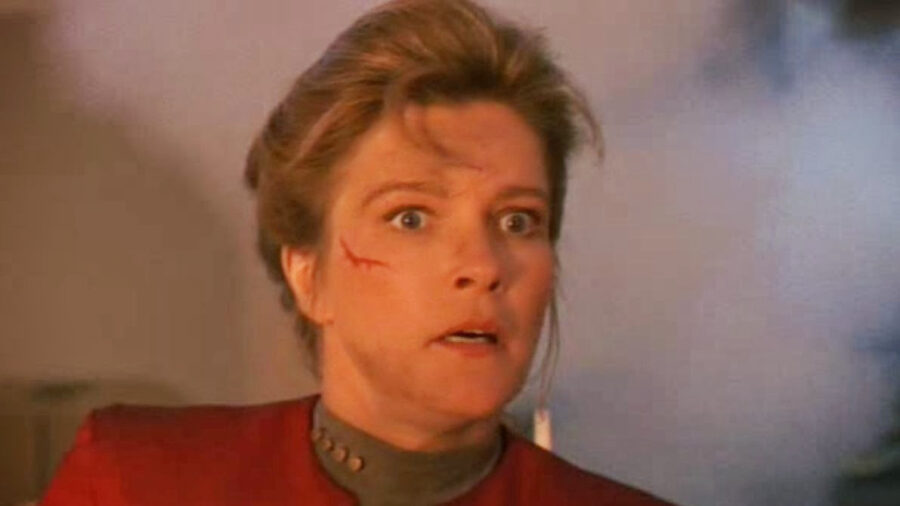
Star Trek is a franchise that has always been known for its colorful villains: from the Klingons to the Borg, episodes have always given us over-the-top bad guys like nothing the audience had ever seen before. However, the most iconic villains of a beloved spinoff were actually modeled after a type of real-life criminal that the audience is all too familiar with. In Star Trek: Voyager, the alien Kazons were originally modeled after the street gangs of Los Angeles, but it took over an entire season before one writer helped shape them into this very specific mold.
During the development of Voyager, producers Rick Berman, Michael Piller, and Jeri Taylor wanted to create a new kind of villain that nonetheless represented very contemporary concerns. As quoted in Captains’ Logs Supplemental – The Unauthorized Guide to the New Trek Voyages, Taylor said that “We felt with the Kazon we needed to address the tenor of our times and what…was happening in our cities and recognizing a source of danger and social unrest. We wanted to do that metaphorically.”
The Bloods, The Crips, And The Kazon

Piller (who almost singlehandedly transformed Star Trek: The Next Generation into must-see TV) liked the idea of villains who embraced anarchy and might fight among themselves as much as they fight with Captain Janeway. He and the other producers retained the LA gang metaphor, internally comparing the differing Kazon factions to the Bloods and the Crips. They were all in on these new bad guys, which is why the Voyager premiere episode and its first season presented various Kazon factions as an ongoing concern in our crew’s quest to navigate the Delta Quadrant and eventually make their way home.
Unfortunately, audiences kind of hated the Kazon in Season 1, and Michael Piller came to believe that the writers had failed to turn these aliens into something truly unique. After Ken Biller wrote an initial draft of the Season 2 episode “Initiations,” Piller called him and (as reported originally by Cinefantastique) expressed his concern that the audience saw the Kazon as “warmed over Klingons.” In order to get these villains back to their roots, Piller gave Biller a pretty wild homework assignment: to go talk to actual gang members and report on “what you find out from the street.”
Biller did not take this frankly dangerous advice, but he did go buy a copy of Monster: The Autobiography of an L.A. Gang Member, written (inside a jail cell, no less) by Sanyika “Monster” Shakur. Insights from the book helped the writer create a better Star Trek: Voyager episode, and Piller was quite pleased with the final draft of “Initiations.” But what pleased him even more was that Biller went on to go above and beyond the call of duty in order to breathe new life into the Kazons.
The Secret To Building A Better Villain

You see, Biller wrote a kind of mini-Kazon Bible that outlined their customs, history, and other major sociological factoids. This proved to be invaluable because Star Trek: Voyager had already planned to devote its second season to the Kazon, essentially giving itself a second chance to make a good impression on the audience. Whenever the writers had to craft a Kazon-heavy episode (like “Alliances”), they relied on Biller’s bible, one which finally made the Kazon feel like something other than Temu Klingons.
To this day, the Kazon aren’t necessarily fans’ favorite villains, but they are arguably the most iconic Star Trek: Voyager bad guys. In a show that would come to be dominated (or should that be assimilated?) by Borg episodes, the Kazon remain an original creation who helped shape Voyager into one of Trek’s most beloved spinoffs. But that never would have happened if Michael Piller and Ken Biller hadn’t teamed up to do the impossible: get these angsty aliens back to their inexplicable gangbanger roots.
Entertainment
House of the Dragon Season 3 teaser gives fiery glimpse of the Battle of the Gullet

Looking to fill the Westeros-shaped hole in your heart after A Knight of the Seven Kingdoms wraps up this Sunday? Worry not: House of the Dragon Season 3 is coming this June, and its first teaser promises a fiery, bloody showdown between Team Black and Team Green.
House of the Dragon Season 2 ended with the promise of great changes coming down the line. Alicent Hightower (Olivia Cooke) went to Dragonstone and told Queen Rhaenyra Targaryen (Emma D’Arcy) that she would surrender the Red Keep to her if Rhaenyra and her new dragonriders came to King’s Landing.
Elsewhere, forces from the Triarchy sailed towards Westeros in the hope of breaking Corlys Velaryon’s (Steve Toussain) naval blockade. In George R.R. Martin’s Fire & Blood, the ensuing clash becomes known as the Battle of the Gullet, and based on the teaser, it’s finally coming to the screen.
The teaser shows Rhaenyra’s forces, including her son Jacaerys (Harry Collett) and his dragon Vermax, opening fire on the Triarchy ships. The sight is as terrifying as it is glorious.
That’s not the only action House of the Dragon Season 3’s teaser promises. From a battle in an open field to Daemon Targaryen (Matt Smith) locked in combat with the forces of House Hightower, it seems like Westeros is trapped in an inevitable spiral of war. I might just have to watch Dunk (Peter Claffey) and Egg (Dexter Sol Ansell) hanging out again in order to de-stress.

Celebrity Babies of 2026: Stars Who Announced Their Children’s Births
The Iconic Star Trek Villains Inspired By Real-Life Criminals


