
Tech
Homeland Security is trying to force tech companies to hand over data about Trump critics
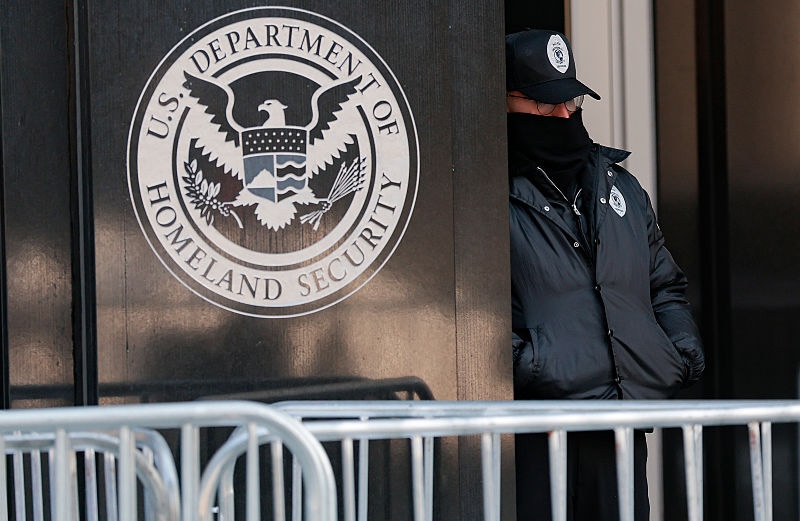
The Department of Homeland Security has been quietly demanding tech companies turn over user information about critics of the Trump administration, according to reports.
In several cases over recent months, Homeland Security has relied on the use of administrative subpoenas to seek identifiable information about individuals who run anonymous Instagram accounts, which share posts about ICE immigration raids in their local neighborhoods. These subpoenas have also been used to demand information about people who have criticized Trump officials or protested government policies.
Unlike judicial subpoenas, which are authorized by a judge after seeing enough evidence of a crime to authorize a search or seizure of someone’s things, administrative subpoenas are issued by federal agencies, allowing investigators to seek a wealth of information about individuals from tech and phone companies without a judge’s oversight.
While administrative subpoenas cannot be used to obtain the contents of a person’s emails, online searches, or location data, they can demand information specifically about the user, such as what time a user logs in, from where, using which devices, and revealing the email addresses and other identifiable information about who opened an online account. But because administrative subpoenas are not backed by a judge’s authority or a court’s order, it’s largely up to a company whether to give over any data to the requesting government agency.
Administrative subpoenas are not new; the use of these self-signed demands by Trump officials to seek identifiable information about people who are critical of the president’s policies has raised alarm.
Bloomberg reported last week that Homeland Security sought the identity of an anonymous Instagram account called @montocowatch, which says its goal is to share resources to help protect immigrant rights and due process across Montgomery County in Pennsylvania. This comes amid an ongoing federal immigration crackdown across the United States, which has drawn widespread protests and condemnation. Homeland Security lawyers sent an administrative subpoena to Meta demanding it turn over personal information of the person who runs the account, citing a non-Homeland Security employee who claimed to receive a tip that ICE agents were being stalked.
The American Civil Liberties Union, representing the account owner, said there was no evidence of wrongdoing and that recording police, sharing that recording, and doing so anonymously is legal and protected under the First Amendment. Homeland Security withdrew its subpoena without providing an explanation.
Techcrunch event
Boston, MA
|
June 23, 2026
The ACLU called the subpoena “part of a broader strategy to intimidate people who document immigration activity or criticize government actions.”
Bloomberg reported the effort to unmask the @montcowatch account was not an isolated incident, referencing at least four other cases where Homeland Security officials used administrative subpoenas in efforts to identify the people running Instagram accounts publishing content critical of the government. Those subpoenas were also withdrawn after the account owners sued to block the attempt.
Tech companies have in recent years published transparency reports that detail how many government demands for data they receive. But most do not break out how many judicial and administrative subpoenas they receive over a period of time, even though the two kinds of demands are fundamentally different.
When asked by TechCrunch, Meta spokesperson Francis Brennan did not say if Meta provided Homeland Security any data involving @montcowatch or if the company was asked to provide information about the account another way.
A new report by The Washington Post on Tuesday found that an administrative subpoena was also used to seek information from Google about an American retiree within hours of him after sending a critical email to Homeland Security’s lead attorney Joseph Dernbach. The retiree’s home was later visited by federal agents inquiring about the email.
The Post described the retiree as someone critical of Trump during his first term, who attended a No Kings rally last year, regularly attends gatherings and protests, and wrote criticisms to lawmakers, all actions protected under the First Amendment.
Within five hours of emailing the Homeland Security lawyer — who was named in an article about the case of an Afghan the U.S. was trying to deport and whose email address is listed on the Florida Bar’s website — the retiree received an email from Google, according to The Washington Post. The email notified him that his account had been subpoenaed by the Department of Homeland Security.
The subpoena demanded to know the day, time, and duration of all his online sessions, his IP address and physical address, and a list of each service he used, and any other usernames and identifiable information relating to his account, such as his credit card, driver’s license, and Social Security numbers.
Two weeks later, Homeland Security agents were on his doorstep, asking him questions about the email that he sent to Dernbach, which the agents conceded broke no laws.
Google spokesperson Katelin Jabbari told TechCrunch the company pushes back against overbroad or improper subpoenas, “as we did in this instance,” referring to the subpoena referenced in The Washington Post’s reporting.
When asked by TechCrunch, Homeland Security assistant secretary Tricia McLaughlin would not say why the U.S. was seeking information about people who have been critical of the Trump administration and accounts documenting ICE activity, or say for what reason the subpoenas were withdrawn.
“HSI has broad administrative subpoena authority under 8 U.S.C. § 1225(d) and 19 U.S.C. § 1509(a)(1) to issue subpoenas,” said McLaughlin, referring to Homeland Security Investigations, an investigative unit within ICE.
Not all companies are able to hand over data about their customers. For instance, information that is end-to-end encrypted and can only be accessed by obtaining a person’s phone or devices. That said, many companies are still able to provide large amounts of information about their users, including where they log in, how they log in, and from where, which may allow investigators to unmask anonymous accounts.
End-to-end encrypted messaging apps, like Signal, have long championed how little data it collects about its users. The messaging app responds to occasional legal demands by stating that it is unable to produce user data that it does not have to begin with.
The reliance on U.S. tech giants is another reason why European countries and ordinary consumers are seeking to rely less on American tech giants, at a time when chief executives and senior leaders at some of the largest U.S. tech companies are overtly cozying up to the Trump administration.
Tech
Are AI tokens the new signing bonus or just a cost of doing business?

This week, a topic that has been boomeranging around Silicon Valley bounced into the spotlight: AI tokens as compensation. The idea is straightforward enough — rather than giving engineers only salary, equity, and bonuses, companies would also hand them a budget of AI tokens, the computational units that power tools like Claude, ChatGPT, and Gemini. Spend them to run agents, automate tasks, crank through code. The pitch is that access to more compute makes engineers more productive, and that more productive engineers are worth more. It’s an investment in the person holding them, is the idea.
Jensen Huang, the leather-jacket-wearing CEO of Nvidia, seemed to capture everyone’s imagination when he floated the notion at the company’s annual GTC event earlier this week that engineers should receive roughly half their base salary again — in tokens. His top people, by his math, might burn through $250,000 a year in AI compute. He called it a recruiting tool and predicted it would become standard across Silicon Valley.
It isn’t entirely clear where the idea was first, well, ideated. Tomasz Tunguz, a renowned VC in the Bay Area who runs Theory Ventures and focuses on AI, data, and SaaS startups — and whose writing on all things data has garnered a loyal following over the years — was talking about this in mid-February, writing that tech startups were already adding inference costs as a “fourth component to engineering compensation.” Using data from the compensation tracking site Levels.fyi, he put a top-quartile software engineer salary at $375,000. Add $100,000 in tokens and you’re at $475,000 fully loaded — meaning roughly one dollar in five is now compute.
That’s no coincidence. Agentic AI has been taking off, and the release of OpenClaw in late January accelerated the conversation considerably. OpenClaw is an open-source AI assistant designed to run continuously — churning through tasks, spawning sub-agents, and working through a to-do list while its user sleeps. It’s part of a broader shift toward “agentic” AI, meaning systems that don’t just respond to prompts but take sequences of actions autonomously over time.
The practical consequence is that token consumption has exploded. Where someone writing an essay might use 10,000 tokens in an afternoon, an engineer running a swarm of agents can blow through millions in a day — automatically, in the background, without typing a word.
By this weekend, the New York Times had put together a smart look at the so-called tokenmaxxing trend, finding that engineers at companies including Meta and OpenAI are competing on internal leaderboards that track token consumption. Generous token budgets are quietly becoming a standard job perk, the paper reported, the way dental insurance or free lunch once was. One Ericsson engineer in Stockholm told the Times he probably spends more on Claude than he earns in salary, though his employer picks up the tab.
Maybe tokens really will become the fourth pillar of engineering compensation. But engineers might want to hold the line before embracing this as a straightforward win. More tokens may mean more power in the short term, but given how fast things are evolving, it doesn’t necessarily mean more job security. For one thing, a large token allotment comes with large expectations. If a company is effectively funding a second engineer’s worth of compute on your behalf, the implicit pressure is to produce at twice the rate (or more).
Techcrunch event
San Francisco, CA
|
October 13-15, 2026
And there’s a muddier problem underneath that: at the point where a company’s token spend per employee approaches or exceeds that employee’s salary, the financial logic of headcount starts to look different to its finance team. If the compute is doing the work, the question of how many humans need to be coordinating it becomes harder to avoid.
Jamaal Glenn, an East Coast-based Stanford MBA and former VC turned financial services CFO, similarly points out that what may seem like a perk can be a clever way for companies to inflate the apparent value of a compensation package without increasing cash or equity — the things that actually compound for an employee over time. Your token budget doesn’t vest. It doesn’t appreciate. It doesn’t show up in your next offer negotiation the way a base salary or equity grant does. If companies successfully normalize tokens as pay, they may find it easier to keep cash comp flat while pointing to a growing compute allowance as evidence of investment in their people.
That’s a good deal for the company. Whether it’s a good deal for the engineer depends on questions most engineers don’t yet have enough information to answer.
Tech
Amazon working on new smartphone with Alexa at its core, report says
Looks like Amazon’s getting back into the smartphone game. More than 11 years after the e-commerce giant pulled the plug on its failed first effort, the Fire Phone, the company is now developing a new smartphone codenamed “Transformer,” Reuters reported, citing anonymous sources.
The device is being developed by the company’s Devices and Services division, and it would feature personalized features that would make it easier to use Amazon’s suite of apps, including Amazon Shopping, Prime Video, and Prime Music, the report said.
The smartphone would also support Alexa, the smart home assistant that Amazon has been investing heavily in, adding AI chops and expanding support to work with most of the company’s devices. AI features are said to be a big focus for the smartphone, which is being seen internally as a way to encourage Amazon customers to use its AI products, Reuters reported.
The smartphone is said to be developed by a relatively new unit within the Devices division called ZeroOne, which is led by J Allard, a former Microsoft executive who helped create the Xbox.
The news comes as Amazon has been going all-in on AI, investing $50 billion into OpenAI recently, and projecting $200 billion in capital expenditures toward its AI, chips, and robotics efforts in 2026.
The company spent more than a year revamping its Alexa assistant with generative AI features, finally launching it this February as Alexa+. The assistant keeps its smart home chops, and can now do most things that other AI chatbots can — like planning an itinerary for a trip, updating a shared calendar, finding and saving recipes to a library, making movie recommendations, helping with homework, exploring a topic, and more.
Amazon declined to comment.
Techcrunch event
San Francisco, CA
|
October 13-15, 2026
Tech
Cyberattack on vehicle breathalyzer company leaves drivers stranded across the US
A cyberattack on a U.S. vehicle breathalyzer company has left drivers across the United States stranded and unable to start their vehicles.
The company, Intoxalock, says on its website that it is “currently experiencing downtime” after a cyberattack on March 14. Intoxalock sells breathalyzer devices that fit into vehicle ignition switches, and is used by people who are required to provide a negative alcohol breath sample to start their car.
Intoxalock spokesperson Rachael Larson confirmed to TechCrunch that the company had been hit by a cyberattack. Larson said the company took steps to “temporarily pause some of our systems as a precautionary measure.”
These breathalyzer devices need to be calibrated every few months or so, but the cyberattack has left Intoxalock unable to perform these calibrations. The company said customers whose devices require calibration may experience delays starting their vehicles.
Drivers posting on Reddit say that cars are unable to start if they miss a calibration, effectively locking drivers out of their vehicles.
According to local news reports across Maine, drivers are experiencing lockouts and some have been unable to start their vehicles. One auto shop in Middleboro told WCVB 5 in Boston that it has had cars parked in its lot all week due to the cyberattack.
News reports from across the United States show drivers are affected from New York to Minnesota, and drivers have been unable to drive because their vehicle-based breathalyzers cannot be immediately calibrated.
Intoxalock would not say what kind of cyberattack it was experiencing, such as ransomware or if there was a data breach, or whether it had received any communications from the hackers, including any ransom demands. The company’s technology is used in 46 states, its website says, and it claims to provide services to 150,000 drivers every year.
Intoxalock did not provide an estimated timeline for its recovery.

Cal eyes continued momentum vs. Saint Joseph's in 2nd-round NIT clash
Movsar Evloev stays unbeaten with majority decision over Lerone Murphy


