
Entertainment
Cairn review: Its Peak for the real climbing freaks
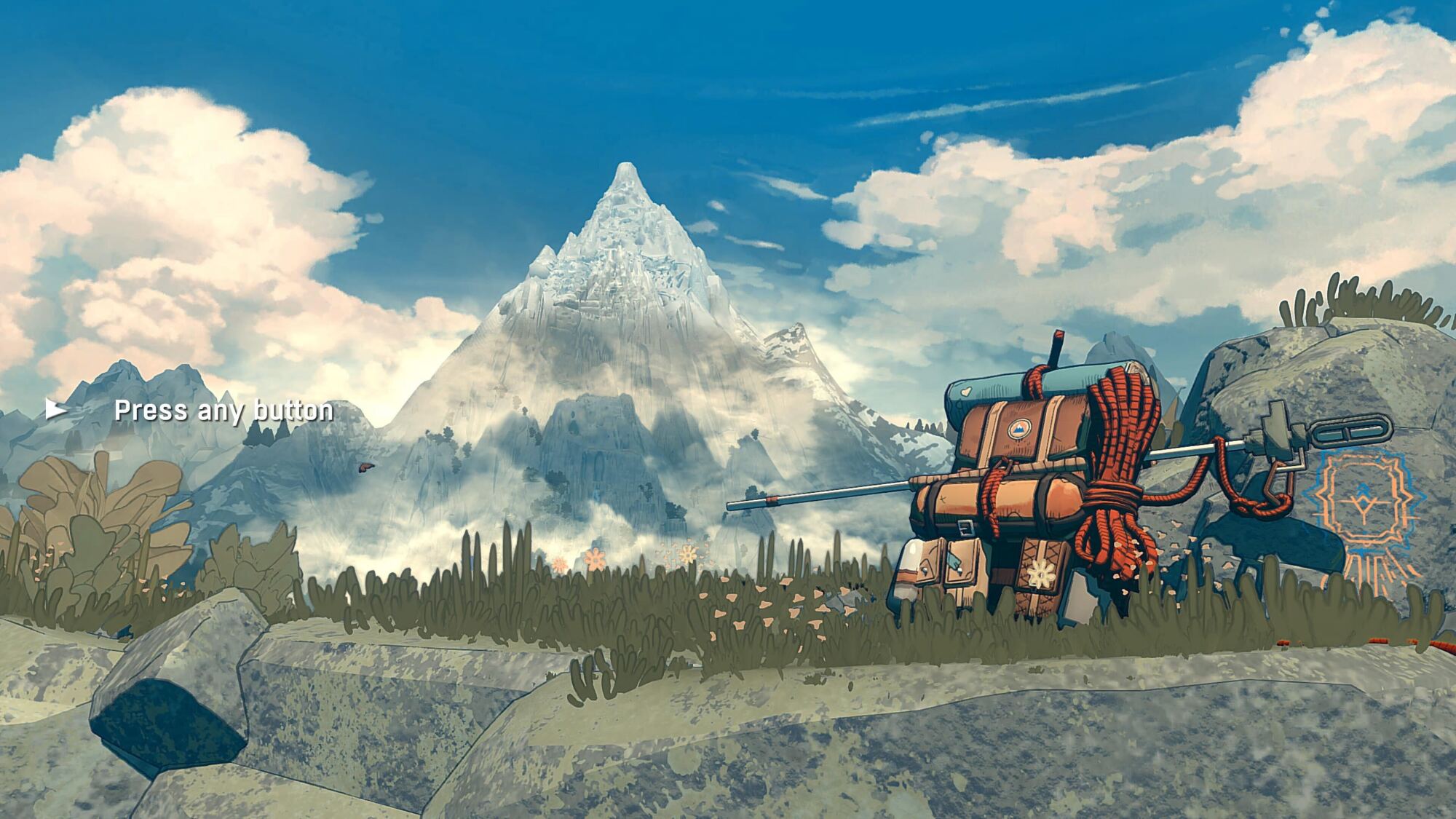
Consider it impeccable timing: just days after Alex Honnold pulled off another completely unhinged free-solo climbing feat, a video game arrives for anyone who watched that and thought, “I want to do that too, but preferably without the risk of death.” That game is Cairn, and instead of a skyscraper, it gives you a mountain.
Cairn is the latest release from French developer The Game Bakers, and it may be the first survival climbing game of its kind. Rather than treating climbing as a fun co-op game or a quick gimmick, Cairn commits fully to the act itself, presenting a simulation-style ascent of the fictional Mount Kami, a peak no climber has ever successfully summited. That distinction doesn’t deter the game’s protagonist Aava, an experienced and well-known climber who takes on the mountain while also running from unresolved problems in her life.
If you’ve played Peak, the recent co-op climbing game built around chaotic teamwork and shared problem-solving, Cairn feels like its solitary opposite. Where Peak turns climbing into a social exercise defined by coordination, communication, and the occasional disastrous misstep, Cairn strips all of that away, leaving you alone with the rock, your stamina, and the consequences of every decision. It’s a quieter, more deliberate take on climbing.
For now, the narrative framing is secondary. What matters is the climb, and Cairn delivers one of the most compelling gameplay experiences I’ve had this year. Yes, it’s still January, but the highs I hit while playing Cairn on PlayStation 5 will be difficult to top in the months ahead.
To the top
Credit: The Game Bakers
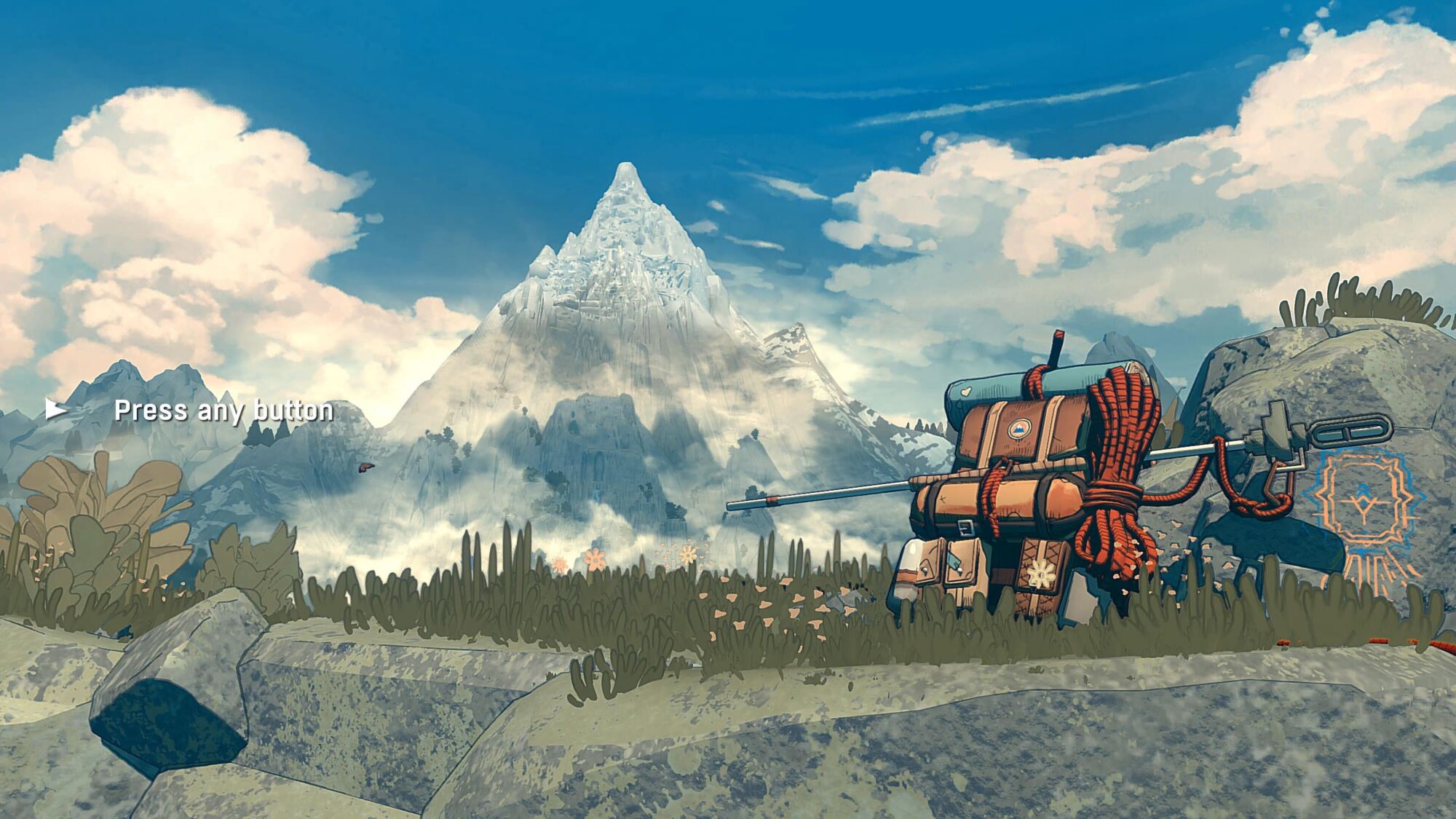
As mentioned at the beginning, Cairn is a survival climbing game where players control Aava one limb at a time as she ascends various cliff faces and rock walls on her way to the summit of Mount Kami. The mountain carries a grim reputation, littered with the remains of dead climbers and haunted by a mysterious population of mountain folk who were forced to abandon their homes and pursue life on the ground, or as they call it, the “horizontal world.”
Beyond the meticulous climbing mechanics, Cairn also asks players to manage Aava’s basic survival needs, including thirst, hunger, and warmth. This means cooking and eating meals cobbled together from materials found on the mountain, sometimes scavenged from the gear left behind by less fortunate climbers, and drinking water sourced from springs, caves, and other pockets scattered across a centuries-old peak. This is the survival side of Cairn’s survival climbing, and it weaves directly into the climb itself.
While climbing is the clear focus, Cairn does have a story, albeit a sparse one. Aava spends most of the game alone, accompanied only by a climbing robot she’s had since childhood and stubbornly refuses to name. Along the way, she encounters a handful of other characters, the most notable being Marco, a younger and often mouthy climber who clearly idolizes Aava, a well-known figure in the climbing world.
Climbing Mount Kami is no small feat, and the game allows players to approach it in two primary ways. The first is free solo climbing, while the second is a more assisted method that makes use of ropes, pitons, and bolts. For the most part, you’ll end up using a mix of both approaches, largely because you have a limited number of pitons available for you to jam into cracks to create a secure handhold as you climb each face.
Credit: The Game Bakers
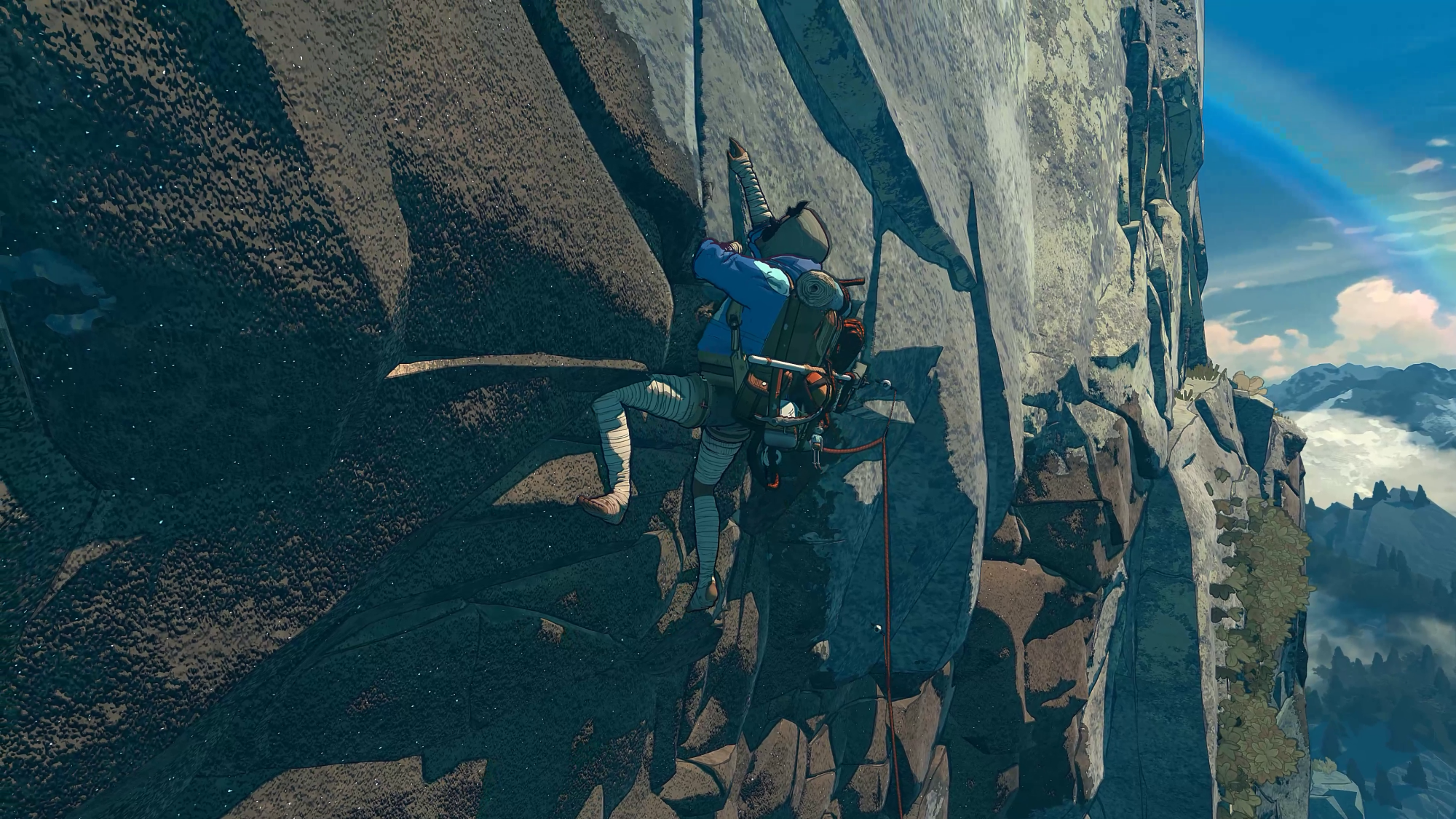
Players can climb almost anything, but the game subtly guides you through the cracks, crevices, and narrow ledges etched into the rock. You can place Aava’s hands and feet almost anywhere along a wall, but those cracks and small outcroppings offer the most reliable grip. A stamina system governs how long she can hold a position, as shown by the visible shaking of her arms and legs when she’s placed in a poor grip or an awkward body position. At the press of a button, Aava can take a brief rest to recover stamina, but you’re limited to doing this only twice per climb. Let any of her limbs tremble for too long and she’ll lose her grip and fall.
Depending on how you routed the ascent, that fall might stop at a piton with Aava dangling from a rope, or send her all the way back down to where you started, which can easily mean death. If you don’t want to belay, safely securing Avaa to a piton with rope, stamina can be regained by situating her in chill, optimal positions and then waiting for her to calm back down. This is where I want to credit the sound design of the game, as you can tell when Avaa is better rested by the lack of deep breathes she takes before taking a deep sigh to signify she’s ready to go again.
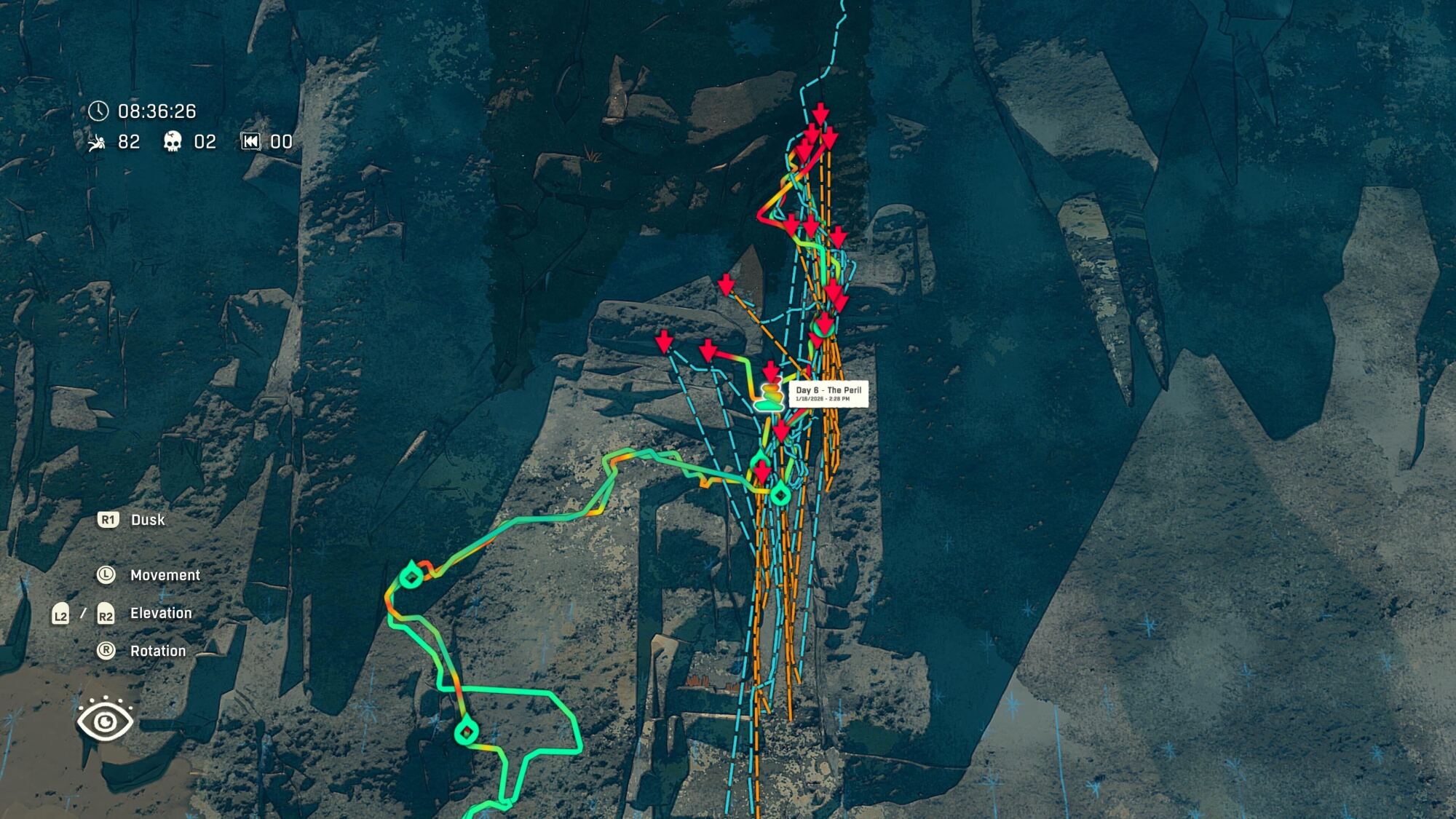
I fell 18 times in this one spot.
Credit: The Game Bakers
When planning a route, you can press L1 on PlayStation 5 or Tab on PC to bring up a climb overview, giving you a sense of the potential paths upward. Pitons can be placed directly into the rock through a quick-time event that feels similar to hitting a perfect reload in Gears of War. Time it perfectly and the piton locks in securely. Miss the mark and it can break outright. Land somewhere in between and it becomes twisted in the rock. I didn’t see the full consequences of a poorly placed piton too often, but given how frequently you’ll fall, it’s clear you want those anchors as solid as possible.
This system creates a straightforward risk-reward equation: how much of the route can you realistically free solo before burning a piton. Early on, playing it safe feels like the obvious choice, but the higher you climb, the more apparent it becomes that the pitons you brought with you are all you’re getting. After completing climbs, Aava’s robot companion can recover pitons for reuse, but only if you’ve managed your route well enough to survive the ascent in the first place. Broken pitons recovered by the climbing bot can be used to create a new one — it’s two broken pitons for one new piton, so it isn’t a lose one, get one back situation. You start the game with six; after my eight hours in the game, I had four to use.
There are also some rock faces that are too dense to insert a piton, and for that, you need to use Troglodyte pitons, which are indestructible and can be planted on any rock. After placing a piton you can belay off them, which you can do to recover stamina, rope down to certain points, or even access your backpack if you need a quick bite or drink.
Resting up
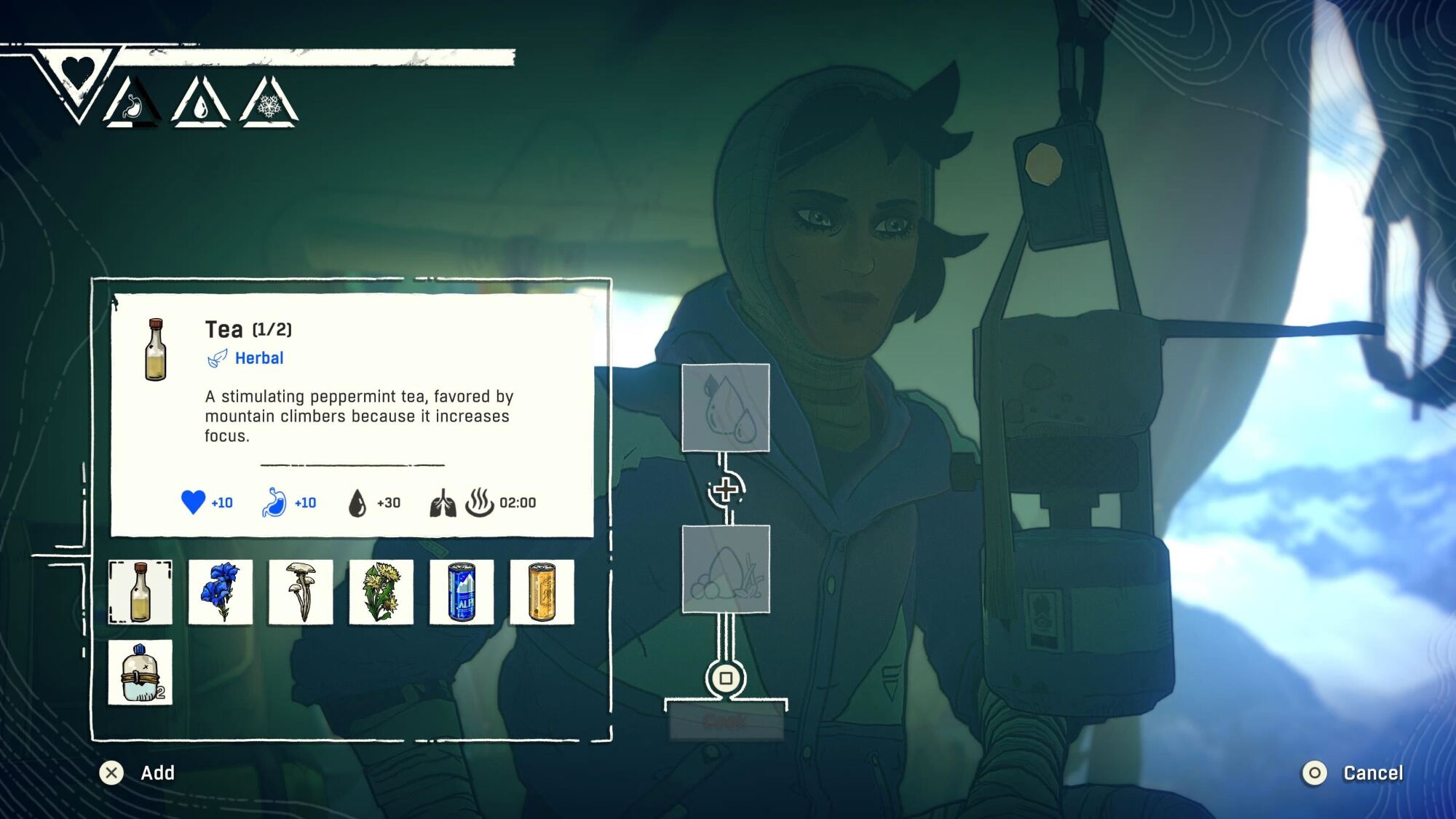
Dinner time.
Credit: The Game Bakers
Cairn also features a day-and-night cycle, along with harsh weather conditions that can dramatically affect a climb. Heavy winds can knock Aava off balance mid-ascent, while rain reduces grip and makes even familiar routes more dangerous. These effects can be mitigated through food and drink that temporarily fortify Aava, preventing her meters from depleting, or by using chalk to improve hand grip. Chalk is thankfully abundant, as it can be replenished by recycling trash generated from consumed items or found scattered across the mountain. You hand that trash to Aava’s climbing robot, and after a short amount of in-game time, the chalk is ready to use.
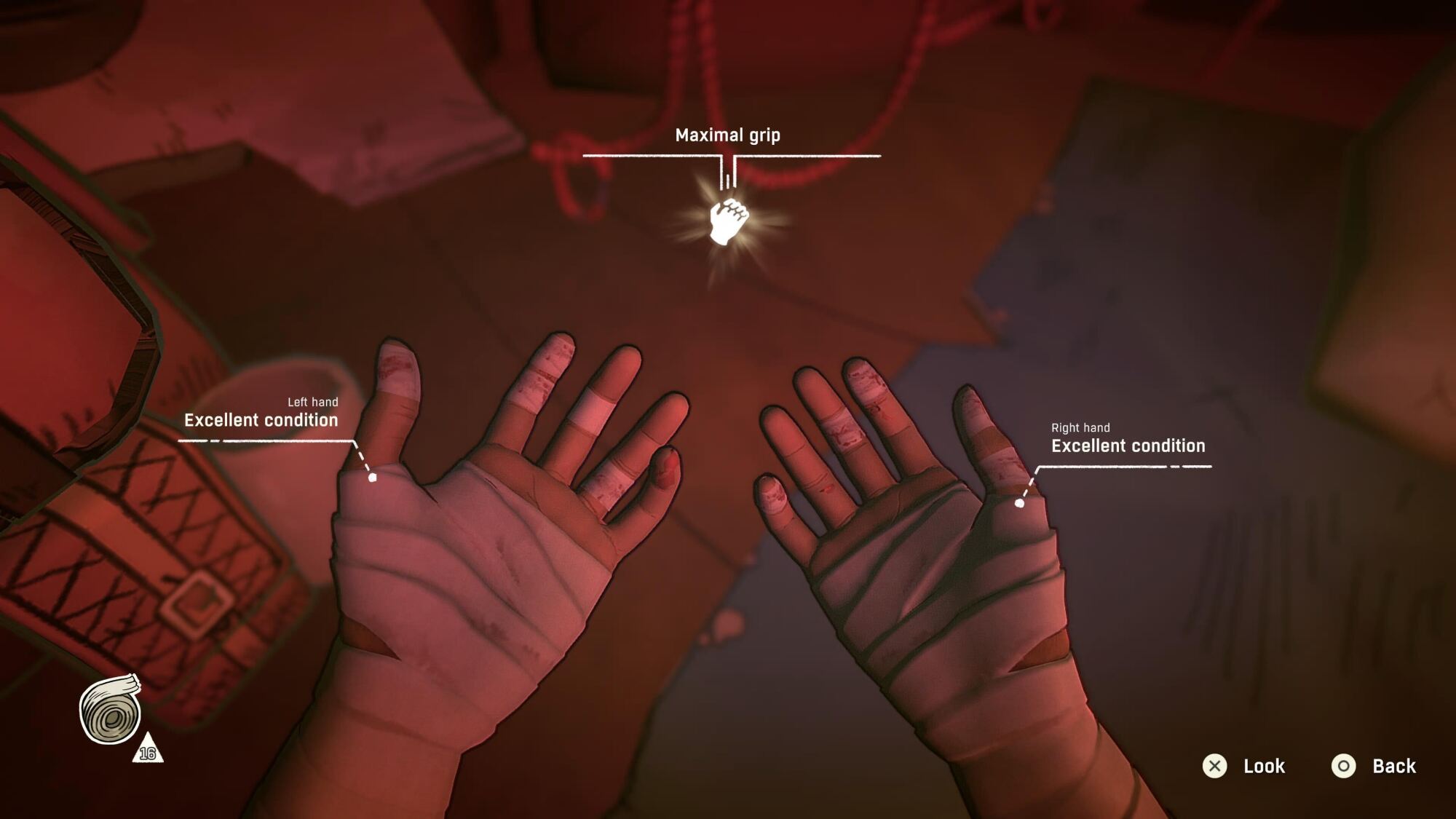
After a long climb, resting becomes essential. Players can pitch a tent at designated save points scattered throughout the mountain. These camps let you cook food, craft new pitons, organize your backpack, and, most importantly, heal Aava’s fingers. Finger condition plays a crucial role in maintaining grip, and as you progress, her fingers will develop cracks and cuts that need to be bandaged individually.
Healing is a surprisingly mundane process, requiring you to slowly wrap each finger one at a time by rotating the right stick on your PlayStation controller. It’s tedious, sometimes frustratingly so, but it aligns with the game’s broader themes of sacrifice and endurance. Healing items are scarce, forcing hard choices. You can fully bandage every finger, or focus only on the worst injuries and push forward. It’s a neat system, even if it occasionally feels unnecessary.
Credit: The Game Bakers
Cooking, by contrast, is simple and intuitive. Aava uses a small pot, which first needs to be filled with water and heated before ingredients can be added. Flowers can be brewed into teas that provide various fortifications, while fish and other ingredients can be cooked into full meals. Each option restores thirst or hunger respectively, with the exception of soups which do both. Any water not stored in your flask can be carried in bottles in your backpack, which can be found throughout the map. Both bottles and flasks can be refilled at springs, ponds, and fountains scattered across the mountain as you work your way toward the summit.
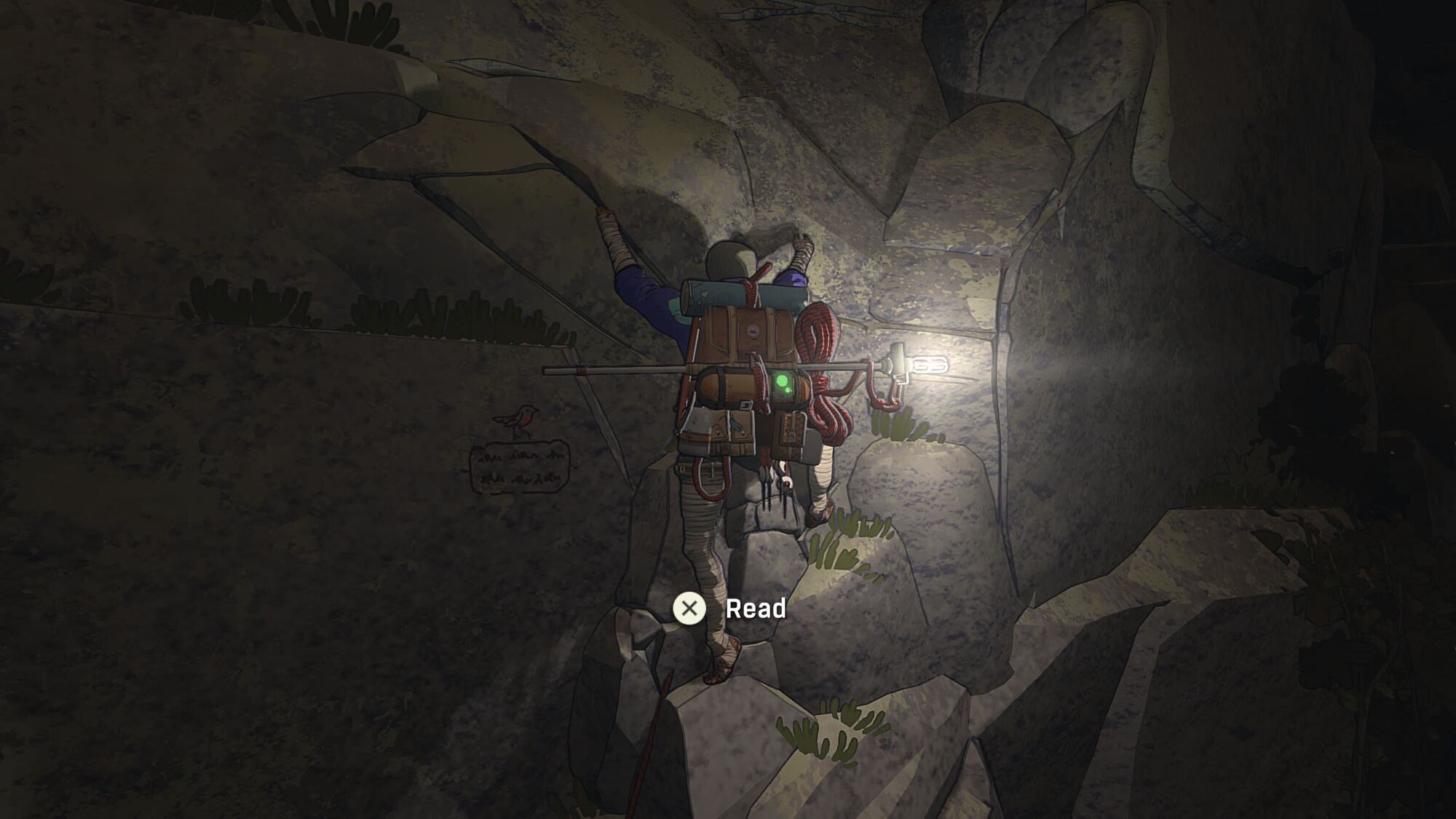
When everything is set, you can continue to climb or take a break, which will fast-forward time to whenever you feel comfortable going again. I try my absolute best not to climb at night unless necessary, as it’s hard to see, even with Avaa’s staff light, and sleeping helps Avaa recover. If none of this appeals to you, though, there’s a casual mode that makes the survival elements an afterthought. This mode turns off Cairn‘s survival elements such as hunger, gives Aava infinite climbing gear, and lets you rewind and try again after falling.
The climbing in Cairn is genuinely fun, a feeling that’s only amplified by how striking the game looks. Cairn’s art style sits somewhere between a graphic novel and a minimalist animated film. Characters and environments are rendered with clean lines, flattened shapes, and painterly textures, giving the world a hand-drawn, almost storybook quality. The color palette leans muted and earthy, with soft gradients and atmospheric lighting that emphasize altitude, cold, and isolation rather than raw spectacle.
The UI follows that same philosophy. Menus and overlays are deliberately stylized to feel tactile and diegetic, with rough-edged frames and sketched iconography that blend naturally into the world. Overall, the game’s visual identity reinforces its themes of solitude and endurance. The art never distracts from the climb; instead, it lends every moment a quiet, contemplative weight that builds as the journey continues.
Credit: The Game Bakers
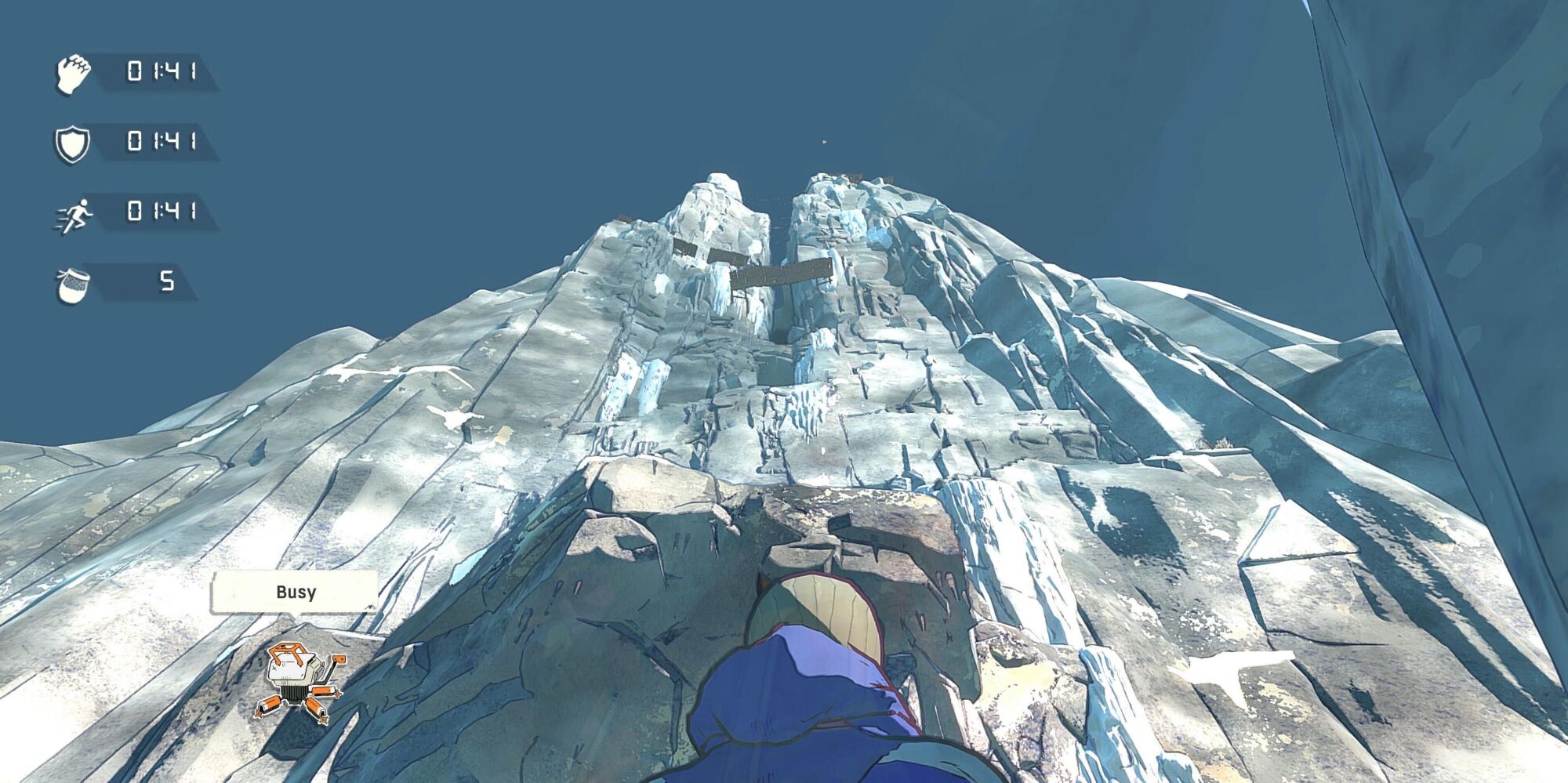
That said, Cairn isn’t without technical rough edges, and some of its performance issues can pull you out of the experience, especially during climbs. There are moments where you fall into a genuine rhythm, carefully placing each limb and steadily working your way upward. The game automatically selects which of Aava’s four limbs to move, though you can override it manually. That system occasionally breaks immersion, with limbs awkwardly morphing through one another and creating strange, almost rubbery animations. As you get closer to the summit, things can get even messier, with environmental objects briefly glitching or wobbling in ways that feel unintentional. The game never crashed during my playthrough, but there were times it felt perilously close.
Beyond the main ascent, Cairn offers several side objectives discovered through letters and maps Aava finds along the way. These usually send you off to climb different sections of the mountain in search of toys, trinkets, or rare items, including specialized pitons. According to the developers, a typical run should take around 15 hours, closer to 18 if you’re aiming to see everything, and upwards of 30 hours if you tackle the hardcore free solo mode. I powered through the game in just over eight hours, which left me wondering what corners I may have cut to finish so much faster than intended.
There’s a subtle Metroidvania-like structure to how progression works. Instead of traditional upgrades or leveling systems, you unlock better gear organically as you climb, including indestructible pitons, expanded chalk capacity, and tools like a pinwheel that warns you of incoming wind. It’s a smart approach that makes progression feel earned through exploration rather than menu management, and it fits neatly into Cairn’s broader philosophy of learning the mountain as you ascend it.
Is Cairn worth it?
Credit: The Game Bakers
The game’s title is a fitting reflection of its themes. A cairn, in the real world, is a stack of stones placed to mark a trail, commemorate the dead, or signal that someone has passed through before. In Cairn, the mountain is littered with similar reminders of those who attempted the climb and never returned, from abandoned gear to the stories left behind in notes and letters. Like a real cairn, these traces don’t offer comfort so much as context. They are quiet acknowledgments of effort, failure, and persistence, reinforcing the idea that every ascent is built on the attempts of those who came before, even if the summit remains unconquered.
Despite some rough edges, Cairn is absolutely worth playing if you’re drawn to games that value systems, atmosphere, and mechanical tension over constant spectacle. Its climbing mechanics are unlike anything else out right now, demanding patience, planning, and a willingness to accept failure as part of the experience. When everything clicks, Cairn delivers some of the most meditative and rewarding moments I’ve had in a game in years.
That said, this is not a game for everyone. The deliberate pacing, occasional technical hiccups, and hands-on survival mechanics will likely frustrate players looking for fast feedback loops or constant narrative momentum. The finger-bandaging, limited resources, and frequent falls can feel punishing, especially early on.
But for players willing to meet it on its own terms, Cairn offers a game that trusts you to learn through repetition and consequence, and one that finds beauty in exhaustion, solitude, and persistence. It’s imperfect, sometimes awkward, and occasionally janky, but it’s also thoughtful, ambitious, and deeply memorable.
Cairn is available today on PlayStation 5 and PC.
Entertainment
See results from over 25 AI models side by side with this game-changing tool

TL;DR: Upgrade your AI workflow with a lifetime subscription to ChatPlayground AI Unlimited Plan, on sale for just $74.97 with code SAVE5 through Feb. 22.
Credit: ChatPlayground AI
If you’re working with AI every day, you know some models have their limitations. You also know how frustrating it can be to hop between different models to get the best results for your prompt. That’s where ChatPlayground AI comes in, offering a convenient one-stop shop to see results from more than 25 different AI models.
Right now, a lifetime subscription to the ChatPlayground AI Unlimited Plan is yours for only $74.97 with code SAVE5, but you’ve got to act fast. This deal only runs through Feb. 22.
Mashable Deals
ChatPlayground AI is ready to streamline your AI workflow, giving you one spot to enter prompts and see the results from more than 25 models. See answers from ChatGPT, Gemini, Llama, Deepseek, Perplexity, and more models side-by-side so you can easily determine the best results.
Whether you’re using AI to generate images, code, or just field questions, ChatPlayground AI is a Chrome extension you can access easily. It doesn’t just give you multiple answers; it also helps you work more efficiently with AI through features like prompt engineering, image and PDF chat, and the ability to save past conversations for future reference.
This tool lets you bypass individual monthly subscription fees by bringing all the models together in one place at a one-time, low price. You’ll get unlimited monthly messaging, priority access to new features and future models, and priority customer support when you need it.
Mashable Deals
Get a lifetime subscription to ChatPlayground AI Unlimited Plan for just $74.97 with code SAVE5 now through Feb. 22.
StackSocial prices subject to change.
Topics
Artificial Intelligence
Entertainment
Big Salad’s Birthday Sale

This week only, we’re offering 20% off annual subscriptions to Big Salad, our weekly newsletter (and the #1 fashion/beauty publication on Substack). For $4/month, you will get every issue for a year — packed with fun finds, life realizations, and essays on sex, dating, love, marriage, divorce, parenting, and friendship — plus access to our deep archives.
Last Friday, I wrote about a dating realization I had that changed everything (gift link, free for all). The comments were truly incredible, and I felt really moved by the ability to share relationship (and life) highs and lows with women who really get it. We really are all in this together.
Here are a few more issues you may enjoy…
On sex, dating, relationships, and friendship:
The genius advice my therapist gave me when my marriage ended.
What it felt like to have sex for the first time post-divorce.
How do you know if it’s time to get divorced?
Four ways I’ve learned to deepen friendships.
The book that profoundly changed my friend’s sex life.
Reader question: “I want to talk dirty in bed, but I’m nervous.”
Nine habits that are making my 40s my favorite decade.
On fashion and beauty:
How to style a shirt like a Copenhagen girl.
7 things we spotted people wearing in Paris (plus, two magic Paris itineraries).
13 beauty products we always finish.
Do I get botox or filler? Readers asked, and I answered. 🙂
At age 46, I finally figured out my hair.
Gemma’s #1 drugstore beauty find.
Our 13 favorite swimsuits.
And, most of all, amazing life insights from women we love:
Ashley C. Ford on why poverty makes it hard to figure out what you like.
Anne Helen Petersen’s book-filled island cottage.
Three people share how they changed their careers. Then, three more women share!
Brooke Barker’s great conversation starter.
Hunter Harris tells us what movies and shows to watch right now.
Abbey Nova’s jaw-dropping garden makeover.
Natasha Pickowicz wants you to throw yourself a party.
My sister’s parenting hack that I can’t stop thinking about.
Alison Piepmeyer’s amazing wallpaper before-and-after photos.
15 incredible books to read.
Nine ways Kate Baer is coming out to play in her 40s.

Here’s the discount link for 20% off annual subscriptions, and here’s the Big Salad homepage, if you’d like to check it out. We would love to have you, and thank you so much for your support and readership. Joannaxo
P.S. We also offer 50 comped subscriptions per month for those who’d like to read Big Salad but aren’t in a place to pay for it at the moment. Just email newsletter@cupofjo.com to get on the list. Thank you!
Entertainment
Brûléed Yogurt? Yes, Please!

Did you know you can brûlée, like, anything? I always forget brûléeing is an option, because it’s one of those fancy cooking processes that’s too much fuss for home cooking. The thing is? It’s really not. All you need is a broiler and the courage to turn it on. (I suppose you might also need a fairly clean oven, or you’ll set off your smoke alarms — but I do that once a month anyway.) And once you’re in the swing of it, it’s truly so much fun.
“I love brûléeing the most simple things,” says our friend Jerrelle Guy, whose gorgeous cookbook, We Fancy, comes out this week. “Warm oatmeal, fresh bananas, grapefruit halves, the peanut butter on my peanut-butter toast. And whenever I brûlée my yogurt, it becomes decadent. I think of it as a no-bake crème brûlée.” For breakfast! Or whenever!
This week, we’re excited to share this fun, creamy, tangy new recipe from Jerelle’s book. True to the title, this is indeed a fancy dish, but Jerrelle is the kind of recipe writer who knows that fancy doesn’t need to be complicated (this is the woman who judged our boxed brownie taste test, after all). When she says you can do this — in less than 30 minutes, no less — you can trust her. And doesn’t a warm, citrus brûlée sound so good right now? Definitely worth braving the broiler. Let’s crack a window and do this thing.
Brûléed Lemon Yogurt With Berries
From We Fancy, by Jerrelle Guy
Serves 2-4
For the berry pico
1/2 cup blueberries and strawberries (fresh or frozen), diced
1 tsp fresh thyme leaves
1 tsp lemon juice
2 tsp olive oil
Kosher salt
For the yogurt crème brûlée
1 cup Greek yogurt (full-fat) or labneh
Turbinado sugar or granulated sugar, for sprinkling
Make the pico: In a small bowl, combine the berries, thyme, lemon juice, olive oil, and a pinch of salt. Set aside to allow the berries some time to release their juices.
Make the yogurt: Divide the yogurt among four 4-ounce ramekins (or two 8-ounce ramekins), or small heat-proof bowls, and spread in a smooth, even layer. Wipe any splattered edges of the ramekins with a clean kitchen cloth. (If making ahead, you can cover the yogurt and refrigerate for up to three days, until ready to eat. You can also leave it overnight to make the yogurt firmer.)
Brûlée the yogurt: Sprinkle sugar over the tops of the yogurt in a thin, even layer. If using a broiler, set an oven rack just beneath the heating element and turn the broiler on high. Place the ramekins on a baking sheet and slide under the broiler. You can also use a blow torch, moving in slow, circular motions over the yogurt. Burn the sugar until it beads, then caramelizes and melts into puddles. Remove from the oven (if using), and allow the yogurt to rest for a few minutes until the sugar hardens. Top with the pico and serve.
Note: If you want to make it even fancier, Jerrelle suggests mixing the yogurt with 2-3 tbsp of lemon curd and 1/2 tsp of pure vanilla extract, before transferring to the ramekins, to add a pleasant tang.

Thank you so much, Jerrelle! We love the new book!
P.S. Molly Yeh’s classic egg-in-a-hole, and seven delicious muffin recipes.
(Photos from Jerrelle Guy. Excerpted from We Fancy. Copyright © 2026 by Jerrelle Guy. Reproduced by permission of Simon Element, an imprint of Simon & Schuster. All rights reserved.)

See results from over 25 AI models side by side with this game-changing tool
Big Salad’s Birthday Sale


