
Entertainment
A Milk Chocolate Taste Test


Six years ago, we featured a taste test of dark chocolate bars, and one reader commented: “The best dark chocolate is milk chocolate.” A hot take, and one with which I happen to agree! So, we thought it was time for another experiment…
We couldn’t have asked for a better panel of judges: five seventh graders, with sweet teeth and strong opinions. Anton’s friends came over after school, and we challenged them to rate 11 popular milk chocolate brands in a blind taste test.

The Contenders:
Only plain milk chocolate varieties were included (no nuts, fillings, or flavors).

The Methodology:
Following Jenny’s finely tuned protocol, I served as master of ceremonies, with Joanna joining as my hype woman. I set up the samples ahead of time, “blinding” the brands as much as possible (those engraved with logos were turned upside down), along with sparkling water and unsalted crackers for cleansing the palate between samples. Each sample was numbered, and only I had the key to the corresponding brands.

I instructed the testers — Nick, Anton, Sienna, Juliet, and Ella — to taste each sample at the same time and weigh in on attributes like sweetness, bite, creaminess, and flavor. Then I asked them to privately rank each sample on a scale of 1-5 (5 being the best). I also asked them to refrain from making guesses on the chocolate brands, to avoid influencing each other. Did they follow these last two instructions? No, not even for a second. (Future scientists, take note: middle schoolers cannot not talk to each other). But did they take the task of scrutinizing and ranking these chocolates extremely seriously? Yes, 100%.

When testing was complete, I gathered their score sheets and averaged the rankings of each sample. In retrospect, I also should have instructed them to round their decimals, so as to avoid rankings like 4.12595982484636456467. But again, this was a flaw in my own procedure, and I cannot fault the children for being precise.
In the end, it didn’t matter anyway. After running the numbers and reviewing their observations, the results were very clear. Here are our findings — and scroll down to the bottom for the overall winner:

The Creamiest
Lindt Classic Recipe & Cadbury Dairy Milk: 4.8
These two scored high across the board (our only samples with tied scores), and both were noted for their exceptionally smooth, creamy texture. One tester described the Cadbury as having a “pure milk” flavor, and several agreed it was the “milkiest” milk chocolate. Everyone also liked the thin-but-not-too-thin shape of the Lindt bar.

Best Flavor
MilkBoy: 4.44
Chocolove: 4.3468
These two were also overall crowdpleasers (and the least recognizable by taste — no one had any idea what brand they might be). MilkBoy elicited the biggest response, flavor-wise, and testers said they tasted notes of raspberry, almond, and even mint. Chocolove was noted for its fruity sweetness — pleasant, but not overpowering. And everyone REALLY liked the domed shape of the squares.

Best Shape & Texture
Dove: 4.5
Ritter Sport Fine Milk Chocolate: 4.38
Whole Foods 365: 4.182
One definite takeaway from this taste test? Shape matters. Like Chocolove, the Dove bar is portioned into small, domed squares. That alone nudged its score up, and it was one of the surprise favorites (though some found it a little too sweet). Another surprise was the Whole Foods 365 bar, which was praised for its texture. One described it as “waxy and SO good.” (I have to agree, the “waxiness” yields a satisfying bite.) Ritter Sport, with its chunky squares, also got high marks on shape, texture, and its pleasant dissolve. And it’s worth noting that, although the official testers weren’t blown away, Ritter Sport was the grown-up favorite by far (Joanna and I tried them before the kids arrived, and kept our lips zipped during testing).

The Outliers
Trader Joe’s: 4.2682
Endangered Species: 3.84
One tester declared the Trader Joe’s sample a 5/5, right off the bat — no notes, loved everything about it. The rest of the testers responded with a resounding meh. A similar thing happened with Endangered Species, which many testers thought was an accidental dark-chocolate addition (it has a higher cocoa content and definitely could be confused for dark). One tester LOVED it, while everyone else (myself included) found it too hard, too bitter, and just too intense. No one wanted a second bite.

The Least Favorite
Hershey’s Symphony Bar: 3.8
Ouch! Remember when Symphony Bars were the fancy chocolate? Times have changed. These kids were NOT impressed. “It just tastes like a s’more.”

The Big Winner
Tony’s Chocolonely: 4.98
It wasn’t even close, y’all. Tony’s was the winner, beloved by all. While it wasn’t deemed the most anything — not the creamiest, sweetest, etc. — I actually think that worked in its favor. The balance was just right. Another big plus was size and shape: Tony’s is a decidedly chonky bar of chocolate, and it breaks apart into a bunch of uneven hunks, which is oddly satisfying. The brand recognition was definitely a factor here (“I got the lucky part!” one tester said, taking the little coin-shaped piece in the center), but I suspect this would have been the winner either way. Tony’s is both good chocolate and fun chocolate. And, really, what more can you ask for?

A big thanks to our wonderful judges, Anton, Nick, Juliet, Ella, and Sienna! Any other milk chocolate fans out there? Do you have a favorite?
P.S. More taste tests, including the best vanilla ice cream and our favorite pasta sauce.
Entertainment
Peter Jackson Is Making A New Lord Of The Rings Movie, It's About Tom Bombadil
By Joshua Tyler
| Updated
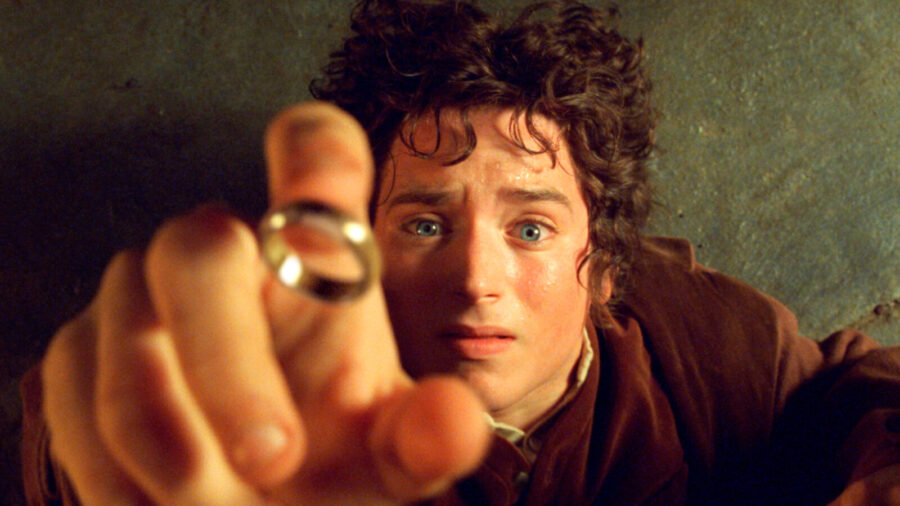
New Zealand filmmaker Peter Jackson is working on a new Lord of the Rings movie, and to make it, he’s teaming up with talk show host Stephen Colbert. This is not a joke or a drill; it’s happening, and they’re already writing the script.
Stephen Colbert, long known as one of Hollywood’s most obsessive Tolkien fans, is co-writing the film alongside his son, Peter McGee, and returning franchise writer Philippa Boyens. They’re using the working title The Lord of the Rings: Shadow of the Past to refer to the project. It’s not clear yet if that will be the movie’s final title.
Here’s the announcement recorded by Peter Jackson…
The story they’re developing is based on six specific chapters from J.R.R. Tolkien’s Fellowship of the Ring. Those chapters are numbers three through eight, often referred to as “Three Is Company through Fog on the Barrow Downs.” They involve Frodo first leaving the Shire, encountering his first Black Rider, and, most notably of all, encountering Tom Bombadil.

Tolkien fans will no doubt remember that Tom Bombadil was the biggest omission from the original Lord of the Rings movies. Jackson will now remedy that by making an entire, dedicated Tom Bombadil story.
Tom Bombadil is one of the strangest and most mysterious figures in The Lord of the Rings. Living in the Old Forest with his wife Goldberry, in Tolkien’s book, he appears cheerful and harmless, yet possesses immense, unexplained power. He’s so powerful that he’s totally unaffected by the One Ring.

Bombadil rescues the hobbits from multiple dangers, including the Barrow-downs, but exists completely outside the main conflict of Middle-earth, seemingly untouched by its wars, politics, or even its rules.
Peter Jackson is mostly involved in The Lord of the Rings: Shadow of the Past on the production side, reuniting with key members of the original creative team, signaling that this isn’t a reboot but another attempt to mine unused Tolkien material with the same people who built the franchise the first time. This new project is slated for release after Lord of the Rings: Hunt For Gollum, a feature film in production under the direction of Lord of the Rings alum Andy Serkis.
Entertainment
NYT Connections hints today: Clues, answers for March 25, 2026
The NYT Connections puzzle today is not too difficult if you keep up with the news.
Connections is the one of the most popular New York Times word games that’s captured the public’s attention. The game is all about finding the “common threads between words.” And just like Wordle, Connections resets after midnight and each new set of words gets trickier and trickier—so we’ve served up some hints and tips to get you over the hurdle.
If you just want to be told today’s puzzle, you can jump to the end of this article for today’s Connections solution. But if you’d rather solve it yourself, keep reading for some clues, tips, and strategies to assist you.
What is Connections?
The NYT‘s latest daily word game has become a social media hit. The Times credits associate puzzle editor Wyna Liu with helping to create the new word game and bringing it to the publications’ Games section. Connections can be played on both web browsers and mobile devices and require players to group four words that share something in common.
This Tweet is currently unavailable. It might be loading or has been removed.
Each puzzle features 16 words and each grouping of words is split into four categories. These sets could comprise of anything from book titles, software, country names, etc. Even though multiple words will seem like they fit together, there’s only one correct answer.
If a player gets all four words in a set correct, those words are removed from the board. Guess wrong and it counts as a mistake—players get up to four mistakes until the game ends.
This Tweet is currently unavailable. It might be loading or has been removed.
Players can also rearrange and shuffle the board to make spotting connections easier. Additionally, each group is color-coded with yellow being the easiest, followed by green, blue, and purple. Like Wordle, you can share the results with your friends on social media.
Mashable Top Stories
Here’s a hint for today’s Connections categories
Want a hint about the categories without being told the categories? Then give these a try:
Here are today’s Connections categories
Need a little extra help? Today’s connections fall into the following categories:
Looking for Wordle today? Here’s the answer to today’s Wordle.
Ready for the answers? This is your last chance to turn back and solve today’s puzzle before we reveal the solutions.
Drumroll, please!
The solution to today’s Connections #1018 is…
What is the answer to Connections today
-
Obfuscate: BLUR, CLOUD, MUDDY, OBSCURE
-
Magazines: FORTUNE, PEOPLE, SPIN, TIME
-
Payment methods: CASH, CHARGE, CHECK, WIRE
-
Units of volume with last letter changed: CUR, GALLOP, PING, QUARK
Don’t feel down if you didn’t manage to guess it this time. There will be new Connections for you to stretch your brain with tomorrow, and we’ll be back again to guide you with more helpful hints.
Are you also playing NYT Strands? Get all the Strands hints you need for today’s puzzle.
If you’re looking for more puzzles, Mashable’s got games now! Check out our games hub for Mahjong, Sudoku, free crossword, and more.
Not the day you’re after? Here’s the solution to yesterday’s Connections.
Entertainment
Starfleet Academy Is Dead, Schrödinger’s Fans Blamed
By Chris Snellgrove
| Published

My relationship with Starfleet Academy has been, as Facebook would call it, complicated. It’s a show I absolutely despised at first, but I grew to like more as Season 1 progressed. Still, I couldn’t shake the feeling that the show was doomed from the start. That’s because it never cracked the Nielsen Top 10 Streaming list, and it very rarely made it into the top 10 for Paramount +, its own streamer. The network is cagey about releasing any actual viewership numbers, but from the outside looking in, it never seemed like enough people were watching to justify this show’s rumored per-episode price tag.
Schrödinger’s Fans (noun, plural) — A paradoxical audience state in which a fanbase is simultaneously dismissed as too small to matter and blamed as large enough to determine a project’s success or failure, depending on which argument is more convenient.
Now that the show is dead, the fandom has been conducting its inevitable autopsy. Equally inevitable is who they have chosen to blame for the show’s failure. Those mean, older fans who criticized the show from the start. Those haters warned of SFA’s doom from the beginning, but were always told they were simply a vocal, hateful minority. Now, these haters are being blamed for the death of Starfleet Academy, which has revealed these harsh critics to be Schrödinger’s fans; a group so small their opinion don’t matter, but so big that their lack of interest can ruin an entire show.
Cultural Collision

When it comes to Starfleet Academy, the division between Star Trek fans is pretty obvious. Most of the show’s biggest defenders skew younger, and the formative sci-fi of their youth was things like the Star Wars prequels (or, God help us, the Star Wars sequels). Conversely, most of the show’s biggest critics skew older, and they grew up watching shows like Star Trek: The Next Generation. A collision between these groups was inevitable: older Star Trek fans wanted Starfleet Academy to be more like older Star Trek. Newer fans wanted the franchise to do something new.
Paramount obviously chose to tailor Starfleet Academy to younger viewers. It’s an understandable impulse, of course. As the franchise warps to its 60th anniversary, the majority of the fandom isn’t getting any younger. The network decided to address this problem fairly directly by creating a show filled with young people speaking in modern slang and constantly enjoying sophomoric humor. Unfortunately, this decision ultimately drove away the older fans that, as Paramount found out the hard way, were more important than anyone could have guessed.
Understanding Schrödinger’s Fans

In case you need a quick refresher, Schrödinger’s cat is a thought experiment in quantum physics. It refers to the idea that particles exist in every possible state until they are directly observed. This idea (known as “superposition”) works well in theory, but the thought experiment shows how silly this notion is when applied to something as simple as a cat in a sealed box. You see, until you open the box and check, quantum mechanics tells us that the cat is, paradoxically, both alive and dead.
What does this have to do with Star Trek? Fans of Starfleet Academy have been looking for someone to blame for the show’s cancellation, and many of them are blaming the older fans who have hated the show from the beginning. These superfans seemingly believe that if the haters had tuned in or simply stopped saying anything negative about the show, SFA would still be around.

To these fans, I must make a blunt request: pick a lane! Before Starfleet Academy was canceled, critical voices were dismissed as a vocal minority who just didn’t understand the subtle genius of this new Star Trek show (the one with the dick and fart jokes).
Now, haters are being told that their refusal to watch SFA somehow screwed the show. Just like that, older Star Trek lovers became Schrödinger’s fans. There are so few of us that our thoughts and opinions don’t matter, yet there are so many of us that our opinions can either save or doom a show.
An Expensive Lesson, But Will Paramount Learn?

It feels self-serving saying this (since I’m a middle-aged, lifelong lover of the franchise), but the clear lesson here is that Paramount needs to give older Star Trek fans what we want. We are not some tiny minority group to be ignored. We are the group that has kept this franchise alive for 60 years. Ironically, most of us started watching The Next Generation at a young age because, get this, it was a slick update to The Original Series!
Star Trek doesn’t have to radically change direction to gain younger fans. Instead, creators need to work on updating the classic formula for modern audiences. This is why Strange New Worlds has proven popular with younger and older fans alike. Aging Trek fans like its homages to The Original Series, while younger fans enjoy the humor and jokes. Hindsight is always 20/20, but there was no need to make Starfleet Academy so radically different than what came before. As it turns out, if a show is Star Trek in name only, not that many Star Trek fans will tune in.

At the end of the day, this is a numbers game, and Starfleet Academy just didn’t have that many viewers. Paramount tried to do something completely new, and it blew up in their faces. Now is the time to embrace the Golden Age of the franchise: kick Alex Kurtzman to the curb, bring back Terry Matalas for Star Trek: Legacy, and focus on capable, competent adults exploring strange new worlds. Otherwise, Paramount’s attempts to reach younger viewers will ultimately result in no viewers, finally killing the greatest sci-fi franchise ever made.

Lucid Bots raises $20M to keep up with demand for its window-washing drones
After pivoting, Y Combinator grad Glimpse raises $35M led by a16z


