A couple years ago, I fell into an analog horror rabbit hole and never looked back. When the original The Backrooms shorts were uploaded to YouTube, I was hooked on the strange subgenre that’s been made possible by countless young filmmakers who grew up online and have an intimidating grasp of genre blending, building out mythology with their audiences in real time, and posting their art straight to YouTube instead of taking more traditional paths.
Analog horror is punk rock, and it’s a movement that I’ve been rooting for since I became aware of it. Admittedly, I’m late to the party and have only begun to scratch the surface, but I’ve been obsessed with the subgenre long enough to point your attention toward the essentials, because the past is prologue.
My goal here is to put together an analog horror primer because the subgenre now has mainstream attention, and there will be plenty more where that came from. There are so many talking heads on YouTube and Instagram who are angered by the fact that people are comparing Backrooms to Skinamarink, but there’s one very important thing to take away from this: analog horror operates on a wide spectrum, using liminal space, “lost media,” and internet folklore to drive its storytelling.
Not all analog horror is created equal, so I’m going to break it down for you (in no particular order because these are wildly different and impossible to rank) so you know what kinds of flavors are out there if you enjoyed Backrooms but want to keep digging.
Skinamarink
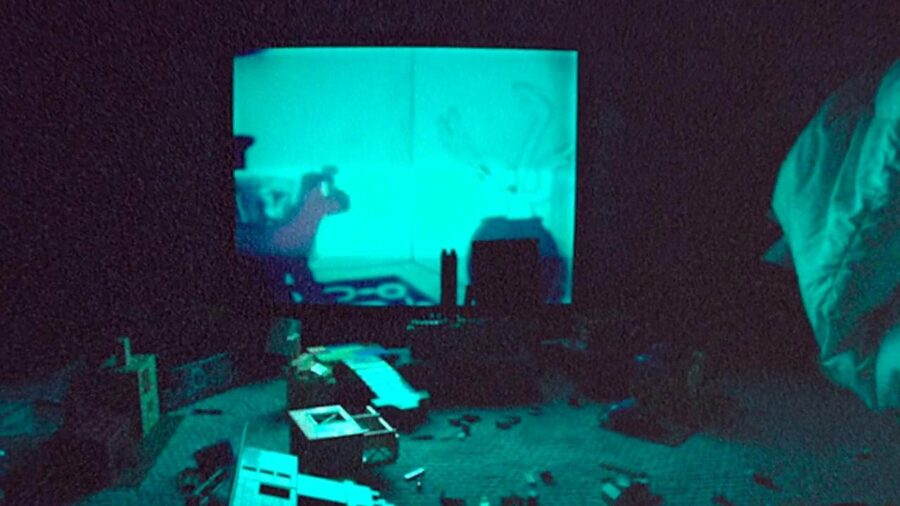
Kyle Edward Ball’s Skinamarink is an endurance test at 100 minutes for the kind of story it’s trying to tell, but it’s an early feature-length experiment that introduces some of the visual language you’ll find throughout analog horror. Set in 1995, the film centers on two little kids, 6-year-old Kaylee (Dali Rose Tetreault) and 4-year-old Kevin (Lucas Paul). One night, while their parents are absent (you find out why later), all the doors and windows in their house disappear, and they only have each other and the glowing TV in the room to keep them company. They build forts in the living room and try to make the best of the situation, even though they hear menacing voices from upstairs that sound like disembodied versions of their parents.
Filmed in its entirety for $15,000 in Ball’s childhood home, Skinamarink is a slow-burn nightmare told through the perspective of frightened children. You see everything at their eye level, and the only lighting comes from either a nightlight or their glowing TV. You think you might see a face in the shadows, but it could all be in your head. It’s a picture-perfect representation of that nameless, endless fear you feel as a child when you’re left alone for the first time and hear strange noises. It’s fear without articulation, which is the most frightening thing of all.
While you need to be built differently to enjoy Skinamarink because it’s a challenging film, it’s a solid entry point for analog horror because it’s set in the ’90s and boasts the VHS aesthetic that most filmmakers in this wheelhouse latch onto. If you’re a millennial approaching middle age, Skinamarink is nostalgia for a simpler, pre-digital time, but also a reminder that existential dread transcends technology.
The Mandela Catalogue
Conceived by YouTuber Alex Kister during the COVID lockdowns, The Mandela Catalogue is the finest example of mixed-media use in analog horror. Taking place across the ’90s and early aughts, the story follows the fictional Wisconsin community of Mandela County, which has been plagued by doppelgangers known as Alternates who slowly replace people by driving them to suicide and then taking their form. There’s religious imagery everywhere, often presented through creepy lost media cartoons depicting the Archangel Gabriel, and there’s a healthy amount of found-footage filmmaking here too.
It’s not worth breaking down the character dynamics here because the web series gets quite convoluted, and it’s one of those things you’re better off experiencing for yourself. Through Emergency Broadcast Systems, computer screens, GPS devices, and camcorders, you’re slowly clued into how far gone the community has become, giving you reason to believe these Alternates have humanity outnumbered and the government has pretty much given up on intervening at this point.
The Mandela Catalogue is still going strong, and it’s very much a community experience. Most people heard about it through reaction videos, and the lore keeps building, with the most recent installment arriving this past March. Half the fun is discussing everything in the comments section, where people are surprisingly receptive to fan theories and turning literally everything into a meme.
No Through Road
Taking a more traditional found-footage approach, No Through Road has four installments that span several years, even though their collective runtime barely cracks 30 minutes. There’s really not much going on here, but it’s executed with such care and precision that I consider it one of the most frightening versions of the “kids with a video camera” setup the genre has to offer. It’s also worth noting that the series’ creator, Stephen Chamberlain, was just 17 years old when the first installment dropped.
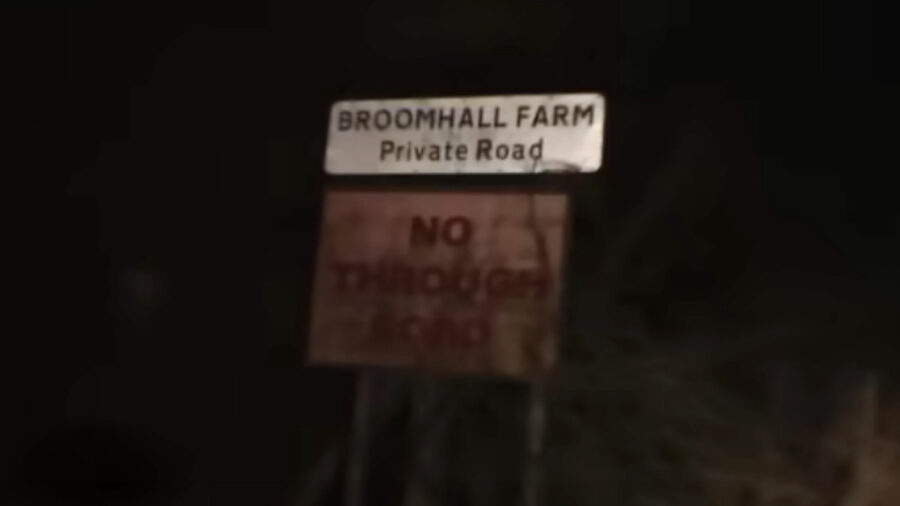
No Through Road tells a simple story about a group of teenagers on a late-night drive who take a private access road that sends them into an unending time loop, where a masked man constantly torments them.
That’s pretty much the long and short of it, aside from one key detail that really sells it for me: we didn’t get a second installment until two and a half years after the first one, which was posted to YouTube as legitimate found footage. While it’s obvious that this was an art project, Chamberlain was smart enough to use the early days of YouTube to build out the lore. Like The Blair Witch Project had everybody believing it was real because the internet wasn’t what it is today, Chamberlain didn’t have that luxury and instead cloaked the whole thing in mystery by updating sparingly.
It’s kids being kids, experiencing a trauma sourced from some uncanny plane of existence, and then radio silence until Part 2 came out. From June 2009 to August 2012, we got four videos, and that’s it. You eventually learn how their relationships broke down between installments, but the wait between releases, coupled with online communities obsessing over every new development, certainly added to its allure when it was first making the rounds.
VCR Willie
A recent analog horror entry that’s still ongoing, Alexander Henderson’s (Alexanderthetitan) VCR Willie is found footage with an added layer of abstraction that makes the entire thing horrifying.
Aside from a quick explanation from Alexander, we’re presented with found footage taking place in an apartment that’s cursed by some sort of supernatural entity. According to Alex’s explanation, he woke up one day and found a Sony Handycam in his closet with a tape inside. He’s suggesting that whatever is on each tape is what he witnessed the during his dreams the night before; there’s no sign of him going out and filming any of the footage himself.
And what’s in the footage, you ask? Creepy, creepy people, all of whom live in Apartment #40. The footage suggests that these people know who Alex is, and he’s invited into their homes to help them deal with supernatural entities that, much like the ones seen in The Mandela Catalogue, are either doppelgangers or have taken over their hosts outright. The story isn’t told in chronological order, and we only see what Alex has access to through his tapes. What he does have access to, though, is terrifying.
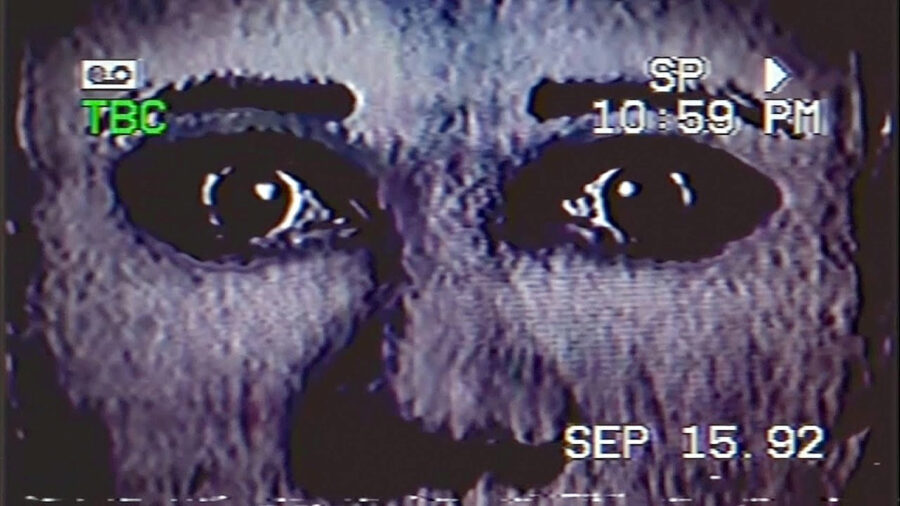
It’s mostly just people staring through your soul and hiding behind objects that are far too small for them, as if they’re not yet familiar with the dimensions of their new bodies, but for some reason it’s completely unnerving. Imagine coming home and seeing somebody who looks like a member of your family standing behind an open kitchen cabinet as if they’re hiding from you while laughing quietly, and they genuinely think you can’t see them. It’s the constant feeling of being watched, and never feeling safe, that makes VCR Willie such an effective effort.
Kepther E
“Kept Here,” stylized as Kepther E, falls into what’s known as the Alternate Reality Game (ARG) subgenre, making it a little more complicated than typical found-footage horror. It was so shocking at the time of its release that it was removed from the internet, but has since been restored through The Internet Archive and various YouTube compilations.
While it initially seems like a mass upload of unrelated found-footage content, you’ll find clues in the upload names that help you piece everything together chronologically (some people have uploaded them in order), and you’ll gradually start to understand what’s actually at stake.
Kepther E is mostly told from the perspective of a troubled teen named Alex, who’s often influenced to do terrible things by his unseen friend, Kevin. The tone and shooting style change depending on the upload prefix attached to each video, but they all lead to the same horrifying place: an abandoned house where it’s implied people are being held captive and tortured, as if it’s all part of some grand cinematic experiment that hasn’t yet been completed.
As each camera source pushes the narrative forward, we learn how everybody is connected, and it’s not for the faint of heart. I haven’t watched this series since I last wrote about it, and I still hear some of those distant screams in my head because they sound so genuine that it’s hard to shake them from your memory.
Indistinct Chatter
Falling into the “lost media” wheelhouse, Indistinct Chatter is a stop-motion experience created by YouTuber KrainagrzybowTV. The whole thing plays out like a bad fever dream, the kind you have when you fall asleep in front of the television and the line between your consciousness and subconsciousness starts to blur. Nothing seems real, but it feels like it’s all calling out to you.
Indistinct Chatter exists in that uncanny valley where you want to believe everything you’re seeing, but you know it’s all an illusion. I can’t say there’s really a point to this one beyond conjuring up the same kinds of memories that films like Skinamarink try to make you experience again as an adult. There’s nothing outright scary here, but there’s a nameless dread lurking around every corner, making you wonder if you’re watching somebody else’s dreams that you’re not supposed to see.
It’s really breezy too, clocking in at just over 30 minutes. Before I get to my last recommendation, I’m going to stop here for a second and tell you that if you’re not built for this one, you definitely won’t be built for the next one.
Buffet Infinity
I watched 2025’s Buffet Infinity for the first time last week because it only recently started making the rounds on digital, and I have not stopped thinking about it since. Buffet Infinity is reminiscent of, and openly inspired by, another analog horror web series known as Local 58, but it completely does its own thing. Local 58 tells its story through public access broadcasts, but the horror comes from the fact that WCLV-TV is repeatedly hijacked by supernatural entities trying to use media to manipulate the population into doing terrible things, including committing suicide.
Buffet Infinity pushes this kind of storytelling to its absolute extreme with a premise involving a sinkhole, a death cult, and a sentient restaurant of unknown origin that’s constantly expanding and consuming the surrounding community. It’s 100 minutes of the kind of public access commercials you used to see on local cable during the late ’90s and early aughts.
While watching 100 minutes of commercials sounds exhausting (and it is), what happens next is what makes this such an effective piece of analog horror. The actors in each commercial, whether they’re representing a law firm, insurance company, or pawn shop, all become vaguely aware of the titular restaurant’s presence and influence. They’re speaking in an almost coded language, trying to warn you about what’s happening.
Meanwhile, Buffet Infinity keeps growing, gets into scraps with rival businesses, and becomes increasingly unhinged until the whole thing boils over into a cosmic horror so all-consuming that you need to walk it off for a good minute.
Plenty More Where That Came From
Listen, there’s plenty more where that came from, and I’ve only begun to scratch the surface. The thing about analog horror is that it has so many different flavors that you can’t lump it into a single category. I hope this primer points you in the right direction and shows you some of the common themes that run throughout the subgenre.
Analog horror specializes in liminal space, found footage, lost media, and our fear of the unknown. It’s been largely produced by kids on YouTube who know what they want to see but haven’t found it anywhere else. It’s the future of horror, and Backrooms has proven just how effective it can be at capturing an audience’s imagination and, more importantly, their undivided attention. It’s low-budget, doesn’t follow any known conventions, and every time I think I’ve seen it all, something from this wheelhouse blows me away and leaves me hungry for more.
Hopefully, this primer sets you in the right direction. Try to keep up, though, because I think we’re going to continue seeing some really great content come from the most unassuming places.
I track TV prices year-round, so I know that these 15+ TV deals ahead of Prime Day are actually worth it
Table of Contents
Best TV deals ahead of Prime Day
Prime Day season is one of the best times of year to buy a TV on sale. That’s been etched into our mental calendars in July for the past decade, but this year, hype for one of the year’s biggest shopping events starts in June: Prime Day 2026 will run from June 23 to 26. As always, worthwhile TV deals are already popping up in the weeks preceding the event.
The good pre-Prime Day TV deals aren’t just at Amazon. Half the time, the reason that TV deals during Prime Day go so hard is that competing retailers like Best Buy refuse to let Amazon get all the attention — and it has already started this year. If you don’t want to wait until the end of the month to grab your new TV, here are 15+ of the best TV deals I’ve found at Amazon and Best Buy ahead of Prime Day. Most models in this list match or beat their all-time record-low price, according to Amazon price tracker camelcamelcamel.
Hisense finally launched its highly-awaited RGB TVs on June 2. While both the UR8 and UR9 RGB TVs are on sale at Best Buy, there’s another 2026 Hisense TV with a much wilder discount: The 75-inch Hisense U7 Mini LED TV is just $1,197.99 after a massive 40% price drop from its usual $1,999.99.
Mashable Deals
By signing up, you agree to receive recurring automated SMS marketing messages from Mashable Deals at the number provided. Msg and data rates may apply. Up to 2 messages/day. Reply STOP to opt out, HELP for help. Consent is not a condition of purchase. See our Privacy Policy and Terms of Use.
Just released in March, the Hisense U7 series has a pretty incredible lighting system for its price range. Its backlight benefits from full-array local dimming, which uses clusters of tiny LED bulbs that can fully turn themselves on or off for more precise contrast during any scene or livestream. Other impressive numbers include a peak brightness of 3,000 nits (great news for FIFA fans trying to watch a game during the daytime) and a native 165Hz refresh rate (great news for gamers on a budget).
This past weekend, Freddie and I sat in the park and played cards. The game was fun, but you know what was even more compelling? People watching. Couples, families, and a gazillion Knicks fans walked by us, and I realized that there’s a definite print of the summer…
Gingham! Do you wear it? It looks so cool and summery. Here are 15 pretty pieces — including the gorgeous shirt above — in partnership with Nordstrom…
Thoughts? If money were no object, this sundress is beautiful — and don’t forget about classic picnic baskets. 🙂
(Gingham shirt at top by Döen. This post is sponsored by Nordstrom, a retailer we’ve loved and worn for decades.)
By now, most audiences are aware of Liam Neeson’s status as an action thriller star, best known for taking on hordes of enemies at once in non-stop thrill rides such as Taken, The Grey, and The A-Team. In 2014’s mystery thriller A Walk Among The Tombstones, Liam Neeson stars as a private investigator hired by a drug kingpin to solve a mysterious crime. The film is available to stream on Amazon Prime Video.
A Walk Among The Tombstones combines two of Liam Neeson’s best qualities as a performer, allowing him to show off his impeccable fighting skills as a physical powerhouse while making great use of the actor’s unflinching humanity.
One Of Neeson’s Best Action Flicks
A Walk Among the Tombstones follows Liam Neeson’s Matt Scudder as he pays his bills performing private detective work in New York. As a disgraced former detective, Scudder is willing to work outside of the law with a number of unsavory characters, including a local drug dealer named Kenny Kristo. Kristo explains to Scudder that his wife has been kidnapped and subsequently murdered despite having paid the ransom that the kidnappers demanded.
In A Walk Among The Tombstones, Liam Neeson’s Matt Scudder is joined by a street-wise homeless youth named TJ (Brian Bradley), who assists him in making connections among the criminal underworld. Scudder and TJ begin to follow ledes that uncover corruption within the DEA, as well as a conspiracy by international drug trafficking rings that threaten to start an all-out gang war on the streets of New York.
As tensions continue to rise, Scudder brings TJ under his wing after learning that the boy has sickle cell anemia and is in declining health.
From there, Scudder and his team set up a sting in order to catch the kidnappers in the middle of a handoff with their next victim. When a shootout ensues, A Walk Among The Tombstones becomes an all-out gunfight, featuring one of Liam Neeson’s most gripping action sequences to date. The conclusion features a revolving door of gunshots that ring out, killing hordes of thugs, leading to the police finally taking down the drug traffickers.
Matthew Scudder’s Novelized Legacy
The film was written and directed by Academy Award-nominated filmmaker Scott Frank, best known for screenwriting the hit 2017 film Logan, starring Hugh Jackman. Frank later went on to create, write, and direct the Netflix mini-series The Queens Gambit, starring Anya Taylor-Joy.
A Walk Among The Tombstones stars Liam Neeson alongside a number of big-name actors such as Downton Abbey‘s Dan Stevens, The Predator‘s Boyd Holbrook, and Stranger Things‘ David Harbour. The film is based on a 1992 novel of the same name written by American crime writer Lawrence Block and serves as the second time the character of Matt Scudder has been brought to the big screen, according to IMDb.
Before the character appeared in A Walk Among The Tombstones, Matt Scudder was portrayed by Jeff Bridges in the 1986 film 8 Million Ways To Die. Block has penned 20 novels in the long-running series, the most recent of which was released in 2023. The events of A Walk Among The Tombstones adapt the tenth book in the long-running series as a standalone adventure.
Though A Walk Among The Tombstones did very well at the box office, the film received mixed reviews from critics.
The Liam Neeson-led movie made over $62 million at the worldwide box office against an estimated production budget of only $28 million, opening at number two at the box office behind The Maze Runner. The film holds a solid 68 percent score on the review aggregate site Rotten Tomatoes, though the audience score clocks in at only 53 percent.
To this day, A Walk Among The Tombstones remains one of Liam Neeson’s most underrated movies, which fans of the Northern Irish actor would surely be elated to check out. Though modern film fans have largely forgotten the over decade-old movie, it holds some of the best action sequences in Liam Neeson’s long and storied career while still giving the actor room to perform as a deep and nuanced character.