
Entertainment
The best open earbuds in 2026: These picks stay put, sound great, and keep you aware of the world

Though open earbuds share the common feature of sitting on the exterior of the ear, they come in many shapes and sizes, from clip models to ear hook models. Some are more geared toward working out, while others are better for everyday use. The Bose Ultra Open earbuds are an especially popular pick, thanks to their sound quality and many colorways, but at $299, they’re far from your only (or most affordable) option.
Below, we’ve compiled some of the best open earbud models available in 2026, after testing out options from Soundcore, Sony, Shokz, Bose, and more budget-friendly options.
What are open earbuds?
Open earbuds allow you to get as close as you possibly can to the feeling of not wearing earbuds at all. Unlike in-ear earbuds which sit in your ear canal, open earbuds sit just outside your ears (as the name would suggest). Some models hold the speaker component in place with an ear hook while others opt for an ear cuff.
People generally opt for open earbuds for three main reasons:
-
They provide a private listening experience while leaving you almost completely aware of the world around you. It’s like the best transparency mode you’ve ever used.
-
For some people, not having an earbud physically in their ear is generally more comfortable.
-
The hooks and cuffs (along with the general awareness of your surroundings) make them a great option for keeping them in place, and keeping you alert, while you’re working out, working, or simply existing in the world.
What are the drawbacks of open earbuds?
As you may have gathered from the section above, open earbuds don’t come with active noise cancellation. That’s mostly thanks to how much sound they let in (by design) and the difficulty of cancelling out sound without having the device covering your actual ear canal.
Also thanks to the whole open ear-canal situation, these aren’t going to be the earbuds for audiophiles. That’s not to say open earbuds sound bad — if you’ve never tried them, we promise they sound much better than you’re imagining — but you will lose out on some of the nuance of a song without having the earbud actually in your ear.
That said, many pairs still have equalizers on their companion apps to help you make them sound their best. Our best picks for sound, the Bose Ultra Open earbuds and Shokz OpenFit Pro earbuds, even have spatial audio features that work surprisingly well.
Most open earbuds will also boast some form of special technology that keeps them from leaking too much sound. While these pairs do pretty well in keeping the sound just to you, most pairs (including our picks) while be prone to some leakage, especially at higher volumes.
Finally, some open earbuds — mainly those with ear hooks — tend to have slightly bulkier cases. If you like to travel especially light, it’s something to be aware of.
What about bone conduction headphones?
Bone conduction earbuds work exactly like the name implies they do — they use your skull to conduct sound waves, instead of projecting the sound into your ear, like most of the picks are on list. Typically, a band runs from either side of the users head to help hold the headphones in place.
Shokz, the brand behind our top pick, is a popular maker of these kinds of headphones. While we do consider them open earbuds, we have yet to test any bone conduction earbuds — look out in the future for that update. On that note:
What’s next in our testing pipeline
The open earbuds market is rapidly expanding, so we’ll be testing more as we can get our hands on them. We recently added the Sony LinkBuds Clip and Soundcore AeroFit 2 Pro to this guide.
In addition to the earbuds that made our initial guide in May 2025, we tested out the Nothing Ear (Open) earbuds ($149), the Sony Linkbuds Open ($199.99), the Anker Soundcore AeroClip earbuds ($169.99), and the Shokz OpenFit Air ($119.95). While none of the above were bad earbuds by any means, we found our picks to outshine them in their comfort and sound quality, especially when considering their respective prices.
Entertainment
Obsession Needed Only Two Weeks To Make Movie History
By Jonathan Klotz
| Published

Memorial Day weekend is a showdown between the two sides of modern Hollywood. On one side, we have Disney’s big-budget Star Wars blockbuster The Mandalorian and Grogu, and on the other, the latest micro-budget horror from Blumhouse: Obsession. The two films can’t be any more different, and while Star Wars’ return to the big screen is expected to earn over $400 million at the box office, it’s Obsession that’s going to enter the history books. Not only because of its total box office, it’s going to end up over a $100 million, but it’s how it’s earned the money. It’s the first film since Shrek to earn more its second weekend than its first, without the benefit of Christmas or Thanksgiving weekends. That’s one for the history books.
Obsession Defies Decades Of History

A second weekend drop of under 50 percent is considered a success in Hollywood. On average, movies tend to be frontloaded these days, and we’ll never again have a film like Titanic, which earned more on Valentine’s Day three months after release than it did on opening night. It was catastrophic that both Batman v. Superman: Dawn of Justice and Ant-Man and the Wasp: Quantumania fell by 67 percent in their second weekends, but a franchise-saving success when Bumblebee dropped only 3 percent. Obsession has, percentage-wise, done better than all of those films, and thousands of others.
Obsession is, as of the time of this writing, on pace for a second weekend performance of $19 million. 16 percent above its original haul of $17 million. With outstanding word of mouth, rave reviews, and countless social media reactions, sketch comedian Curry Barker’s (no relation to that other Barker) horror debut shows no signs of slowing down. If the third weekend breaks $19 million, Obsession will become one of the most successful films in modern history.
The Next Big Name In Horror

With a total budget of under a million dollars, Obsession cost less than the catering budget for The Mandalorian and Grogu. The tight story, with a total runtime of barely over 100 minutes, has been able to capture the audience’s imagination in a way few horror films have before, already earning the film comparisons to The Ring, The Blair Witch Project, and Paranormal Activity. The One Wish Willow that allows Bear (Michael Johnston) to wish for his crush, Nikki (Inde Navarrette) to love him more than anyone is already being talked about as the subject of a second film, or an anthology, with multiple One Wish Willow’s going very, very badly for the wisher.
Low-budget horror has become a staple of cinema over the last few decades in particular, and Curry Barker is set to follow up his current hit next year with Anything but Ghosts starring Aaron Paul and Bryce Dallas Howard (with an estimated budget of $5 million) and in 2027, a new take on an old classic: The Texas Chainsaw Massacre. It’ll be a tough bar to clear the success of Obsession, which might break even more records before its run comes to an end, but given the reaction to his small-scale Monkey’s Paw story, Barker is going to become one of the hottest directors in Hollywood.
Entertainment
Grogu Movie Proves Disney Learned The Wrong Lesson From The Star Wars Sequels
By Chris Snellgrove
| Published

Right now, The Mandalorian and Grogu is in theaters, and I can’t help but think director Jon Favreau and writer Dave Filoni are both doing their best Han Solo impersonations right now: “I’ve got a bad feeling about this.” The movie is projected to earn less money than any live-action Star Wars film before it, a record previously held by the much-maligned Solo: A Star Wars Story. Plus, the movie is currently at a 63 percent on Rotten Tomatoes (perilously close to “rotten” territory). Finally, some critics have dubbed this the new worst Star Wars movie, surpassing the worst that the Sequel Trilogy had to offer.
This is morbidly ironic because this was the safest Star Wars movie Disney could have made. It’s an adaptation of The Mandalorian, the franchise’s only breakout streaming hit, and it stars Pedro Pascal, Hollywood’s current golden boy. How did things go so far off the rails for the first Star Wars movie in seven years? The answer is so simple that you can see it even with your blast shield down: Disney learned all the wrong lessons from the failure of the Sequel Trilogy. Because of this, the movie they made to save the franchise may ultimately doom Star Wars altogether.
Jet Fett Radio
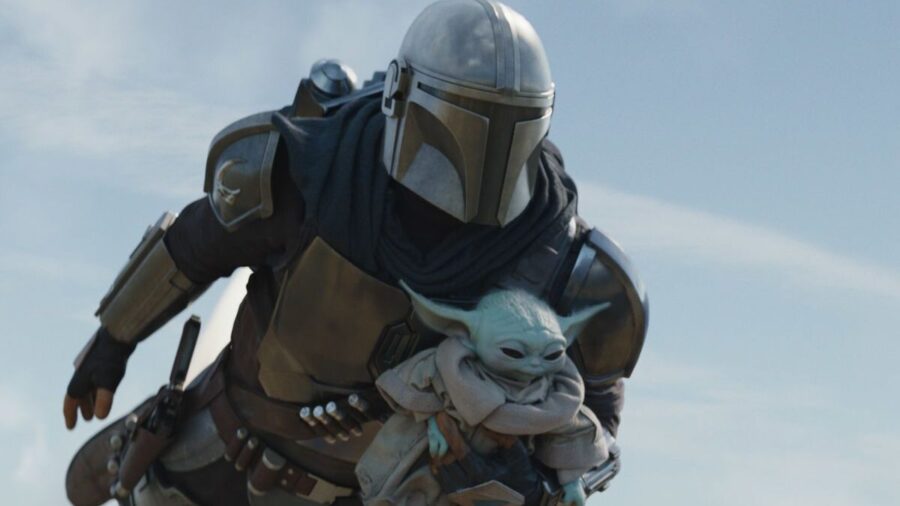
The failure of The Mandalorian and Grogu begins with the Star Wars sequels. The Force Awakens was a crowd-pleaser, but it’s an open secret that this film played it safe. It was a soft reboot of A New Hope that threw in plenty of familiar characters and franchise tropes. The Last Jedi tried to break out of the remake mold altogether, with Rian Johnson delivering a sequel filled with shocks and surprises (there’s not even a lightsaber duel!). The backlash among fans was immediate, and dislike of The Last Jedi is considered a major factor in why Solo: A Star Wars Story did so poorly at the box office.
In response, returning director JJ Abrams tried to fill The Rise of Skywalker with as much fan service as possible. He inexplicably brought Emperor Palpatine back with no explanation of how he survived, and Abrams even brought Han Solo back through equally unexplained means. Fan-favorite characters like Lando Calrissian were pushed to the forefront while controversial characters (mostly, Rose Tico) were almost entirely pushed out. TROS even sloppily recreates the ending of Return of the Jedi, all while frantically trying to undo multiple plot points from The Last Jedi. None of this worked, of course, and The Rise of Skywalker was deemed the worst Star Wars movie ever made.
This Isn’t The Way

Now, The Mandalorian and Grogu may be taking that title, and The Rise of Skywalker is partially to blame. You see, when fans expressed their dislike of The Last Jedi, Disney glommed onto the frequent complaint that “it doesn’t feel like Star Wars.” That’s why TROS is chock full of sloppy fan service: they wanted to give fans something familiar at every turn. But this came at the expense of the story, which is how The Rise of Skywalker came to be hated even more than The Last Jedi. As it turns out, giving fans a bunch of member berries moments doesn’t make up for nonsensical plotting and characterization.
Incredibly, though, Disney execs doubled down: instead of learning from their failures with TROS, they decided the only way for The Mandalorian and Grogu to succeed was if every single frame of the film was overflowing with lazy nostalgia. Villains have no depth or definition: they are all just faceless bad guys for the film’s titular duo to dispatch, video game style. We careen from one familiar Star Wars element to another (Hutts, Stormtroopers, and X-Wings, oh my!) in a plot that goes absolutely nowhere. That’s because you’re not supposed to care about the story: you’re supposed to enjoy watching the director take out your favorite action figures and do all the playing for you.
A Gunshy Studio, A Dying Franchise
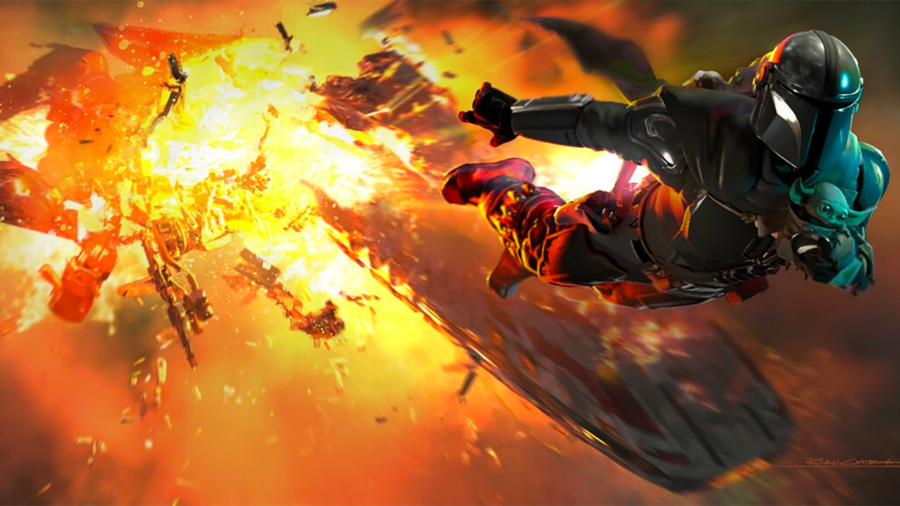
The Mandalorian and Grogu is a failure on many levels: the plot is terrible, the pacing is uneven, the characterization is nonexistent, and so on. But I think the film’s biggest problem is that Disney has lost the nerve to take any creative chances. Basically, fan response to The Last Jedi made the company permanently gunshy, and they no longer have the nerve to give us anything risky on the big screen. That’s fine if all you want out of this franchise is pure spectacle, and the latest movie delivers all the pew-pew you can pack into two hours. However, the sad truth is that Star Wars will never surprise you, ever again.
As a lifelong fan, I genuinely hate to see it. I’m one of the rare nerds who thought The Last Jedi was the best of the sequels, specifically because it took risks and tried to give us something new. That’s the real strength of the prequels, too: as stupid as they got, Lucas was always exploring new ways to tell stories in a galaxy far, far away. Now, in the Disney era, the franchise has lost the ability to innovate altogether and can only offer a buffet of the oldest and moldiest Star Wars tropes. Is it any wonder, then, that even the hungriest fans are starting to lose their appetite?
Entertainment
Psychological Thriller Miniseries Pits TV's Greatest Comedian Against A Killer
By TeeJay Small
| Published

If you’re in the market for a mind-bending psychological thriller, the last person you’re expecting to see is probably Michael Scott. Even still, Hulu’s original mini-series The Patient is the perfect example of Steve Carell’s surprisingly stellar dramatic acting capabilities. The series runs just ten episodes in total, and tells the gripping story of a therapist who is kidnapped and held captive by a crazed serial killer, intent on curbing his own twisted urges. It’s sort of Dexter meets the Melfi scenes in The Sopranos, and it’s the perfect show for a quick weekend binge.
I first became aware of The Patient back when it premiered in 2022, and binge-watched every episode in just two sittings with a friend. From the advertisements I’d seen for the show, I surmised that Steve Carell would be eschewing his usual screwball comedy routine, though I had no idea how strong his performance would ultimately be. I recall seeing other Steve Carell dramas like Foxcatcher in the past, and while I enjoyed seeing him play against type, I wasn’t especially blown away. In The Patient, Carell delivers with enough gravitas to command your attention for all ten episodes, rivaled only by Domhnall Gleeson‘s twisted Sam Fortner.

Early on in The Patient, we’re introduced to Carell’s Dr. Alan Strauss. He’s a therapist who has a tense relationship with his son, currently in the throes of depression after the recent loss of his wife. He’s also suffering a crisis of faith, which further alienates him from his highly devout and religious son. After taking on a new patient by the name of Sam, Alan is knocked unconscious, kidnapped, and chained to a radiator in a cramped basement. Upon waking up, Alan learns that Sam is a serial killer seeking psychiatric help.
At first, Alan attempts to talk his way out of the basement using his superior therapist intellect. He implores Sam to seek help through more traditional means by turning himself in, and highlights that keeping a middle-aged professional hostage will quickly become a logistical nightmare. Even still, Sam presses on, providing Alan with just enough amenities to keep him alive and focused on their unguided sessions. The only upside to Alan’s imprisonment is the food, since Sam is a very picky restaurant inspector with access to all the finest restaurants in town.

The premise may seem a little bare bones, but The Patient winds up delivering some truly gripping material over the course of a single season. The show explores themes of faith and resilience, the relationship between mental health and family, and draws some stark comparisons to the plight of those victimized during the Holocaust. The penultimate episode of the series is even titled “Auschwitz.” I even learned a few interesting things about the Jewish faith over the course of my binge, which brings some seriously unique color to the entire show.
If you’re hoping to see Steve Carell ham it up in an Office-style comedy, you’ll definitely turn this show off after the first episode. But, if you’re open to seeing the comedian grapple with his faith, his career, and his strained relationship with his family while intermittently threatened by a lunatic, this might be the best thing you’ll see all year. It’ll make you laugh, it’ll make you cry, and it will surely make you very hungry for a gourmet meal. The Patient is currently streaming on Hulu.


Emotional Layne Riggs wins Truck Series at Charlotte: 'Did it for Kyle'
Cards-Reds game ppd., to be made up as part of DH on Aug. 17


