
Entertainment
How Men Were Enslaved By A Movie That Tried To Save Them

By Joshua Tyler
| Updated

Noted cartoonist and persuasion expert Scott Adams pioneered the concept of two movies on one screen. Two Movies On One Screen is a term used to describe a phenomenon in which two people or groups witness the same events, facts, video, or information yet perceive and interpret them as two entirely different, often contradictory narratives or “movies.”
It’s exactly as if there are two movies playing on the same screen at the same time.

This kind of disagreement over the nature of reality is common, but rarely has it been more literally true than it was in Falling Down, one of the most controversial movies of the 1990s. To make its point, the film tried to use Two Movies On One Screen to persuade its audience to stand up for themselves, only to have the technique turned against it by the news media and used to destroy it.
This is the story of how Falling Down tried and failed to screenwash men into fighting back against the corruption and rot of the modern world.
Falling Down Is About Two Men, Not One

Others have tried to analyze this movie, but they limit their scope to scrutinizing the actions of its most violent character. That kind of analysis fails because Falling Down isn’t the story of one man; it’s the story of two, and unless you understand how those two characters fit together, you can’t understand the persuasion being attempted by the film.
Falling Down begins with those two men, stuck in the same LA traffic jam. The first looks around at the city’s accumulated filth and feels hatred, frustration, and disgust. The second looks at the same scene of rot and chuckles.

Two movies on one screen, and only one of those screens is showing the truth. Which one is it? By the end of the movie, one of these men will realize he’s wrong, and the other will be dead.
With those points of view established, Falling Down follows both through a world of heaped-on humiliation and contrasts their reactions. Its true intent is hidden behind the trappings of a police manhunt, but that’s not what matters. In reality, Falling Down is a carefully constructed Identification Reversal.
Constructing An Identification Reversal
An Identification Reversal is a psychological technique in which an audience is initially encouraged to identify with one character, viewpoint, or emotional response, only for that identification to gradually shift to an opposing or contrasting figure as the story progresses. It’s frequently used in film, propaganda, and persuasive storytelling to redirect audience sympathy, values, or self-perception over time.

An Identification Reversal is not necessarily evil. Used right, it’s a valid way to tell a story or make a point. Whether it’s a good thing or a bad thing depends on what ideas you’re trying to sell with it. Follow along as I explain how it’s done in Falling Down.
Step One: Bond The Audience To A Character
Falling Down begins with the audience viewing the world from the perspective of a man played by Michael Douglas. He has a name in the movie, but he’s listed in the credits only by the name on his car’s vanity plate, which reads “D-Fens.”

The movie spends the first five minutes with D-Fens, sitting in his car, growing increasingly unhappy with the world around him. His air conditioning stops working, and his engine starts to overheat.
The street he’s stuck on looks terrible. The behavior of other motorists around him is base and appalling. He’s growing increasingly angry, and so is the audience, since we’re seeing it all from his tainted perspective
Fed up with the traffic and the trash, D-Fens abandons his car in the middle of the road and stomps off into the city. It’s framed as a heroic act, a refusal to continue complying with something so obviously and totally broken. We’re fully on the side of D-Fens as he walks through a neighborhood to a grungy convenience store, in search of relief from the heat.

Inside the local Quick E Mart, he finds things as broken as they are outside. The prices are out of control, and the newly immigrated Korean store owner behind the register is rude and speaks only broken English. We feel his frustration fully.
It’s here that D-Fens first snaps. He lashes out, ranting about the unfairness of immigrants who can’t speak proper English, somehow taking over all the small businesses in his neighborhood.
D-Fens takes his frustration too far, and while to modern audiences it probably feels like the moment when viewers would no longer be on his side, to 1990s viewers it didn’t cross that line. Tuned carefully to the limits of 1990s sensibilities, it goes right up to that line and taps it with a baseball bat.

D-Fens continues down that path from there. He encounters menacing gangbangers and other frustrations, raging against them and becoming increasingly murderous and unhinged, but only against targets that the audience may feel deserve it. His most violent act in the film is the murder of a Nazi who tries to assault him, and when it comes to hurting Nazis, audiences are always all in.
Step Two: Corrupt The Bond
With the audience bonded to D-Fens and cheering on his rampage, Falling Down begins working to destroy our affection for him. D-Fens begins to behave in a way that’s increasingly out of bounds. He targets and endangers people who don’t deserve it. He begins making threatening phone calls to his ex-wife and obsessing over his past with her. His own mother is afraid of him.

Gradually, we’re turned against the character we started out rooting for, as he’s revealed to be something far worse than we initially suspected. D-Fens isn’t just an average guy fed up with the world; he’s a mentally ill lunatic who’s been menacing the people he loves for years and probably needs to be put down.
Step Three: Redirect Emotional Energy To The Place Of Your Choosing
With the audience now turning against D-Fens, they need somewhere else to put the positive energy invested in their bond with him. The movie provides a place in the form of an alternate main character who’s been acting as a counterweight from the beginning. His name is Martin Prendergast, and he’s a cop played by Robert Duvall. Martin was in that same traffic jam with D-Fens, and the movie’s been priming us to hate him.

When the Korean store owner, roughed up by D-Fens, reports the incident to the police, Martin asks a Japanese officer to interpret. The officer immediately berates him and accuses Martin of being racist for assuming a Japanese man can speak Korean.
Unlike D-Fens, who pushed back when faced with racism accusations, Martin bows, scrapes, and apologizes like a pathetic, loathsome worm. To rub salt in the wound of Martin’s patheticness, after his apology for assuming his partner speaks Korean, that same partner then says to the Korean store owner, “gamsahamnida,” which is Korean for “thank you.” He spoke Korean all along, but Martin, fully cowed, does not react.

Despite being mocked by his colleagues for caring, Martin is hot on the trail of D-Fens. In the process of doing good police work, he’s abused, harangued, and humiliated by everyone around him.
His boss treats him like garbage; his wife yells at him like he’s her slave; his incompetent, incurious co-workers treat him with derision and scorn. Martin chuckles dumbly and takes all of it. He’s a human punching bag. A natural doormat unaffected by the constant disrespect and cruelty being heaped upon him.
By the time D-Fens begins turning towards clear evil, the audience has grown to hate Martin. And so that’s exactly when the movie changes him.

Martin begins standing up for himself. He demands respect and dinner from his wife. He punches an abusive co-worker. Tells off his psychotic boss. He grabs his coat, hits the street, and decides to do what’s right, rather than continuing to chuckle and listen to his inferiors.
In the end, Martin guns down D-Fens, rescuing his terrified wife and daughter, saving the day against the objections of the entire corrupt, broken LA police force. With that act, all the energy and attachment invested in D-Fens is transferred directly to Martin Prendergast.
As the credits roll, the audience suddenly has a model for resistance against the creeping rot of modernity. The reign of terror created by D-Fens is discredited and replaced by Martin’s measured response.
You started out the movie rooting for D-Fens; you end it wanting to be this newly awakened version of Martin.
Falling Down Discredits Extremism By Advocating For Measured Action

It’s hard to say exactly what motivated director Joel Schumacher to make Falling Down. He’s the guy who would, just a few years later, put nipples on the Batsuit when he took over the Batman franchise from Tim Burton. His sensibilities are questionable.
Interviews conducted with Schumacher around the time suggest he may have felt that degrading conditions in America meant a rise in right-wing extremism was inevitable, and so, rather than stop it, he’d hoped to channel that energy somewhere more constructive and less destructive. So Falling Down subtly works to inspire its audience towards action, rather than dissuade them from it, favoring measured action over extremism.
That should have been viewed as a positive message. Falling Down discredits extremist violence while laying out a path for healthy, positive anger to improve a failing culture.
The Dishonest Media Attack On Falling Down

That kind of real-world response might have worked, too, which is why the entire establishment, the same one that might have had its plans upset if people had listened, set out to destroy the movie advocating for it.
One of Falling Down’s early defenders was legendary film critic Roger Ebert. Writing at the time, he said of other critics’ reaction to Falling Down: “Some will find it racist because the targets of the film’s hero are African-American, Latino and Korean – with a few whites thrown in for balance. Both of these approaches represent a facile reading of the film.”
Ebert was right in his prediction and in his disdain for their shallow views.

When Falling Down hit theaters in 1993, the mainstream backlash started almost immediately. Many critics and commentators treated the movie less like a thriller and more like a political threat. Talking heads accused the movie of encouraging vigilantism and resentment toward minorities, immigrants, and the urban poor.
The LA Times, for instance, called Falling Down, “the howl of a scared, white, urban middle-class man.” It then suggested vilifying anyone who liked the movie, saying, “We know who the real bad guys are.”
Others called it the story of “white men flailing self-righteously.” Several think pieces from the time framed the film as dangerous because audiences in theaters were reportedly cheering during the D-Fens character’s outbursts. To these critics, that reaction proved the movie was tapping into something volatile and evil.

All of those attacks were based on pretending that the movie somehow endorsed D-Fens and his actions, even though it carefully and intentionally does exactly the opposite so that it can clearly endorse the moment when Martin Prendergast finally stands up for himself. However, the attacks directed at the movie tended to gloss over the fact that Robert Duvall’s character is even in the film, despite the fact that Martin gets more screen time than Douglas’s D-Fens.
The film’s attackers painted a picture of a movie that wasn’t on the screen, almost as if there were two movies playing at once. The one they watched, and the one that was actually made.
How Card Stacking Is Used To Control Your Perception
Some in the media were being honest, and in their delusion, really did see that other, non-existent movie on the screen. Many, though, were likely just card stacking to score social points for their political group.
Card stacking is a propaganda technique in which information is selectively presented to favor a particular viewpoint, while relevant facts, context, or evidence that would challenge or contradict that viewpoint are deliberately omitted, creating a misleading or one-sided narrative.

So Martin Prendergast was ignored, and a non-existent movie, which is only about D-Fens, was implanted in the minds of people who hadn’t seen Falling Down and wouldn’t know any better. Despite a lot of initial excitement and positive buzz for the movie driven by its trailers, “responsible” commentators encouraged people to avoid the film and condemn it as dangerous.
That didn’t totally work. Falling Down still made a low-level profit, but was largely relegated to the cultural fringe as mainstream forces worked to shame its defenders. More importantly, it became a cudgel used to silence any objection by white men to the way the world was heading.
Falling Down, a movie that I believe was designed to motivate men to speak up, was molded by the establishment media into their weapon. And so Falling Down achieved the opposite of its intent. Rather than empowering real-world Martin Prendergasts it finished the job of silencing them.
Jon Hamm Is A Modern Day Martin Prendergast, Who Never Stands Up For Himself

If you’re looking for proof of the news media’s total victory over Falling Down’s message, take a moment to check out AppleTV’s new prestige streaming show Your Friends & Neighbors. It has Jon Hamm playing what I’d call a modern-day equivalent of Martin Prendergast. Only unlike Martin, he never stands up for himself.
Instead, the character’s constant humiliation is treated as both appropriate and normal. Rather than following in Martin’s footsteps and fighting back against his abusers, he further debases himself by spending his off-hours robbing other equally tormented men.
Congratulations, culturally irrelevant men, you’ve been Screenwashed.
Entertainment
Star Trek Is Bringing Its Most Controversial Character Back After Killing Them Off

By Chris Snellgrove
| Updated
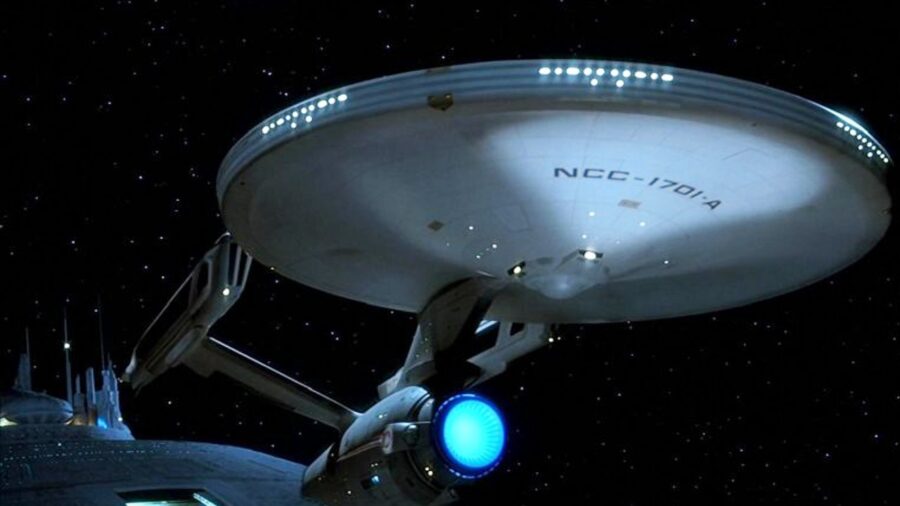
Over on Red Letter Media, Mike Stoklassa once expressed an interesting theory: that Star Trek: The Original Series was more of a horror show than anything else. After all, exploring those strange new worlds often came at a price, with Red Shirts getting killed left and right by some of the scariest monsters in the entire galaxy. Later iterations of the franchise leaned into the idea of Trek as horror, including turning an entire movie, First Contact, into an Aliens homage. Now, even though no new Trek series is currently in production, the franchise is about to embrace horror like never before.
This week, Bloober Team and the Paramount Games Division announced an exciting new video game called Star Trek: Shadow Frontier. It’s a survival horror game where you take control of a Starfleet officer who crashes onto an alien planet and must safely navigate its frightening and often lethal environment. That officer is Ro Laren, the rebellious Bajoran officer from The Next Generation. Ro actor Michelle Forbes once turned down the chance to star in Deep Space Nine and only returned decades later for a brief appearance in Picard. But now, after more than 30 years since she left TNG, she’s ready to take her rightful place as Star Trek’s latest leading lady.
Ro, Ro, Ro, Your Boat
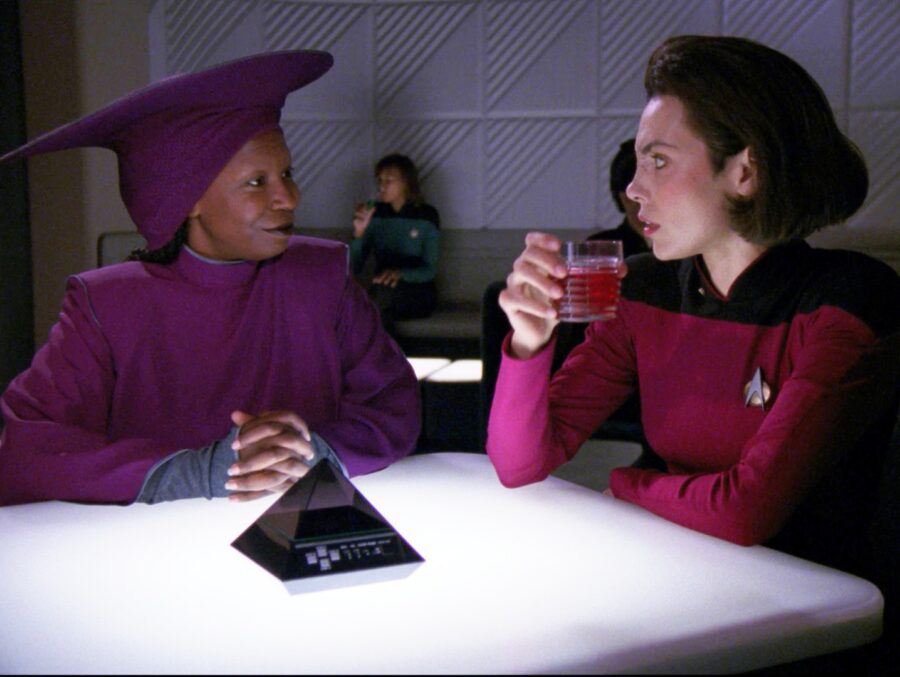
What do we know about Star Trek: Shadow Frontier? In an interview with IGN, Bloober Team’s Michał Gembicki said that Ro Laren crashes on a planet that serves as “a graveyard for ships,” and she must “figure out what happened there and why is there so much wreckage.” The game is designed as a psychological thriller, and a big part of that has to do with this planet’s biggest secret: namely, there is some kind of entity that has taken control of it!
According to Bloober and Paramount, this is a “distant planet overtaken by a strange consciousness,” and “the more [Ro Laren] uncovers, the deeper she is pulled into a corrupted labyrinth where her memories twist, and the planet threatens to sever her connection to reality.” Figuring out this planet’s deal becomes more personal to her over the course of the game. “Only by solving the mysteries of this strange world can Ro hope to make peace with the demons of her past, boldly going into the heart of darkness like never before.” It’s unknown when this game takes place, but the presence of a TNG-era communicator indicates it may take place before Star Trek: Generations.
Star Trek Meets Resident Evil
Right now, Star Trek is getting a steady influx of new video games, including the recent Star Trek: Voyager–Across the Unknown. While we have no way of knowing if Star Trek: Shadow Frontier will be any good (it doesn’t come out until 2027), fans are already hyped because Michelle Forbes will be reprising her role as Ro Laren, the main character. Ensign Ro was introduced into The Next Generation in Season 5 as an ensign with a rough past and a chip on her shoulder; she left in Season 7 after joining the Maquis, a group she was sent to infiltrate. She popped back up in Picard, where it was revealed she had rejoined Starfleet.
One reason older fans like myself are hyped to see Michelle Forbes return is that she was originally meant to have a much larger role in the franchise. She helped to popularize the Bajorans on The Next Generation, and Star Trek’s producers wanted to bring Ro Laren to Deep Space Nine as a main character. However, Forbes didn’t want to commit over half a decade to one job (and the rest of her life to fan conventions), so she declined the offer. This led to Nana Visitor getting cast as a different Bajoran with a sketchy past and a chip on her shoulder: Major Kira.
Somehow, Ro Returned
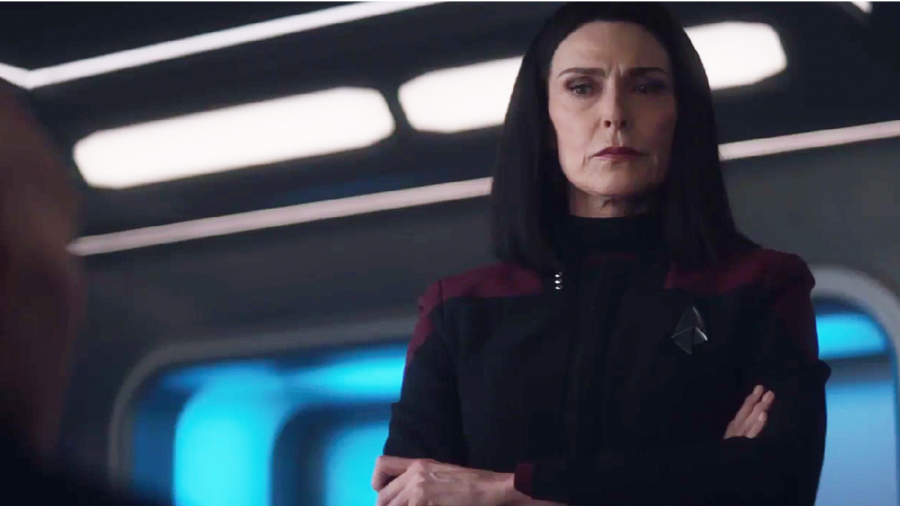
For decades, most assumed we’d never see Forbes in Star Trek again. To everyone’s shock, she popped up in Picard as a Starfleet Intelligence officer, one who tried to warn Picard about Changeling infiltration of Starfleet before she was killed by the very shapeshifters she had been investigating. We don’t get much information about how she was rehabilitated and ultimately brought back into Starfleet, but that Picard episode (“Impostor”) establishes that she always felt guilt for leaving Picard and the Enterprise crew. It’s very likely that Star Trek: Shadow Frontier will explore that guilt and possibly contextualize how and why Ro ultimately left the Maquis and returned to the Starfleet fold.
Star Trek: Shadow Frontier is coming out sometime in 2027 and will be released on Windows PC and all major consoles. We’re likely to get more information on this game in the coming months, but it’s already made a splash: the trailer is moody and atmospheric, and many fans are excited to see this sci-fi franchise’s take on survival horror. Mostly, though, we’re hyped to see the return of Michelle Forbes, one of the greatest actors in the franchise. Just what happened to Ro Laren between Next Generation and Picard? There’s only one way to find out, so be sure to set your controllers on stun when this game releases next year!
Entertainment
NYT Strands hints, answers for June 10, 2026
Today’s NYT Strands hints are easy if you’re good with computers.
Strands, the New York Times‘ elevated word-search game, requires the player to perform a twist on the classic word search. Words can be made from linked letters — up, down, left, right, or diagonal, but words can also change direction, resulting in quirky shapes and patterns. Every single letter in the grid will be part of an answer. There’s always a theme linking every solution, along with the “spangram,” a special, word or phrase that sums up that day’s theme, and spans the entire grid horizontally or vertically.
By providing an opaque hint and not providing the word list, Strands creates a brain-teasing game that takes a little longer to play than its other games, like Wordle and Connections.
If you’re feeling stuck or just don’t have 10 or more minutes to figure out today’s puzzle, we’ve got all the NYT Strands hints for today’s puzzle you need to progress at your preferred pace.
NYT Strands hint for today’s theme: Something just clicked
The words are related to computers.
Mashable Top Stories
Today’s NYT Strands theme plainly explained
These words describe computer saves.
NYT Strands spangram hint: Is it vertical or horizontal?
Today’s NYT Strands spangram is vertical.
Meet The Mashable 101: Our list of the content creators shaping the internet today
NYT Strands spangram answer today
Today’s spangram is Download.
NYT Strands word list for June 10
-
File
-
Software
-
Document
-
Download
-
Photo
-
Application
-
Song
Looking for other daily online games? Mashable’s Games page has more hints, and if you’re looking for more puzzles, Mashable’s got games now!
Check out our games hub for Mahjong, Sudoku, free crossword, and more.
Not the day you’re after? Here’s the solution to yesterday’s Strands.
Entertainment
Disney Already Canceled The Movie That Could Have Saved Star Wars
By Chris Snellgrove
| Published

I spend a lot of time dunking on Star Wars. Accordingly, many people think I’m just a hater who loves to see this iconic franchise fail. In reality, the opposite is true: I have loved Star Wars for almost my entire life, and I’d love nothing more than to see it succeed. However, under Disney’s stewardship, the franchise has had quite a few critical and commercial missteps, so now I love Star Wars the same way you love the drunk uncle that slurs his way through Thanksgiving get-togethers. You know, the one who’s fun to talk to, but you’d secretly like him to put down the sauce and get his life together.
Your uncle is deeply unlikely to put himself together anytime soon, but it might not be too late for Star Wars. You see, Disney doesn’t need to reinvent the franchise from the ground up; instead, they just need to release one really great movie to remind audiences how great this franchise can be. Unfortunately, The Mandalorian and Grogu didn’t scratch that particular itch, and many fans decided they wanted something more from Star Wars than a spinoff of an outdated show. That’s why the House of Mouse needs to bring back the one canceled movie that can finally save this franchise: Patty Jenkins’ Rogue Squadron.
Going Rogue
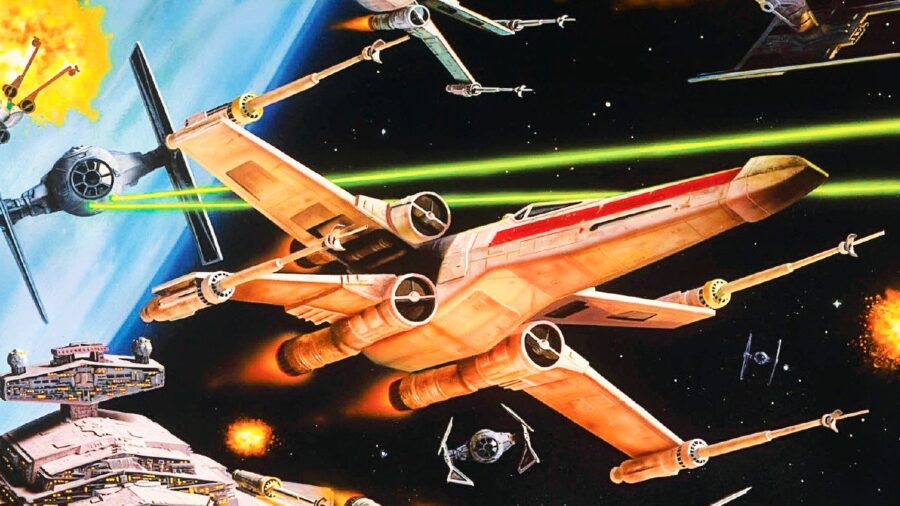
In The Empire Strikes Back, we learn that Luke Skywalker is the commander of Rogue Squadron. The exploits of these pilots (who are basically the best X-Wing pilots in the galaxy) and their new leader, Wedge Antilles, were recorded in some excellent Legends books by Michael Stackpole. In December 2020, Lucasfilm revealed that Wonder Woman director Patty Jenkins would be directing a Rogue Squadron movie. Eventually, Jenkins left the project because she wanted to focus on other films, and the project seemingly died, though Jenkins later revealed that she signed a new deal to write the script for this X-Wing movie. However, there have been no real updates since then.
Given its name and its post-The Rise of Skywalker setting (something Jenkins’ film was supposed to have), most fans assume that Disney dropped Rogue Squadron in favor of Star Wars: Starfighter. However, it’s unclear how well Starfighter will go over with audiences because its rumored plot (about a grizzled pilot escorting a Force-sensitive child through dangerous space) is so similar to The Mandalorian and Grogu, a movie that is (by Star Wars standards) flailing at the box office. Fortunately, it’s not too late for this franchise to get back its former glory. All Disney has to do is bring Patty Jenkins’ Rogue Squadron film (which now has a completed script) to life.
You’re All Clear, Kid
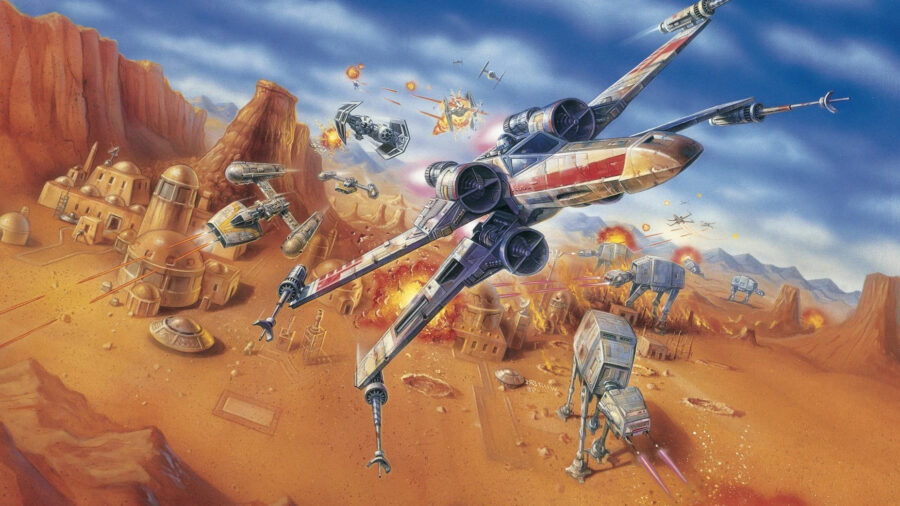
Why am I convinced that Rogue Squadron would be a hit Star Wars film for Disney? While its exact plot details have been kept secret, it’s clear that in commissioning a movie about starfighter pilots, Disney wanted to have their own Top Gun in space. As it turns out, that was a fairly good instinct. When Tom Cruise returned for the belated sequel, Top Gun: Maverick, it earned over $1.5 billion, which is why Top Gun 3 is now in development. As it turns out, general audiences love the combination of sexy pilots and cool dogfights, and Rogue Squadron would be an easy way for Disney to get a piece of the action.
If done well, a Rogue Squadron movie would also help channel what originally made The Mandalorian so cool. Remember how hyped everyone was for that show when it first came out? A big part of the show’s early appeal is that it was free of Jedi and Sith drama and generally untethered from the various Star Wars trilogies. Eventually, it got bogged down with connections to other franchise shows and films, and the hype for Baby Yoda died, which is part of why The Mandalorian and Grogu fizzled at the box office. But a Rogue Squadron movie could deliver what The Mandalorian used to have: entirely new characters and adventures set in a galaxy far, far away.
Stay On Target
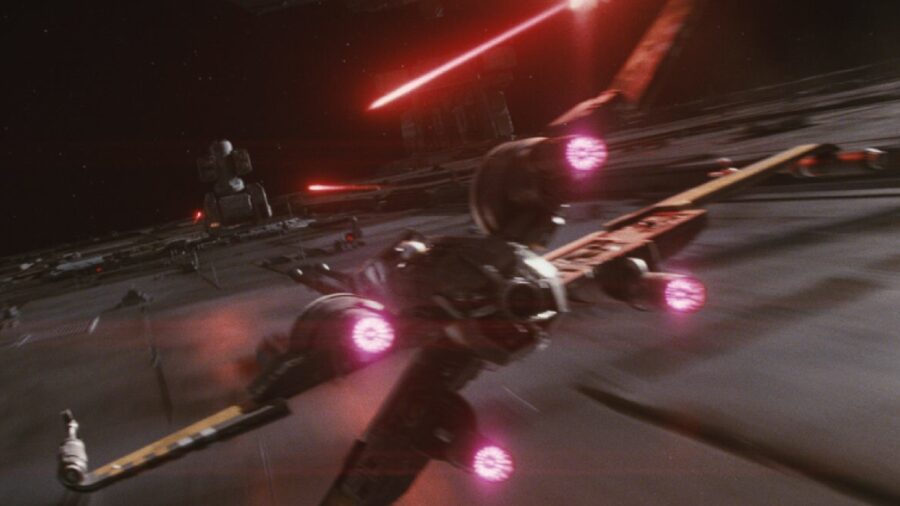
Finally, Rogue Squadron would be the perfect way to bring the franchise back to its roots. If you ask people what their favorite part of the first Star Wars movie is, it’s a safe bet they’ll say the attack on the Death Star. Pilots saving the galaxy through death-defying maneuvers is, quite frankly, what made the entire world fall in love with A New Hope, and one of the only weaknesses of that film is that we hardly knew any of the pilots. Rogue Squadron could finally shine a spotlight on these lesser-known heroes of the rebellion while giving us more of the coolest dogfights in the galaxy.
Unless the Force is with us, it’s unlikely that Rogue Squadron will see the light of day, and it might go down as the only Star Wars movie that got canceled twice. But the script is written, and Patty Jenkins still seems enthusiastic about directing it. All Disney has to do is give the green light to the most exciting franchise film idea of the last decade. If they wait until Starfighter bombs, though, they might have to send the director a personalized holographic message: “Help me, Patty Jenkins, you’re my only hope!”

Star Trek Is Bringing Its Most Controversial Character Back After Killing Them Off
NYT Strands hints, answers for June 10, 2026


