
Entertainment
James Gunn's Superman Is About To Copy The Failed Snyderverse In The Worst Way, By Getting Religious

By Chris Snellgrove
| Published

After James Gunn’s Superman became last summer’s biggest movie and the most successful solo Superman movie ever made, all but the most cultish Snyder Bros had to admit that the nascent DCU improved on the failed DCEU in almost every way. James Gunn’s Superman presented its title character as a flawed icon of hope, one who seemed the deliberate antithesis of Henry Cavill’s Man of Steel. Moreover, his real superpower was clearly optimism, which had an infectiously wholesome effect on the audience. “Isn’t this more fun to watch,” we thought, “than seeing Batman hit him with a grimy bathroom sink?”
Unfortunately, there are early signs that the DCU may make some of the same unforced errors the DCEU made. For example, Lars Eidinger will be playing Brainiac in the upcoming Superman: The Man of Tomorrow, and he recently told The Hollywood Reporter a bit more about his bionic Big Bad. “Brainiac is described as the incarnation of Satan,” he said.
If that is true, then it would position Superman as a Jesus-like figure, destined to defy and ultimately defeat his satanic foe. That sounds neat on paper, but it also echoes the most uncomfortable part of the DCEU: Zack Snyder’s bizarre insistence that Superman be Jesus Christ in a cape.
Could It Be…Satan?

In his interview with The Hollywood Reporter, Lars Eindinger didn’t give too many details about Superman: The Man of Tomorrow or the supervillain he is playing. He simply said, “Brainiac is described as the incarnation of Satan. I find that almost Shakespearean.” That’s high praise coming from this particular actor: if you didn’t know, Eidinger is most famous as a theatre actor, one who has received the most acclaim for his performance as the title character of Hamlet. Therefore, his description of Brainiac as Satan may be his own florid description, or maybe he’s quoting a throwaway bit of characterization from writer/director James Gunn.
Still, taken at face value, the idea of Brainiac being a symbolic Satan has me worried for Superman: The Man of Tomorrow. Not because it’s innately offensive or anything; in fact, if Gunn can come up with something interesting to say by Christian-coding his summer tentpole blockbuster, I’d love to hear it. But, with respect to Lex Luthor, the primary appeal of this sequel is seeing Superman fight Braniac. You don’t have to have gone to Sunday school as a kid to know that if Brainiac is Satan, that would, biblically speaking, make Superman Jesus. Unfortunately, DC has an awful history of turning its most famous superhero into a hackneyed Christ metaphor.
So Help Me, Jesus
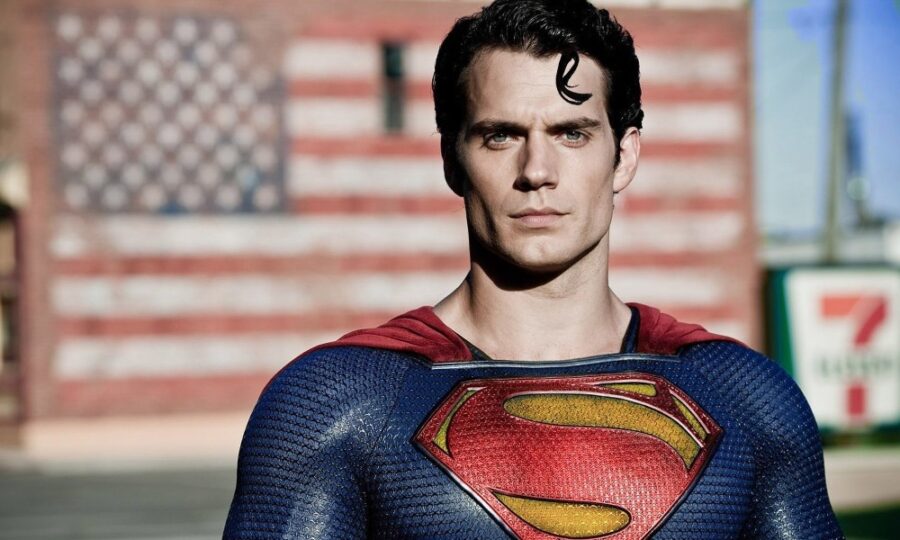
In The Man of Steel, we see Superman strike multiple poses (like when he’s flying) that make him look like he’s being crucified. He is 33 years old in the film, making him the same age Jesus was when he struggled with the fact that he had to die to save the world. Obviously, Superman later did die to save the world when he defeated Doomsday, but not before receiving a spear wound to his side, Christ-like. Inevitably, he was also brought back to life after his noble sacrifice, cementing his weird onscreen journey as a superhero version of Jesus.
Even by itself, this was a hack, over-the-top metaphor that made it hard to take Henry Cavill’s Superman seriously. Additionally, the metaphor clashed with so many other aspects of the character. If Superman is Jesus, why can’t he find another way to stop Zod but kill him? If he is a Christ figure who joyfully dies to save humanity, why does he seem downright bored saving people at the beginning of Batman v. Superman? For that matter, what’s up with Superman becoming a global tyrant if Lois Lane dies? Snyder treated his favorite hero more like the Joker, implying that super-Jesus is just one bad day away from going super-crazy.
Too Early To Crucify Anyone
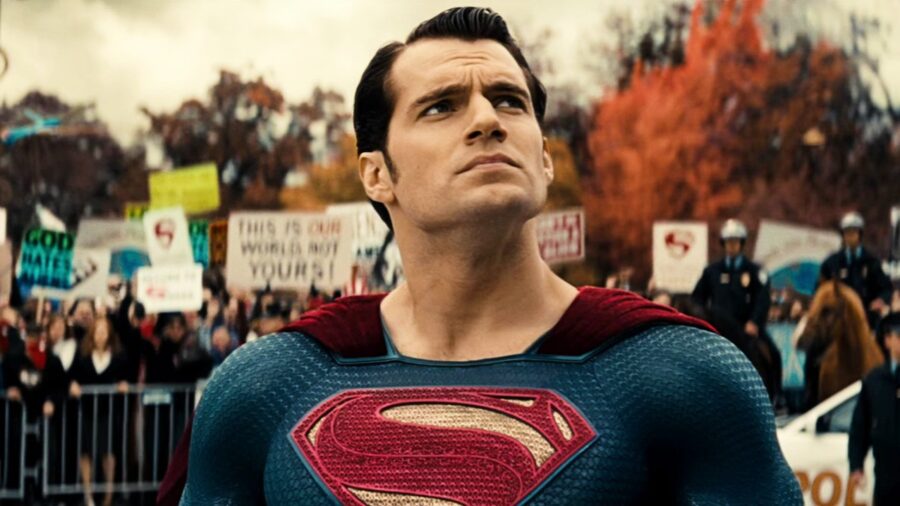
None of this is meant to trample anyone’s faith, of course. But it’s just a little uncomfortable seeing Superman deciding to suit up while getting a pep talk in a church, beneath a stained-glass image of Jesus.
Decades after Alan Moore’s seminal Watchmen reminded us how terrifying an American god would actually be, Zack Snyder comes along to say it’s cool as long as he looks good and gets to do a little murder every now and then (you know, as a treat). Worse, the director does it in a way that arguably cheapens the character while insulting Jesus, someone whose onscreen analog can only defeat his biggest foes by outright murdering them.

So far, though, fans must just have (ahem) a little faith in James Gunn. In Superman, the title character was kinder, gentler, and infinitely more human than his DCEU predecessor, and it would be downright odd if all of that changed in Superman: The Man of Tomorrow. With any luck, the next movie will be another successful entry in the only franchise that can truly give Marvel a run for its money.
If I want more than luck, though, I may just have to pray on the matter. Any suggestions on who I should pray to, though? Because that big, out-of-work guy in the flag-colored pajamas looks pretty pissed at the idea of helping anyone.
Entertainment
House of the Dragon review: Season 3 atones for the sins of Season 2

Let’s face it: Season 2 of House of the Dragon promised fire and blood, but its baffling finale felt more like a puff of smoke.
The season fizzled to an ending with zero catharsis, forced Game of Thrones references, and a highlight reel of what was to come. In some ways, that structure mirrored the season’s core conflict. For all of Season 2, Queen Rhaenyra Targaryen (Emma D’Arcy) and Alicent Hightower (Olivia Cooke) tried everything they could to prevent all-out war. But while their stalling to prevent the inevitable was rooted deeply in the story, the show’s own reluctance to leap into the next phase of George R.R. Martin’s Fire and Blood felt more like it was spinning its wheels until Season 3.
Now, the third season of House of the Dragon is finally here, and its first four episodes manage to make up for Season 2’s finale and then some, delivering jaw-dropping spectacle and somber truths about the cost of war.
House of the Dragon‘s Battle of the Gullet is spectacular.

Steve Toussaint in “House of the Dragon.”
Credit: Ollie Upton / HBO
Remember how barely an episode of House of the Dragon Season 2 went by without a mention of Corlys Velaryon’s (Steve Toussaint) naval blockade in the Gullet? We finally get the payoff for that blockade at the top of Season 3, as the Triarchy’s fleet bears down on the Sea Snake’s forces. The ensuing clash, known as the Battle of the Gullet, is one of the defining fights of the Dance of the Dragons — the royal succession civil war between Rhaenyra Targaryen (Emma D’Arcy) and Aegon II Targaryen (Tom Glynn-Carney).
Given that so much of Season 2 was building to this point — hence the fan frustration that it wasn’t included — the pressure on House of the Dragon to pull off this battle is immense. Thankfully, the series more than delivers, with a sequence that had me yelling and pacing around my living room while also thinking, “We’re so back.”
Mashable Top Stories
A dazzling set piece involving ships, human soldiers, and multiple dragons, the Battle of the Gullet sets a new bar for Westerosi action. Every element is honed for maximum impact, from long takes of sailors boarding enemy ships to sweeping shots of dragons dive bombing the fleet. The battle, directed by Loni Peristere, wrings epic terror and awe from those big moments, but it also strikes gold in quieter moments, like a suspenseful boat chase that quickly becomes a stealth highlight of the episode.
Oh, and did I mention that this all takes place during the day, so you can make out every ounce of action taking place onscreen? For a franchise whose biggest battles have often been marred by darkness (looking at you, Battle of Winterfell), the Battle of the Gullet is a welcome adjustment. And, based on the first four episodes sent to critics for review, it’s only the beginning for House of the Dragon Season 3’s big action sequences.
House of the Dragon Season 3 pushes Rhaenyra to the brink.

Emma D’Arcy in “House of the Dragon.”
Credit: HBO
The Battle of the Gullet isn’t just an emphatic statement to open Season 3. It’s also a major turning point for the Dance of the Dragons, and for Rhaenyra in particular. All throughout House of the Dragon, she has balked at violence, worried at the havoc dragon warfare would wreak on the wider realm. By Season 3, though, Rhaenyra has lost so much to this conflict that she needs to do whatever she can to see it through. Only by taking the Iron Throne can she justify the pain she’s experienced. That means making impossible choices and committing to violence she once would have shunned, sometimes carrying it out with her own hands. As she does, House of the Dragon asks, even after all this, will victory be worth it?
It’s a haunting question, one that House of the Dragon teases out with tinges of psychological horror in the aftermath of the Battle of the Gullet. D’Arcy has always been magnificent as Rhaenyra, but here, they reach new heights with their raw portrayal of the queen’s grief and rage. Their trembling hands and wracking sobs were just as wrenching as some of the Battle of the Gullet’s most devastating moments, proving that House of the Dragon can match its biggest set pieces with pure human drama.
While the first half of House of the Dragon Season 3 manages to atone for Season 2’s ending, it still commits its share of familiar sins. Threats of sexual violence towards women abound unnecessarily in these episodes, a trend that harkens back to Game of Thrones‘ worst moments. (Although thankfully nothing here is nearly as graphic.) Elsewhere, several plot threads feel stagnant, with once major players like Criston Cole (Fabien Frankel) getting so little to do they may as well be set dressing. Their decreased roles may wind up paying off down the road, though, just like the many, many changes the show makes from Fire and Blood. While the latter reportedly strained the relationship between Martin and showrunner Ryan Condal, these changes do muddy the Targaryens’ already very complicated relationships in intriguing ways, to the point that I’m more fascinated at how the writers came to these new arcs than mad at not getting a precise adaptation.
Despite the occasional low point and my misgivings following Season 2, House of the Dragon Season 3 flies high. Instead of spinning its wheels, it roars into the Targaryens’ bloody future with action and creeping dread to spare, and that assurance and forward momentum turns out to be exactly what the show needs.
Topics
HBO
House of the Dragon
Entertainment
The Best New Show Of The Year Is A Supernatural Comedy Horror On AppleTV
By Jonathan Klotz
| Published

The 2026 television season has been a little lackluster so far when it comes to original, new series. The Boroughs was a fun binge on Netflix, Margo’s Got Money Troubles was a good comedy, but nothing can compare to the surprising success of Widow’s Bay on AppleTV. It’s a horror comedy, which might be the hardest combination of genres to pull off, that plays out like Twin Peaks meets Parks and Recreation. No show will leave you laughing so hard in one episode, before traumatizing you in the next.
Widow’s Bay Is The Most Original Show In Years

That odd mix of shows makes sense since Widow’s Bay was created by Katie Dippold, a writer for Parks and Recreation. The series takes place in the island town of Widow’s Bay in New England when Mayor Tom (Matthew Rhys) decides to boost tourism to the small community. The catch is that the community, primarily Wyck (Stephen Root) believes the island is cursed.
It’s not a spoiler to say that yes, yes it is cursed, and yes, there are real horrors at work on the island. That’s not surprising. What is surprising is the dry humor and Matthew Rhys’ perfect facial expressions, as the town’s residents will deliver the most absurd lines with a perfectly straight face. If you vibed with the humor of Parks and Recreation, you know what you’re getting into with the odd residents of Widow’s Bay, especially Kate O’Flynn as Tom’s assistant, Patricia. There’s a sequence with her involving a shotgun that is destined to be a social media hit for years to come, and one of those moments that you’ll think, “I’d do the same thing.”
Slapstick Comedy, Horror, And Amazing Sight Gags

Before starting your binge of the first season, avoid as many spoilers as you can. Widow’s Bay sets up mysteries early on with the chained church bell, the strange basement room, a rolling fogbank, and, while it’s not a supernatural mystery, how many Diet Cokes can Town Hall employee Dale consume? His desk is filled to the brim with cans. That can’t be healthy.
Keep your eyes peeled while watching Widow’s Bay as the production team was heavily influenced by The Simpsons usage of sight gags. Some are called out with blatant shots, others exist in the background of a conversation, but put together, they make the town of Widow’s Bay an absurdist version of Twin Peaks.
No one had supernatural slapstick down on their 2026 Bingo card, but here we are. While Netflix pulled the plug on The Boroughs, Widow’s Bay has already been confirmed for a second season, which is good considering the stakes-raising season finale ends by revealing a whole new layer to the mystery of the island. We have a long wait until Season 2 premieres, giving you plenty of time to watch the show of the Summer, and you can still convince your friends you were a fan of Widow’s Bay before it was cool. ]
Widow’s Bay Season 1 is now streaming on AppleTV.
Entertainment
Don’t pay $199 for Windows 11 Pro when it’s currently just $13
TL;DR: Microsoft Windows 11 Pro is down to just $12.97, giving users an easy OS upgrade with advanced security, productivity tools, gaming features, and Copilot AI.
Some upgrades just feel right. This is one of them.
If your PC has been running a little sluggish or you’ve been meaning to bring your system up to speed, Windows 11 Pro is just $12.97 (reg. $199) — a rare, time-sensitive offer that rewards quick, savvy decisions.
Mashable Deals
This isn’t about chasing trends; it’s more about giving your computer the modern foundation it deserves. Windows 11 Pro brings a sleeker UI, better multitasking, and enhanced security — all in a one-time lifetime license.
Think of it as the difference between driving a reliable car and suddenly upgrading to one with a smarter dashboard, smoother handling, and built-in security features.
For professionals, creators, and power users, this upgrade also unlocks features like Hyper-V, Windows Sandbox, BitLocker encryption, and seamless Azure AD integration — tools that make a real difference when you’re working across projects or managing sensitive data.
And yes, Windows 11 comes with Copilot, Microsoft’s AI-powered assistant that can summarize pages, change settings, or even help you generate code on the fly. It’s like having a co-pilot (literally) inside your OS.
Mashable Deals
But you don’t need convincing — you already know a smart upgrade when you see one. Get Windows 11 Pro for just $12.97 (reg. $199).
StackSocial prices subject to change.

Travis Bazzana's career night powers Guardians past Astros
Eloy Room helps Curacao earn first World Cup point with Ecuador draw


