
Entertainment
Iconic Star Trek Character Was Written So Badly, The Showrunner Intervened

By Chris Snellgrove
| Published

Here’s a story that dates me (hey, it’s not like anyone else was dating me at the time): I was a high school student when Star Trek: Voyager was on the air. I watched the show with the rest of my geeky friends, and we generally enjoyed the wacky adventures of Captain Janeway and her misfit crew. We also spent hours (and I mean hours) making fun of Neelix. He was the ship’s cook, but he might as well have been its mascot because he was always written as the broadest form of comic relief. Why, we wondered, did Star Trek go out of its way to make a new character such a butt-of-the-joke oaf?
As it turns out, Voyager showrunner Michael Piller shared those same concerns. When reading the script for the Season 2 episode “Twisted,” he began to worry that the writers were transforming Neelix into nothing more than “the buffoon of the ship.” That’s when Piller decided to take definitive action. He didn’t make Neelix into a deadly serious character, but he decided to do the next best thing. In the very next episode, he removed the character’s growing jealous streak that he rightly assumed viewers would absolutely hate.
Orange Man Bad

This all goes back to the most problematic thing about Neelix: his extremely underage girlfriend. In the Voyager premiere episode “Caretaker,” Neelix goes out of his way to save Kes, his Ocampan mate, and they both join Captain Janeway’s crew. Kes presents as an attractive young woman in her early ‘20s, but her species ages at a different rate than those of us here on Earth. She’s only one year old when she joins the crew (no, really!), and the writers had to take care not to present Neelix as the dirtiest old man in the Delta Quadrant.
That’s actually how Michael Piller’s concerns about Neelix began. The previous episode, “Elogium,” dealt with Kes’s mating drive activating years ahead of time, forcing her and Neelix to consider whether they were ready for children. While it’s bizarre enough to watch the weird orange alien try to figure out if he is ready to breed his one-year-old girlfriend, “Elogium” also made Neelix into a jealous figure. Specifically, he started thinking Tom Paris was being too friendly towards her and that the pilot was secretly trying to put the moves on Kes.
Jealousy, That Orange-Skinned Monster

When Piller read the script for “Twisted,” he became concerned about an early plot point in which the crew was celebrating Kes’s birthday (she had finally turned two). Neelix made her a cake, but Tom Paris gave her a locket. Once more, Neelix felt jealous of the hotshot human pilot. According to Captains’ Logs Supplemental – The Unauthorized Guide to the New Trek Voyages, Piller was “terribly concerned about Neelix.” He was “afraid we were going to destroy this character if we made him the buffoon of the ship. If all he is is comic relief, we’re in trouble.”
For better or for worse, Piller decided to focus on only one of the ways the writers had transformed Neelix into the comic relief: his jealousy. “The jealousy he was showing toward Kes was becoming irritating, so we wanted to put that to bed quickly,” he said. Accordingly, Piller made sure that “Parturition” (the episode that came directly after “Twisted”) killed this particular character conflict. That episode begins with Neelix and Paris having a fight over Kes, but then they are sent on a mission where they crash land on a hellish planet. They must fight for their survival and take care of a baby alien, ultimately becoming friends who never fight over Kes again.

It’s a heavy-handed fix, admittedly, but Michael Piller’s decision is one that Gene Roddenberry would have agreed with. The Star Trek creator never wanted his main characters to constantly bicker with one another, but Paris and Neelix were constantly fighting over Kes. Thanks to “Parturition,” Piller effectively killed the conflict that was driving these two characters apart. If you think that kept Neelix from being written as bad comic relief, though, I’ve got a whole shipload full of leola roots to sell you!
Entertainment
Netflix Violent Thriller True Story Is Pure Adrenaline Rush
By Robert Scucci
| Published
Survival films like Castaway and The Revenant need to make way for 2023’s Society of the Snow, a one-of-a-kind survival thriller. Based on the 1972 Andes flight disaster, this Netflix film will punch you in the gut and not let up until you’re weeping into your popcorn because there are too many emotions to even consider unpacking upon its conclusion.
Through the tremendous hardships that are portrayed throughout Society of the Snow, you’ll find yourself awestruck by the indomitable human spirit that is so expertly captured on-screen.
The Suffering Of Surviving

Society of the Snow’s story is primarily set in the Andes mountains after a plane carrying 45 passengers crash-lands, ripping the fuselage apart. In one of the most violent depictions of a plane crash in recent cinematic history, those who lived through the initial impact often wished that they had been spared from the suffering of surviving.
Over the course of 72 days, the remaining survivors were put to the ultimate test as they braved sub-zero temperatures with whatever clothes they had on their backs, while tending to the wide array of injuries they sustained.
After eight days of waiting for a rescue plane, a battered radio leftover from the crash broadcasts that search parties have been called off, leaving the traumatized and gravely injured survivors to their own devices and basic survival instincts. Many of the passengers never experienced snowfall, let alone being stranded in the frozen mountains.
A Terrible And Desperate Time

During the months leading to an eventual rescue, Society of the Snow compassionately points to the desperation that the survivors faced during this unthinkable time.
Enduring multiple avalanches that buried their shelter and meager food supply, they had to resort to cannibalism and had no choice but to rely on their friends’ corpses as a means to fight off starvation. It’s worth noting, however, that although such drastic measures had to be taken, their reluctance to commodify human life as a source of sustenance was one of many moral dilemmas they had to make peace with.
A Climb Through The Mountains

Arriving at the conclusion that nobody will ever find them while they’re still alive, Society of the Snow’s narrative shifts to Nando (Augustin Pardella) and Robert (Matias Recalt), who embark on a 10-day climb through the mountains after spending two months subjected to unimaginable living conditions with 14 other survivors.
With each passing scene that Society of the Snow delivers, the only thought that consumes your mind is “how can things get any worse?” The unforgiving mountains always find a way to deliver on this front up until the film’s conclusion.
Compelling Storytelling

Though Society of the Snow is a Spanish-language film, its storytelling is so compelling that you won’t mind the subtitles. In fact, the subject matter is so heavy that you’ll actually appreciate the storytelling on a whole other level because this layer of abstraction in the form of a language barrier will help keep you anchored.
Society of the Snow’s unrelenting storytelling won over audiences upon its limited theatrical release. Universally praised for its tense delivery of despair and insurmountable struggle, this survival movie garnered a 90 percent critical score against an 88 percent audience score on Rotten Tomatoes.

You’re not going to form an emotional connection with a volleyball named Wilson when you watch Society of the Snow, but this movie is a must-see if you are looking for a gripping and emotionally jarring survival film.

SOCIETY OF THE SNOW SCORE
If you have the stomach for it, it comes with strong recommendations that you watch Society of the Snow on Netflix today.
Entertainment
Moon phase today: What the Moon will look like on July 5
The Moon is changing in appearance and visibility each night. This is because of the lunar cycle. We’re currently on day 20 of this 29.5 day of this cycle, which means we’re approaching the Third Quarter, when the Moon appears half full.
What is today’s Moon phase?
As of Sunday, July 5, NASA’s Daily Moon Guide tracker tells us the Moon phase is in its Waning Gibbous phase, with 75% of its surface visible.
If you look up tonight with just your naked eye, you should be able to see the Mare Vaporum, Aristarchus Plateau, and the Tycho Crater. If you have binoculars, you’ll be able to catch a glimpse of the Mare Humorum, the Alphonsus Crater, and the Grimaldi Basin. And if you have a telescope, you’ll see all this plus the Apollo 16 landing spot, the Schiller Crater, and the Fra Mauro Highlands.
When is the next Full Moon?
The next Full Moon will take place on July 29.
What are Moon phases?
According to NASA, the Moon completes one orbit around Earth approximately every 29.5 days, moving through eight recognised phases along the way. Although the same side of the Moon always faces Earth, the amount of its surface illuminated by the Sun changes as it travels around our planet. As a result, the Moon appears to shift in shape throughout the month, progressing from slender crescents to quarter moons and eventually reaching the brightly lit Full Moon stage. This repeating pattern is known as the lunar cycle.
New Moon – The Moon is between Earth and the sun, so the side we see is dark (in other words, it’s invisible to the eye).
Mashable Light Speed
Waxing Crescent – A small sliver of light appears on the right side (Northern Hemisphere).
First Quarter – Half of the Moon is lit on the right side. It looks like a half-Moon.
Waxing Gibbous – More than half is lit up, but it’s not quite full yet.
Full Moon – The whole face of the Moon is illuminated and fully visible.
Waning Gibbous – The Moon starts losing light on the right side. (Northern Hemisphere)
Third Quarter (or Last Quarter) – Another half-Moon, but now the left side is lit.
Waning Crescent – A thin sliver of light remains on the left side before going dark again.
Entertainment
The Sci-Fi Thriller That Killed Director's Career Deserves Another Look
By Brian Myers
| Published

The 2009 thriller The Box had all the makings of a Hollywood hit. A-list stars (Cameron Diaz, Frank Langella, James Marsden), a $30 million budget, and a hot new director to take the lead. However, the lukewarm reception at the box office and the mediocre critical response to The Box led director Richard Kelly’s career to take an almost immediate nosedive. Fifteen years later, streaming maks it possible for viewers to get a second look at a film that deserves a lot more credit than it originally received.
Kelly had scored a major success several years leading up to the production of The Box, serving as director and screenwriter for the sleeper hit 2001 film Donnie Darko. However, in the years since The Box was released, Kelly has only had a handful of projects in the industry.

Some of this has been attributed to his own admission of wanting to prove to studios that he’s worthy of another modestly budgeted film, and some due to sheer bad luck. Kelly was set to work on a crime film titled Amicus with Sopranos star James Gandolfini, only to have the actor die from a heart attack in 2013 before the project could be started.
The Box’s Moral Conundrum
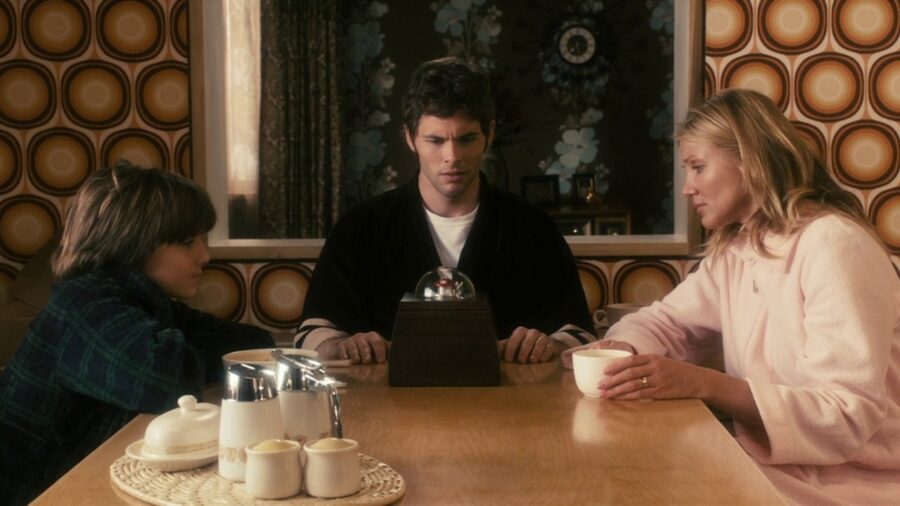
If you’ve never seen The Box, you’ll likely be intrigued by the storyline alone. Married couple Norma and Arthur Lewis (played by Diaz and Marsden, respectively) are approached by a disfigured stranger (Frank Langella) who gives them a mysterious box. Press the button inside the box, the stranger promises, and you’ll receive $1 million in cash.
However, the stranger reveals a caveat to receiving the prize money. Press the button, and someone that they do not know will die. The plot of The Box takes a good number of unpredictable twists and turns after Norma presses the button, and the young family sees a horrific fate unfold before their very eyes.
The Twilight Zone Episode
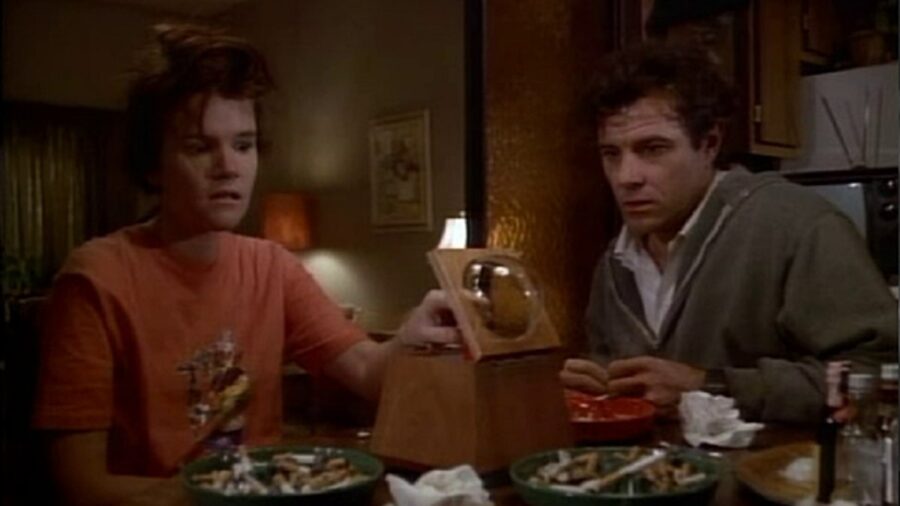
The Box was conceived from a short story written by acclaimed horror and science fiction writer Richard Matheson in 1970. Matheson’s original story, Button, Button, was turned into a radio show in the late 1970s. In 1986, a screenplay was written based on the story for an episode of the revived version of The Twilight Zone.
The theatrical version of Matheson’s story debuted in 2009 and wasn’t a favorite of critics. Though Roger Ebert gave it three out of four stars, other critics cited poor editing and the sense of the film being more of a pet project for Kelly as reasons for their dislike of The Box. Audiences at the time largely agreed as box office receipts led to barely making back the film’s budget.

The Box is certainly worth a look 15 years later, despite the lack of enthusiasm it received in 2009. The soundtrack alone should tempt a good number of curiosity seekers. Win Butler and Regine Chassagne of the pop band Arcade Fire teamed with composer Owen Pallett for a film score that more than redeems any of the film’s minor shortcomings that critics pointed out.
As of this writing, The Box can be rented or purchased on-demand through Amazon Prime Video, YouTube, Apple TV+, and Fandango at Home.

Predators' new acquisition Mavrik Bourque gets 6-year, $33M deal
Report: Patrick Ewing, Steve Clifford joining Wizards staff


