
Entertainment
Star Wars' Most Hated Plot Hole Actually Makes Perfect Sense

By Chris Snellgrove
| Published

Do you know what happens when Star Wars fans get together? If you said “embarrassing things,” you’re correct, but I meant more specifically. After a few conversations and a few beers (or maybe spiked blue milks), everyone starts dishing on their favorite franchise plot holes. These are supposedly narrative mistakes that make this famous galaxy far, far away feel that much less immersive. Incidentally, the one “plot hole” that comes up most frequently in these discussions is the idea that Order 66 should have killed more Jedi than it actually did.
In the Original Trilogy, we are introduced to the idea that Obi-Wan Kenobi and Yoda are the last Jedi in the galaxy. But the prequels, sequels, and an entire universe of tie-in books, comics, and games have increasingly introduced more Jedi characters that survived Emperor Palpatine’s galactic purge of these laser sword-wielding do-gooders. However, as usual, the fandom is griping for no good reason because, based on the sheer onscreen incompetence of Palpatine and his clones, it’s a miracle that more Jedi didn’t survive this sloppy attempt at mass murder.
The Stupidest Order In The Galaxy

The Star Wars movies A New Hope and The Empire Strikes Back presented Obi-Wan Kenobi and Yoda as the only surviving Jedi. Of course, Kenobi didn’t give too many granular details as to how the Jedi died. All he told young Luke Skywalker in that first movie is that Darth Vader “helped the Empire hunt down and destroy the Jedi Knights.… now, the Jedi are all but extinct.” Nobody really questioned this because we had no idea how many Jedi there were to begin with. Plus, it was easy enough to imagine the most powerful guy in the galaxy using all of a vast, galaxy-spanning Empire’s resources to hunt and kill a bunch of hippie space wizards.
But in Revenge of the Sith, we see how it all went down. Palpatine had a hidden command secretly installed in the brains of all the clones who were fighting side-by-side with the Jedi during the Clone Wars. Once the Emperor commanded them to “Execute Order 66,” all of the clones stopped what they were doing to immediately kill the closest Jedi. In a montage of bleak scenes, we see how sudden surprise blaster fire was enough to kill even Jedi Masters like Ki-Adi Mundi, Plo Koon, and Aayla Secura.
Holo Pursuits
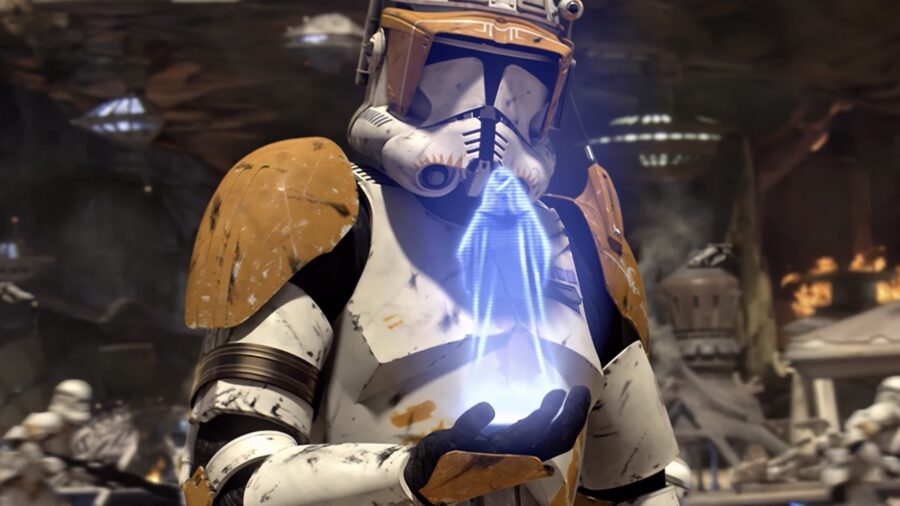
At the time, it made a kind of morbid sense. We had previously seen how Jedi like Qui-Gon Jinn and Obi-Wan Kenobi could deflect a handful of blaster bolts, so it seemed reasonable to believe they couldn’t survive if a small army fired on them all at once. However, some of the clones were downright sloppy with their execution attempts. Because of their methods and the whole design of Palpatine’s harebrained scheme, it was basically inevitable that countless warriors would survive this attempted purge. This would explain why popular Jedi like Kanan Jarrus, Ahsoka Tano, Cal Kestis, and even Grogu survived Order 66.
When you re-watch Revenge of the Sith, notice how sloppy the Clone Troopers are. Cody basically fires one shot at Obi-Wan Kenobi and assumes falling into the water will be enough to kill the guy who can take on entire droid armies by himself. The handful of clones who try to kill Yoda somehow forget that he can sense their intent through the Force. Even some of the successful kills are sloppy. Like, sure, y’all blew Plo Koon out of the sky, but other Jedi flying starships could likely hyperspace to safety (yes, they’d have to get to a hyperspace ring first, you can stop writing that comment).
When The Sith Go Marching In
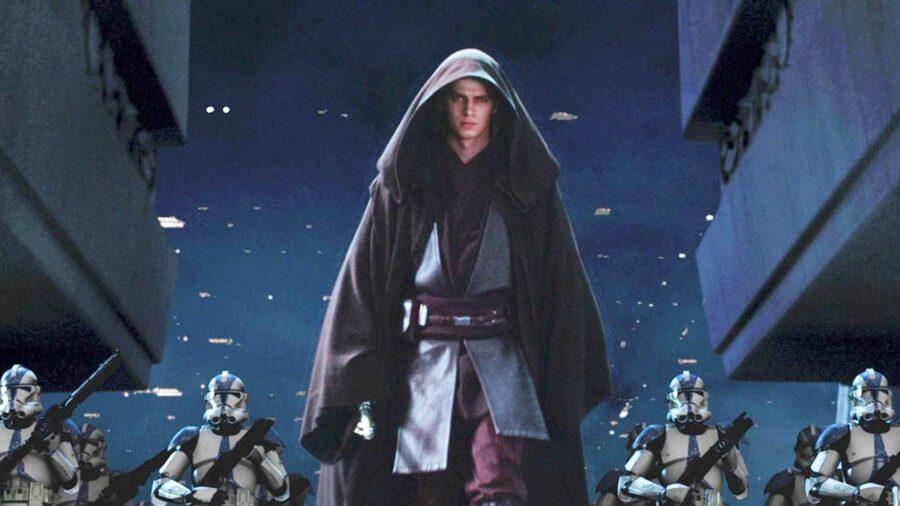
My theory is simple: assuming other Jedi were in similar situations throughout the galaxy, quite a few Jedi would survive Order 66. If the Clone Troopers tried to fire on other warriors who were very far away (like Obi-Wan), the targeted Jedi would likely escape. If other clones tried to sneak up on Jedi in non-combat situations (like with Yoda), these Force users would sense their intent and kill them out of self-defense. Furthermore, if there aren’t enough Clones around when the order goes through, a Jedi could survive, say, only three or four people trying to shoot him, much like Obi-Wan did when fighting Battle Droids throughout the prequels.
Long story not very short, the Emperor came up with a stupid plan and executed it in the sloppiest possible way. Plus, contrary to what Obi-Wan said in A New Hope, later Star Wars shows make it seem like Vader stopped personally hunting down Jedi and left that task to the Inquisitors. Whenever the Inquisitors fight someone other than a helpless child or scared former Padawan, they get their butts handed to them, as seen in everything from Star Wars Rebels to the Fallen Order and Survivor video games. Because Order 66 was done so poorly, and Palpatine’s brute squad sucked so hard, it’s no wonder so many Jedi survived the purge.

In retrospect, this makes sense, too. Palpatine is infamous among fans for his insane plans, which included playing the commander in chief of two different warring armies so he could land the job of “mutilated president for life.” It’s only because of (let’s face it) bad writing on George Lucas’ part that any of the Emperor’s plans ever succeed. Order 66 was so utterly stupid and handled so poorly that it guaranteed plenty of Jedi survivors. But what else would you expect from someone who spent all his Empire’s credits on a space station that’s so easy to blow up … twice!
Entertainment
Every Major Change One Piece Season 2 Made To The Source Material
By Jonathan Klotz
| Published

Now that Netflix’s live-action One Piece Season 2 has been out for awhile, you’ve probably become curious about how it matches up to the original One Piece anime. As with the first season, manga creator Eiichrio Oda was actively involved in all stages of production, even helping with adjustments from the source material and giving them his blessing. His level of involvement is why the series is the new gold standard for live-action adaptations.
The Garp And Gol D. Roger Flashback

Ripped from the Marineford arc and dropped at the start of Season 2’s Loguetown episode, Garp and Gol D. Roger’s conversation is a bit of misdirection. Fans watching only the live-action series would think that Roger is asking Garp, who we know is Luffy’s grandfather, to take care of his son. That would mean Luffy is the son of the greatest Pirate in history.
Except he’s not. Long-time fans know that Roger’s son is Ace, part of Whitebeard’s pirate crew, and user of the Flame Flame Devil Fruit. DC’s Blue Beetle, Xolo Marideuna will play Ace when he makes his first appearance in Season 3.
For now, the flashback to Roger’s execution hints at the existence of his son, misdirects the audience, and lays the stage for something Oda did a lot during One Piece Season 2: placing events from future arcs much, much earlier than before, but where they make perfect sense.
Bartolomeo Appears Much Much Earlier

An example of an early appearance comes right in Episode 1, when the memorable green hair and canines of Bartolomeo appears as a very confused bystander in Loguetown. He doesn’t appear in the anime until episode 633, over 500 episodes from the events of the first episode. But what he does do in the anime, is mention that he saw Luffy during the events in Loguetown. That makes this one of the best changes any live-action adaptation has ever made.

Bartolomeo may not be an East Blue mob boss, but his inclusion in Roger’s execution is technically, not a change from the anime. It’s a bit of a tease for fans as we may not see him again during the Netflix show’s run, unless they start compressing even more arcs each season, and they did a great job bringing the character’s strange appearance to life. He’d eventually become Luffy’s biggest fan, and his ship, the Going Luffy-senpai, is as ridiculous as his fashion sense.
Brook’s Human Form

Yet another pull from the future came in Episode 2, “Good Whale Hunting.” Anime viewers didn’t get to see Brook as a human until long after they got used to his undead skeleton form. His backstory isn’t shown until episode 379, over 40 episodes after his first appearance, and by then, it’s been hundreds of episodes since Reverse Mountain. Including the flashback right away, to explain Laboon’s obsession with ramming the mountain, teases fans with what’s to come, and gives the heartbreaking story maximum emotional impact.

If Brook ever does return to the live-action One Piece, at least Martial T. Bachamen has nailed the look for one of the most unique Straw Hat Pirates. Fans will have to keep waiting to see how they’ll get across his skeletal appearance and wild fighting style in live-action.
Luffy Befriending Laboon

The live-action series changed a lot about the Reverse Mountain arc, from Crocus living inside Laboon, to the weird sky painted on the inside of the whale’s stomach. Among all the changes, Luffy’s plea for friendship is one of the best. It’s perfectly fitting that Luffy, the most joyous, upbeat, enthusiastic character in One Piece, would use the power of friendship to win over the massive whale.

In the anime and manga, Luffy stabs Laboon with the mast of the Going Merry. Instead of declaring their friendship, he announces that he and Laboon are now rivals. On the one hand, that’s how boys make friends, on the other, the live-action did it so well while being true to Luffy’s nature, that both versions work.
Luffy And Zoro Don’t Fight

Zoro gets his shining moment in Whiskey Peak by taking on 100 members of Baroque Works, in what’s not only the highpoint of Season 2, but in the running for Netflix’s best action scene ever. What’s left out, is what comes next in the other adaptations: Luffy attacks Zoro for killing a lot of people he has no idea are Baroque agents. It’s the first real showdown between the two friends and it only comes to an end when Nami acts as the voice of reason. Sort of.

It was a stand out moment in the anime as anime fans love nothing more than debating who can beat who (saying Saitama form One-Punch Man would win is always an immediate flag on the play). Zoro, the greatest swordsman, against Luffy, the indestructible rubber man? It’s a great match up, which Luffy would win 10 out of 10 times, but it’s also easy to see why the live-action series cut it out.
Zoro And Sanji’s Dino Hunt

Little Garden is an interesting early island. Giants weren’t enough, it had to include actual dinosaurs. In the Netflix series, Zoro and Sanji argue over who can take down the biggest beast, and they end up arguing over who landed the killing blow on a massive T-Rex. In the source material, they each take down one of their own. They still argue, but it’s more evidence that Sanji isn’t the joke his only-kicks fighting style can make him look like.
Another small change that ties into the fauna of Little Garden is the missing shot of the insect that bites Nami and gets her sick. Removing any foreshadowing of the illness worked, and Nami going down during the party is an effective teaser for the next part of the journey.
The Marines vs. Baroque Works

Season 1 add a whole new subplot with Kolby and Helmpopo, so it makes sense that Season 2 keeps the Marines involved by including a sequence with Smoker and Tashigi investigating a Marine listening post under a Baroque Works assault. This is the type of addition that helps expand the world of One Piece. Even when the focus is on the Straw Hat Pirates, other characters are going on adventures in the background.
The other reason for the addition is to remind viewers that Smoker is an absolute unit. Without breaking a sweat, he goes through a unit of Agents and Miss Thursday. There’s nothing wrong with letting cool characters show why they’re cool. It’s the basis of Shonen anime.
The Flag

It’s one of the moments in the anime that establishes Luffy as a badass. When he dives and saves Chopper’s flag from destruction at the hands of King Wapol, he’s covered in smoke. Then it clears, and there’s Luffy, holding onto the tattered flag, standing on top of the castle. The kids call this aura farming.
During the Season 2 live action climax, Luffy still saves the flag and gives his speech about what the flag represents to an astonished King Wapol. The scene is still there, but the scale is smaller, the only ones present are Wapol and the crew of the Going Merry. It’s a great moment, and Luffy shows a small fraction of his potential power in absorbing the direct hit, but as with most of the changes from the anime to the live-action, it cuts everything down. Which is understandable, but if more adaptations did it like this, the track record would be a lot better.
One Piece is a Netflix Original, and can be streamed with an active subscription.
Entertainment
An OpenAI-linked news outlet appears to be entirely AI-generated
A new report from The Midas Project’s Model Republic publication has found that news site, The Wire by Acutus, relies almost entirely on AI-generated content. The publication has been operational since the end of 2025 with nearly 100 published articles across tech, energy, media, science, business, and healthcare. Stranger still, their About page describes their work as “collaborative journalism” led by an “editorial team,” but the site has no masthead and credits no editors or journalists in its publications.
The official explanation for this anonymity is buried in their How It Works subhead:
Our editorial team identifies timely topics and invites contributors with relevant, firsthand experience to share their perspective through structured conversations. Those perspectives are synthesized and edited into stories that reflect where contributors align, where they diverge, and what it all means — offering depth, balance, and clarity beyond the headline.
But when journalist Tyler Johnston ran the site’s content through Pangram, an AI detection tool that boasts a 99.98% accuracy rating, he discovered just how widely AI was relied upon: “Of the 94 articles, 69% came back flagged as fully AI-generated, with another 28% flagged as partially AI-generated. Only three articles were classified as human-authored.”
Johnston’s suspicions grew when he looked at the content itself, which was both overwhelmingly in favor of the development of artificial intelligence and dismissive of AI’s critics. One piece, for example, warns of “Escalating Anti-AI Radicalism,” while another chides the reader: “Will Republicans Let Blue States Set America’s AI Rules?”
Mashable Light Speed
The deeper Johnston dug, the clearer the picture got. As a new site with very little social media presence, articles by The Wire are seldom retweeted, but Johnston discovered that half of its engagement on X came from Patrick Hynes, the president of the PR firm Novus Public Affairs. A quick glance at their client list reveals they work on behalf of Targeted Victory, the consulting firm at the very heart of OpenAI’s lobbying efforts in Washington on behalf of its regulatory interests.
Generative artificial intelligence has already created rifts in our collective perception of reality. With enough computing power, you can create fake trailers for films that were never made and never will be, or steal a politician’s voice for a deep fake, or even invent an absurd, implausible scenario, like a shark attacking a plane, and fool at least a few credulous internet rookies.
If Johnston’s reporting is correct and his inferences are accurate, we may have an instance of an AI firm deliberately mischaracterizing its work as “independent journalism” to lobby on its behalf (something Johnston points out contravenes its own usage policies).
Disclosure: Ziff Davis, Mashable’s parent company, in April filed a lawsuit against OpenAI, alleging it infringed Ziff Davis copyrights in training and operating its AI systems.
Topics
Artificial Intelligence
Entertainment
Creative Assembly drops first look at the Alien: Isolation sequel
Twelve years after the original Alien: Isolation game was released across platforms, on the official “Alien Day” meant to celebrate the beloved franchise, game developers Creative Assembly are returning to the world of xenomorphs and unreliable robots to once again terrify the living daylights out of us.
The teaser trailer, aptly titled “False Sense of Security,” does a lot with very little, from the flashing red light in a poorly lit room to the ominous background music and eventual close-up of what looks to be a payphone, with the word “Emergency” appropriately backlit.
As you might expect from the makers of the original game, Creative Assembly is clearly reluctant to over-share, relying on atmosphere and sound to do the heavy lifting, but the brief glimpse we get of the background when the door opens suggests the possibility that, unlike the first game, the sequel might also take place on a planet’s surface, perhaps hinting at a much larger game world.
Needless to say, we’ll be covering more details about the game’s development and progress as they emerge.

Every Major Change One Piece Season 2 Made To The Source Material
Better-rested Nashville SC welcome Charlotte FC


