
Entertainment
NYT Connections hints today: Clues, answers for April 19, 2026

The NYT Connections puzzle today is not too difficult if you have a sweet tooth.
Connections is the one of the most popular New York Times word games that’s captured the public’s attention. The game is all about finding the “common threads between words.” And just like Wordle, Connections resets after midnight and each new set of words gets trickier and trickier—so we’ve served up some hints and tips to get you over the hurdle.
If you just want to be told today’s puzzle, you can jump to the end of this article for today’s Connections solution. But if you’d rather solve it yourself, keep reading for some clues, tips, and strategies to assist you.
What is Connections?
The NYT‘s latest daily word game has become a social media hit. The Times credits associate puzzle editor Wyna Liu with helping to create the new word game and bringing it to the publications’ Games section. Connections can be played on both web browsers and mobile devices and require players to group four words that share something in common.
This Tweet is currently unavailable. It might be loading or has been removed.
Each puzzle features 16 words and each grouping of words is split into four categories. These sets could comprise of anything from book titles, software, country names, etc. Even though multiple words will seem like they fit together, there’s only one correct answer.
If a player gets all four words in a set correct, those words are removed from the board. Guess wrong and it counts as a mistake—players get up to four mistakes until the game ends.
This Tweet is currently unavailable. It might be loading or has been removed.
Players can also rearrange and shuffle the board to make spotting connections easier. Additionally, each group is color-coded with yellow being the easiest, followed by green, blue, and purple. Like Wordle, you can share the results with your friends on social media.
Mashable 101 Fan Fave: Nominate your favorite creators today
Mashable Top Stories
Here’s a hint for today’s Connections categories
Want a hint about the categories without being told the categories? Then give these a try:
-
Yellow: Lippy
-
Green: Gowns
-
Blue: Played in Vegas
-
Purple: Sweet treats
Here are today’s Connections categories
Need a little extra help? Today’s connections fall into the following categories:
-
Yellow: Cheeky
-
Green: Dress measurements
-
Blue: Cards in Texas Hold ‘Em
-
Purple: Last words of candy brands in the singular
Looking for Wordle today? Here’s the answer to today’s Wordle.
Ready for the answers? This is your last chance to turn back and solve today’s puzzle before we reveal the solutions.
Drumroll, please!
The solution to today’s Connections #1043 is…
What is the answer to Connections today
-
Cheeky: ARCH, FRESH, SASSY, WISE
-
Dress measurements: BUST, HIPS, LENGTH, WAIST
-
Cards in Texas Hold ‘Em: FLOP, HOLE, RIVER, TURN
-
Last words of candy brands in the singular: CAP, DUD, KID, MINT
Don’t feel down if you didn’t manage to guess it this time. There will be new Connections for you to stretch your brain with tomorrow, and we’ll be back again to guide you with more helpful hints.
Are you also playing NYT Strands? Get all the Strands hints you need for today’s puzzle.
If you’re looking for more puzzles, Mashable’s got games now! Check out our games hub for Mahjong, Sudoku, free crossword, and more.
Not the day you’re after? Here’s the solution to yesterday’s Connections.
Entertainment
Liquids on a plane? New airport scanners make it possible.
For more than 20 years, air travelers have had to make sure they bring their liquid toiletries in 3 oz. bottles only, then chug their drinks before passing through airport security — a reaction to foiled terrorist plots that involved liquid explosives.
But those days are coming to an end, at least in Europe, where two large airports are installing new 3D Computed Tomography (CT) security scanners that can more accurately detect real threats.
Meanwhile, the U.S.’s Transportation Safety Administration (TSA) is “aggressively” adding the new scanners to airports, according to Scientific American, but any change to liquid rules does not appear imminent. Part of the reason for the delay is the patchwork implementation, with only about 255 of the country’s 432 airports adding them.
The TSA estimates that all its airports will be equipped with 3D scanners by 2043.
Brussels and London enter the 21st century
Back in Europe, Brussels Airport in Belgium is the latest facility to announce the new CT scanners; construction is set to begin next year, and the first implementation in 2028. The technology will replace 2D X-ray scanners and ultimately screen passengers, via full-body scanners, and carry-on luggage via conveyor belt scanners.
Mashable Light Speed
When in place, fliers will be able to transport an unlimited amount of liquids in their carry-ons as long as the individual containers do not exceed 2 liters (about 68 fluid ounces); the EU currently limits liquids to 1 liter in containers no larger than 100 milliliters (about 3.4 fluid ounces) for those passing through 2D scanners. The new rules will apply to more than drinks, as most airports consider toiletries like lotions, toothpaste, and hair gel to be liquids.
Laptops can stay in carry-ons
The CT scanners’ ability to accurately identify objects through various angles also means travelers can leave their laptops in their carry-on luggage as they pass through security. The scanners use sophisticated algorithms to create high-resolution 3D models of bags, allowing security personnel to rotate objects and more accurately identify them as harmless or worth a closer look.
Brussels Airport officials tout the new scanners as a way to streamline the security process.
“With this new technology, we will not only continue to ensure safety, but also make security screening even smoother and easier for our passengers. With the new scanners, we will also increase capacity so that we are prepared for any growth in passenger numbers in the coming years,” Arnaud Feist, CEO of Brussels Airport, said in a statement.
Brussels follows London’s Heathrow Airport, which installed the CT scanners earlier this year and is already allowing some fliers to drop the 100 milliliter liquid limit and keep their laptops in their bags.
Entertainment
Love Backrooms But New To Analog Horror? Here’s The Primer You’re Looking For
By Robert Scucci
| Published

A couple years ago, I fell into an analog horror rabbit hole and never looked back. When the original The Backrooms shorts were uploaded to YouTube, I was hooked on the strange subgenre that’s been made possible by countless young filmmakers who grew up online and have an intimidating grasp of genre blending, building out mythology with their audiences in real time, and posting their art straight to YouTube instead of taking more traditional paths.
Analog horror is punk rock, and it’s a movement that I’ve been rooting for since I became aware of it. Admittedly, I’m late to the party and have only begun to scratch the surface, but I’ve been obsessed with the subgenre long enough to point your attention toward the essentials, because the past is prologue.

My goal here is to put together an analog horror primer because the subgenre now has mainstream attention, and there will be plenty more where that came from. There are so many talking heads on YouTube and Instagram who are angered by the fact that people are comparing Backrooms to Skinamarink, but there’s one very important thing to take away from this: analog horror operates on a wide spectrum, using liminal space, “lost media,” and internet folklore to drive its storytelling.
Not all analog horror is created equal, so I’m going to break it down for you (in no particular order because these are wildly different and impossible to rank) so you know what kinds of flavors are out there if you enjoyed Backrooms but want to keep digging.
Skinamarink
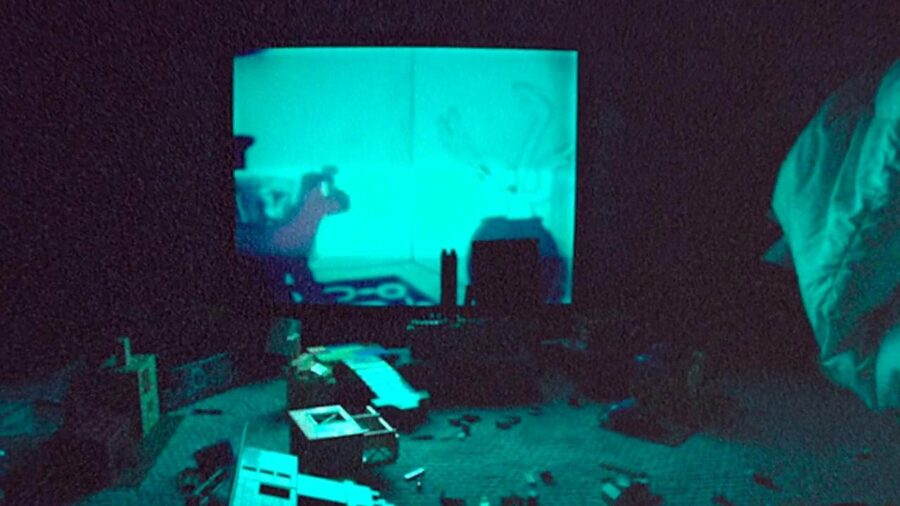
Kyle Edward Ball’s Skinamarink is an endurance test at 100 minutes for the kind of story it’s trying to tell, but it’s an early feature-length experiment that introduces some of the visual language you’ll find throughout analog horror. Set in 1995, the film centers on two little kids, 6-year-old Kaylee (Dali Rose Tetreault) and 4-year-old Kevin (Lucas Paul). One night, while their parents are absent (you find out why later), all the doors and windows in their house disappear, and they only have each other and the glowing TV in the room to keep them company. They build forts in the living room and try to make the best of the situation, even though they hear menacing voices from upstairs that sound like disembodied versions of their parents.
Filmed in its entirety for $15,000 in Ball’s childhood home, Skinamarink is a slow-burn nightmare told through the perspective of frightened children. You see everything at their eye level, and the only lighting comes from either a nightlight or their glowing TV. You think you might see a face in the shadows, but it could all be in your head. It’s a picture-perfect representation of that nameless, endless fear you feel as a child when you’re left alone for the first time and hear strange noises. It’s fear without articulation, which is the most frightening thing of all.

While you need to be built differently to enjoy Skinamarink because it’s a challenging film, it’s a solid entry point for analog horror because it’s set in the ’90s and boasts the VHS aesthetic that most filmmakers in this wheelhouse latch onto. If you’re a millennial approaching middle age, Skinamarink is nostalgia for a simpler, pre-digital time, but also a reminder that existential dread transcends technology.
The Mandela Catalogue
Conceived by YouTuber Alex Kister during the COVID lockdowns, The Mandela Catalogue is the finest example of mixed-media use in analog horror. Taking place across the ’90s and early aughts, the story follows the fictional Wisconsin community of Mandela County, which has been plagued by doppelgangers known as Alternates who slowly replace people by driving them to suicide and then taking their form. There’s religious imagery everywhere, often presented through creepy lost media cartoons depicting the Archangel Gabriel, and there’s a healthy amount of found-footage filmmaking here too.

It’s not worth breaking down the character dynamics here because the web series gets quite convoluted, and it’s one of those things you’re better off experiencing for yourself. Through Emergency Broadcast Systems, computer screens, GPS devices, and camcorders, you’re slowly clued into how far gone the community has become, giving you reason to believe these Alternates have humanity outnumbered and the government has pretty much given up on intervening at this point.
The Mandela Catalogue is still going strong, and it’s very much a community experience. Most people heard about it through reaction videos, and the lore keeps building, with the most recent installment arriving this past March. Half the fun is discussing everything in the comments section, where people are surprisingly receptive to fan theories and turning literally everything into a meme.
No Through Road
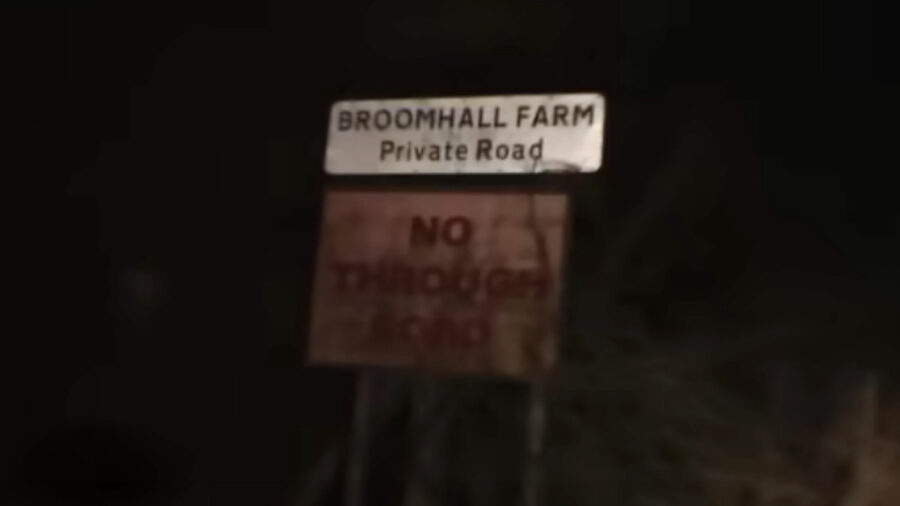
Taking a more traditional found-footage approach, No Through Road has four installments that span several years, even though their collective runtime barely cracks 30 minutes. There’s really not much going on here, but it’s executed with such care and precision that I consider it one of the most frightening versions of the “kids with a video camera” setup the genre has to offer. It’s also worth noting that the series’ creator, Stephen Chamberlain, was just 17 years old when the first installment dropped.
No Through Road tells a simple story about a group of teenagers on a late-night drive who take a private access road that sends them into an unending time loop, where a masked man constantly torments them.

That’s pretty much the long and short of it, aside from one key detail that really sells it for me: we didn’t get a second installment until two and a half years after the first one, which was posted to YouTube as legitimate found footage. While it’s obvious that this was an art project, Chamberlain was smart enough to use the early days of YouTube to build out the lore. Like The Blair Witch Project had everybody believing it was real because the internet wasn’t what it is today, Chamberlain didn’t have that luxury and instead cloaked the whole thing in mystery by updating sparingly.
It’s kids being kids, experiencing a trauma sourced from some uncanny plane of existence, and then radio silence until Part 2 came out. From June 2009 to August 2012, we got four videos, and that’s it. You eventually learn how their relationships broke down between installments, but the wait between releases, coupled with online communities obsessing over every new development, certainly added to its allure when it was first making the rounds.
VCR Willie

A recent analog horror entry that’s still ongoing, Alexander Henderson’s (Alexanderthetitan) VCR Willie is found footage with an added layer of abstraction that makes the entire thing horrifying.
Aside from a quick explanation from Alexander, we’re presented with found footage taking place in an apartment that’s cursed by some sort of supernatural entity. According to Alex’s explanation, he woke up one day and found a Sony Handycam in his closet with a tape inside. He’s suggesting that whatever is on each tape is what he witnessed the during his dreams the night before; there’s no sign of him going out and filming any of the footage himself.

And what’s in the footage, you ask? Creepy, creepy people, all of whom live in Apartment #40. The footage suggests that these people know who Alex is, and he’s invited into their homes to help them deal with supernatural entities that, much like the ones seen in The Mandela Catalogue, are either doppelgangers or have taken over their hosts outright. The story isn’t told in chronological order, and we only see what Alex has access to through his tapes. What he does have access to, though, is terrifying.
It’s mostly just people staring through your soul and hiding behind objects that are far too small for them, as if they’re not yet familiar with the dimensions of their new bodies, but for some reason it’s completely unnerving. Imagine coming home and seeing somebody who looks like a member of your family standing behind an open kitchen cabinet as if they’re hiding from you while laughing quietly, and they genuinely think you can’t see them. It’s the constant feeling of being watched, and never feeling safe, that makes VCR Willie such an effective effort.
Kepther E

“Kept Here,” stylized as Kepther E, falls into what’s known as the Alternate Reality Game (ARG) subgenre, making it a little more complicated than typical found-footage horror. It was so shocking at the time of its release that it was removed from the internet, but has since been restored through The Internet Archive and various YouTube compilations.
While it initially seems like a mass upload of unrelated found-footage content, you’ll find clues in the upload names that help you piece everything together chronologically (some people have uploaded them in order), and you’ll gradually start to understand what’s actually at stake.

Kepther E is mostly told from the perspective of a troubled teen named Alex, who’s often influenced to do terrible things by his unseen friend, Kevin. The tone and shooting style change depending on the upload prefix attached to each video, but they all lead to the same horrifying place: an abandoned house where it’s implied people are being held captive and tortured, as if it’s all part of some grand cinematic experiment that hasn’t yet been completed.
As each camera source pushes the narrative forward, we learn how everybody is connected, and it’s not for the faint of heart. I haven’t watched this series since I last wrote about it, and I still hear some of those distant screams in my head because they sound so genuine that it’s hard to shake them from your memory.
Indistinct Chatter

Falling into the “lost media” wheelhouse, Indistinct Chatter is a stop-motion experience created by YouTuber KrainagrzybowTV. The whole thing plays out like a bad fever dream, the kind you have when you fall asleep in front of the television and the line between your consciousness and subconsciousness starts to blur. Nothing seems real, but it feels like it’s all calling out to you.
Indistinct Chatter exists in that uncanny valley where you want to believe everything you’re seeing, but you know it’s all an illusion. I can’t say there’s really a point to this one beyond conjuring up the same kinds of memories that films like Skinamarink try to make you experience again as an adult. There’s nothing outright scary here, but there’s a nameless dread lurking around every corner, making you wonder if you’re watching somebody else’s dreams that you’re not supposed to see.

It’s really breezy too, clocking in at just over 30 minutes. Before I get to my last recommendation, I’m going to stop here for a second and tell you that if you’re not built for this one, you definitely won’t be built for the next one.
Buffet Infinity
I watched 2025’s Buffet Infinity for the first time last week because it only recently started making the rounds on digital, and I have not stopped thinking about it since. Buffet Infinity is reminiscent of, and openly inspired by, another analog horror web series known as Local 58, but it completely does its own thing. Local 58 tells its story through public access broadcasts, but the horror comes from the fact that WCLV-TV is repeatedly hijacked by supernatural entities trying to use media to manipulate the population into doing terrible things, including committing suicide.

Buffet Infinity pushes this kind of storytelling to its absolute extreme with a premise involving a sinkhole, a death cult, and a sentient restaurant of unknown origin that’s constantly expanding and consuming the surrounding community. It’s 100 minutes of the kind of public access commercials you used to see on local cable during the late ’90s and early aughts.
While watching 100 minutes of commercials sounds exhausting (and it is), what happens next is what makes this such an effective piece of analog horror. The actors in each commercial, whether they’re representing a law firm, insurance company, or pawn shop, all become vaguely aware of the titular restaurant’s presence and influence. They’re speaking in an almost coded language, trying to warn you about what’s happening.

Meanwhile, Buffet Infinity keeps growing, gets into scraps with rival businesses, and becomes increasingly unhinged until the whole thing boils over into a cosmic horror so all-consuming that you need to walk it off for a good minute.
Plenty More Where That Came From
Listen, there’s plenty more where that came from, and I’ve only begun to scratch the surface. The thing about analog horror is that it has so many different flavors that you can’t lump it into a single category. I hope this primer points you in the right direction and shows you some of the common themes that run throughout the subgenre.
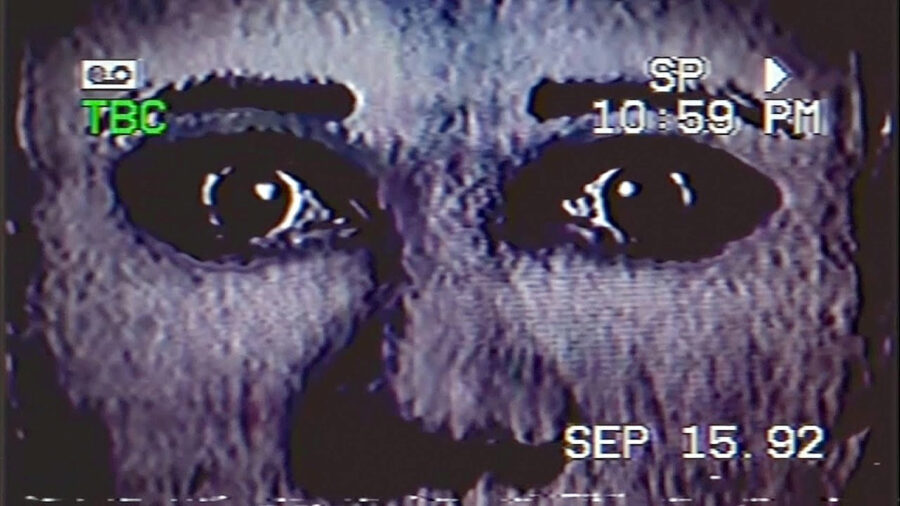
Analog horror specializes in liminal space, found footage, lost media, and our fear of the unknown. It’s been largely produced by kids on YouTube who know what they want to see but haven’t found it anywhere else. It’s the future of horror, and Backrooms has proven just how effective it can be at capturing an audience’s imagination and, more importantly, their undivided attention. It’s low-budget, doesn’t follow any known conventions, and every time I think I’ve seen it all, something from this wheelhouse blows me away and leaves me hungry for more.
Hopefully, this primer sets you in the right direction. Try to keep up, though, because I think we’re going to continue seeing some really great content come from the most unassuming places.
Entertainment
80s Blockbuster Series Has The Best Evil Twin Storyline
By Jonathan Klotz
| Published

Evil twin storylines have been around forever. Soap Operas use them at least once a year, and sometimes, the evil twin becomes more popular than the good twin. Star Trek: The Original Series introduced the Mirror Universe, where evil Spock had a goatee, creating a simple visual language for when someone is evil. Star Trek isn’t where you can find the best evil twin storyline though, that would be the 1982 hit series, Knight Rider, starring David Hasselhoff. It’s the best because not only does Michael Knight have an evil twin, Garthe, they even made an evil counterpart for K.I.T.T.: K.A.R.R., complete with an evil goatee.
Knight Rider Has The Best Evil Twins

Both K.I.T.T. and K.A.R.R are modified Pontiac Firebird Transams loaded with all sorts of weapons and gadgets, except one AI is designed to save people, and the other was damaged and corrupted to only pursue self-preservation. K.A.R.R. was the original prototype that resurfaces in the Season 1 episode, “Trust Doesn’t Rust,” after some thieves recover it from deep storage. Michael Knight (David Hasselhoff) and K.I.T.T. stop his rampage by taking advantage of the self-preservation instinct with a game of chicken. It’s an 80s action series, and it’s incredible.
In that first appearance, K.A.R.R. resembles K.I.T.T., except he’s voiced by Optimus Prime (Peter Cullen, who returned in the 2008 series), instead of Mr. Feeny (William Daniels). When K.A.R.R. resurfaced in Season 3, he was modified to include a two-tone paint job: black on top, and silver on the bottom. The result? K.A.R.R. has the evil goatee.

K.A.R.R. should have been in more than the two episodes. The concept of an evil car is incredible and could have been milked for at least one episode a season. Knight Rider video games have done the evil car justice, and in every iteration of the show, K.A.R.R. eventually shows up at least once. K.I.T.T. wasn’t the only one on the show to have an evil twin, which annoyed David Hasselhoff.
David Hasselhoff Put On The Evil Facial Hair

Hasselhoff’s Michael Knight isn’t actually Michael Knight: he’s Michael Long with a surgically constructed face that we learn was modeled after Garthe Knight, the son of Knight Industries founder Wilton Knight. You know he’s evil because he’s played by David Hasselhoff with a thin mustache and a soul patch. Well, that, and he straight-up murders a man who was going to squeal about his plan to use his modified big rig, Goliath, to steal missiles from the U.S. government.

Garthe appears in Season 2, first in “Goliath” and again in the aptly named “Goliath Returns,” and he likely could have appeared more times except Hasselhoff has been vocal over his dislike of playing Garthe Knight. In a moment of delightful honesty, he’s explained in interviews that playing both roles meant he was always on set for those episodes and couldn’t take breaks in his trailer during production. That’s the best reason yet to drop a character from a show.
Knight Rider isn’t a particularly deep series, but it doesn’t have to be. It’s from a time before the concept of a mythology arc was needed in every show. Weekly adventures were good enough for audiences of the 80s to make it one of the most popular shows, and there’s always a chance that it could come back. Knight Rider (2008) may have crashed and burned, but the concept of someone trying to do good and battle crime with a superintelligent car is never going to be out of style. Unlike Garthe Knight’s soul patch.

Meta signs first AI data center deal in India with Reliance
MLB roundup: White Sox's Braden Montgomery hits walk-off HR in debut


