
Entertainment
Starfleet Academy Just Brought Back The Worst Thing About Star Trek: Picard

By Chris Snellgrove
| Published
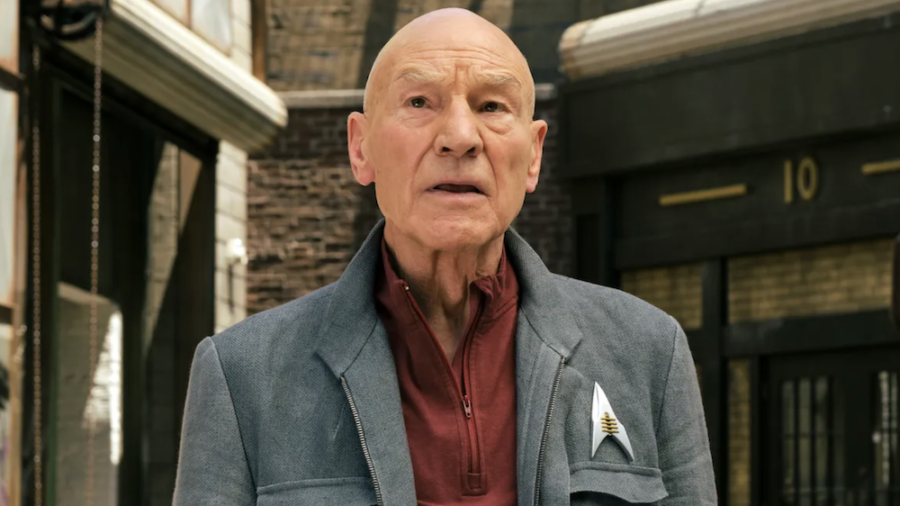
Picard remains one of the most controversial Star Trek shows because its first two seasons were astoundingly bad: they piled nonsensical plots on top of bonkers retcons, all in service of creating absolutely slop. Generally, fans agree that Season 3 was a major improvement because it brought back the core crew from The Next Generation while bringing in a showrunner (Terry Matalas) who genuinely cares about the franchise. Unfortunately, even Season 3 couldn’t resist tweaking the lore in a way that absolutely ruined the spirit of Star Trek.
The Beginning Of The End For Star Trek Values

In a single throwaway line, Worf reveals that Section 31 stopped being the Federation’s secret wetworks division and became an open part of Starfleet Intelligence. That means that the “good guys” have no problem working with a division that specializes in murder and genocide, and that nearly jeopardized the entire galaxy back in Discovery. Eventually, Michael Burnham and crew jumped to the far future, but Starfleet Academy just revealed something depressing: Section 31 is alive and well, even in the 32nd century.
Section 31 was introduced back in Deep Space Nine as the Federation equivalent to the Cardassians’ Obsidian Order or the Romulans’ Tal Shiar. The main Section 31 representative in DS9 was a man named Sloane, who insisted that this spooky organization was created by the original Starfleet charter. However, the show played very coy with this notion, forcing audiences to argue whether Section 31 was truly sanctioned by the peace-loving Federation or simply a rogue organization doing terrible deeds in the name of the greater good.
Those terrible deeds included disgracing their Romulan ally, Cretak: they made sure she was convicted of treason, ensuring that this Dominion War hero, who saved countless Federation lives, would almost certainly die. Section 31 also tried to kill all of the Changelings with a morphogenic virus, proving that this organization has no problem committing genocide. Later, Season 3 of Picard also revealed that Section 31 conducted torture experiments on captured Changelings, intent on forcing them to be the perfect spies for the Federation.
Starfleet Loses Its Moral Compass
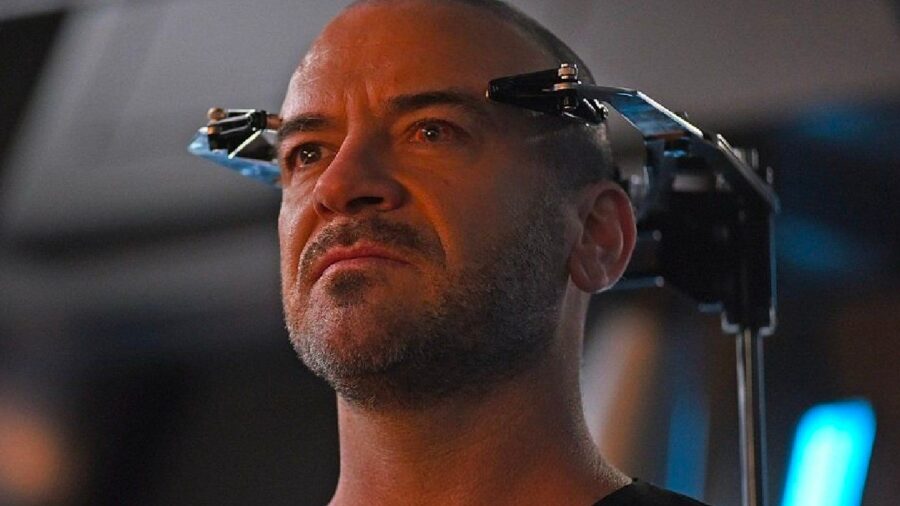
Many Star Trek fans hated the whole idea of Section 31 because, as Dr. Bashir noted, the very existence of an amoral organization accountable to no one goes against the ideals of Starfleet and the Federation. Those fans mostly clung to the idea that this really might be a rogue organization that Starfleet turns a blind eye to but does not officially condone. Unfortunately, in Star Trek: Picard, Worf casually mentions that Section 31 is an official part of Starfleet intelligence.
That means that, as of the 25th century, Starfleet has openly welcomed a group of genocidal murderers into its ranks. That’s nothing short of depressing, but it fits the mold of Picard, a show that regularly transformed Star Trek’s utopian vision of the future into something dark and dystopian. Speaking of the future, fans who have always hated Section 31 still had one last hope: that in its own fictional future, Starfleet would eventually be able to leave this creepy organization behind.
How Starfleet Academy Brought It All Back

Unfortunately, the Starfleet Academy episode “300th Night” completely dashed those hopes. So far, there has been no mention of Section 31 in either Discovery or SFA, implying that the organization might finally be a thing of the past. However, “300th” night revealed that Starbase J19-Alpha (which had recently been ransacked by Nus Braka) was developing superweapons, including a synthetic version of the Omega particle that could be used to destroy subspace and make warp travel through an area impossible.
It’s basically impossible to watch “300th Night” and not compare Starbase J19-Alpha to Daystrom Station from Picard. In the 25th century, that station housed some of Section 31’s creepiest experiments, including alien superweapons. Meanwhile, it is belatedly revealed that in the 24th century, this is the station where Section 31 tortured Changelings as part of its plan to forcibly create a small army of superspies.
Starfleet Is Now The Galaxy’s Number One Threat

For all intents and purposes, Daystrom Station was a Section 31 Starbase: it was used for their experiments, housed their technology, and generally engaged in experiments that violated half the laws of the Federation. Now, even though Section 31 hasn’t been name-dropped in Starfleet Academy, it seems like Starbase J19-Alpha is the same as Daystrom Station: it is used for secretive experiments that most of Starfleet doesn’t know about. Meanwhile, the revelation that they had weaponized the Omega particle (a molecule that Starfleet previously forced captains to destroy on sight) confirms the station is developing weapons that violate Federation laws nearly a millennium old.
In short, Section 31 obviously won the long game: they went from being considered a rogue organization to being an official part of Starfleet intelligence. Over the next seven centuries, they eroded the values of this once-ethical organization, turning Starfleet into a mirror for their own twisted cause: namely, Federation supremacy, no matter the cost. Sadly, this forever mars Starfleet Academy, a lighthearted show that just confirmed its hopeful cadets are working for one of the most amoral organizations in the entire galaxy!
Entertainment
Sid Haig’s Unrated Clown Saga Is Captain Spaulding's Redemption Arc

By Robert Scucci
| Published

2006’s Little Big Top is one of those movies you’ve probably never heard of unless you’re a fan of both Sid Haig and Richard Riehle. It’s a movie about clowning around, literally, and I can’t think of a better actor to portray a retired, drunken, down-on-his-luck circus clown than Haig. Think of it as a Captain Spaulding side quest. One where he’s not in hot pursuit of a bunch of sexy teenagers he can drop off at Dr. Satan’s place to be disemboweled, but instead getting absolutely hammered in his old, abandoned childhood home while reluctantly reentering the circus life he left behind so many years ago.
At its heart, Little Big Top is a film about putting your ego and personal demons aside for the greater good of the community. Here we have a sad clown who’s perfectly content drinking the rest of his days away, but rediscovers his passion for pieing people in the face when tasked with whipping the next generation of circus folk into shape. At first, he only does it for the money, but it becomes about something more by the time the story wraps.
This Movie Wouldn’t Work Without Sid Haig

Sid Haig totally understood the assignment, which makes perfect sense because he had just wrapped production on The Devil’s Rejects before working on Little Big Top. The way I see it, he got the manic killer clown energy out of his system with that movie, as well as 2003’s House of 1000 Corpses, and what we get here is a much more subdued performance. In my head, I kept calling the movie Captain Spaulding’s Last Ride. What a way to go out.
We first catch a glimpse of this character, known only as Seymour, through his opening sequences. He arrives in town, hits up the liquor store without hesitation, heads to his old boarded-up house, realizes it has no electricity or plumbing, cooks bacon over a fire while getting wasted, steps outside to relieve himself, and then crashes in preparation for the inevitable hangover.

Shortly after arriving, Seymour is approached by Bob (Richard Riehle), who’s organizing a circus event for the company Seymour’s grandfather founded. Wanting nothing to do with the lights, pies, and spectacle, but desperate for cash, Seymour agrees to coach the next generation under Bob’s supervision, but not for free. Bob, the gullible sap that he is, pays him out of his own pocket, which he immediately regrets when Seymour blows it all on booze and keeps living in his own filth.
Realizing how much faith Bob has in him, even though he’s 100 percent a lost cause, Seymour eventually comes around, and his passion for the circus slowly reignites. Think of it as a slow smolder, where our hero comes to terms with the fact that the only thing he’s good at is entertaining, even if his passion for it is long gone.
Inspiring, But Not Really, But That’s The Point

Little Big Top tells an ugly truth that most of us don’t want to admit. Sometimes the things you’re good at aren’t necessarily the things you want to do with your life. Maybe you don’t want to take over the family business because it doesn’t feel like your calling. Or maybe you just lost your way and need to be reminded that you were once not only great at what you do, but passionate about it. Little Big Top is about begrudgingly rediscovering that passion, not for your own sake, but for the sake of those around you.
Watching Seymour fight off yet another violent hangover while criticizing the new troupe’s clown car etiquette perfectly sums up this feeling because you can practically feel the pounding headache and smell the disdain early in the film. He’s stepping out of his comfort zone, which for him means getting completely assfaced and passing out in his own mess, because the next generation desperately needs guidance, and he’s the only one even capable of giving it.

Watching Seymour figure out where he belongs in all of this is half the fun that Little Big Top has to offer. The other half is watching Richard Riehle’s Bob realize just how screwed he is after spending his savings bankrolling Seymour’s disastrous return to the circus.

Little Big Top is currently streaming for free on Tubi.
Entertainment
A Milk Chocolate Taste Test

Six years ago, we featured a taste test of dark chocolate bars, and one reader commented: “The best dark chocolate is milk chocolate.” A hot take, and one with which I happen to agree! So, we thought it was time for another experiment…
We couldn’t have asked for a better panel of judges: five seventh graders, with sweet teeth and strong opinions. Anton’s friends came over after school, and we challenged them to rate 11 popular milk chocolate brands in a blind taste test.

The Contenders:
Only plain milk chocolate varieties were included (no nuts, fillings, or flavors).

The Methodology:
Following Jenny’s finely tuned protocol, I served as master of ceremonies, with Joanna joining as my hype woman. I set up the samples ahead of time, “blinding” the brands as much as possible (those engraved with logos were turned upside down), along with sparkling water and unsalted crackers for cleansing the palate between samples. Each sample was numbered, and only I had the key to the corresponding brands.

I instructed the testers — Nick, Anton, Sienna, Juliet, and Ella — to taste each sample at the same time and weigh in on attributes like sweetness, bite, creaminess, and flavor. Then I asked them to privately rank each sample on a scale of 1-5 (5 being the best). I also asked them to refrain from making guesses on the chocolate brands, to avoid influencing each other. Did they follow these last two instructions? No, not even for a second. (Future scientists, take note: middle schoolers cannot not talk to each other). But did they take the task of scrutinizing and ranking these chocolates extremely seriously? Yes, 100%.

When testing was complete, I gathered their score sheets and averaged the rankings of each sample. In retrospect, I also should have instructed them to round their decimals, so as to avoid rankings like 4.12595982484636456467. But again, this was a flaw in my own procedure, and I cannot fault the children for being precise.
In the end, it didn’t matter anyway. After running the numbers and reviewing their observations, the results were very clear. Here are our findings — and scroll down to the bottom for the overall winner:

The Creamiest
Lindt Classic Recipe & Cadbury Dairy Milk: 4.8
These two scored high across the board (our only samples with tied scores), and both were noted for their exceptionally smooth, creamy texture. One tester described the Cadbury as having a “pure milk” flavor, and several agreed it was the “milkiest” milk chocolate. Everyone also liked the thin-but-not-too-thin shape of the Lindt bar.

Best Flavor
MilkBoy: 4.44
Chocolove: 4.3468
These two were also overall crowdpleasers (and the least recognizable by taste — no one had any idea what brand they might be). MilkBoy elicited the biggest response, flavor-wise, and testers said they tasted notes of raspberry, almond, and even mint. Chocolove was noted for its fruity sweetness — pleasant, but not overpowering. And everyone REALLY liked the domed shape of the squares.

Best Shape & Texture
Dove: 4.5
Ritter Sport Fine Milk Chocolate: 4.38
Whole Foods 365: 4.182
One definite takeaway from this taste test? Shape matters. Like Chocolove, the Dove bar is portioned into small, domed squares. That alone nudged its score up, and it was one of the surprise favorites (though some found it a little too sweet). Another surprise was the Whole Foods 365 bar, which was praised for its texture. One described it as “waxy and SO good.” (I have to agree, the “waxiness” yields a satisfying bite.) Ritter Sport, with its chunky squares, also got high marks on shape, texture, and its pleasant dissolve. And it’s worth noting that, although the official testers weren’t blown away, Ritter Sport was the grown-up favorite by far (Joanna and I tried them before the kids arrived, and kept our lips zipped during testing).

The Outliers
Trader Joe’s: 4.2682
Endangered Species: 3.84
One tester declared the Trader Joe’s sample a 5/5, right off the bat — no notes, loved everything about it. The rest of the testers responded with a resounding meh. A similar thing happened with Endangered Species, which many testers thought was an accidental dark-chocolate addition (it has a higher cocoa content and definitely could be confused for dark). One tester LOVED it, while everyone else (myself included) found it too hard, too bitter, and just too intense. No one wanted a second bite.

The Least Favorite
Hershey’s Symphony Bar: 3.8
Ouch! Remember when Symphony Bars were the fancy chocolate? Times have changed. These kids were NOT impressed. “It just tastes like a s’more.”

The Big Winner
Tony’s Chocolonely: 4.98
It wasn’t even close, y’all. Tony’s was the winner, beloved by all. While it wasn’t deemed the most anything — not the creamiest, sweetest, etc. — I actually think that worked in its favor. The balance was just right. Another big plus was size and shape: Tony’s is a decidedly chonky bar of chocolate, and it breaks apart into a bunch of uneven hunks, which is oddly satisfying. The brand recognition was definitely a factor here (“I got the lucky part!” one tester said, taking the little coin-shaped piece in the center), but I suspect this would have been the winner either way. Tony’s is both good chocolate and fun chocolate. And, really, what more can you ask for?

A big thanks to our wonderful judges, Anton, Nick, Juliet, Ella, and Sienna! Any other milk chocolate fans out there? Do you have a favorite?
P.S. More taste tests, including the best vanilla ice cream and our favorite pasta sauce.
Entertainment
How A Big-Budget Sequel Ruined Two Genres At Once, Nearly Destroying The Best Sci-Fi Franchise
By Chris Snellgrove
| Published

There’s something especially depressing about awful sequels to franchises that used to be great. The best example of this is, of course, Jurassic Park. Steven Spielberg turned that first film into a generational classic, one that energized children all over the world and ushered in the CGI age, all while making dinosaurs cool again. That movie got some comparatively lackluster sequels before the franchise roared back to life many years later with 2015’s Jurassic World.
Relatively speaking, Jurassic World was a decent franchise reboot. It brought us entertaining characters, serious spectacle, and more crazy action scenes than you can shake a fossil at. Unfortunately, it took the revived franchise no time at all to go off the rails because Jurassic World: Fallen Kingdom (2018) was a horrific flop, one which tried to be both an action-adventure movie and (weirdly enough) a horror movie. If you’re ready to see the movie that successfully ruined two completely different genres, it’s easier than ever to watch. All you have to do is stream Jurassic World: Fallen Kingdom on Netflix.
Somehow, The Dinosaurs Returned

The premise of Jurassic World: Fallen Kingdom is that years after the Jurassic World disaster, the dinosaurs on that island are in danger of going extinct yet again, thanks to an upcoming volcanic explosion. The government decides to let them die, after which Owen Grady and Claire Dearing (our two will they, won’t they protagonists from the first movie) get talked into helping relocate some of the dinosaurs, saving them from certain death. Unfortunately, this lands them squarely in the middle of an increasingly bizarre plot involving clones, haunted houses, and an underground auction for weaponized dinosaurs.
The cast of Jurassic World: Fallen Kingdom includes plenty of familiar faces, including Chris Pratt (best known for Guardians of the Galaxy) and Bryce Dallas Howard (best known for Jurassic World: Dominion). We also get the brief return of the popular Jeff Goldblum and his fellow Jurassic Park alumnus BD Wong. The film also features performances from character actor legends James Cromwell (best known for LA Confidential) and Toby Jones (best known for Captain America: The First Avenger), both of whom are giving far better performances than this stinker of a script deserves.
Profit, Uh, Finds A Way

Even though it was hated by both audiences and critics (more on this soon), Jurassic World: Fallen Kingdom made fat stacks of prehistoric cash at the box office. Against a budget as high as $465 million, this disappointing sequel earned $1.310 billion. Making as much as Marvel movies did at their height guaranteed that Fallen Kingdom would get a sequel, and Jurassic World: Dominion came out in 2022. That movie’s chief claim to fame was that it reunited popular characters like Alan Grant, Ellie Satler, and Ian Malcolm. But the writing did not, uh, find a way, and that film ended up being even more of a critical disappointment than Fallen Kingdom.
Part of the magic of the first Jurassic Park film is that it was beloved by audiences and critics alike, all of whom appreciated this slice of genuine movie magic. Jurassic World: Fallen Kingdom is the opposite, though, in that it’s equally hated: it has a 47 percent critical rating on Rotten Tomatoes and a 48 percent audience rating. Fans and reviewers alike dunked on the movie for its sloppy characterization and ramshackle writing. The movie was ultimately a shell of the franchise. As a thrill ride without any thrills, Fallen Kingdom will have you wanting to bail long before the credits roll.
Everything Falls Apart

This is one of those cases where I firmly stand with the critical consensus. While it was far from a masterpiece, the first Jurassic World did a good job bringing the franchise back to life. In the vein of The Force Awakens, it mostly functioned as a slick remake of Jurassic Park that added new characters but didn’t tweak the formula too much. That was arguably the biggest problem with Jurassic World: that it didn’t take enough big, creative swings. By contrast, Fallen Kingdom swings for the fences, but it strikes out each and every time by failing to follow through on any of its half-baked ideas.
For example, the first part of the movie is a lame retread plot that involves going back to the island. On paper, an island full of dinosaurs that’s about to explode would make for a fairly exciting film. But nothing really interesting happens here, which is that much more disappointing because the film takes its sweet time even getting our characters back to this iconic location. Once they are there, all they do in between moving the sluggish plot along is watch dinosaurs die. Thanks, Fallen Kingdom, for giving action-adventure fans what they really want: an excuse to cry over phoned-in CGI creatures.
A Plot That Should Have Gone Extinct

After this, Jurassic World: Fallen Kingdom inexplicably transforms itself into a haunted house movie with dinosaurs in the basement being auctioned off to the highest bidder. You have to seriously suspend your disbelief that nobody in the mansion upstairs can hear the small army of dinosaurs being sold on the dark web. But the part that will turn you into the Joker is the most coveted dino, one that will attack whatever target you paint with your gun-mounted laser sight. This begs the question: if I’m close enough to target my enemy with the laser, wouldn’t it be cheaper and easier on every level to just shoot the guy instead of bringing a 20-ton dinosaur with me and having him do it?
Adding insult to injury, Jurassic World: Fallen Kingdom has a cool, unexpected ending that the next film never really follows up on. In terms of acting, writing, and even effects, this was already the worst film in the entire trilogy. By having the third movie undo everything neat about the second, the studio reveals this sequel to be a hot mess of superfluous storytelling. The Star Wars metaphor is now complete: if Jurassic World is this franchise’s The Force Awakens, then Fallen Kingdom is most definitely The Last Jedi.

Are you in the mood for a film so bad that it will make you root for a new ice age? Are you looking to torment your friends, or maybe you just want to fry your own brain? Either way, you don’t even have to move from the couch. All you have to do is stream Jurassic World: Fallen Kingdom on Netflix to discover a cinematic disaster 65 million years in the making.

Sid Haig’s Unrated Clown Saga Is Captain Spaulding's Redemption Arc
How soap opera-TikTok hybrids became a billion-dollar business


