
Entertainment
The NAACP is fighting back against AI data centers
xAI’s notorious data centers near Memphis, Tenn., are appropriately named Colossus 1 and Colossus 2. The supercomputers that power the Grok chatbot are indeed enormous — they’re also environmental menaces, according to the NAACP.
The civil rights organization sued Elon Musk’s xAI last year over Colossus’ numerous methane gas turbines, saying the company used a legal loophole to install them without permits and, in doing so, threatened the health of the nearby Black-majority community of Boxtown. Somewhat shockingly, the Environmental Protection Agency (EPA) agreed with the NAACP, ruling in January 2026 that Colossus’ turbines were not exempt from air quality permit requirements. Curtailing the turbines, which emit nitrogen oxide into a community already dealing with high levels of pollution, was a victory for the NAACP and Abre’ Conner, director of the organization’s Center for Environmental and Climate Justice.
Just this month, Conner and the NAACP were buoyed when New York state introduced a three-year moratorium on data center construction, potentially giving legislators time to enact regulations for the energy-sucking facilities. Conner, a lawyer and longtime environmental justice leader, spoke with Mashable about her mission and how the data center build-out is reminiscent of the destructive highway construction of the last century.
Tell us why the NAACP is making data centers a priority.
Conner: A lot of the time, people will attribute the AI bubble that may pop up on their search screen to something that lives in the cloud, but it doesn’t. It uses physical infrastructure to power these AI requests.
The reason we’re so interested and concerned about this is that for decades, the NAACP has understood that environmental and climate justice issues are racial justice issues. A lot of the technology and promises, as it relates to energy, have shown up in Black communities and frontline communities in the past, from fracking to crypto mining.
A lot of this industrial build-out tends to be concentrated in particular places, and we saw that very pointedly last year when Elon Musk and xAI decided to build a data center near Boxtown, which is in south Memphis, and that’s a historically Black community. What was even more concerning was that there was a typical process you went through to get a permit, and then, at that point, it would be decided whether you could operate and what that operation should look like. And that data center was operating with unregulated methane gas turbines.
So we had concerns about whether we would see more of these operations now that you have tech billionaires [showing interest] in other communities. Of course, we did start to see the AI boom [manifest] throughout the year in different ways; different nondisclosure agreements being signed, backroom deals, and more pollution that was starting to be more concentrated in communities that have been fighting back against environmental and climate justice concerns for years.
[B]ecause it’s people in the tech space, they’re promising that somehow [the data centers are] different. Even though they’re using the same industrial build-out — the same types of diesel generator backups, methane gas — somehow that’s going to be less harmful to people’s health when it was done in the past.
What have these tech companies been telling community members?
[That’s] if they even show up and talk to the community members at all. A lot of times, they’re not talking to community members; they might be talking to one or two elected officials. They might talk to someone at an agency level, maybe. But there aren’t a lot of conversations actually happening with the people most impacted. That’s part of the problem — there’s not a lot of transparency. By the time people find out about it, the zoning is being redone, and construction may already be happening. In the case of xAI, they’re already operating, and then they want to go and have a conversation with the community after they’re already in it.
Because [the tech companies are] going into places where there’s been disinvestment over decades and decades, we’re seeing the same playbook used, like promising a community fair or investment in a school. That has nothing to do with the pollution they’re actually bringing into the communities, or the hundreds of millions of gallons of water they’re utilizing in order to run the data center, or the noise concerns. We’re seeing some of the same plays we saw in the coal-fired power plant boom, from fracking and crypto mining.
Mashable Light Speed
But what’s interesting and different is that because it’s people in the tech space, they’re promising that somehow [the data centers are] different. Even though they’re using the same industrial build-out — the same types of diesel generator backups, methane gas — somehow that’s going to be less harmful to people’s health when it was done in the past.
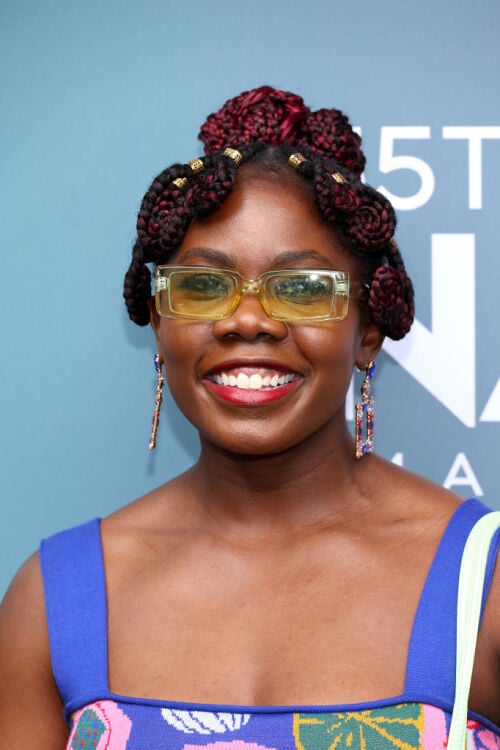
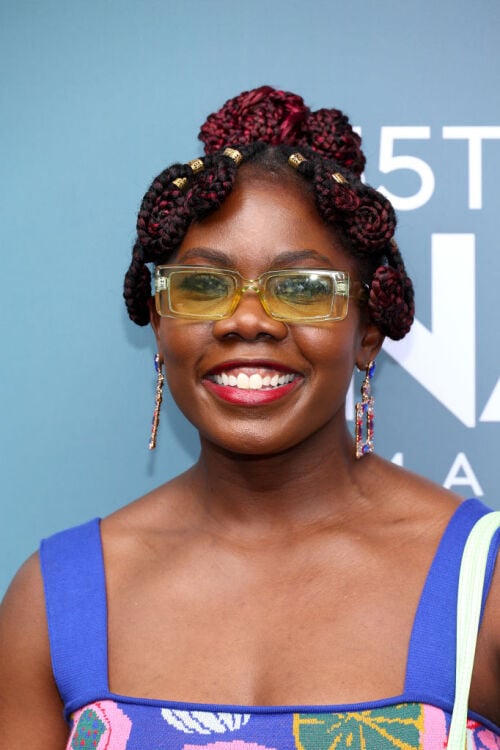
Abre’ Conner at an NAACP event in Los Angeles.
Credit: Photo by Leon Bennett/Getty Images For NAACP
It seems reminiscent of the construction of the U.S. highway system in the 20th century, when Black and minority neighborhoods were leveled for the expressways. Are there parallels?
Absolutely. Redlining, the idea of NIMBYism, all that kind of framing is what we’re seeing now. There’s also this promise of a better future, but when people working at these companies are asked, “Would you want that data center in your backyard?” They’re like, “Well, let’s take a pause.”
When we look at redlining to highways to trains, there was a systemic racism component to it. If the [tech companies are] getting advised to, for example, build in places where there is already existing infrastructure, that is just going to deepen the environmental and climate concerns from people who don’t want more pollution in [their] communities.
I imagine the reaction from governments to data centers is very different depending on where they are. Tennessee, for example, is not a hotbed of environmental activism, while a state like New York is considering moratoriums on data centers. How does that geographic inconsistency affect your efforts?
For me, as someone who’s been doing environment and climate justice work for a decade and a half, what’s extremely hopeful for me is where seeing people across political lines, in urban and rural communities, all asking questions. They’re saying, “Do we have enough answers in order to move forward with a data center in our community?” That is something that’s really different than what we’ve seen in other industrial build-outs in the past.
People are asking, “Why are you signing a nondisclosure agreement about our public resources? Shouldn’t we be able to see what you’re all talking about if we’re paying taxes in this community? Shouldn’t we be part of that conversation?”
Because people are seeing their utility bills go up, they’re seeing the impacts of data centers even before one shows up. That’s changed the landscape of the conversation. That’s why we’re seeing places like New York, saying, “Do we have enough information to move forward?” In [the NAACP’s] playbook for 2026, that was something we shared. If there’s not enough information, call for a moratorium until you have the information needed to move forward in a way that feels responsible to the community that will feel those impacts.
Questions are being asked [of the tech companies, like], “OK, you’re saying jobs. How many?” The highest we’re seeing is in the dozens; a lot of them are temporary.
Are the tech companies trying to sell the idea of job creation with these data centers?
It’s absolutely the same playbook of, “There’s going to be jobs. It’s going to be good for the local economy. This is something we’re going to do in the cleanest way possible.” Questions are being asked [of the tech companies, like], “OK, you’re saying jobs. How many?” The highest we’re seeing is in the dozens; a lot of them are temporary, a lot of them are on the construction side, a lot of them are going to deepen the same concerns that we see when it comes to working on sites when you’re going to be exposed to a bunch of pollution non-stop.
In our frontline framework that we released last year, over 100 organizations, allies, and coalition partners came together to say that jobs cannot be more important than the health of the community members who live there.
What is it like working in environmental justice in 2026, when the federal government is so pro-AI and has expressed very little concern about the environment and minority communities?
When we saw Project 2025, we knew what that was going to look like. We knew there wasn’t going to be a rollback of our environment and climate protections. We knew that was coming.
For the NAACP, at our roots, it’s always been about people power. It’s been about highlighting what we could do with or without government support on the federal level.
Back in North Carolina, in Warren County, when you had a Black community saying, “We don’t want dumping in our community,” there wasn’t any federal government support per se at that time. The state was even saying, “Well, we’re not really sure we want to be involved in that.”
It was the people on the ground who mobilized and said, “We will not take this anymore.” They created the audience that was needed on the national level, and that’s what we’re seeing now. Even though we don’t have an administration at the federal level that is helpful, hopefully people are understanding just what this means. We’re in a midterm year; we have an opportunity to have people in office who represent our perspectives. The mobilization, the organizing, the work on the ground will always be there, and as long as we’re there with the communities willing to push back, I think we still have a fighting chance regardless of who’s in office.
Read more about the NAACP’s environmental work here.
Entertainment
Big Salad’s Birthday Sale!


This week only, we’re offering 20% off annual subscriptions to Big Salad, our weekly newsletter (and the #1 fashion/beauty publication on Substack). For $4/month, you will get every issue for a year — packed with fun finds, life realizations, and essays on sex, dating, love, marriage, divorce, parenting, and friendship — plus access to our deep archives.
Last Friday, I wrote about a dating realization I had that changed everything (gift link, free for all). The comments were truly incredible, and I felt really moved by the ability to share relationship (and life) highs and lows with women who really get it. We really are all in this together.
Here are a few more issues you may enjoy…
On sex, dating, relationships, and friendship:
The genius advice my therapist gave me when my marriage ended.
What it felt like to have sex for the first time post-divorce.
How do you know if it’s time to get divorced?
Four ways I’ve learned to deepen friendships.
The book that profoundly changed my friend’s sex life.
Reader question: “I want to talk dirty in bed, but I’m nervous.”
Nine habits that are making my 40s my favorite decade.
On fashion and beauty:
How to style a shirt like a Copenhagen girl.
7 things we spotted people wearing in Paris (plus, two magic Paris itineraries).
13 beauty products we always finish.
Do I get botox or filler? Readers asked, and I answered. 🙂
At age 46, I finally figured out my hair.
Gemma’s #1 drugstore beauty find.
Our 13 favorite swimsuits.
And, most of all, amazing life insights from women we love:
Ashley C. Ford on why poverty makes it hard to figure out what you like.
Anne Helen Petersen’s book-filled island cottage.
Three people share how they changed their careers. Then, three more women share!
Brooke Barker’s great conversation starter.
Hunter Harris tells us what movies and shows to watch right now.
Abbey Nova’s jaw-dropping garden makeover.
Natasha Pickowicz wants you to throw yourself a party.
My sister’s parenting hack that I can’t stop thinking about.
Alison Piepmeyer’s amazing wallpaper before-and-after photos.
15 incredible books to read.
Nine ways Kate Baer is coming out to play in her 40s.

Here’s the discount link for 20% off annual subscriptions, and here’s the Big Salad homepage, if you’d like to check it out. We would love to have you, and thank you so much for your support and readership. Joannaxo
P.S. We also offer 50 comped subscriptions per month for those who’d like to read Big Salad but aren’t in a place to pay for it at the moment. Just email newsletter@cupofjo.com to get on the list. Thank you!
Entertainment
The Apple MacBook Air M4 is close to $150 off right now at Amazon — act fast to score this low price
SAVE OVER $100: As of Feb. 10, the Apple MacBook Air M4 is on sale for $849.99 at Amazon. This 15% discount saves you $149.01 off its list price of $999.
$849.99
at Amazon
$999
Save $149.01
Amazon has knocked nearly $150 off the price of the Apple MacBook Air M4. If you’ve been hoping to upgrade your laptop for the year ahead, this is a great time to scoop up this popular model at a cheaper price.
The 2025 13-inch MacBook Air usually comes with a price tag of $999, but it’s currently available for $849.99. In total, this saves you $149.01 off its list price. If you’re in the Apple ecosystem already, it’s a laptop that’s certainly worth picking up on sale.
Mashable Deals
We consider the 2025 13-inch MacBook Air to be the best MacBook for students, thanks to “its greater portability and even cheaper price,” but it’s an option for everyone. Whether you’re using it for work or personal use, the M4 chip offers up speedy and smooth processing power, and with up to 18 hours of battery life, it’ll keep you going throughout the day.
Its Liquid Retina display offers up crisp, colorful visuals. This particular model comes with 16GB of Unified Memory and a 256GB SSD.
Mashable Deals
Don’t miss this excellent deal on the Apple MacBook Air M4 at Amazon.
Entertainment
This Microsoft Office 2021 and Windows 11 Pro bundle drops to under $50
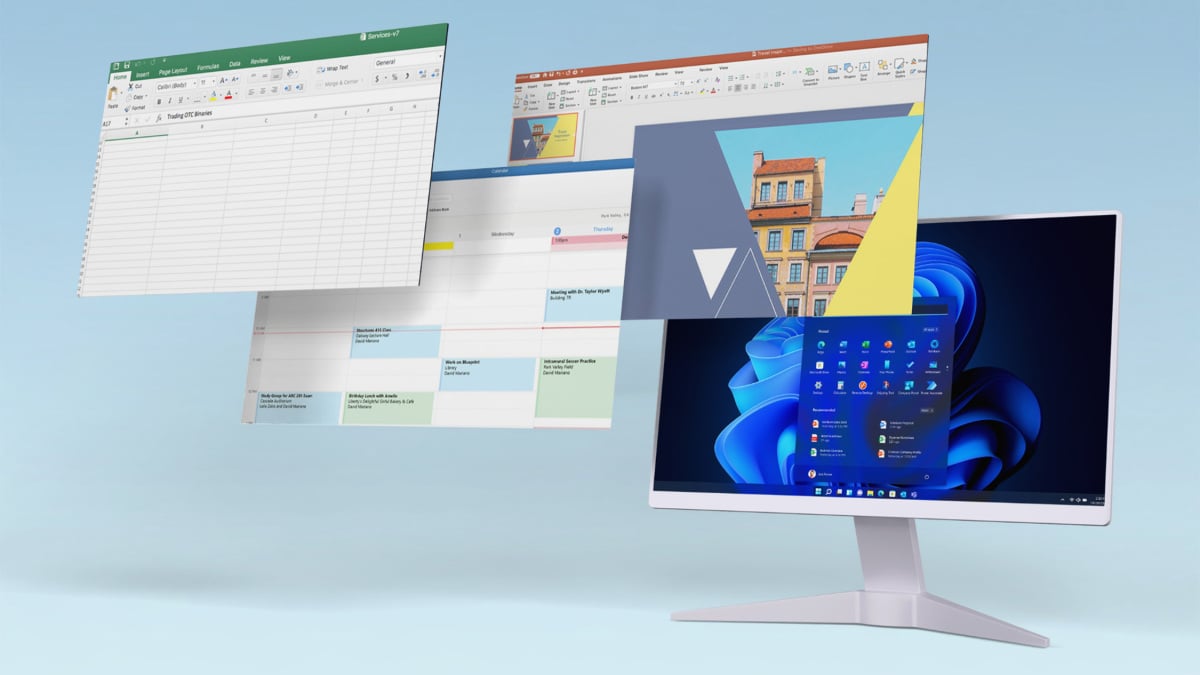
TL;DR: A lifetime license for Microsoft Office Professional 2021 bundled with Windows 11 Pro is on sale for $44.97 (reg. $418.99) through Feb. 22 at 11:59 p.m. PT.
$44.97
$418.99
Save $374.02
Microsoft Office remains a fundamental software for work and school, but subscription fees aren’t for everyone. For those who prefer a one-and-done approach, this bundle pairs a lifetime license for Microsoft Office Professional 2021 with Windows 11 Pro for $44.97 (reg. $418.99) through Feb. 22 at 11:59 p.m. PT.
Office 2021 Professional delivers the core suite that remains central to many daily routines: Word, Excel, PowerPoint, Outlook, OneNote, Publisher, Access, and Teams. These are full desktop versions, which are ideal for those who want offline access and a traditional layout. The familiar ribbon interface streamlines document creation and analysis, offering customization for layouts, fonts, and formatting. For those who don’t need cloud-first tools, Office 2021’s setup is a practical advantage.
Mashable Deals
The bundle’s other half is Windows 11 Pro, Microsoft’s current professional-grade operating system. Along with a streamlined design, it offers productivity and security features like BitLocker encryption, Windows Sandbox, Hyper-V virtualization, and advanced account controls. Copilot, Microsoft’s AI assistant, is also integrated — ready to summarize web pages, generate drafts, answer questions, or change settings from the taskbar.
This is a one-time purchase, not a Microsoft 365 subscription, so it does not include ongoing feature updates or cloud storage perks. Hardware requirements are modest — 4GB of RAM and 64GB of storage — but users should still check compatibility before upgrading.
Mashable Deals
This deal is well-suited for professionals, students, or small-business owners who prefer to own their software and skip subscription extras. If you fall into that group, $44.97 is a stellar price for securing both Office tools and Windows 11 Pro with no recurring fees. For those weighing their options, this bundle offers value and simplicity in one purchase. Get it today at this low price until Feb. 22 at 11:59 p.m. PT.
StackSocial prices subject to change.

Big Salad’s Birthday Sale!
The Apple MacBook Air M4 is close to $150 off right now at Amazon — act fast to score this low price


