
Tech
New York lawmakers propose a three-year pause on new data centers
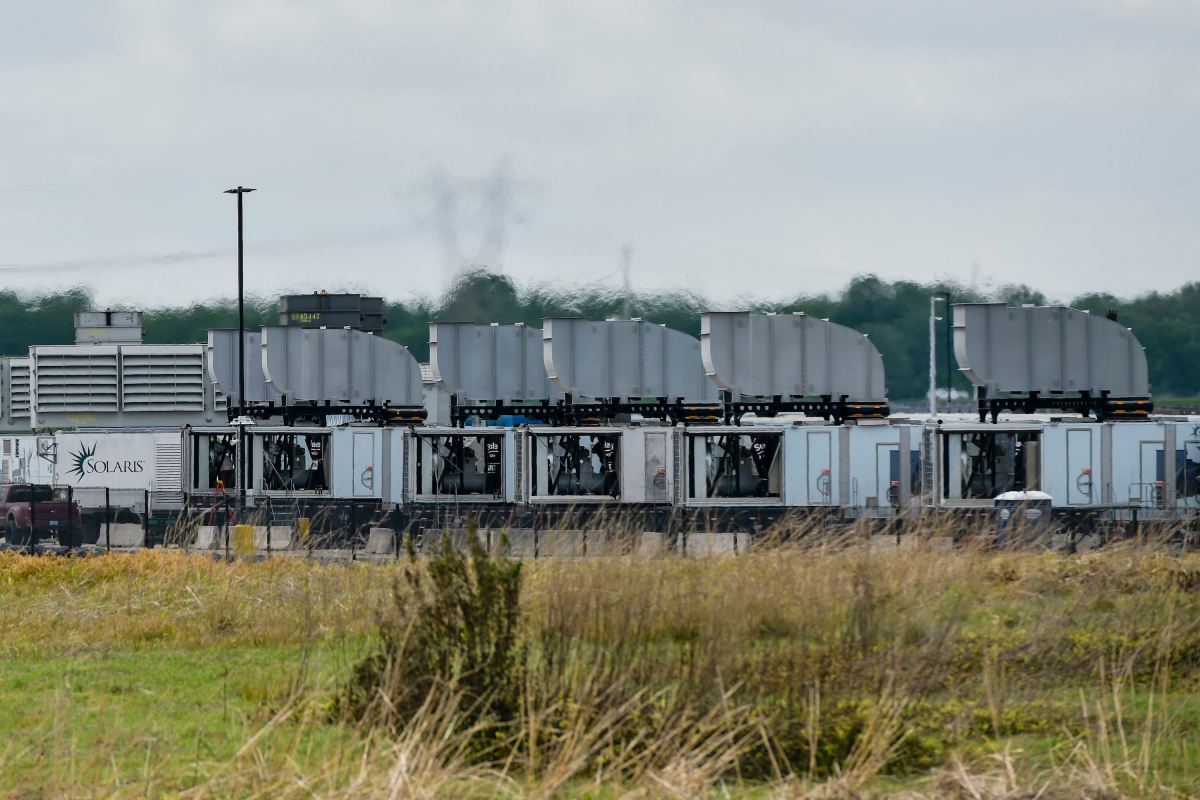
New Yorker state lawmakers have introduced a bill that would impose a moratorium of at least three years on permits tied to the construction and operation of new data centers. While the bill’s prospects are uncertain, Wired reports that New York is at least the sixth state to consider pausing construction of new data centers.
As tech companies plan to spend ever-increasing amounts of money to build AI infrastructure, both Democrats and Republicans have expressed concerns about the impact those data centers might have on surrounding communities. Studies have also linked data centers to increased home electricity bills.
Critics include progressive Senator Bernie Sanders, who has called for a national moratorium, as well as conservative Florida Governor Ron De Santis, who said data centers will lead to “higher energy bills just so some chatbot can corrupt some 13 year old kid online.”
More than 230 environmental groups including Food & Water Watch, Friends of the Earth, and Greenpeace recently signed an open letter to Congress calling for a national moratorium on the construction of new data centers.
Eric Weltman of Food & Water Watch told Wired that the New York bill — sponsored by state senator Liz Krueger and assemblymember Anna Kelles, both Democrats — was “our idea.” Data center pauses have also been proposed by Democrats in Georgia, Vermont, and Virginia, while Republicans sponsored similar bills in Maryland and Oklahoma.
According to Politico, Krueger described her state as “completely unprepared” for the “massive data centers” that are “gunning for New York.”
“It’s time to hit the pause button, give ourselves some breathing room to adopt strong policies on data centers, and avoid getting caught in a bubble that will burst and leave New York utility customers footing a huge bill,” she said.
Techcrunch event
Boston, MA
|
June 23, 2026
Last month, New York Governor Kathy Hochul announced a new initiative called Energize NY Development, which her office said would both modernize the way large energy users (i.e., data centers) would connect to the grid while also requiring them to “pay their fair share.”
Tech
Embattled startup Delve has ‘parted ways’ with Y Combinator

The controversy around Delve appears to have cost the compliance startup its relationship with accelerator Y Combinator.
Delve is no longer listed among YC’s directory of portfolio companies, and the Delve page seems to have been removed from the YC website. In addition, the startup’s COO Selin Kocalar posted on X that “YC and Delve have parted ways.”
“I still remember the day we took our YC interview at MIT,” Kocalar said. “We’re so grateful to the community and every founder friend we’ve made.”
YC isn’t the first investor to distance themselves from Delve. Insight Partners also appears to have deleted posts about its investment in the company, although its primary blog post was later restored.
Meanwhile, Delve continues to push back against anonymous claims that it misled clients by telling them they were compliant with privacy and security regulations while allegedly skipping important requirements and auto-generating reports for “certification mills that rubber stamp reports.”
Those claims were first published in an anonymous Substack post attributed to “DeepDelver,” who described themselves as a former Delve customer who became suspicious after receiving leaked data about the startup’s clients.
DeepDelver published subsequent posts sharing what they said were Slack and video posts from the company, as well as accusing Delve of passing off an open source tool as its own, without giving credit or reaching an agreement with the developer. A security researcher also said he was able to access sensitive Delve data.
Techcrunch event
San Francisco, CA
|
October 13-15, 2026
Meanwhile, Delve became part of a related controversy when malware was discovered in an open source project developed by Delve customer LiteLLM.
In the company’s latest blog post, Delve’s COO Kocalar and CEO Karun Kaushik declared their intention to set “the record straight on anonymous attacks.” Among other things, they claimed that the company has hired a cybersecurity firm “to help us understand what happened,” and said the “evidence points to a malicious attack rather than a genuine whistleblower.”
“It appears that an attacker purchased Delve under false pretenses, maliciously exfiltrated data, including Delve’s internal company data, and used it to launch a coordinated smear campaign against us,” they said. The blog post also includes a screenshot that they said “shows the attacker exfiltrating our audit tracking spreadsheet via file.io.”
Beyond this accusation, Delve also described DeepDelver’s criticism as “a mix of fabricated claims, cherry-picked screenshots, and data taken out of context.” For example, they said DeepDelver “dismisses our AI while acknowledging it automated 70% of a security questionnaire.”
On the question of using open source tools, Delve said it “built on an Apache 2.0 open-source repository, which explicitly permits commercial use, and significantly rebuilt it for compliance use cases.”
However, the executives also said they’ve been taking steps to ensure customers “feel confident in our platform and compliance outcomes.”
Those steps supposedly include cleaning up the company’s network to remove auditing firms “that don’t meet our standards,” “offering complimentary re-audits and penetration tests to all active customers,” and making it “unambiguously clear” that Delve’s templates for things like board meeting notes “are designed to be starting points only.”
In a post on X, Kaushik made many of the same points but also said, “[W]e grew too fast and fell short of our own standard. To our customers, we deeply apologize for the inconveniences caused.”
TechCrunch has reached out to Y Combinator and DeepDelver for any response to Delve’s comments.
Tech
Peter Thiel’s big bet on solar-powered cow collars
Founders Fund has made its name backing what Peter Thiel calls “zero to one” companies — businesses that don’t just improve on existing ideas but create something entirely new. Its portfolio includes Facebook, SpaceX, and Palantir. Its latest bet is a New Zealand startup that puts solar-powered smart collars on cows.
Halter, which closed a $220 million Series E at a $2 billion valuation last month, with Founders Fund leading the round, isn’t the kind of company that tends to dominate technology headlines. There is no agentic AI involved, no humanoid robots. There is, however, a very large and largely unsolved problem: How do you manage cattle spread across some of the most remote terrain on earth, without dogs, horses, motorbikes, or helicopters?
Craig Piggott, Halter’s 30-year-old founder and CEO, has spent nine years working on an answer. “If you manage a pasture-based farm, whether it’s dairy or beef, the most important variable is how you manage the productivity of your land,” Piggott told TechCrunch in a recent interview. “Fences are the lever — they control where animals graze and how you rest the land. Being able to do that virtually just made a lot of sense.”
The system Halter has built combines a solar-powered collar, a network of low-frequency towers, and a smartphone app to let farmers create virtual fences, monitor every animal around the clock, and move their herds without ever leaving the farmhouse. Cattle are trained to respond to audio and vibration cues from the collar — a process Piggott that likens to the way a car beeps as it approaches a wall while parking. Most animals, he says, learn within three interactions with a virtual fence. “Then you’re able to guide them and shift them around on sound and vibration alone.”
The collar does more than herd. Because it is always on and collecting behavioral data, it also tracks animal health, monitors fertility cycles, and flags when individual animals may be sick, capabilities that Piggott says have improved dramatically as Halter has accumulated what is likely the world’s largest dataset of cattle behavior. The company is now on its fifth generation of hardware, and its reproduction product is currently in beta with U.S. customers.
“The product that ranchers use today is radically different to what they bought a year ago,” Piggott said. “Every week, we’re releasing new things to our customers.”
Piggott grew up on a dairy farm in New Zealand before studying engineering and landing a brief stint at Rocket Lab, the rocket company that gave him his first glimpse of what a technology startup could be. “Rocket Lab was kind of my introduction to technology and startups and the world of venture capital,” he said. “Realizing you could raise money, hire a team, and chase an ambitious mission was inspiring. I wanted to do that in agriculture.” He started Halter at 21. “Probably a bit naive in hindsight,” he acknowledged, “but that was fine.”
Techcrunch event
San Francisco, CA
|
October 13-15, 2026
Nine years later, Halter’s collar is on more than a million cattle across more than 2,000 farms in New Zealand, Australia, and the United States, where the company operates in 22 states. The financial proposition for farmers is straightforward: By giving ranchers precise control over where their herds graze, Halter can lift the productivity of their land by as much as 20% — not by saving labor costs (though that happens, too), but by ensuring cattle graze more efficiently and leave less grass behind. “In some cases, we see customers literally doubling the output off their land,” Piggott said. “The upper ceiling for returns is very, very strong.”
Halter isn’t alone in spying the opportunity. Pharmaceutical giant Merck already makes its own virtual fencing system for cattle, called Vence, and newer entrants are circling too — at Y Combinator’s most recent “demo day,” a startup called Grazemate presented a vision for herding cattle with autonomous drones (no collars necessary).
Piggott seems unbothered by either. Asked about drones, he answers: “Can I see drones playing some small part in the future? Probably. But I don’t think a drone is the right form factor for the core fencing element of virtual fencing. A collar will probably be the right form factor for a very long period of time.” And as for the bigger competitive picture, he argues the real obstacle isn’t rival technology at all. “The biggest competition is just not changing anything,” he said. “It’s doing what you did last year.”
What sets Halter apart, Piggott argues, is the sheer engineering difficulty of what it has spent nine years solving — a system managing a thousand animals needs to be reliable to many nines of uptime, because even a 1% failure rate means ten animals out at any given time. “Chasing those many nines of reliability takes time,” he said, “and that long tail is what we proved out in New Zealand over many years before we started to expand globally.”
Halter is also something of an outlier in the agricultural technology sector, which has slumped in recent years as startups struggled to persuade farmers to adopt new products while managing high operational costs. Piggott attributes Halter’s traction to its relentless focus on financial return. “From day one, Halter has been built around a really strong financial ROI,” he said. “If you can lift the productivity of land by 20%, that flows through the entire business.”
Unlike most technology companies, Halter doesn’t view the United States as the center of its universe. “The U.S. market is important for us, but it’s not the world’s biggest market,” Piggott said. “Agriculture is spread around the world, and we need to get there too.” The company has now raised roughly $400 million in total and is prioritizing expansion across the U.S., South America, and Europe.
But the scale of the remaining opportunity is perhaps best captured in a single number — one that no doubt resonated with Founders Fund and Halter’s earlier backers, too. Halter’s collar is on one million cattle, while there are one billion more in the world. With less than 10% penetration in its home market of New Zealand alone, “We have a long way to go, and a lot of product still to build,” Piggott said.
You can listen to our conversation with Piggott on this newest episode of the StrictlyVC Download podcast, which drops Tuesdays.
Tech
OpenAI acquires TBPN, the buzzy founder-led business talk show
OpenAI has acquired popular tech industry talk show TBPN — Technology Business Programming Network — making this the AI giant’s first acquisition of a media company. The show will report to OpenAI’s chief political operative, Chris Lehane.
TBPN, hosted by former tech founders John Coogan and Jordi Hays, is a daily live show that airs on YouTube and X for three hours, focusing on tech, business, AI, and defense.
The show has gained a cult following in Silicon Valley, a safe space where industry power players can speak candidly and be questioned by fellow insiders. The show has a reputation for being something of a Sports Center for the tech industry — a place where top tech CEOs like Mark Zuckerberg, Satya Nadella, Marc Benioff, and, yes, Sam Altman, come to chop it up, react to the news of the day, and occasionally make some of their own.
TBPN will continue to live on as its own brand, which OpenAI will help scale. Not that it necessarily needed help on that front; TBPN has grown into an empire that’s on track to pull in more than $30 million this year, according to The Wall Street Journal.
OpenAI already has its own podcast for long-form conversations with the people building tech at the company.
OpenAI will also tap the founders’ “amazing comms and marketing instincts” outside the show, according to OpenAI’s head of AGI deployment, Fidji Simo, who said TBPN will “bring AI to the world in a way that helps people understand the full impact of this technology on their daily lives.”
Simo went even further, noting that TBPN’s prowess is necessary for an atypical company like OpenAI where “the standard communications playbook just doesn’t apply.”
Techcrunch event
San Francisco, CA
|
October 13-15, 2026
She said TBPN will have editorial independence and continue to “run their programming, choose their guests, and make their own editorial decisions.”
Still, the acquisition might give some pause. After all, OpenAI is a valuable AI lab on the brink of an IPO buying a buzzy talk show that often discusses the company and its competitors. And once the deal closes, TBPN will operate under OpenAI’s strategy team and report to Chris Lehane, the man who invented the phrase “vast right-wing conspiracy” as a tool to deflect press scrutiny of the Clinton White House.
Lehane, who has been described as a master of the “political dark arts,” is also behind the crypto industry super PAC Fairshake, which spent hundreds of millions to kneecap anti-crypto candidates in the 2024 election. He joined OpenAI that same year and has been in President Trump’s ear ever since, whispering recommendations for sweeping and controversial policies like preventing states from regulating AI and easing environmental restrictions that might slow data center construction.
OpenAI CEO Sam Altman, who said in a social media post that TBPN is his favorite tech show, seems to believe the acquisition won’t change TBPN’s commentary and even criticism of the company.
“I don’t expect them to go any easier on us, am sure I’ll do my part to help enable that with occasional stupid decisions,” he wrote.
TBPN, meanwhile, sees the acquisition as a means to do more than just commentary.
“While we’ve been critical of the industry at times, after getting to know Sam and the OpenAI team, what stood out most was their openness to feedback and commitment to getting this right,” Hays said in a statement. “Moving from commentary to real impact in how this technology is distributed and understood globally is incredibly important to us.”
Got a tip or documents about the AI industry? From a non-work device, contact Rebecca Bellan confidentially at rebecca.bellan@techcrunch.com or Signal: rebeccabellan.491.
Five Early 2026 MLB Takes That Might Already Be True
LeBron James, depleted Lakers face Mavericks


