
Entertainment
How Star Trek’s Strongest Female Character Ruined Dr. Crusher
By Chris Snellgrove
| Published

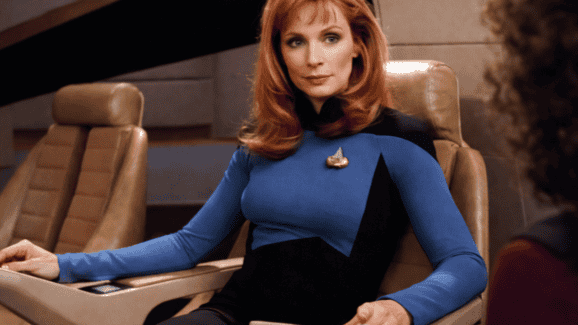
Arguably, the strongest female character in Star Trek: The Next Generation was Dr. Beverly Crusher. Not only was she the Chief Medical Officer, but she had the same rank as Commander Riker, the Enterprise’s swaggering first officer. Given the character’s rank, it would have been perfectly plausible for her to hop in the captain’s chair and take command on a relatively regular basis. However, Dr. Crusher actor Gates McFadden recently revealed why this didn’t happen: Star Trek’s producers kept her out of the captain’s chair to make the arrival of Voyager’s Captain Janeway feel more special.
This information comes to us courtesy of Fan Expo Portland, where McFadden got very candid about her time on Star Trek: The Next Generation. She explained that the producers “knew they were going to have a female captain fairly early on.” Finishing her thoughts, she noted that “while I was put sometimes in the captain’s chair, since I had the same rank as [Will Riker], they were careful about how much they wanted to do that, because they were saving that for when Voyager happened.”
The Doctor Is In (The Chair)
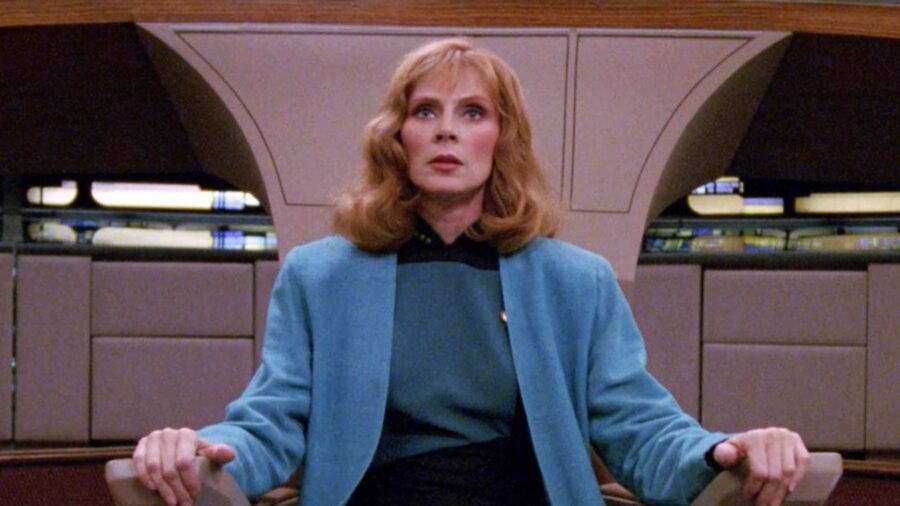
The most notable example of Dr. Crusher being put in command happened during the two-part episode, “Descent.” To help search for Commander Data, Picard inexplicably sends himself, his bridge crew, and half the ship to canvas an unknown alien planet, leaving Dr. Crusher in command of the Enterprise. Her command skills are really put to the test, though, when she has to figure out how to defeat a new type of Borg vessel, which (not unlike the old vessels) is more powerful than her ship in every way.
Using a combination of scientific know-how and more than a little plot armor, Dr. Crusher takes the Enterprise into the planet’s sun. After that, she uses the ship’s phasers to trigger a solar eruption that completely destroys the Borg vessel. After seeing the good doctor kicking butt and taking names in the captain’s chair, it’s understandable that fans wanted to see more of Crusher in command.
No Future In Command
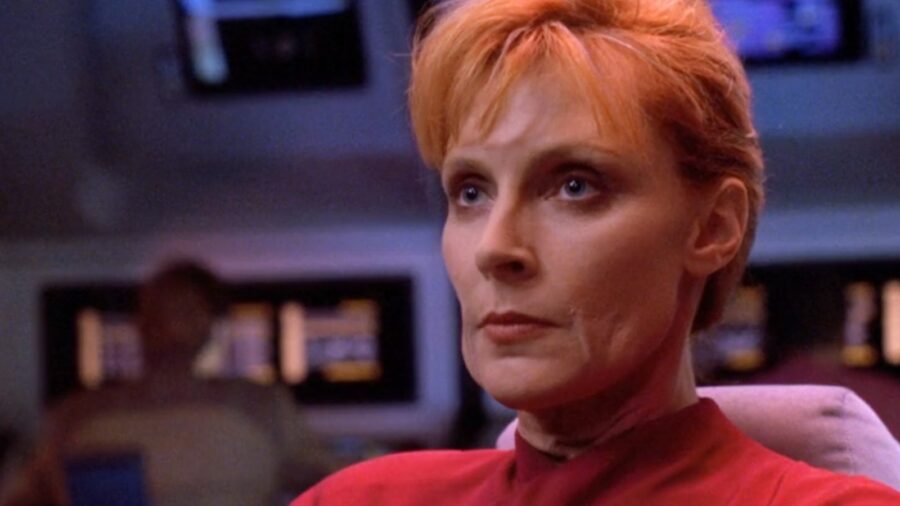
According to Gates McFadden, this didn’t happen very much because producers were busy developing Voyager. The timing of that show’s development generally matches McFadden’s account; Dr. Crusher led the Enterprise to victory over the Borg at the beginning of The Next Generation’s seventh season, which is exactly when the powers that be began working on Voyager. Because the producers knew the spinoff would have a female captain, they wanted to make Captain Janeway’s appearance special, effectively downplaying Dr. Crusher’s capabilities at commanding a starship.
Why was it so important for Voyager to have a female captain, though? While Deep Space Nine had proven to be a very successful TNG spinoff, Paramount wanted to create yet another Star Trek television show. Deciding that the new show would take place on a starship (hey, you can only do the space station gimmick once!), the producers faced a unique problem: how to make a new Star Trek show with this familiar setting that didn’t just feel like a lazy copy of The Next Generation.
Star Trek Leans In (At Dr. Crusher’s Expense)
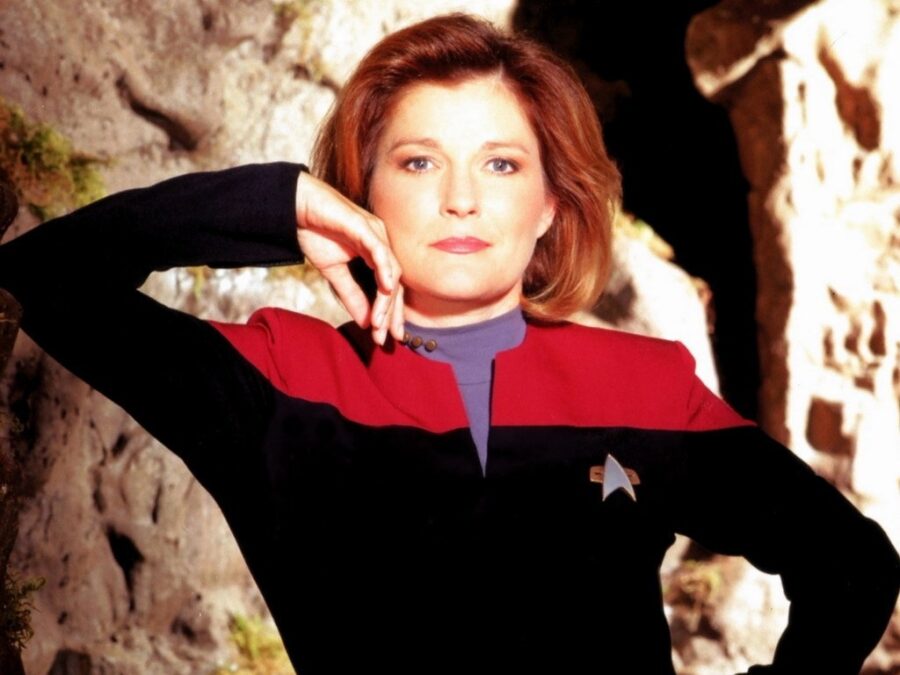
Part of what would ultimately make Voyager unique was its setting: namely, in the largely uncharted Delta Quadrant that the Borg call home. The crew would also be a mixture of Starfleet and Maquis personnel, which would provide (on paper, anyway) the potential for more character conflict than we ever saw on The Next Generation. Mostly, though, what set Voyager apart was that it was led by a female captain, a first for a franchise whose first show infamously claimed that women couldn’t become Starfleet officers.
Sadly, the production of Voyager kept Dr. Crusher sidelined from possible command duties. This is doubly painful because her character was often written very poorly, and she went from drunkenly throwing herself at Picard in Season 1 to boning down with a ghost in Season 7. She was also written out of Season 2 altogether by Maurice Hurley, the worst showrunner The Next Generation ever had.
Gates McFadden ultimately got the last laugh, though: Picard brought her character back for its third and final season, and both Dr. Crusher and her son became pivotal parts of the entire plot. This was arguably an even beefier revival of her vintage character than Kate Mulgrew got by voicing Captain Janeway in Prodigy. Furthermore, Picard even made Crusher an admiral and the new Head of Starfleet Medical, finally giving the dancing doctor her due after more than 35 years of writers holding her back!
Entertainment
Babylon 5 Is The Reason Millennials Love Ghostbusters

By Jonathan Klotz
| Published

Ghostbusters has had far, far more staying power than any other 80s comedy. It’s been quoted for decades, parodied since the moment it hit theaters in 1984, and there have even been two legacy sequels. What’s interesting about the franchise, however, is that as great as the original film was, it’s been able to remain popular thanks to the boost from the Saturday morning cartoon, The Real Ghostbusters.
Running for five years, the cartoon’s popularity helped the series reach a new audience and is as responsible, if not more, for the millennial generation’s love of the franchise as the movie. As it turns out, J. Michael Straczynski (JMS), the man who would go on to create Babylon 5, worked on the cartoon as one of his first jobs and wrote most of the series’ greatest episodes.
From Citizen Ghost To Midnight On The Firing Line

J. Michael Straczynski’s eye for detail is legendary in the world of sci-fi. He wrote out the entire story for Babylon 5 before even pitching the project, and his run on The Amazing Spider-Man is one of the greatest in history. His impressive ability to write and develop entire scripts at superhuman speed led to him getting called in when The Real Ghostbusters received a massive, 65-episode syndicated order from ABC.
The episodes he wrote included the Season 1 standouts “Take Two,” where the Ghostbusters go to Hollywood to consult on a movie about them, and it includes footage of the live-action movie. “Citizen Ghost” explains why Slimer is hanging out with them after being a villain in the original film, “Chicken, He Clucked,” about a man using magic to get rid of every chicken on the planet, and “Knock, Knock,” featuring a door not supposed to be opened until Doomsday, and well, it opens a little ahead of schedule.

It might be hard to imagine the same man who wrote “Midnight on the Firing Line” and “Between the Darkness and Light” for Babylon 5 also wrote “Doctor, Doctor,” the closest the series ever got to body horror. Some of the best cartoons of the 80s were written and edited by JMS. In fact, it’s not a stretch to say that his contributions to The Real Ghostbusters are why the entire franchise is fondly remembered today.
The Real Ghostbusters Was So Good You Forgot It Was A Commercial
Ghostbusters was such a runaway success that nothing the franchise has done since has come remotely close to replicating its success. Ghostbusters II couldn’t even reach the level of the first movie, and by the time of the legacy sequels, it had been so long that even die-hard fans thought they’d never see another official entry in their lifetime. It was the cartoon, with its resulting wave of action figures, playsets, and comics, that kept the franchise going.

Cartoons of the 80s were toy commercials, and The Real Ghostbusters was no exception, but in part thanks to the talented and creative mind of JMS, it overcame the low expectations to become a generational favorite. It’s not uncommon for fans of the franchise to say that the original movie is the best part, but close behind is the cartoon.
You can stream The Real Ghostbusters for free on The Roku Channel if you want to appreciate JMS’ writing a decade before Babylon 5 redefined sci-fi.
Entertainment
What Star Trek And Star Wars Must Learn From Netflix’s Most Popular Show
By Chris Snellgrove
| Updated

One of the more underrated parts of marriage is that you’re involved in a kind of ongoing cultural exchange. Over the course of a lifetime, both of you will introduce each other to various things you love. This includes favorite songs, foods, and books. Of course, if both of you are pop culture junkies, it also means favorite TV shows. Once you binge enough series with your partner, you’ll know plenty about what makes them tick, all while watching shows you might not otherwise check out.
That’s how I ended up watching Bridgerton, the breakout Netflix hit that all the ladies love. I was surprised by how much I liked this show that drives all the girls crazy, and equally surprised by how much I enjoyed its sprawling cast of quirky characters (#TeamBenedict over here). But as a lifelong sci-fi nerd, I was also struck by how much Star Trek and Star Wars could stand to learn from this Netflix show. You see, Bridgerton specializes in doing something that these legendary sci-fi franchises have forgotten how to do: simply giving fans more of what they love, year after year.
The Ultimate Ladies’ Show

Bridgerton is a show that takes place in an alternate universe 19th century and focuses on the titular Bridgerton family. Each season focuses on marrying off one of the Bridgerton brood, and there is plenty of drama about who they will end up with, along with plenty of scheming from the wealthy families of Regency-era London. Hovering over all of these proceedings are two powerful women: Queen Elizabeth, a monarch who loves nothing more than romantic drama, and Lady Whistledown, the anonymous author of a self-published tabloid who entertains everyone with gossip about the local residents.
What does a romantic drama aimed squarely at women have to do with Star Trek and Star Wars, two franchises that have often (though not exclusively) been aimed at men? The short answer is that, unlike these iconic sci-fi brands, Bridgerton never changes its essential formula. Sure, each season focuses on a different primary character and different stories among supporting characters. However, you can bet your latest copy of Lady Whistledown that each season will feature the following: a Bridgerton falling in love with an unlikely partner, drama about how they come from two different worlds, a handful of steamy sex scenes, and a big wedding.
The Farce Awakens

Mind you, this isn’t a criticism: the people making this show know exactly what their audience wants, and they deliver it each season, like clockwork. The first season of the show had over 82 million viewers, instantly becoming Netflix’s most-watched series of all time. Now, Netflix is on track to adapt all eight of Julia Quinn’s best-selling Bridgerton books into their own season. While the streamer has tweaked certain storylines, they generally hew close to the vibe of Season 1 because of a fairly simple philosophy: if it ain’t broke, don’t fix it.
The two biggest sci-fi franchises in the world didn’t get that memo. While The Force Awakens was a soft reboot of A New Hope, Disney spent the rest of the Sequel Trilogy trying to do something completely different than the original Star Wars trilogy. The failure of these movies was so complete that the House of Mouse pivoted to the small screen, where the biggest failures (like The Acolyte and The Book of Boba Fett) were the ones that deviated the most from the original formula. Successful shows, meanwhile, built off existing mythology (like Ahsoka and Obi-Wan Kenobi) or at least leaned into the spirit of the OT (The Mandalorian and Andor).
To Coldly Go
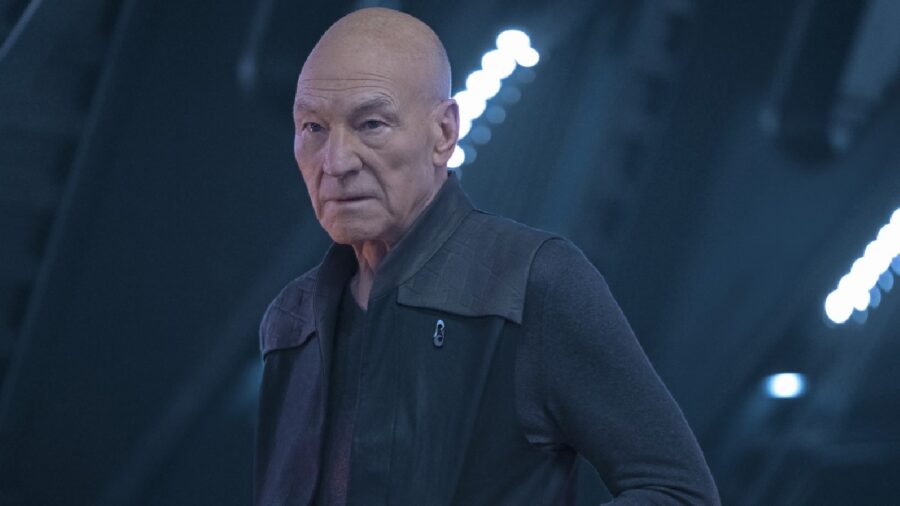
The same thing happened once Star Trek returned to the small screen. The most beloved shows have been the ones recreating the formula of The Original Series (like Strange New Worlds) or serving as a love letter to the Golden Age of ‘80s and ‘90s Trek (like Lower Decks). Some shows half-assed it: Picard only got good in the final season, when Paramount finally gave us the TNG reunion we wanted from the beginning. Discovery, however, only got canceled when it stopped trying to update TOS and tried doing something new. Disco spinoff Starfleet Academy was the most unconventional Trek ever made, and it was canceled immediately after its first season.
The lesson is so simple a blind man could see it (sorry, Geordi): the producers of these blockbuster sci-fi franchises need to stick with what works. Star Trek and Star Wars fans aren’t going to suddenly wake up one day and want something completely different than what they fell in love with in the first place. Like Luke Skywalker and his obsession with colorful milk, these fans know what they want. Simply put, they want the same formula with just a few minor tweaks and surprises. In other words, they want what Bridgerton fans are getting each season!

I’m no Lady Whistledown, but this is what I hope Disney and Paramount will learn from the success of Bridgerton: nobody wants you to change the formula and create, say, the “New Coke” of Star Wars. They want the stories of tomorrow grounded very firmly in the successful stories of yesteryear.
The more producers try to subvert our expectations and completely change what has worked before, the more they ruin what made these franchises successful in the first place. Netflix figured it out, and it’s time for other streamers to internalize the simplest message in the galaxy: if you keep giving the people what they want, they’ll keep wanting what you have to give!
Entertainment
Netflix Is Turning The Best Ever Superhero Crime Story Into A Series
By Jonathan Klotz
| Published

Comics haven’t been only for kids for a very long time, if ever, but the general public has had a perception that they are primarily superhero stories about good vs. evil and everything is resolved with a fight. There’s a whole world of comics out there that are different, but straddling the line between noir mysteries and cape-filled superheroes is Powers by Brian Michael Bendis.
The award-winning series follows two Chicago homicide detectives investigating the deaths of “powers” (superheroes). It’s a police procedural mixed with superheroes, and Netflix is making an animated series out of it, finally giving fans the adaptation they’ve wanted for 25 years.
One Of The Best Crime Comics Ever Printed

Powers starts off with a bang with the “Who Killed Retro Girl?” story arc, which introduces us to the detectives, rookie Deena Pilgrim and the veteran Christian Walker, both of whom have connections to the powers community that slowly come to light over the series. The blonde bombshell Retro Girl was one of the most popular superheroes, which means the list of suspects is long, from villains to those jealous of her success. It’s a classic noir storyline filled with red herrings, and it slowly peels back the layers of Bendis’ superhero universe, with each new revelation bringing with it even more questions.
The second arc, “Roleplay,” involves a college LARP (live-action roleplaying) club in which, of course, the members are being murdered one by one. It’s not as good as the first arc, but that’s more a testament to the quality of the first murder mystery than it is the second. No matter the story, it looks incredible thanks to the artwork of Michael Avon Oeming, with big, bold characters, colors, and matching the noir story by evoking the classic comics of the 1930s.
Second Time’s The Charm For Powers

Netflix’s choice to bring Powers to the service as an animated series makes sense not only because of the success Amazon has found with Invincible, another adult superhero series, but Sony’s 2015 live-action Powers series was a complete disaster. Starring Sharlto Copley as Walker, the show was the first original series for the PlayStation Network. If you forgot PSN ever had original shows, don’t worry, everyone forgot this happened despite the show airing for two full seasons.
This time, Powers is being handled correctly, and the move to animation means, hopefully, it will be closer to the source material. Invincible proved there’s an audience out there for animated adult superhero shows. It remains to be seen if there’s an equally massive audience for Netflix’s new show, which is more police procedural than action epic.

In September 2025, Powers came back for a new 12-issue run, proving that there’s at least an audience of comic readers out there anxious for more adventures in Bendis’ original universe. Advertising “from the creator of Miles Morales and Jessica Jones” will go much further in 2026 than it did in 2015. There’s still a wait to see if Netflix can pull it off, with no announced release date, but that’s alright, it gives you more time to hunt down the collected editions and enjoy one of the best superhero crime comics of all time.

Bucks get second chance against Clippers in same week
Tiger Woods’ Legacy at a Crossroads After Latest DUI Arrest


