
Tech
China is leading the fight against hidden car door handles
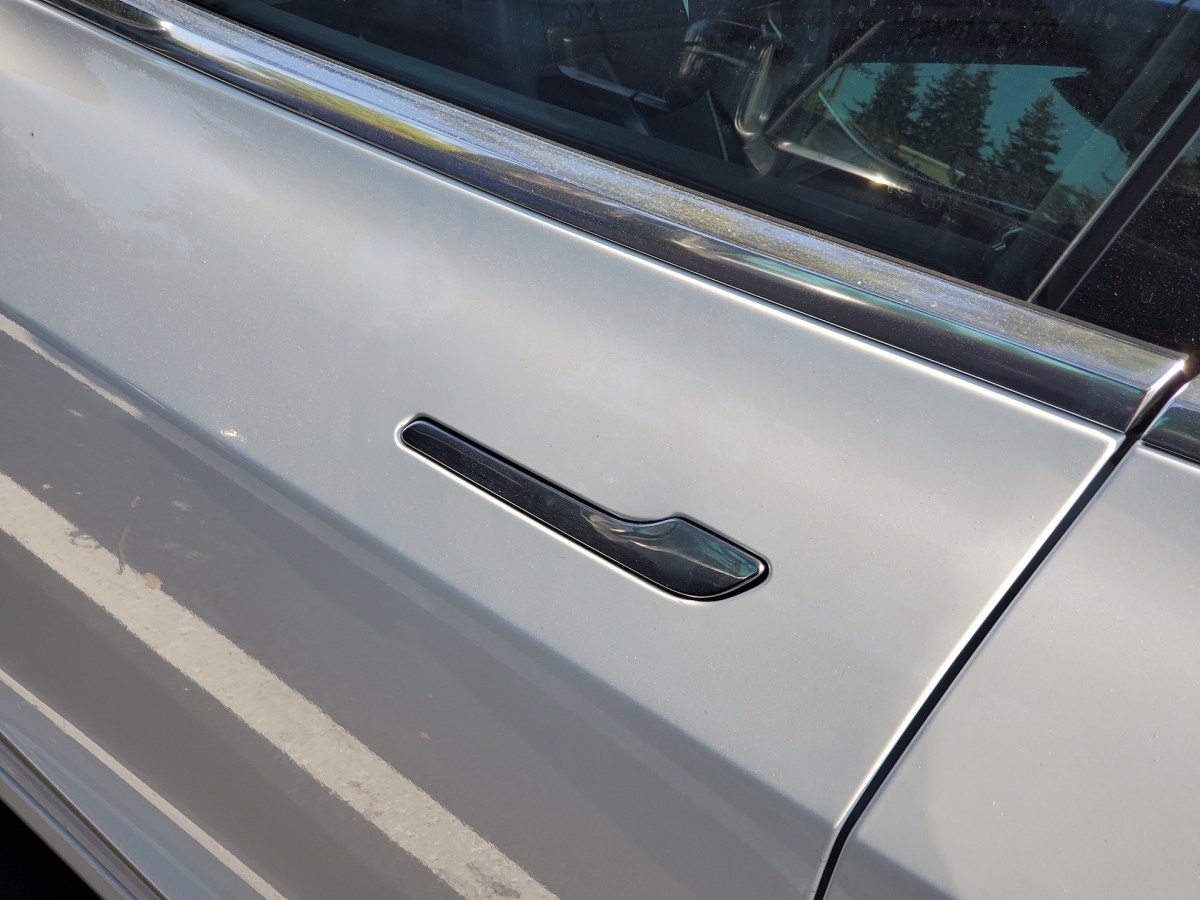
One of the design features that became synonymous with Tesla has been banned in China.
Under new safety rules published Monday by China’s Ministry of Industry and Information Technology, cars sold in the country must have mechanical releases on their door handles. The new rules, which go in effect January 1, 2027, will prohibit the hidden, electronically actuated door handles popularized by Tesla — and now found on numerous other electric vehicles in China.
The new rule dictates that each door (excluding the tailgate) should be equipped with a mechanically released external door handle. Vehicles must also have a mechanical release on the interior of the vehicle. Bloomberg previously reported on the new safety policy.
Numerous high-profile fatal incidents, in which occupants have become trapped in their vehicles, have raised concerns among safety regulators and advocates globally. China is the first country to issue a ban.
An investigation by Bloomberg last September uncovered problems with the concealed door handles on Tesla vehicles, citing several crashes in which first responders or occupants were unable to open the doors because the electronic door locks weren’t getting enough power from the vehicle’s battery system to work properly. The U.S. National Highway Traffic Safety Administration then opened a defect investigation into certain Tesla Model Y and Model 3 door handles. While Tesla does have manual releases inside its vehicles, federal investigators noted that the releases can be hard for children to access, and many owners are unaware of their existence. Some U.S. lawmakers have proposed regulation requiring manual door releases in all new vehicles.
Fatal incidents in China, including a crash involving a Xiaomi SU7 electric sedan, prompted regulators there to propose changes to EV door handles last year.
The Chinese government began the process in May 2025 with more than 40 domestic vehicle manufacturers, parts suppliers, and testing institutions participating in the initial research. More than 100 industry experts held multiple rounds of discussions to determine the standard framework and form a draft standard of what would become the Safety Technical Requirements for Automobile Door Handles rule, according to the Chinese government’s standards agency.
Techcrunch event
Boston, MA
|
June 23, 2026
That included dozens of automakers, including Chinese companies such as BYD, Geely Holdings, SAIC, and Xiaomi, as well as foreign automakers, including General Motors, Ford, Hyundai, Nissan, Porsche, Toyota, and Volkswagen. Tesla, however, was not listed as an official “drafter,” according to information posted on the standards agency’s website.
Tech
SXSW rebounds as a top networking, ideas festival for founders and VCs

The air felt different at this year’s SXSW, the annual March festival where tech meets pop culture in Austin. I was reminded of the 2019 SXSW when people packed downtown, and snake lines formed out of local ventures.
Attendees said it was like that again this year, though my friend, who lives in the area and has attended many times, admitted that some stuff has changed. For instance the festival is now two days shorter than it used to be. It was also “decentralized,” mainly due to the demolition of the Austin Convention Center, which scattered events and panels throughout downtown venues. That made the whole conference feel less overwhelming but also less connected.
The event is also still recovering from the pandemic, during which it laid off staff and went two years without much income. It’s switched hands since then and, as of this year, has adopted a new strategy.
Greg Rosenbaum, the SVP of programming at SXSW, said this year, the conference’s 40th anniversary, was its most “ambitious reinvention” yet. He cited changes like the new Clubhouses, for recharging, networking, and special programming, that attracted 5,000 people daily. He noted how attendees were experiencing “more of Austin and the downtown community.”
For at least the tech founders I spoke with, the conference remains immensely valuable, and everyone had the same advice: conferences like these, you get what you give.
After all, there were people to meet and panels to speak on. The Grammy-nominated Lola Young performed, Vox threw a hot party, the new Boots Riley film premiered, while Serena Williams and Steven Spielberg had keynotes. (I also moderated a panel about AI and taboo topics like relationships and money, which was pretty good if you ask me.)
Ashley Tryner-Dolce, an investor and founder, said the conference was still an “incredible gathering of ideas.” Like many festivals, though, she found the most “meaningful moments” happened at the side events — like INC’s Founder House party, where she connected with other founders and CEOs.
Techcrunch event
San Francisco, CA
|
October 13-15, 2026
“It’s less about the main stage and more about who you’re sitting across from,” she said.
James Norman, a managing partner at Black Ops VC, didn’t even have a proper badge to the festival. He threw an event to connect founders with opportunities and attended some film screenings and dinners.
“If you’re just showing up without the right connections or proximity to the rooms and conversations that matter, you’re going to struggle to unlock the real value of the event,” he said, which is exactly what Jonathan Sperber, a founder who participated in the SXSW pitch competition, also expressed.
“The value tends to depend on how well you prepare for it,” Sperber said, adding that his team made sure to have meetings lined up and a clear strategy going in. He called it an “effective setting for connecting with large enterprises and other key stakeholders.”
The talk of SXSW being dead has circled the industry for years, but that never seems to be the case. For every batch of tiring founders, emerges a crop of fresh eyes and ambition, ready to take advantage of what lies in the festival’s wake.
For example, this was Simon Davis’ first SXSW. He said that his overall impression was that it was “a media conference with a tech angle, not the other way around.” He praised the diversity of the event compared to other tech events (which we will spare to mentioning).
“At SXSW, you get a much wider range of people, backgrounds, and experience levels,” he continued. “The live music programming reinforces that. It’s a different energy entirely. Not somewhere you’d necessarily go to do deals as a tech company, but a great place to share and learn.”
This year, SXSW introduced a new badging system, meaning each person had a different experience, depending on what track badge they bought — film, music, or tech. I, for example, felt surrounded by conversations about AI and technology, and overheard other tech people talking about how the festival once had a stronger music focus (though it did seem, for sure, that there were more tech-focused panels this year than music showcases or film opportunities).
The conference also eliminated the secondary access that let people with, say, music badges get into film events. Instead, people had to buy the all-in-one premium badge for around $2,000. It also introduced a reservation system (to help with lines), where badge holders had to book time for whatever they wanted to do. That was true even for those with a platinum badge, like Sperber.
As a result, he said the festival didn’t feel like a place where anyone could just show up, and noted that some events booked up so quickly they were difficult to get into. The decentralized bit also made it harder to get around than he would have liked.
“I liked the openness and the ability to meet folks from all life experiences, got to really understand the city, and some of the interactive exhibits were very interesting,” he said.
Rosenbaum said the team made the decision to get rid of secondary access after hearing feedback that attendees want more of a “streamlined access across the badges, as well as more benefits for Platinum badges.” They also lowered the price of the platinum badge to make the all-in-one option more affordable. Reservations, meanwhile, will return next year, he said, citing positive feedback (aside from a few technical errors and capacity confusion). “We will certainly adjust and refine them as needed,” he said.
Norman described it as more of an “unconference” now, at least from his perspective. He said the event was more flexible, allowing people to move around, meet people, and then go to other places.
Rodney Williams, the co-founder of the fintech SoLo Funds, has also noticed a change, but again, it’s not necessarily a bad one. He’s been going to SXSW for more than a decade and has hosted events and spoken on panels. Usually, he goes for the entire festival, but this year, he decided to go only for a few days, throwing his own events and avoiding lines.
He said that for tech founders, SXSW has “moved from an intimate, scrappy discovery zone to a high-cost, high-competition space,” focused on “investor interaction and experiential marketing” — meaning companies with big budgets can put on the big activations and get more eyeballs.
“If you are attending for the first time or don’t have access to the right events or connections, the event can definitely prove to be tricky,” Williams said.
Adweek reported fewer spectacles overall and said that there was an absence of big tech companies advertising. Williams elucidated that even with the lack of big tech companies, advertising is still a big-bucks game.
“Companies with massive marketing budgets are usually the only ones participating, launching products, or throwing pricey events,” he said. “It wasn’t always like this, and that shift has taken away opportunities from the emerging tech companies that used to participate.”
Williams added, “Now, standing out requires more than just a great product, demanding significant marketing investment that only companies with huge budgets can do.”
That didn’t stop him from throwing a party this year. Norman either. In fact, the organizers expected around 300,000 people to show up this year (final numbers won’t be available until April), revealing that the conference has yet to lose its steam or its magic.
“I always enjoy it and make the most out of it,” Williams said.
Tech
TechCrunch Mobility: When a robotaxi has to call 911
Welcome back to TechCrunch Mobility — your central hub for news and insights on the future of transportation. To get this in your inbox, sign up here for free — just click TechCrunch Mobility!
Waymo shared that it is now providing 500,000 paid robotaxi rides every week. That number is small compared to its human-driven ride-hailing counterparts, like Lyft and Uber. But that’s not what I found most interesting. The pace of growth in rides, new markets, and how it compares to its fleet size is what got my attention. We built a chart (which you can view below) that helps visualize the rapid scale.
That scale, however, does create new challenges, including the inevitably of the robotaxis becoming paralyzed, like so many did during the blackout in California in December. It got us wondering, what happens when a robotaxi gets stuck — and who unsticks it?
Senior reporter Sean O’Kane dug into Waymo’s system (which includes its own roadside assistance team), as well as at least six incidents in which first responders had to step in and manually drive the stuck Waymo. In some cases, robotaxis got stuck in the middle of an emergency: A police officer responding to a mass shooting in Austin earlier this month was diverted to first move a Waymo robotaxi out of the way.
At its core, Sean found that when Waymo’s vehicles get stuck, the company relies on taxpayer-funded public services to move its vehicles for it.
Depending on who you talk to, this is either unacceptable, no big deal, or somewhere in between. In a recent hearing, San Francisco District 4 supervisor Alan Wong said that many of his counterparts agree that “our first responders should not be AAA.”
For those who shrug, I would suggest they think about what’s coming.
Techcrunch event
San Francisco, CA
|
October 13-15, 2026
This is not just a Waymo issue. Numerous companies are hoping to deploy paid robotaxis in the U.S. this year, including Motional and Zoox. Tesla, which has its service in Austin, has big ambitions too. Each company may have a different system with varying degrees of reliance on first responders.

A little bird

A little bird close to Uber recently shared a tidbit about Waymo, which the ride-hailing company has partnered with in a few cities. According to this insider, it takes up to 30% longer for a Waymo robotaxi to get somewhere compared to a human driver because of how careful the robot car needs to be and its tendency to avoid potential challenges like unprotected left turns. (Important note: I’ve been in lots of Waymos and these vehicles can absolutely handle left-hand turns, but they can be difficult and so it makes sense the robotaxis may avoid them.)
Got a tip for us? Email Kirsten Korosec at kirsten.korosec@techcrunch.com or my Signal at kkorosec.07, or email Sean O’Kane at sean.okane@techcrunch.com.
Deals!

Zipline, the U.S. autonomous drone delivery and logistics startup, has been around for years. Recently, its success in home delivery and continued global expansion has helped it attract even more money.
The company said it raised another $200 million, adding to a recent funding round originally announced in January. The additional funds, which included participation from crypto investment firm Paradigm, has pushed Zipline’s recent Series H round to $800 million. Fidelity Management & Research Company, Baillie Gifford, Valor Equity Partners, and Tiger Global participated in the initial tranche that valued the drone delivery startup at $7.6 billion.
My story homes in on why the startup may have found so many interested investors. TL;DR: Its at-home delivery volume growth beat its forecast in January and February, and CEO Keller Clifton said he expects it to over the next three months, relative to 2025.
Other deals that got my attention …
NoTraffic, an Israeli traffic management software startup, raised $90 million in a Series C funding round led by PSG Equity, Axios reported.
Rivian received another $1 billion from Volkswagen Group after completing one of its milestones under a technology joint venture between the two automakers. About $750 million is coming in the form of an equity investment. The other $250 million is either equity or convertible debt, depending on which prototypes Volkswagen Group provided to Rivian for testing. (The companies did not make this immediately clear.)
Shield AI, the autonomous military aircraft maker, raised $1.5 billion in Series G funding at a $12.7 billion post-money valuation. The deal was led by PE firm Advent and a JPMorganChase investment group.
Swish, a Bengaluru-based food delivery startup, raised $38 million in a Series B round led by Hara Global and Bain Capital Ventures. Other investors included Accel, Stride Ventures, and Alteria Capital.
Uber plans to invest in Verne, the robotaxi company under Rimac Group. The undisclosed investment, which insiders tell us should be resolved in the next few months, is part of a broader deal that includes Pony.ai to bring robotaxis to Europe, starting with Zagreb, Croatia.
Notable reads and other tidbits

DoorDash has introduced relief payments for drivers as the Iran-U.S. war drives up gas prices.
Harbinger, the EV trucking startup, continues to add to its product roster. This time, Harbinger’s chassis will be used in emergency vehicles for 70-year-old company Frazer.
Faraday Future is in the clear with the Securities and Exchange Commission. The SEC closed its investigation into the electric vehicle startup despite SEC staff on the case recommending an enforcement action last year.
Here’s a timely feature. Flighty, the popular flight-tracking app, released a new “Airport Intelligence” feature that gives users real-time alerts and reasons about airport disruptions, available across 14,000 airports in the world.
Sony Honda Mobility, the joint venture between the two Japanese conglomerates, is giving up on the two Afeela-branded EVs it spent the last few years developing. I received loads of press releases and invites to see the Afeela over the years and with each passing quarter it seemed less likely it would become a reality.
Utah’s governor signed a bill that establishes a liability framework for autonomous vehicles.
Zoox’s purpose-built robotaxis are navigating public roads in Austin and Miami after almost two years of operating its test vehicles in the cities. The company plans to start offering rides in both locations later this year as part of its early-rider program. Note: until its gets the exemption from the feds, Zoox can’t charge for rides.
One more thing …
Here are the results to my question regarding Rivian and its R2 robotaxi deal with Uber. As a reminder, this was the setup. Rivian plans to build thousands of R2 robotaxis, including the self-driving system. Is this a distraction and too big a risk OR is it critical to the company’s long-term future?
About 55% of voters believe it’s a distraction, while 45% said the robotaxi pursuit is critical to its long-term future.
Sign up for the newsletter to get Mobility in your inbox and participate in our polls!
Tech
Sora’s shutdown could be a reality check moment for AI video
OpenAI announced this week that it’s shutting down its Sora app and related video models just six months after launching the app.
On the latest episode of TechCrunch’s Equity podcast, Kirsten Korosec, Sean O’Kane, and I debated what the decision means for OpenAI and for the industry more broadly. To some extent, the move seems consistent with what we’ve been hearing about OpenAI as it focuses on enterprise and productivity tools ahead of a possible IPO.
In fact, Kirsten suggested that OpenAI’s decision to shutter Sora was “a sign of maturity that was nice to see in an AI lab.”
But Sora’s shutdown — along with ByteDance’s reported delay in launching its Seedance 2.0 video model worldwide — could also be a reality check moment for the makers of AI video tools, and for evangelists who claim these tools will be replacing Hollywood anytime soon.
Read a preview of our conversation, edited for length and clarity, below.
Anthony: I think it’s worth highlighting that it’s not just the app. I mean, the app was particularly unappealing to me, at least, and I think to other people, because it was this idea of a social network without people, where it’s just nothing but slop.
But beyond the app, it seems like OpenAI is basically winding down pretty much everything it’s doing with video. According to the Wall Street Journal, which broke some of this news, it’s really about this idea that Open AI is — in advance of potentially going public — really trying to focus on business products, enterprise products, programming products. [So] this consumer social app, [and] more broadly video, is not a priority right now.
Techcrunch event
San Francisco, CA
|
October 13-15, 2026
Sean: Yeah, I never really used [the app]. The idea of it turned me off for a number of different reasons. And you know, it was a good reminder that Open AI — and I don’t mean this to knock them down in really any way — but I think this was a reminder, probably, for them internally, of the element of luck […] in how successful ChatGPT became.
Clearly, there is something that is valuable there to people, I don’t want to take away from that, because you do not get to the usage numbers that we’ve heard reported from them without there being something that is working right —and even more so that it’s been kept up over a number of years and developed into something that stays meaningful to people.
But there was an element of Sora, when it came out, of like, “We built the most successful consumer product ever, and now we’re doing it again. And we’re going to bring in Disney and all this stuff.” I think this is just a really harsh reminder of like it’s not always going to be an absolute shortcut to the top of the greatest consumer products ever and that there really needs to be something that people feel like they’re getting some meaning out of it for it to stick around.
Kirsten: Yeah, I actually want to give OpenAI props for this decision, because we sometimes make fun of the whole idea of “move fast and break things,” but I think that there is some value [to] companies that can iterate very quickly and then kill off products that are not working and not feel a sense of failure behind it. I mean, there was real money that was lost. If you were to look at the deal with Disney, that was a billion dollar deal, but if you look at — and we don’t have the insight into this because we’re not seeing their balance sheets — but what were they spending on this and what was the long-term value for the company?
And I think that while, sure, it was interesting to see what they could create, their decision to shutter it, to me, showed a sign of maturity that was nice to see in an AI lab.
Anthony: In terms of what it means for OpenAI, it seems very consistent with everything that we’ve been hearing about their strategy going forward. It doesn’t seem like a huge blow or anything like that in terms of how we think about the future of generative AI.
Particularly in video, it’s interesting because it also comes at this time that there’s been reporting around Seedance, which is the ByteDance generative AI model [for video]. There’s reports that [Seedance 2.0 has] been delayed because there’s engineering and legal questions and basically [figuring out], “Can we build IP protections into this?” Which apparently they hadn’t taken as seriously before.
And so, it’s this reality check moment. There were these really hyperbolic statements, including from people within Hollywood that [were] like, “We’re done, this is the future, it’s just typing in prompts and making feature films.” And it turns out that for all kinds of technical and legal reasons, it is not that easy and we are very, very far from that happening.
Sean: And the last thing I think we should say about this, too, is this is one of a number of decisions that appear to be happening after Fidji Simo came in [and began] sort of running the day-to-day operations. That’s just a huge dynamic that’s changed inside of OpenAI. And I think the further we get away from that moment of of her being tapped to run the show, and especially these consumer products and decide the fate of them, the easier it’ll be to look back at this moment in time and think about how big a moment that was for this company.

Why WrestleMania Season Doesn’t Feel Like WrestleMania Right Now
UConn returns to Final Four after rolling past Notre Dame


