
Entertainment
Star Trek Just Ruined Its Best Alien Race, And The Explanation Makes No Sense

By Chris Snellgrove
| Updated
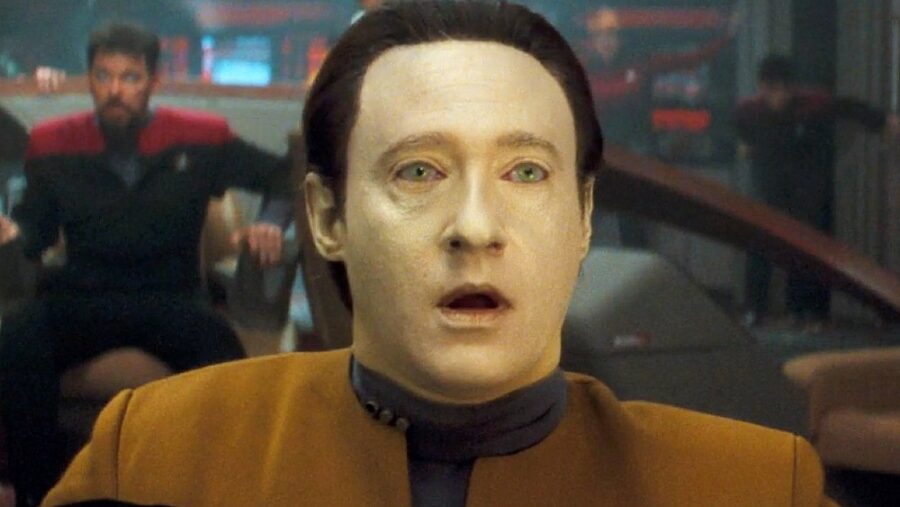
The fourth episode of Starfleet Academy, “Vox In Excelsio,” made some huge changes to the most famous alien race in all of Star Trek: The Klingons. The biggest change (and beware some spoilers the size of a warp core, this is your only warning!) is that the Klingon homeworld of Qu’onos has been completely destroyed because the Burn (introduced back in Discovery, Season 3) caused all of the planet’s dilithium reactors to explode. However, based on everything we know about dilithium from over 60 years of franchise history, this should have been completely impossible!
First, some context: since the days of Star Trek: The Original Series, we’ve seen starships traveling the galaxy thanks to the dilithium crystals that power their warp cores. After the crew of the USS Discovery jumped to the 32nd century, they discovered that both interstellar travel and the Federation had been devastated by an event called the Burn. The Burn caused dilithium throughout the galaxy to go inert, and this caused countless starships to explode because these crystals regulate the matter/antimatter reaction necessary to achieve warp speed.
Avoiding The Mistakes Of The Future, Today

Once the crystals went inert, the matter and antimatter collided in any ship with an active warp drive. This instantly caused the last thing any Starfleet captain wants to deal with: a warp core breach. Because of this, the Federation is still rebuilding by the end of Star Trek: Discovery, and Starfleet Academy is all about training the next generation of cadets who will make the galaxy a safer place as various planets and space empires continue recovering.
That brings us to the most recent episode of Starfleet Academy, “Vox Excelsius,” in which a reporter casually mentions that the Klingon homeworld of Qo’noS has previously been destroyed by the Burn. How did this work, mechanically speaking? The only explanation we get (aside from a dismissed conspiracy theory that “they blew it up themselves”) is that “the Burn caused dilithium reactors on Qo’noS and other worlds to explode.”
What The Experts Have To Say
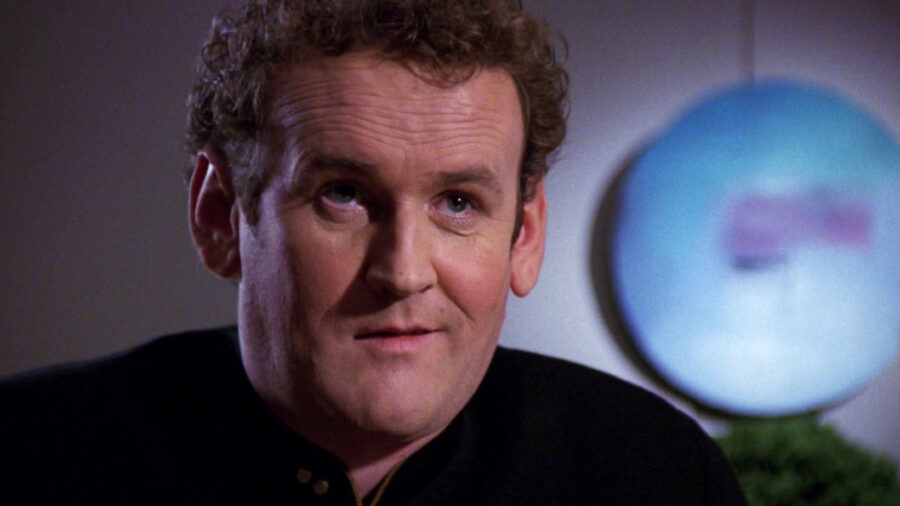
At first glance, this probably makes sense. After all, we know that the Burn affected dilithium in a way that made starships throughout the galaxy explode. Dilithium is both mined and stored on various planets, so the reporter’s breezy comment might make you think that the dilithium simply exploded with enough force to either destroy the Klingon homeworld outright or render it completely uninhabitable.
However, the starships destroyed by the Burn were only lost because the dilithium going inert caused instant warp breaches. While Starfleet Academy doesn’t really explain what a “dilithium reactor” is, it’s fair to assume that the Klingon homeworld was not attempting to travel anywhere at warp speed. The reactor is presumably meant to be a power source for Qo’noS, but at no point in Star Trek history has matter/antimatter been used to power anything other than warp drive.
Therefore, it’s only logical (Spock would be so proud) to determine that Paramount ruined the Klingons because the writers forgot how the Burn worked, which was established in the show that Starfleet Academy spun off from. This isn’t a case of the writers forgetting some obscure factoid introduced in The Original Series or even The Next Generation. Instead, they are ignoring a major story element that was introduced just a few years ago, a mistake made even worse by the other logical problems of this bizarre plot point.
Almost All Klingons Died For No Reason

For example, even though the Klingons are canonically stupid, why would they rely on dilithium as a power source? Even if we were to expect the idea (that flies in the face of established lore) that dilithium works as a planetary power source, Discovery previously established that dilithium had started becoming super scarce years before the Burn happened, which is why the Federation was researching alternative methods of achieving warp speed without dilithium crystals. Facing that same dilithium shortage, the Klingons could have easily traded out their dilithium reactors to power planets with fusion or solar power, both of which the Federation was relying on nearly a millennium ago.
Now, before the Star Trek fanboys come for me, I’ll concede that Starfleet Academy might explain all of this away in a future episode. Maybe we’ll get a technobabble explanation as to how dilithium reactors work, or we’ll get an in-universe reason why the Klingons never switched to another, more convenient power source once dilithium got insanely scarce. Heck, we might even get an explanation as to why the Klingons had these reactors on every single planet of their empire, something which seems like it would be overkill for smaller, more remote colonies.
Right now, though, none of this makes any sense, which is effectively bad news for Star Trek as a whole. The writers just ruined the franchise’s most iconic race, and they did so with a plot point that proves even they weren’t watching Discovery. You should act accordingly, when this kind of narrative stupidity causes you to unsubscribe from Paramount+, don’t forget to write in “exploding warp reactors” as the reason you are leaving.
Don’t think the Skydance Corporation will believe it? Trust me: if they bought Paramount, these guys will buy anything.
Entertainment
Euphoria Star Claims She Was Detained By ICE

By TeeJay Small
| Published

If you’ve been keeping up with the news, you may already know that ICE enforcers have been sent to airports all across the United States, in order to aid the TSA amidst staffing shortages. Unfortunately, not every flyer has found this back-up force helpful. Some have complained that ICE aren’t trained to properly do the job, while others have alleged that ICE agents are spending their time standing around, not helping at all.
For one intrepid traveler and Netflix actress, ICE has become a major thorn in an otherwise seamless travel experience. The star, Natasha Lyonne, took to X to describe a recent run-in with the Homeland Security force that left her unable to appear on the The Drew Barrymore Show as previously scheduled. In her post, Lyonne describes being detained after getting kicked off an April 7 flight from Los Angeles to New York.
Conflicting Sources Tell Conflicting Stories

Specifically, the X post explains that Natasha Lyonne “took a Lunesta once seated, to ensure some shut eye on the Delta One red eye flight.” Lyonne continued to claim “ICE had other plans & I was detained instead. Sign of the times, I guess … Never had a problem with Delta or TSA before.” The actress concluded her remarks with a thank you to tenured TSA officials, and an apology to other travelers who may have been disrupted by her altercation.
Curiously, a spokesperson for the Department of Homeland Security denies that this event ever took place, after a bit of investigating from reporters at Variety. DHS told the outlet “Neither ICE nor TSA escorted or detained Natasha Lyonne.” Clearly, someone isn’t being entirely truthful in this exchange, though recent developments at the government agency show that their record keeping leaves much to be desired.
Not An Ideal Travel Scenario

For now, it’s unclear whether Natasha Lyonne was in fact detained by ICE, or if there was a larger misunderstanding at play. Either way, she missed her slot on The Drew Barrymore Show, where she was going to promote her upcoming turn on HBO’s Euphoria.
Lyonne is perhaps best known for portraying Nicky on Orange Is The New Black, and Nadia Vulvokov on Netflix’s Russian Doll. She also appears in the Focus Features documentary Lorne, which is currently playing in select theaters. Hopefully, this alleged ICE interaction is a one-off, and not a “sign of the times,” as Lyonne suggests.
Entertainment
Apple AirPods Max 2 review: Same great style with the tiniest of upgrades
Apple‘s got new headphones in its lineup. Or does it?
The new AirPods Max 2 are the first proper upgrade to the company’s first and only set of over-the-ear headphones, which came out in 2020; the revised version in 2024 only got a USB-C port instead of Lightning, and Apple, again, just called them AirPods Max.
Now, the AirPods Max 2 are here, but the list of upgrades is once again pretty short. I’ve spent about a week with a pair to see whether these are worth their price; here’s what I found.
The 12 best headphones of 2026 — we tested the top contenders from Sony, Apple, Bose, and Beats
Design, colors, battery life: No changes
This is the first time, and possibly the last time, I’m lumping all of these together in a headphone review. The reason is simple: They’re all the same. The design, weight, and dimensions haven’t changed at all. Even the colors on offer are the same: Midnight, Starlight, Blue, Purple, and Orange.
I’ve had an old pair of Midnight AirPods Max with USB-C (check my full review), and the new ones Apple sent me were Blue. There’s literally no way of telling that these are different model numbers and two years apart.

On the left, the new AirPods Max 2. On the right, the old AirPods Max.
Credit: Stan Schroeder/Mashable
To be fair, there isn’t very much I’d change here, design-wise. These headphones look great, they’re incredibly sleek and comfortable, and even though I rarely use the physical controls on the right earcup, I have no improvement suggestions there, either.
Some people complain that the AirPods Max are too heavy. At 386.2 grams, they are pretty chunky; for comparison, Sony’s WH-1000XM6 and Bose’s QuietComfort Ultra headphones, which are also wireless, over-the-ear headphones with active noise cancellation, both weigh roughly 130 grams less. I don’t mind the weight, but if you do, just note that nothing has changed in this regard since the very first AirPods Max model.
Want to learn more about getting the best out of your tech? Sign up for Mashable’s Top Stories and Deals newsletters today.
What does annoy me is the fact that the AirPods Max can only be fully folded inwards, and when you do that, the chance of one earcup chaffing and scratching the other gets very high with each movement. Apple’s Smart Case is practically a must-carry for this reason alone, but I’m unhappy to report that the case is still the same as before: Unsightly and not very protective.

I like the look of the AirPods Max 2, and I don’t mind the fact that they’re pretty heavy but…they are pretty heavy.
Credit: Stan Schroeder/Mashable
The Blue color was nicer than I thought, because it’s far more silver than blue. It is a lot flashier and more noticeable on your head than Midnight, so if you’re looking for something subdued, Blue isn’t it. It is odd, however, that Apple didn’t introduce at least one new color with the new model.
Battery life is still listed at 20 hours with noise cancellation on, and I didn’t notice any difference between the old and the new model.
They sound pretty much the same, too
If you’re shopping for a pair of headphones, the way they sound should be pretty high on your list of priorities. With the AirPods Max 2, Apple left most of the hardware unchanged, with the biggest difference being the new H2 chip.
In theory, it should improve sound quality; in its marketing materials, Apple says the new model offers “elevated sound quality.”

As hard as I tried, I couldn’t hear the difference when it comes to sound quality.
Credit: Stan Schroeder/Mashable
Both the old AirPods Max and the new ones sound excellent. They offer a wide soundstage and plenty of detail across all frequencies. The sound is tuned so that the bass and treble are pronounced, while the mid-range is a little subdued. I prefer to fix that with a trick: On the iPhone, go to Settings – Accessibility – Audio & Visual – Headphone Accommodations; turn the setting on, and select “Tune audio for Balanced Tone”. I have it set to Moderate, which makes the overall sound brighter and the vocals more present.
With or without such tinkering, I could not hear the difference between the old and new models. My initial setup was to remove all equalization, turn off Bluetooth, connect the headphones to a MacBook Pro with a USB-C cable, and play some hi-res lossless track on Apple Music, while alternating between the two models. In such a setting, the two models sounded exactly the same.
With the biggest improvement to the new model being the H2 chip, I thought perhaps I could get a bigger difference by going wireless, and switching between various modes and options, including Transparency mode and Noise Cancellation. Nope. I still couldn’t hear a difference, aside from noise cancelling being better on the new model (more on that in a bit).
Better noise cancellation and tons of new software features

The noise cancellation has been improved.
Credit: Stan Schroeder/Mashable
Apple says the new H2 chip improves noise cancellation by 1.5x compared to the old model. I can’t vouch for that exact figure, but the noise cancellation has been audibly improved. I’ve tested it by blasting white noise and jet engine noise on various speakers around the house, and not only did the new AirPods Max 2 blocked more noise, but they were also better at reducing noise depending on where I turned or how I moved my head.
That said, Apple’s AirPods Max 2 still aren’t particularly great at noise cancellation. While not directly comparable as they’re a different type of headphone, Apple’s own AirPods Pro 3 earbuds are a better choice, and not by a little. Wearing them on a busy street makes the outside noise vanish in a spectacular fashion; the AirPods Max 2 make the noise more tolerable, but the effect isn’t nearly as noticeable.
The AirPods Pro 3 are worth mentioning here because they also have the H2 chip, and with this latest upgrade, Apple’s AirPods Max 2 are essentially catching up with them. This means the AirPods Max 2 now also have features like Adaptive Audio, Conversation Awareness, Live Translation, Voice Isolation, Personalized Volume, Loud Sound Reduction, and Siri Interactions. These are all great since they’re optional. For example, I like to manually switch Noise Cancellation on and off, but if you prefer the headphones to do it automatically, Adaptive Audio is the way.
Still pretty great, but not all that new

The AirPods Max 2 are still a great product, but if you have an old model, you don’t really need to upgrade.
Credit: Stan Schroeder/Mashable
The AirPods Max 2 are Apple’s only over-the-ear headphones (if you don’t count Beats), and they’re an excellent product. They sound pretty good, play nice with Apple hardware, they look great, and they’re very comfy (if you don’t mind the weight). They’re pricy, and you can get better-sounding headphones for the money, but you will never get all of the features listed above in one product.
As a second-generation product, however, they aren’t great. They’re basically the same as the original, with the only meaningful upgrade being the new H2 chip. This does enable a number of new features as well as improve noise cancelling, but that’s where the list of improvements ends. And yes, they’re still priced at $549, which is more than you’ll pay for similar headphones from Sony, Bose, or Sennheiser.
As a result, I can recommend the new AirPods Max 2 in one case only: If you’re an avid Apple user shopping for over-the-ear headphones for the first time. If you have a pair of old AirPods Max at home, it’s not worth upgrading, and I’d argue that if you just need something that cancels noise well, you’d do better if you just bought the AirPods Pro 3.

Entertainment
Lego’s May the 4th Star Wars drop is here, and half the sets are under $50
With May the 4th coming up, my nephew and I are getting ready for our mandatory apartment tradition: hitting up BrickinBad (a local “Lego collector hub”) so he can pick out a new set for us to build together over the weekend. Neither of us is a huge Star Wars fan, but you don’t have to be to appreciate a good Lego build.
Lego’s annual May the 4th drop is known for being an expensive, shelf-clearing event. But looking at the 2026 lineup, the prices are pretty reasonable. Yes, there’s a $250 Ultimate Collector Series ship in the mix, but most sets run just under $50.
The official promotional event runs from May 1 to May 6, but seven of the eight new sets hit shelves early on April 26. But, if you hold off and buy them in May, Lego will throw in exclusive freebies — like a free Darksaber set if you spend over $160.
Whether you’re treating yourself to some new desk decor or taking a kid on a weekend toy run, here’s the full breakdown:
Lego Star Wars The Mandalorian’s N-1 Starfighter (75442)

If you’re going to splurge this Star Wars day, make it this one.
Credit: Lego
It wouldn’t be May the 4th without a ridiculously detailed Ultimate Collector Series model to anchor the event. This 1,809-piece N-1 Starfighter is the priciest set of the bunch at $249.99, but buying it automatically scores you an exclusive Mandalorian and Grogu Display gift. It drops on May 1 for Lego Insiders and May 4 for everyone else, so you’ll want to jump on it before it sells out.
Mashable Trend Report
Lego Star Wars The Razor Crest (75447)
If you want a more affordable weekend project ($250 is kind of steep), Mando’s iconic original ship is a great alternative. This 930-piece version of the Razor Crest hits shelves on April 26, and if you wait to buy it during the May event for $149.99, it qualifies for a free Razor Crest mini-build.
Lego Star Wars Grogu, Mandalorian Apprentice (75446)

Because there’s no such thing as too much Grogu.
Credit: Lego
For fans who prefer building characters over ships, this 1,200-piece model portrays Grogu in his apprentice era. (Holding off to buy this one in May also gets you the free Razor Crest mini-build.) It’s intricate enough to display on an office desk without looking too toy-ish, plus there’s really no such thing as too much Grogu merchandise in your apartment.
Lego Star Wars Anzellan Starship (75445)

A must-have if you love Babu Frik.
Credit: Lego
If you’re a fan of Babu Frik and his adorable droidsmith species, this 701-piece ship is a mid-range option. It drops on April 26 for $74.99 and is another set that’ll score you the free Razor Crest mini-build if purchased during the promotional window.
Lego Star Wars Darth Vader Bust (75439)

Come to the dark side.
Credit: Lego
You can grab this 349-piece Darth Vader bust starting April 26. It’s great if you just want a small, $49.99 piece of the May the 4th action for your desk. If you want to complete a classic trilogy display while building up your cart to hit that $160 Darksaber freebie threshold, you might want to consider adding the Yoda bust to your cart too.
Lego Star Wars AT-RT Attack

A fun, action-focused build.
Credit: Lego
At 297 pieces, this AT-RT Attack is the smallest and most affordable set of the entire drop. It hits shelves on April 26 for $44.99, giving you a quick, action-focused build that qualifies you for the free Razor Crest mini-build. It’s also a great pick if you’re taking a kid on a toy run and don’t want to do any real damage to your bank account.
Lego Star Wars The Mandalorian and Grogu: Allies & Villains (40856)

A solid mid-size build to celebrate the iconic duo.
Credit: Lego
This 661-piece set drops just ahead of the holiday on April 26 and leans heavily into the Mando hype. At just $39.99, get a decent amount of bricks to keep you busy for an afternoon without emptying your wallet. Plus, it’s an easy add-on to throw in your cart if you’re just trying to cross that $160 finish line for the free Darksaber.
Lego Star Wars Yoda Bust (75438)

A quick, affordable build for fans of the original trilogy.
Credit: Lego
If you prefer the classics over the newer Disney+ shows, this 399-piece Yoda bust is a quick and affordable build. It won’t take up your entire weekend to finish, but still helps you hit the $160 minimum to get the free Darksaber set.

Inconsistent Nationals face challenge in surging Braves
On 5-game win streak, Cubs aim to add to Phillies' woes


