
Tech
Apple buys Israeli startup Q.ai as the AI race heats up
Apple, Meta, and Google are locked in a fierce battle to lead the next wave of AI, and they’ve recently increased their focus on hardware. With its latest acquisition of the AI startup Q.ai, Apple aims to gain an edge, particularly in the audio sector.
As first reported by Reuters, Apple has acquired Q.ai, an Israeli startup specializing in imaging and machine learning, particularly technologies that enable devices to interpret whispered speech and enhance audio in noisy environments. Apple has been adding new AI features to its AirPods, including the live translation capability introduced last year.
The company has also developed technology that detects subtle facial muscle activity, which could help the tech giant enhance the Vision Pro headset.
The Financial Times reported that the deal is valued at nearly $2 billion, making it Apple’s second-largest acquisition to date, after buying Beats Electronics for $3 billion in 2014.
Notably, this is the second time CEO Aviad Maizels has sold a company to Apple. In 2013, he sold PrimeSense, a 3D-sensing company that played a key role in Apple’s transition from fingerprint sensors to facial recognition on iPhones.
Q.ai launched in 2022 and is backed by Kleiner Perkins, Gradient Ventures, and others. Its founding team, including Maizels and co-founders Yonatan Wexler and Avi Barliya, will join Apple as part of the acquisition.
The news comes a few hours ahead of Apple’s first quarterly earnings, in which analysts are estimating revenue at around $138 billion. It’s also expected to be the company’s strongest iPhone sales growth in four years.
Techcrunch event
Boston, MA
|
June 23, 2026
Tech
New York lawmakers propose a three-year pause on new data centers
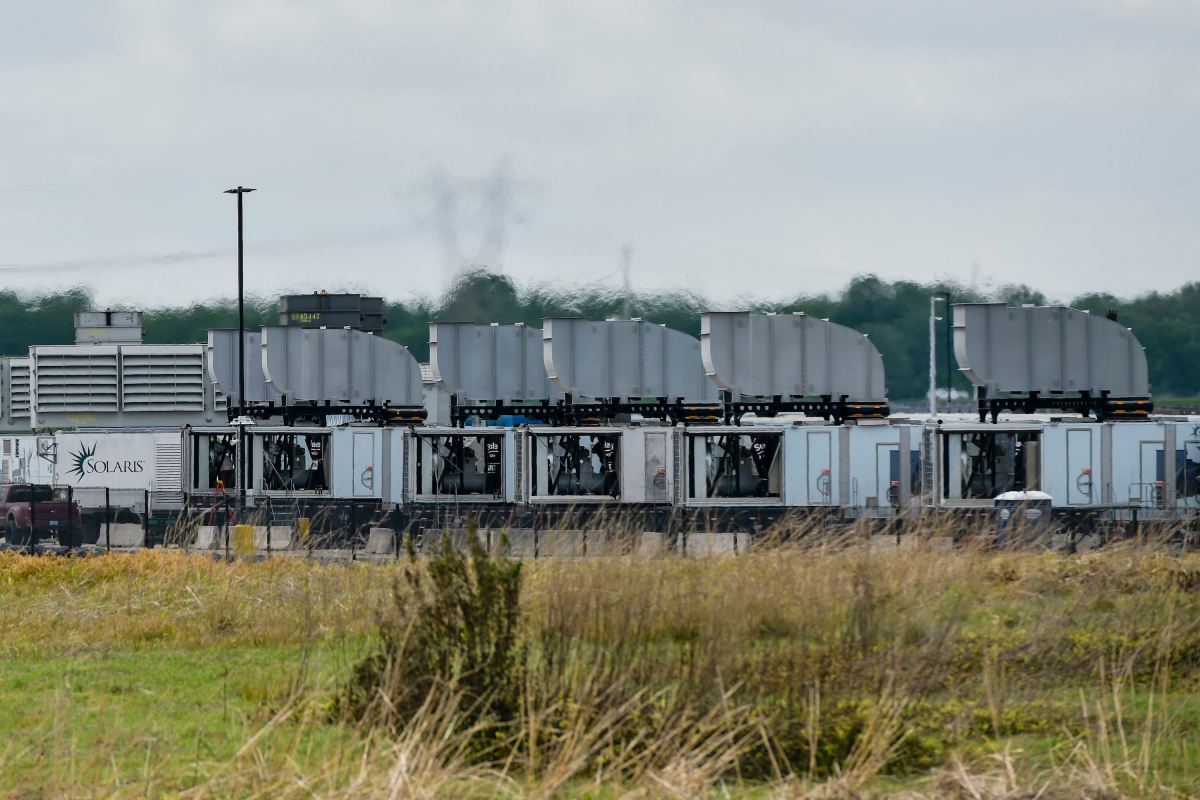
New Yorker state lawmakers have introduced a bill that would impose a moratorium of at least three years on permits tied to the construction and operation of new data centers. While the bill’s prospects are uncertain, Wired reports that New York is at least the sixth state to consider pausing construction of new data centers.
As tech companies plan to spend ever-increasing amounts of money to build AI infrastructure, both Democrats and Republicans have expressed concerns about the impact those data centers might have on surrounding communities. Studies have also linked data centers to increased home electricity bills.
Critics include progressive Senator Bernie Sanders, who has called for a national moratorium, as well as conservative Florida Governor Ron De Santis, who said data centers will lead to “higher energy bills just so some chatbot can corrupt some 13 year old kid online.”
More than 230 environmental groups including Food & Water Watch, Friends of the Earth, and Greenpeace recently signed an open letter to Congress calling for a national moratorium on the construction of new data centers.
Eric Weltman of Food & Water Watch told Wired that the New York bill — sponsored by state senator Liz Krueger and assemblymember Anna Kelles, both Democrats — was “our idea.” Data center pauses have also been proposed by Democrats in Georgia, Vermont, and Virginia, while Republicans sponsored similar bills in Maryland and Oklahoma.
According to Politico, Krueger described her state as “completely unprepared” for the “massive data centers” that are “gunning for New York.”
“It’s time to hit the pause button, give ourselves some breathing room to adopt strong policies on data centers, and avoid getting caught in a bubble that will burst and leave New York utility customers footing a huge bill,” she said.
Techcrunch event
Boston, MA
|
June 23, 2026
Last month, New York Governor Kathy Hochul announced a new initiative called Energize NY Development, which her office said would both modernize the way large energy users (i.e., data centers) would connect to the grid while also requiring them to “pay their fair share.”
Tech
NBA star Giannis Antetokounmpo joins Kalshi as an investor

Giannis Antetokounmpo of the Milwaukee Bucks announced Friday that he has joined prediction market Kalshi as a shareholder, making him the first NBA player to invest directly in the company.
“The internet is full of opinions. I decided it was time to make some of my own,” said the two-time NBA MVP in a social media post. “Today, I’m joining Kalshi as a shareholder. We all on Kalshi now.”
The announcement has not gone over well on social media. On Reddit, for example, one user described it as “literally a conflict of interest,” while another described Kalshi as “cancerous” and yet another wondered, “is this even allowed.”
According to The Athletic, the NBA’s recent collective bargaining agreement allows players to advertise and take stakes of up to 1% in sports betting companies, as long as they’re not promoting league-related wagers.
Kalshi said it will partner with Antetokounmpo on marketing and live events — and in accordance with the company’s “strict terms of service that ban insider trading and market manipulation,” he will not be allowed to trade on markets related to the NBA.
Tech
Benchmark raises $225M in special funds to double down on Cerebras
This week, AI chipmaker Cerebras Systems announced that it raised $1 billion in fresh capital at a valuation of $23 billion — a nearly threefold increase from the $8.1 billion valuation the Nvidia rival had reached just six months earlier.
While the round was led by Tiger Global, a huge part of the new capital came from one of the company’s earliest backers: Benchmark Capital. The prominent Silicon Valley firm invested at least $225 million in Cerebras’ latest round, according to a person familiar with the deal.
Benchmark first bet on 10-year-old Cerebras when it led the startup’s $27 million Series A in 2016. Since Benchmark deliberately keeps its funds under $450 million, the firm raised two separate vehicles, both called ‘Benchmark Infrastructure,’ according to regulatory filings. According to the person familiar with the deal, these vehicles were created specifically to fund the Cerebras investment.
Benchmark declined to comment.
What sets Cerebras apart is the sheer physical scale of its processors. The company’s Wafer Scale Engine, its flagship chip announced in 2024, measures approximately 8.5 inches on each side and packs 4 trillion transistors into a single piece of silicon. To put that in perspective, the chip is manufactured from nearly an entire 300-millimeter silicon wafer, the circular discs that serve as the foundation for all semiconductor production. Traditional chips are thumbnail-sized fragments cut from these wafers; Cerebras instead uses almost the whole circle.
This architecture delivers 900,000 specialized cores working in parallel, allowing the system to process AI calculations without shuffling data between multiple separate chips (a major bottleneck in conventional GPU clusters). The company says the design enables AI inference tasks to run more than 20 times faster than competing systems.
The funding comes as Cerebras, based in Sunnyvale, Calif., gains momentum in the AI infrastructure race. Last month, Cerebras signed a multi-year agreement worth more than $10 billion to provide 750 megawatts of computing power to OpenAI. The partnership, which extends through 2028, aims to help OpenAI deliver faster response times for complex AI queries. (OpenAI CEO Sam Altman is also an investor in Cerebras.)
Techcrunch event
Boston, MA
|
June 23, 2026
Cerebras claims its systems, built with its proprietary chips designed for AI use, are faster than Nvidia’s chips.
The company’s path to going public has been complicated by its relationship with G42, a UAE-based AI firm that accounted for 87% of Cerebras’ revenue as of the first half of 2024. G42’s historical ties to Chinese technology companies triggered a national security review by the Committee on Foreign Investment in the United States, bumping back Cerebras’ initial IPO plans and even prompting the outfit to withdraw an earlier filing in early 2025. By late last year, G42 had been removed from Cerebras’ investor list, clearing the way for a fresh IPO attempt.
Cerebras is now preparing for a public debut in the second quarter of 2026, according to Reuters.


Apple’s 2017 MacBook Air is now 80% off

Everything we know about the iPhone Fold: Specs, pricing, rumors and leaks


