
Entertainment
Charlize Theron's Forgotten R-Rated Thriller On Netflix, Explores A Twisted Past
By Robert Scucci
| Published

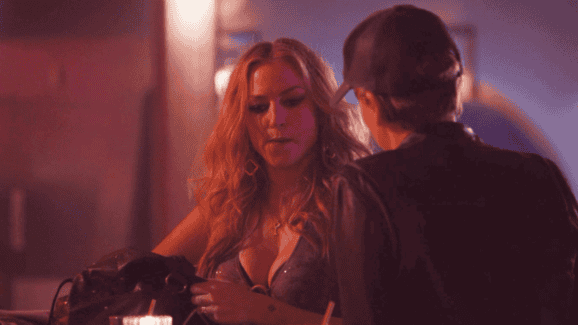
Around the time Charlize Theron was transitioning out of one massive studio project (a little film called Mad Max: Fury Road) and into something far smaller and more restrained, she took on the 2015 crime thriller Dark Places. Based on the best-selling novel of the same name and fully committed to its mystery, Dark Places was mostly forgotten upon release, earning just over $5 million at the box office against its reported $11.9 million production budget. Even worse, the film took a beating on the critical front, landing at 23 percent with critics on Rotten Tomatoes and a not much better 33 percent approval rating on the Popcornmeter.
While I don’t necessarily agree with that harsh of an assessment, Dark Places is a difficult watch because it tries to do too much at once. It’s one of those cases where the timelines it explores are better suited for the page than the screen. What’s meant to be a present-day mystery informed by grisly events from decades earlier becomes a narrative tangle, which is frustrating because the screenplay itself is solid, the acting is even better, and the individual components mostly work. The problem is how those components collide.
Defined By Trauma, Motivated By Money

Dark Places’ present-day mystery centers on Libby Day (Charlize Theron), the sole survivor of a family massacre that occurred when she was just 8 years old, portrayed in flashbacks by Sterling Jerins. Her older brother Ben (Corey Stoll) was charged with the crime and is currently serving a life sentence. Ben insists that Libby never knew the whole story, and that when he was a teenager, portrayed by Tye Sheridan, there were other suspects who were never properly considered.
In the present day, Libby survives on donations tied to her notoriety as the girl whose family was murdered. As the years pass and public interest fades, that money dries up, creating financial pressure that not even her ghostwritten book is able to relieve. When Libby is approached by Lyle Wirth (Nicholas Hoult) and invited to speak at his true crime club, she agrees on the condition that she’s paid. Defined by her trauma and motivated by survival, Libby sees it as a necessary move to keep the lights on. That calculation changes quickly once she realizes what Lyle is actually after.

While Lyle does run a true crime club, it operates on two very different levels. The bottom floor caters to casual hobbyists, while the upper floor is filled with people who dedicate their free time to actively solving cold cases. Lyle believes Ben may be innocent, but Libby’s childhood testimony was compelling enough to secure a conviction. As far as Libby remembers, she told the truth. Still, she’s forced to confront the idea that memories formed under extreme trauma may not be as reliable as she once believed.
Initially showing up purely for the money, Libby agrees to visit her brother in prison to hear his version of events. That conversation sends her along a breadcrumb trail of half-buried truths, pushing her closer to the possibility that someone else murdered her family while Ben took the fall.
Two-Story Structure Kills The Momentum

On paper, Dark Places has a compelling setup. An estranged brother and sister work toward the same goal years after they’re separated, each carrying their own version of the truth. The tension is baked in, since Libby’s testimony put Ben behind bars, even though she was just a child and every piece of evidence at the time pointed directly at him. Ben has either accepted his fate or is playing a long game that even Lyle and his crew of amateur sleuths can’t fully see through.
Alternating with the present-day story is a second narrative set in 1985, leading up to the night of the murders. These scenes are drip-fed with the intention of eventually colliding with the present-day revelations. It’s a strong idea conceptually, but one that becomes unwieldy in execution. The audience can slowly piece things together as the film goes, but by the time Dark Places reaches its midpoint, most of the major cards are already on the table if you’re familiar with the genre.

Dark Places leans heavily into well-worn tropes, and to its credit, it executes them competently. The downside of that level of reliability is a story structure that follows a painfully familiar logic, which softens the impact of the mystery. The dual narrative is meant to heighten the tension, but instead it undercuts its own reveal. While I wouldn’t argue that Dark Places deserves its current critical score, it’s easy to understand why it left so many viewers feeling underwhelmed. All the pieces for a compelling thriller are present, they just never lock together in a way that feels satisfying.

For its performances and its core concept alone, Dark Places is worth a watch. But if you’re hoping for a mystery that really gets its hooks into you, this probably isn’t the one that will do it.

Dark Places is streaming on Netflix.
Entertainment
Snag a pair of Bose QuietComfort Ultra headphones for $50 off

SAVE $50: As of May 6, get the Bose QuietComfort Ultra Headphones (2nd Gen) for $399 at Amazon, down from their usual price of $449. That’s a discount of 11%.
$399
at Amazon
$449
Save $50
If you want to experience your favorite music to the fullest, you need headphones that are up to the task. Bose can typically be counted on to provide that kind of quality, especially with its QuietComfort lineup. You can try its newest model for less right now for less thanks to this Amazon deal, which heavily discounts the cans so you don’t have to spend an arm and a leg on them.
As of May 6, get the Bose QuietComfort Ultra Headphones (2nd Gen) for $399 at Amazon, down from their usual price of $449. That’s $50 off and a discount of 11%.
Though an incremental upgrade from the previous QuietComfort model, these have some new features you’ll want to try out. But mostly, these comfortable headphones are all about feeling great on your ears and sounding fantastic. They offer noise cancellation and spatialized audio so it sounds as though you’re right where the music is. The new Cinema Mode can help to spatialize and balance background and sound and sound effects when watching movies to help put you right into the film as well.
Beyond that they can be used to take calls with their built-in microphones. They’ll last a long time while you’re on the phone too, with 30 hours of play time when listening to songs, podcasts, or taking meetings.
Mashable Deals
Mashable Lead Shopping Reporter Bethany Allard took the headphones for a spin in her review and and called them a “well-rounded pair of headphones”, praising their blend of “comfort, noise cancellation, and sound”.
If you’re ready to pick up a new pair of headphones at a discount that’ll tick all the boxes for you, grab these before the discount disappears.
Entertainment
Score up to 64% off at EcoFlow and snag free solar panels with your purchase.
SAVE 64%: Between May 6 and May 17, you can score up to 64% off at EcoFlow and snag free solar panels with your purchase.
Get up to 64% off plus a free solar panel with purchase
I live in an apartment, so I don’t exactly have a “whole home” to back up. But if there’s one thing I hate, it’s losing power. There goes the AC, the internet, the food in the fridge — it’s a total nightmare. If you actually own a house and have been putting off buying a backup power system because it’s pricey, I have some good news.
The DJI Power 1000 Mini portable power station just launched — U.S. availability is pending
Right now, EcoFlow is running a Mother’s Day Sale through May 17 with discounts as high as 64%. They’re also throwing in free hardware to sweeten the deal: All single orders between $600 and $3,000 come with a free 45W solar panel, and orders over $3,000 come with two free 160W solar panels. If you’re looking for something more portable, their RAPID Power Banks are also up to 53% off right now.
Just keep an eye on the countdown clock — it’s for the Flash Sale items that have even better, limited-time price cuts. If you miss the flash window, the standard Mother’s Day and Home Improvement deals (including a $700 installation discount for larger systems) are still valid through mid-May.
Mashable Deals
Here are a few of the best deals I’ve spotted so far:
Entertainment
Maddies Secret trailer reveals John Early as youve never seen him before
Comedian John Early makes his feature directorial debut with Maddie’s Secret, an offbeat homage to melodrama that he wrote and headlines as its eponymous heroine.
As an aspiring food influencer, Maddie Ralph (Early) is passionate about her cuisine. And at first glance, she’s got a picture-perfect life: a loving husband (Eric Rahill), a devoted best friend (Kate Berlant), and a job at a culinary content studio called Gourmaybe. But as the title suggests, there’s a side to Maddie she can’t stomach sharing with her loved ones. And this secret could kill her.
Out of the movie’s premiere at the Toronto International Film Festival last fall, I cheered Maddie’s Secret, writing in my review for Mashable, “The film is silly and strange, but even amid campy bits, sincere. So, you’ll laugh at its parody elements, but may well be genuinely moved by Early’s commitment to this strange and splendid film.”
I also said “John Early is a better ingénue than Sydney Sweeney,” comparing Maddie’s Secret to another earnest (but less entertaining) TIFF offering, Christy. And I stand by it.
Maddie’s Secret opens in theaters in New York on June 19, and in Los Angeles on June 26.

Snag a pair of Bose QuietComfort Ultra headphones for $50 off
Score up to 64% off at EcoFlow and snag free solar panels with your purchase.


