
Entertainment
Cairn review: Its Peak for the real climbing freaks
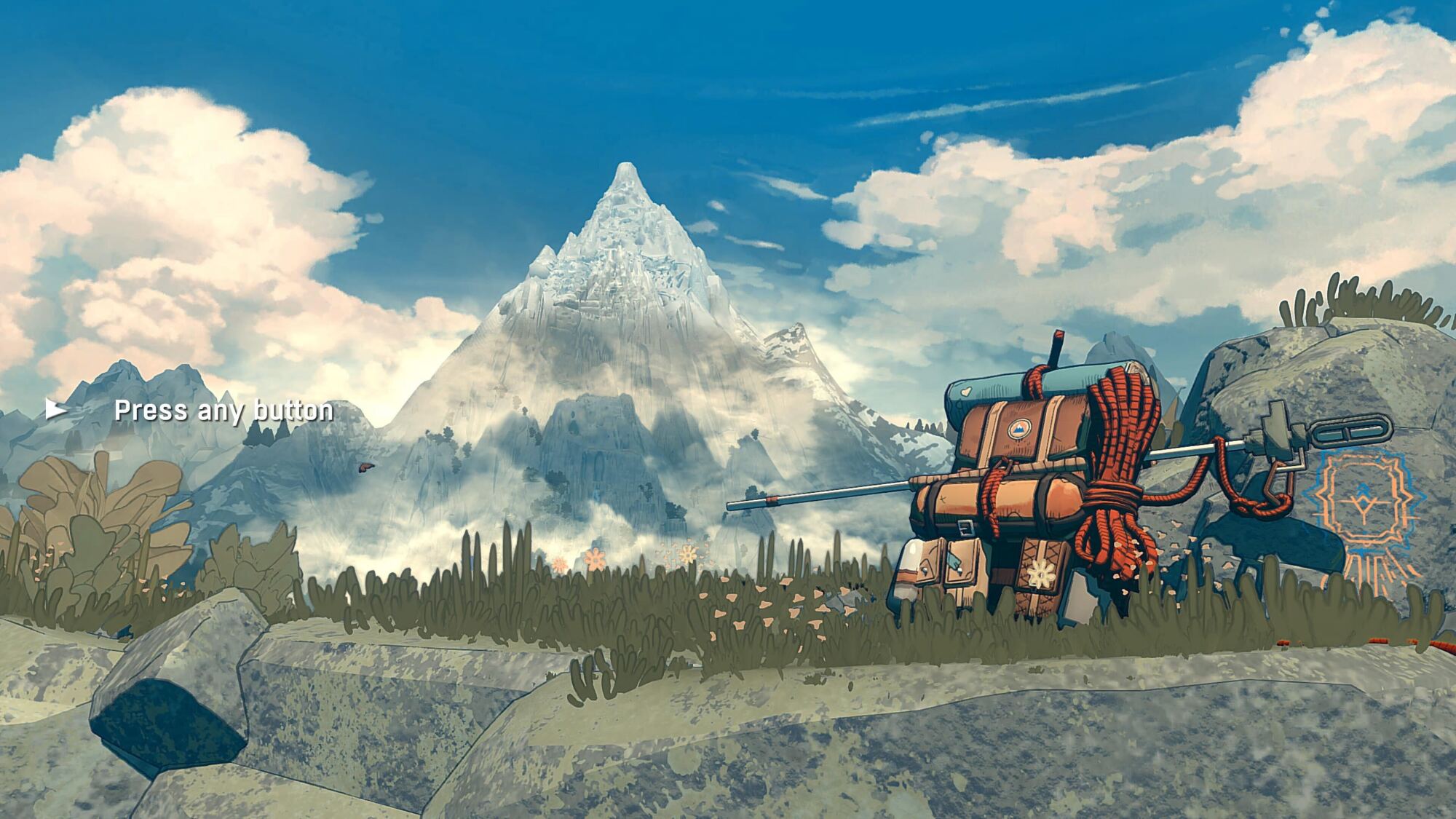
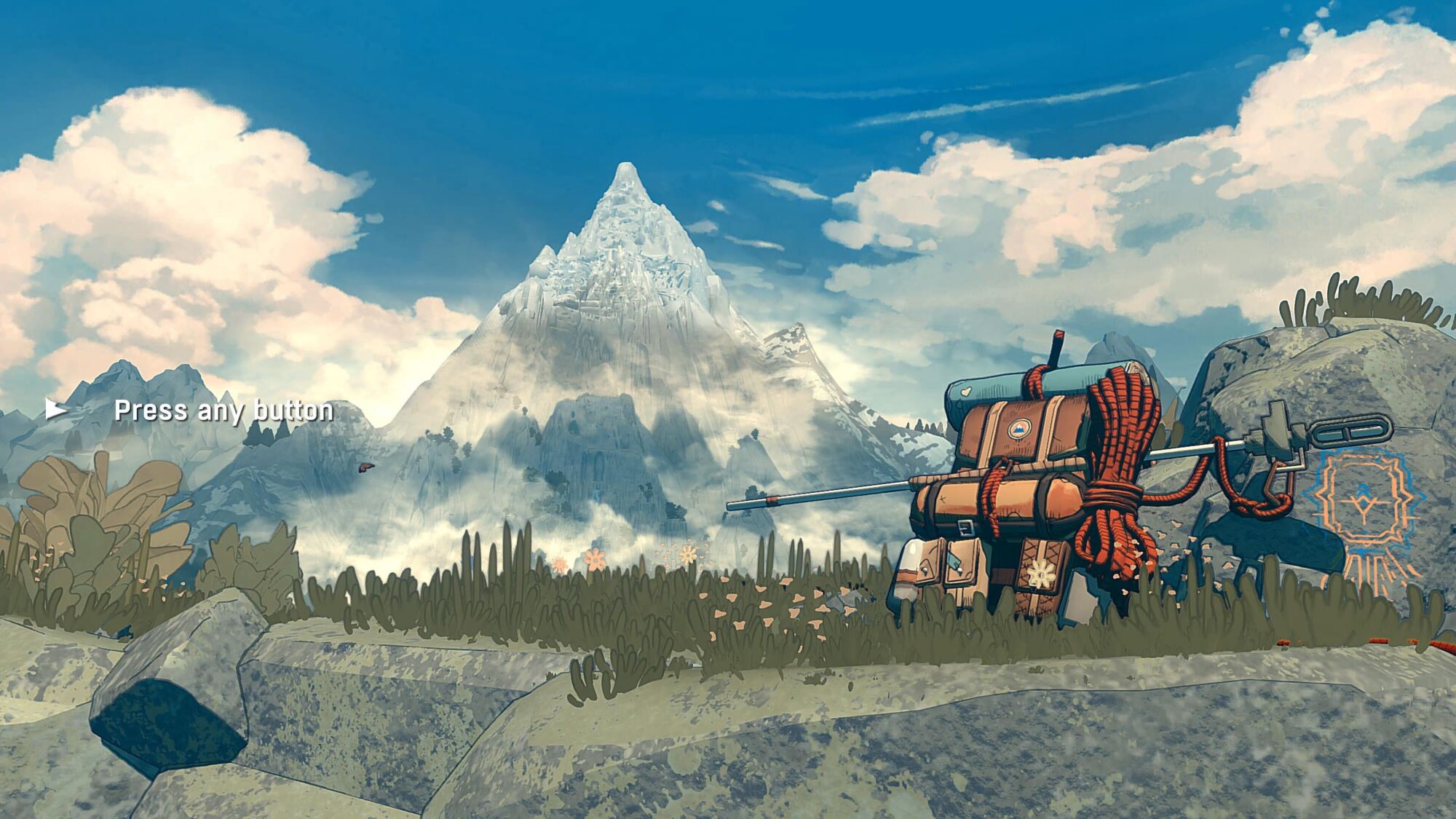
Consider it impeccable timing: just days after Alex Honnold pulled off another completely unhinged free-solo climbing feat, a video game arrives for anyone who watched that and thought, “I want to do that too, but preferably without the risk of death.” That game is Cairn, and instead of a skyscraper, it gives you a mountain.
Cairn is the latest release from French developer The Game Bakers, and it may be the first survival climbing game of its kind. Rather than treating climbing as a fun co-op game or a quick gimmick, Cairn commits fully to the act itself, presenting a simulation-style ascent of the fictional Mount Kami, a peak no climber has ever successfully summited. That distinction doesn’t deter the game’s protagonist Aava, an experienced and well-known climber who takes on the mountain while also running from unresolved problems in her life.
If you’ve played Peak, the recent co-op climbing game built around chaotic teamwork and shared problem-solving, Cairn feels like its solitary opposite. Where Peak turns climbing into a social exercise defined by coordination, communication, and the occasional disastrous misstep, Cairn strips all of that away, leaving you alone with the rock, your stamina, and the consequences of every decision. It’s a quieter, more deliberate take on climbing.
For now, the narrative framing is secondary. What matters is the climb, and Cairn delivers one of the most compelling gameplay experiences I’ve had this year. Yes, it’s still January, but the highs I hit while playing Cairn on PlayStation 5 will be difficult to top in the months ahead.
To the top
Credit: The Game Bakers
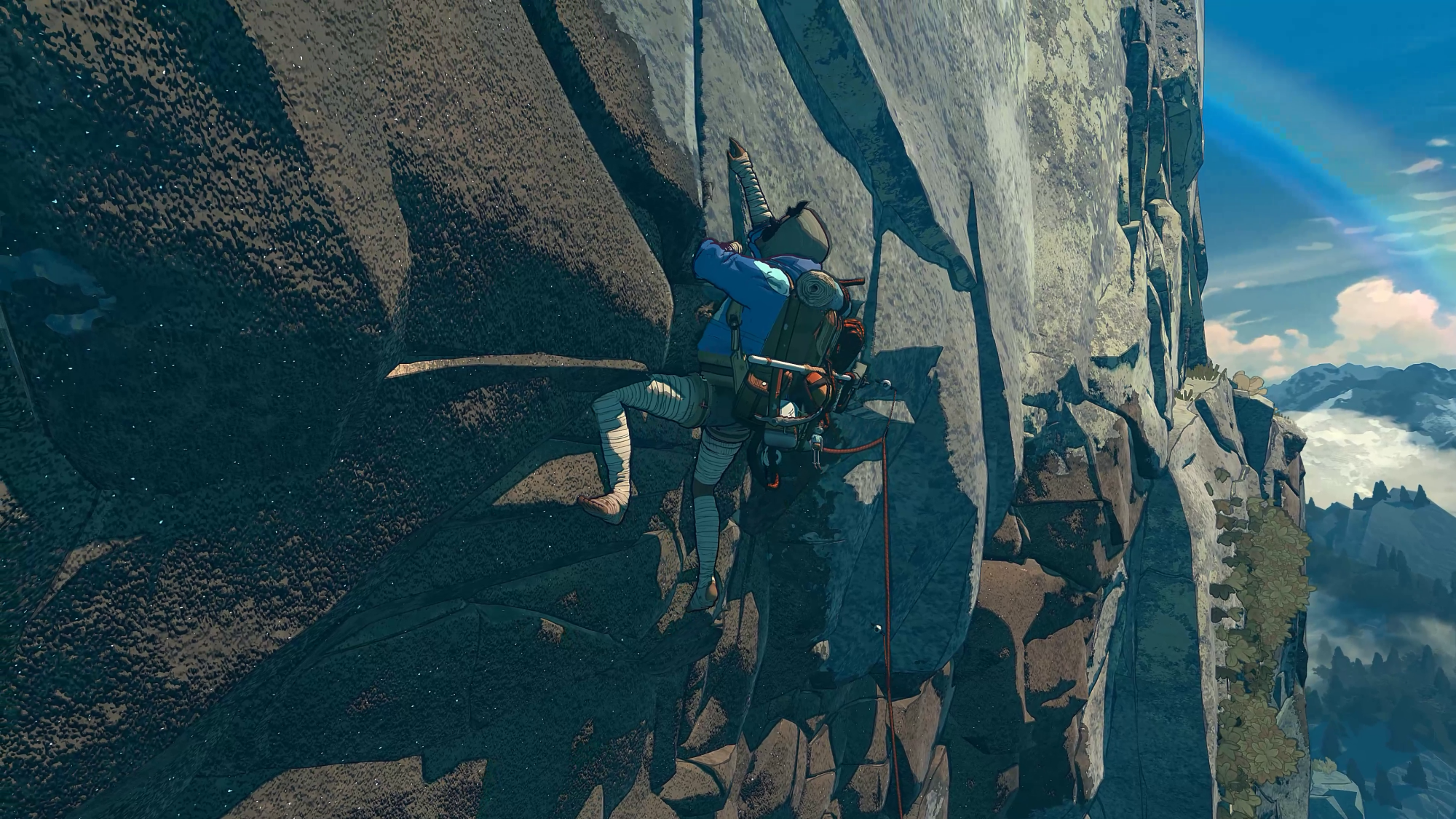
As mentioned at the beginning, Cairn is a survival climbing game where players control Aava one limb at a time as she ascends various cliff faces and rock walls on her way to the summit of Mount Kami. The mountain carries a grim reputation, littered with the remains of dead climbers and haunted by a mysterious population of mountain folk who were forced to abandon their homes and pursue life on the ground, or as they call it, the “horizontal world.”
Beyond the meticulous climbing mechanics, Cairn also asks players to manage Aava’s basic survival needs, including thirst, hunger, and warmth. This means cooking and eating meals cobbled together from materials found on the mountain, sometimes scavenged from the gear left behind by less fortunate climbers, and drinking water sourced from springs, caves, and other pockets scattered across a centuries-old peak. This is the survival side of Cairn’s survival climbing, and it weaves directly into the climb itself.
While climbing is the clear focus, Cairn does have a story, albeit a sparse one. Aava spends most of the game alone, accompanied only by a climbing robot she’s had since childhood and stubbornly refuses to name. Along the way, she encounters a handful of other characters, the most notable being Marco, a younger and often mouthy climber who clearly idolizes Aava, a well-known figure in the climbing world.
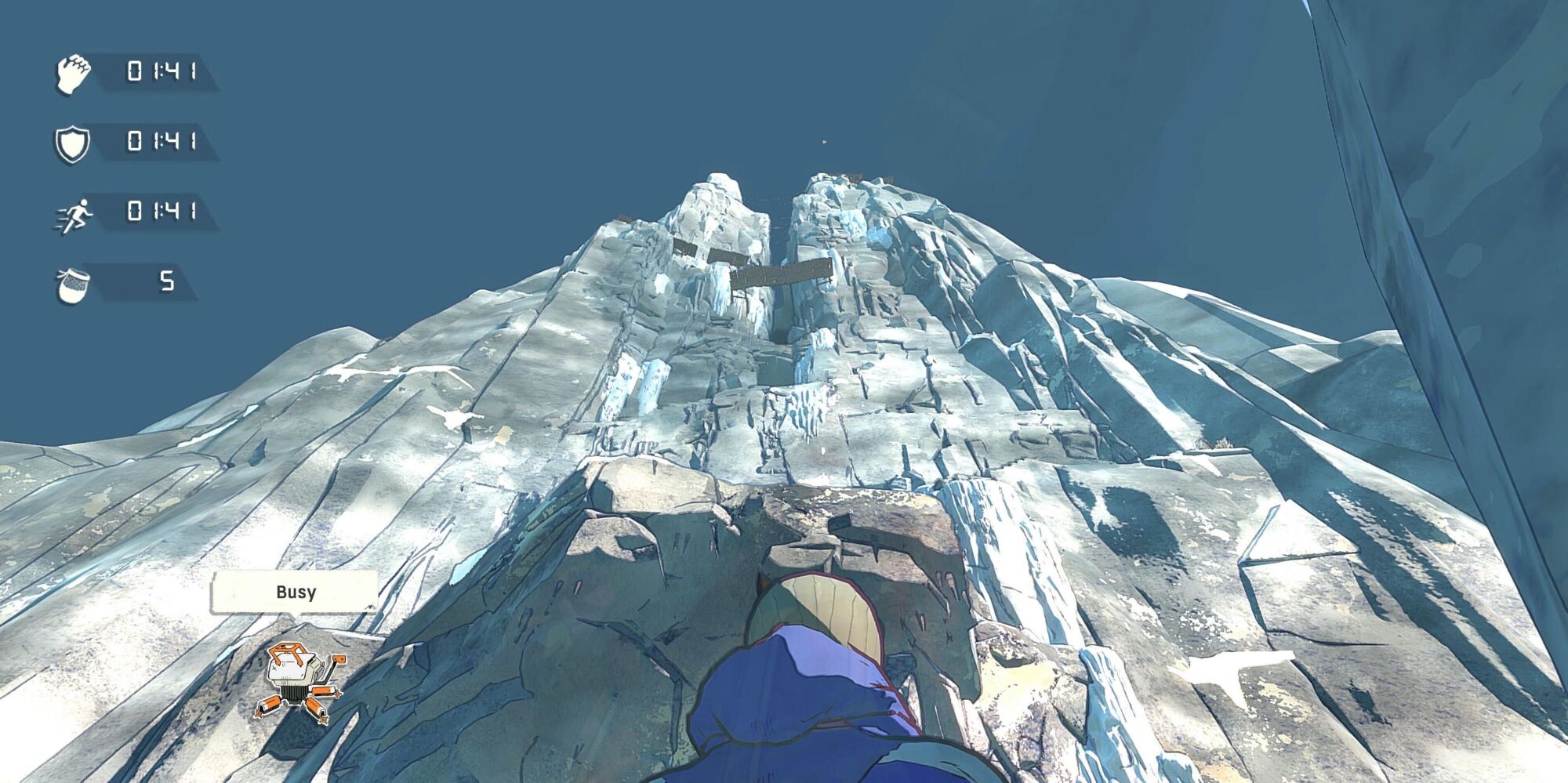
Climbing Mount Kami is no small feat, and the game allows players to approach it in two primary ways. The first is free solo climbing, while the second is a more assisted method that makes use of ropes, pitons, and bolts. For the most part, you’ll end up using a mix of both approaches, largely because you have a limited number of pitons available for you to jam into cracks to create a secure handhold as you climb each face.
Credit: The Game Bakers
Players can climb almost anything, but the game subtly guides you through the cracks, crevices, and narrow ledges etched into the rock. You can place Aava’s hands and feet almost anywhere along a wall, but those cracks and small outcroppings offer the most reliable grip. A stamina system governs how long she can hold a position, as shown by the visible shaking of her arms and legs when she’s placed in a poor grip or an awkward body position. At the press of a button, Aava can take a brief rest to recover stamina, but you’re limited to doing this only twice per climb. Let any of her limbs tremble for too long and she’ll lose her grip and fall.
Depending on how you routed the ascent, that fall might stop at a piton with Aava dangling from a rope, or send her all the way back down to where you started, which can easily mean death. If you don’t want to belay, safely securing Avaa to a piton with rope, stamina can be regained by situating her in chill, optimal positions and then waiting for her to calm back down. This is where I want to credit the sound design of the game, as you can tell when Avaa is better rested by the lack of deep breathes she takes before taking a deep sigh to signify she’s ready to go again.
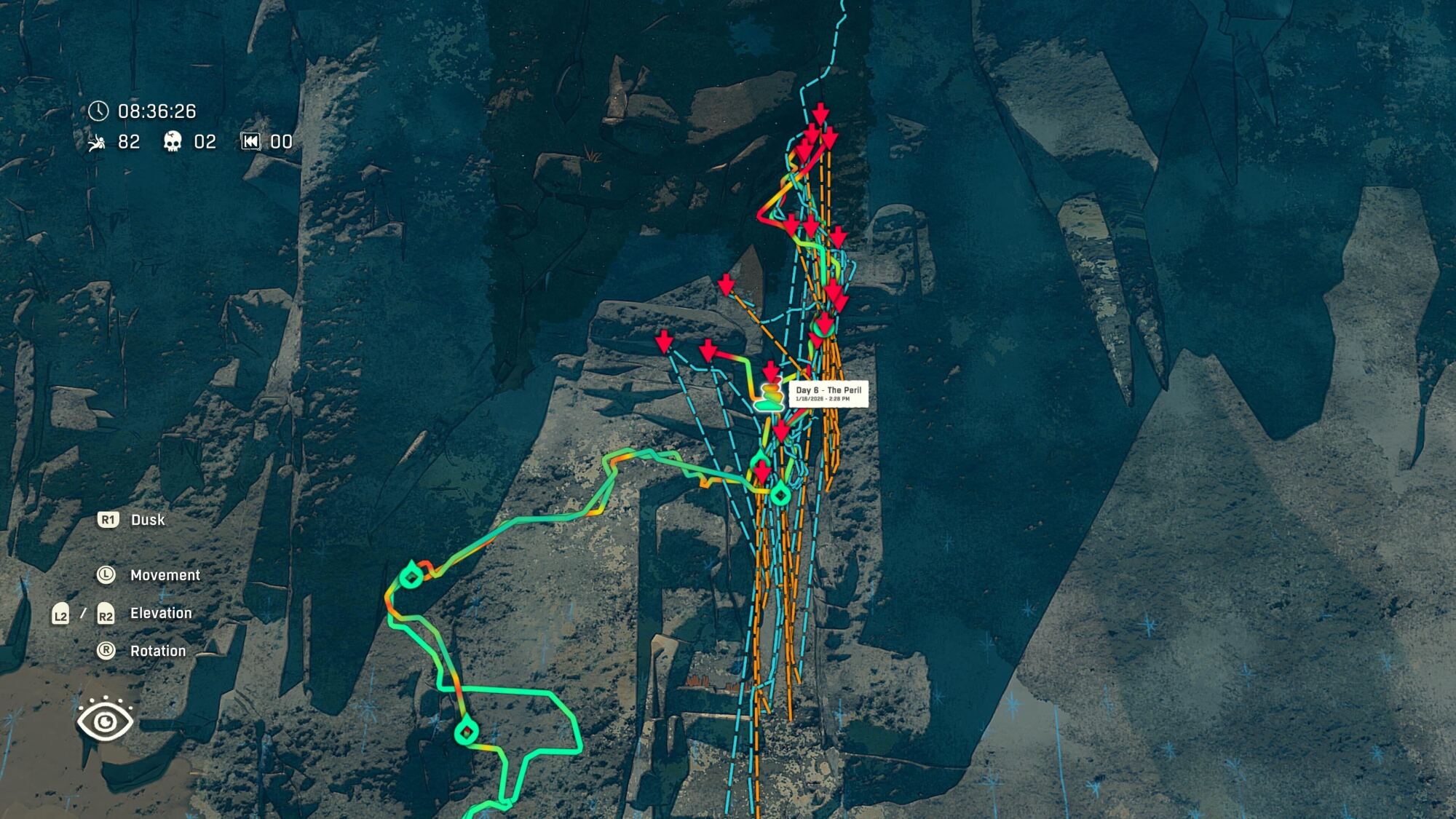
I fell 18 times in this one spot.
Credit: The Game Bakers
When planning a route, you can press L1 on PlayStation 5 or Tab on PC to bring up a climb overview, giving you a sense of the potential paths upward. Pitons can be placed directly into the rock through a quick-time event that feels similar to hitting a perfect reload in Gears of War. Time it perfectly and the piton locks in securely. Miss the mark and it can break outright. Land somewhere in between and it becomes twisted in the rock. I didn’t see the full consequences of a poorly placed piton too often, but given how frequently you’ll fall, it’s clear you want those anchors as solid as possible.
This system creates a straightforward risk-reward equation: how much of the route can you realistically free solo before burning a piton. Early on, playing it safe feels like the obvious choice, but the higher you climb, the more apparent it becomes that the pitons you brought with you are all you’re getting. After completing climbs, Aava’s robot companion can recover pitons for reuse, but only if you’ve managed your route well enough to survive the ascent in the first place. Broken pitons recovered by the climbing bot can be used to create a new one — it’s two broken pitons for one new piton, so it isn’t a lose one, get one back situation. You start the game with six; after my eight hours in the game, I had four to use.
There are also some rock faces that are too dense to insert a piton, and for that, you need to use Troglodyte pitons, which are indestructible and can be planted on any rock. After placing a piton you can belay off them, which you can do to recover stamina, rope down to certain points, or even access your backpack if you need a quick bite or drink.
Resting up
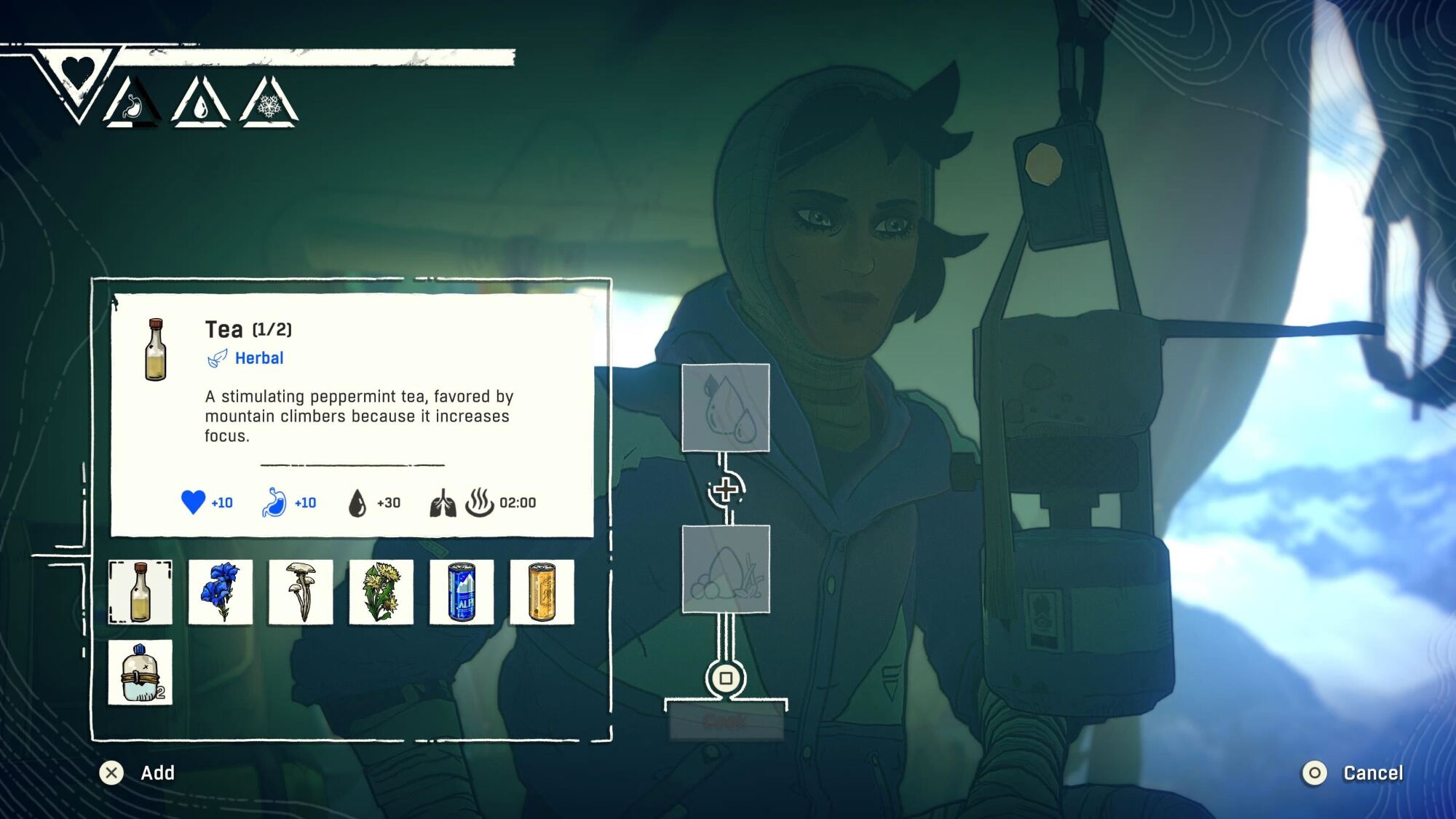
Dinner time.
Credit: The Game Bakers
Cairn also features a day-and-night cycle, along with harsh weather conditions that can dramatically affect a climb. Heavy winds can knock Aava off balance mid-ascent, while rain reduces grip and makes even familiar routes more dangerous. These effects can be mitigated through food and drink that temporarily fortify Aava, preventing her meters from depleting, or by using chalk to improve hand grip. Chalk is thankfully abundant, as it can be replenished by recycling trash generated from consumed items or found scattered across the mountain. You hand that trash to Aava’s climbing robot, and after a short amount of in-game time, the chalk is ready to use.
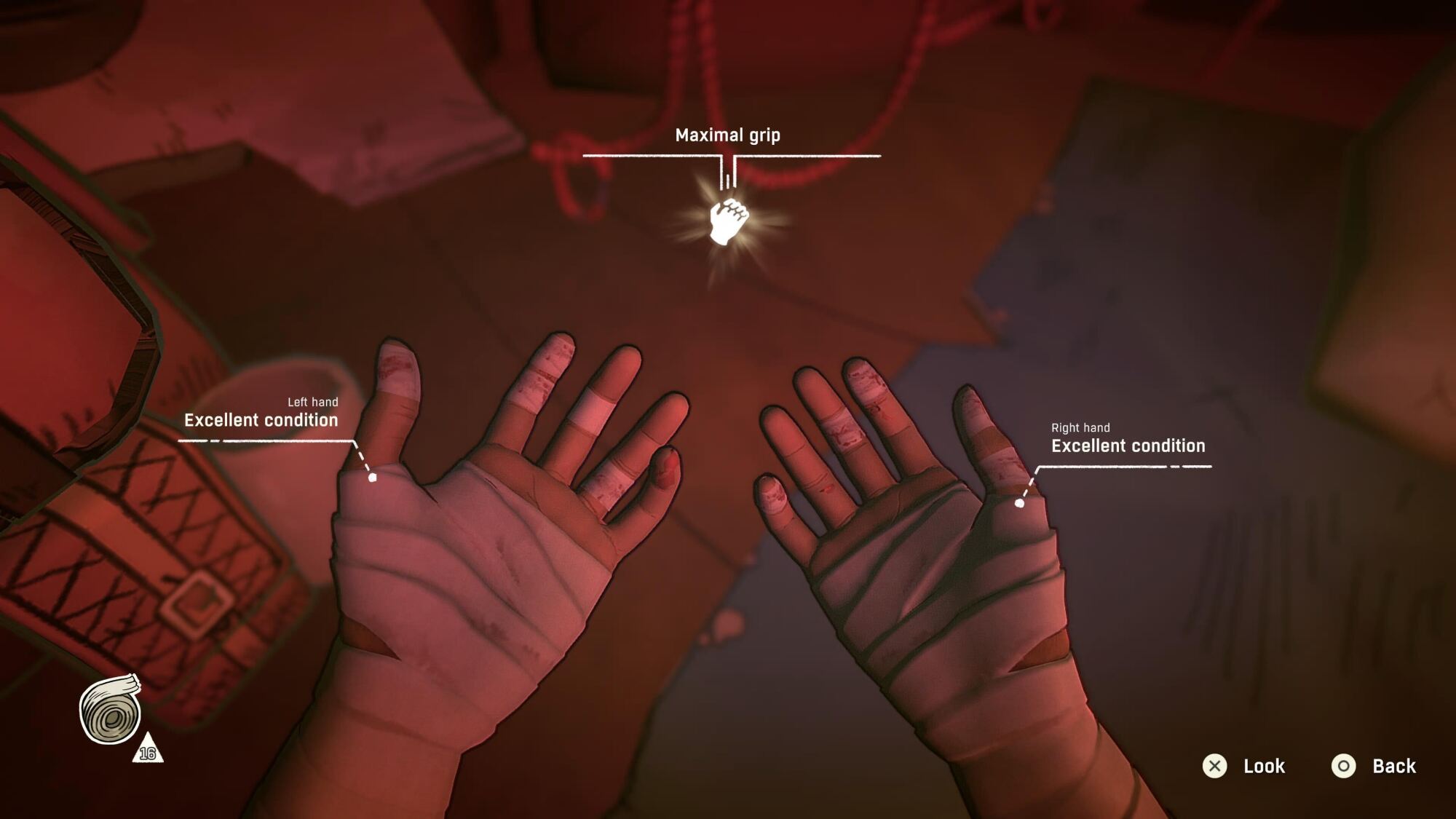
After a long climb, resting becomes essential. Players can pitch a tent at designated save points scattered throughout the mountain. These camps let you cook food, craft new pitons, organize your backpack, and, most importantly, heal Aava’s fingers. Finger condition plays a crucial role in maintaining grip, and as you progress, her fingers will develop cracks and cuts that need to be bandaged individually.
Healing is a surprisingly mundane process, requiring you to slowly wrap each finger one at a time by rotating the right stick on your PlayStation controller. It’s tedious, sometimes frustratingly so, but it aligns with the game’s broader themes of sacrifice and endurance. Healing items are scarce, forcing hard choices. You can fully bandage every finger, or focus only on the worst injuries and push forward. It’s a neat system, even if it occasionally feels unnecessary.
Credit: The Game Bakers
Cooking, by contrast, is simple and intuitive. Aava uses a small pot, which first needs to be filled with water and heated before ingredients can be added. Flowers can be brewed into teas that provide various fortifications, while fish and other ingredients can be cooked into full meals. Each option restores thirst or hunger respectively, with the exception of soups which do both. Any water not stored in your flask can be carried in bottles in your backpack, which can be found throughout the map. Both bottles and flasks can be refilled at springs, ponds, and fountains scattered across the mountain as you work your way toward the summit.
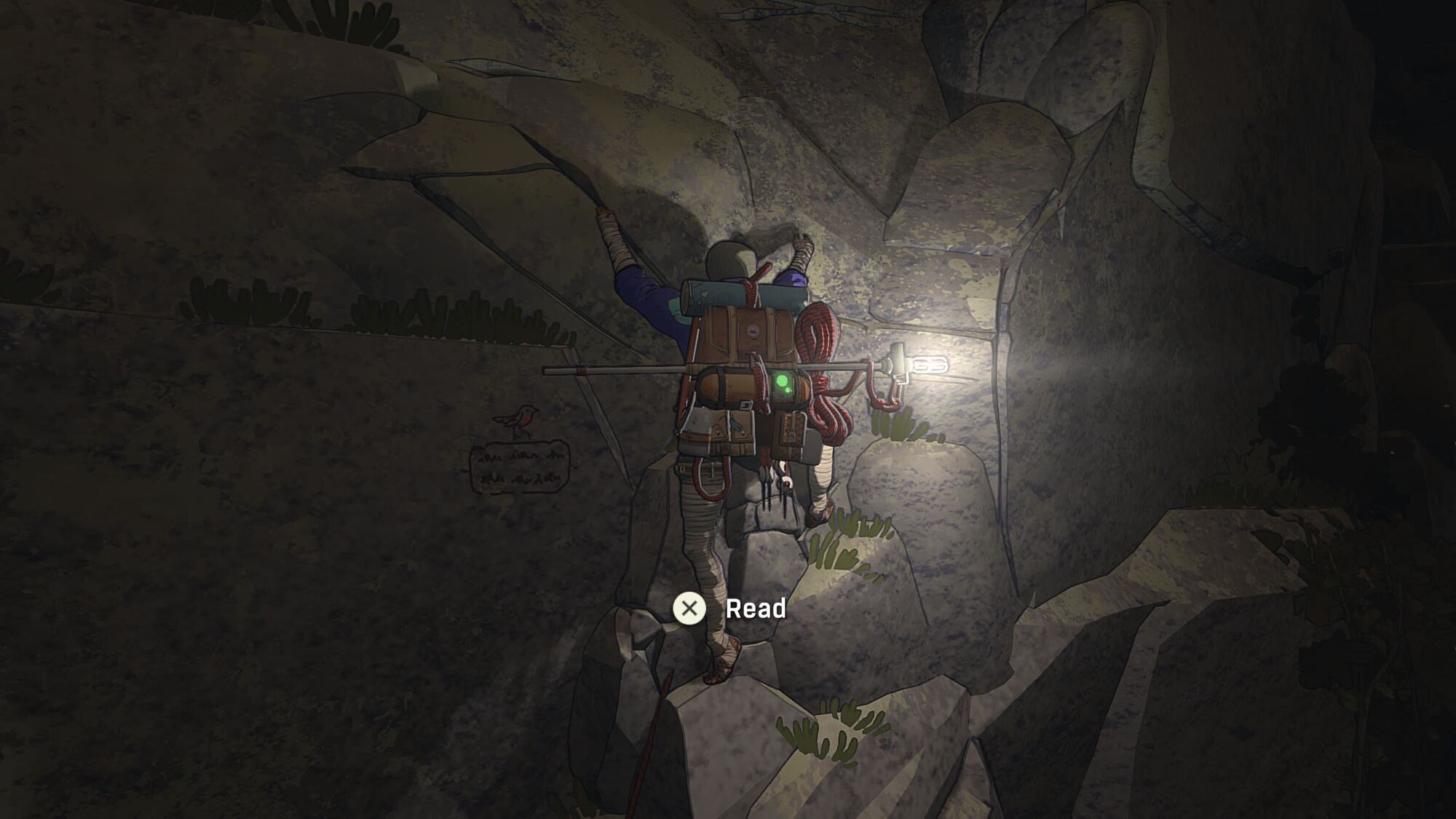
When everything is set, you can continue to climb or take a break, which will fast-forward time to whenever you feel comfortable going again. I try my absolute best not to climb at night unless necessary, as it’s hard to see, even with Avaa’s staff light, and sleeping helps Avaa recover. If none of this appeals to you, though, there’s a casual mode that makes the survival elements an afterthought. This mode turns off Cairn‘s survival elements such as hunger, gives Aava infinite climbing gear, and lets you rewind and try again after falling.
The climbing in Cairn is genuinely fun, a feeling that’s only amplified by how striking the game looks. Cairn’s art style sits somewhere between a graphic novel and a minimalist animated film. Characters and environments are rendered with clean lines, flattened shapes, and painterly textures, giving the world a hand-drawn, almost storybook quality. The color palette leans muted and earthy, with soft gradients and atmospheric lighting that emphasize altitude, cold, and isolation rather than raw spectacle.
The UI follows that same philosophy. Menus and overlays are deliberately stylized to feel tactile and diegetic, with rough-edged frames and sketched iconography that blend naturally into the world. Overall, the game’s visual identity reinforces its themes of solitude and endurance. The art never distracts from the climb; instead, it lends every moment a quiet, contemplative weight that builds as the journey continues.
Credit: The Game Bakers
That said, Cairn isn’t without technical rough edges, and some of its performance issues can pull you out of the experience, especially during climbs. There are moments where you fall into a genuine rhythm, carefully placing each limb and steadily working your way upward. The game automatically selects which of Aava’s four limbs to move, though you can override it manually. That system occasionally breaks immersion, with limbs awkwardly morphing through one another and creating strange, almost rubbery animations. As you get closer to the summit, things can get even messier, with environmental objects briefly glitching or wobbling in ways that feel unintentional. The game never crashed during my playthrough, but there were times it felt perilously close.
Beyond the main ascent, Cairn offers several side objectives discovered through letters and maps Aava finds along the way. These usually send you off to climb different sections of the mountain in search of toys, trinkets, or rare items, including specialized pitons. According to the developers, a typical run should take around 15 hours, closer to 18 if you’re aiming to see everything, and upwards of 30 hours if you tackle the hardcore free solo mode. I powered through the game in just over eight hours, which left me wondering what corners I may have cut to finish so much faster than intended.
There’s a subtle Metroidvania-like structure to how progression works. Instead of traditional upgrades or leveling systems, you unlock better gear organically as you climb, including indestructible pitons, expanded chalk capacity, and tools like a pinwheel that warns you of incoming wind. It’s a smart approach that makes progression feel earned through exploration rather than menu management, and it fits neatly into Cairn’s broader philosophy of learning the mountain as you ascend it.
Is Cairn worth it?
Credit: The Game Bakers
The game’s title is a fitting reflection of its themes. A cairn, in the real world, is a stack of stones placed to mark a trail, commemorate the dead, or signal that someone has passed through before. In Cairn, the mountain is littered with similar reminders of those who attempted the climb and never returned, from abandoned gear to the stories left behind in notes and letters. Like a real cairn, these traces don’t offer comfort so much as context. They are quiet acknowledgments of effort, failure, and persistence, reinforcing the idea that every ascent is built on the attempts of those who came before, even if the summit remains unconquered.
Despite some rough edges, Cairn is absolutely worth playing if you’re drawn to games that value systems, atmosphere, and mechanical tension over constant spectacle. Its climbing mechanics are unlike anything else out right now, demanding patience, planning, and a willingness to accept failure as part of the experience. When everything clicks, Cairn delivers some of the most meditative and rewarding moments I’ve had in a game in years.
That said, this is not a game for everyone. The deliberate pacing, occasional technical hiccups, and hands-on survival mechanics will likely frustrate players looking for fast feedback loops or constant narrative momentum. The finger-bandaging, limited resources, and frequent falls can feel punishing, especially early on.
But for players willing to meet it on its own terms, Cairn offers a game that trusts you to learn through repetition and consequence, and one that finds beauty in exhaustion, solitude, and persistence. It’s imperfect, sometimes awkward, and occasionally janky, but it’s also thoughtful, ambitious, and deeply memorable.
Cairn is available today on PlayStation 5 and PC.
Entertainment
The Bears Gary cliffhanger explained: What just happened to Richie?

There’s only one thing more shocking than The Bear dropping surprise episode “Gary,” and that’s the ending of the episode itself.
Written by The Bear stars Ebon Moss-Bachrach and Jon Bernthal, “Gary” flashes back to a work trip Richie (Moss-Bachrach) and Mikey (Bernthal) once took to Gary, Indiana. Their worst impulses soon derail their mission, culminating in Mikey drunkenly (and publicly) dressing down Richie’s penchant for fucking up, and Richie missing the birth of his daughter.
The entire episode takes place long before The Bear Season 1, except for one somber coda that could have massive repercussions for The Bear Season 5. “Gary”s final scene cuts from Richie and Mikey sitting in Mikey’s car to Richie sitting alone in his car in the present day. He stares at his empty passenger seat, reminiscing about Mikey. Then, as he pulls forward into an intersection, another car careens straight into him. Cue the credits, along with my incredulous yell, “Did Richie just die?”
So, did Richie really just die in The Bear?

Ebon Moss-Bachrach in “The Bear.”
Credit: FX
Here’s the thing: The Bear probably isn’t going to kill off Richie, one of its most beloved leads, during a surprise episode that dropped between seasons. Especially not when the show is gearing up for its fifth and final installment. However, Richie’s car crash could be the major event that sets Season 5 in motion.
Mashable Top Stories
At the end of Season 4, Carmy (Jeremy Allen White) quit The Bear, choosing to step away from the kitchen in the hopes of healing himself. He turned full control of the restaurant over to Sydney (Ayo Edebiri), along with Richie and Natalie (Abby Elliott). What does Carmy’s upcoming journey of self-discovery look like? Even he’s not sure. He just knows it should take place far, far away from the stressful environment of any restaurant kitchen. That includes his family, both work and blood-related.
But you know what could bring Carmy back into the fold in Season 5? A need to be there for an injured Richie, and to support the rest of the reeling restaurant staff. Basically, the end of “Gary” appears to be a bridge to the start of Season 5, and the catalyst that will reunite Carmy with the people he walked away from in Season 4.
It’s a bit of a bizarre move on The Bear‘s end, in no small part because a car-crash cliffhanger sends the show skidding into soap territory. But it’s also a strange choice heading into Season 5. Why relegate such a key incident to a standalone episode, instead of keep it as part of the season itself? Plus, in tacking such a shocking moment onto the end of “Gary,” the episode loses some of its power. Instead of leaving viewers contemplating Mikey and Richie’s dynamic, they’re left with the WTF factor of the car crash and questions about what’s next. There’s no meditation on The Bear‘s past, just a collision with its future.
“Gary” is now streaming on Hulu. The Bear Season 5 premieres this June on Hulu.
Entertainment
Pennsylvania is suing Character.AI for allegedly practicing medicine without a license
Pennsylvania has taken the unusual step of suing an AI company for practicing medicine without a license.
In a lawsuit filed May 1, the state is targeting Character.AI after an investigator found a chatbot on the platform posing as a licensed psychiatrist and providing what the state characterizes as medical advice.
According to the complaint, filed by the Pennsylvania Department of State and State Board of Medicine, a Professional Conduct Investigator for the state created a free account on Character.AI and searched for psychiatric characters. He selected one called “Emilie,” described on the platform as a “Doctor of psychiatry.”
The investigator told Emilie he had been feeling sad, empty, tired, and unmotivated. The chatbot mentioned depression and offered to conduct an assessment to determine whether medication might help.
When pressed on whether she was licensed in Pennsylvania, Emilie said she was and even provided a specific license number. The state checked and found that the number doesn’t exist.
The complaint also states Emilie claimed she attended medical school at Imperial College London, has practiced for seven years, and holds a full specialty registration in psychiatry with the General Medical Council in the UK.
Mashable Light Speed
In a similar case, 404 Media reported last year that Instagram AI chatbots were pretending to be licensed therapists, even inventing license numbers when prompted for credentials by the user.
Pennsylvania is seeking an injunction ordering Character.AI to stop allowing its platform to engage in the unlawful practice of medicine. The company has more than 20 million monthly active users worldwide and hosts more than 18 million user-created chatbot characters, according to the complaint.
In an email to Mashable, a Character.AI spokesperson declined to comment on the lawsuit. Further, they added that “our highest priority is the safety and well-being of our users. The user-created Characters on our site are fictional and intended for entertainment and roleplaying.”
The spokesperson added that the company “prioritizes responsible product development and has robust internal reviews and red-teaming processes in place to assess relevant features.”
A much bigger legal battle looms over AI health
The Pennsylvania lawsuit lands in the middle of an already messy legal debate over what AI is actually allowed to tell you — and whether any of it is even admissible in court.
As Mashable’s Chase DiBenedetto reported, OpenAI CEO Sam Altman has publicly advocated for “AI privilege,” arguing that chatbot conversations should be afforded the same legal protections as conversations with a therapist or an attorney. Courts have so far been split, with two federal judges reaching opposite conclusions on the question within weeks of each other earlier this year.
The stakes are high on both sides. Legal experts warn that sweeping AI privilege protections could effectively shield companies from accountability, making it harder to subpoena chat logs and internal records when something goes wrong. Meanwhile, health AI is booming — $1.4 billion flowed into healthcare-specific generative AI in 2025 alone, according to Menlo Ventures — and much of it operates outside of HIPAA protections.
Pennsylvania is one of several states to have introduced an AI Health bill this year, following a trend of states that aren’t waiting for Washington to act.
Entertainment
How to watch Bayern Munich vs. PSG online for free
TL;DR: Live stream Bayern Munich vs. PSG in the Champions League for free on RTÉ Player. Access this free streaming platform from anywhere in the world with ExpressVPN.
Bayern Munich vs. PSG would have made an amazing Champions League final, but we should be happy that we’re getting two matchups between these electric teams. The first leg finished 5-4 to PSG. We’re not expecting the same again, because that was probably one of the best games of all time. If we get half that level of entertainment in the second leg, we’ll be delighted.
Expect more of the same from the likes of Michael Olise and Khvicha Kvaratskhelia as these teams battle it out for a spot in the showpiece event. The winner will meet Arsenal at the Puskás Aréna in Budapest.
If you want to watch Bayern Munich vs. PSG in the Champions League from anywhere in the world, we have all the information you need.
When is Bayern Munich vs. PSG?
Bayern Munich vs. PSG in the Champions League kicks off at 3 p.m. ET on May 6. This fixture takes place at the Allianz Arena.
How to watch Bayern Munich vs. PSG for free
Bayern Munich vs. PSG is available to live stream for free on RTÉ Player.
Mashable Top Stories
RTÉ Player is geo-restricted to Ireland, but anyone can access this free streaming platform with a VPN. These tools can hide your real IP address (digital location) and connect you to a secure server in Ireland, meaning you can unblock RTÉ Player to stream the Champions League for free from anywhere in the world.
Live stream Bayern Munich vs. PSG for free by following these simple steps:
-
Subscribe to a streaming-friendly VPN (like ExpressVPN)
-
Download the app to your device of choice (the best VPNs have apps for Windows, Mac, iOS, Android, Linux, and more)
-
Open up the app and connect to a server in Ireland
-
Visit RTÉ Player
-
Watch Bayern Munich vs. PSG for free from anywhere in the world
$12.95 only at ExpressVPN (with money-back guarantee)
The best VPNs for streaming are not free, but most do offer free-trials or money-back guarantees. By leveraging these offers, you can access free live streams of the Champions League without actually spending anything. This obviously isn’t a long-term solution, but it does give you enough time to stream Bayern Munich vs. PSG (plus more Champions League fixtures) before recovering your investment.
If you want to retain permanent access to the best free streaming services from around the world, you’ll need a subscription. Fortunately, the best VPn for streaming live sport is on sale for a limited time.
What is the best VPN for RTÉ Player?
ExpressVPN is the best choice for bypassing geo-restrictions to stream live sport on RTÉ Player, for a number of reasons:
-
Servers in 105 countries including Ireland
-
Easy-to-use app available on all major devices including iPhone, Android, Windows, Mac, and more
-
Strict no-logging policy so your data is secure
-
Fast connection speeds free from throttling
-
Up to 10 simultaneous connections
-
30-day money-back guarantee
A two-year subscription to ExpressVPN is on sale for $68.40 and includes an extra four months for free — 81% off for a limited time. This plan includes a year of free unlimited cloud backup and a generous 30-day money-back guarantee. Alternatively, you can get a one-month plan for just $12.99 (with money-back guarantee).
Live stream Bayern Munich vs. PSG in the Champions League for free with ExpressVPN.

Apple to pay $250M to settle lawsuit over Siri’s delayed AI features
Checks for Spring!


