
Tech
Trump energy department loosens rules on nuclear safety
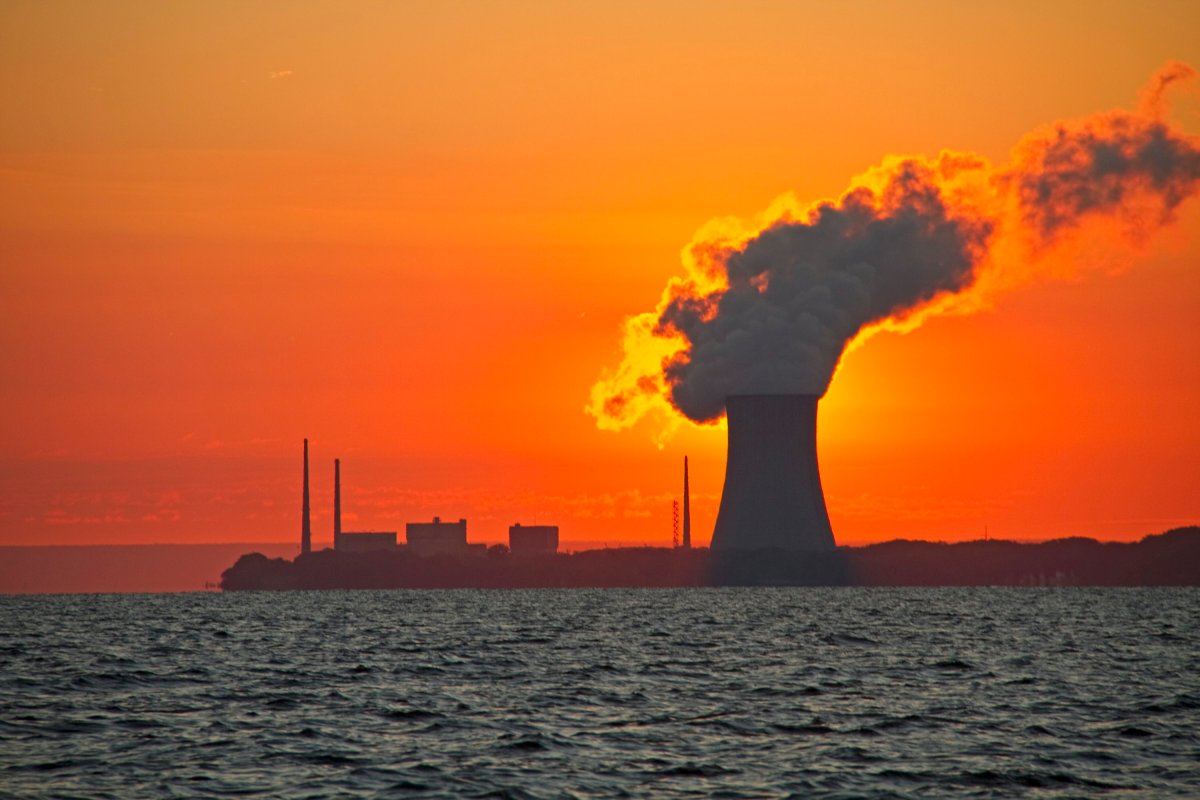
For the last several months, nuclear startups have been raising large sums of money — well over $1 billion so far.
Data centers and their thirst for electricity have been one driving force. But recent changes to federal nuclear safety policies could be another accelerant that helps clear the way for speedy reactor development and at a potential cost to human and environmental health.
The Trump administration has quietly changed how the Department of Energy oversees the safety and security of nuclear power plants built on its properties, according to a report from NPR. About a third of the rulebook has been axed, and several sections have been heavily revised. Previous requirements, including those aimed at limiting groundwater and environmental contamination, are now suggestions, and workers can be exposed to higher doses of radiation. Plant security protocols are now largely up to the company.
The new rules were developed without public comment or notice, according to NPR. They only apply to reactors built on DOE property; those built elsewhere are still subject to Nuclear Regulatory Commission oversight. Several startups are developing demonstration reactors on DOE property in the hopes of hitting a Trump administration deadline of July 4, 2026.
Tech
TechCrunch Mobility: How do you issue a ticket to a robotaxi?

Welcome back to TechCrunch Mobility — your central hub for news and insights on the future of transportation. To get this in your inbox, sign up here for free — just click TechCrunch Mobility!
We’re going to do a bit of a deep dive today, which may make this newsletter look a little different than normal. There is a reason!
This newsletter is not region-specific, but sometimes there are policies at the state level that have widespread implications for tech companies and startups alike. Which brings me to California and the new autonomous vehicle testing and deployment rules issued this week by the state’s Department of Motor Vehicles.
There are two new sets of rules — collectively 100 pages long — that cover requirements for the testing and deployment of AVs. I spent the past few days speaking to engineers and policy folks working at AV companies and discovered that they have strong opinions and few want to speak publicly about it. But thanks to the public commentary period on these regulations, we have some insight into what the industry supported and what it did not.
The regulations include new, more robust requirements for data collection and sharing, training, and operations. Here are a few items that stuck out and what insiders told me.
How do you ticket a robotaxi? Under these new rules, law enforcement can cite AV companies for traffic violations committed by their vehicles. The rule, called “Notice of Autonomous Vehicle Noncompliance,” requires the manufacturer (meaning the robotaxi company) to report the violation to the DMV within 72 hours of receiving it from law enforcement.
I’ve heard a number of interpretations of this rule and how it will be implemented, but it appears there is not a monetary fine attached to these violations. Instead, these violations are another piece of data that the DMV can use to identify problems and take action if needed.
Techcrunch event
San Francisco, CA
|
October 13-15, 2026
Insiders told me that the data is actionable and more important than a monetary fine. My question: Why not both?
The good news for industry: The DMV will now allow heavy-duty vehicles equipped with autonomous vehicle tech to test and eventually deploy on public roads. Self-driving truck companies are happy with this outcome. Daniel Goff, VP of external affairs at Kodiak, told me the company is already working on the required documentation to apply for a permit.
The burden for the industry: The word that came up in every conversation I had with someone in the AV industry was “burdensome.” And it was always used in reaction to the new data collection and sharing regulations.
Goodbye, disengagement reports; hello, malfunctions: Others were happy to see annual disengagement reporting disappear. Disengagement reports, which detailed instances when human drivers had to take over control due to technology failures or safety concerns, have been controversial because companies use varying standards. This has made it impossible to compare the results or rate the proficiency of autonomous vehicle technology.
That entire section has been removed and replaced with a requirement to report “dynamic driving task performance relevant system failure.” This may seem like semantics — trading one jargony phrase for another. Insiders tell me that while it is not a perfect metric, it is clearer than its predecessor. That doesn’t mean it is beloved either.
There is a lot more in these documents, including a requirement to provide annual updates to first responder interaction plans, access to manual vehicle override systems, two-way communication links with 30-second response times, and updated training requirements to ensure safe and timely interactions with first responders.
My question for you, reader, is whether these rules go too far or if they are appropriate and provide the kind of reporting and data collection needed to keep these companies accountable? Sign up for the Mobility newsletter to vote in our polls!
A little bird

We had a lot of little birds talk to us about the new California AV rules, so nothing new to add here. But remember, you can always send us tips. Here’s how.
Got a tip for us? Email Kirsten Korosec at kirsten.korosec@techcrunch.com or my Signal at kkorosec.07, or email Sean O’Kane at sean.okane@techcrunch.com.
Deals!

BMW i Ventures launched a new $300 million fund with a timely thesis: AI will reshape how the automotive industry operates. The fund will invest in early-stage through Series B startups in North America and Europe that are working on agentic AI and physical AI as well as industrial software, advanced materials, and manufacturing and supply-chain technologies. This third fund brings the firm’s total capital under management to $1.1 billion.
Other deals that got my attention …
Sereact, a German robotics startup, raised $110 million in a Series B funding round led by VC Headline. Other investors include Bullhound Capital, Felix Capital, Daphni, Air Street Capital, Creandum, and Point Nine.
Spirit Airlines is preparing to shut down after failing to secure a $500 million lifeline from the government, the WSJ reports. The company is expected to cease operations around 3 a.m. ET Saturday.
Notable reads and other tidbits

China suspended issuing new licenses for autonomous vehicles after dozens of Baidu’s Apollo Go robotaxis suddenly stopped last month, Bloomberg reported.
Google‘s Gemini AI assistant is hitting the road in millions of vehicles.
Faraday Future paid around $7.5 million to a company controlled by its founder, Jia Yueting, in 2025, senior reporter Sean O’Kane discovered in a recent SEC filing.
Rivian reported earnings this week and one item that stood out to us — and to many others — was the downsizing of its DOE loan from $6.6 billion to $4.5 billion. That loan restructuring comes with changes to its Georgia factory. Instead of two 200,000-vehicle capacity structures on the Georgia site, Rivian will now build a 300,000-vehicle capacity factory and leave the adjacent “pad” untouched and ready for future development. Analysts didn’t necessarily view this as negative but did position this as rightsizing. Barclays, for instance, views the modification as Rivian adjusting to the current EV environment, according to a research note published Friday. Barclays also stated it didn’t believe Rivian currently plans to build the second plant at Georgia, “at least not until early/mid next decade.”
Tesla launched a Semi-Charging for Business program, which includes a new product called the Basecharger that is designed for depot and overnight use.
Uber has tapped Hertz to clean, charge, and fix its Lucid Motors robotaxis. This announcement left us with a cheeky question: How many companies does it take to launch a robotaxi service?
Uber customers in the United States can now book hotels directly through the app, one of several new features announced this week that pushes far beyond the company’s original ride-hailing purpose and even deeper into its users’ lives. At launch, Uber customers will have access to more than 700,000 hotels worldwide through a partnership with Expedia Group, the travel company that Uber CEO Dara Khosrowshahi led for 12 years.
Vay, a remote driving tech startup, says it has grown its fleet to 175 vehicles on the road and has surpassed 60,000 rides.
When you purchase through links in our articles, we may earn a small commission. This doesn’t affect our editorial independence.
Tech
In Harvard study, AI offered more accurate emergency room diagnoses than two human doctors
A new study examines how large language models perform in a variety of medical contexts, including real emergency room cases — where at least one model seemed to be more accurate than human doctors.
The study was published this week in Science and comes from a research team led by physicians and computer scientists at Harvard Medical School and Beth Israel Deaconess Medical Center. The researchers said they conducted a variety of experiments to measure how OpenAI’s models compared to human physicians.
In one experiment, researchers focused on 76 patients who came into the Beth Israel emergency room, comparing the diagnoses offered by two internal medicine attending physicians to those generated by OpenAI’s o1 and 4o models. These diagnoses were assessed by two other attending physicians, who did not know which ones came from humans and which came from AI.
“At each diagnostic touchpoint, o1 either performed nominally better than or on par with the two attending physicians and 4o,” the study said, adding that the differences “were especially pronounced at the first diagnostic touchpoint (initial ER triage), where there is the least information available about the patient and the most urgency to make the correct decision.”
In Harvard Medical School’s press release about the study, the researchers emphasized that they did not “pre-process the data at all” — the AI models were presented with the same information that was available in the electronic medical records at the time of each diagnosis.
With that information, the o1 model managed to offer “the exact or very close diagnosis” in 67% of triage cases, compared to one physician who had the exact or close diagnosis 55% of the time, and to the other who hit the mark 50% of the time.
“We tested the AI model against virtually every benchmark, and it eclipsed both prior models and our physician baselines,” said Arjun Manrai, who heads an AI lab at Harvard Medical School and is one of the study’s lead authors, in the press release.
Techcrunch event
San Francisco, CA
|
October 13-15, 2026
To be clear, the study didn’t claim that AI is ready to make real life-or-death decisions in the emergency room. Instead, it said the findings show an “urgent need for prospective trials to evaluate these technologies in real-world patient care settings.”
The researchers also noted that they only studied how models performed when provided with text-based information, and that “existing studies suggest that current foundation models are more limited in reasoning over nontext inputs.”
Adam Rodman, a Beth Israel doctor who’s also one of the study’s lead authors, warned the Guardian that there’s “no formal framework right now for accountability” around AI diagnoses, and that patients still “want humans to guide them through life or death decisions [and] to guide them through challenging treatment decisions.”
In a post about the study, Kristen Panthagani, an emergency physician, said this is an “an interesting AI study that has led to some very overhyped headlines,” especially since it was comparing AI diagnoses to those from internal medicine physicians, not ER physicians.
“If we’re going to compare AI tools to physicians’ clinical ability, we should start by comparing to physicians who actually practice that specialty,” Panthagani said. “I would not be surprised if a LLM could beat a dermatologist at an neurosurgery board exam, [but] that’s not a particularly helpful thing to know.”
She also argued, “As an ER doctor seeing a patient for a first time, my primary goal is not to guess your ultimate diagnosis. My primary goal is to determine if you have a condition that could kill you.”
This post and headline have been updated to reflect the fact that the diagnoses in the study came from internal medicine attending physicians, and to include commentary from Kristen Panthagani.
When you purchase through links in our articles, we may earn a small commission. This doesn’t affect our editorial independence.
Tech
‘This is fine’ creator says AI startup stole his art
You’ve seen this comic before: An anthropomorphic dog sits smiling, surrounded by flames, and says, “This is fine.”
It’s become one of the most durable memes of the past decade, and now AI startup Artisan seems to have incorporated it into an ad campaign — an ad for which KC Green, the artist who created the comic, said his art was stolen.
A Bluesky post seems to show an ad in a subway station featuring Green’s art, except the dog says, “[M]y pipeline is on fire,” and an overlaid message urges passersby to “Hire Ava the AI BDR.”
Quoting that post, Green said he’s “been getting more folks telling me about this” and that “it’s not anything [I] agreed to.” Instead, he said the ad has “been stolen like AI steals,” and he told followers to “please vandalize it if and when you see it.”
When TechCrunch sent Artisan an email asking about the ad, the company said, “We have a lot of respect for KC Green and his work, and we’re reaching out to him directly.” In a follow-up email, the company said it had scheduled time to speak with him.
Artisan has courted controversy with its ads before, specifically with billboards urging businesses to “Stop hiring humans” — although founder and CEO Jaspar Carmichael-Jack insisted that the message was about “a category of work,” not “humans at large.”
“This is fine” first appeared in Green’s webcomic “Gunshow” in 2013, and while he hasn’t disavowed the smiling-melting dog entirely (he recently turned the comic into a game), it’s clearly escaped from his control. And of course, Green is far from the only artist to see his meme-able art used in ways he finds objectionable.
Techcrunch event
San Francisco, CA
|
October 13-15, 2026
But some artists have still taken action when their art is monetized or used in commercial ways without their permission, for example when cartoonist Matt Furie sued right-wing conspiracy theory site Infowars for using his character Pepe the Frog in a poster. (Furie and Infowars eventually settled.)
Green told TechCrunch via email that he will be “looking into [legal] representation, as I feel I have to.” Still, he said it “takes the wind out of my sails” that he has to take “time out of my life to try my hand at the American court system instead of putting that back into what I am passionate about, which is drawing comics and stories.”
Green added, “These no-thought A.I. losers aren’t untouchable and memes just don’t come out of thin air.”
When you purchase through links in our articles, we may earn a small commission. This doesn’t affect our editorial independence.

Get AdGuard Family Plan for $16 and protect up to 9 devices
These Forgotten Star Trek Episodes Tried To Warn Us About AI Slop


