
Tech
Google Photos brings its prompt-based editing feature to India, Australia and Japan
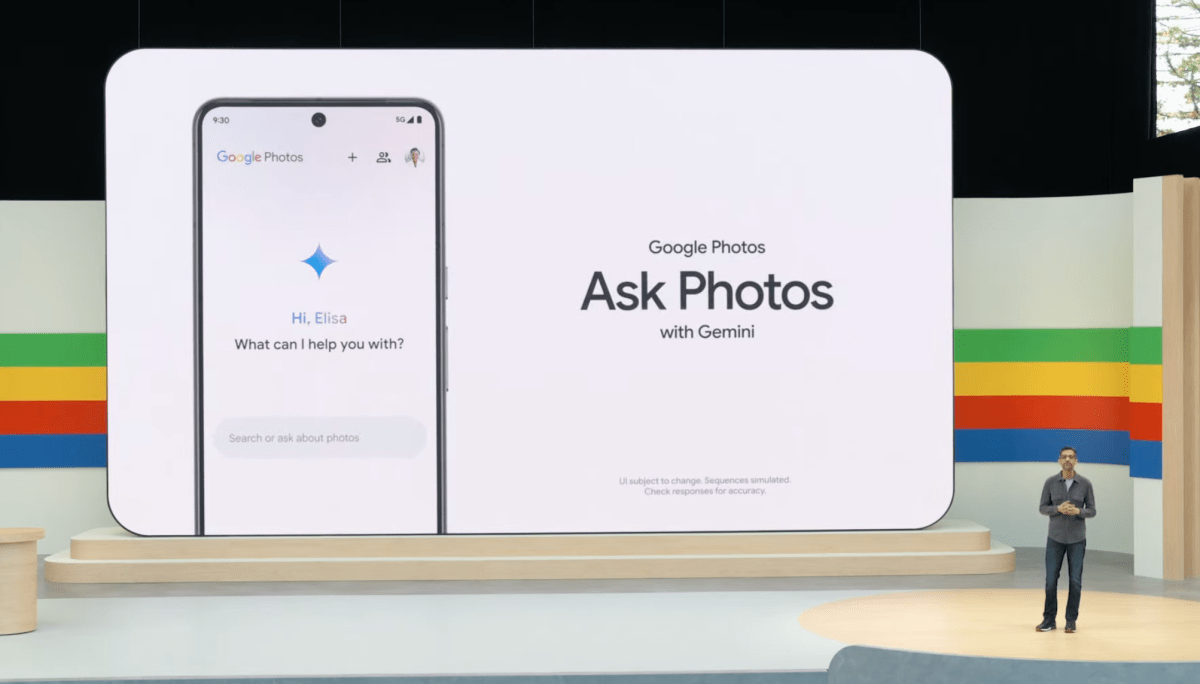
Google is bringing AI-powered photo editing to more users around the world, making it easier to fix your photos with simple text commands instead of complicated editing tools.
The company announced Tuesday that it’s expanding natural language-based editing in Google Photos to additional countries, including Australia, India, and Japan. The feature, which Google first launched for Pixel 10 users in the U.S. last August, lets people describe the changes they want to make to their photos rather than manually adjusting sliders or learning complex editing software.
Users in these newly supported countries will now see a “Help me Edit” box when they tap the edit option on a photo. From there, they can either select from suggested prompts or type their own requests in plain language. For example, you could ask the app to “remove the motorcycle in the background,” “reduce the background blur,” or use a more general command like “restore this old photo.”
The AI can handle surprisingly specific requests too. You can ask it to edit a friend’s pose, remove their glasses, or even have them open their eyes in a photo where they blinked. The feature uses Google’s Nano Banana image model to transform photos, and all the processing happens directly within the app without requiring an internet connection for the actual editing.
The feature will work on any Android device with at least 4GB of RAM running Android 8.0 or higher, meaning it’s not limited to Google’s own Pixel phones. Along with this geographic expansion, Google is also adding language support beyond English, including Hindi, Tamil, Marathi, Telugu, Bengali, and Gujarati, making the tool accessible to millions more users in their native languages.
Google is also rolling out C2PA Content Credentials support in Google Photos for these countries. This metadata will indicate when an image was created or edited using AI. As AI-generated and AI-edited images become more common, social media platforms have been grappling with how to label AI content, and credentials like C2PA help users understand what they’re looking at.
The expansion is the latest in Google’s aggressive push to integrate AI throughout Google Photos. Last November, the company expanded AI-powered search capabilities to over 100 countries with support for more than 17 languages. It also introduced AI templates that can convert photos into different artistic styles. Just last week, Google rolled out a “Meme me” feature that lets users combine reference templates with their own images to create memes.
Techcrunch event
San Francisco
|
October 13-15, 2026
Tech
Cursor makes its biggest India push yet ahead of SpaceX acquisition with localized pricing

Weeks before its expected acquisition by SpaceX closes, AI coding startup Cursor is making its biggest push into India yet, launching its first country-specific subscription as the company bets on one of the world’s largest developer markets to drive its next stage of growth.
On Monday, the startup introduced Cursor Start, a ₹649-a-month (about $7) subscription built specifically for India — and priced well below Cursor’s standard $20-a-month Pro subscription.
The move reflects India’s growing importance to Cursor’s business. The startup says India is already its third-largest market globally and home to its highest concentration of power users, with its user base in the country more than tripling over the past year.
That scale, coupled with India’s deep pool of software engineering talent, made it the first market where Cursor chose to localize pricing, Simon Green, Cursor’s head of Asia-Pacific and Japan, told TechCrunch. “We felt that we had an opportunity there to right-size the commercial model and drive scale,” Green said. “The technical competency of the country and the engineering talent that already exists make it a very natural fit.”
India has emerged as one of the world’s largest software developer hubs. Earlier this year, GitHub said that the country has more than 27 million developers on its platform, second only to the U.S., with more than two million joining in 2026 alone.
Cursor Start includes access to Cursor’s Composer 2.5 model and Grok 4.5, with higher usage limits than the free tier, alongside cloud agents, its iOS app, plugins, Model Context Protocol support, hooks, and skills. The startup said the plan is aimed at developers who need more AI-assisted coding capacity than the free tier offers without upgrading to its full Pro subscription.
The lower-priced plan is intended to broaden access rather than replace Cursor’s flagship offering, Green said. Unlike the $20-a-month Pro subscription, Start does not include access to frontier AI models from providers such as OpenAI and Anthropic, or advanced features including Bugbot, Auto Mode, Automations, and the Cursor SDK.
The plan is billed in Indian rupees and supports payments through credit and debit cards as well as India’s Unified Payments Interface (UPI).
Green told TechCrunch that Cursor would use multiple checks to ensure the India-only subscription is available only to individual users in the country, including measures to deter people from accessing the plan through virtual private networks (VPNs).
Cursor is not alone in tailoring its pricing for India. OpenAI and Anthropic have also rolled out India-specific plans over the past year as global AI companies compete for users in one of the world’s fastest-growing AI markets.
While Cursor Start is initially limited to India, Green told TechCrunch that the startup could expand localized pricing to other markets if the model proves successful.
“We will continue to do everything we can to fuel the demand and serve those clients that are using us,” Green said. “Now, if this model proves that we could take it to other markets, perhaps we will. But I think it’d be crazy to say we would never do it elsewhere.”
OpenAI provides one precedent for this strategy, having launched its sub-$5 ChatGPT Go in India before expanding the lower-priced subscription to other markets.
In addition to the localized pricing strategy, Cursor is also expanding its presence in India through new hires. Green told TechCrunch that the startup recently hired its first salesperson in India and expects another leader to join in Delhi. The company is also building out its a government affairs office, alongside three technical customer support hires, as it expands its presence in Bengaluru, Chennai, Hyderabad, and Mumbai.
Cursor’s enterprise push is still in its early stages in India, Green said, where adoption has so far been driven largely by individual developers, startups, and universities. He said Cursor sees significant opportunities in sectors including banking and large enterprises as it expands its local sales efforts.
Green said, the India-specific pricing was designed to be commercially sustainable rather than a loss leader. He said the lower-priced plan is viable because it is built around Cursor’s own AI models, which carry lower operating costs than relying primarily on third-party frontier models.
Cursor’s India expansion comes a little over a month after Elon Musk’s SpaceX agreed to acquire the AI coding startup in a $60 billion all-stock deal, following SpaceX’s blockbuster initial public offering. The acquisition is expected to close in Q3. However, SpaceX has been partnered with Cursor since April to develop a next-generation “coding and knowledge work AI.”
Green said Cursor will continue to operate independently until the transaction closes and that the company’s India expansion plans were already in motion before the deal. Once the acquisition closes, however, Green said SpaceX’s existing presence in India through Starlink could help Cursor expand faster by lowering commercial and operational barriers.
When you purchase through links in our articles, we may earn a small commission. This doesn’t affect our editorial independence.
Tech
Lyft and Baidu enter London’s robotaxi battleground as testing begins
Chinese tech giant Baidu has started testing autonomous vehicles in London as part of its partnership with Lyft and Freenow, the German taxi and multi-mobility app that Lyft now owns. Baidu is the latest in a string of companies to test self-driving technology in the UK ahead of commercial robotaxi deployments.
The testing, which began Tuesday with human safety operators, comes nearly a year after the two companies struck a strategic partnership to deploy Baidu’s purpose-built Apollo Go RT6 robotaxi across key European markets through the Lyft platform. The vehicles will eventually be available through Freenow, which Lyft acquired in 2025 for about $197 million.
That deal gave Lyft a foothold in Europe’s ride-hailing market, where a handful of well-funded companies are now jockeying to be first to market with robotaxis.
London is particular is shaping up to be a key battleground in the region. In April, Waymo began testing its autonomous vehicles with human safety operators in the city. Uber and its self-driving tech partner, Wayve, also announced plans to launch a robotaxi service in London this year. That initial service — which customers can now sign up for on an interest list — will have human safety operators behind the wheel before fully driverless operations begin later.
Baidu and Freenow by Lyft (as the latter service is now called) said they expect to invite the public to hail their robotaxis in 2027. The companies, which didn’t provide a more detailed timeline, noted that the launch will depend on regulatory approval.
For now, dozens of test vehicles will operate within London’s borough of Brent. Lyft and Freenow said they continue discussions with safety and city officials, including Transport for London (TfL) and the Centre for Connected and Autonomous Vehicles (CCAV). The UK government is in the process of creating autonomous vehicle regulations and opened applications in May for companies interested in an AV pilot program that lets companies test self-driving vehicles under government oversight.
When the service does launch, Freenow by Lyft said it will operate a hybrid network — employing the same language rival Uber has used — meaning human drivers operating taxis and private-hire vehicles will work alongside the robotaxis.
“As a platform with deep roots in the taxi industry, our priority is ensuring that autonomous technology supports the professional drivers who keep London moving,” Thomas Zimmermann, CEO of Freenow by Lyft, said in a statement.
When you purchase through links in our articles, we may earn a small commission. This doesn’t affect our editorial independence.
Tech
Granola launches an Apple Watch app
AI note-taking app Granola is launching an app for the Apple Watch in hopes that its users will want to record meetings and take notes without using their smartphones.
Users can set the Granola app as one of the watch faces to start transcribing at any time. The app can also surface reminders about upcoming meetings, and works with the iOS app, which launched last year.
The company’s co-founder, Chris Pedregal, told TechCrunch that the Apple Watch app is meant to be a way to capture in-person meetings without having to take your phone out of your pocket — for example, if someone is having a walking one-on-one meeting.
When Granola tested its app with employees who had Apple Watches, a big chunk of their mobile usage switched from iOS to the Watch, the company said.
In the past year, companies have released auxiliary devices that can be used with smartphones to record and transcribe meetings. Granola said it considered it easier to develop an app for Apple Watches rather than integrate with another hardware product at this point. Dictation app Monlogue earlier this year also added support for meeting note-taking, for both online and offline modalities, along with Apple Watch support.
Granola became a unicorn earlier this year with a $125 million Series C round that was led by Index Ventures.
When you purchase through links in our articles, we may earn a small commission. This doesn’t affect our editorial independence.

Jerry Kelly holds on to win 'indescribable' Senior Open title
The Ozlo Sleepbuds 2 are somehow cheaper and better than the original version


