
Tech
Anthropic and OpenAI CEOs condemn ICE violence, praise Trump
On a Monday night NBC News segment, Anthropic CEO Dario Amodei expressed concern over “some of the things we’ve seen in the last few days,” referring to the violence of Border Patrol agents in Minneapolis.
Amodei focused on the importance of preserving democracy at home, both on NBC and in a post on X that specifically called out “the horror we’re seeing in Minnesota.” On NBC, he said he’s a believer in arming democracies to defend against autocratic countries, and that “we need to defend our own democratic values at home.” He added that Anthropic has no contracts with Immigration and Customs Enforcement (ICE).
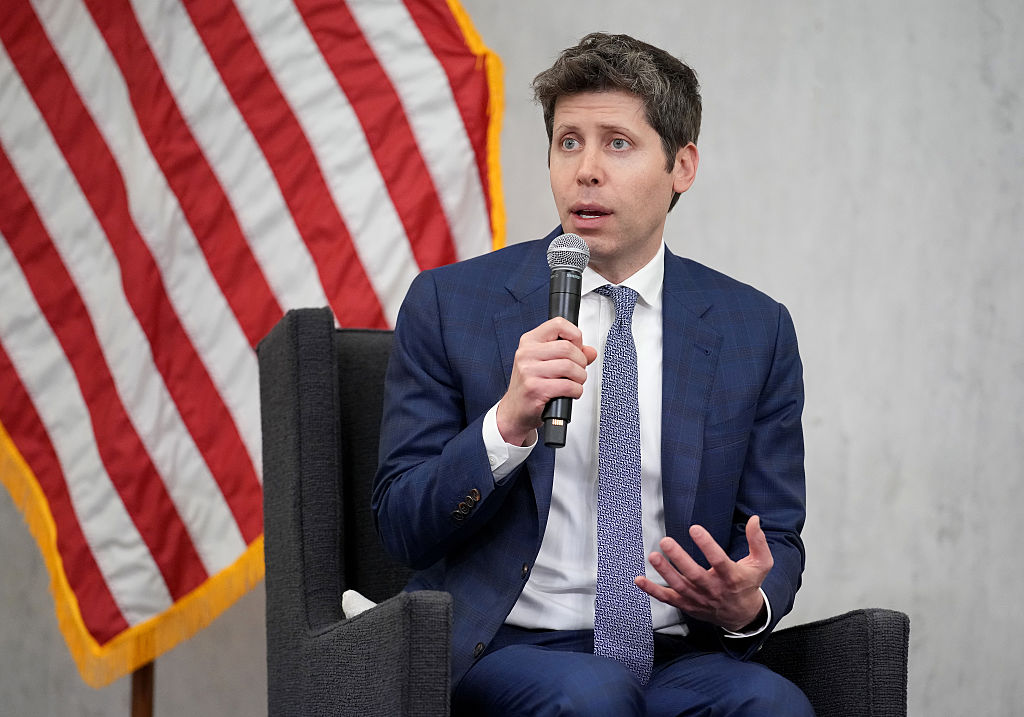
Meanwhile, in an internal Slack message to OpenAI employees that got leaked to The New York Times, Sam Altman said, “What’s happening with ICE is going too far.”
“Part of loving the country is the American duty to push back against overreach,” Altman wrote. “There is a big difference between deporting violent criminals and what’s happening now, and we need to get the distinction right.”
Tech workers, including employees of both companies, have been calling on their chiefs to call the White House and demand that ICE leave U.S. cities in the aftermath of Border Patrol agents killing two U.S. citizens in Minneapolis. In an open letter, tech workers also urged their CEOs to cancel all company contracts with ICE and speak out publicly against ICE’s violence.
Employees calling for CEOs to take action are encouraged and want more to join the ranks.
“We’re glad to hear the CEOs of OpenAI and Anthropic condemning the ICE murders,” the ICEout.tech organizers, whose identities remain unknown, told TechCrunch. “Now we need to hear from CEOs of Apple, Google, Microsoft, and Meta, all of whom have remained silent despite calls all across the industry.”
Techcrunch event
San Francisco
|
October 13-15, 2026
While Amodei and Altman may be taking something of a stand — one in public, the other internally — both CEOs couched their statements with praise for President Trump, as well.
Amodei applauded Trump’s consideration to allow Minnesota authorities to conduct an independent investigation into the shootings by federal agents after multiple videos of Alex Pretti’s death circulated online. (It remains to be seen if that investigation will happen, but a growing number of Republicans have begun to call for an investigation, as well.)
In Altman’s message to his staff he also said he was encouraged by Trump’s more recent responses and said he hopes the president, “a very strong leader,” will “rise to this moment and unite the country.”
Altman assured them that OpenAI would “try to figure out how to actually do the right thing as best we can, engage with leaders and push for our values, and speak up clearly about it as needed.” Altman has yet to publicly criticize the administration’s immigration agenda, or how it is deploying Border Patrol agents into American cities.
J.J. Colao, founder of PR firm Haymaker Group and one of the signatories on ICEout.tech’s letter, called Altman out for trying to “have it both ways” by calling Trump a strong leader, “as if the president bears no responsibility for ICE’s actions.” He added: “On net, I think his statement is helpful, but the performative tribute to the president does a lot to diminish it.”
Of course, the Trump administration’s current AI-forward policies have helped fuel explosive growth at companies like OpenAI and Anthropic over the past year; OpenAI raised at least $40 billion and is in talks to raise another $100 billion at an $830 billion valuation, and Anthropic has raised $19 billion and is in talks to raise another $25 billion at a $350 billion valuation.
Still, such words of praise for Trump is an about-face for Altman. In the lead up to Trump’s first term in 2016, Altman posted the following to his own blog:
“[Trump] is not merely irresponsible. He is irresponsible in the way dictators are…To anyone familiar with the history of Germany in the 1930s, it’s chilling to watch Trump in action.”
At that time, he called Trump a “demagogic hate-monger” who dangles the lie that he will “Make America Great by keeping us safe from outsiders” to distract from the fact that he actually has “no serious plan for how to restore economic growth.” Altman acknowledged that he took some risk by writing his post, and ended on a quote that has been attributed to Edmund Burke: “The only thing necessary for the triumph of evil is for good men to do nothing.”
“This would be a good time for us all—even Republicans, especially Republican politicians who previously endorsed Trump—to start speaking up,” he wrote.
And Amodei also appeared to be more passionate about his opposition to Trump allowing Nvidia to sell AI chips to China, calling the decision “crazy” last week during the World Economic Forum and likening it to “selling nuclear weapons to North Korea and [bragging that] Boeing made the casings.”
Whether these CEOs are doing everything that some among their workforce want them to do remains to be seen. Still, given what’s at stake for their companies, even internal and mild-mannered critiques are notable.
TechCrunch has reached out to Anthropic and OpenAI for comment.
This story has been updated with comment from J.J. Colao.
Got a sensitive tip or confidential documents? We’re reporting on the inner workings of the AI industry — from the companies shaping its future to the people impacted by their decisions. Reach out to Rebecca Bellan at rebecca.bellan@techcrunch.com or Russell Brandom at russell.brandom@techcrunch.com. For secure communication, you can contact them via Signal at @rebeccabellan.491 and russellbrandom.49.
Tech
ElevenLabs lists BlackRock, Jamie Foxx, and Eva Longoria as new investors

Voice AI company ElevenLabs revealed new investors that are part of its $500 million Series D fundraise, which was first announced in February. The additions include institutions such as BlackRock, Wellington, D.E. Shaw, and Schroders; enterprises like Nvidia, Salesforce Ventures, Santander, KPN, and Deutsche Telekom; and individual investors such as Jamie Foxx, Eva Longoria, and Squid Game creator Hwang Dong-hyuk.
The startup also noted that it surpassed $500 million in ARR (annual recurring revenue), after ending last year with nearly $350 million in ARR. The company’s co-founder and CEO, Mati Staniszewski, said last month that ElevenLabs added $100 million in net new ARR in Q1 2026, ending the quarter at roughly $450 million in ARR.
The company has also accelerated its valuation rapidly, growing from $6.6 billion last September to $11 billion this February.
“Voice is the highest-stakes channel for any customer interaction, and the bar for quality, latency, and security is extremely high. ElevenLabs is not just a category leader – it is becoming a foundational enabler of Deutsche Telekom’s broader Industrial AI vision. From voice-as-a-service to multilingual automation and in-network AI agents, we believe the company is uniquely positioned to reshape how businesses interact with customers across all channels,” Karine Peters, managing director at Deutsche Telekom’s venture arm T.Capital, said in a statement.
In the past quarter, the voice AI company has signed enterprise contracts with the likes of Deutsche Telekom, Revolut, and Klarna.
ElevenLabs said that, besides the fundraising, it also closed a $100 million tender, a second in roughly six months after the company issued one last September. Staniszewski said in a blog post that the company will give an opportunity to retail investors to invest in ElevenLabs through Robinhood Ventures, but didn’t provide details about the program.
Staniszewski noted that consumers won’t trust systems that sound robotic or “interact strangely” and emphasized the importance of building “human-level AI voice models.” Last month, the company acquired the team from Polish voice AI startup Papla to bolster its research team.
When you purchase through links in our articles, we may earn a small commission. This doesn’t affect our editorial independence.
Tech
Kaspersky suspects Chinese hackers planted a backdoor into Daemon Tools in ‘widespread’ attack
Security researchers at Kaspersky say they have identified a malicious backdoor planted in the popular and long-running Windows disc imaging software, Daemon Tools.
The Russian cybersecurity company said on Tuesday that data collected from computers around the world running the Kaspersky antivirus software shows a “widespread” attack is under way, targeting thousands of Windows computers running Daemon Tools.
The hackers, whom Kaspersky has linked to a Chinese-language speaking group based on an analysis of the malware, used the backdoor in Daemon Tools to plant additional malware on a dozen computers across the retail, scientific and manufacturing sectors, as well as government systems. Kaspersky said the hacking of these specific computers implied a “targeted” effort.
The company said the targeted organizations are located in Russia, Belarus, and Thailand.
Kaspersky said the backdoor was first detected on April 8.
Kaspersky said it had contacted Disc Soft, the company that maintains Daemon Tools, but did not say if the developer responded or took action. Kaspersky said the supply chain attack is “still active,” suggesting that the hackers can still plant malware on thousands of computers running the disc imaging software.
This is the latest in a string of so-called “supply chain” attacks that have targeted developers of popular software in recent months. Hackers are increasingly taking aim at the accounts of developers who work on widely used code and software, and abusing that access to push malicious code to anyone who relies on the software. This approach lets the hackers break into a large number of computers at once when their malicious code is delivered as a software update.
Earlier this year, hackers associated with the Chinese government hijacked the popular text editing software Notepad++ to deliver malware to a number of organizations with interests in East Asia. Security researchers also warned of another attack last month targeting users who visited the website of CPUID, which makes the popular HWMonitor and CPU-Z tools.
TechCrunch downloaded the Windows installer from Daemon Tools’ website, and the file appeared to contain the backdoor when we checked it with the online malware scanner service VirusTotal.
It’s not known if the macOS version of Daemon Tools was compromised, or if other apps made by Disc Soft are affected.
When contacted for comment, a Disc Soft representative said they are “aware of the report and are currently investigating the situation.”
“Our team is treating this matter with the highest priority and is actively working to assess and address the issue. At this stage, we are not in a position to confirm specific details referenced in the report. However, we are taking all necessary steps to remediate any potential risks and to ensure the security of our users,” the representative said.
Do you know more about the cyberattack targeting Daemon Tools users? Did you receive an antivirus alert saying you were affected? We want to hear from you. To contact this reporter securely, reach out via Signal username zackwhittaker.1337.
When you purchase through links in our articles, we may earn a small commission. This doesn’t affect our editorial independence.
Tech
Etsy launches its app within ChatGPT as it continues its AI push
Etsy announced Tuesday the launch of its native app within ChatGPT, opening up a new way for shoppers to explore its catalog of over 100 million listings.
The new experience is designed to move beyond the limitations of traditional keyword queries. Instead of typing something like “wooden coffee table,” then scrolling and adjusting filters, users can now express what they’re looking for in natural language. For instance, “Help me find a Mother’s Day gift under $100 for my mom who loves gardening.”
Now live in beta, the feature allows users to tag @Etsy directly within a prompt. From there, the Etsy app in ChatGPT surfaces relevant product listings that users can browse, compare, and click through to Etsy for additional details or purchase.
This isn’t Etsy’s first experiment inside ChatGPT. Back in September, Etsy became an early partner in ChatGPT’s Instant Checkout integration, which let users buy products directly inside the chat interface. However, the initiative ended in March, suggesting it didn’t perform as OpenAI had hoped. It was reported that Etsy didn’t see a large volume of sales from the integration, leading Etsy to start building a native app within ChatGPT instead.
Alongside this launch, Etsy also revealed it’s testing a beta conversational search experience within its platform, specifically geared toward helping users find gifts. The gift assistant acts as a personal shopper, offering a guided, conversational way to discover ideas, narrow down preferences, and surface relevant products.

This builds on Etsy’s broader AI push, which includes an AI-powered discovery experience featuring curated collections and a suite of seller tools, including a tool that helps generate product titles and descriptions, as well as a writing assistant to help draft messages to buyers. In 2024, Etsy introduced a new “Designed” label to identify AI content, part of an effort to increase transparency as AI-generated artwork becomes more prevalent on the platform.
The news of a ChatGPT integration comes a week after Etsy reported its Q1 2026 earnings, surpassing revenue expectations with $631 million, and marketplace gross merchandise sales were up 6% year over year. Notably, active buyers increased for the first time in two years to 86.6 million. Etsy also touted 5.6 million active sellers on the platform.
In February, the company announced it was selling Depop to eBay for $1.2 billion in cash, a move aimed at doubling down on its core marketplace.
Etsy joins a growing list of companies building native apps within ChatGPT, including Angi, SeatGeek, Tubi, and Wix. Developers have been able to build apps within the chatbot since October.
When you purchase through links in our articles, we may earn a small commission. This doesn’t affect our editorial independence.

Checks for Spring!
The Bears Gary cliffhanger explained: What just happened to Richie?


