
Entertainment
The Best Spider-Man Movie Ever Made Is Now On Netflix
By Chris Snellgrove
| Published
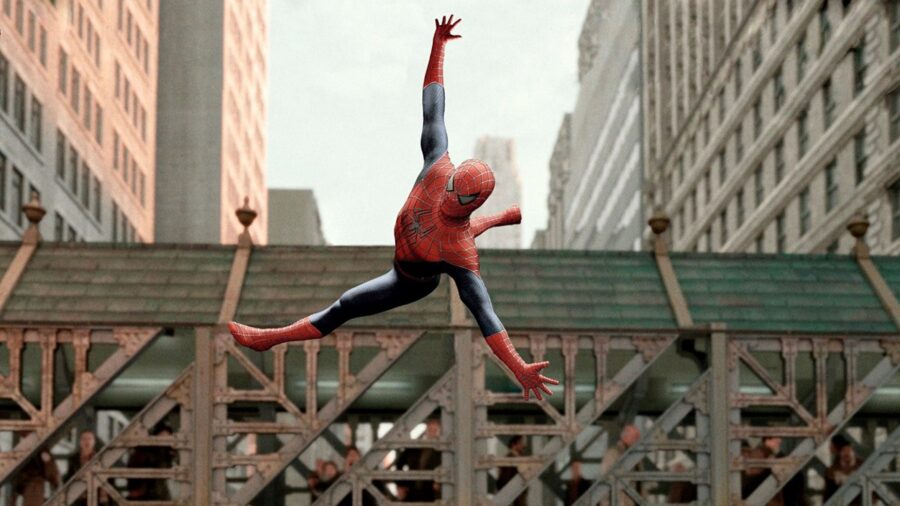
While the studio achieved success with the Venom trilogy of movies, Sony has generally run the Spider-Man brand into the ground with awful movies based on his supporting characters, including Morbius, Kraven the Hunter, and Madame Web. However, the studio managed to knock it out of the park with a 2018 film that most fans agree is the best Spider-Man movie ever made. That film is Spider-Man: Into the Spider-Verse (2018), and you can now stream this colorful cartoon classic for yourself on Netflix.
The premise of Spider-Man: Into the Spider-Verse is that gifted student Miles Morales gets bitten by a spider that gives him similar abilities to those of his favorite hero, Spider-Man. After he witnesses his idol’s death, he decides to help with Spidey’s final mission: stopping Kingpin from using a collider that threatens all of space and time. Once different spider heroes begin showing up from different realities, though, they must all work together to take down the kingpin of crime before he manages to destroy the entire multiverse.
Your Celebrity Sense Is Tingling

There’s a surprising amount of big names providing the voices for Spider-Man: Into the Spider-Verse, including Lily Tomlin (best known for Nashville) as Aunt May. Jake Johnson (best known for New Girl) plays a schlubby Spider-Man from another universe while Zoë Kravitz (best known for The Batman) plays Mary Jane. Her heroic Peter Parker, incidentally, is played by Chris Pine (best known for Star Trek).
Additionally, Hailee Steinfeld (best known for Sinners) plays Spider-Gwen, and Nicolas Cage (best known for Face/Off) plays the gravelly-voiced Spider-Man Noir. Comedian John Mulaney voices Spider-Ham, while Liev Schreiber (best known for Spotlight) plays the conniving Kingpin. Holding the entire cast together is Shameik Moore (best known outside these films for Samaritan), who transforms Miles Morales into a hilariously relatable everyman who is suddenly responsible for saving all of reality from a grieving madman.
A Thwippy Hit With Audiences And Critics

Spider-Man: Into the Spider-Verse came out and delivered a Kingpin-sized hit right when Sony needed one the most. The film earned $394 million against a budget of only $90 million, making this animated adventure an unqualified success at the box office. It was followed by a highly-acclaimed sequel (Spider-Man: Across the Spider-Verse), and fans are eagerly awaiting the third film (Spider-Man: Beyond the Spider-Verse) that will bring this ambitious trilogy to a satisfying conclusion.
When Spider-Man: Into the Spider-Verse came out, movie reviewers decided that Miles Morales certainly knew how to thwip it good. On Rotten Tomatoes, it has a 97 percent, with critics praising the movie for its powerful blend of emotional storytelling and cutting-edge animation. They also commended the film for balancing heart, humor, and pulse-pounding action, making Into the Spider-Verse the rare story that delivers literally everything you could want from a superhero movie.
An Award-Winning Superhero Masterpiece

This critical adoration meant it was no surprise when Into the Spider-Verse became an awards darling, earning every single Annie Award (the Annies focus on American animation) it was nominated for, including Best Animated Feature. Additionally, the film took home a Golden Globe for Best Animated Feature Film and even an Academy Award for Best Animated Feature Film. The latter achievement was particularly impressive because this was the first time the award had been won by a non-Disney, non-Pixar film in seven years!
When Spider-Man: Into the Spider-Verse was first announced, I had a bad feeling about it: I loved Miles Morales and Gwen Stacy, but after the two Amazing Spider-Man movies, I wasn’t sure if Sony could do these characters justice. Making matters worse was that modern Spider-Man comics writing (including the comics that introduced the Spider-Verse in the first place) was largely hit-or-miss, so I feared we might get a bad adaptation of an already mediocre story. Finally, I thought the animation in the first trailer looked weird and that watching the movie might give me a very literal headache.
Sony Finally Takes A Leap

However, I saw the film in theaters on opening night, and I’ve never been quite so happy to be wrong. The animation is almost hypnotically beautiful, and the film’s top-notch art design helped bring the unique comic book aesthetic to life on the big screen. Plus, the story is both entertaining and powerful, giving us a multiversal tale that is more epic in scope and more moving in execution than anything the Marvel Cinematic Universe has ever done.
By every possible metric, Spider-Man: Into the Spider-Verse is the best Spider-Man movie ever made, one that honors decades of comic history while helping a newer incarnation of the title character take center stage. A good Spidey story always focuses on relationships as much as action, and Miles Morales’ interactions with his family are often powerful enough to make you cry. The same can be said of his interactions with Peter B. Parker, who goes from being a slovenly mentor to someone who realizes how much he has to learn from his pupil.
It’s got killer animation, breathtaking fights, a perfect cast, and a completely unforgettable story. Whether you’re an old-school comics fan or you just enjoy a good blockbuster, you owe it to yourself to stream Spider-Man: Into The Spider-Verse on Netflix today. Afterward, you can join the rest of us in crossing fingers, toes, and webshooters that Beyond the Spider-Verse brings the house down when it brings this trilogy to a close in 2027.

Entertainment
Time for a new smartwatch? Snag the Samsung Galaxy Watch 8 Classic for 51% off ahead of Samsung Unpacked.

SAVE $280: As of July 21, get the Samsung Galaxy Watch 8 Classic for $269.99 at Woot, down from its usual price of $549.99. That’s a discount of 51%.
$269.99
at Amazon
$549.99
Save $280
If you’re looking to kit your wrist out with a new smartwatch, now’s a great time to do so. Samsung is on the verge of debuting several new models, and that means the old ones are going down in price. Case in point: the Samsung Galaxy Watch 8 Classic, which you can get for an excellent discount right now if you don’t want to wait for the new crop of devices.
As of July 21, get the Samsung Galaxy Watch 8 Classic for $269.99 at Woot, down from its usual price of $549.99. That’s $280 off and a discount of 51%.
This classy smartwatch opts to keep things traditional while offering a variety of modern features that you’ll appreciate. That includes a bright, easy-to-read display, a rotating bezel you use to select apps and navigate menus, and several health-tracking abilities so you can stay on top of what’s happening with your body and fitness at all times.
From a heart rate and sleep score monitor to a daily Energy Score calculated from your heart rate, sleep, activity, and rest this watch can make sure you’re ready for the day in all the ways that count. It can also be used to help track blood pressure.
Mashable Deals
Beyond all its health-centric features, this is a great smartwatch for day-to-day functionality and staying on top of your schedule. It has a built-in AI assistant as well as the option to use voice commands to navigate, which means you never have to use your hand to get things done if you don’t want to.
If you’re ready to debut a new smartwatch without breaking the bank, now’s a good time to buy in.
Entertainment
The Latest Poster For Avengers: Doomsday Secretly Spoils The Plot
By Chris Snellgrove
| Published

With less than five months left until the film’s release, Marvel has taken their marketing for Avengers: Doomsday to the next level. Right now, fans are mostly focused on the trailer that dropped today, which is no surprise; after all, it’s not every day that you see the reunion of Thor and Steve Rogers or, for that matter, a battle between Shang-Chi and Gambit. Amid all the breathless hype over the trailer, however, a more powerful advertisement is lurking in plain sight. At the same time Marvel launched the trailer, they also released a new Avengers: Doomsday poster.
Compared to that crowded character poster, the new poster is downright subdued. It features Doctor Doom staring at a huge tapestry with a broken world and two characters: a woman and a boy. Some comics fans think this image is Doom and his mother, a character who is eventually damned to Hell. However, other fans are convinced that this is actually an image of Doom’s wife and child; if true, this would effectively ruin the biggest plot twist. How does it do that? If you don’t mind some potential spoilers for this year’s biggest film, just keep reading!
You Can’t Spell “Painting” Without “Pain”

So, let’s start this story in reverse (just don’t let the TVA get me!): why do some fans think the woman in this poster is Doctor Doom’s mother? In the comics, she’s a big deal. To defeat an evil dictator who was ruling her country with an iron fist (an actual fist, not the kung-fu guy), she made a deal with the devil. As usual, the deal went wrong, and she lost control of the powers that she gained from Mephisto. She renounced those powers, got killed, and was then dragged into Hell. To see her again, Doom later mastered magic, visited Mephisto, and conducted an experiment that ruined his own face.
However, all of the lore behind this origin story is too dense to fit into Avengers: Doomsday, a movie which is already crowded with endless character cameos. It seems the movie is taking a different direction, as multiple reports have claimed that the two figures are actually Doom’s wife and child. An unconfirmed leak of the movie’s plot (don’t say I didn’t warn you about spoilers, kids!) claims that Doom actually lost his family to one of the incursions, which is when one reality collides with another. This motivates Doom to learn more about the incursions and to plot his revenge.
A Hero Will Be Broken

Revenge against whom, you ask? According to the leaked plot, Steve Rogers! Reportedly, Loki visits the former Captain America in the past and warns him that the TVA will prune his entire timeline because he’s not supposed to be there. In an act of seeming kindness, Loki brings Cap, Peggy, and their young son to the Fantastic Four’s universe. However, the leak claims that Steve’s presence in this universe somehow triggers an incursion and that Doom disfigured himself and killed his own wife and son trying to stop it. In a shocking twist, Doom reportedly kills Steve’s son in front of the hero in an act of vengeance.
Now, again, all of this comes from a leaked plot summary that hasn’t been confirmed, so all of this could be an Ego-sized bottle of hogwash. But it’s worth noting that the Avengers: Doomsday teasers last year prominently focused on both Captain America and Thor becoming fathers. This potentially adds credence to the idea that this is a film about family and how far someone will go to protect the ones they love. If the leaks are true, this innocuous poster featuring Doctor Doom is spoiling the motivation the villain will have to cross time and space and cross countless moral event horizons along the way.

A movie where costumed vigilantes (like Batman, Spider-Man, and so many more) are driven by the ghosts of family members they lost when they were children? Well, nobody ever accused Marvel of being all that original!
Entertainment
The Best Horror Series Ever Made Is Now Streaming For Free
By Chris Snellgrove
| Published

My absolute favorite kind of movie is the anthology. When you have a collection of short films all rolled into one, it provides the ultimate ROI for the audience. Don’t like one of the stories? You can just thug it out with the short runtime or skip ahead to the next tale. Either way is infinitely preferable to slogging through a two-hour film that started boring you to tears in the first scene. The anthology is much rarer in television, however, because networks and streamers have learned just how attached fans get to the same characters and stories, causing them to run these shows into the ground.
Heroes, Stranger Things, Star Trek: Discovery…what do all of these shows have in common? They were designed to be anthologies that would change things up each season, but their early success meant we were stuck with the same cast for years as the show got worse. Fortunately, true anthology lovers are just a click away from getting their fix. Right now, Tales From the Crypt is streaming for free on Tubi, just waiting to delight all you ghouls and boys. It’s not just the perfect anthology show; it is, in fact, the greatest horror series ever made!
Meet The Cryptkeeper
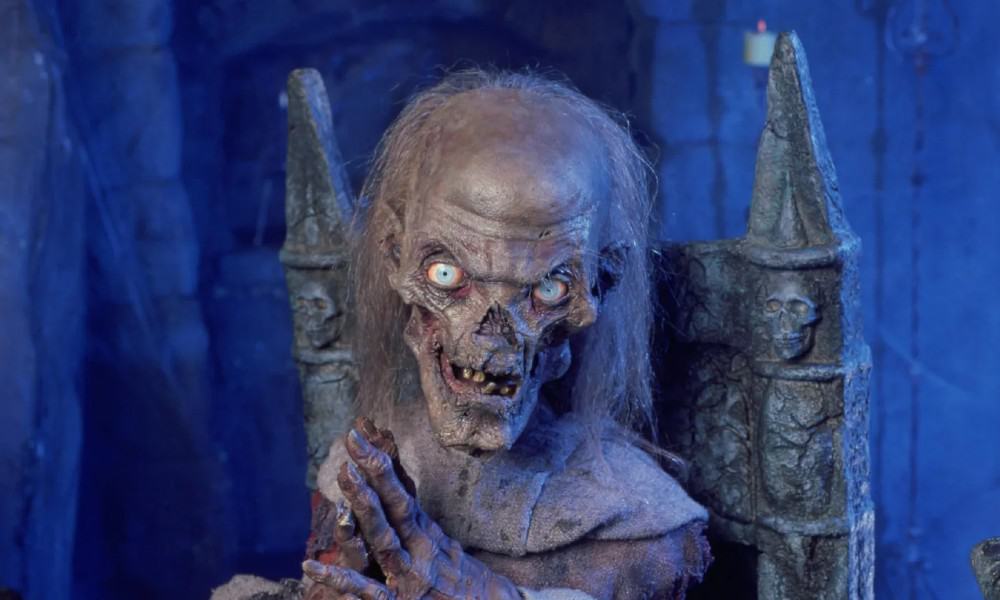
Tales From the Crypt fully embraces its anthology format, with every single episode focusing on different characters and different terrifying tales. What ties all of them together is our host, the Cryptkeeper. He’s a snarky, hilariously mean corpse of a character brought to life by a small army of puppeteers. The show originated on HBO, and its creators embraced the fact that it didn’t have to abide by any of the restrictive standards of network television. As such, episodes were filled to the brim with vulgar language, nudity, sex, and more buckets of blood than you can shake a bodybag at.
Younger horror fans should know that it’s almost impossible to overstate the popularity of Tales From the Crypt and its ghoulish host. Despite all the blood, breasts, and beasts, the show was wildly popular with kids, including my own underage self. Accordingly, it got two spinoffs aimed directly at children: Tales From the Cryptkeeper (a Saturday Morning children’s cartoon) and Secrets of the Cryptkeeper’s Haunted House (a weird gameshow). If that seems odd, this was during the same time that Kenner marketed toys based on Terminator 2 and Aliens directly to kids. What can I say? The ‘90s were weird, man!
Friends In Low Places

One compelling reason to check out Tales From the Crypt is that it had plenty of awesome guest stars, all of whom were happy to do an episode without being tied down to a long contract. Guests included Arnold Schwarzenegger, Brad Pitt, Michael J. Fox, Tom Hanks, and so many more. In most cases, these actors are performing against type, making what happens to them onscreen that much more shocking. Trust me: if you only know actors like Robert Picardo and Wil Wheaton from Star Trek, you’ll never look at them the same way after watching Tales From the Crypt.
For me, though, the single best thing about Tales From the Crypt is the show’s wicked sense of humor. With his relentless puns, wild expressions, and unhinged laughter, the Cryptkeeper sets the tone for a show that has black comedy running through its veins at all times. This adds serious entertainment value and also helps position the show as a light (but filling) bite for horror fans. Not in the mood for elevated horror and don’t have the time for a two-hour psychological thriller? You can always count on Tales From the Crypt to deliver a perfect slice of scary entertainment in under 30 minutes.

There’s not much more to say, especially without spoiling these awesome episodes. Ready to see if this early HBO success story lives up to the hype? Maybe you want to laugh and scream in equal measure, or just write down some weird new puns with which to torment your children? Whatever your reason, the best horror series ever made is just a click away. Tales From the Crypt is currently streaming for free on Tubi, which is arguably the best platform for any boils and ghouls who love a good scare!
TALES FROM THE CRYPT REVIEW SCORE

Mired in 'rough' stretch, Padres' Walker Buehler seeks to bounce back vs. Braves
Time for a new smartwatch? Snag the Samsung Galaxy Watch 8 Classic for 51% off ahead of Samsung Unpacked.
Twins vs. Guardians Prediction: Best Bets for Tuesday's AL Central Showdown


Entertainment
The Best Spider-Man Movie Ever Made Is Now On Netflix
By Chris Snellgrove
| Published
While the studio achieved success with the Venom trilogy of movies, Sony has generally run the Spider-Man brand into the ground with awful movies based on his supporting characters, including Morbius, Kraven the Hunter, and Madame Web. However, the studio managed to knock it out of the park with a 2018 film that most fans agree is the best Spider-Man movie ever made. That film is Spider-Man: Into the Spider-Verse (2018), and you can now stream this colorful cartoon classic for yourself on Netflix.
The premise of Spider-Man: Into the Spider-Verse is that gifted student Miles Morales gets bitten by a spider that gives him similar abilities to those of his favorite hero, Spider-Man. After he witnesses his idol’s death, he decides to help with Spidey’s final mission: stopping Kingpin from using a collider that threatens all of space and time. Once different spider heroes begin showing up from different realities, though, they must all work together to take down the kingpin of crime before he manages to destroy the entire multiverse.
Your Celebrity Sense Is Tingling
There’s a surprising amount of big names providing the voices for Spider-Man: Into the Spider-Verse, including Lily Tomlin (best known for Nashville) as Aunt May. Jake Johnson (best known for New Girl) plays a schlubby Spider-Man from another universe while Zoë Kravitz (best known for The Batman) plays Mary Jane. Her heroic Peter Parker, incidentally, is played by Chris Pine (best known for Star Trek).
Additionally, Hailee Steinfeld (best known for Sinners) plays Spider-Gwen, and Nicolas Cage (best known for Face/Off) plays the gravelly-voiced Spider-Man Noir. Comedian John Mulaney voices Spider-Ham, while Liev Schreiber (best known for Spotlight) plays the conniving Kingpin. Holding the entire cast together is Shameik Moore (best known outside these films for Samaritan), who transforms Miles Morales into a hilariously relatable everyman who is suddenly responsible for saving all of reality from a grieving madman.
A Thwippy Hit With Audiences And Critics
Spider-Man: Into the Spider-Verse came out and delivered a Kingpin-sized hit right when Sony needed one the most. The film earned $394 million against a budget of only $90 million, making this animated adventure an unqualified success at the box office. It was followed by a highly-acclaimed sequel (Spider-Man: Across the Spider-Verse), and fans are eagerly awaiting the third film (Spider-Man: Beyond the Spider-Verse) that will bring this ambitious trilogy to a satisfying conclusion.
When Spider-Man: Into the Spider-Verse came out, movie reviewers decided that Miles Morales certainly knew how to thwip it good. On Rotten Tomatoes, it has a 97 percent, with critics praising the movie for its powerful blend of emotional storytelling and cutting-edge animation. They also commended the film for balancing heart, humor, and pulse-pounding action, making Into the Spider-Verse the rare story that delivers literally everything you could want from a superhero movie.
An Award-Winning Superhero Masterpiece
This critical adoration meant it was no surprise when Into the Spider-Verse became an awards darling, earning every single Annie Award (the Annies focus on American animation) it was nominated for, including Best Animated Feature. Additionally, the film took home a Golden Globe for Best Animated Feature Film and even an Academy Award for Best Animated Feature Film. The latter achievement was particularly impressive because this was the first time the award had been won by a non-Disney, non-Pixar film in seven years!
When Spider-Man: Into the Spider-Verse was first announced, I had a bad feeling about it: I loved Miles Morales and Gwen Stacy, but after the two Amazing Spider-Man movies, I wasn’t sure if Sony could do these characters justice. Making matters worse was that modern Spider-Man comics writing (including the comics that introduced the Spider-Verse in the first place) was largely hit-or-miss, so I feared we might get a bad adaptation of an already mediocre story. Finally, I thought the animation in the first trailer looked weird and that watching the movie might give me a very literal headache.
Sony Finally Takes A Leap
However, I saw the film in theaters on opening night, and I’ve never been quite so happy to be wrong. The animation is almost hypnotically beautiful, and the film’s top-notch art design helped bring the unique comic book aesthetic to life on the big screen. Plus, the story is both entertaining and powerful, giving us a multiversal tale that is more epic in scope and more moving in execution than anything the Marvel Cinematic Universe has ever done.
By every possible metric, Spider-Man: Into the Spider-Verse is the best Spider-Man movie ever made, one that honors decades of comic history while helping a newer incarnation of the title character take center stage. A good Spidey story always focuses on relationships as much as action, and Miles Morales’ interactions with his family are often powerful enough to make you cry. The same can be said of his interactions with Peter B. Parker, who goes from being a slovenly mentor to someone who realizes how much he has to learn from his pupil.
It’s got killer animation, breathtaking fights, a perfect cast, and a completely unforgettable story. Whether you’re an old-school comics fan or you just enjoy a good blockbuster, you owe it to yourself to stream Spider-Man: Into The Spider-Verse on Netflix today. Afterward, you can join the rest of us in crossing fingers, toes, and webshooters that Beyond the Spider-Verse brings the house down when it brings this trilogy to a close in 2027.
Entertainment
Time for a new smartwatch? Snag the Samsung Galaxy Watch 8 Classic for 51% off ahead of Samsung Unpacked.
SAVE $280: As of July 21, get the Samsung Galaxy Watch 8 Classic for $269.99 at Woot, down from its usual price of $549.99. That’s a discount of 51%.
$269.99
at Amazon
$549.99
Save $280
If you’re looking to kit your wrist out with a new smartwatch, now’s a great time to do so. Samsung is on the verge of debuting several new models, and that means the old ones are going down in price. Case in point: the Samsung Galaxy Watch 8 Classic, which you can get for an excellent discount right now if you don’t want to wait for the new crop of devices.
As of July 21, get the Samsung Galaxy Watch 8 Classic for $269.99 at Woot, down from its usual price of $549.99. That’s $280 off and a discount of 51%.
This classy smartwatch opts to keep things traditional while offering a variety of modern features that you’ll appreciate. That includes a bright, easy-to-read display, a rotating bezel you use to select apps and navigate menus, and several health-tracking abilities so you can stay on top of what’s happening with your body and fitness at all times.
From a heart rate and sleep score monitor to a daily Energy Score calculated from your heart rate, sleep, activity, and rest this watch can make sure you’re ready for the day in all the ways that count. It can also be used to help track blood pressure.
Mashable Deals
Beyond all its health-centric features, this is a great smartwatch for day-to-day functionality and staying on top of your schedule. It has a built-in AI assistant as well as the option to use voice commands to navigate, which means you never have to use your hand to get things done if you don’t want to.
If you’re ready to debut a new smartwatch without breaking the bank, now’s a good time to buy in.
Entertainment
The Latest Poster For Avengers: Doomsday Secretly Spoils The Plot
By Chris Snellgrove
| Published
With less than five months left until the film’s release, Marvel has taken their marketing for Avengers: Doomsday to the next level. Right now, fans are mostly focused on the trailer that dropped today, which is no surprise; after all, it’s not every day that you see the reunion of Thor and Steve Rogers or, for that matter, a battle between Shang-Chi and Gambit. Amid all the breathless hype over the trailer, however, a more powerful advertisement is lurking in plain sight. At the same time Marvel launched the trailer, they also released a new Avengers: Doomsday poster.
Compared to that crowded character poster, the new poster is downright subdued. It features Doctor Doom staring at a huge tapestry with a broken world and two characters: a woman and a boy. Some comics fans think this image is Doom and his mother, a character who is eventually damned to Hell. However, other fans are convinced that this is actually an image of Doom’s wife and child; if true, this would effectively ruin the biggest plot twist. How does it do that? If you don’t mind some potential spoilers for this year’s biggest film, just keep reading!
You Can’t Spell “Painting” Without “Pain”
So, let’s start this story in reverse (just don’t let the TVA get me!): why do some fans think the woman in this poster is Doctor Doom’s mother? In the comics, she’s a big deal. To defeat an evil dictator who was ruling her country with an iron fist (an actual fist, not the kung-fu guy), she made a deal with the devil. As usual, the deal went wrong, and she lost control of the powers that she gained from Mephisto. She renounced those powers, got killed, and was then dragged into Hell. To see her again, Doom later mastered magic, visited Mephisto, and conducted an experiment that ruined his own face.
However, all of the lore behind this origin story is too dense to fit into Avengers: Doomsday, a movie which is already crowded with endless character cameos. It seems the movie is taking a different direction, as multiple reports have claimed that the two figures are actually Doom’s wife and child. An unconfirmed leak of the movie’s plot (don’t say I didn’t warn you about spoilers, kids!) claims that Doom actually lost his family to one of the incursions, which is when one reality collides with another. This motivates Doom to learn more about the incursions and to plot his revenge.
A Hero Will Be Broken
Revenge against whom, you ask? According to the leaked plot, Steve Rogers! Reportedly, Loki visits the former Captain America in the past and warns him that the TVA will prune his entire timeline because he’s not supposed to be there. In an act of seeming kindness, Loki brings Cap, Peggy, and their young son to the Fantastic Four’s universe. However, the leak claims that Steve’s presence in this universe somehow triggers an incursion and that Doom disfigured himself and killed his own wife and son trying to stop it. In a shocking twist, Doom reportedly kills Steve’s son in front of the hero in an act of vengeance.
Now, again, all of this comes from a leaked plot summary that hasn’t been confirmed, so all of this could be an Ego-sized bottle of hogwash. But it’s worth noting that the Avengers: Doomsday teasers last year prominently focused on both Captain America and Thor becoming fathers. This potentially adds credence to the idea that this is a film about family and how far someone will go to protect the ones they love. If the leaks are true, this innocuous poster featuring Doctor Doom is spoiling the motivation the villain will have to cross time and space and cross countless moral event horizons along the way.
A movie where costumed vigilantes (like Batman, Spider-Man, and so many more) are driven by the ghosts of family members they lost when they were children? Well, nobody ever accused Marvel of being all that original!
Entertainment
The Best Horror Series Ever Made Is Now Streaming For Free
By Chris Snellgrove
| Published
My absolute favorite kind of movie is the anthology. When you have a collection of short films all rolled into one, it provides the ultimate ROI for the audience. Don’t like one of the stories? You can just thug it out with the short runtime or skip ahead to the next tale. Either way is infinitely preferable to slogging through a two-hour film that started boring you to tears in the first scene. The anthology is much rarer in television, however, because networks and streamers have learned just how attached fans get to the same characters and stories, causing them to run these shows into the ground.
Heroes, Stranger Things, Star Trek: Discovery…what do all of these shows have in common? They were designed to be anthologies that would change things up each season, but their early success meant we were stuck with the same cast for years as the show got worse. Fortunately, true anthology lovers are just a click away from getting their fix. Right now, Tales From the Crypt is streaming for free on Tubi, just waiting to delight all you ghouls and boys. It’s not just the perfect anthology show; it is, in fact, the greatest horror series ever made!
Meet The Cryptkeeper
Tales From the Crypt fully embraces its anthology format, with every single episode focusing on different characters and different terrifying tales. What ties all of them together is our host, the Cryptkeeper. He’s a snarky, hilariously mean corpse of a character brought to life by a small army of puppeteers. The show originated on HBO, and its creators embraced the fact that it didn’t have to abide by any of the restrictive standards of network television. As such, episodes were filled to the brim with vulgar language, nudity, sex, and more buckets of blood than you can shake a bodybag at.
Younger horror fans should know that it’s almost impossible to overstate the popularity of Tales From the Crypt and its ghoulish host. Despite all the blood, breasts, and beasts, the show was wildly popular with kids, including my own underage self. Accordingly, it got two spinoffs aimed directly at children: Tales From the Cryptkeeper (a Saturday Morning children’s cartoon) and Secrets of the Cryptkeeper’s Haunted House (a weird gameshow). If that seems odd, this was during the same time that Kenner marketed toys based on Terminator 2 and Aliens directly to kids. What can I say? The ‘90s were weird, man!
Friends In Low Places
One compelling reason to check out Tales From the Crypt is that it had plenty of awesome guest stars, all of whom were happy to do an episode without being tied down to a long contract. Guests included Arnold Schwarzenegger, Brad Pitt, Michael J. Fox, Tom Hanks, and so many more. In most cases, these actors are performing against type, making what happens to them onscreen that much more shocking. Trust me: if you only know actors like Robert Picardo and Wil Wheaton from Star Trek, you’ll never look at them the same way after watching Tales From the Crypt.
For me, though, the single best thing about Tales From the Crypt is the show’s wicked sense of humor. With his relentless puns, wild expressions, and unhinged laughter, the Cryptkeeper sets the tone for a show that has black comedy running through its veins at all times. This adds serious entertainment value and also helps position the show as a light (but filling) bite for horror fans. Not in the mood for elevated horror and don’t have the time for a two-hour psychological thriller? You can always count on Tales From the Crypt to deliver a perfect slice of scary entertainment in under 30 minutes.
There’s not much more to say, especially without spoiling these awesome episodes. Ready to see if this early HBO success story lives up to the hype? Maybe you want to laugh and scream in equal measure, or just write down some weird new puns with which to torment your children? Whatever your reason, the best horror series ever made is just a click away. Tales From the Crypt is currently streaming for free on Tubi, which is arguably the best platform for any boils and ghouls who love a good scare!
TALES FROM THE CRYPT REVIEW SCORE
Leave a Reply