
Entertainment
This is how Americans truly feel about self-driving cars
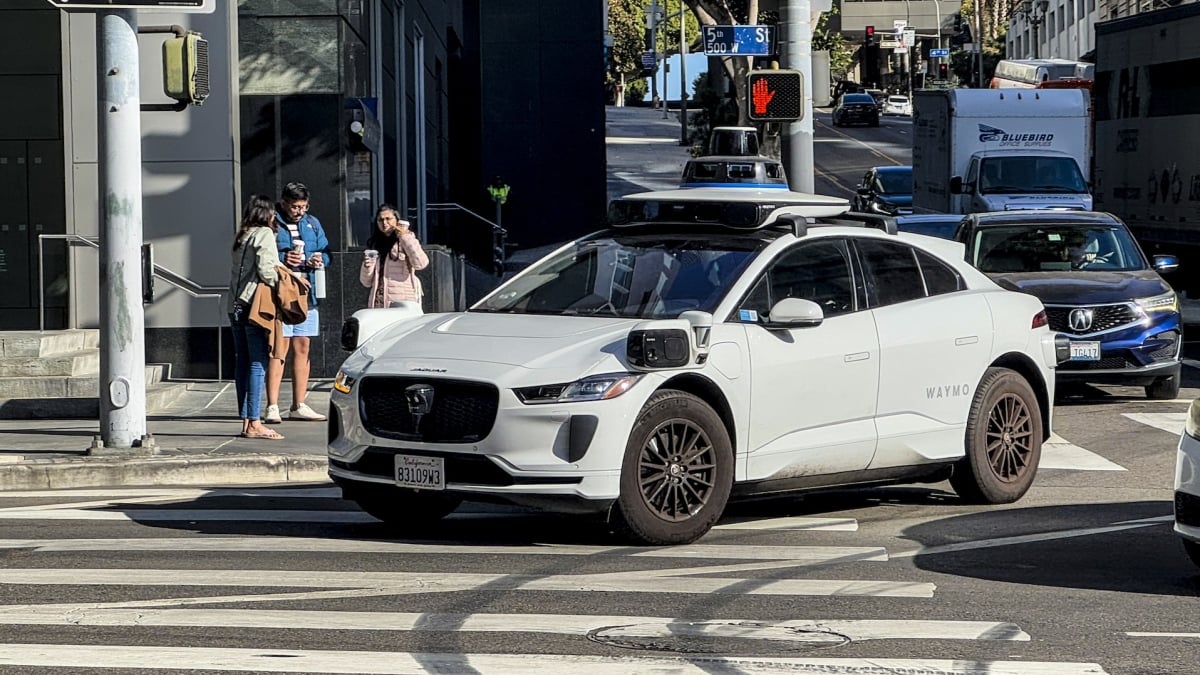
A convincing majority of Americans remain “afraid” to ride in self-driving vehicles, according to a survey released today by AAA.
A January survey of 1,095 people found that 61 percent do not trust self-driving vehicles (that survey question didn’t differentiate between semi-autonomous cars, like some Tesla models, and fully autonomous cars, like Waymo robotaxis). Conversely, 13 percent trust self-driving vehicles and 26 percent are unsure of their safety.
Robot, take the wheel: What you need to know about autonomous vehicles rolling out across the U.S.
While the percentage of those who remain scared of self-driving vehicles dropped from last year’s findings, which was 66 percent, 2025’s results represent a 7 percent increase in those frightened of using the technology from when AAA’s first self-driving survey was conducted in 2021.
Mashable Light Speed
AAA also queried its panel specifically on robotaxis, finding that 74 percent knew that self-driving rideshare cars were available in certain cities, yet 53 percent said they would not ride in one. While Millennial and Generation X drivers were more receptive to robotaxis than Baby Boomers, majorities of the younger generations still said they wouldn’t ride in such a vehicle.
The development of self-driving vehicles was not a priority for respondents; more people wanted investments in vehicle safety systems rather than expanding access to autonomous vehicles. According to AAA’s survey, the public’s interest in self-driving vehicles has decreased from 18 percent in 2022 to 13 percent this year.
“Most drivers want automakers to focus on advanced safety technology,” Greg Brannon, the automotive engineering director at AAA, said in a statement. “Though opinions on fully self-driving cars vary widely, its evident that today’s drivers value features that enhance their safety.”
While drivers remain skeptical of autonomous vehicles, many expressed a desire for self-driving technology like automatic emergency braking, reverse automatic emergency braking, and lane keeping assistance. In its announcement on the survey results, AAA reiterated its call for less confusing naming of the aforementioned autonomous technology.
Entertainment
When AI hallucinates aliens: Some think NASA should be nervous

If a chatbot can insist it’s right while being totally wrong, imagine the stakes when NASA starts leaning on artificial intelligence to help with life detection.
Could the rovers suddenly hallucinate aliens?
Michigan State University researchers wanted to know, so they trained an AI system to spot the difference between digital “organisms” that can copy themselves and others that can’t, using a computer program called Avida. In test runs, the algorithm nailed the distinction, getting it right 99.97 percent of the time.
Then, the team tried to fool it. They took nonliving chunks of code and made small changes over and over, nudging the AI to feel more confident that it was looking at something alive. Eventually, the system became almost 100 percent certain that many of the fakers were alive, even though they never exhibited the one behavior defined as “alive” in that virtual world: replication.
The work shows how AI can latch onto patterns in its training data without fundamentally understanding what makes something alive, said Ankit Gupta, a doctoral student in computer science and engineering. Gupta and his coauthor, Christoph Adami, a professor of microbiology and molecular genetics, physics, and astronomy, warn that this weakness could foil space missions that send smart instruments to Mars, icy moons, or other extraterrestrial environments to hunt for signs of life.
The team will present their findings in August at the 2026 Conference on Artificial Life in Waterloo, Canada.
“AI is highly accurate at classifying things that are ‘usual,'” Gupta told Mashable. “The problem occurs when it is presented with examples that are unlike the common things, which AI will misclassify with confidence. This is much more likely with extraterrestrial life, for obvious reasons.”

The Perseverance rover on Mars collected a rock sample with fossilized material that ancient alien microorganisms could have created.
Credit: NASA / JPL-Caltech / ASU / MSSS
At the same time, NASA and its partners are pouring money into AI‑driven life‑detection projects, betting that machine learning can sift through huge, complex data sets that scientists could never fully analyze on their own. It’s setting the stage for a future in which AI helps flag promising clues, with humans making the final call.
Mashable Light Speed
In one NASA‑funded effort, a large team led by Carnegie Science’s Michael L. Wong and NASA’s Caleb Scharf is building machine‑learning tools to pick out patterns of life in complex chemical data. Their project, supported by a $5 million grant, aims to train AI on at least 1,000 samples — from meteorites and rocks to fossils and living organisms.
Some of the data comes from real instruments, including mass spectrometers like those already flying on NASA missions. The algorithm learns how a mix of molecules shifts when life has shaped that material versus when simple physics and chemistry have done the job.
While Wong welcomes the fresh scrutiny, he isn’t sure the experiments exposed a serious vulnerability in AI approaches. In his view, the way the study actually created its fake life matters. The authors used a kind of selection process that kept refining the code until it looked increasingly lifelike.
“I don’t think it’s that bad, to be honest,” he told Mashable. “To generate their life mimics — their spoofs — they actually had to perform natural selection, which is a living process. I don’t know of any actual physical environment that performs that kind of selection, where it says, ‘I will prefer entities that just look like life, but don’t actually do lifelike things.'”
But the research did push Wong to think more about what kinds of examples he feeds into life‑detection models. His group wants to continue training AI not just on things that are alive, but also on the remains and byproducts of life — the fossils, goo, and waste.
After all, if the models are only taught to identify living things, they won’t be able to recognize the dead ones, he said. That could create a massive blind spot if Mars or another world hosts only the chemical leftovers of a long‑extinct biosphere.

Some sea squirts host photosynthetic algae in their outer tissues.
Credit: Hal Beral / Getty Images
“A fossil is evidence of life. So is the chair that I’m sitting on because those don’t just magically pop into existence thanks to geology,” he said. “A fossil and my chair are not alive, but I think they’re part of life. They are a product of life.”
Wong’s team also spends a lot of time trying to deceive its models. In some cases, the algorithm has surprised the scientists by picking up on patterns the humans initially missed. In one test, the system kept insisting that a sea squirt sample looked photosynthetic, even though sea squirts don’t make their own food from sunlight. What initially looked like an error was anything but, Wong said: Those creatures often host algae that do use sunlight, and the AI had spotted the chemical fingerprints.
Despite the advances in technology, the Michigan State team is not convinced the tools are ready for spacecraft. The team’s lab is also working on its own machine-learning methods to defend against this kind of trickery.
“We can wait,” Gupta said. “Clearly, we are not there yet.”
Topics
Artificial Intelligence
Entertainment
Comedy icon Lynne Marie Stewarts last film was The Dink, and Josh Greenbaum made sure she saw it
This week sees the release of The Dink, which — on top of being a hilarious underdog comedy about pickleball — is also the last film in which Lynne Marie Stewart appears.
Perhaps best known as the beautiful Miss Yvonne on Pee-wee‘s Playhouse or Charlie’s mom on It’s Always Sunny on Philadelphia, the American actress had a prolific career in comedy, appearing in more than 150 films and TV shows.
At the age of 78, she passed away on Feb. 21, 2025, not long after she was featured in the critically heralded Paul Reubens documentary Pee-wee as Himself. But before that, she was able to see a cut of The Dink, thanks to director Josh Greenbaum.
In The Dink, Stewart plays Judy, a seventy-something pickleball player who befriends recent divorcee Candace (Mary Steenburgen) and has-been tennis phenom Dusty (producer Jake Johnson). Flirty, joyful, and a fan of trash talk, Judy brings her own bounce to the pickleball comedy.
In an interview with Mashable Entertainment Editor Kristy Puchko, Greenbaum shared how Stewart came to join The Dink, the unique improvisation she added, and how she got to see the movie before her passing.

Jake Johnson faces off against Lynne Marie Stewart in “The Dink.”
Credit: Apple TV
You have an amazing cast, but I want to talk about Lynne Marie Stewart, because I love her, and I think she’s so, so funny in this. Can you tell me what it was like to work with her? She is such an icon of comedy.
Josh Greenbaum: She’s the best. We auditioned people for that role for Judy, and you know, a lot of very, very funny women came into the room. So many so that I was like, well, this is a difficult decision. They’re all really, really funny. I think at that age, there’s not a lot of roles for older women.
Mashable Top Stories
Which, also to interject, I love that in The Dink, the joke is never on these women for being older. They’ve got jokes. There are no jokes about treating their age as a cheap punchline, which is true in [Greenbaum’s other films] Barb and Star and in Will & Harper too.
You don’t stop being funny when you’re 70. So, no, that was never the joke. And she came in the room — I remember Jake Johnson and I were in the audition room — and she walked in with this big smile on her face, and her arms out wide. And she shuffled in as though to say, “I’m here. Here’s your Judy.”
And before she said a word, we both looked at each other and we were just like, “Oh well, that’s, it’s clearly Lynne Marie.” And then, of course, she crushed her audition. Felt funny that we even had to audition her, but I hadn’t seen her in a little while. Obviously, I saw her on It’s Always Sunny. But you know, [it had] been a few years. But she was just, like, such a joy.
I mean, one of my favorite lines in the whole film is is her whole run about the butter knife, and that is totally Lynne. I said, give me a long, overly explained run that’s supposed to be trash talk, but it’s about like, “Are you in the kitchen?” And she did this long run about forgetting the butter knife because you took your butter knife and a pat of butter, but you forgot the muffin — this long explanation about how you left the butter knife in the kitchen. And it just brings me such joy when she delivers that line, and so many other lines. Unfortunately, we didn’t know she was terminally ill while we were filming.
[Editor’s note: Matt Wolf, the director of Pee-wee as Himself, did not know Reubens was terminally ill while they were shooting footage for that documentary.]
She discovered that shortly after filming, and unfortunately passed shortly after that, which was heartbreaking. But her sister reached out and said, “Hey, is there any chance you could get us the film? She would love to watch it.” And so I sent her sister and Lynne a copy of the film. They watched it together and sent me a beautiful note back that Lynne was dying laughing and full of joy watching what obviously became her last performance. So, that’s really special.
I just love her. She was such a special woman. I was able to go to her her funeral and reception here in in L.A., and it was full of thousands of people who had she had worked with and who were her friends. She just put such warmth and love out into the world. I’m just very grateful she was with us, and that I had a chance to kind of work with her, even briefly.
The Dink is now streaming on Apple TV.
Entertainment
Single dashboard includes ChatGPT, Claude, Gemini, and more for a one-time $80 through July 26
TL;DR: Get the 1min.AI Advanced Business Plan Lifetime for $79.97 (reg. $540) through tomorrow, July 26, and access leading AI models plus millions of monthly AI credits from one all-in-one workspace.
If your browser is filled with separate tabs for writing, image generation, document analysis, video editing, and AI chat, there’s a simpler approach. Through tomorrow, July 26, you can get the 1min.AI Advanced Business Plan Lifetime Subscription for a one-time $79.97, bringing a wide range of AI tools into one platform for life.
Instead of bouncing between different services, 1min.AI gives you access to leading AI models — including GPT, Claude, Gemini, Llama, Mistral, and Cohere — alongside specialized tools for content creation, design, document management, audio production, and video editing.
Some of the features users are likely to appreciate most include:
-
4,000,000 AI credits every month, plus opportunities to earn up to 450,000 additional monthly credits
-
AI writing tools for blog posts, rewrites, summaries, grammar, and brand voice
-
AI image generation, editing, background removal, and upscaling
-
PDF chat, document translation, presentation generation, and multi-document analysis
-
Text-to-video, image-to-video, YouTube summarization, and caption generation
-
Unlimited prompt library, unlimited storage, and unlimited brand voices
Because everything is organized within one interface, it’s easier to move between projects without constantly copying content between different AI platforms.
Whether you’re creating marketing content, researching, editing media, analyzing documents, or experimenting with AI for business, 1min.AI offers a practical way to consolidate your workflow into one subscription.
Mashable Deals
Get the 1min.AI Advanced Business Plan Lifetime Subscription for just $79.97 (reg. $540) through tomorrow, July 26, and simplify your AI toolkit with one all-in-one platform.
StackSocial prices subject to change.
Topics
Artificial Intelligence

When AI hallucinates aliens: Some think NASA should be nervous
Comedy icon Lynne Marie Stewarts last film was The Dink, and Josh Greenbaum made sure she saw it


